
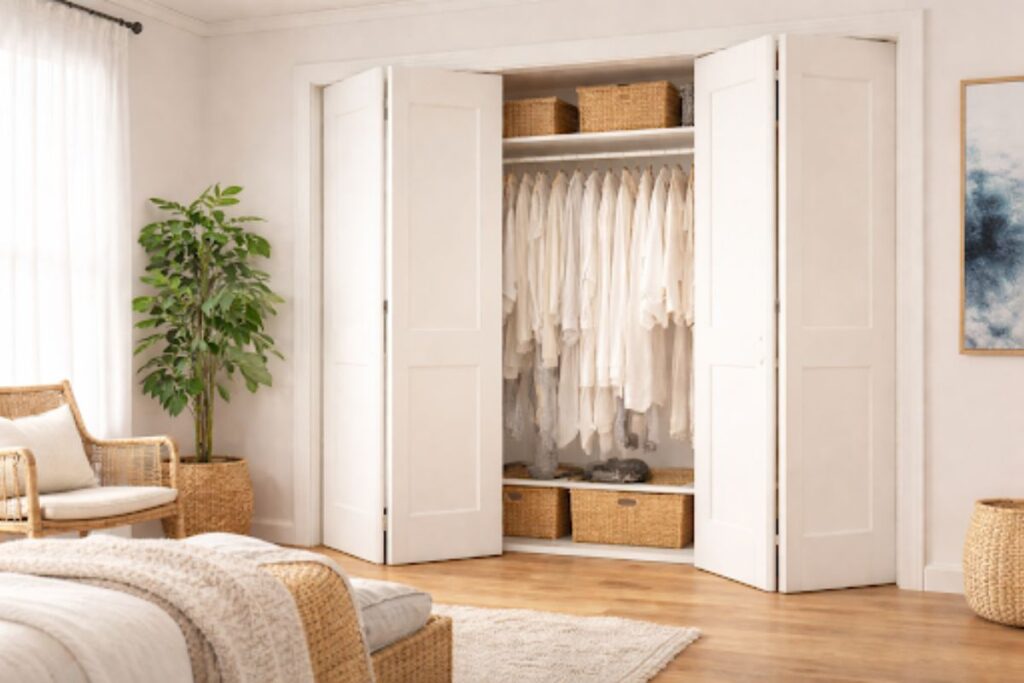
Open a standard door in a tight bedroom, and you immediately feel the problem. It swings out, hits furniture, and wastes space you don’t have.
That’s where bifold shaker doors come in. They fold instead of swinging, and they bring in a clean, simple design that works in most homes without overcomplicating things.
But here’s the reality. These doors are either smooth and practical or constantly annoying. The difference comes down to the choices you make before and during installation.
Let’s break it down properly so you get it right the first time.
What Are Bifold Shaker Doors?
Bifold shaker doors are interior folding doors made of two connected panels that slide along a top track. When opened, they fold to the side instead of taking up space in the room.
The shaker style keeps the look minimal. Flat panels, straight lines, nothing extra. That’s why they fit so well in modern, farmhouse, or even slightly traditional interiors.
In real use, this means you can stand right in front of your closet and open it without stepping back. That small detail makes a big difference in tight spaces.
Where They Actually Work Best
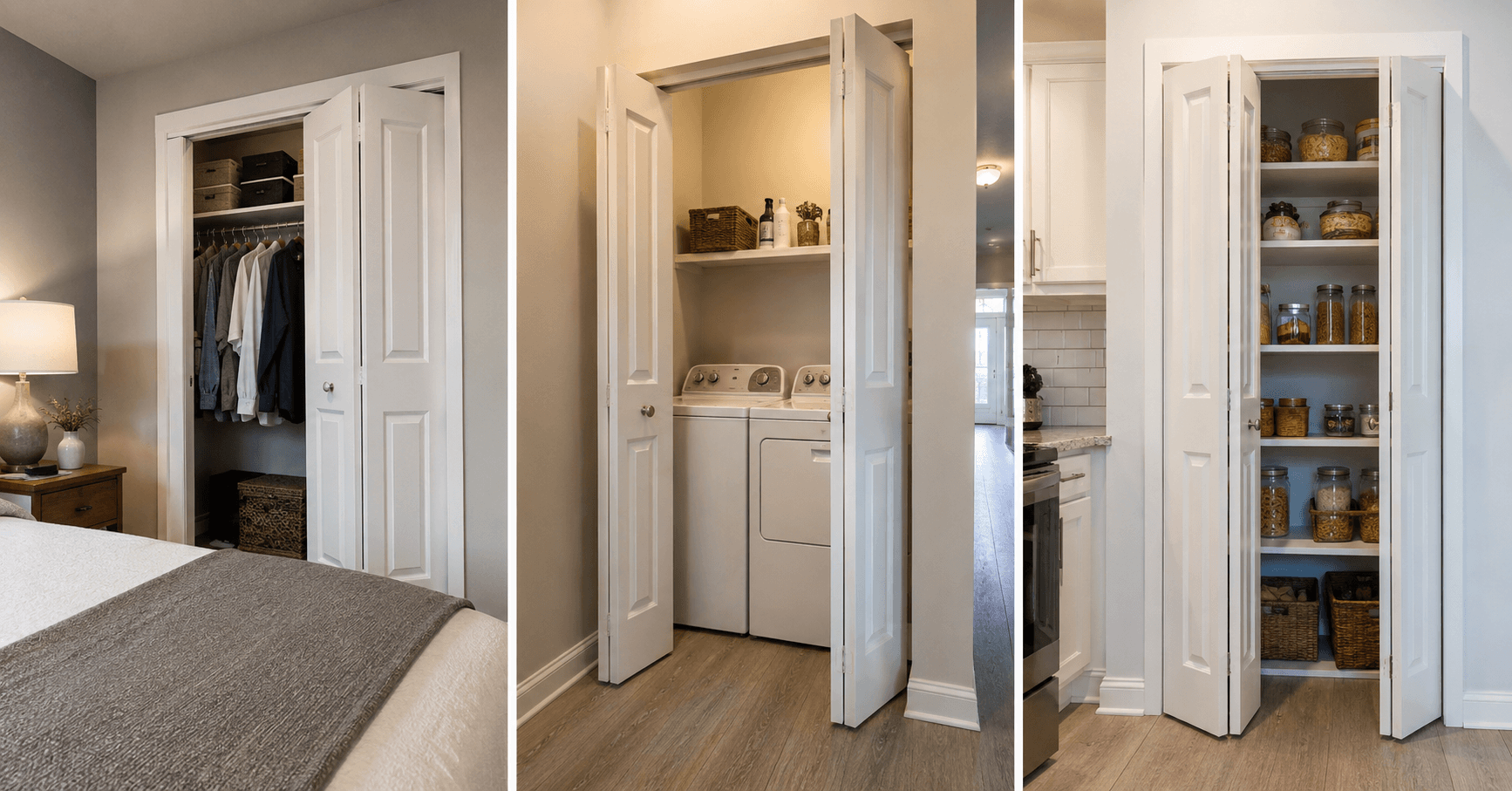
These doors solve specific problems. When used in the right place, they feel like an upgrade. In the wrong place, they feel like a compromise.
Closets
This is where they perform best.
Example: A typical US bedroom where the bed sits close to the closet.
- A swing door hits the bed
- A sliding door limits access
- A bifold gives you the full opening without needing extra space
Laundry Areas
A lot of homes have washer and dryer units in hallways or small closets.
Here, bifold doors make daily use easier. You can open them quickly without blocking your path, and they don’t interfere with movement in narrow spaces.
Pantry Spaces
In smaller kitchens, every bit of space matters. A door that swings outward gets in the way when you’re cooking or moving around.
A bifold door stays compact and gives quick access, which is exactly what you need in a busy kitchen.
Pros and Cons You Should Know
Let’s keep this realistic.
What works well
- Saves space in tight layouts
- Clean, modern look that fits most interiors
- Better access compared to sliding doors
- Affordable compared to custom door solutions
Where issues show up
Not everything is perfect, especially with lower-quality options.
- Cheap track systems wear out quickly
- Lightweight panels feel unstable
- Limited sound insulation
- Poor installation leads to constant sticking
Most complaints about bifold doors come from cheap hardware or rushed installs, not the design itself.
Choosing the Right Material (MDF vs Solid Wood vs Hollow Core)
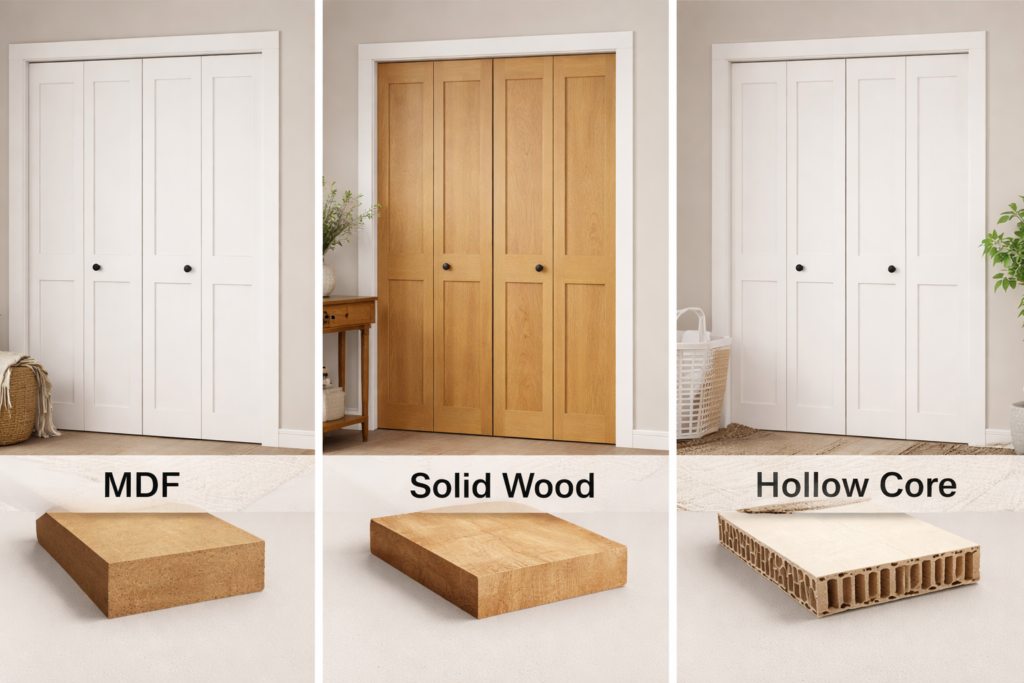
Material choice affects how the door feels and how long it lasts.
MDF is the most common option. It’s smooth, easy to paint, and works well for most indoor spaces. For closets and bedrooms, it’s usually enough.
Solid wood is stronger and feels more premium. It costs more, but it holds up better over time. If you’re upgrading for resale or long-term use, this is worth considering.
Hollow core is the budget option. It’s lighter and easier to install, but it doesn’t feel as solid and won’t last as long in high-use areas.
Real insight: In most US homes, MDF bifold shaker closet doors last around 5 to 10 years with standard use. Solid wood can last much longer if the hardware is good.
Cost Breakdown (US Market)
Prices depend on quality, but most homeowners fall into a predictable range.
Door pricing
- Budget options: $80 to $150
- Mid-range MDF: $150 to $300
- Solid wood: $300 to $600+
Installation
You can install them yourself if you’re comfortable with basic tools. Otherwise, hiring a professional usually costs between $100 and $300 per door.
What people actually spend
In most cases, a standard closet setup ends up between $150 and $400 total, depending on materials and installation choices.
Bifold Shaker Doors Installation Guide (Step-by-Step)
Installation is where things either go smoothly or become frustrating long-term.
You don’t need advanced skills, but you do need precision.
For a detailed step-by-step installation walkthrough, see This Old House’s guide to installing bifold doors.
Here’s the simplified flow:
- Measure the opening carefully (more than once)
- Install the track completely level
- Attach pivot brackets securely
- Hang the panels and adjust alignment
Sounds simple, but small mistakes here cause long-term issues.
Common mistakes to avoid
Some problems don’t show up immediately but get worse over time.
- Assuming the opening is perfectly square
- Installing the track slightly off-level
- Choosing the wrong size door
- Relying on low-quality hardware
These are the reasons doors start sticking or coming off track after a few months.
How to Choose the Best Bifold Shaker Doors for Your Closet
This is where a lot of people make the wrong decision.
Start with size. Measure your opening properly instead of guessing based on standard dimensions.
Then focus on building quality. A slightly heavier door with better hardware will always perform better than a cheap, lightweight option.
Also, think about usage. A guest room closet doesn’t need the same durability as a primary bedroom that’s used every day.
What actually matters most:
- Correct sizing for your opening
- Strong top track and hardware
- Material suited to your space (dry vs humid area)
- Panel thickness and overall weight
Pro Tips That Make a Real Difference
This is where experience shows.
- Upgrade the track system if possible
- Choose slightly heavier panels for better stability
- Leave proper clearance so doors don’t rub
- Paint or finish the doors before installation
One more thing most people overlook. Check how the door feels when opening and closing before finalizing everything. If it doesn’t feel smooth now, it won’t improve later.
Bifold vs Sliding vs Hinged Doors (Quick Comparison)
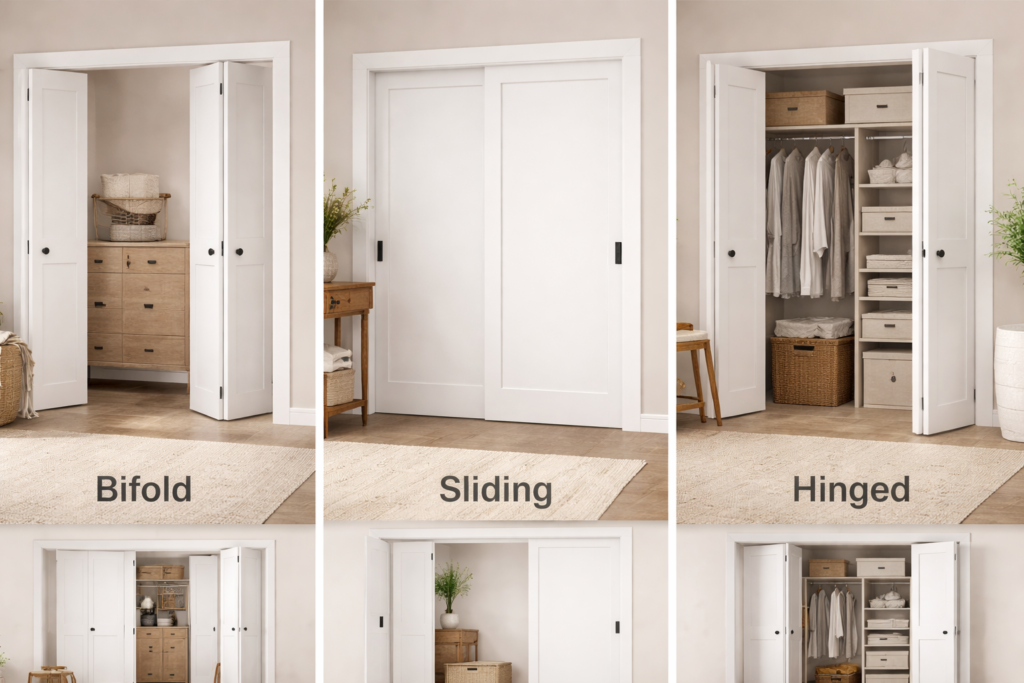
If you’re still unsure, here’s a simple way to compare them.
Bifold doors give you full access and save space, which makes them ideal for closets.
Sliding doors look cleaner and work well for wide openings, but you can only access one side at a time.
Hinged doors feel more solid and traditional, but they need enough room to swing open fully.
Each option solves a different problem. The best choice depends on your layout, not just style.
When You Should Skip Bifold Shaker Doors
There are situations where these doors don’t perform well.
- When you need strong sound privacy
- For large openings that need stability
- As the main room entry doors
- In high-end interiors, a heavier door looks better
In these cases, it’s better to choose something more solid.
FAQs About Bifold Shaker Doors
Are bifold shaker doors good for closets?
Yes, they’re one of the best options for closets, especially in smaller rooms. They save space and give you full access to the opening.
Do bifold shaker doors look cheap?
They can, but it depends on quality. MDF or solid wood versions with good hardware look clean and modern. Cheap hollow-core doors with poor tracks are what usually feel low-end.
How long do bifold shaker doors last?
With decent hardware and proper installation, most last between 5 and 10 years or more. Higher-quality materials can extend that lifespan.
Make the Right Call for Yo7 Best Bifold Shaker Doors for Closets & Small Spacesur Space
At the end of the day, bifold shaker doors are not about trends. They’re about solving a very specific problem, making tight spaces easier to use without overthinking the design.
If your current setup feels cramped or awkward, this is one of the simplest upgrades you can make that actually improves daily use. No major renovation, no complex changes.
Just make sure you don’t cut corners where it matters. Choose the right material, invest in decent hardware, and take your time with installation.
Do that, and you won’t just get a better-looking door. You’ll fix a layout problem that’s been bothering you every single day.

I started Domelite Home because I got tired of home improvement advice that was either too vague or written by people who had never actually picked up a drill. I’m Naik Zali Shah I’ve spent years obsessing over renovation projects, smart home setups, and interior design, and I built this site to share what actually works. No fluff, no filler. Just honest advice for homeowners who want to get things right the first time.
6 thoughts on “7 Best Bifold Shaker Doors for Closets & Small Spaces”