
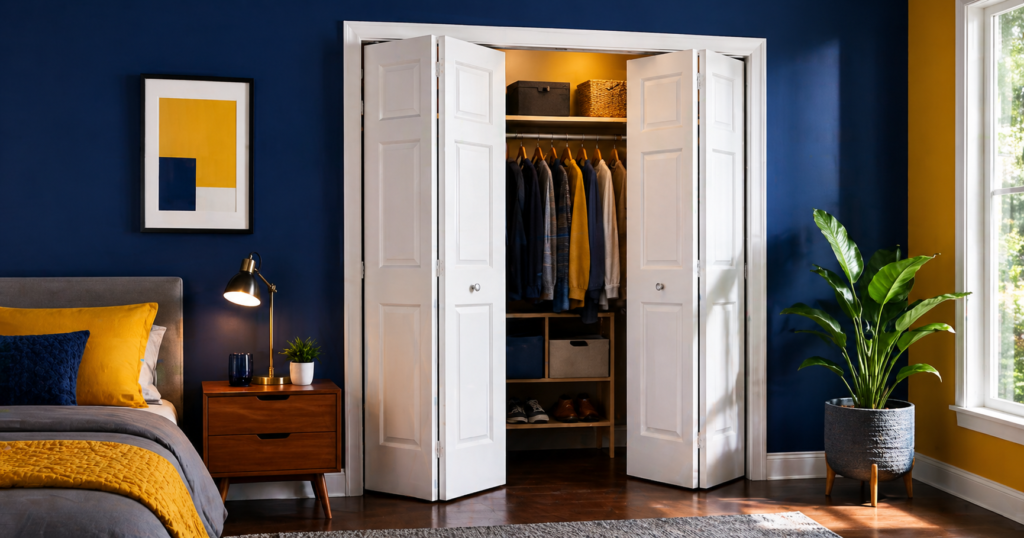
Quick answer: The best bifold doors for small spaces fold accordion-style along a track, giving you full opening access with zero floor clearance. Top picks range from $50 (Masonite hollow-core at Home Depot) to $250 (aluminum mirror bifolds on Amazon). Read on for our full ranked list, US size chart, and step-by-step measuring guide.
If your closet door swings open and immediately hits your bed, you already know the problem. Traditional doors eat up floor space that small rooms simply don’t have. That’s exactly why bifold doors have become one of the most popular upgrades in American homes, apartments, and condos.
In this guide, we’ve rounded up the 7 best bifold doors for small spaces in 2026, covering every room type, budget tier, and material. We’ve also included a US standard size chart, a material comparison, and a step-by-step measuring guide to help you avoid wasting money on the wrong size.
If you’re also considering a style upgrade, our guide on Bifold Shaker Doors: A Smart, Space-Saving Upgrade for Modern Homes walks through the shaker-panel style, specifically one of the most popular choices for small bedrooms and closets right now.
Let’s get into it.
Why Bifold Doors Are Perfect for Small Spaces
Before we get to the picks, here’s why bifold doors beat the alternatives in tight spaces.
A standard swing door needs roughly 9–12 square feet of clear floor space just to open. In a small bedroom, hallway closet, or laundry nook, that’s space you don’t have. Sliding doors solve the swing problem, but they only give you access to half the opening at a time frustrating when you’re pulling out luggage or a laundry basket.
Bifold doors fold accordion-style along a top track, stacking neatly to one side. When fully open, they take up only 10–15% of the total door width as stacked panels. That means you get the full opening width with zero swing clearance needed, the best of both worlds.
They’re also DIY-friendly. Most 2-panel interior bifold kits come with all the hardware and can be installed by one person with basic tools in under two hours. According to the Window & Door Manufacturers Association (WDMA), bifold interior doors are among the most installed replacement door types in US residential homes, a trend that’s accelerated as apartment living and smaller floor plans have become more common.
Bifold vs. Sliding Doors for Small Spaces: Which One Wins?
| Feature | Bifold Doors | Sliding Doors |
|---|---|---|
| Floor space needed | None | None |
| Access to full opening | Yes | Only 50% |
| DIY install difficulty | Easy | Easy |
| Price range | $50–$400+ | $80–$500+ |
| Best for | Closets, laundry, pantry | Wide closets, room dividers |
| Looks / aesthetics | Clean, modern | Sleek, minimal |
For most small spaces, especially closets, laundry rooms, and pantries, bifold doors give you more usable access. Sliding doors work better when you have a very wide opening (6 ft+) and only need to access one side at a time.
US Bifold Door Size Chart for Small Spaces
One of the most common (and costly) mistakes is ordering the wrong size. Here’s what you need to know about standard US bifold door dimensions.
Important: Bifold doors are sold by nominal size; the label on the box is slightly larger than the actual size of the panels. The actual door is typically ½ inch narrower and 1 inch shorter than the nominal size, to allow for track hardware and installation clearance.
Standard Interior Bifold Door Widths (2-Panel Sets)
| Nominal Width | Actual Panel Width | Best For |
|---|---|---|
| 18″ | ~17.5″ | Very narrow utility closets |
| 24″ | ~23.5″ | Small bedroom closets |
| 28″ | ~27.5″ | Standard bedroom closets |
| 30″ | ~29.5″ | Most common, fits most closets |
| 32″ | ~31.5″ | Medium closets |
| 36″ | ~35.5″ | Larger closets, pantry access |
Standard Heights
| Height | Best For |
|---|---|
| 80″ (6’8″) | Standard US ceiling height, most common |
| 96″ (8′) | Taller rooms, high-ceiling apartments |
Pro tip: Always measure your rough opening at three points (top, middle, bottom) and use the smallest measurement. Subtract ½ inch from that number when ordering your door width.
The 7 Best Bifold Doors for Small Spaces
We evaluated each door based on space-saving performance, build quality, ease of DIY installation, and real customer reviews from US buyers on Amazon, Wayfair, Home Depot, and Lowe’s.
1. SMARTSTANDARD 2-Panel Bifold Closet Door, Best Overall
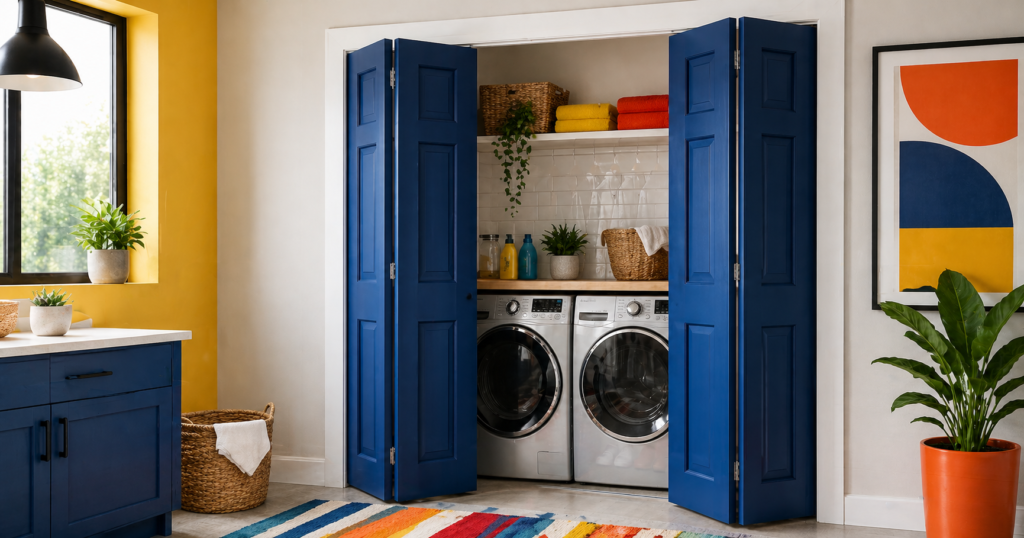
Best for: Bedroom closets, laundry nooks | Price range: $80–$150 | Material: Solid wood + MDF
SMARTSTANDARD is one of the most consistently rated bifold door brands on the US market, and for good reason. Their 2-panel interior bifold comes pre-drilled for hardware, ships with all the track components, and fits standard 80″ and 96″ openings.
What makes it stand out for small spaces is the clean shaker-style paneling that looks premium without overwhelming a small room. It’s available in a white primed finish, easy to repaint to match any interior. The solid wood and MDF construction resists warping and sagging, which is a common complaint with cheaper hollow-core doors.
In our experience reviewing reader-submitted home upgrades, shaker-style bifolds are the single most requested door type for small bedroom makeovers. The clean lines work in both modern and traditional interiors.
Why it works for small spaces: Zero swing clearance, full opening access, and the white finish reflects light to make tight rooms feel brighter.
Available at: Amazon | Wayfair
2. Masonite Primed Hollow-Core 6-Panel Bifold, Best Budget Pick
Best for: Renters, quick upgrades | Price range: $50–$90 | Material: Composite wood (hollow core)
If you’re renting or just want a functional upgrade without a big spend, Masonite’s hollow-core bifold is the most widely available budget option in the US. You’ll find it at Home Depot and Lowe’s in standard sizes from 24″ to 36″ wide.
The 6-panel raised design looks more traditional and suits older homes well. Installation is straightforward. Masonite includes clear instructions, and it fits standard hardware kits. The hollow core makes it light enough for one person to hang alone.
Limitation: Hollow core doors can feel less substantial and don’t insulate sound or temperature as well as solid options.
Available at: Home Depot | Lowe’s
3. Aluminum Mirror Bifold Door, Best for Making Small Rooms Feel Larger
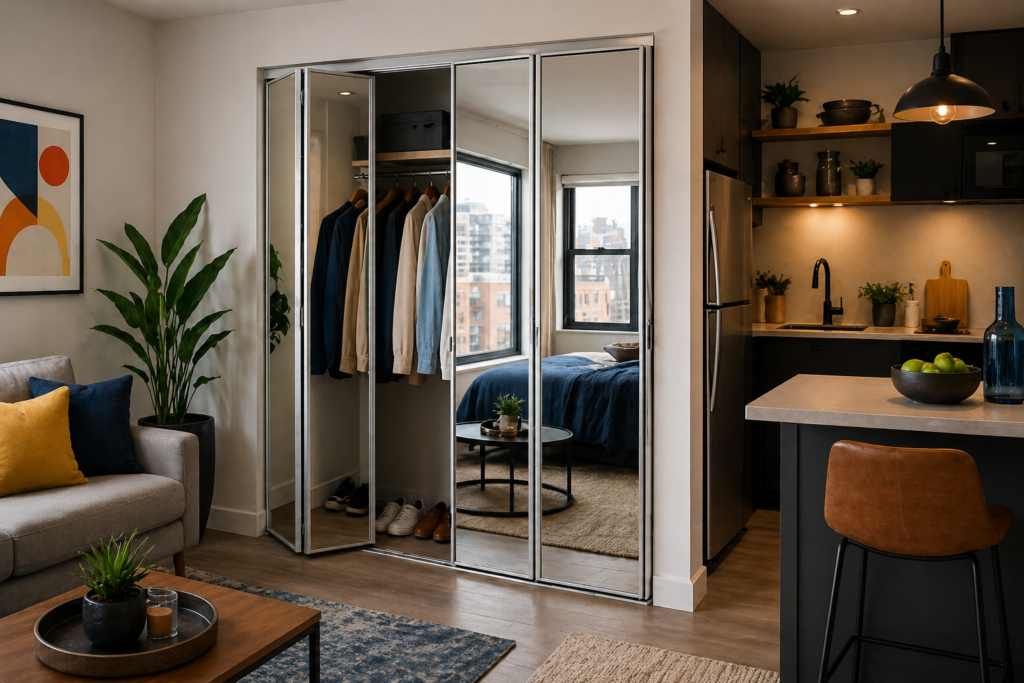
Best for: Bedrooms, small apartments, studio units | Price range: $120–$250 | Material: Aluminum frame + mirrored glass
A mirrored bifold door does two things at once: it functions as your closet door, and it visually doubles your room’s perceived size by reflecting light and space into the room. This is one of the most underrated upgrades for genuinely small spaces, and almost no blog covers it.
The aluminum frame is lightweight and resistant to warping important for smooth track operation. The PVC-coated mirror surface is scratch-resistant and easy to clean. Many models on Amazon and Wayfair open up to 90%+ of the closet width when folded.
This is particularly popular in studio apartments and small primary bedrooms where every visual trick counts.
Why it works for small spaces: Reflects natural light, eliminates the need for a separate full-length mirror, and gives the room an instantly more open feel.
Available at: Amazon | Wayfair
4. TREEBLING White Paneled MDF Bifold Door, Best for Pantries
Best for: Pantries, laundry rooms | Price range: $90–$160 | Material: MDF board
The TREEBLING bifold is built on a sturdy MDF board frame that handles daily heavy use without flexing or sagging, exactly what a busy pantry door needs. The white paneled design is clean and contemporary, fitting well in modern kitchens.
It provides 90%+ access to the full opening width, which matters when you’re pulling out bulky grocery items or a vacuum cleaner. The door ships mostly assembled, which cuts installation time significantly.
Why it’s pantry-specific: The MDF construction handles humidity fluctuations in kitchen-adjacent spaces better than solid wood, which can swell. The full-opening access is key for deep pantry shelves.
Available at: Wayfair | Amazon
5. White Folding Barn Door Bifold, Best for Aesthetic-Forward Small Spaces
Best for: Home offices, bedroom alcoves, studio apartments | Price range: $130–$220 | Material: Solid wood + MDF
The barn door aesthetic has been trending in US home design for years, and this bifold version brings that farmhouse-modern look to tight spaces without requiring barn door hardware (which actually needs more wall space than bifolds do).
The folding design minimizes space when open, while the solid wood and MDF construction keep it sturdy. Pre-drilled holes and included hinges make installation beginner-friendly; most users report a 30–45 minute install. The white primed finish shows natural wood grain through paint, giving it a more elevated look than plain hollow-core doors.
Available at: Wayfair
6. DoorFusion Pre-Drilled Bifold Door, Best for DIY Beginners
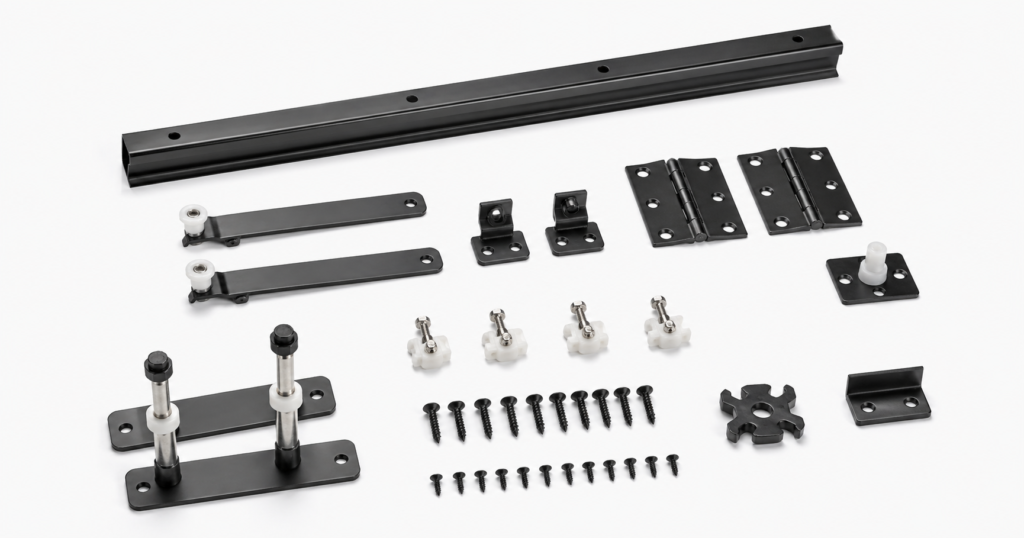
Best for: First-time installers, all room types | Price range: $100–$180 | Material: Engineered wood
DoorFusion designs its bifold doors specifically with DIY installation in mind. The hardware comes pre-drilled, and the package includes every component: tracks, pivot pins, hinges, and screws. No measuring for hardware placement required.
The build quality is thicker than the price point would suggest, with reviewers consistently noting the door feels more substantial than expected. It’s available in multiple sizes from 24″ to 36″ and ships in excellent packaging with minimal damage reports.
Why it works for beginners: Clear instruction manual, pre-drilled hardware, and included components mean you don’t need to source anything separately.
Available at: Wayfair | Amazon
7. CHZDPP PVC Accordion Bifold Door, Best for Non-Standard Openings
Best for: RVs, basements, odd-sized openings, bathroom doorways | Price range: $80–$200 | Material: Aluminum alloy frame + PVC panels
If your opening is a non-standard size, a common problem in older US homes, this fully customizable PVC bifold is your best option. You order it to your exact measurements (width × height), and it ships cut to size. No trimming, no shimming.
The folded panels take up only 10% of the total space compared to traditional doors. The aluminum alloy top rail handles up to 463 lbs, the PVC frame is waterproof and easy to clean, and the magnetic closure keeps it shut without slamming.
It works especially well for bathroom doorways (30″–36″), basement utility rooms, and RV interiors where standard sizes rarely apply.
Available at: Amazon
Best Bifold Doors by Room, Quick Reference
Small Bedroom Closet
Go with a 2-panel set in 24″–30″ width. Mirrored bifold doors are especially effective here; they save space and make the room feel larger. Solid wood or MDF shaker-style panels work well for aesthetics. For a deeper look at shaker-style options, see our Bifold Shaker Doors guide.
Laundry Room
Prioritize a door that opens the full width. A bifold beats a swing door in a laundry nook every time. Look for MDF or composite materials that handle occasional humidity. A 24″–28″ door covers most laundry closets.
Pantry
You want full access to your shelves, so a 4-panel bifold (48″–60″ wide) or a 2-panel 36″ door is ideal. The TREEBLING MDF option handles kitchen humidity well and gives a near-full opening width.
Bathroom
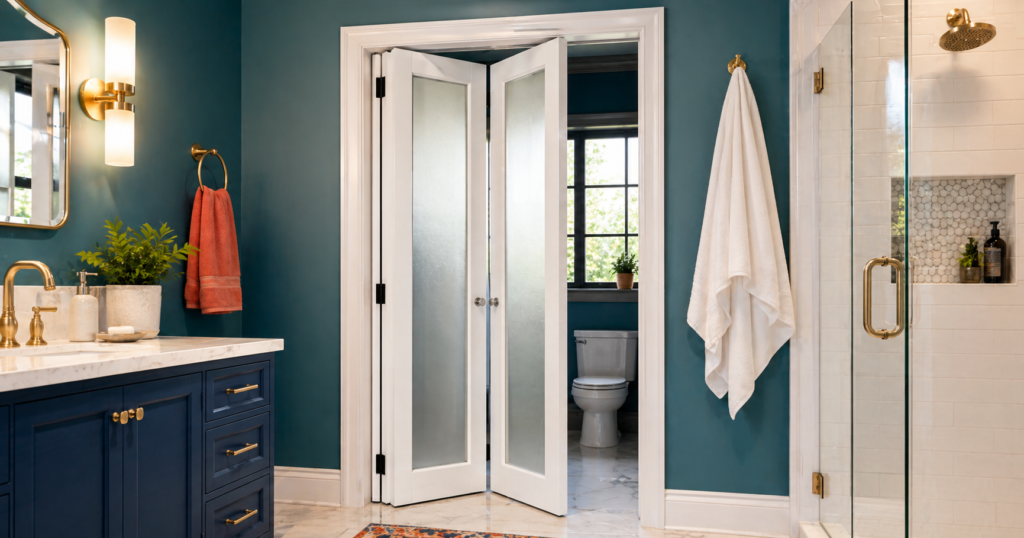
Smaller bifolds in 28″–32″ widths work well for bathroom doorways. PVC or aluminum frame options are best given moisture exposure. Frosted glass bifolds are a popular upgrade; they let light through while keeping privacy.
Studio Apartment / Open Plan
Bifold doors work brilliantly as room dividers in studio units. A 4-panel set across a 48″–72″ opening can close off a sleeping area or home office without losing the open-plan feel when folded back.
How to Choose the Right Bifold Door Material
| Material | Best For | Pros | Cons |
|---|---|---|---|
| Solid Wood | Bedrooms, living areas | Premium look, paintable/stainable | Heavier, it can warp with humidity |
| MDF | Pantries, laundry, painted finish | Affordable, smooth, paint-ready | Less moisture-resistant than PVC |
| Hollow Core Composite | Budget, rental upgrades | Lightweight, cheap, widely available | Less durable, poor sound insulation |
| Aluminum + Glass | Modern, light-focused spaces | Sleek, lets in light, durable | Pricier, less privacy unless frosted |
| PVC | Bathrooms, basements, RVs | Waterproof, lightweight, customizable | Less premium aesthetic |
| Mirrored | Small bedrooms, studios | Space-enhancing, dual function | Heavier, fragile if hit |
How to Measure for Bifold Doors in Small Spaces (Step-by-Step)
Getting the measurement right the first time saves you a return trip to Home Depot. Here’s how to do it:
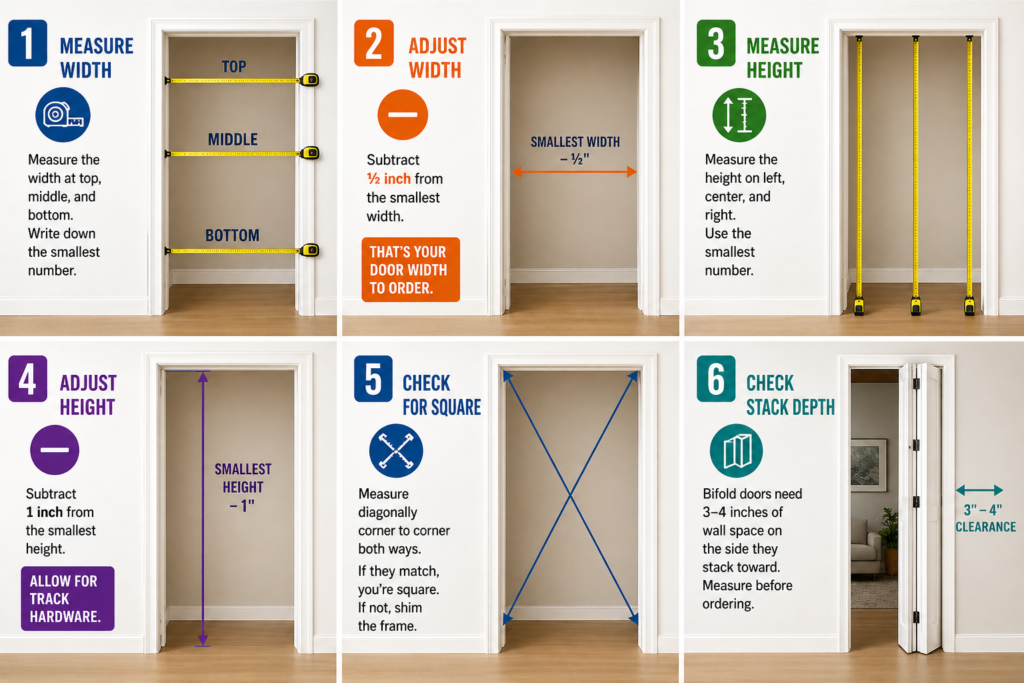
Step 1 — Measure the width at three points: top of the opening, middle, and bottom. Write down the smallest number.
Step 2 — Subtract ½ inch from the smallest width measurement. That’s your door width to order.
Step 3 — Measure the height on the left side, center, and right side of the opening. Again, use the smallest number.
Step 4 — Subtract 1 inch from the height to allow for the track hardware at the top.
Step 5 — Check for a square. Measure diagonally from corner to corner both ways. If the two diagonal measurements match, your opening is square, and you’re good to go. If they don’t, you may need to shim the frame before installing.
Step 6 — Check stack depth. When folded open, bifold panels need 3–4 inches of wall space on the side they stack toward. Measure that clearance before ordering.
Common Mistakes to Avoid When Buying Bifold Doors for Small Spaces
Ordering by nominal size without accounting for actual size. A “30-inch” bifold door is not 30 inches wide. It’s approximately 29.5 inches. If you measure your opening as exactly 30 inches, the door will be too tight. Always subtract ½ inch.
Choosing a door that opens the wrong direction. Decide before buying whether your panels will stack left or right. In tight spaces, one side often has an obstruction (wall, furniture) that makes only one direction practical.
Ignoring stack depth. The folded panels need wall clearance to stack. Measure 3–4 inches of clear wall space on the stack side before ordering.
Buying hollow core for high-traffic areas. Hollow-core doors are fine for a spare bedroom closet. For a pantry or laundry room opened multiple times a day, spend a little more on solid or MDF construction.
Skipping the hardware check. Most bifold doors ship with basic hardware. If you want soft-close hinges or a bottom guide (recommended for taller doors), check whether they’re included or plan to buy separately.
Frequently Asked Questions
What size bifold door do I need for a small closet?
Most small bedroom closets take a 2-panel bifold in 24″–30″ nominal width at 80″ height. Measure your opening and subtract ½ inch from the width to get your order size.
Are bifold doors good for small rooms?
Yes, they’re one of the best door types for small rooms because they require zero floor clearance to open and give you full access to the entire opening width, unlike sliding doors.
What’s the cheapest bifold door option in the US?
Hollow-core composite bifold doors from Masonite, available at Home Depot and Lowe’s, start around $50–$80 and are the most budget-friendly option.
Can I install bifold doors myself?
Yes. Most 2-panel interior bifold doors are designed for DIY installation with basic tools: a drill, level, and screwdriver. Expect 1–2 hours for your first install.
Do mirrored bifold doors make a small room look bigger?
Yes, a mirrored bifold reflects light and space, visually doubling the perceived depth of a small room. They’re especially effective in bedrooms and studio apartments.
What’s the difference between bifold and accordion doors?
Bifold doors have 2–4 rigid panels hinged together. Accordion doors have many thin, flexible vinyl panels. Bifold doors look more premium and are better for bedroom closets; accordion doors work for utility spaces and odd-sized openings.
Final Thoughts
The best bifold door for your small space depends on three things: your room type, your opening size, and your budget. For most US homeowners tackling a bedroom closet or laundry nook, the SMARTSTANDARD 2-panel shaker bifold hits the sweet spot of quality, price, and ease of install. If you want to visually expand a tight room, go mirrored. If your opening is non-standard, go with custom PVC.
Whatever you choose, measure twice, and subtract that half inch.
Have questions about bifold doors for your specific space? Drop them in the comments below.

Samreen Khadim Hussain is a home improvement writer and content creator at Domelite Home. She specializes in making home renovation, interior design, and bathroom safety accessible to everyday US homeowners, turning technical subjects into clear, actionable advice. Her work is rooted in research, real-world practicality, and a genuine belief that a better home is within everyone’s reach.
4 thoughts on “7 Best Bifold Doors for Small Spaces (2026): Expert Picks + Size Guide”