
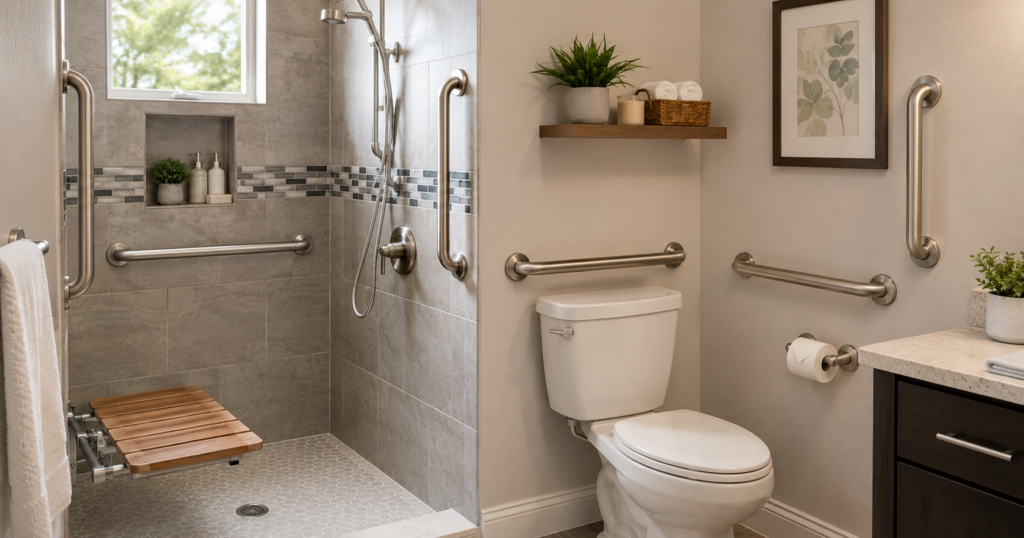
Most bathroom falls don’t happen because someone slipped. They happen because there was nothing to hold onto.
That’s the reality for millions of Americans, and it’s entirely preventable. If you’re renovating your bathroom, caring for an aging parent, or simply planning, installing ADA grab bars for bathrooms is one of the smartest moves you can make. Not just for safety. For independence.
This guide covers everything: what ADA actually requires, where bars go, how to install them correctly, and what happens if you get it wrong.
Why This Matters More Than You Think
Here’s a number that should stop you cold: 80% of senior falls happen in the bathroom.
According to the CDC, nearly 235,000 people visit the emergency room every year because of a bathroom injury. Falls are the leading cause of injury-related deaths among adults 65 and older, and the bathroom is the most dangerous room in the house.
The wet floors. The tight spaces. The awkward movements of stepping in and out of a tub. It all adds up fast.
The good news? A properly installed grab bar reduces that risk dramatically. It costs a few hundred dollars. A hip fracture, the most common fall injury, costs an average of $30,000 to $40,000 in medical bills, not counting lost mobility or months of recovery.
The math is simple. The decision should be too.
What are ADA Grab Bars for bathrooms?
ADA grab bars are safety bars installed in bathrooms to help people steady themselves, particularly around toilets, showers, and bathtubs. The term “ADA” refers to the Americans with Disabilities Act, which sets federal standards for accessibility in public and commercial spaces.
While private homes aren’t legally required to follow ADA standards, those exact specifications are widely used as the gold standard for residential safety because they work.
Quick Reference: ADA Grab Bars Bathroom Requirements
Use this quick reference table to check your ADA grab bars bathroom measurements before you buy or install anything.
| Requirement | ADA Standard |
| Bar Height | 33–36 inches above finished floor |
| Bar Diameter | 1¼ to 2 inches |
| Wall Clearance | 1½ inches minimum |
| Load Capacity | 250 lbs minimum |
| Toilet Side Wall Bar | 42 inches long minimum |
| Toilet Rear Wall Bar | 36 inches long minimum |
| Shower Bar Height | 33–36 inches above floor |
| Bathtub Back Wall Bars | 33–36 inches above the floor |
ADA Grab Bar for Bathrooms Requirements: The Exact Numbers
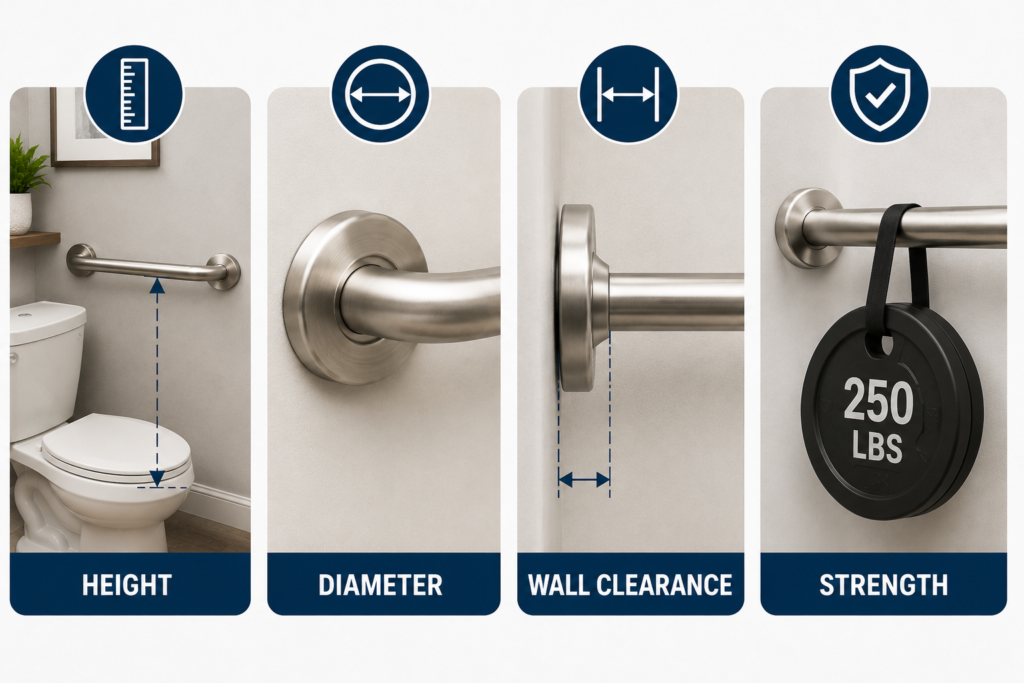
Height: According to the U.S. Access Board, ADA grab bars for bathrooms must be mounted with the top of the gripping surface 33 to 36 inches above the finished floor. This is non-negotiable in commercial spaces and strongly recommended in homes.
Diameter: The bar must be 1¼ to 2 inches in diameter. That range fits the natural grip of a human hand. Too thin and it’s hard to grip. Too thick, and it’s impossible to hold securely.
Wall clearance: There must be exactly 1½ inches of space between the bar and the wall. Enough room for knuckles, not enough for an arm to slip through dangerously.
Strength: Every ADA grab bar bathroom installation must support a minimum of 250 pounds of force at any point, bar, fastener, or mounting. This is the most overlooked spec. A bar that isn’t anchored into a stud or blocking is a liability, not a safety feature.
Where to Install Grab Bars: Room by Room
Around the Toilet
Two bars are required under ADA standards:
- Rear wall bar: At least 36 inches long, mounted 33–36 inches above the floor, extending 12 inches from the toilet centerline toward the wall and 24 inches toward the open side.
- Side wall bar: At least 42 inches long, positioned no more than 12 inches from the rear wall and extending at least 54 inches from the rear wall.
Many contractors also add a vertical grab bar on the side wall. The ADA doesn’t require it, but the ICC A117.1 building code does, and it makes standing up significantly easier for people with limited strength.
In the Shower
For a standard transfer shower (36″ x 36″):
- A horizontal bar runs along the side wall, 33–36 inches above the floor.
- A vertical bar at the shower entry helps with stepping in and out.
For roll-in showers, bars are required on the back wall and the side wall farthest from the entry, with no bars placed above any seat.
At the Bathtub
The bathtub is where most injuries happen. ADA standards call for:
- Two bars on the back wall, one at standard height (33–36″), one 8–10 inches above the tub rim.
- One bar on the control end wall (24 inches minimum), positioned at the front edge of the tub.
- One bar on the head end wall (12 inches minimum) at the front edge of the tub.
This arrangement gives support at every point of the transfer, getting in, bathing, and getting out.
The Mistake That Makes Grab Bars Useless
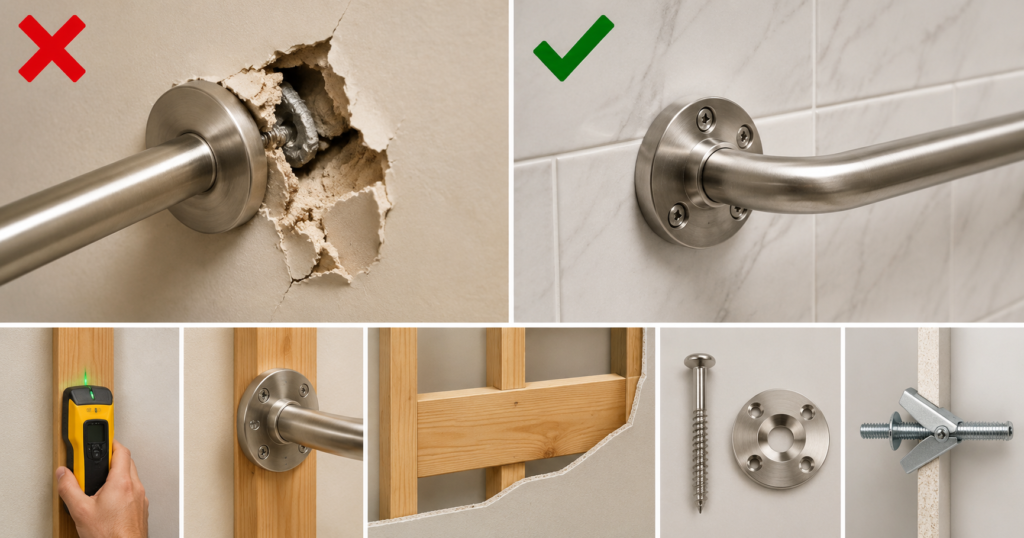
Here it is: screwing into drywall.
Drywall cannot hold 250 pounds. A grab bar mounted into drywall without a stud or blocking behind it will rip out of the wall exactly when someone needs it most.
The right way to install grab bars:
- Find the studs using a stud finder before you do anything else.
- Install into studs wherever possible. Studs are typically 16 inches apart.
- If studs aren’t where you need them, install solid wood blocking (a 2×8 or 2×10 piece of lumber) behind the wall during any renovation. This is the professional standard.
- Use the right hardware, stainless steel or chrome screws rated for the load, not whatever came in the box.
If you’re already planning a bathroom overhaul, this is exactly the right time to add wall blocking before the tiles go up at almost zero extra cost. Our guide on Home Renovation Tips and Tricks That Save Money Without Sacrificing Results walks through more budget-smart moves just like this one.
If you’re not renovating and can’t open the wall, use a toggle bolt anchor rated for 250+ lbs per point. But blocking during renovation is always the better option.
Do Grab Bars Have to Look Ugly?
Not anymore. This is a question many homeowners ask, and it used to be a fair concern.
Today’s grab bars come in brushed nickel, matte black, chrome, oil-rubbed bronze, and even decorative styles that look more like a design feature than a medical device. Several manufacturers now make bars that double as towel bars. You don’t have to choose between safety and style.
Common Questions Answered
Are grab bars required in home bathrooms?
Not by federal law for private residences. However, if your home is a rental property, multi-family building, or was built with federal funding, ADA accessibility standards may apply. Check with your local building department.
Can I install grab bars myself?
Yes, if you’re comfortable finding studs and using a drill. The installation itself isn’t complicated, but the anchoring must be done correctly. If you’re unsure, hire a licensed contractor or a Certified Aging-in-Place Specialist (CAPS).
How much do grab bars cost?
The bars themselves range from $20 to $150, depending on material and finish. Professional installation typically adds $50 to $200 per bar. A full bathroom setup (toilet + shower + tub) with professional installation usually runs $300 to $600 total.
What’s the difference between ADA and non-ADA grab bars?
Non-ADA bars may not meet the diameter, strength, or spacing requirements. They often look similar but perform differently under load. Always check that the bar is rated to support at least 250 lbs before purchasing.
Will grab bars affect my home’s resale value?
Research increasingly says no, and in many cases, they help. According to the 2026 Houzz U.S. Renovation Plans Report, over 66% of US homeowners plan to age in place, making bathroom accessibility features a selling point, not a stigma.
The Bottom Line
A grab bar isn’t a sign that something has gone wrong. It’s a sign that someone planned.
The bathroom is the most injury-prone room in any home. ADA grab bars for bathrooms, properly placed and properly anchored, are the single most effective modification you can make to prevent a fall. They cost less than a dinner out for a family of four. The injury they prevent can cost far more than that.
If you’re renovating your bathroom now, add blocking behind the walls. It costs almost nothing at that stage. If you’re not renovating, measure your wall studs, pick a style you like, and get them installed this weekend.
There’s no better time to do it than before you need it.
Sources: U.S. Access Board ADA Standards·CDC Injury Center·National Institute on Aging·Houzz 2026 U.S. Renovation Plans Report

Samreen Khadim Hussain is a home improvement writer and content creator at Domelite Home. She specializes in making home renovation, interior design, and bathroom safety accessible to everyday US homeowners, turning technical subjects into clear, actionable advice. Her work is rooted in research, real-world practicality, and a genuine belief that a better home is within everyone’s reach.
3 thoughts on “ADA Grab Bars for Bathrooms: The Complete Installation Guide Most Homeowners Get Wrong”