
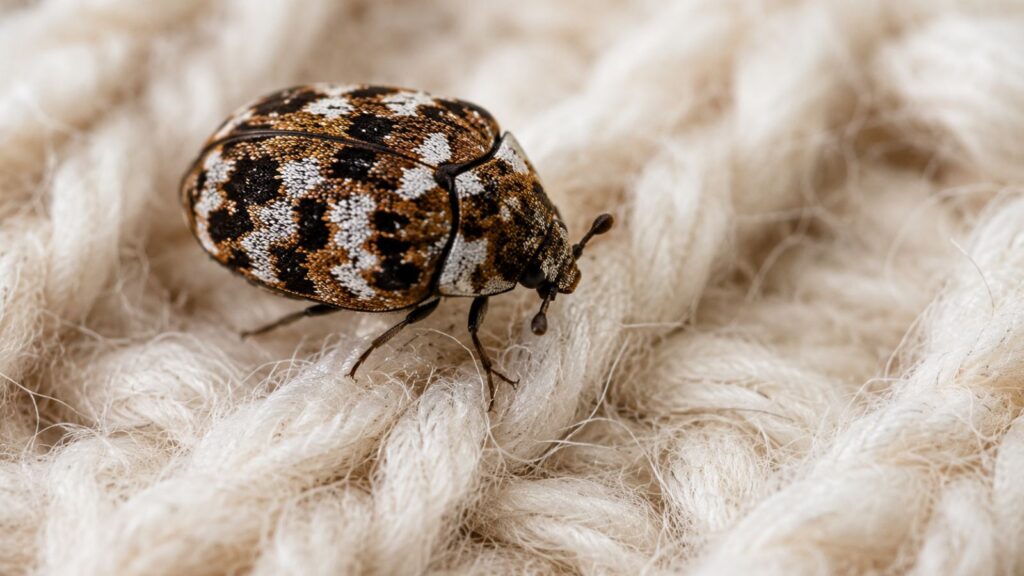
Quick answer: Getting rid of carpet beetles means removing their food source and killing every life stage, not just the adults you happen to see. Identify and bag infested items, vacuum thoroughly (edges, baseboards, under furniture, closets), wash fabrics in hot water or dry clean them, freeze or heat-treat non-washable items, then treat remaining problem areas with diatomaceous earth or boric acid before sealing entry points. Most infestations clear up in 2 to 4 weeks with consistent follow-through, though widespread or recurring infestations often need a professional.
If you’re finding tiny holes in a sweater, unexplained rashy bumps on your skin, or small speckled beetles collecting on windowsills every spring, carpet beetles are a reasonable suspect. Knowing how to get rid of carpet beetles starts with knowing how to identify carpet beetles correctly in the first place, since they’re one of the more commonly misdiagnosed household pests, mistaken for bed bugs, mistaken for a fabric moth problem, and often not identified at all until real damage has already been done. This guide walks through what they actually are, how to tell them apart from what they get confused with, and a step-by-step removal process based on how pest management professionals and university extension entomologists actually approach it, not just “vacuum and hope for the best.”
Quick Facts
- Adult carpet beetles: 1/16 to 1/8 inch, oval, mottled black, white, and orange or yellow patterns
- Larvae (“woolly bears”): brown, bristly, up to 5mm, the actual source of fabric damage
- Egg to adult life cycle: 6 months to 2 years depending on species and conditions
- Female lays 50 to 100 eggs per cycle
- They do not bite; skin irritation comes from shed larval hairs, not blood-feeding
- Freezing at 0°F for at least a week, or -20°F for 72 hours, kills all life stages
What Are Carpet Beetles
Carpet beetles belong to the Dermestidae family, a group of scavenger beetles built to feed on dried animal and plant material. Inside your home, that translates to wool, silk, fur, feathers, leather, and pet hair, along with less obvious food sources like dead insects trapped in wall voids, accumulated lint, and cotton blends that have picked up enough body oil or food residue to become appealing. The University of Kentucky Department of Entomology notes that pure cotton and synthetic fabrics are rarely attacked unless blended with wool or heavily soiled, which explains a scenario a lot of homeowners find confusing: one wool sweater in a drawer gets destroyed while the cotton shirt folded right next to it comes out untouched.
A few different species turn up in US homes, and while their markings differ, the removal process below works the same regardless of which one you’re dealing with.
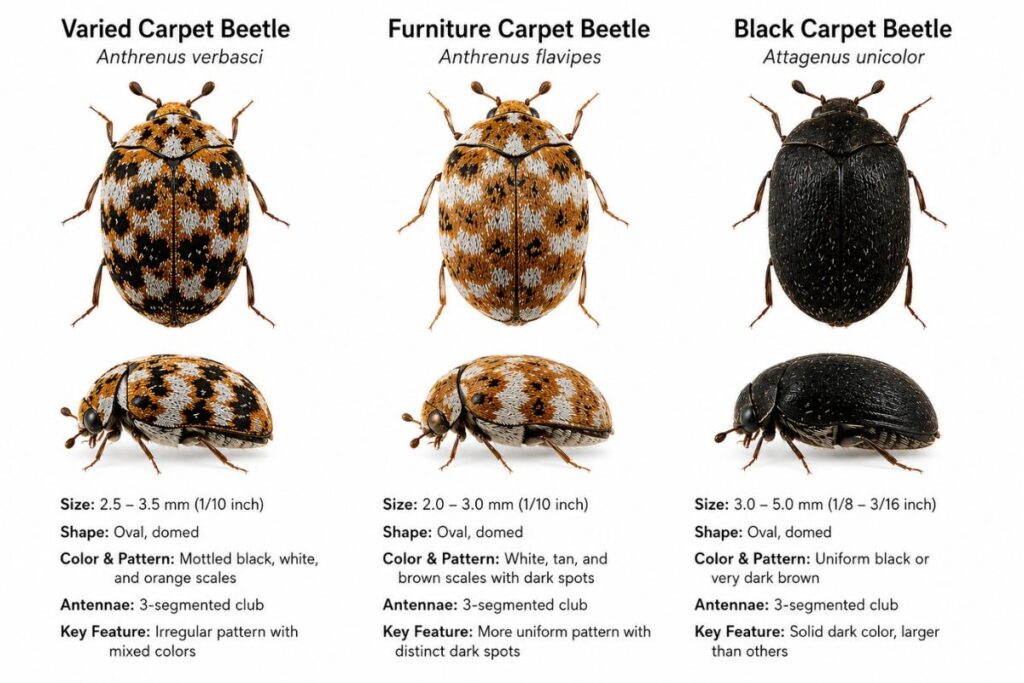
| Species | Adult Appearance | Larva Appearance | Notes |
| Varied carpet beetle | Mottled black, white, yellow, orange scales | Brown, carrot-shaped, bristly | Most common species found in homes |
| Furniture carpet beetle | Black and gray patches, moves slowly | Brown with long tail hairs | Common on upholstered furniture |
| Black carpet beetle | Solid shiny black or dark brown | Long, tapered, golden-brown | Larvae can survive over a year without feeding |
| Common carpet beetle | Similar mottled pattern to varied | Similar bristly appearance | Naming varies somewhat by region |
Carpet Beetle Life Cycle
Understanding the life cycle matters more than it might seem, because it’s the reason a single cleaning pass so rarely solves the problem for good. Adult females lay 50 to 100 eggs directly on or near vulnerable material. Those eggs hatch within one to two weeks indoors, and the larvae that emerge, the stage actually responsible for the damage, can go on feeding for months, sometimes over a year in the case of black carpet beetle larvae, before finally pupating and emerging as adults. The adults themselves don’t eat fabric at all; they feed on pollen and nectar outdoors and tend to show up on windowsills in spring, which is often the very first sign a homeowner notices, well after the larvae have already been quietly at work inside.
This also explains why entomologists describe insecticide sprays as having fairly limited effectiveness against carpet beetles on their own. A spray kills the adults you can see, but it does nothing for eggs already laid or larvae already feeding inside a fabric fold or under a rug edge where the spray never reached.
Signs You Have a Carpet Beetle Infestation
- Small, irregular holes in wool, silk, fur, or feather-based items, especially ones that have been sitting in storage
- Shed larval skins, thin, translucent, bristly casings that look like tiny empty exoskeletons left behind after molting
- Live larvae, brown and bristly, tucked into dark undisturbed spots like closet corners, under rugs, or inside drawers
- Adult beetles appearing on windowsills, especially in spring, often dismissed as a random bug rather than recognized as a sign of something happening indoors
- Damage concentrated at rug edges and undersides rather than open, regularly walked-on areas, since rugs that get vacuumed often are rarely the ones affected
Carpet Beetles vs. Bed Bugs vs. Clothes Moths
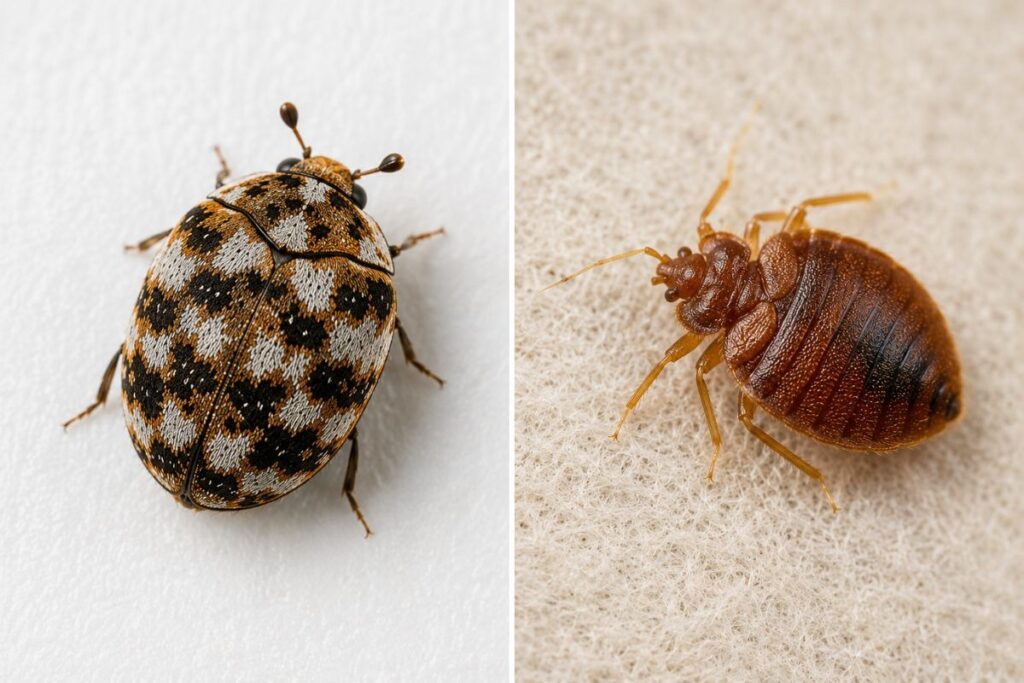
This is probably the single biggest point of confusion, and getting it wrong means treating for the wrong pest entirely, which wastes time while the actual problem keeps going.
| Factor | Carpet Beetles | Bed Bugs | Clothes Moths |
| Bites humans | No, never bites | Yes, feeds on blood | No |
| Skin reaction | Allergic rash from larval hairs, scattered pattern | True bites, often in rows or clusters | None |
| What they eat | Wool, fur, feathers, keratin-based materials | Human blood only | Wool, fur, similar natural fibers |
| Where found | Carpets, closets, storage, rug edges | Mattresses, bed frames, cracks near sleeping areas | Closets, stored garments |
| Visual ID | Small, oval, mottled, slow-moving | Flat, reddish-brown, apple-seed shaped | Small tan or buff-colored moths, larvae are silky white worms |
| Fabric damage | Yes, irregular holes | No | Yes, similar irregular holes |
Carpet Beetle Bites and Skin Reactions
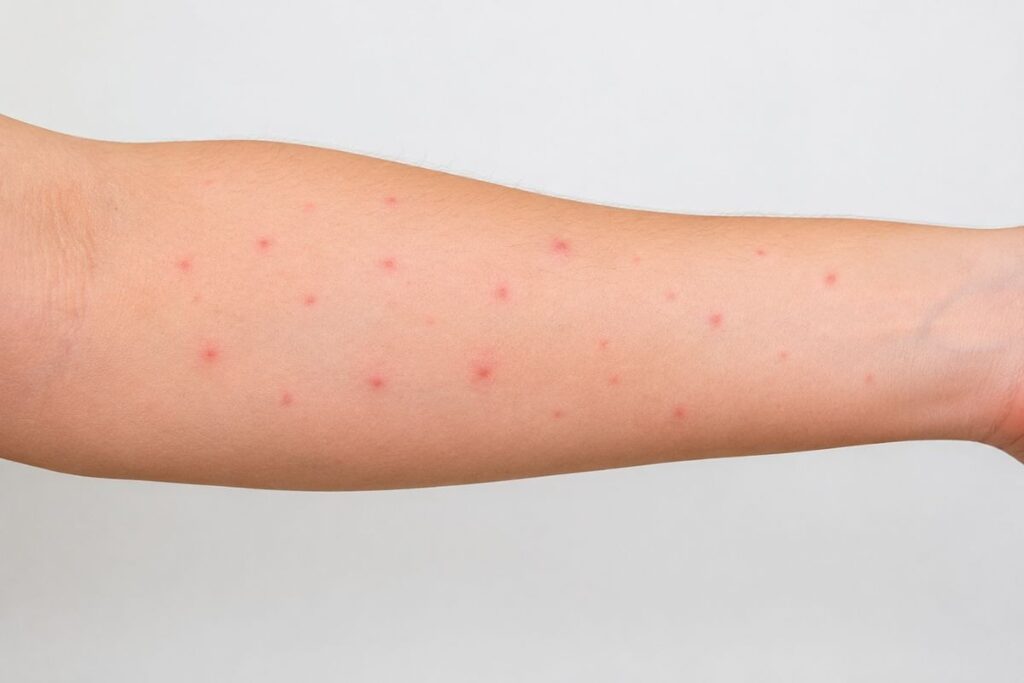
Here’s something most pest control guides barely touch on: carpet beetles physically cannot bite you. What people describe as “carpet beetle bites” is actually carpet beetle dermatitis, an allergic reaction to the tiny barbed hairs, called hastisetae, that shed from larvae and drift through household air before settling on skin and fabric. A clinical review published in the dermatology journal Cutis describes the resulting lesions as scattered and random, quite different from the clustered or linear pattern typical of bed bug or flea bites, and notes the rash tends to show up on exposed skin, arms, neck, and face, rather than concentrated on areas that touched a mattress overnight.
There’s a useful clue buried in this too: not everyone in the same household reacts. Bed bugs bite everyone they can reach, but carpet beetle dermatitis only affects people sensitive to the shed hairs in the first place, which is why one family member might be covered in a rash while everyone else sleeping in the same house has nothing at all. If you’re dealing with a persistent, unexplained rash and a standard bed bug or flea check hasn’t turned up evidence of either, carpet beetle dermatitis is genuinely worth mentioning to a doctor, particularly if the pattern is scattered rather than clustered.
How to Get Rid of Carpet Beetles: Step by Step
Step 1: Identify and Isolate the Source
Start with stored, seldom-used items, wool sweaters, blankets, area rugs, taxidermy, anything wool-blend that’s been sitting untouched for a while. Bag anything showing damage or live larvae in sealed plastic right away, which stops the infestation from spreading further while you work through the rest of the process.
Step 2: Vacuum Thoroughly
Vacuum carpets, rugs on both sides if you can manage it, baseboards, floor and wall junctions, under furniture, and inside closets. Pay particular attention to edges and corners, since carpet beetles concentrate at rug edges and undersides far more than in open areas that get walked on regularly. Empty the canister or dispose of the vacuum bag outside immediately afterward, since eggs and larvae can survive inside a vacuum and just reintroduce themselves the next time you clean. If you’re already deep-cleaning the carpet at this stage, it’s a good time to deal with any stubborn stains too, our guide on how to get slime out of carpet covers a similar approach for a different sticky problem.
Step 3: Wash or Dry Clean Fabric Items
Wash anything machine-safe in hot water, the heat kills eggs, larvae, and adults on contact. For wool or delicate items that can’t handle a hot wash, dry cleaning works just as well, since the solvents used are equally effective against every life stage.
Step 4: Freeze or Heat-Treat Non-Washable Items

For items that can’t go through a washer or a dry cleaner, cold and heat are both genuinely effective, chemical-free options, and which one you pick often comes down to what the item itself can handle. Seal items in plastic first either way, to prevent condensation damage from freezing or moisture loss from heat.
For freezing, aim for 0°F for at least a full week, or -20°F for 72 hours if you have access to a deep freezer. Let items return to room temperature slowly, about 24 hours, before unwrapping them, since some materials become brittle at very low temperatures and handling them cold risks breaking or tearing.
For smaller, sturdier items, heating in an oven at 120°F or higher for at least 30 minutes is an alternative worth knowing about, since not every household has freezer space for a full comforter or a rolled-up rug. And for genuinely fragile or irreplaceable pieces, museum textiles, antique taxidermy, rare books, where either extreme temperature risks damage, anoxic treatment, sealing the item in an oxygen-impermeable bag with oxygen-absorbing packets for one to three weeks, is the option conservators actually use. It’s slower and more involved, but it’s the safest route when the item itself is worth more than the hassle.
Step 5: Steam Clean Carpets and Upholstery
Steam cleaning reaches into fibers and seams that vacuuming alone tends to miss, using heat to kill larvae and eggs on contact. This is especially useful for upholstered furniture and area rugs that can’t reasonably go through a washing machine.
Step 6: Treat Remaining Areas
For spots that are still giving you trouble, food-grade diatomaceous earth or boric acid can be lightly dusted into carpet edges, baseboards, and storage areas, left to sit for a few hours to a full day, then thoroughly vacuumed up. Both work mechanically, damaging the larvae’s exoskeleton or dehydrating them, rather than acting as a chemical poison, which makes them a reasonably low-toxicity option. That said, keep boric acid away from pets and small children regardless.
Step 7: Seal Entry Points
Check that window screens fit properly, add weather stripping to any door that isn’t closing snugly, and think twice before bringing cut flowers inside without a quick check, since adult carpet beetles feed on pollen and nectar and will happily hitch a ride indoors on a bouquet.
Step 8: Monitor With Traps
Sticky monitoring traps placed in previously affected rooms are a simple way to confirm whether the infestation is actually resolved or whether something survived treatment somewhere you missed. Leave them in place for several weeks after your last treatment step, since the multi-month larval stage means a problem can look solved and then resurface later.
Natural vs. Chemical Treatment Methods
| Method | How It Works | Best For | Considerations |
| Vacuuming and steam cleaning | Physical removal and heat kill | First-line treatment for any infestation | Requires thoroughness and repeat passes |
| Freezing or heat treatment | Extreme temperature kills all life stages | Non-washable stored items | Needs sustained temperature and enough time |
| Hot water washing | Heat kills eggs, larvae, and adults | Washable fabrics | Confirm the fabric can handle hot water first |
| Diatomaceous earth | Physically damages larval exoskeleton | Carpet edges, cracks, storage areas | Messy to apply, wear a mask |
| Boric acid | Dehydrates larvae and eggs | Persistent carpet and rug infestations | Keep away from pets and children |
| Insecticide sprays (bifenthrin, deltamethrin, cyfluthrin) | Kills on contact | Severe or recurring infestations | Limited effect on eggs; never apply directly to clothing or bedding |
Safety note: insecticides labeled for carpet beetle control should never go directly on clothing, bedding, or anything you’ll have regular skin contact with. Test any spray on a hidden section of carpet or fabric first to rule out staining, and follow the label’s instructions on ventilation and re-entry time without shortcutting them.
DIY vs. Calling a Professional
Most infestations caught early respond well to the process above, and there’s no real need to jump straight to an exterminator over one damaged sweater or a small patch near a single rug. That said, a few situations genuinely call for bringing in a professional: infestations spanning multiple rooms, larvae turning up inside wall voids or other hard-to-reach structural gaps, a problem that keeps coming back after a thorough DIY effort, or high-value items, antique rugs, fur, taxidermy, where the cost of getting it wrong outweighs the cost of a proper inspection.
Common Mistakes That Let Infestations Come Back
- Treating only the visible damage spot. Larvae travel and feed in more than one location, not just wherever you first noticed a hole.
- Skipping the vacuum bag disposal step. Eggs and larvae can survive inside a vacuum and end up right back in the next room you clean.
- Spraying insecticide directly on clothing or bedding. This does little against eggs already laid and creates a real skin-contact concern in the meantime.
- Ignoring stored items during the initial cleanup. A closet of untouched sweaters is often the actual source, not the visible carpet damage that prompted the search to begin with.
- Assuming one treatment pass is enough. Given how long the larval stage runs, a single vacuum-and-spray effort misses whatever was mid-development at the time.
- Confusing carpet beetle dermatitis for bed bugs and treating for the wrong pest entirely. This burns time and money while the actual source keeps right on feeding.
How to Prevent Carpet Beetles From Coming Back

- Vacuum regularly, especially rug edges, under furniture, and closet floors, since areas that get disturbed often are rarely the ones that end up infested.
- Store wool, fur, and silk items in sealed, airtight containers instead of open bins or loose garment bags.
- Wash clothing before long-term storage, since food and body oil residue attracts carpet beetles even on fabrics they wouldn’t otherwise bother with.
- Add cedar blocks or lavender sachets to storage areas as a mild deterrent alongside proper sealing, not as a standalone fix on their own.
- Seal gaps around windows and doors, and repair or replace any damaged screens.
- Remove bird or rodent nests near the home, a common outdoor source that later moves populations indoors.
- Give cut flowers a quick check before bringing them inside, since adult beetles feed on pollen and can enter this way without you noticing.
- Cut down on lint and hair buildup in corners and under furniture, both are food sources on their own, even without an obvious fabric target nearby.
Frequently Asked Questions About Carpet Beetles
Do carpet beetles bite humans?
No. Carpet beetles cannot bite. What looks like bites is carpet beetle dermatitis, an allergic skin reaction to shed larval hairs, not an actual bite from the insect itself.
How do I know if it’s carpet beetles or bed bugs?
Bed bug bites show up in rows or clusters, usually on skin exposed while sleeping, and everyone sleeping in an infested bed will typically react. Carpet beetle dermatitis produces scattered, random marks, and not everyone in the same household reacts, since it’s an allergic sensitivity rather than an actual bite.
How long does it take to get rid of carpet beetles?
Most infestations clear up in 2 to 4 weeks of consistent vacuuming, washing, and treatment, though the multi-month larval life cycle means a follow-up check a few weeks later is worth doing to catch anything that was still developing during your first pass.
What attracts carpet beetles to a home?
Natural fibers like wool, silk, fur, and feathers, pet hair, lint buildup, dead insects in wall voids, and food or body oil residue on fabric all attract carpet beetles. Adults are also drawn indoors by flowering plants and cut flowers, since they feed on pollen and nectar.
Can carpet beetles infest a mattress?
Yes, though it’s less common than bed bugs. Carpet beetle larvae can feed on any wool, feather, or natural-fiber material inside bedding, including down comforters and wool-blend mattress padding.
Do carpet beetles live in wood floors?
Carpet beetles don’t feed on wood itself, but they can live in the gaps between floorboards or baseboards where lint, hair, and debris collect, using that debris as a food source rather than the wood.
Is diatomaceous earth safe to use with pets in the house?
Food-grade diatomaceous earth is generally considered low-risk around pets once it’s settled and dry, but it should still be vacuumed up after the recommended treatment window rather than left indefinitely, and pets should stay off treated areas until it’s fully removed.
Why do I keep finding carpet beetles even after cleaning?
Usually this comes down to either an untreated source, commonly stored clothing or an unnoticed dead insect nest, or an incomplete first treatment that missed eggs or larvae still developing at the time. A second, more thorough pass focused on storage areas rather than just visible carpet tends to be the fix.
Can carpet beetles damage synthetic carpet?
Rarely, and only if it’s heavily soiled or blended with natural fiber. Pure synthetic materials like polyester aren’t a food source for the larvae, which is why infestations concentrate so heavily on wool rugs, wool-blend carpet, and natural-fiber furnishings rather than all-synthetic ones.
Should I throw away infested clothing or can it be saved?
Most infested items can be saved with proper treatment. Hot water washing, dry cleaning, freezing, and heat treatment all effectively kill every life stage without needing to toss the item. Replacement really only becomes necessary when the physical damage itself is too extensive to repair.
What time of year are carpet beetles most active?
Adults are most commonly seen in spring, often on windowsills, as they emerge and look for mates before laying eggs. Larvae, on the other hand, can feed year-round indoors regardless of season, since indoor conditions stay fairly stable no matter what’s happening outside.
Can I get rid of carpet beetles without chemicals?
Yes. Thorough vacuuming, hot water washing, steam cleaning, and freezing or heat-treating non-washable items address every life stage without any insecticide involved, and this combination is often enough on its own for infestations caught before they spread widely.
Bottom Line on Getting Rid of Carpet Beetles
Carpet beetles are a genuinely solvable problem, but only if you go after every life stage, not just the adults you happen to spot on a windowsill. Identify the actual source, usually stored wool or heavily soiled fabric tucked away somewhere, then work through vacuuming, washing or dry cleaning, freezing or heat treatment, and targeted cleanup of whatever problem areas remain. Skipping the storage-item check is the single most common reason a treated infestation comes back, since a closet of untouched sweaters is often doing more damage than the visible carpet spot that prompted the search in the first place.
And if you’re also dealing with an unexplained, scattered rash and a standard bed bug or flea check hasn’t turned up anything, carpet beetle dermatitis is genuinely worth ruling in or out before assuming it’s something else.
For detailed species information and additional pest management guidance, the University of Kentucky Department of Entomology’s carpet beetle fact sheet is a solid reference if you want to go deeper on identification.

I started Domelite Home because I got tired of home improvement advice that was either too vague or written by people who had never actually picked up a drill. I’m Naik Zali Shah I’ve spent years obsessing over renovation projects, smart home setups, and interior design, and I built this site to share what actually works. No fluff, no filler. Just honest advice for homeowners who want to get things right the first time.