

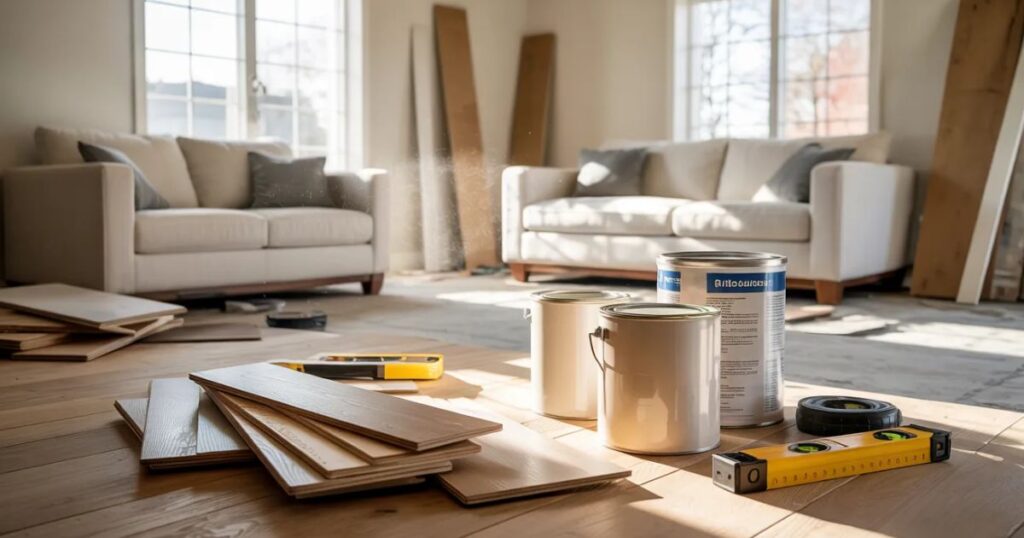
Most homeowners don’t have a bottomless renovation budget. Usually, you are working with a specific number, often a tight one, and a long list of things you desperately want to change. The real challenge isn’t finding inspiration; Pinterest and Instagram handle that. The real hurdle is figuring out how to make the money go further without ending up with a half-finished project or a space that still doesn’t feel right.
If you are looking for practical home renovation tips that actually work for budget-conscious owners, you are in the right place. We are skipping the overpriced contractors for every minor step and the trendy materials you’ll regret in three years. This is real advice on planning your renovation budget, upgrading your living spaces, and choosing the right flooring so you get the most value out of every dollar spent.
What Is a Realistic Home Renovation Budget?
Before you touch a single wall or buy a gallon of paint, you need a number you can actually stick to. Most homeowners underestimate costs, not because they are careless, but because renovation expenses have a way of growing once the work starts.
The 20% Contingency Rule
A good rule of thumb is to set aside 15% to 20% of your total budget as a contingency fund. If you are planning to spend $10,000, hold $1,500 to $2,000 back for surprises. Old subfloors, outdated wiring, and hidden water damage show up at the worst times. Having that cushion keeps the project moving instead of stalling while you wait for your next paycheck.
The 30% Benchmark
Another helpful benchmark is the 30 percent rule. Generally, the total money you put into renovating your home shouldn’t exceed 30% of your property’s current market value. This protects you from over-improving for your street, which rarely pays off when it is time to sell.
Prioritizing Your Project List
Once you have your overall number, split the project into three distinct groups:
- Must-haves: Changes that directly affect how you use the space. This includes replacing damaged flooring, fixing a drafty room, or improving lighting that gives you headaches.
- The Wish List: Things you want but can delay or scale back if costs run high. Think built-in bookcases, new window treatments, or upgraded cabinet hardware.
- Future Projects: Improvements that do not belong in this current renovation cycle.
This approach keeps scope creep under control, which is the single biggest reason renovation budgets blow up.
Getting Multiple Quotes and Shopping Smarter
If any part of your renovation involves hired labor, such as flooring installation, drywall repair, or professional painting, get at least three quotes. Labor costs vary dramatically between contractors, sometimes by hundreds of dollars for the exact same scope of work. Getting multiple bids gives you a realistic price floor and real leverage when negotiating.
Timing Your Purchases
For materials, timing matters more than you would think. Large hardware stores run seasonal sales, and end-of-line flooring inventory often goes at a significant discount. Buying materials during a sale and storing them in your garage until you are ready is a straightforward way to shave 15% to 25% off your material costs.
Don’t ignore warehouse clubs, building material liquidators, and local Habitat for Humanity ReStores. The selection changes constantly, but the savings on flooring, paint, tile, and light fixtures can be massive if you are willing to hunt.
Living Room Renovation: High Impact for Less
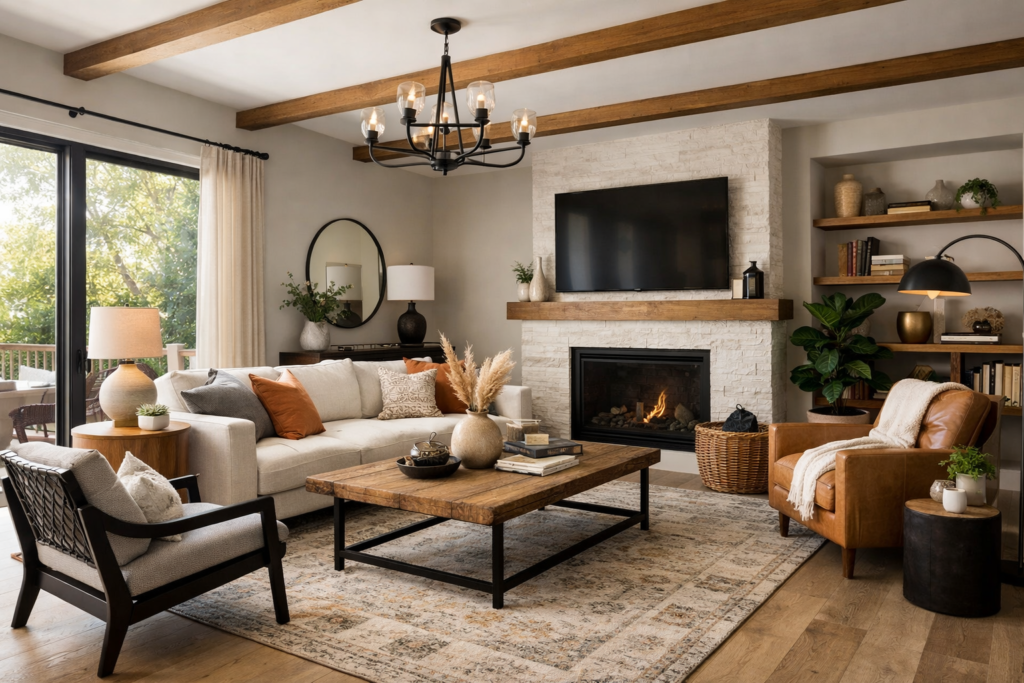
The living room is where your renovation dollars do the most visible work. It is the space guests see first and where your family spends the most time. Here is where to focus your money for the biggest return.
Paint: The $150 Transformation
A gallon of quality interior paint runs $35 to $60. For most living rooms, you will need two to three gallons. That is a $70 to $180 project that can completely change how a room feels, and it is achievable in a weekend with no prior experience.
- Color Temperature: Warm whites and soft neutrals work in almost any living space because they reflect light without feeling sterile.
- The Accent Wall: A darker accent wall on a single wall behind a sofa or fireplace adds depth without the commitment or cost of painting the entire room.
- Mistint Deals: Many hardware stores sell mistint paint, which are gallons mixed incorrectly and returned, at steep discounts. If you find something close to your vision, it is a huge win.
Lighting Upgrades That Cost Less Than You Think
Builder-grade light fixtures are a dead giveaway that a room hasn’t been touched in decades. Swapping them out is one of the easiest DIY upgrades you can make.
- Multitasking Fixtures: A ceiling fan with an integrated light kit replaces two functions at once and costs $80 to $200.
- Layered Lighting: A new pendant light or wall sconces add a designer look. If the wiring is already in place, you don’t even need an electrician.
- Bulb Temperature: Simply switching from cool white (5000K) to warm white (2700K to 3000K) bulbs costs almost nothing and immediately makes the space feel more high-end and inviting.
Flooring on a Budget: What to Buy and What to Skip
Flooring is one of the biggest expenses in any living room renovation. It is also where the right choice makes the biggest difference in the final look.
Luxury Vinyl Plank (LVP): The Market Leader
LVP is the most practical choice for budget renovators right now. It looks convincingly like real hardwood, resists water, and installs as a floating floor. This means no glue, no nails, and no professional installation required for a reasonably handy homeowner.
- Cost: Material runs $2 to $5 per square foot for a mid-range option. For a 400-square-foot living room, that is roughly $800 to $1,200.
- The Wear Layer: This is crucial. For living rooms, look for a 12 mil wear layer or higher. A 20 mil layer is the most durable and is worth the modest price increase if you have kids or large pets.
Laminate: Classic Look, Honest Price
Modern laminate realistically mimics the look and texture of hardwood. It is durable against scratches and runs $1 to $3 per square foot. The only real limitation is moisture; keep it away from areas with humidity issues or potential leaks.
Refinishing Hardwood: The Jackpot Option
Before buying new flooring, lift a corner of your existing carpet. Older homes frequently have hardwood floors hidden underneath. Refinishing existing hardwood costs $3 to $8 per square foot, which is often cheaper than buying high-end new material and results in a much more premium look.
The Master Sequence: Doing Things in Order

Doing things in the wrong order is the fastest way to waste money. Follow this sequence to avoid rework:
- Structural Repairs: Complete any subfloor or drywall repairs first.
- Paint Early: Paint walls and ceilings before the flooring goes in. It is much easier to paint when you don’t have to worry about ruining a brand-new floor.
- Install Flooring: Once the messy painting is done, lay your LVP or laminate.
- Trim and Molding: Install baseboards last. They cover the expansion gaps at the floor edge and hide any imperfect cuts.
- Fixtures and Furniture: Swap your lights, move your furniture back in, and add your finishing touches like rugs and curtains.
Final Thought
The best home renovations aren’t the most expensive ones. They are the ones planned carefully, executed in the right order, and focused on changes that genuinely improve how you live in the space. A well-chosen floor, a fresh coat of paint, and thoughtful lighting upgrades cost far less than most people assume, but the results look like a million bucks.
Start with one room. Build a real budget. Make smart material choices. The results will take care of themselves.


1 thought on “Home Renovation Tips and Tricks That Save Money Without Sacrificing Results”