
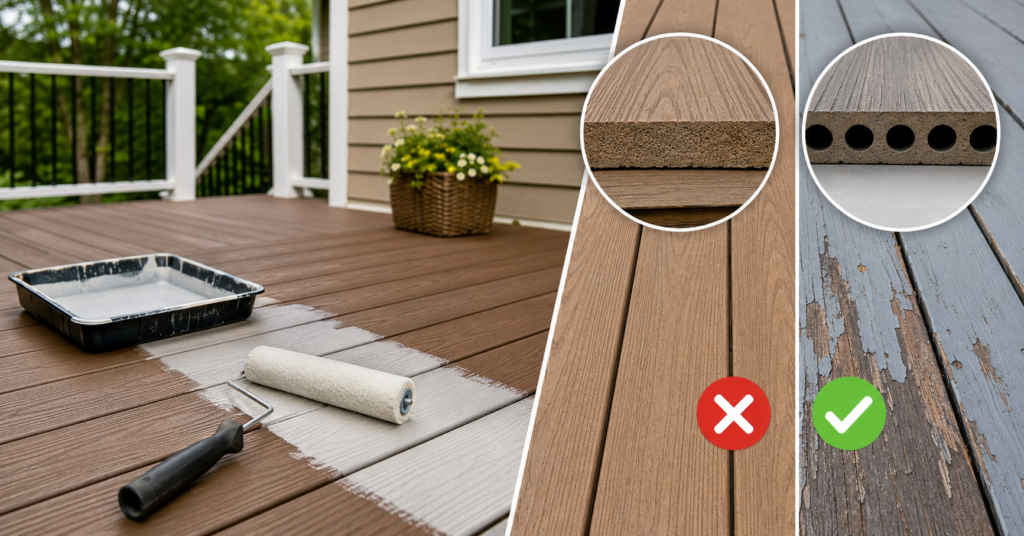
Quick Answer: It depends entirely on when your Trex deck was installed. Pre-2010 uncapped Trex boards can be painted after proper cleaning, sanding, and priming with exterior latex acrylic paint. Post-2010 capped Trex boards have a protective shell that resists paint adhesion, traps moisture, and painting them voids your warranty. For most homeowners with modern Trex, deep cleaning or board replacement beats painting every time.
Can you paint Trex decking? The answer depends entirely on when your deck was installed. You look out at your Trex deck, and something feels off. Maybe the color has faded. Maybe it no longer matches your new siding or patio furniture. Maybe there are a few boards with staining that cleaning has never fully removed. And now you are standing in the paint aisle, wondering if a couple of gallons of exterior paint could solve the whole problem in a weekend.
Here is what most paint aisle decisions do not tell you: Trex is not wood, and treating it like wood is how a $500 weekend project turns into a $2,000 repair job. The answer to whether you can paint Trex decking is not a simple yes or no. It is a question that depends on the age of your boards, what generation of Trex product you have, and whether you are willing to accept the long-term maintenance commitment that painting any composite surface creates.
This guide gives you the complete picture, including the one date that determines everything, exactly what happens when you paint the wrong boards, and what actually works better than paint for most Trex decks.
Can You Paint Trex Decking? Start by Identifying Your Board Type
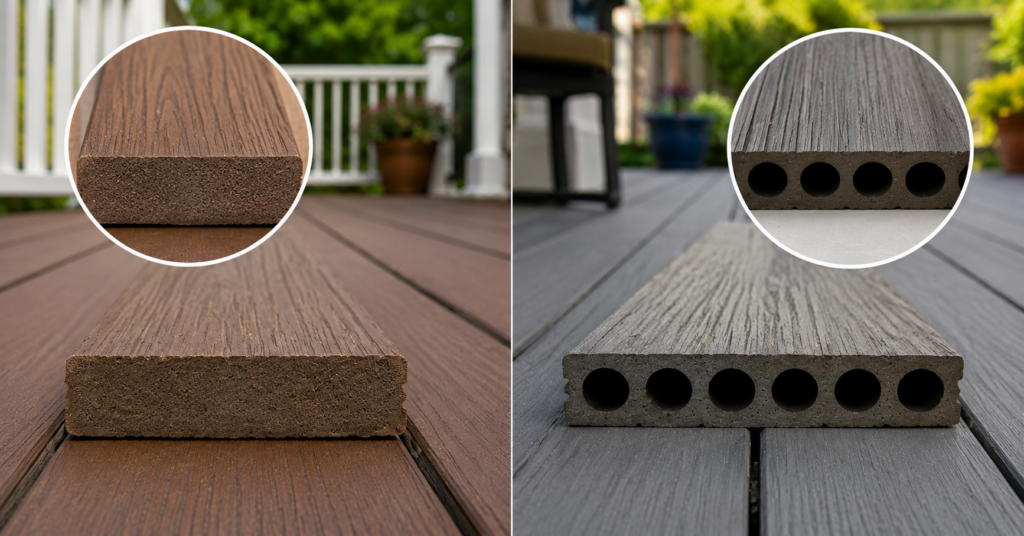
Before anything else, this is the question that determines your entire decision. Trex has gone through several manufacturing generations, and they behave completely differently when it comes to paint adhesion.
Pre-2010 Uncapped Trex Boards
These older boards were manufactured without a protective outer shell. The surface is more porous and contains exposed wood fibers that allow paint and stain to penetrate and bond more effectively. If your Trex deck was installed before 2010 and the boards have been fading for at least 12 weeks, painting is a viable option with the right preparation and products.
Fading for 12 weeks is not arbitrary. Trex specifies this waiting period because freshly installed older boards have manufacturing residue on the surface that interferes with adhesion. Weather exposure breaks down this residue and opens up the surface for better bonding.
Post-2010 Capped Trex Boards
In 2010, Trex introduced high-performance capped composite decking across its product lines. Trex stopped manufacturing uncapped boards entirely by 2014. If your deck was installed after 2010, it almost certainly has a protective PVC-like cap on the surface.
This cap is the reason Trex became a genuinely low-maintenance product. It is engineered to resist fading, moisture, staining, and wear without any additional treatment. That same resistance is exactly what makes paint fail on these boards. Paint cannot penetrate the cap surface to bond properly. It sits on top, and within one to two seasons, it begins to peel, bubble, and flake in ways that look significantly worse than the faded deck you started with.
Painting post-2010 capped Trex also voids the manufacturer’s warranty. Trex tests and guarantees performance on boards without any coatings applied. The moment you alter the surface, the warranty does not cover any resulting damage.
To identify which type you have, look at a cross-section of any board at the cut end. Uncapped boards show a consistent composite color all the way through. Capped boards display a distinct outer shell layer that is visually different from the core material.
Can You Paint Trex Decking Without Damaging It?
This section exists because the internet has plenty of articles that say painting capped Trex is possible with the right preparation. It is technically true. It is also genuinely not worth doing for most homeowners.
Here is what actually happens after you paint modern capped Trex boards:
Paint sits on the surface rather than bonding into it, because the cap is engineered to resist exactly this kind of penetration. Even with aggressive sanding and a bonding primer, the mechanical grip on the surface is weaker than on a porous material.
Within six to eighteen months, depending on your climate and how much direct sun the deck receives, the paint begins to peel at the edges of boards, at seams, and in high-traffic areas. Freeze-thaw cycles in northern states accelerate this dramatically. The paint lifts and chips rather than wearing gradually, which means your deck looks worse than the faded boards you started with.
Once you have painted capped Trex boards, you cannot simply remove the paint and return to the factory surface. You are now committed to repainting on a cycle similar to a wood deck, every two to four years, depending on conditions. The entire value proposition of choosing composite over wood, which was low maintenance, has been eliminated.
The one exception where painting capped Trex sometimes makes sense is on very low-traffic sections like under built-in seating or permanent patio furniture, where UV exposure and foot traffic are both minimal. In these specific areas, a careful application can hold longer because the surface never has to withstand real use.
Step by Step: How to Paint Uncapped Pre-2010 Trex Boards Correctly
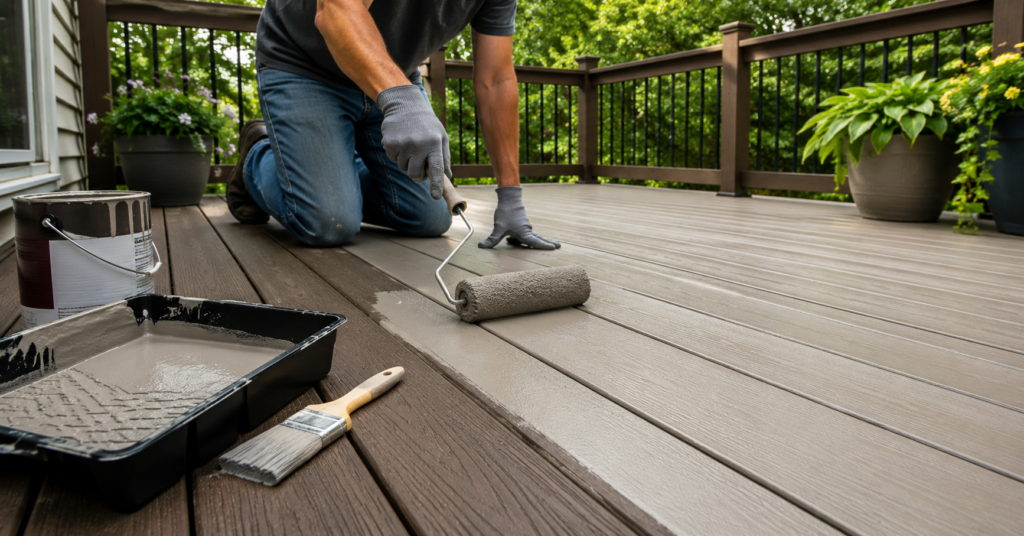
If you have confirmed you have uncapped pre-2010 boards and they have been fading for at least 12 weeks, here is the correct process from preparation through topcoat.
Step 1: Deep Clean the Entire Deck Surface
This step cannot be rushed or skipped. Any dirt, mildew, algae, or surface residue left on the boards will prevent adhesion and cause premature failure.
Use a composite deck cleaner specifically formulated for the material, not a general purpose wood cleaner. Mix and apply according to the product directions, scrub with a stiff bristle brush, and allow it to dwell on the surface for the recommended time.
Rinse with a low pressure garden hose or a pressure washer set below 1500 PSI with a fan tip held at least 8 inches from the surface. High pressure damages composite surface fibers and creates an uneven texture that will be visible under paint.
Allow the deck to dry completely for at least 48 hours before proceeding. Moisture trapped beneath primer or paint is the single most common cause of premature failure.
Step 2: Lightly sand the Surface
Once fully dry, sand the entire deck surface with 80 to 100 grit sandpaper. This scuffs the composite surface and creates mechanical grip for the primer to bond into. Do not skip this step even on older uncapped boards.
Vacuum all sanding dust thoroughly and wipe down with a tack cloth before applying primer.
Step 3: Apply a High-Quality Bonding Primer
Use an adhesion primer specifically formulated for composite, plastic, or difficult surfaces. Standard wood primers do not provide sufficient bonding on composite materials.
Apply in thin, even coats and allow full drying time between coats per the manufacturer’s specification. Do not rush the primer stage. It is the foundation that determines whether everything above it holds.
Step 4: Apply Exterior Latex Acrylic Paint in Thin Coats
Exterior latex acrylic paint is the correct choice for composite decking. It remains flexible as the boards expand and contract with temperature changes, which reduces cracking and peeling. Oil-based paints are rigid and crack as composite boards move, making them a poor choice for this application.
Apply in thin, even coats using a brush, roller, or sprayer. Thin coats bond better and last longer than thick ones. Allow each coat to dry fully before applying the next.
Most composite deck paint jobs require two to three coats for full coverage and adequate durability. A third coat significantly improves longevity, particularly on south-facing decks with high UV exposure.
Choose a day with mild, dry weather for application. Avoid temperatures below 50 degrees Fahrenheit or above 90 degrees, and do not paint if rain is forecast within 24 hours.
Step 5: Seal and Maintain Annually
Once painted, your composite deck requires annual inspection and maintenance similar to a painted wood deck. Check for any areas where paint has lifted, cracked, or peeled, and address them with spot priming and repainting before they expand.
Plan for a full repaint every three to five years, depending on sun exposure and climate. This maintenance schedule is the trade-off for choosing paint over the alternatives discussed below.
What Paint to Use If You Can Paint Trex Decking
Not all exterior paints perform equally on composite surfaces. Here is what to look for:
Type: Exterior latex acrylic paint rated for deck and floor surfaces. Look specifically for products described as deck paint or porch and floor enamel, which are formulated for horizontal surfaces that take foot traffic.
Finish: Semi-gloss or satin. Matte finishes show dirt and scuffs more readily on a horizontal deck surface and are harder to clean.
UV resistance: Specifically labeled as UV-resistant or fade-resistant. South-facing and unshaded decks receive intense UV exposure that degrades standard exterior paint faster than on vertical wall surfaces.
Flexibility: Composite boards expand and contract more than wood with temperature changes. Flexible latex formulations accommodate this movement. Rigid paints crack along the expansion lines.
If you decide to hire a professional instead of painting the deck yourself, Angi estimates that deck painting typically costs between $2 and $5 per square foot, depending on the deck’s size, condition, local labor rates, and preparation work required.
For most homeowners with modern capped Trex decking, however, painting is not the best long-term solution. Consider these alternatives before buying primer and paint.
Can You Paint Trex Decking, or Should You Choose These Alternatives?
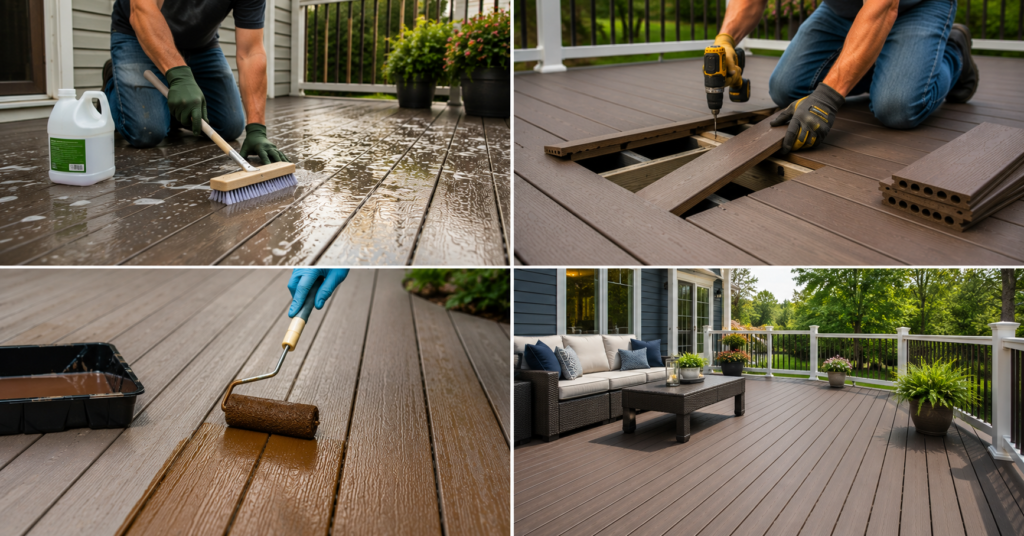
For the majority of US homeowners with post-2010 capped Trex, these alternatives deliver better results than painting at lower long-term cost and effort.
Deep Cleaning First
Before considering any surface treatment, try a proper deep clean. Composite deck cleaners are formulated to remove the oxidation, mold, mildew, and environmental buildup that make a deck look faded and dull. Many decks that look like they need repainting or replacement simply need a thorough cleaning that homeowners have never done properly.
Use a dedicated composite deck brightener after cleaning to restore the surface’s original luster. The combination of cleaner and brightener frequently restores older capped Trex to near-original appearance without any paint or coating.
Replace Individual Boards
If the problem is limited to a few badly faded, stained, or damaged boards, replacing those specific boards is often cheaper and more effective than painting the entire deck. Trex sells replacement boards in its current color range, and while the new boards may not perfectly match weathered existing boards initially, they will settle to a consistent appearance within one to two seasons of weathering.
This approach preserves the low-maintenance nature of the composite deck and avoids the painting maintenance cycle entirely.
Composite Deck Stain for Older Uncapped Boards
For pre-2010 uncapped boards where you want a color change or refresh without the full paint commitment, a composite deck stain is often a better choice than paint. Stains penetrate slightly deeper into porous composite surfaces than paint sits on top, and they tend to wear more gradually rather than peeling in sheets.
Use a stain with UV and mildew inhibitors specifically formulated for composite decking. Apply a stain-blocking primer first and follow the same preparation process described above for painting.
Full Board Replacement
For a deck with widespread fading, warping, or aesthetic issues that cleaning cannot address, full board replacement is worth the investment. Modern Trex products in 2026 are significantly more fade-resistant than any boards installed before 2014, with warranties of 25 to 50 years depending on the product line. A full replacement restores the low-maintenance promise that made composite decking attractive in the first place.
Trex materials cost $5 to $15 per square foot, depending on the product line, with full installation running $20 to $62 per square foot, including labor and substructure. For a 12-by-16-foot deck, total replacement costs range from $8,650 to $13,450.
For the latest maintenance recommendations and warranty information, refer to Trex’s official Care & Cleaning Guide, which explains the manufacturer’s recommendations for maintaining composite decking.
Common Mistakes That Cause Painted Trex to Fail
Even homeowners who correctly identify their board type and follow the preparation steps often make one of these errors that undermines the final result.
Skipping the full dry time after cleaning. Moisture trapped under primer or paint is the most common cause of early failure. The deck needs 48 hours of full dry time after cleaning, longer in humid climates or shaded areas where boards hold moisture longer.
Using the wrong primer. Standard wood or masonry primer does not provide adequate adhesion on composite surfaces. Only use primers specifically formulated for composite, plastic, or difficult surfaces.
Applying thick coats. Thick coats are a leading cause of peeling on composite surfaces. They dry unevenly, with the top surface drying before the material below, creating internal stress that cracks and lifts. Always apply thin, even coats.
Painting in poor conditions. Temperatures below 50 degrees or above 90 degrees, high humidity, and rain within 24 hours of application all compromise adhesion and lead to premature failure.
Not checking the board generation first. This is the single most expensive mistake. Painting post-2010 capped boards without understanding the limitations commits you to a maintenance cycle and removes your warranty coverage.
If paint has already peeled on your composite boards and you are dealing with the aftermath, the guide on how to fix peeling paint covers the prep and repair process for peeling surfaces in detail, including how to address the surface before any recoating.
Frequently Asked Questions
Q: Can you paint modern Trex decking made after 2014?
A: Modern capped Trex boards made after 2014 are not designed to be painted. The protective outer shell resists paint adhesion, and painting voids the manufacturer’s warranty. Paint on capped Trex boards typically peels within one to two seasons. For modern boards, deep cleaning with a composite deck cleaner and brightener is the recommended approach for refreshing appearance.
Q: What happens if you paint capped Trex decking?
A: Paint applied to capped Trex boards sits on the surface rather than bonding properly. Within six to eighteen months, depending on climate and sun exposure, it begins to peel, chip, and bubble. Freeze-thaw cycles accelerate this in northern states. Once you have painted capped boards, you cannot return to the factory surface and are committed to a regular repainting cycle.
Q: Does painting Trex void the warranty?
A: Yes. Trex tests and guarantees all products without any coatings, stains, or paints applied. Altering the surface with any coating voids the manufacturer’s warranty for both early-generation and modern capped products. This is particularly significant for modern boards that carry warranties of 25 to 50 years.
Q: Can You Paint Trex Decking with Exterior Latex Paint?
A: Exterior latex acrylic paint specifically rated for deck and floor surfaces performs best on uncapped pre-2010 Trex boards. Look for products with UV resistance and flexibility ratings that allow the paint to expand and contract with the composite boards. Semi-gloss or satin finishes are more practical than matte on horizontal deck surfaces. Avoid oil-based paints, which are rigid and crack as composite boards move.
Q: How long does painted Trex decking last before repainting?
A: On properly prepared, uncapped boards with quality latex acrylic paint, a painted Trex deck typically lasts three to five years before requiring a full repaint. High-UV south-facing decks and climates with significant freeze-thaw cycles reduce this lifespan. High-traffic areas may need spot repainting annually, even on a well-executed original paint job.
Q: Is there a better alternative to painting faded Trex decking?
A: For most homeowners with modern capped Trex, yes. A deep clean using a dedicated composite deck cleaner, followed by a deck brightener, restores the appearance significantly on many decks. For isolated damaged or heavily faded boards, replacing individual boards is more cost-effective than painting the whole deck. For widespread aesthetic issues, full board replacement with modern Trex restores the low-maintenance value and comes with a long-term warranty.
For homeowners thinking about broader outdoor space improvements alongside deck decisions, the guide on DIY outdoor shower covers how to add outdoor functionality that complements a refreshed deck without a full renovation budget. And for broader renovation planning that helps prioritize where your money goes, the guide on home renovation tips and money-saving tricks covers how to sequence outdoor improvement decisions for maximum long-term value.
If you’re still asking, “Can you paint Trex decking?” remember that the answer depends on your deck’s age. Older uncapped Trex boards can be painted with proper preparation, while modern capped boards are best left unpainted to preserve their warranty and low-maintenance finish.
Not sure whether your Trex boards are capped or uncapped? Drop your deck installation year and the Trex product line, if you know it, in the comments,s and we will help you figure out your options.

Samreen Khadim Hussain is a home improvement writer and content creator at Domelite Home. She specializes in making home renovation, interior design, and bathroom safety accessible to everyday US homeowners, turning technical subjects into clear, actionable advice. Her work is rooted in research, real-world practicality, and a genuine belief that a better home is within everyone’s reach.
Great content! Keep up the good work!
Thank you for your thoughtful feedback. I’m glad you found the article helpful. I truly appreciate your support and encouragement.
Thank you for your kind words! We appreciate your support and are glad you found the content helpful. Stay tuned for more home improvement and interior design insights.