
Quick Answer
Towels smell after washing because bacteria and mildew survive the wash cycle, not because they picked up new odor after the fact. Cold water that doesn’t get hot enough to kill germs, too much detergent or fabric softener left behind in the fibers, and towels sitting damp too long are the usual culprits. The fix is washing in hot water with the right amount of detergent, skipping fabric softener, and drying towels fully and promptly. A dirty washing machine is often part of the problem too, so the towels aren’t always the ones at fault.
Why Do Towels Smell After Washing?
Here’s the thing that catches most people off guard: if your towels smell musty right out of the machine, the towels usually aren’t the problem. The wash cycle is. Bacteria and mildew both love warm, damp environments, and a load of wet towels sitting in a machine is about as close to ideal conditions as it gets for both of them.
It’s a genuinely frustrating situation, because it feels like you did everything right. You ran a full cycle, used detergent, maybe even added extra for good measure, and the towels still come out smelling like they skipped the wash entirely.
A few things are usually happening at once, and they tend to stack on top of each other. Cold water rinses the surface clean but doesn’t get hot enough to actually kill the bacteria responsible for that musty smell. Detergent and fabric softener residue build up in the fibers wash after wash, and that leftover residue doesn’t just sit there harmlessly, it actively feeds the bacteria instead of washing it away. Then there’s timing: if towels sit wet, whether that’s tossed in a damp pile in the hamper or left in a closed washer after the cycle finishes, mildew gets a head start before you’ve even opened the lid.
Towels are also just more prone to this than most other laundry. They’re thick, absorbent by design, and spend far more time in a damp state than a t-shirt or a bedsheet ever does. That’s not a flaw in the towel, it’s the whole point of the fabric, but it does mean towels need a slightly different approach than the rest of your laundry.
None of this means your towels are ruined or that you need to replace them. It means the routine needs a few adjustments, and most of those adjustments cost nothing beyond paying a bit more attention to water temperature and timing. If the smell has already set in and feels more like mildew than a fresh wash gone wrong, our guide on how to remove mildew smell from towels walks through a more targeted treatment before you try anything below.
9 Reasons Your Towels Still Smell After Washing
Dirty Washing Machine
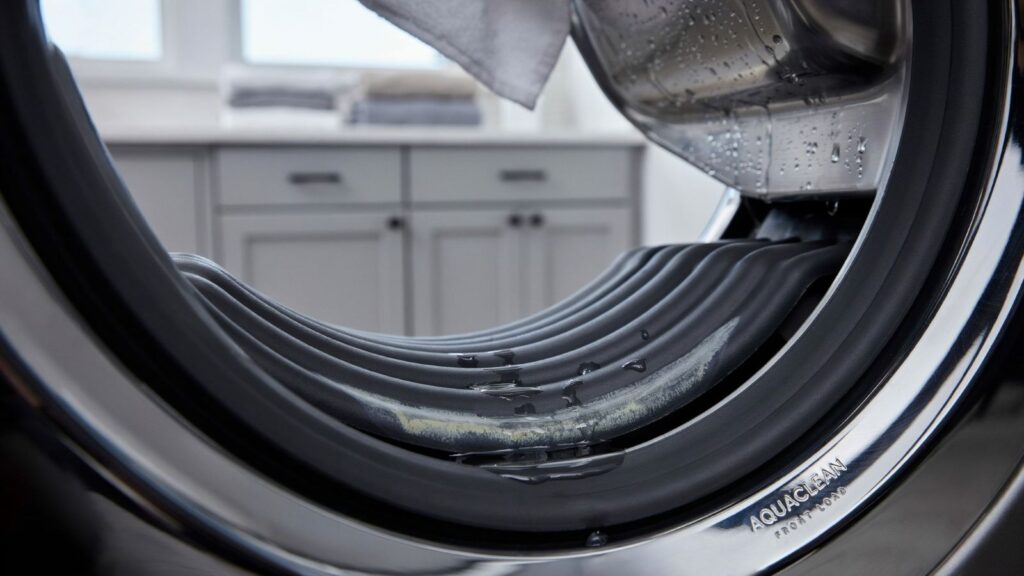
If the machine itself has mildew or bacterial residue built up in the drum, gasket, or detergent drawer, every load that goes through it picks up some of that smell, no matter how clean the towels were going in. This shows up especially often with front-load machines, since the rubber door seal traps moisture far longer than a top-load drum does. In a lot of cases, this is actually where the odor starts, not the towels themselves.
Too Much Detergent
More detergent doesn’t translate to cleaner towels, even though it feels like it should. Excess detergent doesn’t fully rinse out of the fabric, and whatever’s left behind turns into exactly the kind of environment bacteria thrive in. Most people eyeball the detergent cap instead of measuring it carefully, and it’s an easy habit to fix once you realize your towels are smelling off despite going through a full cycle.
Fabric Softener Buildup
Fabric softener makes towels feel softer by coating the fibers, but that same coating gets in the way of absorbency and how thoroughly the towels rinse clean. Over time, the buildup traps moisture and odor instead of letting the wash cycle carry it away. It’s part of why a towel can feel perfectly soft to the touch and still smell musty the moment it gets damp again.
Cold Water Washes
Cold water is great for saving energy and keeping colors from fading, but it generally isn’t hot enough to kill the bacteria causing that musty smell. Towels are one of the few things in your laundry routine where hot water genuinely earns its place, precisely because they’re thick, absorbent, and spend so much time damp compared to everything else in the hamper.
Wet Towels Sitting Too Long
A towel left in a damp pile in the hamper, or forgotten in a closed washer after the cycle ends, is already starting to mildew before it’s been properly washed or dried. Mildew doesn’t need much time at all, a few hours in a warm, enclosed, damp space is often more than enough for it to get going.
Overloaded Washer
Cramming too many towels into a single load sounds efficient, but it means they can’t move freely or rinse properly. Detergent and soil end up trapped in the folds instead of rinsing away, leaving residue behind even though the cycle technically ran to completion.
Poor Drying
Towels that come out of the dryer slightly damp, or that air-dry slowly in a humid bathroom, hand mildew exactly the conditions it needs, even after an otherwise proper wash. This is one of the more common reasons a towel smells perfectly fine right out of the dryer but musty again within a day or two.
Old Towels
Towels naturally lose some of their fiber structure after years of use, and that breakdown creates more surface area for bacteria to grip onto. It’s why older towels tend to smell faster than newer ones, even when you’re following the exact same washing routine. Thinning fibers also hold onto detergent and softener residue more stubbornly than tighter-woven, newer cotton does.
Humid Environment
A bathroom or laundry room with poor airflow keeps everything around it a little damp, towels included, which makes it that much harder for them to fully dry between uses. If you live somewhere genuinely humid, this can undercut an otherwise solid laundry routine almost entirely, no matter how carefully you’re washing and drying.
How to Remove the Smell From Towels
Once towels already smell musty, a regular wash usually isn’t enough to fix it on its own. These methods go after the bacteria and residue directly, rather than just adding more fragrance on top of the problem.
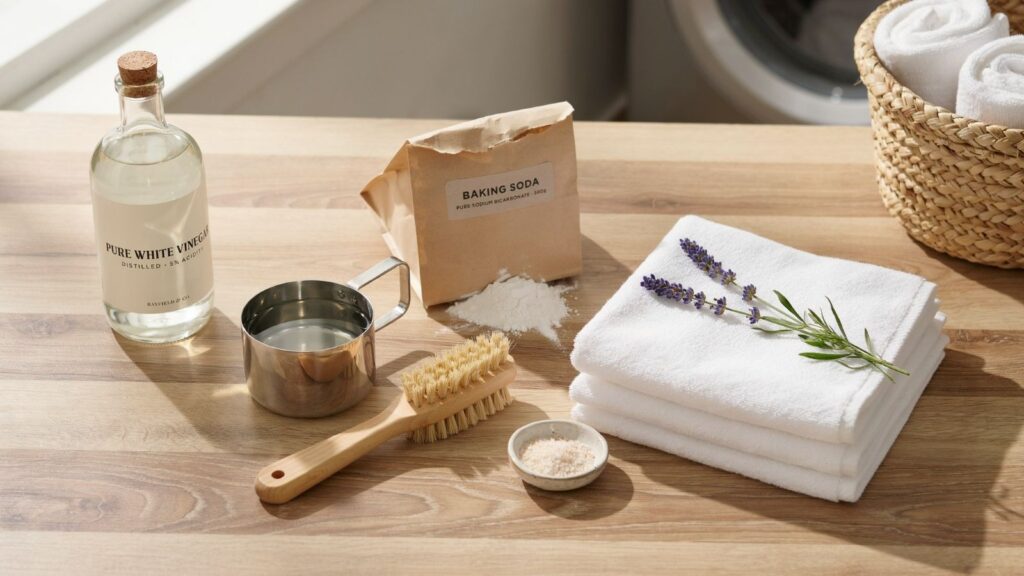
White vinegar is probably the most reliable starting point. Add a cup to the wash cycle with no detergent in that load, and it does a genuinely good job breaking down bacteria and residue buildup. Baking soda works well too, gentler than vinegar and fine to use more regularly, about half a cup added to the wash cycle. For towels that don’t respond to vinegar alone, oxygen bleach is a solid next step, it’s safe for most colors when you follow the product instructions, and it deep-cleans in a way a standard detergent cycle can’t match. Borax is worth reaching for if you’re dealing with towels that are particularly far gone, added per the package directions for extra-strength odor removal.
Water temperature still matters here too. Wash on the hottest setting your towels can handle, since heat is what actually kills the bacteria that cold water leaves behind. And once the wash is done, proper drying is what keeps the smell from just coming right back, full drying on high heat, or hanging in direct sun with good airflow if you line-dry.
One safety note worth taking seriously: never mix vinegar or oxygen bleach with chlorine bleach. That combination can create genuinely harmful fumes, so keep those treatments as separate loads rather than combining them in one cycle.
A method that tends to work well for towels that are genuinely musty is running two washes back to back. First, a hot cycle with just a cup of white vinegar and no detergent at all. Then a second hot cycle with your regular detergent, measured properly this time. The vinegar wash strips out the built-up residue and bacteria, so the second wash is actually cleaning the towels rather than working against leftover buildup.
Don’t Forget to Clean Your Washing Machine
If your towels keep smelling no matter what you change about how you wash them, it’s worth stepping back and looking at the machine itself, because it’s very likely part of the problem.
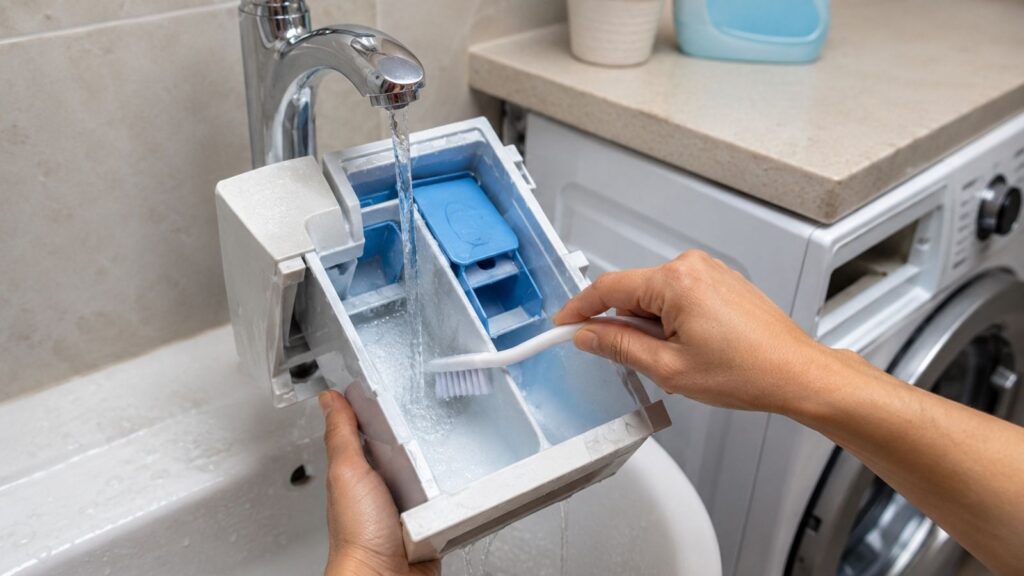
Start with the front-load gasket if you have one. Wipe down the rubber seal after every load, and get in the habit of leaving the door open between washes so it actually has a chance to dry out. This single spot is the most common source of washing machine odor, by a wide margin. The detergent drawer deserves the same attention, pull it out and rinse it monthly, since detergent and softener residue build up there fast and can quietly leach smell into every load that follows.
Running a cleaning cycle matters too, whether that’s your machine’s dedicated setting or a hot, empty cycle with a washing-machine cleaner or a cup of white vinegar. Aim for this monthly rather than treating it as a one-time fix. A machine that gets cleaned once and then ignored will build that smell right back up within a matter of weeks, which is exactly why so many people feel like they’ve “already tried cleaning the machine” and still have the problem.
Common Laundry Mistakes That Make Towels Smell Worse
Leaving wet towels in the washer after the cycle ends is probably the easiest mistake to fall into, especially on a busy day. Even an hour or two is enough time for mildew to start taking hold. Using fabric softener on towels at all is another one, it feels nice in the moment but works against absorbency and rinse quality over the long run, a trade-off most people don’t realize they’re making until the smell shows up.
Washing towels together with heavily soiled clothes causes problems too, since towels end up absorbing extra soil and bacteria from whatever else is in the load, gym clothes being a common offender. Drying on low heat to “protect the fabric” backfires more often than people expect, since lower heat frequently isn’t enough to fully dry thick towels all the way through, leaving damp spots in the folded corners even when the towel feels dry on the outside.
Storing towels while they’re still slightly damp creates a slow-motion mildew problem, and it doesn’t just affect the one towel that wasn’t quite dry, it can spread to everything folded around it. And reusing towels for several days without airing them out in between means bacteria never really gets a chance to die off, especially if the towel is hanging in a bathroom with poor ventilation to begin with.
How to Keep Towels Smelling Fresh
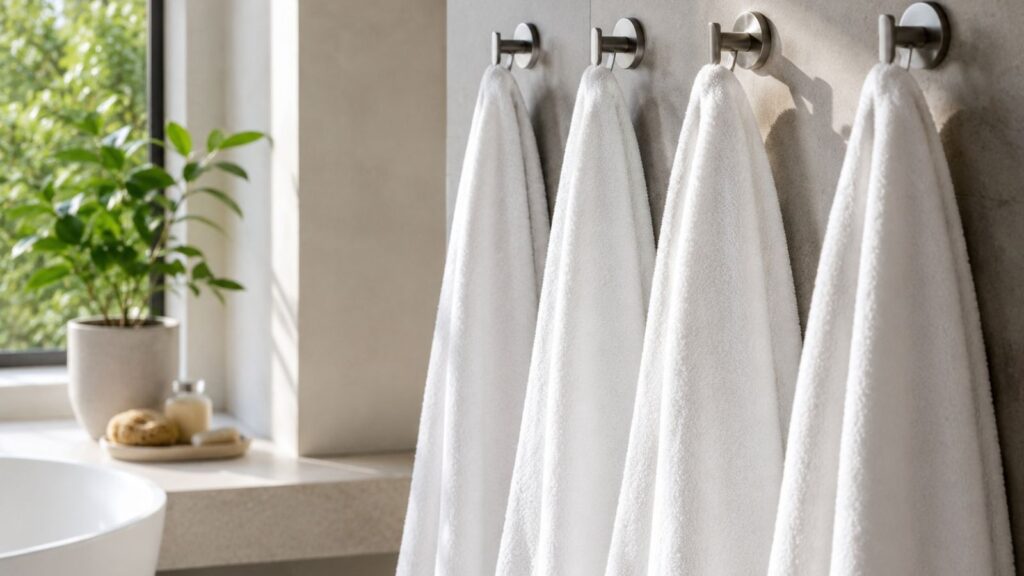
Wash towels on a regular schedule using hot water, rather than waiting until they visibly need it. Measure your detergent for the actual load size instead of eyeballing it, since more really isn’t better here. Skip fabric softener entirely, or if you like the softening effect, switch to wool dryer balls instead, they do a similar job without the residue problem.
Don’t overload the washer. Towels need room to move and rinse properly, and a packed drum works against everything else you’re doing right. Pull towels out of the washer promptly once the cycle ends, ideally within 15 to 20 minutes, and dry them fully on high heat, or hang them in direct sun with good airflow if you prefer line-drying.
Between washes, hang towels up to air out rather than leaving them balled up on a hook or the floor. Clean your washing machine monthly, gasket and detergent drawer included, and if a towel is more than a few years old and keeps smelling despite a solid routine, it might genuinely be time to replace it. If humidity in your bathroom is a recurring issue, a fan or a cracked window can make a real difference in how quickly towels actually dry between uses.
Frequently Asked Questions
Why do my towels smell like mildew even right after washing?
This almost always means bacteria and residue survived the wash cycle rather than being introduced fresh. Cold water, too much detergent, or a dirty washing machine are the usual suspects, and a hot-water vinegar wash is typically enough to reset the towels back to normal.
Is it normal for new towels to smell?
New towels sometimes carry a manufacturing residue smell that fades after a wash or two, and that’s a different thing entirely from a musty or mildew smell. If a brand-new towel smells musty rather than just chemical or “new fabric,” it probably picked up moisture somewhere during shipping or storage.
Can I use both vinegar and baking soda in the same wash?
You can, though it’s not really necessary. Both help with odor on their own, but running them as two separate treatments rather than combining them in the same water tends to give more consistent, reliable results.
How often should I deep clean my towels?
A monthly hot-water vinegar wash is a reasonable baseline for most households. If you live somewhere humid, or notice the smell coming back faster than that, it’s worth doing it more often.
Does fabric softener really cause towel odor?
Yes, though indirectly. It coats the fibers, which reduces absorbency and how thoroughly towels rinse clean, and that leftover residue is exactly what ends up feeding bacteria over time.
What temperature should I wash towels at?
Hot water, generally 130°F or higher, does the best job of actually killing the bacteria behind musty odors. Check your towel’s care label first, but towels are one of the few things in your laundry where hot water is usually the smarter default rather than the exception.
Can a dirty washing machine really cause towels to smell bad?
Yes, and it’s one of the most overlooked causes of the whole problem. If the drum, gasket, or detergent drawer has built-up residue or mildew, that smell transfers to everything that goes through it, regardless of how carefully the towels themselves were washed.
Should I throw away smelly towels or can they be saved?
Most musty towels can be saved with a proper hot-water and vinegar treatment. It’s only worth considering replacement if the smell sticks around after that treatment and the towels are also several years old, since fiber breakdown itself may be contributing at that point.
Why do towels smell worse in humid weather?
Humidity slows down drying time for both the towels and the inside of the washing machine, which gives bacteria and mildew more time to establish themselves before everything actually finishes drying out.
Is it bad to leave towels in the washer overnight?
Yes, and even a few hours can be enough to start the problem, let alone overnight. If you genuinely can’t get towels into the dryer right away, it’s better to just rewash them than to let them sit wet and hope for the best.
Final Thoughts
A musty towel smell almost always traces back to the same handful of causes: water that isn’t hot enough, too much detergent or softener left behind in the fibers, towels sitting damp longer than they should, or a washing machine that needs some attention of its own. None of that requires special products or a full towel replacement to fix.
Wash hot, measure your detergent instead of guessing, skip the fabric softener, and dry towels fully and promptly. Give your machine the same monthly attention you’re giving the towels, since it’s often doing more to cause the smell than people realize. This lines up with what laundry experts interviewed by The Spruce point to again and again, cold water, detergent buildup, and an overloaded machine are the repeat offenders, not anything unusual about your towels themselves. Once that routine is actually in place, the odor doesn’t come back, because you’ve dealt with what’s actually causing it instead of just masking it one wash at a time.

I started Domelite Home because I got tired of home improvement advice that was either too vague or written by people who had never actually picked up a drill. I’m Naik Zali Shah I’ve spent years obsessing over renovation projects, smart home setups, and interior design, and I built this site to share what actually works. No fluff, no filler. Just honest advice for homeowners who want to get things right the first time.