
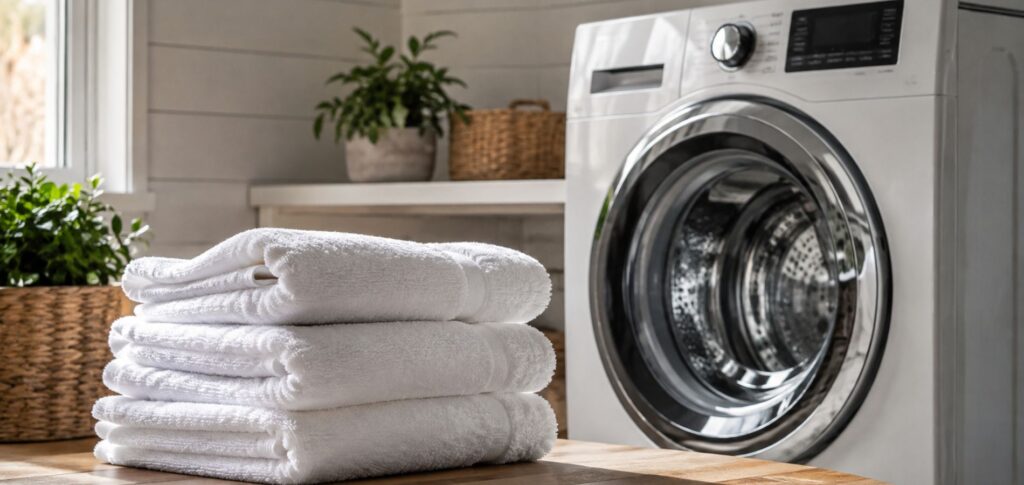
If you want to remove mildew smell from towels for good, you’ve probably already tried the obvious thing: just washing them again. You pull a towel out of the linen closet, one you washed two days ago, and there it is, that sour, damp smell that makes you reach for a different one. If you’ve stood in your bathroom sniffing towels one by one, hunting for a “clean enough” one, you already know this isn’t about dirt. The towel looks fine. It’s the smell that gives it away.
That musty odor is mildew, one of the most common laundry complaints we hear, right up there with sheets that never feel fresh. Most people fix the symptom without touching the cause, so it comes right back within a wash or two. We’ve tested these methods across cotton, microfiber, and bamboo towels, and this guide covers what actually works and how to stop rewashing the same towel five times a month.
Quick Answer
[Insert your TOC plugin block or Rank Math’s TOC block here, generated from the H2s below — this clears the “Use Table of Content” readability check.]
Wash mildew-smelling towels in the hottest water the fabric allows, with one cup of white vinegar and no detergent. Follow with a second cycle using regular detergent and half a cup of baking soda. Dry immediately and completely, in a hot dryer or direct sunlight, since trapped moisture is what let mildew grow in the first place.
If the smell persists after two washes, the problem usually isn’t the towels. It’s the washing machine.
Why Towels Get a Mildew Smell (Even When They Look Clean)
Mildew is a fungus that needs three things to grow: moisture, warmth, and something to feed on. A used bath towel checks all three boxes, especially if it’s thick, folded over itself, or sitting somewhere with poor airflow.
Here’s what usually causes it:
- The towel never fully dried between uses. This is the top cause by far. One hung on a hook in a steamy bathroom, or left balled up on the floor, can stay damp for hours, plenty of time for mildew spores to take hold.
- Detergent or fabric softener buildup. Residue coats the fibers, holds onto moisture, and feeds bacteria. Fabric softener is the bigger offender, since it’s built to leave a coating behind.
- Washing on cold water only. Cold water is gentler on colors, but it doesn’t break down oils and detergent film the way hot water does.
- An overloaded washer. Too many towels in one load means they can’t rinse or agitate properly, so soil and soap stay behind.
- A washing machine that’s mildewed itself. Front-loaders trap water in the rubber door gasket and detergent tray. That moisture sits between loads, grows its own mildew, and transfers onto every load, including towels that were clean going in. Regular upkeep here falls under general home maintenance.
- Storing towels before they’re fully dry. Folding one that’s still 90 percent dry and stacking it in a closed linen closet is close to mildew’s ideal habitat.
If towels smell musty again within a day or two of washing, check the machine before blaming the towels again. For background on how mold and mildew actually grow indoors, the EPA’s mold cleanup guide is a solid, science-backed reference. More on fixing your machine below.
What Actually Works: Our Go-To Method
After testing across a few towel sets over the years, the two-cycle vinegar-then-baking-soda method is the one we reach for first. Here’s why it holds up:
- Vinegar is acidic enough to kill most mildew and break down detergent film without being harsh on fabric.
- Baking soda neutralizes odor rather than masking it, and it’s gentle enough for nearly any towel.
- Running them as separate cycles, instead of combining them, gives each one full contact time with the fibers rather than cancelling each other out.
The habit that matters more than any product is drying towels fast right after washing. We’ve watched people do everything right in the wash, then undo it by leaving damp towels in the machine overnight. Mildew doesn’t care how clean the cycle was if the towel stays wet for six hours afterward.
If two cycles don’t clear the smell, don’t repeat the same wash a third time. Move on to borax or a stripping soak instead.
Method Comparison at a Glance
| Method | Best For | Time Required | Safe For |
| Vinegar wash | First attempt, mild-to-moderate odor | One wash cycle (45 to 60 min) | Nearly all towel types |
| Baking soda wash | Follow-up after vinegar, general freshness | One wash cycle | Nearly all towel types |
| Borax wash | Stubborn odor, detergent buildup | One wash cycle | Cotton, most synthetics (check label) |
| Chlorine bleach | Heavily mildewed white cotton towels | One wash cycle | White cotton only |
| Oxygen bleach | Colored or patterned towels with odor or stains | One wash cycle, or a 30 to 60 min soak first | Most colorfast fabrics |
| Towel stripping soak | Severe, recurring odor across a whole set | Two to four hour soak plus one wash cycle | Durable cotton (hard on fibers, use sparingly) |
| Sun or hot-dry | Every method above, as the finishing step | One to three hours | All towel types |
Step-by-Step: How to Remove Mildew Smell From Towels
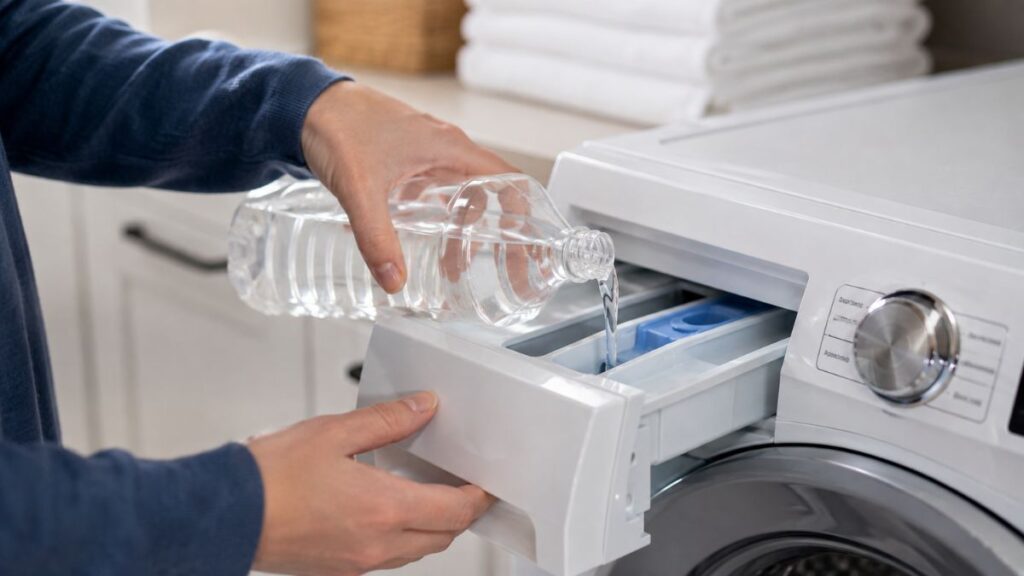
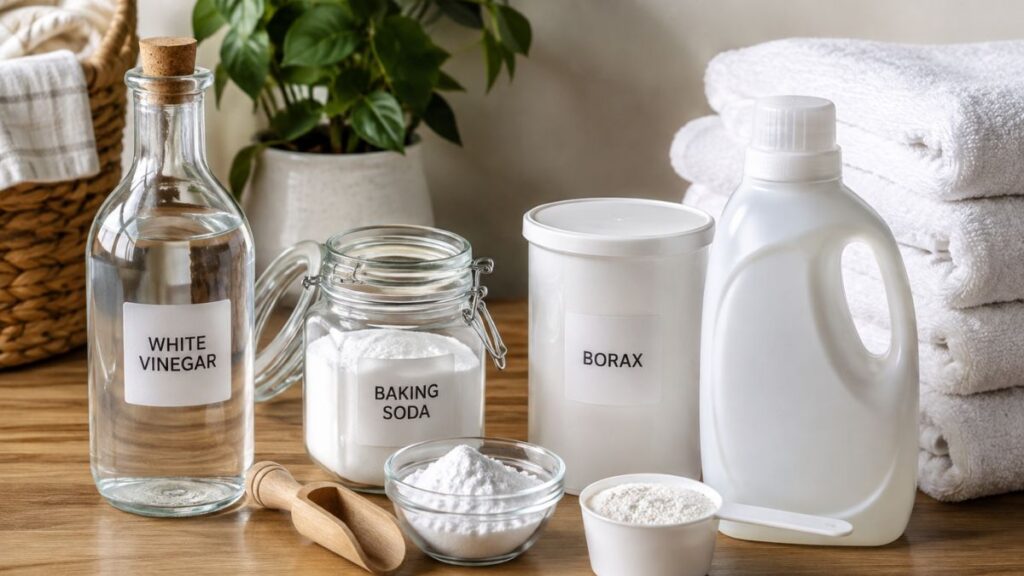
1. The vinegar wash. Load the towels with no detergent. Add one cup of white distilled vinegar to the drum, or into the fabric softener dispenser so it releases during the rinse. Wash on the hottest setting the label allows, then check the smell while the towels are still damp. If it’s gone, dry them right away; if not, move to step two.
Safety note: never add bleach to a vinegar wash. Mixing chlorine bleach with any acid can release chlorine gas, which is dangerous to breathe. Run them as separate cycles with a full rinse in between.
2. The baking soda follow-up. Run a second cycle with your normal detergent and half a cup of baking soda. Use hot water again if the fabric allows it, then dry immediately.
3. Borax for deeper buildup. Borax raises the pH of the wash water, helping break down ground-in detergent residue vinegar alone can’t always lift. Add one cup along with your regular detergent, wash on the hottest safe setting, and dry completely before storing.
Safety note: borax is a mineral cleaner, not a bleach. It won’t whiten fabric or remove stains; it’s specifically for breaking down residue and odor.
4. Chlorine bleach, white cotton towels only. For plain white cotton towels with a strong or recurring smell, bleach is the most direct fix. Wash on the hottest water the label allows with a heavy-duty detergent, add bleach per the bottle’s dosage for your load size, and dry immediately.
Safety note: use bleach in a ventilated space, never combine it with vinegar or ammonia-based products, and skip it on colored, patterned, or blended-fiber towels, since it will fade or weaken them.
5. Oxygen bleach for colored or patterned towels. Oxygen bleach, sometimes labeled color-safe, gets much of bleach’s power without the fading risk. Add it with your regular detergent per the label’s dosage. For heavily soiled towels, soak in warm water and oxygen bleach for 30 to 60 minutes first, then wash on the hottest water safe for the color and dry right away.
6. Towel stripping for severe, recurring cases. If two or three washes haven’t touched the smell, the towels likely have deep buildup regular washing can’t reach. Fill a tub with hot water and add a quarter cup of borax, a quarter cup of washing soda, and one scoop of powdered oxygen stain remover. Soak two to four hours, stirring occasionally, then wring out and run through a normal cycle with a little detergent before drying completely.
This works, but it’s tough on fibers, so save it for once every few months, and pair it with a gentle detergent afterward to help towels recover their softness.
7. Dry immediately and completely. This is where most of the real prevention happens. Sunlight works best, since UV exposure and airflow both fight mildew and towels dry faster outdoors. A hot, well-ventilated dryer cycle is the next best option, run until towels are fully dry, not just warm. Avoid draping towels over a shower rod in a closed bathroom or leaving them in a hamper, since both recreate the damp environment that caused the smell.
Does Towel Material Change the Method?
| Fabric | Water Temp | Bleach | Notes |
| Cotton | Hot (check label) | Chlorine (white only) or oxygen | Most durable, handles every method above |
| Microfiber | Warm | Oxygen only, avoid chlorine | Traps oils fast; skip fabric softener entirely |
| Bamboo or linen | Warm | Avoid bleach | Delicate; stick to vinegar and baking soda |
| Towels with embroidery or rubber backing | Gentle cycle | Follow label | Avoid stripping; it can loosen stitching or backing |
When the care label and this guide disagree, follow the label; it reflects testing specific to that towel’s fiber blend. For a general primer on reading those symbols, the American Cleaning Institute’s fabric care guide breaks down what each icon means. If you’re refreshing more than just towels, our bathroom remodel guides cover storage and layout choices that make it easier to keep towels dry between uses.
Washing Machine Mildew Smell: The Cause People Miss
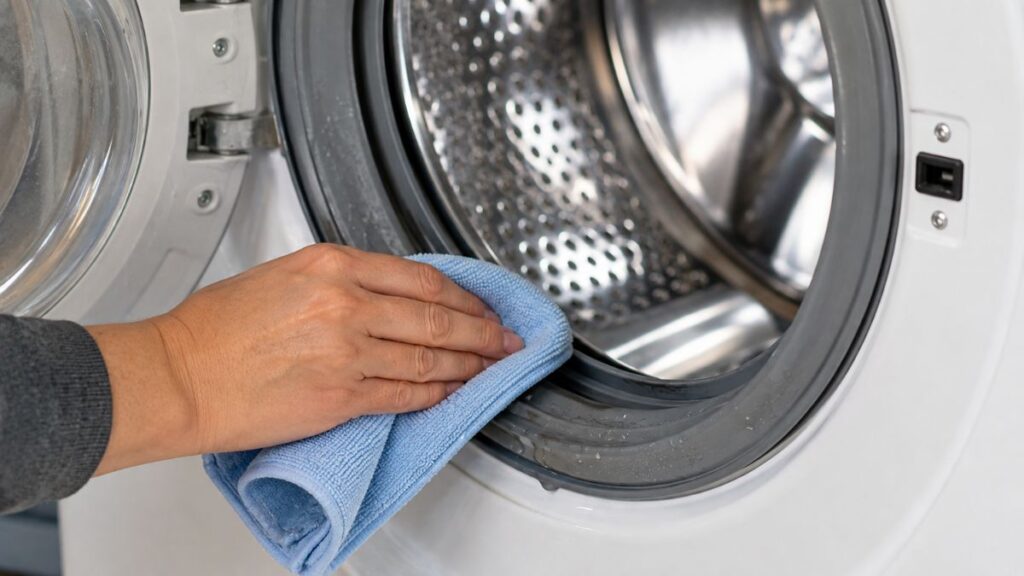
If you’ve rewashed the same towels two or three times and the smell keeps coming back, stop blaming the towels and check the machine.
Front-load washers are especially prone to this, since water collects in the door gasket and doesn’t fully drain. That trapped moisture grows its own mildew colony and passes a little onto every load.
To clean your machine, wipe down the door gasket, including inside the folds where water pools, and clean out the detergent and fabric softener drawer. Then run an empty hot-water cycle with a washing machine cleaning tablet, or two cups of white vinegar, to flush residue from the drum and pipes. Leave the door open between loads afterward so it can air dry.
Doing this monthly solves the towels smell like mildew after washing problem for a lot of households, with nothing else about the routine needing to change.
Common Mistakes That Make Mildew Smell Worse
- Leaving wet towels in the washer after the cycle ends. Even a couple of hours is enough for mildew to start again.
- Using fabric softener on towels, which traps moisture and reduces absorbency over time.
- Overloading the washer to save time, when towels need room to rinse fully.
- Storing towels before they’re completely dry, one of the most common causes we see.
- Mixing bleach with vinegar or ammonia-based cleaners. This can produce genuinely dangerous fumes, so keep them separate.
- Repeating the same wash instead of switching methods once vinegar alone hasn’t worked after two tries.
How to Prevent Mildew Smell Permanently
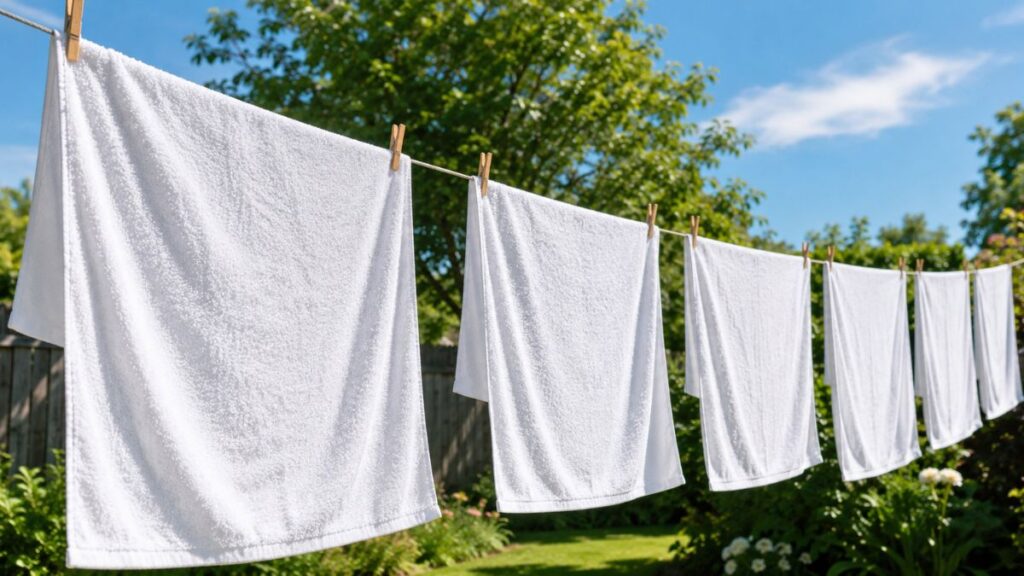
- Hang towels open and spread out right after use instead of bunching them on a hook.
- Wash every three to four uses instead of letting them sit in a hamper for a week.
- Skip fabric softener on towels altogether.
- Make sure towels are completely dry, not just cool to the touch, before folding and storing.
- Clean your washing machine monthly.
- Store spare towels in a ventilated linen closet rather than a sealed bin, part of the broader home improvement habits that keep moisture problems from starting in the first place.
- In humid climates, a small dehumidifier or fan in the bathroom helps cut ambient moisture.
When to Replace Your Towels Instead
Sometimes a towel has been through enough that washing isn’t worth it. Consider replacing towels if visible mold remains after washing with bleach or oxygen bleach, absorbency hasn’t returned even after stripping, the fabric feels thin or scratchy regardless of detergent, or the smell returns within a day even after the machine has been cleaned.
A well-made set, cared for properly, should last several years. If you’re replacing towels more than once a year because of odor, review your drying habits and machine maintenance before buying new ones.
Frequently Asked Questions
Why do my towels smell like mildew even right after washing? Usually it means detergent residue has built up in the fibers, or the machine itself has mildew growing in the door gasket or detergent tray. Try the vinegar wash and a machine-cleaning cycle together.
Can I use vinegar and baking soda in the same wash cycle? Better to run them separately. Combined, they can react with each other before either has had time to fully act on the fibers.
Is bleach or vinegar better for mildew smell? Bleach works faster and suits white cotton well. Vinegar is gentler, safe for colored towels, and effective for lighter or recurring odor. Use oxygen bleach instead of chlorine bleach on colored towels.
How often should towels be washed to prevent mildew smell? Every three to four uses is reasonable. In humid climates, or for households that shower daily, washing more often may help.
Why do my towels smell musty even though they look completely clean? Mildew odor comes from bacteria and fungal residue in the fibers, which isn’t always visible. A towel can look spotless and still hold the buildup that causes the smell.
Does fabric softener cause mildew smell in towels? It can contribute. Fabric softener coats fibers with residue that reduces absorbency and traps moisture, both of which favor mildew.
What’s the fastest way to make towels smell fresh again? A single hot-water vinegar wash followed by immediate, complete drying is the fastest fix for mild odor. For stronger smells, plan on two cycles rather than expecting a one-step solution.
The Bottom Line
Mildew smell in towels almost always comes down to trapped moisture feeding bacteria and fungal spores, not a dirty towel in the traditional sense. A hot vinegar wash followed by baking soda or borax clears existing odor in most cases, and fast, complete drying combined with a clean washing machine is what keeps it from coming back. For towels that won’t budge after a couple of attempts, stripping is worth the extra effort before deciding a towel is beyond saving.

I started Domelite Home because I got tired of home improvement advice that was either too vague or written by people who had never actually picked up a drill. I’m Naik Zali Shah I’ve spent years obsessing over renovation projects, smart home setups, and interior design, and I built this site to share what actually works. No fluff, no filler. Just honest advice for homeowners who want to get things right the first time.
Hello, of course this piece of writing is actually nice and I have learned lot of things from it on the topic of blogging.
thanks.
Thank you so much. I’m glad you found the article helpful and learned something useful. I really appreciate you taking the time to share your feedback. I hope you continue to find value in our upcoming articles.