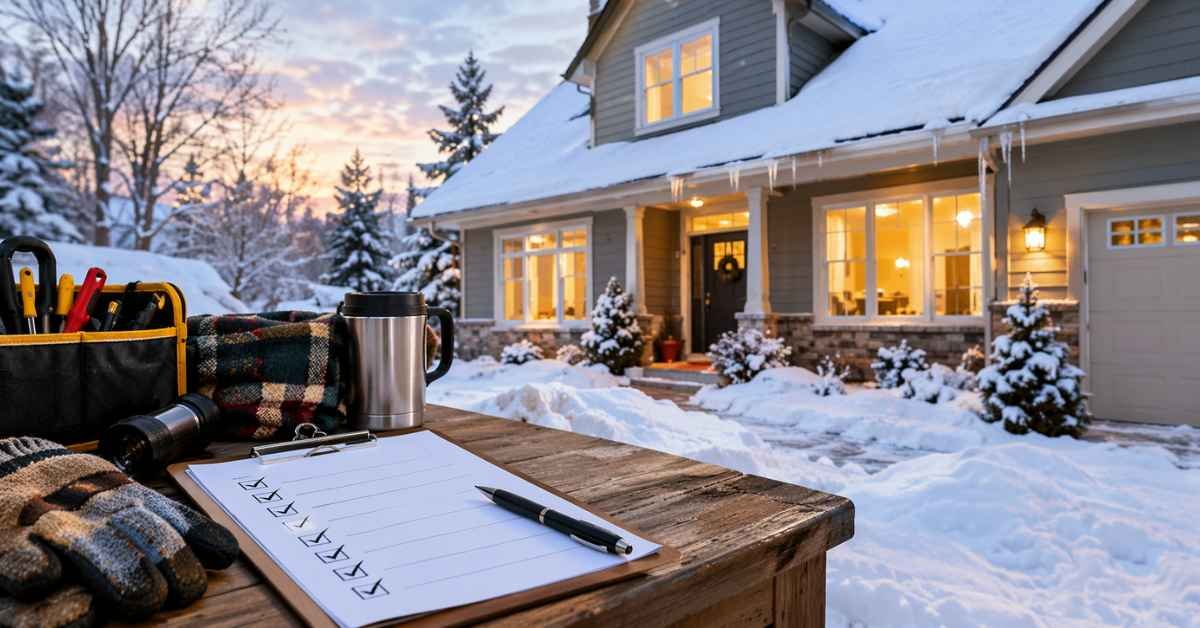
Quick Answer: How Do You Prepare Your Home for Winter?
A winter preparedness checklist for home should include roof inspections, weatherproofing, heating system maintenance, pipe insulation, fire safety, and emergency supplies. Before temperatures drop, seal drafts around windows and doors, clean gutters, protect exposed plumbing, test smoke and carbon monoxide detectors, and prepare for power outages. These 15 essential steps can help prevent winter damage, improve indoor comfort, and reduce unnecessary heating expenses.
Preparing your home for winter is essential to protect your property from freezing temperatures, harsh weather, and unexpected seasonal damage. A Winter Preparedness Checklist for Home helps homeowners identify maintenance needs, improve energy efficiency, protect essential systems, and prepare for winter emergencies before cold weather arrives.
This guide covers 15 practical winter home preparation steps, from inspecting your roof and sealing window drafts to protecting water pipes, maintaining heating equipment, and stocking emergency supplies. Whether you experience heavy snowfall or occasional freezing temperatures, these tips will help you keep your home safer, warmer, and more comfortable throughout the season.
Why Is Winter Home Preparation Important?

Cold weather can put extra pressure on your home’s heating, plumbing, roofing, and electrical systems. Freezing temperatures, heavy rain, snow, and strong winds can cause problems that become expensive if you ignore them.
For example, a small gap around a window allows cold air to enter, making your heating system work harder. Similarly, water pipes exposed to freezing temperatures can burst and cause significant property damage.
Preparing your home before winter gives you time to identify maintenance issues, arrange necessary repairs, and purchase essential supplies. Even a few simple improvements can make your home safer, warmer, and more energy-efficient.
Winter Preparedness Checklist for Homeowners: 15 Essential Steps
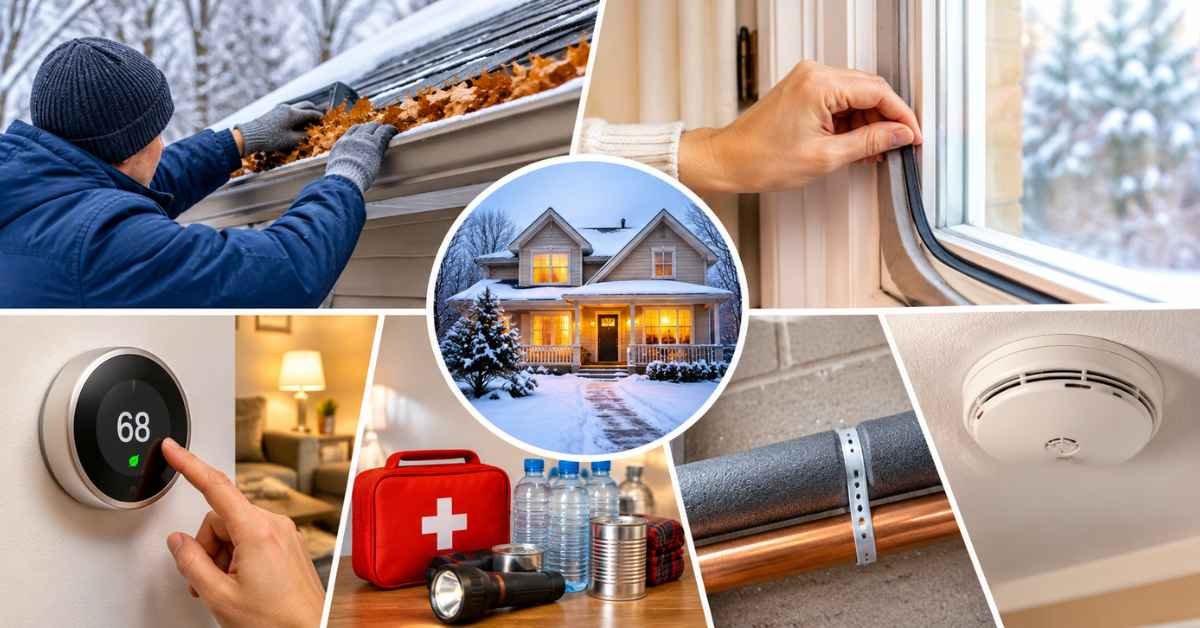
Use this practical winter home maintenance checklist to prepare your property before colder weather arrives.
1. Inspect Your Roof, Gutters, and Downspouts
Start your winter preparation with an exterior inspection. Your roof protects your entire home, so look for missing shingles, damaged flashing, cracked seals, and signs of water leakage.
Clean gutters and downspouts to remove leaves, dirt, and other debris. Blocked gutters prevent proper drainage and can increase the risk of water damage.
Also, check that downspouts direct rainwater away from your home’s foundation. If you notice loose roofing materials or significant damage, arrange a professional inspection before winter storms arrive.
2. Seal Drafts Around Windows and Doors
Small gaps around windows and doors can make your home uncomfortable during winter. Cold air enters through these openings, while heated indoor air escapes.
Inspect window frames, door edges, and other openings for damaged seals. Use weatherstripping around movable doors and windows and suitable caulk around stationary gaps.
Insulated curtains can provide another layer of protection, especially in rooms with large windows. These relatively affordable improvements help maintain indoor comfort and reduce unnecessary heating demand.
The U.S. Department of Energy explains the benefits of air sealing and insulation in its guide to energy-efficient home insulation and air sealing.
3. Service Your Heating System
Do not wait until the coldest day to discover that your heating system is not working properly.
Schedule professional maintenance for your furnace, boiler, heat pump, or other heating equipment. Ask a qualified technician to inspect its operation, check ventilation, and identify potential problems.
Replace or clean air filters according to the manufacturer’s recommendations. Dirty filters restrict airflow and can reduce heating efficiency.
Finally, make sure furniture, curtains, and other objects do not block heating vents or radiators. Proper airflow helps distribute warmth throughout your home.
4. Protect Water Pipes From Freezing
Frozen pipes are among the most troublesome winter plumbing problems. When water freezes inside a pipe, it expands and can cause the pipe to crack or burst.
Pay particular attention to plumbing in unheated basements, garages, crawl spaces, and exterior walls.
Use suitable insulation to protect exposed pipes and seal openings that allow cold air to reach plumbing. Disconnect and drain outdoor garden hoses before freezing weather arrives.
During extreme cold, follow local plumbing guidance for additional precautions. Also, locate your main water shutoff valve so you can respond quickly if a pipe leaks or bursts.
5. Test Smoke and Carbon Monoxide Detectors
Heating equipment, fireplaces, and alternative heating sources can increase fire and carbon monoxide risks during winter.
Test your smoke alarms and carbon monoxide (CO) detectors before the heating season. Install them in the locations recommended by local fire-safety guidance and the manufacturers.
Replace batteries when necessary and check the expiration dates of your devices.
The CDC’s winter storm safety guidelines explain how to heat your home safely, prepare for power outages, and reduce risks from space heaters and portable generators.
6. Check Your Home’s Insulation
Proper insulation helps your home retain heat and maintain a more comfortable indoor temperature.
Inspect accessible areas, including your attic, basement, crawl spaces, and exterior walls. Look for damaged, missing, or insufficient insulation.
If replacing insulation is outside your budget, start with smaller improvements. Thermal curtains, suitable window insulation kits, and sealing gaps around openings can help reduce heat loss.
For larger projects, consider a professional home energy assessment to identify where insulation improvements will make the biggest difference.
7. Prepare for Winter Power Outages
Winter storms and severe weather can interrupt electricity supplies, leaving homes without heating, lighting, or communication.
Prepare a backup kit containing flashlights, spare batteries, fully charged power banks, and a battery-powered radio.
If you use a portable generator, operate it outdoors at least 20 feet away from your home, with exhaust directed away from buildings. Never run it inside a house, garage, basement, or enclosed space.
Keep important phone numbers accessible and identify a safe alternative location where your household can stay warm if your heating system stops working.
8. Stock Up on Emergency Supplies
A well-stocked emergency kit makes unexpected winter conditions easier to manage.
Keep essential supplies in an accessible location. Your household emergency kit should include:
- Drinking water and nonperishable food.
- A manual can opener.
- First-aid supplies and essential medicines.
- Warm blankets and sleeping bags.
- Flashlights and extra batteries.
- Portable phone chargers.
- Personal hygiene products.
- Baby supplies and pet food, if needed.
Check expiration dates periodically and adjust the quantities according to your household size.
9. Prepare Your Fireplace and Chimney
If your home has a fireplace or wood-burning stove, arrange a professional inspection before using it regularly.
Creosote buildup, damaged chimney liners, and blocked flues can increase the risk of chimney fires and dangerous indoor smoke.
Remove flammable materials from the fireplace area and use a properly fitted fireplace screen. Store firewood in a dry location away from heating equipment.
Never leave an active fire unattended. Keep smoke and carbon monoxide alarms working properly.
10. Adjust Your Thermostat and Ceiling Fans
Your thermostat settings affect both indoor comfort and heating expenses.
Set a comfortable temperature that suits your household. A programmable thermostat can help reduce heating when everyone is asleep or away.
For practical guidance, read our article on recommended thermostat settings for summer and winter.
Ceiling fans can also help circulate warm air. If your fan has a reversible motor, use its winter setting according to the manufacturer’s instructions. A low-speed clockwise rotation is commonly recommended to move warm air down from the ceiling without creating an uncomfortable breeze.
Read our guide to ceiling fan direction for winter for more details.
11. Protect Outdoor Areas and Entryways
Outdoor maintenance is another important part of winter home preparation.
Bring lightweight outdoor furniture, cushions, and decorative items inside or secure them before strong winds arrive.
Inspect exterior steps, handrails, walkways, and driveways for loose surfaces or existing damage. If snow or ice is common in your area, keep a suitable shovel and ice-melting product available.
Place durable doormats near entrances to reduce the amount of moisture, dirt, and mud brought indoors. Also, check exterior lighting to keep entrances and pathways visible during shorter winter days.
12. Prepare for Pets and Family Members
Your winter preparedness checklist should account for everyone living in your home, including pets.
Make sure children, older adults, and family members with mobility limitations have access to warm rooms, suitable clothing, and essential supplies.
Check that pets have warm sleeping areas, sufficient food, and access to fresh, unfrozen water.
If you care for outdoor cats, provide a properly insulated shelter that protects them from wind and rain. Our guide to an outdoor cat house for winter explains practical shelter considerations.
13. Check Your Plumbing and Water Supply
Apart from protecting exposed pipes, inspect your plumbing fixtures and water system for existing problems.
Look underneath sinks, around toilets, near water heaters, and along visible plumbing connections for signs of moisture or leakage.
Check that outdoor faucets are properly protected, and that garden hoses have been disconnected and drained where freezing conditions are expected.
If you notice unusual water heater noises, visible corrosion, or leakage, arrange professional servicing.
14. Find Ways to Reduce Winter Heating Costs
Preparing your home for winter does not have to mean spending more money on energy.
Small improvements can help reduce unnecessary heat loss and improve everyday comfort.
Consider these practical changes:
- Use thick curtains to reduce heat loss through windows.
- Seal gaps around doors and window frames.
- Keep heating vents clean and unobstructed.
- Use energy-efficient LED lighting.
- Follow a consistent thermostat schedule.
- Close fireplace dampers when the fireplace is not in use, and it is safe to do so.
- Use ceiling fans on the appropriate winter setting.
Focus on improvements that address your home’s actual problems instead of purchasing unnecessary heating products.
15. Review Your Winter Emergency Plan
Finally, make sure everyone in your household knows what to do if severe winter weather affects your home.
Identify the locations of your main water shutoff valve, electrical panel, and gas shutoff, where applicable. Make sure household members understand how to use these controls safely.
Keep emergency contact numbers accessible, monitor local weather alerts, and establish a communication plan in case family members become separated.
If your home becomes unsafe or cannot maintain a safe indoor temperature, know where you can go for assistance or temporary shelter.
When Should You Start Preparing Your Home for Winter?

Ideally, begin winter home preparation in early fall, before temperatures drop significantly. Starting early gives you enough time to arrange repairs, purchase supplies, and address maintenance problems without rushing.
Use this simple schedule to organize your tasks:
| Timing | Essential preparation tasks |
| Early fall | Inspect the roof, gutters, windows, and exterior walls. |
| Mid-fall | Service heating equipment and check insulation. |
| Before freezing temperatures | Protect exposed pipes and outdoor faucets. |
| Before winter storms | Stock emergency supplies and charge backup devices. |
| Throughout winter | Monitor weather alerts and check for leaks or heating problems. |
Adjust the schedule to your local climate and your home’s condition.
Conclusion
A complete winter preparedness checklist for home helps protect your property, improve indoor comfort, and reduce the risk of expensive seasonal repairs.
Start with the essentials: inspect your roof, seal drafts, service your heating system, protect plumbing, and test safety detectors. Then prepare emergency supplies, check outdoor areas, and make sure every household member understands your winter safety plan.
You do not need to complete every improvement in one day. Work through the checklist before severe weather arrives, and prioritize repairs that affect your home’s safety.
A little preparation now can prevent major problems later.
Frequently Asked Questions
1. What should I do to prepare my house for winter?
Inspect your roof and gutters, seal gaps around doors and windows, service your heating system, insulate exposed pipes, test smoke and carbon monoxide detectors, and prepare emergency supplies.
2. How do I keep my house warm during winter?
Improve insulation, seal air leaks, use suitable window coverings, maintain your heating equipment, and adjust your thermostat to a comfortable temperature. Keep heating vents unobstructed to improve airflow.
3. How can I prevent pipes from freezing in winter?
Insulate exposed pipes, seal openings that allow cold air inside, disconnect outdoor hoses, and protect plumbing in unheated spaces. During severe freezes, follow local guidance for additional precautions.
4. What emergency supplies should I keep at home during winter?
Keep drinking water, nonperishable food, flashlights, batteries, power banks, blankets, first-aid supplies, essential medicines, and supplies for children and pets.
5. How can I reduce heating bills during winter?
Seal drafts, improve insulation, maintain your heating system, use a programmable thermostat, and avoid heating unused spaces unnecessarily. These improvements can help reduce energy waste while maintaining indoor comfort.

I’m Samreen Khadim Hussain, a home improvement writer specializing in practical, research-driven content for U.S. homeowners. At Domelite Home, I cover home renovation, interior design, home maintenance, and residential safety, translating technical information and industry research into clear, actionable guidance. My approach combines search intent research, reliable sources, and reader-focused writing to help homeowners understand their options, make informed decisions, and create safer, more functional living spaces.