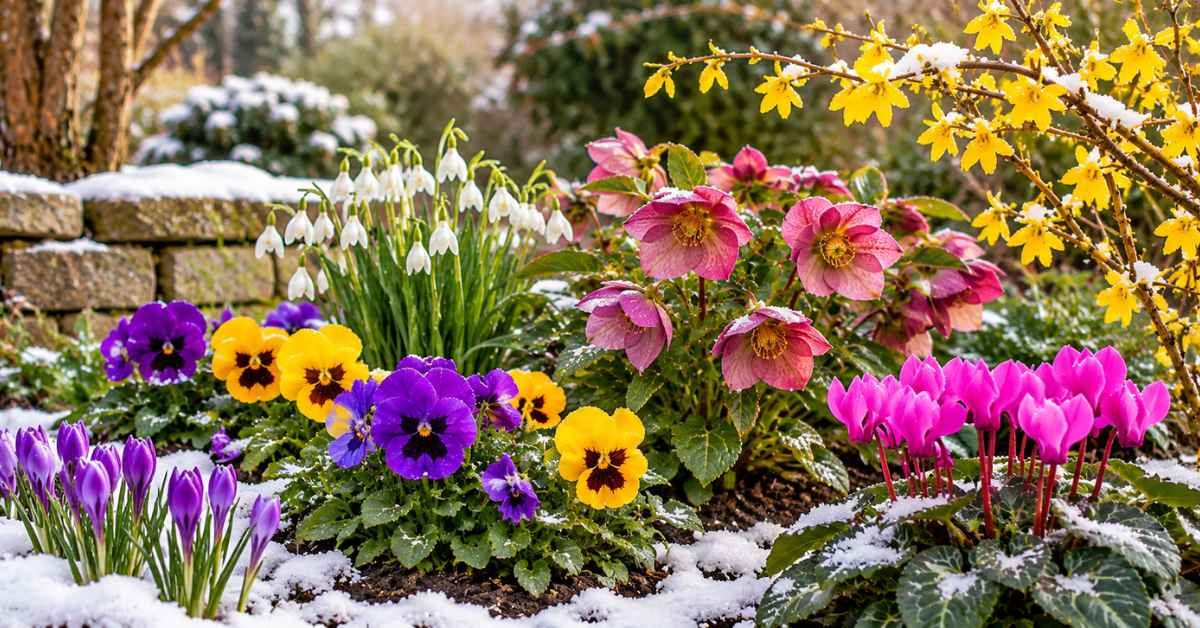
Quick answer: The best winter flowers to plant are pansies, violas, hellebores, snowdrops, cyclamen, and winter jasmine. Plant pansies and violas in fall while the soil is still above 45°F, plant bulbs like snowdrops and crocus before it freezes, and set hellebores in fall or early spring. Check your USDA hardiness zone first. In zones 7 to 9, pansies bloom most of the winter. In zones 3 to 6, hellebores, snowdrops, and crocus open in late winter, and indoor bulbs fill the gap.
Most yards look empty from December to February. They do not have to. Many flowers handle frost, snow, and short days, and some bloom only when it is cold. This guide shows which winter flowers fit your zone, when to plant each one, and how to keep them alive until spring.
Find Your Hardiness Zone First
Every plant below has a zone range. Look up your zone on the USDA Plant Hardiness Zone Map by entering your ZIP code. The map uses 30-year averages of the lowest winter temperature at each location, so a zone 6b yard typically sees a yearly low between -5°F and 0°F. If a plant’s range includes your zone, it can stay outdoors in the ground all winter.
| Flower | Hardy zones | Bloom time | Light |
| Pansies and violas | 6 to 9 | Fall to spring | Full sun |
| Hellebores | 4 to 9 | Late winter to early spring | Part to full shade |
| Snowdrops | 3 to 7 | Late winter | Part shade |
| Crocus | 3 to 8 | Late winter to early spring | Full sun |
| Hardy cyclamen | 5 to 9 | Fall or late winter | Part shade |
| Camellias | 7 to 9 | Fall to early spring | Morning sun |
| Witch hazel | 5 to 8 | Winter to early spring | Sun to part shade |
| Winter jasmine | 6 to 10 | Winter to early spring | Sun to part shade |
| Snapdragons | 7 to 10 | Fall to spring | Full sun |
| Primroses | 5 to 8 | Late winter to spring | Part shade |
Each bar runs from zone 3 (left) to zone 10 (right). Find your zone on the USDA Plant Hardiness Zone Map.
10 Best Winter Flowers to Plant Outdoors
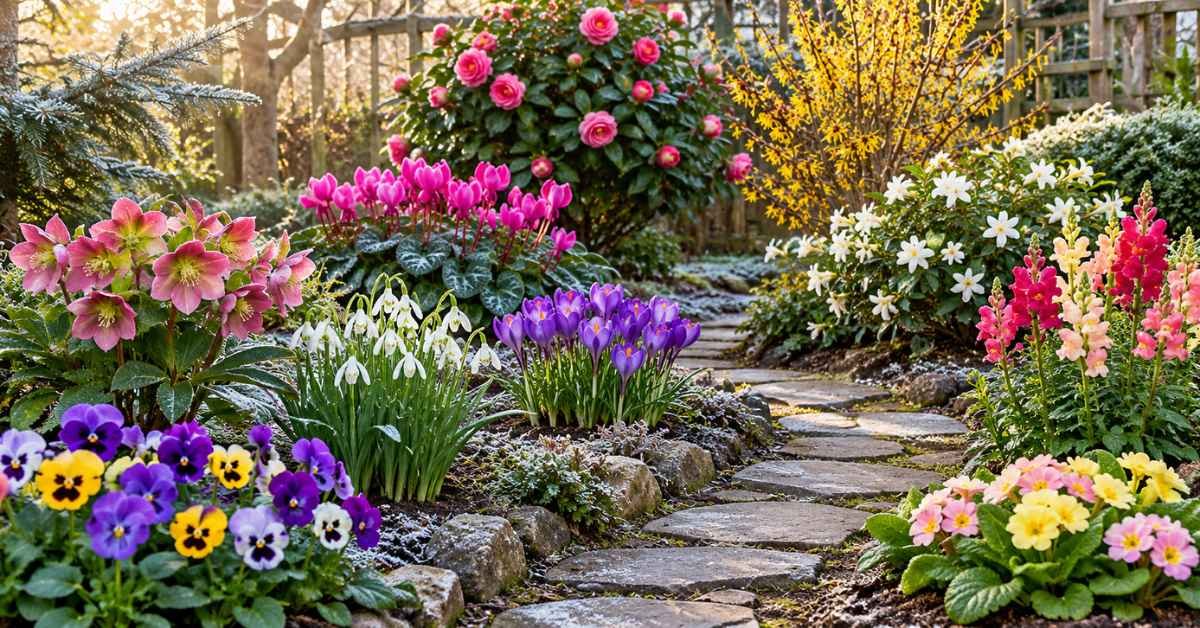
1. Pansies and Violas
Pansies are the most reliable winter color in beds and pots. Violas are smaller, bloom more, and take hard cold better. Plant both in fall while the soil is still warm, because soil under 45°F stunts growth and cuts flowers. Give them full sun and pinch off faded blooms. In colder zones, they pause under snow and restart in spring.
2. Hellebores
Also called Lenten roses or Christmas roses, hellebores bloom from late winter and often push flowers up through snow. They like shade and rich soil, and deer leave them alone. Plant in fall or early spring, then do not move them. Clumps take two to three years to settle. All parts are toxic to pets.
3. Snowdrops
Snowdrops are among the first bulbs to flower, often in January or February. Plant bulbs 3 inches deep and 3 inches apart in fall, ideally under deciduous trees. They spread on their own over the years. Nurseries also sell them “in the green,” meaning growing plants shipped in late winter, which establish more reliably than dry bulbs.
4. Crocus
Crocus blooms as the last snow melts. Plant bulbs 3 to 4 inches deep in full sun in fall. Squirrels dig them up, so lay hardware cloth over the bed until shoots appear. They look best planted in drifts of 20 or more, and in lawns, where you should delay mowing until the leaves die back.
5. Hardy Cyclamen
Hardy cyclamen is not the florist plant sold in pots. It is a small tuber with silver-marked leaves. Cyclamen hederifolium blooms in fall and Cyclamen coum blooms in late winter. Plant tubers 1 to 2 inches deep in well-drained soil, and use them in dry shade under trees where little else grows.
6. Camellias
Camellia sasanqua blooms from fall into winter, and Camellia japonica blooms from winter into spring. Both are evergreen shrubs for zones 7 to 9 that want acidic soil, morning sun, and afternoon shade. Plant in fall and shelter them from wind. Buds can brown in a hard freeze, so cover shrubs with frost cloth when nights fall into the low 20s.
7. Witch Hazel
Witch hazel (Hamamelis x intermedia) opens spidery yellow, orange, or red flowers on bare branches from January to March, and many varieties smell sweet. It grows 10 to 20 feet tall, so give it room. Plant in fall or early spring in moist soil with full sun to part shade.
8. Winter Jasmine
Winter jasmine (Jasminum nudiflorum) carries bright yellow flowers on green arching stems from January to March. It has little to no scent, but it blooms when almost nothing else does. Train it over a trellis or fence, or let it spill down a slope. Plant in fall or spring.
9. Snapdragons
In zones 7 to 10, snapdragons planted in fall bloom through mild winters and tolerate light frost. In colder zones, they die back. Give them full sun, pinch the tips for more stems, and cut the flowers for indoor vases.
10. Primroses
English primroses (Primula vulgaris) bloom in late winter in mild regions and early spring farther north. They want part shade, moist soil, and a layer of mulch. Plant in fall. Slugs love them, so check the leaves after rain.
Winter Flowers for Pots and Indoors
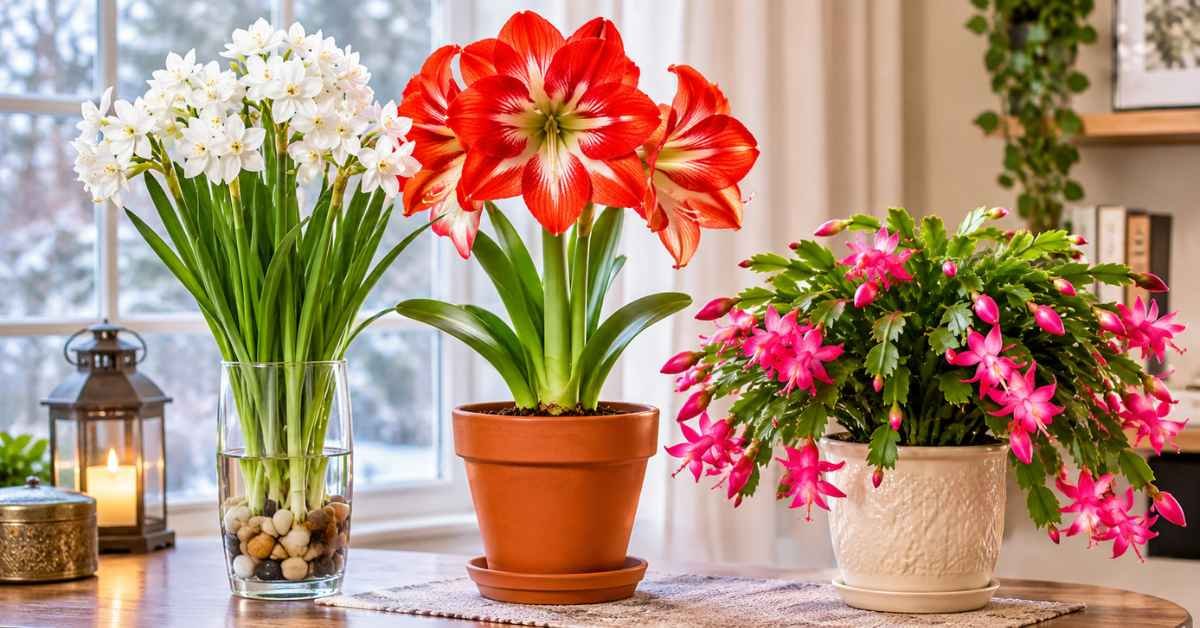
No yard, or ground that is frozen solid? These three bloom indoors.
Paperwhites. They need no chilling. Set the bulbs in pebbles with water touching only the base, and they bloom in about a month. Use a tall container because the stems flop. They are toxic to pets.
Amaryllis. Plant one bulb in a pot with the top third above the soil, and water lightly until the flower stalk reaches 4 to 6 inches. Blooms arrive in 6 to 8 weeks. Also toxic to pets.
Christmas cactus. It sets buds when nights are long and cool, around 55°F with 12 or more hours of darkness. Do not move the plant once buds form, or they drop.
Keep all three away from cold glass. If the spot by your patio door is drafty, fix the seal first with this sliding glass door weather stripping guide.
When to Plant Winter Flowers
- Early to mid fall (soil still above 45°F): pansies, violas, snapdragons, primroses, and hellebores.
- Mid to late fall, before the ground freezes: snowdrops, crocus, and cyclamen tubers. Bulbs need about six weeks to root before hard freezes.
- Late winter to early spring: witch hazel, winter jasmine, and any bulbs you missed.
If you can dig the soil, you can plant. Bulbs put in the ground in December or January often still bloom, just later and sometimes smaller.
How to Keep Winter Flowers Alive in Cold Weather
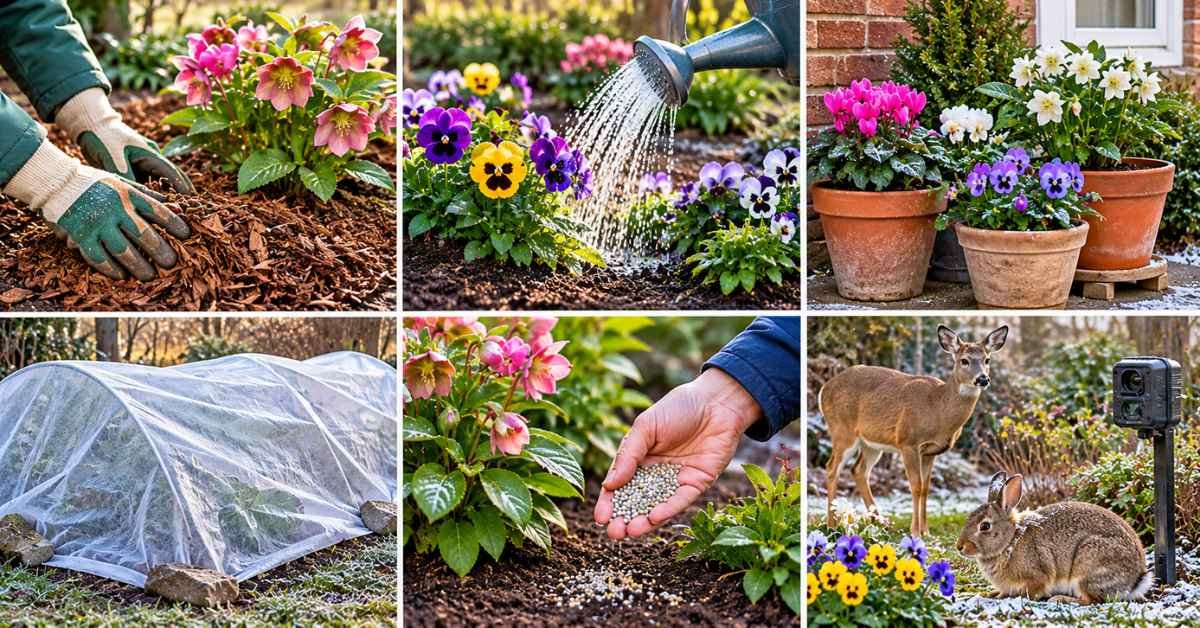
Mulch. Spread 2 to 3 inches of shredded bark or leaves after the soil cools. Keep it 1 to 2 inches away from stems.
Water. Water in the morning when the top inch of soil is dry, and temperatures are above freezing. Camellias and hellebores need water during dry winter spells.
Containers. Roots in pots freeze faster than roots in the ground. Choose plants rated one to two zones colder than yours, group pots against a south-facing wall, and raise them on pot feet so water drains.
Frost cover. On nights below 28°F, cover plants with frost cloth or a sheet. Plastic that touches leaves can freeze them. Remove the cover in the morning.
Fertilizer. Skip nitrogen in winter. It pushes soft growth that frost kills.
Wildlife. Deer, rabbits, and squirrels feed harder in winter. Hellebores, snowdrops, and daffodils are rarely eaten, while pansies are a favorite. If you cannot tell who is raiding your beds, a camera for the garden shows you what is happening overnight.
Common Winter Flower Mistakes
- Planting pansies too late. Cold soil stunts roots, and plants never recover.
- Ignoring zones. A plant rated for zone 8 will not live through a zone 5 winter.
- Overwatering pots. Soggy soil rots roots and freezes into a block around them.
Winter Flowers FAQs
What flowers bloom in winter?
Pansies, violas, hellebores, snowdrops, crocus, hardy cyclamen, camellias, witch hazel, winter jasmine, snapdragons, and primroses all bloom in winter, depending on your zone. Indoors, paperwhites, amaryllis, and Christmas cactus bloom in the same months.
What are the best winter flowers for cold climates?
In zones 3 to 5, plant hellebores, snowdrops, and crocus in fall. They bloom in late winter and early spring and handle temperatures well below zero once established. Add paperwhites and amaryllis indoors for midwinter color.
Can you plant flowers in winter?
Yes, if the soil is workable. You can plant bulbs, hellebores, and bare-root shrubs in winter. Do not plant when the ground is frozen or waterlogged. Cold-season annuals like pansies do best when planted in fall.
What winter flowers survive snow and frost?
Hellebores, snowdrops, crocus, violas, and pansies survive snow and frost. Hellebores and snowdrops often bloom through it. Camellias and snapdragons handle light frost but need cover in hard freezes.
What winter flowers grow best in the South?
In zones 8 to 10, pansies, violas, snapdragons, camellias, and primroses thrive. Plant them in October or November so they bloom from late fall through spring.
What are the easiest winter flowers for beginners?
Pansies, hellebores, and paperwhites. Pansies need only sun and water, hellebores need almost no care once planted, and paperwhites bloom in water with no soil.
Which winter flowers are deer resistant?
Hellebores, snowdrops, and daffodils are rarely eaten by deer. Pansies, violas, and camellia buds are common targets, so fence or spray them if deer visit your yard.
Can winter flowers grow in pots?
Yes. Pansies, violas, snapdragons, primroses, and cyclamen all grow well in containers. Use a pot with drainage holes, choose plants rated one to two zones colder than yours, and move pots to a sheltered wall in hard freezes.
Bottom Line
Start with your zone, then match each plant to a month. Pansies and snapdragons give color within weeks of planting, hellebores and bulbs carry late winter, and witch hazel and winter jasmine fill January. For more seasonal upkeep, browse the home improvement guides on Domelite Home.
For zone-specific plant lists, the University of Georgia Extension guide to flowering plants for winter landscapes is a solid next read.

I’m Samreen Khadim Hussain, a home improvement writer specializing in practical, research-driven content for U.S. homeowners. At Domelite Home, I cover home renovation, interior design, home maintenance, and residential safety, translating technical information and industry research into clear, actionable guidance. My approach combines search intent research, reliable sources, and reader-focused writing to help homeowners understand their options, make informed decisions, and create safer, more functional living spaces.