

That cold stripe across your living room floor every January? It’s probably not your furnace calling it quits. With most US patio doors, the culprit is worn-out sliding glass door weather stripping. Simple as that.
You’ll notice it in three ways. The AC never shuts off in July. Rain sneaks under the fixed panel when a storm hits sideways. Or you’ve got a trail of ants showing up at the interlock like they pay rent. Good news: you can knock this out in under an hour for $12 to $40 at Home Depot or Lowe’s. No contractor, no second mortgage. I’ll show you how to check if the seal’s actually bad, buy the exact piece you need, and swap it without losing your Saturday. I’ll also tell you when new weatherstripping is a waste of money because the door itself is the problem.
Quick pro move: Before you drive anywhere, take three photos: the full door, a close-up of the interlock where the panels meet, and the bottom track. Show them to the person at the Pro Desk. If they can see the kerf and which way the fin points, they’ll ID your seal in seconds. Beats holding up mystery parts under fluorescent lights.
How to Tell If Your Sliding Glass Door Weather Stripping Failed
Most US homes built from 1985 to 2010 have the same 6-ft or 8-ft sliders. Aluminum or vinyl, it doesn’t matter. The seals give up after 5 to 10 years. The sun cooks them. Dirt grinds them down. In Phoenix and Tampa, they die faster.
Three Tests You Can Do Tonight
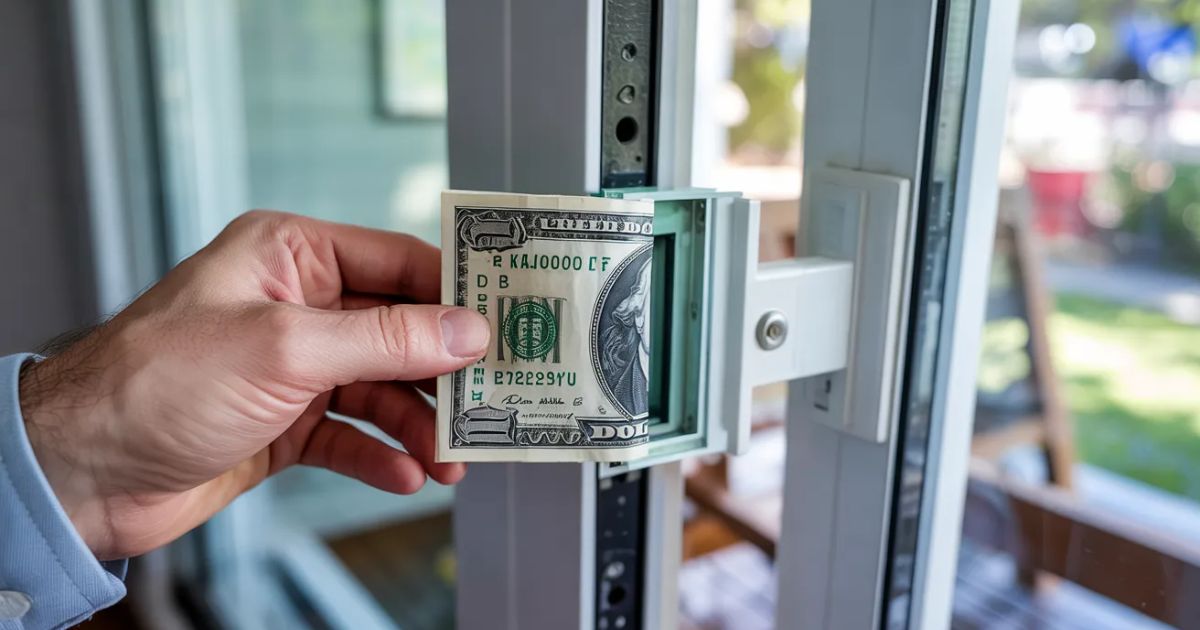
- The dollar bill test. Close the door on a bill right at the interlock, that’s where the sliding panel hits the fixed panel. If you can slide the bill out without any tug, your fin seal is crushed. That’s air moving in and out.
- The flashlight test. Wait until it’s dark. Stand inside, have someone outside aim a flashlight at the bottom track and sides. See light? Your bulb seal or bug flap is gone.
- The water test. Hit the outside threshold with a gentle hose spray. Water comes in? Check the weep holes first. Those little slots in the bottom track are drains. If they’re packed with dirt, even perfect weatherstripping won’t stop a leak.
Don’t make this mistake: Only testing the latch side. The interlock takes the wind and gets the most wear. That’s where 80% of air infiltration starts on US sliders. Test there first, always.
Last summer, a homeowner in Phoenix was complaining about dust on the couch every single day. The AC filter was clean. We did the dollar bill test at the interlock, and the bill fell out. The pile with the fin was pancake-flat. We swapped it for $18. Took 40 minutes. Dust issue? Gone.
Types of Sliding Glass Door Weather Stripping + Which One You Need
This is where people waste cash. The aisle at Lowe’s has 15 packages that look identical. They’re not. Here’s how to tell them apart.
Pile with Fin vs. Bulb Seal vs. Vinyl T-Fin
- Pile with fin is on about 90% of US doors. It runs up the interlock and sometimes along the top and latch sides. Looks like fuzzy Velcro with a thin plastic fin down the center. The fin stops air; the pile stops bugs and light. You have to measure pile height: 1/4″, 5/16″, or 3/8″. Go too tall, and your door will drag like it’s in mud. Best for: Windy spots and almost every vinyl or aluminum door made after 1990.
- The bulb seal sits on the bottom of the older sliding panels. It’s a little hollow tube that squishes when you close the door. The sun turns it brittle, then it cracks. Best for: 1990s doors with a dedicated bulb channel. You don’t see these much after 2010.
- A vinyl fin or T-fin usually seals the fixed panel to the frame. Some are peel-and-stick, some slide into a kerf. Best for: Fixed-panel gaps where the pile won’t fit.
What most articles skip: A lot of Milgard and JELD-WEN doors after 2015 use dual-durometer weatherstripping. That means one piece has a hard plastic backing molded to a soft bulb. If your old seal has two different textures in one piece, stop. The generic aisle won’t have it. You need OEM. Google “Milgard sliding door replacement weatherstrip” plus your door year.
Brand-Specific Gotchas for US Doors + Where to Buy
Check your brand before you shop. Look for a sticker on the top edge of the sliding panel. It’s often a foil label or etched in the glass spacer.
| Brand | What You Actually Need | Where to Get It | 2026 Cost | My Two Cents |
| Andersen | Proprietary fin seal, 0.187″ backing | Andersen dealer or andersenparts.com | $27.50-$33.99 | 400 Series ≠ 200 Series. Photo the sticker or you’ll order wrong. |
| Pella | Dual pile at interlock on 350/450 Series | pella.com/parts or Lowe’s Pro Desk | $29-$37.50 | Replace both sides of the interlock. Do one and you’ll still feel a draft. |
| Milgard | Standard 0.270″ kerf, pile/fin | Home Depot, Frost King E/O 7ft | $14.98-$18 | If your pile is gray, that’s “Ultra” low-friction. Spend the extra $3. It slides better. |
| JELD-WEN | 0.270″ or 0.187″ — measure it | Lowe’s MD Building Products | $12-$22 | They changed specs in 2018. Bring the old piece or you’ll be back. |
Another mistake to avoid: Buying by door size. “I have a 6-ft door” means nothing here. The kerf width and pile height are the only numbers that matter. Pull out an inch of the old seal and measure the plastic backing with a ruler. 32nds of an inch, not guesses.
Cost to Replace Sliding Glass Door Weather Stripping in 2026
Let’s talk real money. These are US prices I checked in April 2026.
Materials only:
- Generic pile/fin kit 7ft: $14.98 at Home Depot, $16.48 at Lowe’s
- Andersen OEM interlock kit: $27.50-$33.99, depending on series
- Pella dual-pile kit: $29.00-$37.50
- Peel-and-stick bulb seal 17ft: $10.98
- V-seal tape for renters: $6.98-$8.50
If you hire it out:
- Handyman flat rate: $125-$250 in most metros. I see $135 in Dallas and Phoenix. NYC and LA are closer to $225+.
- Door company service call: $189-$295, though that often includes adjusting rollers too.
Does it pay for itself? DOE says air leaks waste 5-10% of your HVAC bill. The average US electric is $137/mo. Gas in winter runs about $110/mo. Call it $150/mo combined. Save 7%, and that’s $10.50 back every month. A $20 kit pays for itself in two months. That’s a 600% annual return. Your 401(k) would be jealous.
According to the U.S. Department of Energy, air leaks account for 5–10% of total home heating and cooling costs.
Step-by-Step: How to Replace Sliding Glass Door Weather Stripping
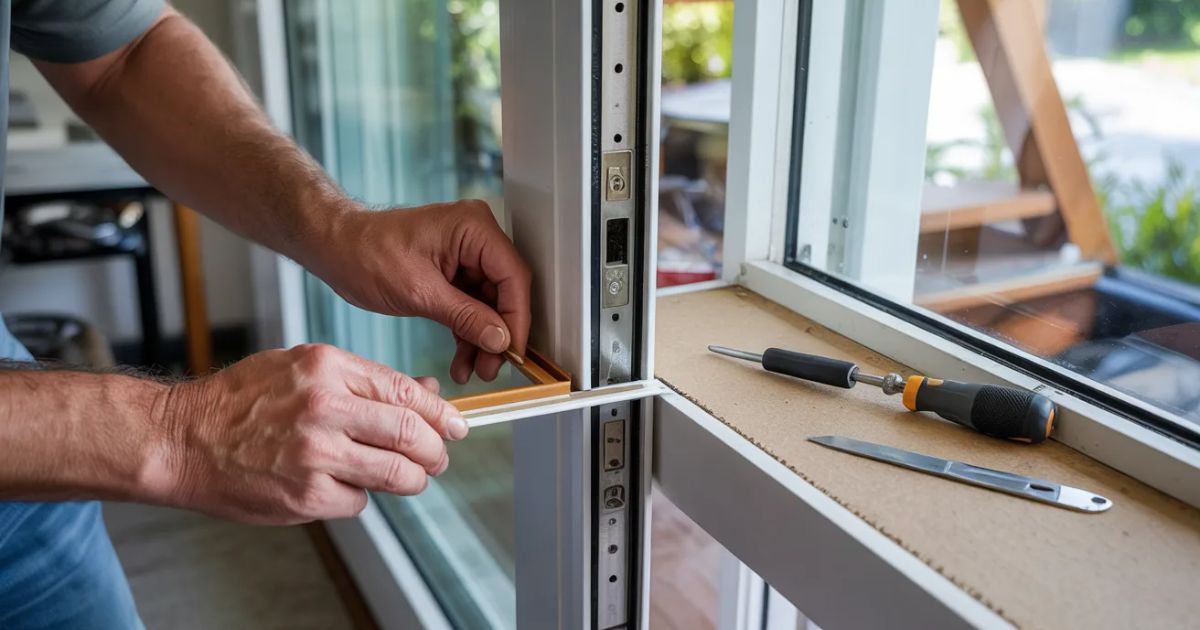
If you can change a vacuum bag, you can do this. You’re pulling fuzzy stuff out of a groove and pressing new stuff in. That’s it.
Tools, Materials, and Resources Checklist
- Must-haves: Scissors or a sharp utility knife, 91% isopropyl alcohol, plastic putty knife, tape measure, clean rag.
- Nice-to-haves: Needle-nose pliers to grab the old seal, an old credit card to seat the new one, vacuum with a crevice tool.
- Safety: Throw on gloves if your door is aluminum. Those old kerfs can be sharp.
- Time: 30-45 minutes. Difficulty? 2 out of 10.
Timing tip: Do this when it’s 60-75°F outside. Below 50°F, the peel-and-stick adhesive gets cranky and won’t bond. Above 90°F, the pile gets floppy and hard to keep straight. Doing this in Arizona in July? Start at 7 am.
Replacing Pile with Fin in the Interlock
- Get the sliding panel out. Unlock it. Lift the whole panel into the top track, then swing the bottom out toward you. For 6-ft doors, get a helper. They run 80-120 lbs, and they’re awkward.
- Pull the old pile. Find the end at the top or bottom corner. Slide your plastic putty knife under it and pull. Check which way the fin points — usually toward the outside. Take a quick picture so you remember.
- Clean the kerf. That’s the groove it lived in. Soak a rag with alcohol and wipe it out. Any grit left behind will chew up the new seal. Let it dry for two minutes.
- Measure and cut the new seal. Hold it against the old piece or measure the channel. Cut it 1/8″ long. It will compress as it goes in, so you don’t end up with a gap.
- Press it in. Start at the top. Press the plastic backing into the kerf with your thumb. Use that credit card to seat it all the way. Make sure the fin isn’t twisted. If it twists, pull that section and redo it.
- Rehang and test. Set the door back in, bottom first, then lower it into place. It should slide with a little resistance, not grind. Do the dollar bill test again. You should feel a tug now.
Don’t stretch it: If you pull the pile taut while installing, it’ll shrink back when it gets hot and leave gaps at the corners. Keep it slightly compressed as you work it in.
Replacing the Peel-and-Stick Bulb Seal on the Bottom
You don’t need to remove the door for this one. Vacuum the bottom track. Wipe it with alcohol and let it dry completely. Peel the backing off the new bulb seal six inches at a time and press it down hard. Peel it all at once, and it’ll stick to itself. You’ll hate everything.
Pro move: After it’s down, close the door and leave it shut for an hour. The pressure helps the adhesive cure. Cold outside? Hit it with a hair dryer for 30 seconds.
A landlord in Dallas knocked out four units in one afternoon. Total cost: $72. The “my AC is broken” texts stopped that week.
When Sliding Glass Door Weather Stripping Won’t Fix the Problem
Here’s what most articles won’t tell you. If the door itself is messed up, new seals are lipstick on a pig. Check these first.
- Door is out of square: You’ve got a 1/2″ gap at the top and zero at the bottom. That’s a roller adjustment, not weatherstripping. Look for a small hole near the bottom corners of the sliding panel. Phillips screwdriver, clockwise raises that corner.
- Bad rollers: Door scrapes, hops, or won’t stay closed. Seals can’t seal if the panel isn’t sitting flat. A roller kit is $18-$28. If your door is pre-2000, just replace it. They’re done.
- Clogged weep holes: Water pools in the track and spills over. Unclog those little drain slots with a zip tie before you buy anything.
- Bent track: Happens on old aluminum doors when someone slams them. If the track has a visible dent, no seal can fill a 1/4″ bend. You can sometimes tap it straight with a wood block and hammer.
- House settlement: If the gap is diamond-shaped, the wall shifted. You need to re-square the frame. That’s not a DIY seal job.
My rule: If you see daylight wider than 1/8″ with the door closed, fix the door first. Weatherstripping is for 1/16″ gaps, not gaps you can stick a finger through. The ENERGY STAR program recommends inspecting door and window seals annually as part of routine home weatherization.
Renter-Friendly Weather Stripping for Sliding Glass Doors
The landlord won’t fix it, and you can’t damage anything. You’ve still got options. All of these come off clean and cost under $15.
- Duck V-seal: Clear, folded tape for the interlock. Makes a decent draft seal for $7. Peels off in spring with no residue.
- Foam compression strip: Cut a piece and wedge it in the top track for winter. $12 at Ace. Pull it out in April.
- Draft snake: Fabric tube for the bottom. Zero install, $15 on Amazon. Looks way better than a rolled-up towel.
Comparison: V-seal stops air but not bugs. Foam stops both, but can make the door hard to open. Pick your battle. A renter in Chicago used V-seal on her slider. Gas bill dropped $22 the next month. The landlord never knew.
How Long Does Sliding Glass Door Weather Stripping Last? + Maintenance
These aren’t forever parts. UV and dirt kill them.
- Pile with fin: 3-5 years in Phoenix, Vegas, or Houston sun. Maybe 7-10 years in Seattle.
- Bulb seal: 4-6 years before it cracks and hardens.
- Vinyl T-fin: 8-12 years. It’s the toughest of the bunch.
Keep it alive longer: Vacuum the tracks every spring and fall when you swap HVAC filters. Takes 90 seconds. Dirt acts like sandpaper and cuts the pile’s life in half. And never spray WD-40 or silicone lube in the track. It attracts grit and shreds the seal in months. Use dry Teflon spray on the rollers only, not the track.
Coastal reality: If you live within 5 miles of the ocean, salt air kills bulb seals in 2-3 years. Buy two kits and stash one in the garage. You’ll need it.
Stop Heating the Backyard
Most drafty patio doors aren’t a $2,000 replacement. They’re a $20 sliding glass door weather stripping failure. The seals are meant to be replaced, just like the wiper blades on your car. Andersen, Pella, and Milgard all expect you to do it.
So test your door tonight with a dollar bill. If it fails, you now know how to ID the exact seal, buy it without guessing, and swap it in under an hour. If your rollers are shot or the track is bent, you just saved $30 on parts that wouldn’t have fixed anything. Either way, you stop paying to heat the backyard, keep bugs out, and kill that whistling draft in January.
Still not sure what type you have? Snap those three photos and ask the Pro Desk. They’ve seen your door 1,000 times. You’re not the first person with a drafty slider, and you won’t be the last. But you can be the one who fixes it before next month’s energy bill shows up.

I started Domelite Home because I got tired of home improvement advice that was either too vague or written by people who had never actually picked up a drill. I’m Naik Zali Shah I’ve spent years obsessing over renovation projects, smart home setups, and interior design, and I built this site to share what actually works. No fluff, no filler. Just honest advice for homeowners who want to get things right the first time.
2 thoughts on “Sliding Glass Door Weather Stripping: Easy DIY Fix Guide”