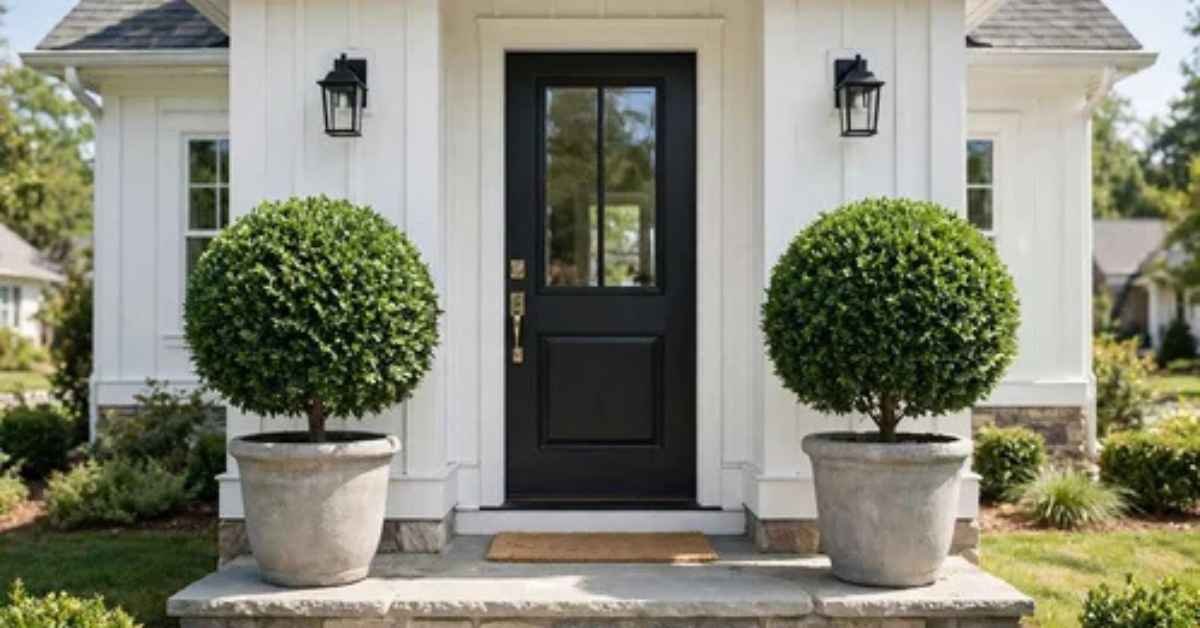
Quick Answer: Artificial plants for outdoors work best when they are made for outdoor use, not just moved outside from indoors. Choose UV-stabilized polyethylene (PE, with UV protection built into the plastic, not just sprayed on top. Pick the right size for the spot, use a weighted pot, and place the plant where it gets the sun it can handle. A good outdoor plant lasts 3 to 5 years in full sun and 5 to 8 years in shade, with no watering, trimming, or feeding.
Artificial plants for outdoors give you green all year, in spots where real plants die, dry out, or need more care than you can give. This guide shows you what to check before you buy, which material lasts, which plant fits each spot, how much to pay, and how to keep it looking real.
What to Look for First in Artificial Plants for Outdoors
Start with the label, not the leaves. A plant made for outdoors should say UV-resistant, UV-stabilized, or outdoor safe. If it says indoor only, or says nothing about UV, do not put it in full sun.
Check the material next. Polyethylene, PE, is the best choice for most outdoor spots. It holds color well and resists water when it includes UV stabilizers. Polypropylene, PP, is also strong and light, and works well for grasses and hedges. Polyester, often sold as silk, looks soft and real, but it fades fast in direct sun. PVC can become brittle in cold weather, below 32 degrees F, so avoid it for cold US winters.
Check how the UV protection was added. Built-in protection means UV inhibitors, often Hindered Amine Light Stabilizers, or HALS, were mixed into the plastic before the leaves were made, so it cannot wash off. A spray coating sits on the surface only, wears off in 1 to 2 years, and must be re-sprayed every year.
Check the base. A tall plant acts like a sail in the wind. If the pot is light, put it inside a heavier decorative pot and fill the gap with sand, gravel, or soil. The EPA UV Index runs on a scale of 1 to 11+, where 1 is minimal risk, and 11+ is very high risk. A spot with a UV Index of 8 to 10 in summer needs the strongest UV protection you can buy.
Artificial Plants for Outdoors: Material Comparison
| Material | Full sun life | Best for |
| Polyethylene, PE | 3 to 5 years, 5 to 8 years in shade | Most outdoor plants, boxwood, ferns, trees |
| Polypropylene, PP | 3 to 5 years | Grasses, hedges, and strong stems |
| Polyester or silk | 1 to 3 years, longer in shade | Shaded porches and covered patios only |
| PVC | 1 to 2 years, brittle in cold | Short term use only; avoid in cold climates |
| UV-treated plastic | 3 to 6 years in moderate climates | Budget outdoor plants with a UV label |
Best Artificial Plants for Outdoors by Spot
Front door and entryway
Use a pair of matching topiaries for symmetry. Boxwood balls, spirals, and cones, 3 to 6 feet tall, work best here. Cedar trees, 4 to 7 feet tall, also frame a door well. Put them in heavy pots, one on each side of the door.
Patio and poolside
Use a tall tree for height. Palm trees, 5 to 8 feet tall, olive trees, 5 to 7 feet tall, and ficus trees, 5 to 7 feet tall, make a strong focal point in a large patio corner. Keep them away from the pool edge, where splashing water and pool chemicals can dull the leaves. Pair them with a DIY outdoor shower for rinsing off after a swim.

Balcony and railing
Use trailing plants that soften hard edges. Ivy, eucalyptus, and trailing geraniums work well in hanging baskets and window boxes. Keep the pots small and light for the railing, and anchor them well, because a balcony gets more wind than a ground patio.

Backyard and garden bed
Use shrubs and grass bundles to fill a bed without watering. Boxwood shrubs, Boston ferns, and artificial grass bundles, 12 to 18 inches tall, fill a border fast. Mix 2 to 3 greens, not one, so the bed looks natural.
How Long Do Artificial Plants for Outdoors Last?
How long artificial plants for outdoors last depends on the material, the sun, and the climate. There is not one number for every spot.
In full sun, 6 or more hours a day, a UV-stabilized PE plant holds good color for 3 to 5 years. An unprotected silk plant shows first fade in 2 to 3 months and looks washed out in 8 to 12 months. In partial sun, a UV-protected plant often lasts 4 to 6 years. In shade, a UV-protected plant can last 6 years or more.
Heat, wind, and cold also matter. High heat speeds up fading, wind tears thin leaves and tips over light pots, and freeze and thaw cycles make cheap plastic brittle. In a hot, sunny US state like Arizona, Texas, or Florida, buy the strongest UV rating you can find, and choose morning sun over harsh afternoon sun if you can.
How Much Do Artificial Plants for Outdoors Cost?
Artificial plants for outdoors cost 10 to 400$. Small grass bundles and faux flowers cost 10 to 30$. A mid-range potted plant, 2 to 4 feet tall, costs 30 to 80$. A topiary, 3 to 4 feet tall, costs 70 to 130$. A potted tree, 4 to 6 feet tall, costs 120 to 400$. Pots add 30 to 100$, and a can of UV spray costs 10 to 15$.
Judge value by cost per year. A 60$ plant that lasts 4 years costs 15$ a year. A 15$ plant that fades in 1 year costs the same, but you must replace it every year. A fade warranty of 1 year is standard. A warranty of 2 to 3 years is a good sign. No warranty, no UV claim, and a price under 20$ for a large topiary are red flags.
How to Place and Secure Artificial Plants for Outdoors
Measure first. A plant should be about two thirds as tall as the space it fills. A front door topiary should be 3 to 6 feet tall, and a patio tree 5 to 8 feet tall. Leave at least 12 inches of clear space around a plant so air can move.
Place the plant in the sun it can handle. Put UV-stabilized PE in full sun, and silk and polyester in shade or under a porch roof. Put bright reds, pinks, and purples in the lowest light spots, because they fade first. Rotate a pot a quarter turn every 2 to 3 months.
Secure it for wind. Put the nursery pot inside a heavier decorative pot and fill the gap with sand, gravel, or soil. For a tall tree, anchor it to a fence or railing with a non-corrosive cord. Bring small pieces inside before a hurricane or a named storm.
How to Clean Artificial Outdoor Plants
Clean artificial plants for outdoors every 2 to 4 weeks in a dusty area, monthly on a quiet patio, and within 48 hours after a heavy storm. Dust makes a plant look faded, so clean it before you judge it.

Dust first with a soft duster or microfiber cloth, working from the top down. Then rinse gently with a garden hose on a low setting, and let it air dry in shade. For grime, wipe the leaves with a cloth dipped in mild soapy water, then rinse again. Let the plant air dry for 30 to 60 minutes before full sun, or water spots can leave streaks.
Do not use a pressure washer, bleach, or harsh cleaners. If mold appears, scrub it with equal parts water and white vinegar, rinse well, and dry in the sun.
Common Mistakes With Artificial Plants for Outdoors
Do not buy an indoor plant for outdoors. Indoor silk and indoor PE have no UV protection. They fade to a blue or chalky color and turn brittle in 3 to 6 months.
Do not trust the words weather resistant alone. That phrase does not mean UV protected. Look for UV-resistant or UV-stabilized on the label, and ask for the fade warranty in years.
Do not put a tall plant in a light pot. It will tip in the first strong wind, break stems, and crack the pot. Weigh the base first.
Do not place fake plants near open flame. Most artificial plants are made from polyester, silk, latex, or plastic, and those materials can catch fire. Keep them away from grills, fire pits, candles, and heaters. The US Consumer Product Safety Commission says to look for the fire resistant label on artificial trees, and to keep burning candles in sight and away from flammable items.
Do not forget drainage. A pot with no drainage holds water, grows mold, and can crack when trapped water freezes in winter. Make sure every outdoor pot drains.
Frequently Asked Questions
Can artificial plants stay outside all year?
Yes, UV-rated artificial plants for outdoors can stay outside all year in most US climates. Cold and snow do not hurt UV-rated PE foliage. Weight the pot for wind, make sure it drains, and brush off heavy snow.
Do artificial plants fade in the sun?
Yes, artificial plants fade in the sun if they lack UV protection. UV light breaks down the dyes and the plastic itself. A silk plant can show its first fade in 2 to 3 months in full sun. A UV-stabilized PE plant can hold color for 3 to 5 years in full sun, longer in shade.
How long do artificial plants for outdoors last?
A good UV-stabilized PE plant lasts 3 to 5 years in full sun and 5 to 8 years in shade. UV-treated plastic lasts 3 to 6 years in moderate climates. Silk lasts 2 to 4 years in full sun, and longer in shade. Lifespan depends on material, sun hours, and climate, not on the price alone.
How do I clean artificial outdoor plants?
Dust first with a soft cloth, then rinse gently with a garden hose on low, and let it air dry in the shade. For grime, wipe with mild soapy water and rinse again. Do not use a pressure washer, bleach, or harsh cleaners. Clean every 2 to 4 weeks in dusty areas.
How do I keep artificial plants from blowing over?
Put the nursery pot inside a heavier decorative pot and fill the gap with sand, gravel, or soil. Anchor tall trees to a fence or railing with a non-corrosive cord. Put light pieces in sheltered spots and heavy pieces in wind-prone spots. Bring small pieces inside before a storm.
Are artificial outdoor plants safe for kids and pets?
Most modern artificial outdoor plants are non-toxic, but they are not edible and should not be chewed. Choose plants with no small loose parts for young children, and check the label for lead and phthalate warnings, including California Proposition 65 warnings if you live in California.
Can I leave artificial plants outside in winter?
Yes, you can leave UV-rated artificial plants outside in winter. Cold does not hurt PE foliage. Make sure the pot drains so trapped water cannot freeze and crack it, and brush off heavy wet snow.
Pick the Spot, Then Pick the Plant
Pick one spot first, then buy the plant for that spot. Check the label for UV-stabilized PE, weigh the base, and place it where the sun and wind match what it can handle. A good artificial plant for outdoors should look green in year three, not just on day one. For the rest of your outdoor space, start with these backyard makeover ideas and build one zone at a time.

I’m Samreen Khadim Hussain, a home improvement writer specializing in practical, research-driven content for U.S. homeowners. At Domelite Home, I cover home renovation, interior design, home maintenance, and residential safety, translating technical information and industry research into clear, actionable guidance. My approach combines search intent research, reliable sources, and reader-focused writing to help homeowners understand their options, make informed decisions, and create safer, more functional living spaces.