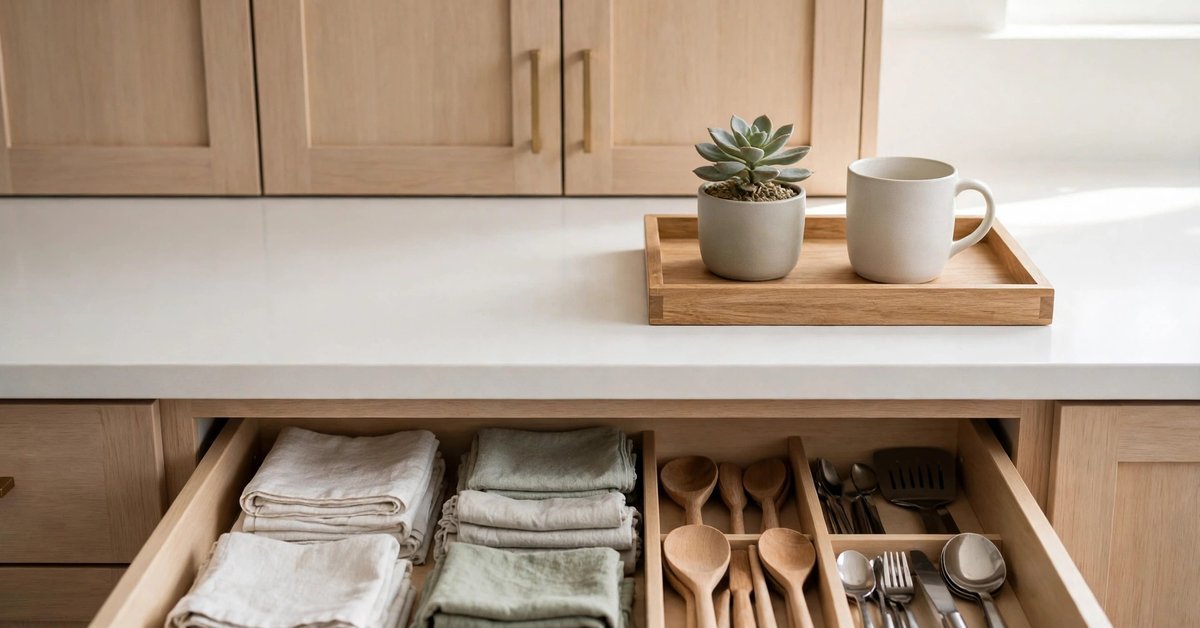
Quick answer: To learn how to declutter your home, start with one small zone, not a whole room. Set a timer for 15 to 30 minutes. Take everything out, sort it into Keep, Donate, Sell, and Trash, and put back only what you use and have space for. Work room by room, save sentimental items for last, and take donations out within 48 hours. Repeat in short sessions until every zone has a clear purpose and a home for each item you keep.
Counters are covered, closets will not close, and every room asks for attention at once. This plan shows how to declutter your home in finished sessions, with a clear order and fast decisions
How to declutter your home in 4 steps
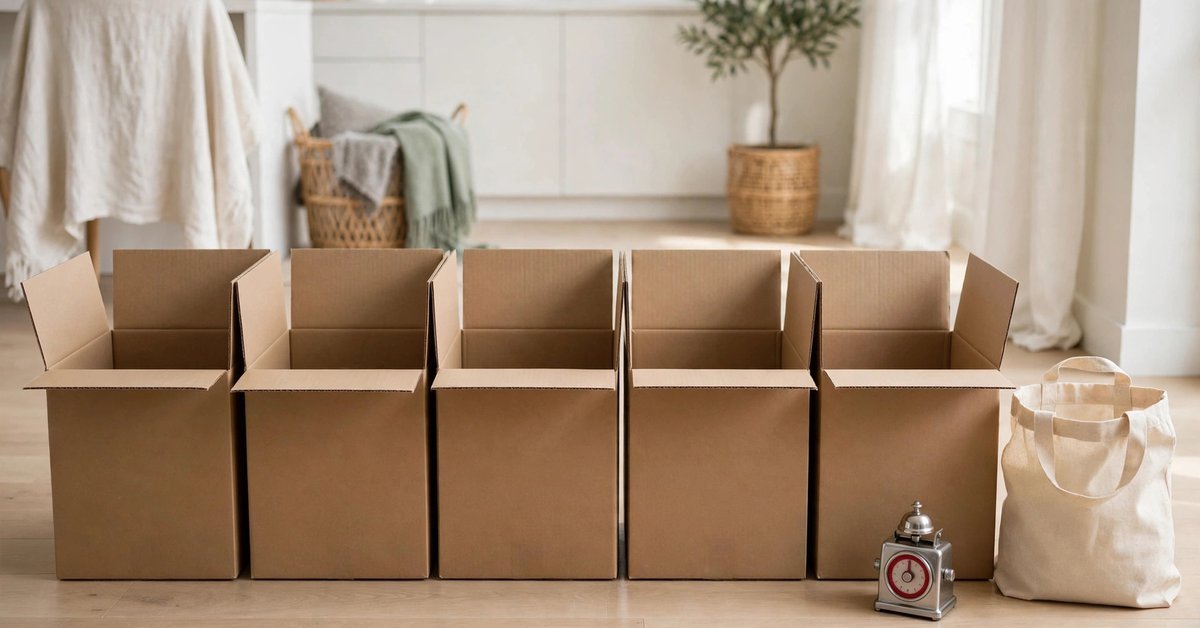
You can learn how to declutter your home in 4 steps: clear quick wins, sort with boxes, work room by room, then keep a daily reset.
Step 1: Clear the quick wins first
Fill one trash bag with empty packaging, broken items, old receipts, and expired goods. Carry stray dishes to the sink, then collect dirty laundry in a basket.
Step 2: Use the 4 box method, with a Maybe box
Label boxes Keep, Donate, Sell, and Trash, and add a Maybe box for unsure items. Date it, store it out of sight for 3 to 6 months, then donate or throw away what you did not use or miss.
Step 3: Tackle one room or one category at a time
Work room by room, or pick one category, such as clothes. In the closet, try the reverse hanger trick: turn hangers backward, turn each one forward after you wear that item, and donate what is still backward after 6 months.
Step 4: Build a 5 minute daily reset
End each day with a 5 minute reset. Return items to their place, sort mail at once, and clear one surface. Use one in, one out: a new item comes in only when you know where it will live.
Where should I start decluttering when I feel overwhelmed?
To learn how to declutter your home, start with one flat surface you see every day, such as the entryway bench or a kitchen counter. Start with one flat surface you see every day, such as the entryway bench or a kitchen counter. A visible win in 20 minutes does more for momentum than a half emptied closet.
Do not start with photos, letters, or inherited items. Save sentimental items for last, after you have cleared easy wins in 3 or 4 zones.
What do I need before I start decluttering?
You need 5 boxes or bags, a marker, and a timer. Label them Keep, Donate, Sell, Trash, and Maybe, and add one bag for recycling.
- Trash bags and a box for donations
- Sticky notes or tape to label zones
- A phone timer, set to 15 to 30 minutes
- A booked donation drop off or pickup date
Use one decision test for every item. Ask: Have I used it in the last 12 months? Would I buy it again today? Two no answers mean it goes into Donate, Sell, or Trash.
How to declutter your home room by room
Work in this order: entryway, kitchen, living room, bathroom, bedroom and closet, then storage areas. The order moves from easy, low emotion zones to harder ones, so you build skill before you face keepsakes.
Entryway: clear the drop zone first

Keep only daily shoes, current season coats, and one tray for keys and mail. Move spare coats, single gloves, and bags you do not use to Donate, and give each person one hook and one pair of shoes by the door.
Once the drop zone is clear, give what stays a fixed place with a DIY mudroom bench with storage, so shoes and bags do not spread back across the floor.
Kitchen: clear counters, then duplicates
Clear counters first, then remove duplicate utensils, chipped mugs, lids without containers, and gadgets unused for 12 months. Keep one good set of daily tools within reach of the stove.
For tight kitchens, keep only the tools you reach for weekly on the counter. Move the rest to one cabinet or to Donate, so prep space stays clear.
Living room: clear every flat surface
Clear the coffee table, side tables, and media console, then return only what you use daily. Remove broken remotes, dead batteries, old magazines, and decor you no longer notice or like.
If the room still feels crowded after the clear out, the furniture may be the problem. These space-saving furniture ideas show how to keep seating and storage without filling the floor again.
Bathroom: let expiry dates decide
Throw out expired medicine, dried out makeup, and empty bottles first. Keep daily products in one tray or basket, and store backups in one small bin so duplicates stop building up.
Bedroom and closet: keep what fits your life now
Keep clothes that fit now, suit your current week, and are in good repair. Donate clothes unworn for 12 months, and clear nightstands down to a lamp, a book, and a charger.
Once the volume drops, use a simple closet system with one rod section per category, so returning clothes takes seconds.
Garage, basement, and storage: go last
Do storage areas last, in 30 minute zones, one shelf or one box at a time. Remove broken tools, dried paint you cannot use, and boxes unopened since your last move, and check labels before you keep any chemical or cleaner.
Which zone should you do first? Compare time and effort
Start with the zone that gives a visible result in the shortest time. Use this table to pick your first 3 sessions.
| Zone | Time for one session | Effort | Remove first |
| Entryway | 20 to 30 minutes | Low | Extra shoes, coats, loose mail |
| Bathroom cabinet | 15 to 25 minutes | Low | Expired medicine and makeup |
| Kitchen counter and one drawer | 30 to 45 minutes | Medium | Duplicates, chipped mugs, dead gadgets |
| Closet, one section | 45 to 60 minutes | High | Clothes unworn for 12 months |
| Garage, one shelf | 30 to 45 minutes | High | Broken tools, unopened boxes |
What should I throw away first when decluttering?
When you learn how to declutter your home, throw away trash, broken items, and expired products first, because they need no debate. This first pass often fills a full bag and makes the room look better before you make a single hard choice.
- Broken items you have not repaired in 6 months
- Expired food, medicine, makeup, and sunscreen
- Single socks, single gloves, and lids without containers
- Dead batteries, dried pens, and chargers for devices you no longer own
- Instruction manuals you can read free on the maker site
How do I declutter sentimental items without regret?
Keep sentimental items on purpose, in one memory box with a fixed size, such as one 12 inch by 12 inch box per person. If it does not fit, photograph it and keep the best example, not the full set.
One teacup on a shelf means more than 24 in a basement box. Display or use what you keep.
How long does it take to declutter a house?
Plan on 12 to 20 hours of active sorting for a typical 2 to 3 bedroom home, spread over several weekends. That is a planning estimate, not a promise: a light clear out takes less, and a full garage or basement adds hours.
Work one zone per session and finish it, including taking bags out. Half finished rooms drain energy.
What to do with stuff after decluttering
Get everything out within 48 hours, or it will drift back. Donate usable goods in good condition, sell only items worth your time to list, recycle what your local program accepts, and trash the rest.
For donations, the Internal Revenue Service states in Publication 526 that you can deduct a contribution only if you make it to a qualified organization, so keep the charity name, date, and a list of items if you plan to claim it. See IRS Publication 526, Charitable Contributions (https://www.irs.gov/publications/p526).
For paint, cleaners, oils, batteries, and pesticides, the U.S. Environmental Protection Agency classifies leftover products that can catch fire, react, or explode, or that are corrosive or toxic, as household hazardous waste. The EPA says never mix such products, keep them in their original containers, and do not pour them down drains, on the ground, or into storm sewers. Use your local collection site or collection day. See EPA guidance on household hazardous waste (https://www.epa.gov/hw/household-hazardous-waste-hhw).
Common mistakes that make decluttering fail
Most people learning how to declutter their home fail on the exit and the system, not on the sorting.
- Buying bins and organizers before you declutter, so you store items you should remove
- Emptying a whole room onto the floor, then running out of time and energy
- Starting with sentimental items and stalling in the first hour
- Keeping duplicates just in case, without a space or a use for them
- Leaving donate bags by the door for weeks, then putting items back
- Sorting once with no home for new items, so clutter rebuilds in days
How do I keep my home clutter free after decluttering?
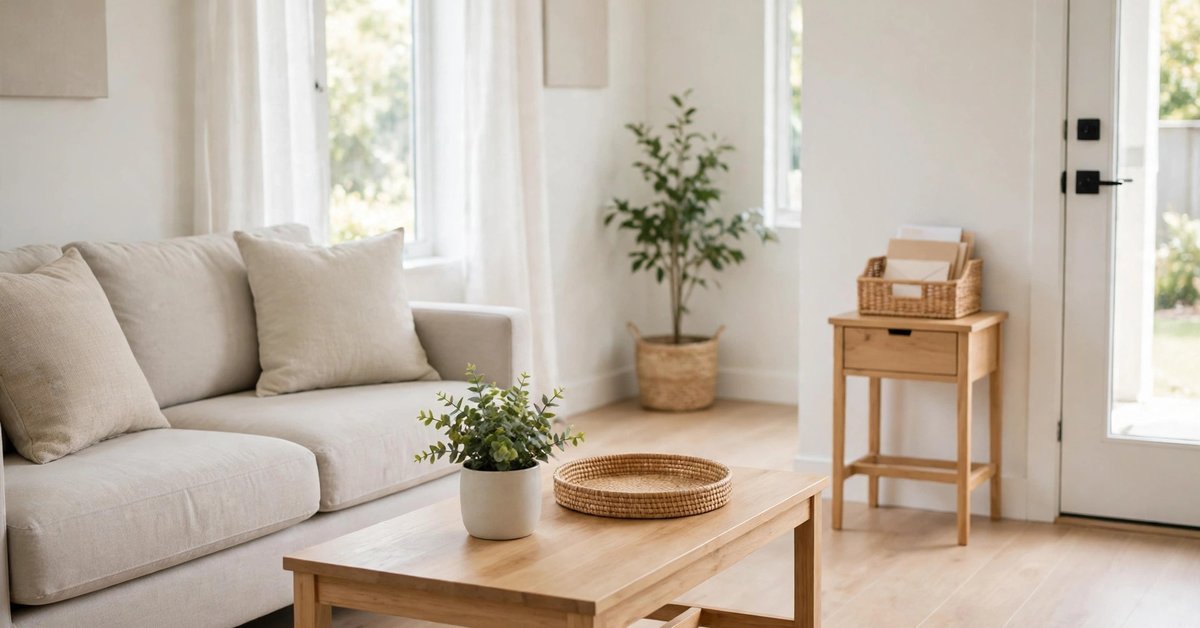
To learn how to declutter your home and keep it clear, use a one in, one out rule, a 5 minute daily reset, and a 10 minute weekly reset. Use a one-in, one out rule, a 5 minute daily reset, and a 10 minute weekly reset. Every item you keep needs a specific place, and every new item needs a place before it comes in.
Add a 30 day list for non essential buys. Write the item and the date, and buy it only if you still want it after 30 days.
Frequently asked questions
Where should I start decluttering my house?
Start decluttering in the entryway or bathroom, where decisions are easy, and results show fast. Pick one surface or drawer, set a timer for 15 to 30 minutes, and finish that zone. A small win builds confidence for harder rooms like closets and storage areas later.
What should I declutter first in my home?
Declutter trash, broken items, expired food, and expired medicine first, because they need no hard decisions. Next, remove duplicates, such as extra mugs, spatulas, and chargers. These quick removals clear visible space fast, reduce decision fatigue, and make the next sorting session feel much easier to start.
How long does it take to declutter a whole house?
A whole house usually takes 12 to 20 hours of active sorting for a typical 2 to 3 bedroom home, spread over several weekends. Work in 15 to 30 minute sessions or one zone per day. Garages, basements, and sentimental items add time, so schedule them last.
What is the 12/12/12 rule for decluttering?
The 12/12/12 rule means you find 12 items to throw away, 12 to donate, and 12 to return to their proper place. It works well for a quick reset when you do not know where to start. Set a timer, move fast, and do not second guess boxed items.
How do I declutter when I feel overwhelmed?
When you feel overwhelmed, shrink the job to one zone under 4 square feet, such as a nightstand or one shelf. Use five boxes, work for 15 minutes, and stop when the timer ends. Do not start with photos or keepsakes. Small, finished zones create progress you can see.
What do I do with items I declutter?
Take decluttered items out fast: donate usable goods, sell items of real value, recycle what your local program accepts, and trash the rest. Book the donation drop off before you sort, and aim to remove bags within 48 hours. Items left by the door tend to drift back into rooms.
How do I keep my home clutter free after decluttering?
Keep your home clutter free with a one in, one out rule, a 5 minute daily reset, and a 10 minute weekly reset of flat surfaces.
Start with one surface today
Pick one surface, set a timer for 20 minutes, and finish it today. Then add a weekly surface reset to your home maintenance checklist (https://domelitehome.com/home-maintenance-checklist/) and keep the same short session rhythm for the rest of the house.

I’m Samreen Khadim Hussain, a home improvement writer specializing in practical, research-driven content for U.S. homeowners. At Domelite Home, I cover home renovation, interior design, home maintenance, and residential safety, translating technical information and industry research into clear, actionable guidance. My approach combines search intent research, reliable sources, and reader-focused writing to help homeowners understand their options, make informed decisions, and create safer, more functional living spaces.