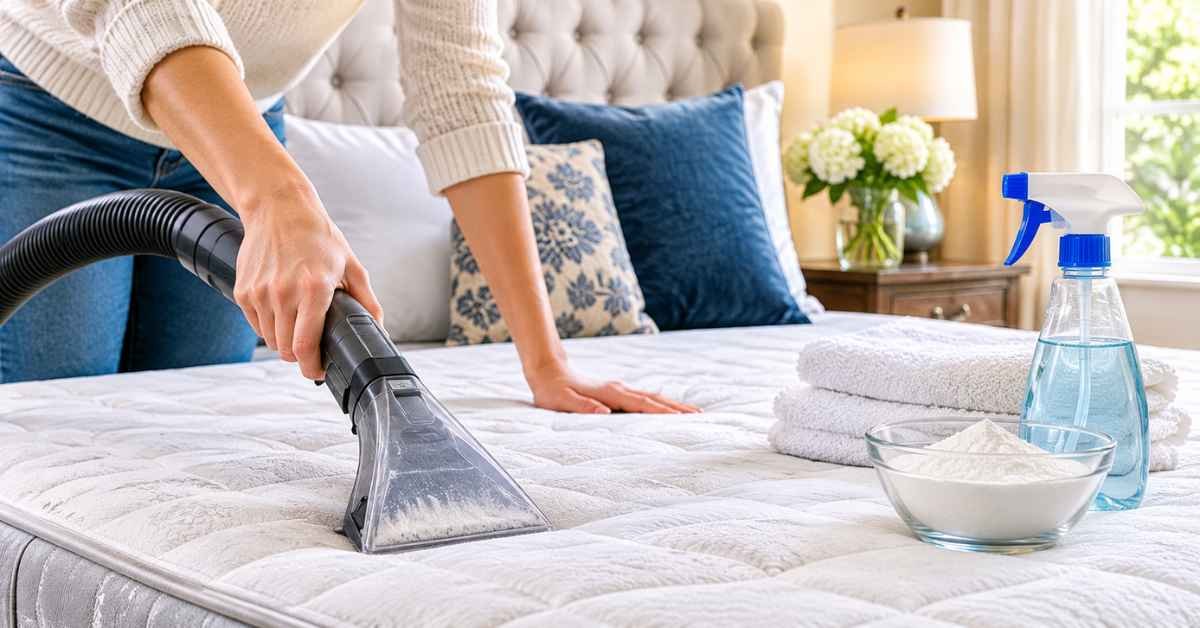
Quick Answer: How to Clean a Mattress? To clean a mattress, remove all bedding and vacuum the entire surface with an upholstery attachment. Treat stains by gently blotting them with a suitable cleaner and using as little moisture as possible. Sprinkle baking soda over the mattress to help absorb odors, leave it for several hours, and vacuum it away. Let the mattress dry completely before replacing your bedding. Always check the manufacturer’s care instructions before using any cleaning product.
How to Clean a Mattress at Home: 6 Easy Steps
You do not need expensive equipment to freshen up a mattress. A vacuum, a few clean cloths, mild cleaning products, and baking soda are enough for basic maintenance.
Before starting, check your mattress label or manufacturer’s website. Some mattresses have removable covers with specific washing instructions, while others should never be exposed to certain cleaning products or excess moisture.
Step 1: Remove All Bedding and Wash It
Strip the bed completely, including:
- Sheets and pillowcases
- Blankets and comforters
- Mattress protectors
- Removable mattress covers, if the manufacturer says they are washable
Wash each item according to its care label. Do not automatically use hot water because some fabrics can shrink, fade, or become damaged. Use the recommended washing temperature and dry everything thoroughly.
If you use a mattress protector, washing it regularly can help prevent sweat, body oils, and spills from reaching the mattress.
Step 2: Vacuum the Entire Mattress
Use a vacuum cleaner with a clean upholstery attachment. Slowly vacuum the top of the mattress, paying extra attention to:
- Seams and stitching
- Edges and corners
- Tufted areas and fabric folds
- The sides of the mattress
These areas can collect dust, hair, dead skin cells, and other debris.
Avoid pressing too hard or using an attachment that could damage the mattress fabric. If your vacuum has a crevice tool, use it carefully around seams and edges.
For additional mattress-cleaning guidance, read the Sleep Foundation’s guide to cleaning a mattress, which explains how to vacuum, treat stains, and maintain your mattress.
Step 3: Spot-Clean Mattress Stains

The best way to remove a stain depends on what caused it. Start by checking the mattress care instructions and testing your chosen cleaner on a small, hidden area.
Use a clean white cloth to apply the cleaning solution. Gently blot the stain instead of rubbing it. Rubbing can spread the mark and push moisture deeper into the mattress.
Here are some common stain treatments.
How to Remove Sweat and Yellow Stains
Sweat and body oils can leave yellowish marks on a mattress over time.
For a light stain:
- Mix a small amount of mild detergent with cool water.
- Dampen a clean cloth with the solution.
- Gently blot the stained area.
- Use another cloth lightly dampened with clean water to remove detergent residue.
- Blot with a dry towel to absorb excess moisture.
Do not pour the solution directly onto the mattress. Older yellow stains may not disappear completely, especially if they have soaked into the fabric or padding.
How to Remove Blood Stains
Use cold water when treating blood stains. Hot water can make protein-based stains more difficult to remove.
- Dampen a clean cloth with cold water.
- Blot the stain gently, working from the outside toward the center.
- If the mark remains, use a suitable fabric-safe stain remover according to its label.
- Blot away any residue with a clean, lightly damp cloth.
- Allow the area to dry completely.
Some people use hydrogen peroxide for blood stains, but it can lighten or damage certain mattress fabrics. Only consider it if the mattress manufacturer’s instructions allow it, and test an inconspicuous area first.
How to Remove Urine Stains and Odors
Urine can leave both a visible stain and an unpleasant smell. An enzyme-based cleaner labeled as suitable for upholstery may help break down urine residue.
- If the area is still wet, press a dry towel against it to absorb as much liquid as possible.
- Apply a small amount of an appropriate enzyme cleaner to a cloth, following the product instructions.
- Gently blot the affected area.
- Remove residue as directed on the cleaner’s label.
- Let the mattress dry completely before making the bed.
Avoid soaking the mattress. If urine has reached the inner layers, surface cleaning may not remove the odor entirely.
How to Remove Food and Drink Stains
For fresh coffee, juice, or food spills, remove any solid material carefully without spreading it.
Then:
- Blot the spill with a clean, dry cloth.
- Mix a little mild dish soap with cool water.
- Apply the suds to a cloth rather than pouring the mixture onto the mattress.
- Gently blot the stain.
- Use a separate cloth with a little clean water to remove soap residue.
- Press a dry towel against the area to absorb moisture.
Avoid using too much detergent because leftover residue can attract dirt.
Step 4: Deodorize the Mattress with Baking Soda
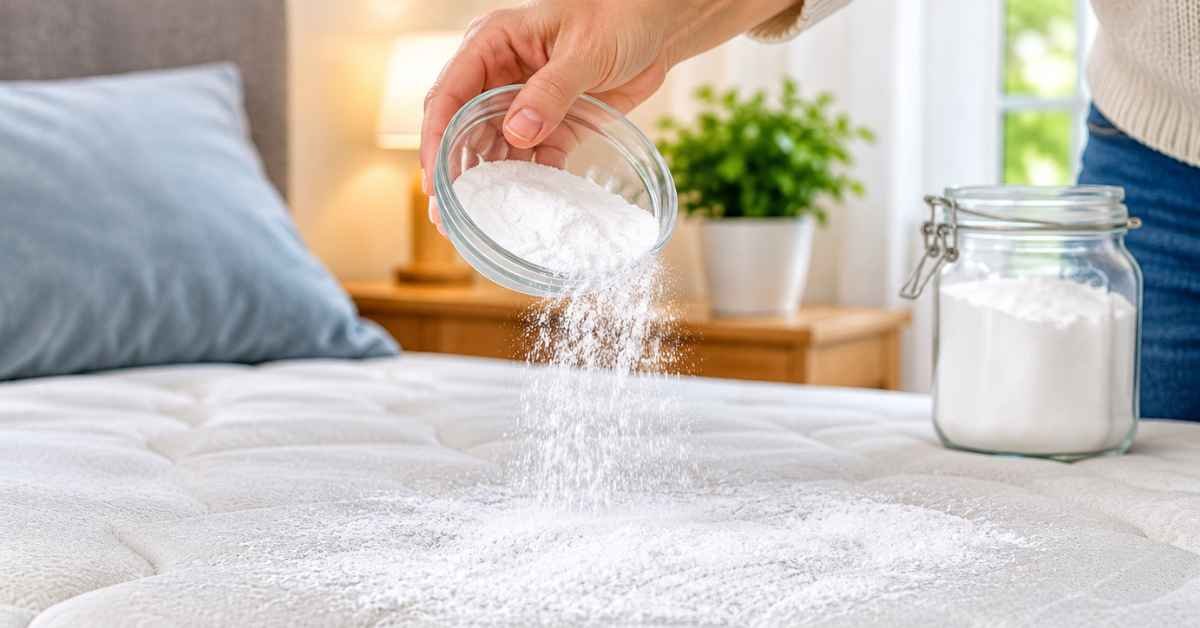
Baking soda can help absorb moisture and reduce unpleasant odors on the mattress surface. It is useful after spot-cleaning, but it is not a disinfectant and should not be treated as a way to kill dust mites or bacteria.
Follow these steps:
- Make sure any spot-cleaned areas are dry.
- Sprinkle a thin, even layer of baking soda over the mattress.
- Leave it for several hours. You can leave it longer if the room can remain well-ventilated.
- Vacuum the baking soda thoroughly using the upholstery attachment.
Do not add baking soda to a wet mattress. Remove all visible powder before replacing the bedding.
Step 5: Let the Mattress Dry Completely
Drying is one of the most important parts of mattress cleaning. Trapped moisture can lead to musty odors and may encourage mold growth.
To help the mattress dry:
- Keep the bedding off until the mattress is completely dry.
- Open windows when weather and outdoor conditions allow.
- Use a fan to improve air circulation.
- Avoid applying more liquid than necessary during spot-cleaning.
Do not use a hair dryer or direct heat unless the manufacturer specifically recommends it. Also, do not place a mattress in direct sunlight unless its care instructions permit this.
For more practical cleaning advice, see Which?’s guide to cleaning a mattress, including tips for different mattress types and common stains.
Step 6: Replace the Bedding and Protect the Mattress
Once the mattress is fully dry, put on clean sheets and a fresh mattress protector.
A washable, well-fitting protector helps reduce the amount of sweat, body oils, dust, and accidental spills that reach the mattress.
You can also keep your bedroom fresh with clean bedding and regular room cleaning. If you are updating the overall look of your sleeping space, explore these dark academia bedroom ideas for bedroom design inspiration.
How to Clean Different Types of Mattresses

Not every mattress can be cleaned in the same way. Materials and construction affect how much moisture and which products are safe to use.
| Mattress Type | Cleaning Advice | What to Avoid |
| Memory foam | Vacuum gently and spot-clean with minimal moisture if permitted by the manufacturer. | Soaking, harsh chemicals, and excessive scrubbing. |
| Innerspring | Vacuum the surface, seams, and edges. Spot-clean stains carefully. | Excess water that can reach the inner materials. |
| Hybrid | Follow the care instructions for its foam and spring construction. Use low-moisture spot-cleaning. | Steam or liquid treatments not approved by the manufacturer. |
| Latex | Use gentle surface cleaning and follow the manufacturer’s specific instructions. | Harsh cleaners, excessive moisture, and unapproved heat. |
How to Clean a Memory Foam Mattress
Memory foam needs particular care because it can absorb moisture and take a long time to dry.
Use an upholstery attachment to vacuum the surface. If you find a stain, apply a small amount of an approved cleaner to a cloth and gently blot the area. Never pour water or cleaning solution directly onto the foam.
Allow the mattress to dry fully before putting the bedding back on. Check the manufacturer’s instructions before removing or washing a mattress cover.
How Often Should You Clean a Mattress?
For most households, a general mattress clean about every six months is a reasonable starting point. You may need to clean it more often if you have pets, allergies, frequent spills, or heavy sweating.
| Cleaning Task | Suggested Frequency |
| Wash sheets and pillowcases | At least once a week |
| Wash mattress protector | Follow its care label; commonly every few weeks or as needed |
| Vacuum mattress | Every 3–6 months |
| Spot-clean spills | As soon as possible |
| General mattress cleaning | About every 6 months |
These are general guidelines, not fixed rules. Follow your mattress and bedding manufacturers’ care recommendations.
For more ways to keep your bed looking fresh, see these bedding ideas for a comfortable bedroom.
Common Mattress Cleaning Mistakes to Avoid
A mattress can be difficult to dry and repair if it is cleaned incorrectly. Avoid these common mistakes:
- Using too much water: Excess moisture can reach the inner layers and create lingering odors.
- Pouring cleaner directly onto the mattress: Apply a small amount to a cloth instead, unless the product instructions specifically say otherwise.
- Scrubbing stains aggressively: Rubbing can spread the stain and damage the fabric.
- Using harsh chemicals: Bleach and strong cleaning products may discolor or damage mattress materials.
- Using steam without approval: Heat and moisture may damage some mattresses.
- Putting bedding back too soon: Always allow the mattress to dry completely.
- Flipping a one-sided mattress: Some mattresses are designed to be used on one side only. Check whether yours should be rotated or flipped.
For broader ideas on creating a coordinated home interior, you can also browse these dark academia living room ideas.
Frequently Asked Questions
1. How often should you clean a mattress?
A general mattress clean every six months is a useful starting point. Vacuuming, washing bedding, and using a mattress protector between deeper cleans can help keep it fresh. Clean spills as soon as possible.
2. Can you clean a mattress with baking soda?
Yes. Baking soda can help absorb moisture and reduce surface odors. Sprinkle a thin layer over a dry mattress, leave it for several hours, and vacuum it thoroughly. Baking soda does not disinfect the mattress or kill dust mites.
3. How do you clean a mattress without a vacuum?
You can remove loose debris with a soft, clean brush, but this will not remove dust as effectively as vacuuming. For stains, use a suitable cleaner on a cloth and gently blot the affected area. Avoid soaking the mattress.
4. Can you use vinegar to clean a mattress?
Some people use diluted vinegar for certain surface marks or odors, but it is not suitable for every mattress or fabric. Check the manufacturer’s instructions first and test a hidden area. Never mix vinegar with bleach or other cleaning products.
5. How do you clean a mattress without getting it wet?
Start by vacuuming the surface and seams. For odors, you can apply baking soda to a dry mattress and vacuum it away after several hours. If there is a stain, use a suitable cleaner sparingly on a cloth rather than applying liquid directly to the mattress.
6. Can you use hydrogen peroxide on a mattress?
Hydrogen peroxide may help with some stains, but it can bleach or damage mattress fabric. Do not use it unless the manufacturer’s care instructions allow it. If permitted, test a small hidden area first and follow appropriate product directions.
7. How long does a mattress take to dry after cleaning?
Drying time depends on the material, room temperature, airflow, and how much moisture was used. A lightly spot-cleaned surface may dry within a few hours, but thicker materials can take longer. Do not remake the bed until the cleaned area is completely dry.
Final Thoughts
Learning how to clean a mattress helps you remove everyday dust, deal with stains, and reduce unpleasant odors. The safest approach is to vacuum regularly, treat stains gently, use as little moisture as possible, and allow the mattress to dry completely.
Always follow the care instructions for your particular mattress. A suitable mattress protector and regular bedding care can also make future cleaning easier.

I’m Samreen Khadim Hussain, a home improvement writer specializing in practical, research-driven content for U.S. homeowners. At Domelite Home, I cover home renovation, interior design, home maintenance, and residential safety, translating technical information and industry research into clear, actionable guidance. My approach combines search intent research, reliable sources, and reader-focused writing to help homeowners understand their options, make informed decisions, and create safer, more functional living spaces.