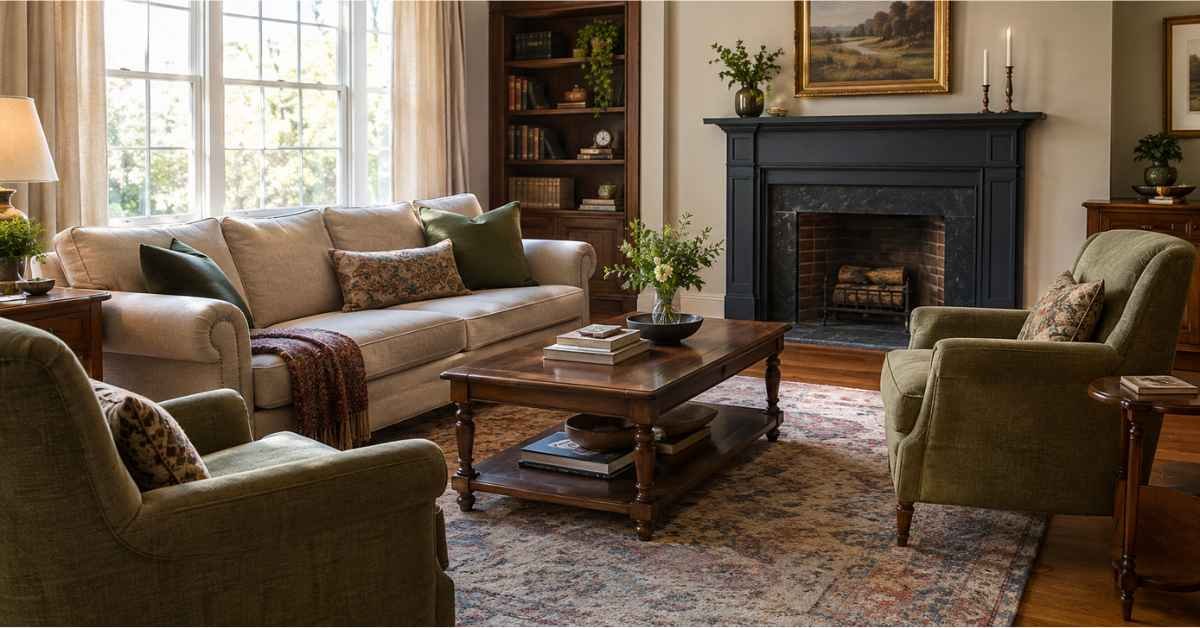
Quick Answer: A dark academia living room combines traditional architectural details, comfortable seating, expressive artwork, layered lighting, and personal collections to create a sophisticated, literary atmosphere. You can achieve this look in a modern apartment or a traditional home by focusing on conversation, comfort, and character rather than filling the room with dark furniture and decorative antiques.
A living room should tell a story without feeling like a museum. Imagine settling into a comfortable chair after a long day, listening to the rain outside, or spending an evening talking with friends beneath a softly lit painting. That welcoming, thoughtful atmosphere is what makes dark academia such an appealing interior style.
The best part? You can create it gradually, using furniture and accessories that fit your home and your lifestyle.
What Makes a Dark Academia Living Room Special?
A dark academia living room takes inspiration from traditional drawing rooms, historic libraries, and homes filled with art, books, and personal collections. However, a living room serves a different purpose from a bedroom or study. It needs to support conversation, relaxation, family activities, and entertaining without losing its distinctive character.
Instead of copying a particular historical interior, focus on the feeling you want to create. Architectural details provide visual interest, comfortable furniture makes the space inviting, and thoughtful lighting helps it transition from daytime gatherings to quiet evenings.
If you’re exploring the wider aesthetic, our guides to dark academia room design and dark academia furniture offer additional inspiration. The ideas below focus specifically on making your living room functional, personal, and visually engaging.
15 Dark Academia Living Room Ideas
1. Arrange Furniture Around Conversation
Furniture placement can transform a room more effectively than buying additional decorations. Instead of pushing every seat against a wall, create a comfortable grouping that encourages people to talk. Position the sofa opposite one or two chairs, leaving enough space for people to move between the seating area and adjoining rooms.
Consider how your household actually uses the space. If you regularly entertain guests, a circular or U-shaped arrangement may encourage conversation. If your living room is narrow, a loveseat paired with a single armchair may work better than several bulky pieces. Keep frequently used pathways clear, and make sure everyone can reach a table without stretching awkwardly.
2. Make Architectural Features the Focal Point

Architectural details can give a living room character before you add a single decorative accessory. Original fireplaces, ceiling moldings, paneled doors, exposed beams, and built-in cabinets all provide opportunities to establish a traditional atmosphere.
If your home already has these features, emphasize them rather than covering them with competing decorations. In a newer property, a substantial framed artwork, a traditional mirror, or a carefully chosen console can provide a similar focal point without expensive renovations.
The key is to work with your home’s existing proportions. A small apartment does not need oversized architectural features to feel sophisticated. Sometimes, a well-positioned mirror or a distinctive piece of furniture creates enough visual interest.
3. Use Layered Lighting for Different Activities
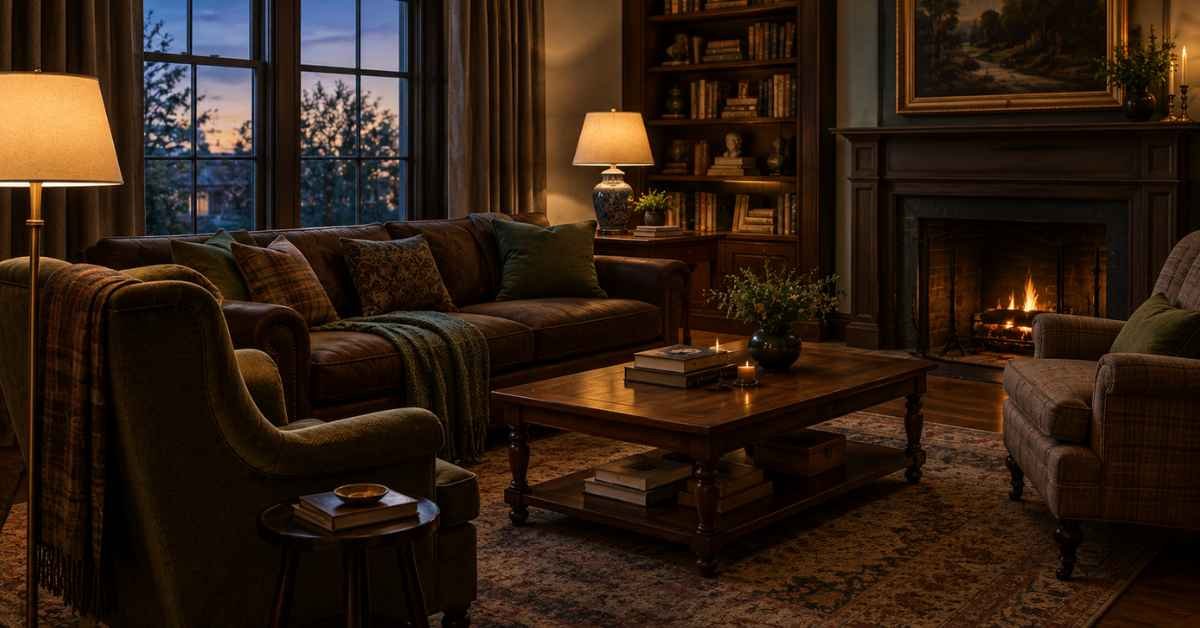
Lighting determines how comfortable a living room feels throughout the day. A single ceiling fixture may provide general illumination, but it rarely creates the flexibility needed for reading, entertaining, and relaxing.
Combine overhead lighting with floor lamps, table lamps, or wall sconces where appropriate. Place a reading lamp beside your favorite chair, and consider dimmable bulbs for fixtures that support them. Warm light can create a relaxed evening atmosphere, while adequate task lighting remains important for reading and other detailed activities.
For additional practical guidance, read Architectural Digest’s advice on common living room design mistakes, which discusses lighting, seating arrangements, and making living spaces more functional.
4. Display Artwork That Reflects Your Interests
Art adds personality and gives visitors something to notice beyond the furniture. Traditional landscapes, architectural drawings, historical illustrations, and portraits can complement the dark academia aesthetic without making the room feel overly themed.
You do not need expensive originals. Affordable prints can look polished when displayed in well-chosen frames. Consider hanging a larger piece above the sofa or arranging a small collection along a staircase wall or beside a doorway.
Before hanging anything, arrange the frames on the floor to test the composition. Keep the spacing reasonably consistent, and relate the arrangement to the furniture beneath it. Most importantly, choose artwork that genuinely interests you rather than purchasing pieces simply because they look antique.
5. Create a Living Room That Encourages Reading
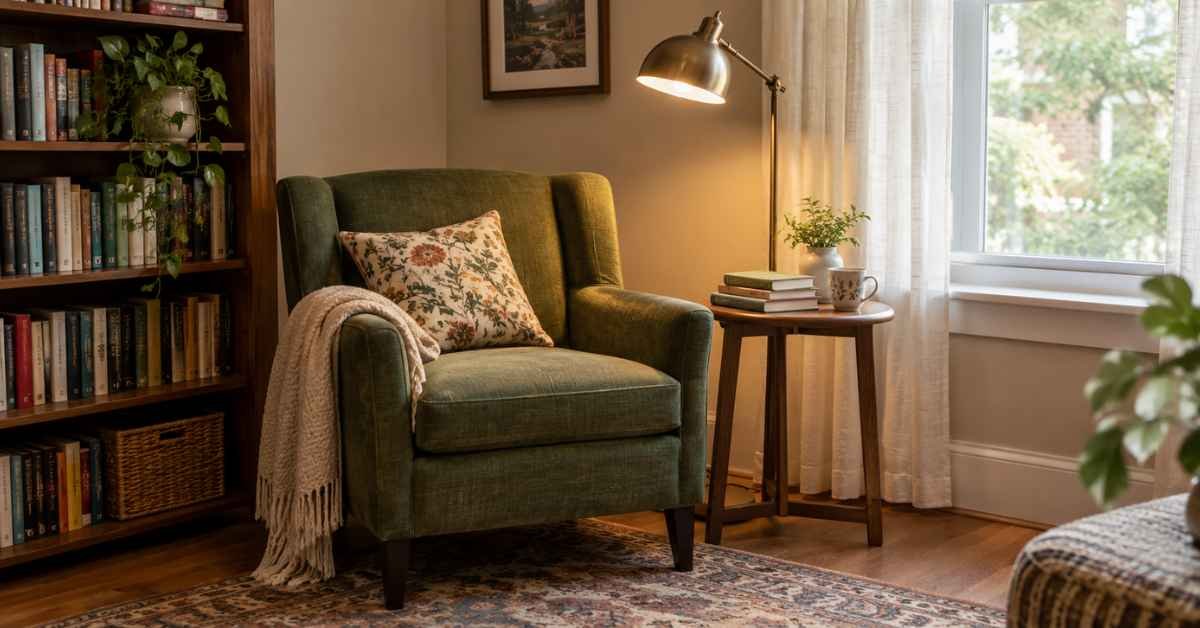
A reading area gives your living room a quiet purpose beyond entertaining. Choose a comfortable chair with suitable back support, a small side table, and a lamp that provides enough light for reading. A window alcove or an unused corner may offer the ideal location.
Books should be accessible rather than treated as decorative objects alone. Keep current reading material within reach, and use a small basket or cabinet to organize magazines and notebooks. If you have limited space, a narrow bookcase can provide useful storage without dominating the room.
You do not need an extensive library. A handful of favorite novels, poetry collections, biographies, or art books can make the space feel personal and inviting.
6. Choose Window Treatments That Suit the Room
Window treatments influence privacy, daylight, and the overall proportions of a living room. Full-length curtains can emphasize tall windows, while simple blinds offer practical light control. Textured fabrics provide visual interest without requiring elaborate patterns.
Think about the direction your windows face and how much natural light enters the room. Heavy curtains may suit a bright, exposed space, but lighter fabrics can be more appropriate in rooms that already receive limited daylight.
7. Introduce Texture Without Overcrowding the Room
Texture makes traditional interiors feel welcoming. Woven rugs, linen curtains, wool throws, and upholstered seating can create visual depth without adding more decorative objects.
Start with the largest surfaces. If your sofa has smooth upholstery, a textured rug or woven cushion can introduce contrast. If the room already contains patterned furniture, simpler fabrics may help maintain balance.
Practicality matters, too. Choose washable cushion covers where possible, and consider durable rugs in homes with children or pets. The goal is to create a comfortable room that looks inviting on an ordinary weekday, not just when everything has been arranged for a photograph.
8. Style the Coffee Table for Everyday Use
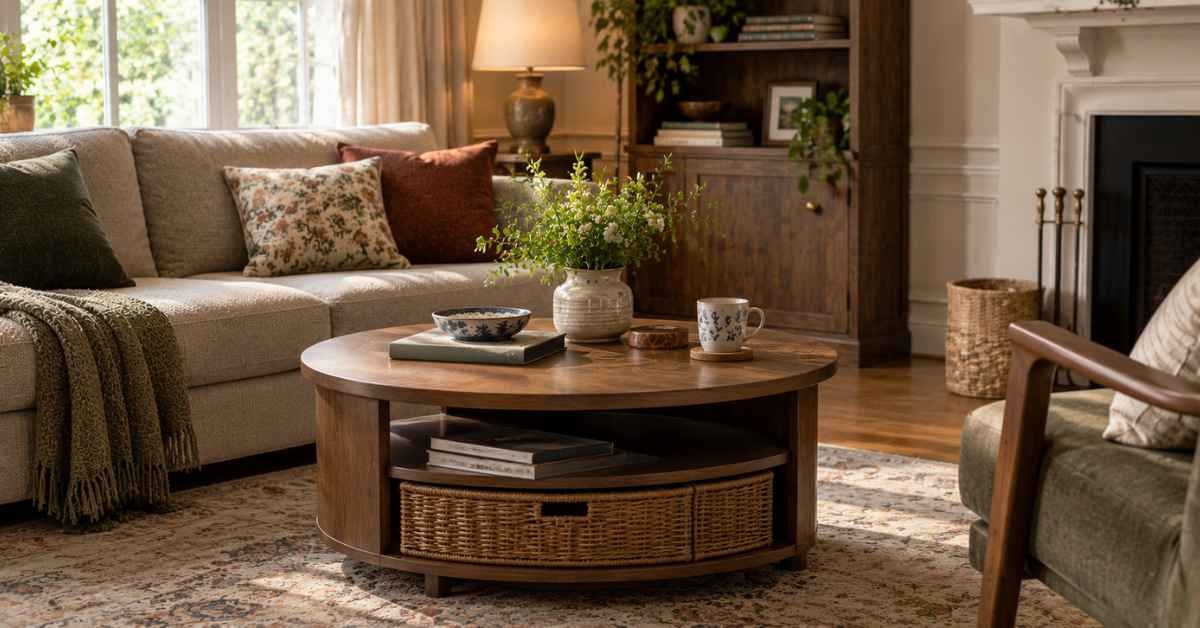
A coffee table can add character without becoming a collection of objects that need constant moving. A favorite book, a small ceramic bowl, and a modest vase may be enough to create a considered arrangement.
Leave open space for drinks, snacks, and everyday essentials. If your living room is small, choose a table with storage or consider nesting tables that can be moved when guests arrive.
Think about height and shape as well. Rounded edges can make movement easier in a compact seating area, while a rectangular table may suit a longer sofa. Select a design that supports the way you use the room rather than choosing one based on appearance alone.
9. Use Mirrors to Improve the Sense of Space
A well-placed mirror can reflect daylight, create a greater sense of depth, and make a small living room feel more open. Traditional frames can complement the aesthetic, while simpler designs can balance rooms with more elaborate furniture.
Position the mirror where it reflects something attractive, such as a window, artwork, or architectural feature. Avoid placing it where it mainly reflects clutter or an unappealing view.
Choose a size that suits the wall and secure the mirror with suitable hardware. In a rental property, check whether removable hanging systems are appropriate for the mirror’s weight and the wall surface before installation.
10. Bring Nature Into the Living Room
Natural elements can soften the formality of traditional interiors. A leafy houseplant, a branch in a ceramic vase, or a framed botanical illustration can introduce a subtle connection to nature.
Choose plants according to the room’s available light and your willingness to care for them. A plant that thrives near a bright window may struggle in a dark corner, so research the needs of individual varieties before buying.
Keep the arrangement simple. One substantial plant beside a cabinet can have more impact than several small pots scattered across every surface. If you have pets, check whether a plant is safe for them before bringing it home.
11. Give Storage a Decorative Purpose
Storage does not need to be hidden if the pieces themselves contribute to the room’s character. A traditional cabinet, a well-maintained sideboard, or a bookcase can provide practical storage while adding visual interest.
Use closed compartments for items that tend to create clutter, such as cables, chargers, games, and paperwork. Reserve open shelves for books and a few meaningful objects.
Tall furniture should be stable and appropriately secured, particularly in homes with children. The U.S. Consumer Product Safety Commission’s Anchor It! furniture safety campaign explains the importance of preventing furniture tip-overs.
12. Adapt the Style for a Small Living Room
A compact living room can achieve the dark academia aesthetic without oversized furniture or crowded shelves. Focus on a few distinctive elements, such as a traditional armchair, framed artwork, a compact bookcase, and a practical reading lamp.
Choose furniture according to the room’s dimensions, not simply its appearance in a showroom. Measure doorways and walking paths before buying, and consider multifunctional pieces where storage is limited.
Keep some surfaces clear so the room feels comfortable rather than cramped. A restrained arrangement often makes architectural details and individual objects more noticeable.
13. Combine Traditional and Contemporary Pieces
You do not need to furnish your living room entirely with antiques. A contemporary sofa can work beautifully beside a traditional wooden cabinet, and a modern floor lamp can complement a collection of framed historical prints.
Create visual connections between different periods through repeated materials, finishes, or shapes. For example, a modern chair with wooden legs may relate naturally to an older side table.
This approach also makes the room easier to maintain and update. You can retain practical furniture you already own while introducing traditional character through carefully selected additions.
14. Make the Room Reflect Your Personal Story
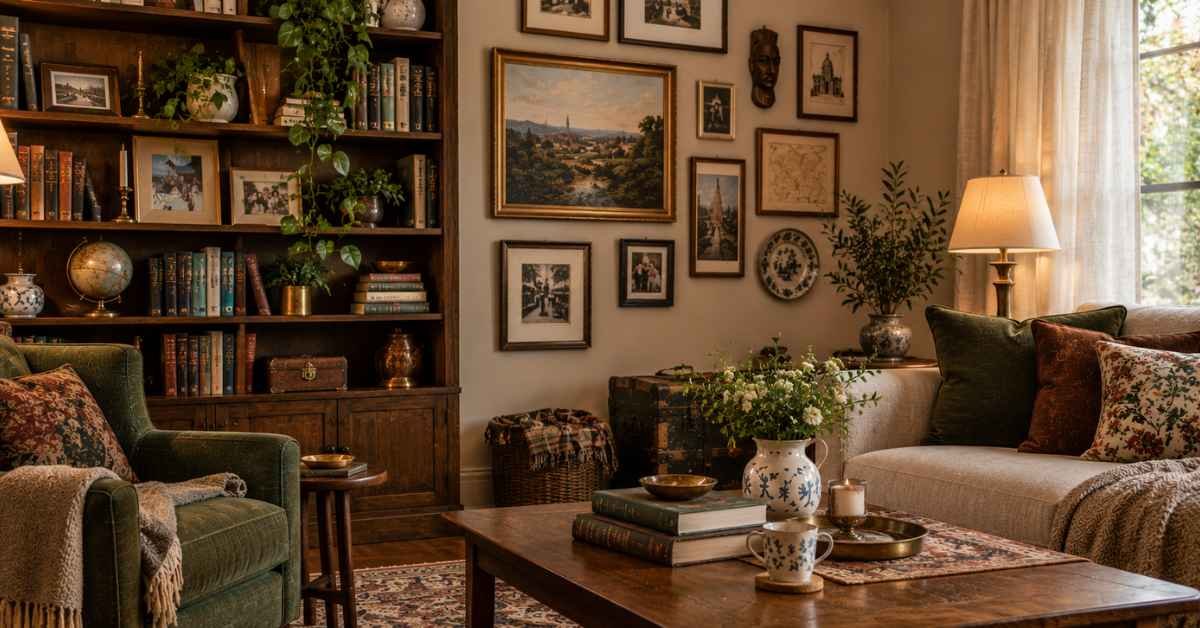
The most memorable interiors feel connected to the people who live in them. Family photographs, travel souvenirs, treasured books, inherited objects, and handmade ceramics can give the room a sense of history.
Choose a few items that have genuine meaning rather than filling every shelf with decorative purchases. Group related objects together, and allow each arrangement enough space to remain visible.
A living room should evolve naturally as your interests change. You can add a new artwork after a trip, rearrange your books, or replace an accessory that no longer suits the room. Personal character develops over time, not through a single shopping trip.
15. Build the Look Gradually
Creating a distinctive living room does not require a complete makeover. Start by deciding what the room needs most. If seating feels awkward, rearrange the furniture. If the room lacks personality, introduce artwork. If evenings feel uncomfortable, improve the lighting.
Once the essential elements work well together, consider additional details. Our guide to dark academia wallpaper explores patterned wall treatments if you want to introduce more decorative character elsewhere in your home.
Take time to assess each purchase before committing. A room built around useful furniture and meaningful objects is more likely to remain attractive than one filled with accessories chosen simply to follow a trend.
Common Dark Academia Living Room Mistakes to Avoid
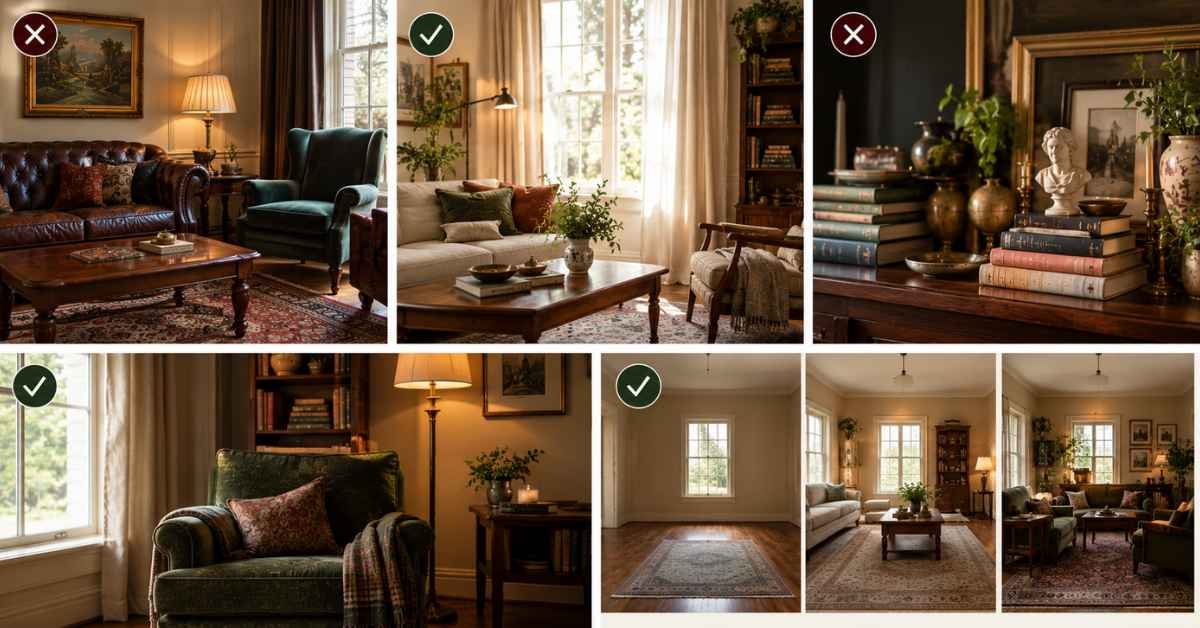
Several design choices can make a living room less comfortable, even when the individual pieces look attractive.
Making the space too formal: Avoid seating that looks impressive but feels uncomfortable. The room should support everyday use as well as entertaining.
Blocking useful daylight: Heavy curtains and poorly placed furniture can make the space feel enclosed. Consider how daylight moves through the room before finalizing the layout.
Overdecorating every surface: Too many accessories compete for attention and create additional cleaning. Leave some shelves and tables partially clear.
Ignoring lighting needs: Atmospheric lamps cannot always replace adequate general and task lighting. Provide suitable illumination for reading and other activities.
Buying everything at once: Rushing to complete the aesthetic can result in mismatched purchases. Make gradual changes and assess how each addition works with the existing room.
How to Create a Dark Academia Living Room on a Budget
You can create a sophisticated living room without replacing all your furniture. Begin by using what you already own, then identify the changes that would make the greatest difference.
Rearranging seating, framing existing artwork, organizing books, or updating a lampshade may cost little compared with buying new furniture. Secondhand shops and local marketplaces can also offer distinctive cabinets, tables, and traditional accessories.
Prioritize comfort and function before decorative extras. If you need a better reading chair, invest in one that provides suitable support. If storage is the main problem, choose a useful cabinet rather than buying more decorative containers.
Keep a simple budget and allow room for unexpected costs, including repairs or cleaning when buying used furniture. A gradual approach makes it easier to build a coherent space without spending money on items you later regret.
Conclusion
A dark academia living room should combine traditional character with the comfort and practicality of a modern home. Thoughtful seating arrangements, expressive artwork, flexible lighting, useful storage, and personal collections can create a space that feels distinctive without becoming gloomy or overly formal.
Start with your existing furniture, identify what the room needs, and introduce new pieces carefully. You do not need an enormous library, expensive antiques, or a historic property to create the atmosphere.
The best living room is one that looks inviting, supports your daily routine, and feels unmistakably your own.
Frequently Asked Questions
1. How do you create a dark academia living room?
Start with a comfortable seating arrangement, traditional details, meaningful artwork, and layered lighting. Add books, textured materials, and personal objects gradually while keeping the room practical for everyday use.
2. Can dark academia work in a small living room?
Yes. Choose appropriately sized furniture, use vertical storage carefully, and avoid overcrowding shelves and tables. A few distinctive pieces can establish the style without making the room feel cramped.
3. What lighting works best in a dark academia living room?
Combine general lighting with floor lamps, table lamps, or wall sconces where suitable. Place reading lights near seating areas and ensure the room has enough illumination for everyday tasks.
4. Do you need antique furniture for dark academia interiors?
No. Modern furniture can work well alongside secondhand or vintage-inspired pieces. Choose furniture that is comfortable and practical, then create cohesion through complementary materials, artwork, and carefully selected accessories.
5. How can you make a dark academia living room feel welcoming?
Prioritize comfortable seating, preserve natural daylight, use layered lighting, and leave enough open space for movement. Personal objects and books can add character without making the room feel staged or cluttered.

I’m Samreen Khadim Hussain, a home improvement writer specializing in practical, research-driven content for U.S. homeowners. At Domelite Home, I cover home renovation, interior design, home maintenance, and residential safety, translating technical information and industry research into clear, actionable guidance. My approach combines search intent research, reliable sources, and reader-focused writing to help homeowners understand their options, make informed decisions, and create safer, more functional living spaces.