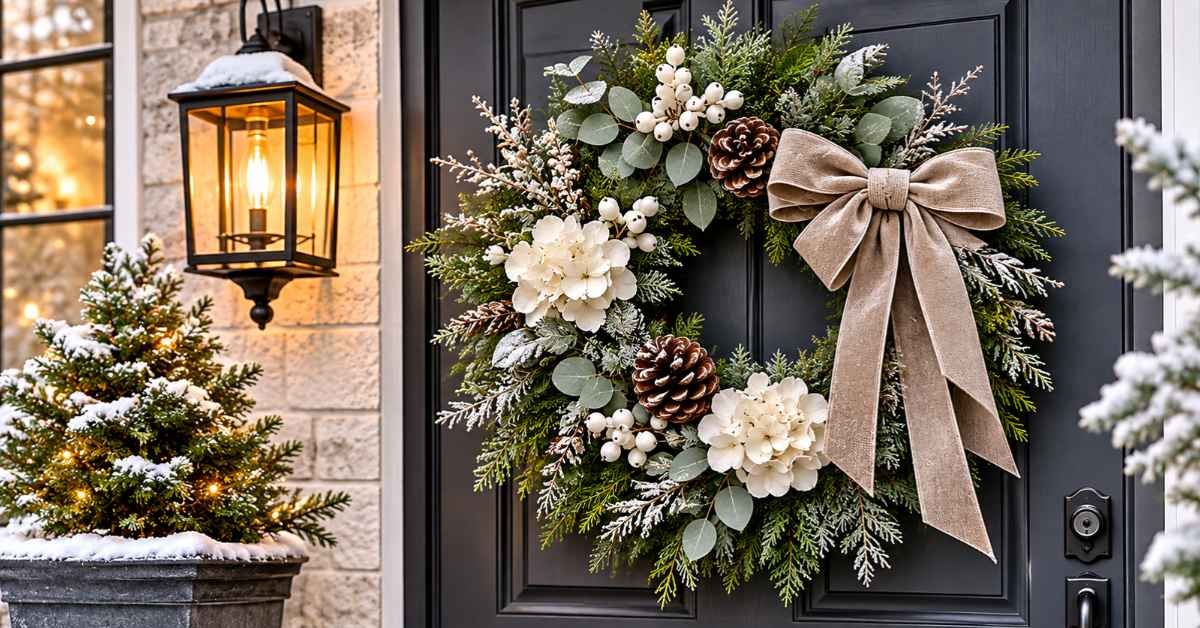
Quick Answer: The best winter wreath ideas for your front door combine evergreen branches, eucalyptus, pinecones, magnolia leaves, dried flowers, berries, and natural textures. Choose colors such as forest green, white, silver, burgundy, and warm brown to create a beautiful seasonal entrance. Whether you prefer a rustic grapevine wreath, a minimalist wooden hoop, or a full evergreen arrangement, select materials that suit your front door and local weather.
Winter is a beautiful season for decorating your home’s entrance. Natural greenery, bare branches, dried flowers, and soft neutral colors can make a front door look welcoming even when the garden is quiet.
A winter wreath does not need to be large or heavily decorated to make an impression. Sometimes a simple arrangement of eucalyptus, pinecones, and a natural ribbon looks more attractive than an overly elaborate design.
Whether your home has a modern, traditional, farmhouse, or rustic exterior, these 17 winter wreath ideas offer inspiration for creating a beautiful front-door display. You will also find practical advice on wreath materials, sizes, hanging methods, and outdoor care.
17 Gorgeous Winter Wreath Ideas for Your Front Door
1. Classic Evergreen and Pinecone Wreath
An evergreen wreath is a timeless choice for winter decorating. Use pine, fir, spruce, or cedar branches to create a full, natural base.
Add a few pinecones in small clusters rather than covering the entire wreath. A simple cream, beige, or natural linen ribbon gives the arrangement a finished appearance without distracting from the greenery.
Best for: Traditional homes, wooden doors, and natural exterior styles.
2. Eucalyptus and White Berry Wreath

Eucalyptus has soft, muted green and silvery leaves that work beautifully in winter arrangements. Pair it with small white berries and a grapevine or wire base for a light, elegant design.
Keep most of the foliage along one side of the frame to create an asymmetrical arrangement. This allows part of the base to remain visible and gives the wreath a modern appearance.
Best for: Contemporary homes, neutral entrances, and minimalist decorating styles.
3. Frosted Pine and White Berry Wreath
A lightly frosted pine wreath creates a snowy winter appearance without looking overly decorative. Choose greenery with subtle white tips and add a few white berries or natural pinecones.
Avoid excessive artificial snow or glitter if you prefer a realistic outdoor design. The combination of green foliage and white accents looks especially attractive against navy, charcoal, black, or deep green doors.
Best for: Dark front doors and homes with cool neutral exterior colors.
4. Magnolia Leaf Wreath with Natural Brown Accents
Magnolia leaves have glossy green upper surfaces and warm brown undersides. Their contrasting colors provide plenty of visual interest without requiring many additional decorations.
Arrange the leaves in overlapping layers, allowing some of the brown undersides to remain visible. A narrow brown or cream ribbon can complete the design.
Best for: Traditional homes, elegant entrances, and warm neutral exteriors.
5. Dried Orange and Natural Pinecone Wreath
Dried orange slices introduce warm amber and orange tones into winter decorations. Combine them with pinecones, cinnamon sticks, and evergreen sprigs for a natural, rustic appearance.
Arrange the orange slices in small groups rather than distributing them evenly around the frame. This creates a more balanced design and allows the greenery to remain the main feature.
Best for: Cottage-style homes, rustic entrances, and handmade winter decor.
6. Minimalist Wooden Hoop Wreath
A wooden hoop wreath is a good alternative to a traditional full-circle arrangement. Leave most of the wooden frame exposed and attach a small bundle of eucalyptus, cedar, or olive branches to one side.
You can finish the design with a narrow linen ribbon or a few dried flowers. The open space makes this style particularly suitable for modern front doors where a large, dense wreath might look overwhelming.
Best for: Contemporary homes, narrow entrances, and minimalist exterior designs.
7. Burgundy Berry and Evergreen Wreath
Burgundy berries add a rich seasonal color that works beautifully with deep green foliage. Combine them with a few natural pinecones for additional texture.
Place the berries in two or three clusters to create a balanced arrangement. A matching burgundy velvet ribbon can add warmth, especially against a white, cream, gray, or dark wooden door.
Best for: Traditional entrances and homes with neutral exterior palettes.
8. Winter White Floral Wreath
White hydrangeas, dried flowers, pale seed heads, and silver-green foliage create a softer alternative to traditional evergreen wreaths.
Use larger flowers as the main feature and fill smaller spaces with delicate branches. If your front door is exposed to rain, choose weather-resistant artificial flowers rather than delicate dried materials.
Best for: Light-colored doors, elegant homes, and understated winter decorating.
9. Rustic Grapevine Wreath with Evergreen Sprigs

A grapevine wreath has natural texture and an attractive twisted-branch appearance. It can look beautiful even when parts of the base remain uncovered.
Attach cedar sprigs, pinecones, berries, and a few dried seed heads to create a relaxed woodland design. Avoid covering the entire frame because the exposed vines are part of its appeal.
Best for: Farmhouse, cottage, and rustic exterior styles.
10. Cedar and Juniper Wreath Without a Bow
If you prefer understated decorations, combine cedar and juniper branches without adding a ribbon or large accessories.
Their different textures and shades of green provide enough visual interest on their own. Allow a few branch tips to extend naturally beyond the circular shape for a relaxed woodland appearance.
Best for: Minimalist homes and homeowners who prefer natural materials.
11. Silver and Blue-Green Winter Wreath

Combine blue-green pine branches with a few silver-painted pinecones and subtle white accents. This cooler color combination creates a crisp winter appearance.
Use metallic details sparingly. A few silver elements provide contrast, while too many shiny decorations can make the wreath look crowded.
Best for: Navy, charcoal, black, and white front doors.
12. Natural Twig Wreath with Asymmetrical Greenery
A twig wreath provides a lightweight, open design that works well on smaller doors. Choose a circular frame made from natural branches and attach a compact arrangement of eucalyptus or evergreen foliage to one side.
A small neutral bow is optional. Leaving much of the frame visible gives the wreath a handmade appearance and prevents it from looking crowded.
Best for: Modern farmhouse and Scandinavian-inspired entrances.
13. Warm LED Winter Wreath
Small warm-white LED lights can make an evergreen wreath more noticeable after sunset. Choose an outdoor-rated battery-operated light strand and weave it carefully through the foliage.
Keep the battery compartment at the back of the wreath and secure loose wires. Check the manufacturer’s instructions for outdoor use and weather protection before hanging it in an exposed location.
Best for: Covered porches and entrances that need gentle evening lighting.
14. Farmhouse Wreath with a Neutral Plaid Bow
A plaid bow can add character to a simple evergreen wreath. Black and cream, gray and white, and muted brown patterns work particularly well with natural greenery.
Keep the pinecones and other decorations limited so the bow remains the main accent. Choose weather-resistant ribbon if the wreath will stay outside throughout the winter.
Best for: Farmhouse entrances, white doors, and natural wood exteriors.
15. Oversized Layered Evergreen Wreath
A large wreath can create a stronger focal point on a wide front door or double entrance. Combine different evergreen branches, magnolia leaves, and a few pinecones to create depth.
Make sure the finished arrangement is not excessively heavy. Check the hanging hardware’s weight capacity and allow enough clearance for the door handle, glass panels, and door opening.
Best for: Wide entrances, double doors, and larger porches.
16. Dried Grass and Seed Head Wreath
For a design that feels different from traditional evergreen arrangements, use dried grasses, seed heads, and natural branches.
Choose a willow or grapevine base and attach the dried materials in overlapping layers. Neutral shades of beige, tan, muted brown, and soft cream create a warm winter palette.
Because dried materials can be damaged by moisture, this design is better suited to a sheltered porch or covered entrance.
Best for: Natural, rustic, and contemporary farmhouse homes.
17. Soft Pink and Green Winter Wreath

Winter decorations do not have to rely entirely on white, brown, and dark green. Soft pink flowers or muted blush berries can add gentle color to an evergreen wreath.
Combine the pink accents with eucalyptus, cedar, or other muted greenery. Keep the color limited to a few small areas so the finished arrangement remains balanced.
Best for: Cream, white, sage green, and light gray front doors.
How to Decorate Your Front Door Around a Winter Wreath
A wreath looks more intentional when the surrounding entrance uses a few complementary decorations. You do not need to fill every available space. Two or three coordinated additions are usually enough.
Add an Evergreen Garland Around the Doorframe
A cedar or pine garland can visually connect the wreath with the rest of the entrance. Choose similar foliage and keep the arrangement relatively simple.
A natural green garland works especially well with wooden doors, stone exteriors, and neutral-colored walls.
Place Matching Winter Planters Beside the Door
Planters add height and balance to a front entrance. Choose evergreen plants, suitable seasonal flowers, or decorative branches arranged in weather-resistant containers.
For more seasonal planting inspiration, explore these winter flower ideas.
Use Decorative Lanterns for Warm Lighting
Lanterns add a welcoming touch, particularly when placed beside the doorway or near a porch step. Choose a simple metal, wood, or black finish that complements the wreath.
Battery-operated flameless candles are a practical option around dried foliage, ribbons, and other decorative materials.
Choose a Neutral Winter Doormat
A simple doormat can complete the entrance without competing with the wreath. Natural textures, understated patterns, and muted colors work well with evergreen arrangements.
Choose an outdoor-suitable mat and make sure it does not interfere with the door opening.
Add Natural Branches and Pinecones to Porch Containers
A small arrangement of branches and pinecones can extend the wreath’s natural look to the rest of the porch. Use a sturdy container and secure lightweight materials so they do not blow away.
For more ideas to refresh your home’s exterior, see these home exterior improvement ideas.
How to Choose the Right Winter Wreath for Your Front Door
Before buying or making a wreath, consider three things: its size, the material, and the weather conditions where it will hang.
Choose a Wreath Size That Suits Your Door
A wreath should be noticeable without covering door hardware, decorative glass, or other features. Measure the door before purchasing a ready-made wreath or selecting a DIY frame.
A useful starting point is to choose a wreath approximately one-third of the door’s width. This is a decorating guideline, not a strict measurement rule.
| Door width | Suggested wreath diameter |
| 28–30 inches | 10–16 inches |
| 32–36 inches | 18–24 inches |
| 36–42 inches | 22–28 inches |
| Wider or double doors | 26–32 inches or larger |
These are approximate styling suggestions. The best size also depends on the wreath’s thickness, available hanging space, and the design of the entrance.
Compare Fresh, Artificial, and Dried Wreath Materials

Different materials suit different locations and maintenance preferences.
| Wreath material | Main advantage | Main limitation |
| Fresh evergreen | Natural fragrance and appearance | Gradually loses moisture |
| Artificial greenery | Reusable and generally easy to maintain | Quality and outdoor suitability vary |
| Dried flowers | Natural texture and muted colors | Can become brittle or damaged by moisture |
| Preserved foliage | Retains a natural appearance | Requires suitable display conditions |
| Grapevine and twigs | Reusable base with natural texture | Usually needs additional seasonal accents |
Fresh evergreen wreaths are attractive when you want a natural appearance and fragrance. Artificial wreaths are more practical if you want to reuse the same design for several winters. Dried wreaths are suitable for covered entrances where they are protected from rain and strong winds.
Match the Wreath to Your Porch’s Weather Exposure
The best material also depends on where you plan to hang it.
| Display location | Suitable choices | Materials to use carefully |
| Covered porch | Fresh greenery, dried flowers, artificial wreaths | Delicate ribbons |
| Exposed front door | Sturdy evergreen or outdoor-rated artificial wreath | Dried flowers and untreated fabric |
| Shaded entrance | Fresh evergreen and preserved foliage | Materials that need protection from moisture |
| Sunny entrance | Weather-resistant artificial greenery | Fresh foliage that dries quickly in direct sun |
If your entrance receives frequent rain or strong wind, choose a sturdy design with securely attached decorations. Delicate dried materials are better kept under a covered porch.
How to Hang a Winter Wreath Without Damaging Your Door
The right hanging method depends on your door’s material, finish, and available hardware.
1. Use an over-the-door wreath hanger. This is a convenient option for many standard doors because it does not require drilling. Check the hanger’s dimensions and make sure it does not prevent the door from closing properly.
2. Hang the wreath with a ribbon. A strong ribbon can be looped over the top of the door and secured on the inside. Check that it does not interfere with the door seal or locking mechanism.
3. Use a suitable adhesive hook. If you prefer not to use a hanging ribbon, choose a hook specifically rated for the door’s surface and the wreath’s weight. Follow the manufacturer’s cleaning, installation, temperature, and weight-limit instructions.
4. Check the wreath’s weight before hanging. Fresh greenery can become heavier when wet. Use hardware with an appropriate weight capacity and inspect it after storms or heavy rain.
5. Position it at a comfortable viewing height. Center the wreath visually on the door, leaving enough space around the handle, lock, and glass panels.
How to Keep a Fresh Winter Wreath Looking Good Longer
Fresh wreaths need suitable conditions to retain their color and texture. Their lifespan depends on the type of greenery, temperature, moisture, and exposure to wind and sunlight.
Iowa State University Extension explains that fresh-cut wreaths last best in cool, moist conditions. It also recommends avoiding windy locations because moving air can remove moisture from the foliage.
Follow these practical care tips:
- Choose fresh branches with pliable needles rather than dry, brittle greenery.
- Keep the wreath away from strong winds where possible.
- Avoid placing fresh greenery near heat sources.
- Mist foliage when appropriate, following the needs of the greenery and the wreath maker’s instructions.
- Follow product directions if using an anti-desiccant spray.
- Remove the wreath when it becomes excessively dry or begins shedding heavily.
For more detailed advice on selecting evergreen branches, constructing a wreath, and caring for fresh foliage, read the Iowa State University Extension wreath-making guide.
The Royal Horticultural Society gives approximately four to five weeks as a general outdoor lifespan for fresh wreaths under suitable conditions. Indoor wreaths may remain fresh for only one to two weeks, depending on room temperature. Its guide to wreath materials and care also explains suitable foliage, natural bases, and ways to keep greenery moist.
Artificial wreaths require less maintenance. Dust them gently, check that decorative pieces remain attached, and store them in a dry container when the season ends.
Common Winter Wreath Decorating Mistakes to Avoid
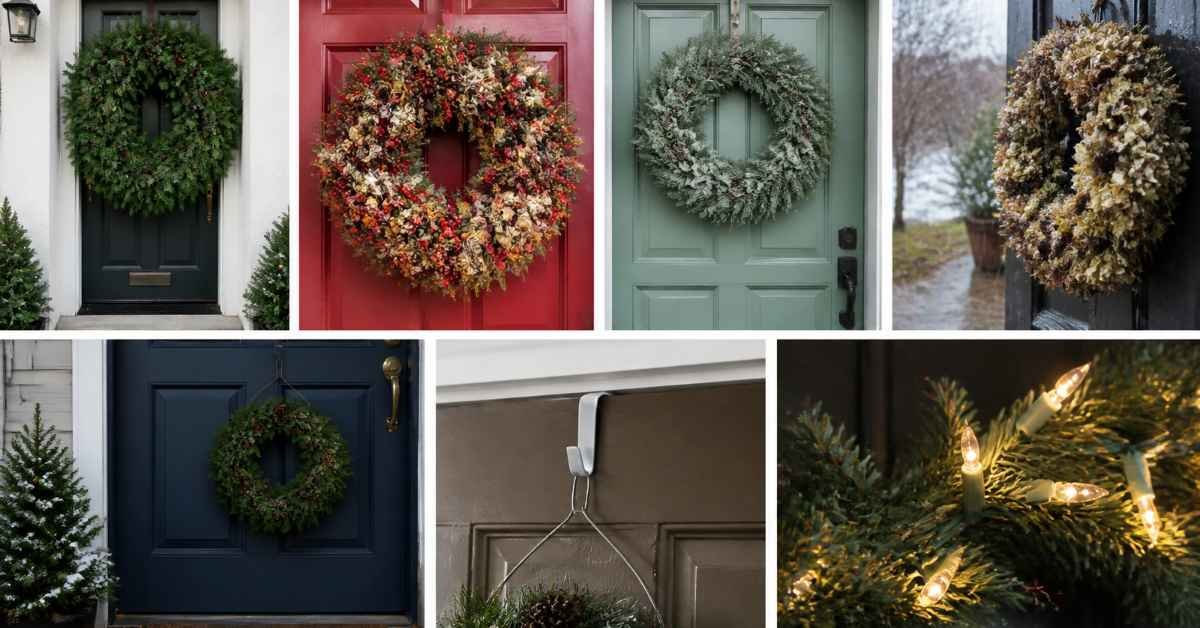
A beautiful wreath can still look out of place if its size, colors, or materials do not suit the entrance.
Avoid these common mistakes:
- Choosing the wrong size: Measure the door and consider the wreath’s finished width, not just its frame.
- Using too many decorations: Large bows, flowers, berries, and ornaments can make the arrangement look crowded.
- Ignoring the door color: Choose accents that contrast with the door instead of blending into it.
- Using delicate materials outdoors: Dried flowers and untreated fabrics may deteriorate in rain and wind.
- Hanging the wreath too low: Keep it clear of door handles, locks, and decorative glass.
- Using unsuitable hanging hardware: Check its weight capacity and compatibility with the door’s finish.
- Leaving damaged lights in place: Inspect decorative light strands and follow the manufacturer’s safety instructions.
Conclusion
The best winter wreath ideas for your front door combine attractive seasonal materials with a design that suits your home’s exterior. Evergreen branches, eucalyptus, pinecones, magnolia leaves, dried flowers, and natural twig frames offer plenty of ways to create a welcoming entrance.
Choose colors that complement your front door, select materials suited to your porch’s weather conditions, and complete the display with a few matching planters, lanterns, or a simple winter doormat.
A thoughtfully chosen wreath can keep your front door looking beautiful throughout the winter season without requiring an elaborate decorating project.
Frequently Asked Questions
1. What is the best wreath for a front door in winter?
An evergreen wreath made with pine, fir, or cedar is a popular winter choice because it provides natural color and texture. Add pinecones, white berries, or a neutral ribbon for a simple seasonal design.
2. What size winter wreath should I buy for my front door?
A wreath measuring approximately 18 to 24 inches works well for many standard front doors. Wider doors may accommodate larger designs, while narrow entrances often look better with smaller wreaths. Measure the available space before purchasing.
3. What materials are best for making a winter wreath?
Evergreen branches, eucalyptus, magnolia leaves, pinecones, grapevine, dried flowers, and natural twigs are popular wreath materials. Choose materials based on the appearance you want and whether the wreath will hang in a sheltered or exposed location.
4. How long does a fresh winter wreath last outside?
A fresh evergreen wreath may last several weeks outdoors, depending on its greenery, temperature, moisture, and wind exposure. The Royal Horticultural Society gives approximately four to five weeks as a general outdoor guide under suitable conditions.
5. How do I protect an outdoor wreath from rain and wind?
Choose sturdy greenery, secure decorative pieces with floral wire, and use suitable hanging hardware. A sheltered location helps protect delicate materials. Avoid exposed dried flowers and check the wreath after heavy rain or strong winds.
6. What colors look best on a winter front door wreath?
Deep green, burgundy, white, silver, brown, and muted gold are attractive winter wreath colors. Choose combinations that contrast with your front door. White accents stand out against dark doors, while burgundy and greenery complement lighter exteriors.
7. Can I leave a winter wreath up throughout the season?
Yes. An artificial or weather-resistant winter wreath can remain on your front door throughout the season. Choose evergreen foliage, natural branches, and durable materials. Inspect it regularly and remove damaged decorations.
8. What can I decorate my front door with besides a winter wreath?
You can use an evergreen swag, wooden hoop, vertical greenery arrangement, decorative hanging basket, or seasonal door sign. Matching planters, lanterns, and a winter doormat can also create an attractive entrance.

I’m Samreen Khadim Hussain, a home improvement writer specializing in practical, research-driven content for U.S. homeowners. At Domelite Home, I cover home renovation, interior design, home maintenance, and residential safety, translating technical information and industry research into clear, actionable guidance. My approach combines search intent research, reliable sources, and reader-focused writing to help homeowners understand their options, make informed decisions, and create safer, more functional living spaces.