
Quick Answer: A dark academia dorm room combines vintage-inspired academic details, rich colors, practical storage, and functional student furniture without requiring permanent alterations. Use removable wall displays (where permitted), compact desk accessories, twin XL bedding, portable lighting, secondhand decorative pieces, and under-bed organizers to create a literary atmosphere. The key is to work with your university’s housing rules, limited floor space, and roommate arrangements rather than treating your dorm like a traditional bedroom.
How to Create a Dark Academia Dorm Room That Works for Student Life
A standard university dorm rarely offers much room for personal decoration. You may have a twin XL bed, a small desk, a shared closet, institutional furniture, and barely enough floor space for a chair. Yet these limitations don’t mean you have to abandon your preferred interior style.
A dark academia dorm room should feel like a student residence with an old-library influence, not a fully furnished period bedroom. Think vintage book covers, antique-inspired stationery, framed literary prints, dark wood accessories, brass-look details, and carefully organized study materials.
The most effective approach is to concentrate on portable details that serve a purpose. Instead of buying large decorative furniture, choose items that fit into your existing setup, support your academic routine, and can move with you when the semester ends.
17 Practical Dark Academia Dorm Room Ideas
1. Work With Your Dorm’s Existing Furniture
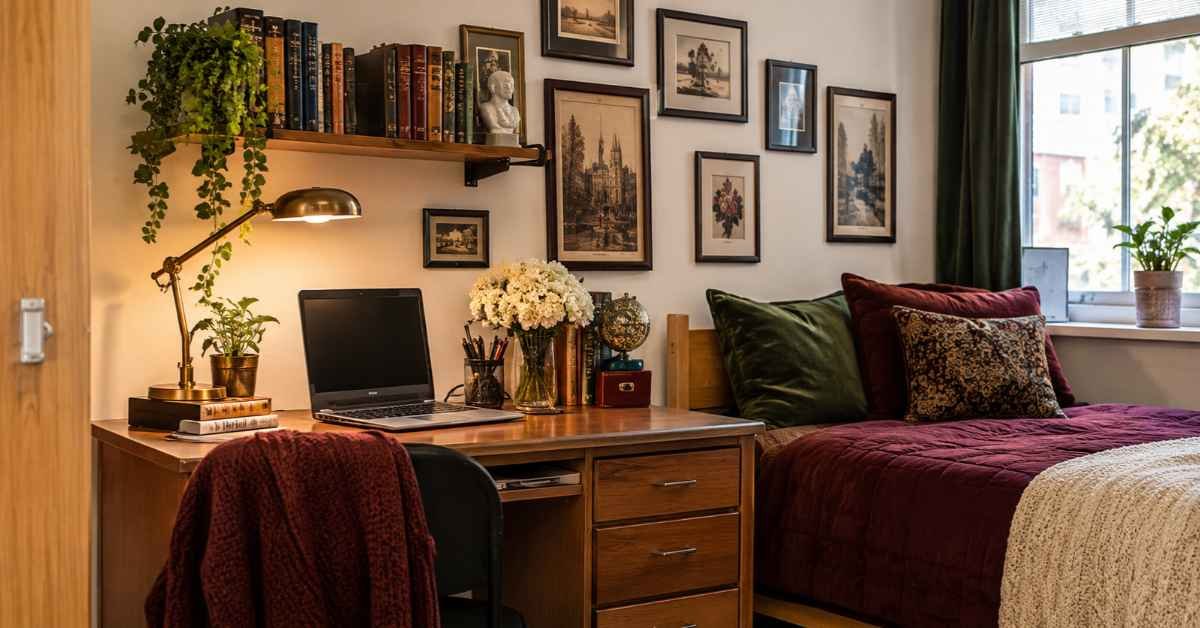
Start with the furniture your university provides. Most residence halls already include a bed, desk, chair, wardrobe, and sometimes a small dresser. Rather than bringing additional furniture that may overcrowd the room, use these existing pieces as the foundation of your design.
A dark brown desk organizer, vintage-style drawer pulls (only if removable and permitted), or a small wooden tray can introduce an academic character without changing the furniture itself. If your desk has a light finish, add darker accessories to create contrast.
For additional inspiration, see this dark academia furniture guide.
2. Make a Twin XL Bed Look More Refined
Many American college dorms use twin XL mattresses measuring approximately 39 by 80 inches. Standard twin bedding may not provide the correct fit, so check your mattress dimensions before purchasing sheets or comforters.
Choose a twin XL bedding set in burgundy, charcoal, forest green, chocolate brown, or muted cream. A dark duvet cover paired with neutral sheets creates a coordinated appearance without requiring expensive bedding.
A washable throw blanket folded at the foot of the bed can introduce another texture while remaining practical during colder months.
3. Create a Literary Wall Display Without Installing Shelves

A literary atmosphere doesn’t require a permanent bookshelf. In a dorm, wall displays made with lightweight prints, postcards, and paper illustrations are often easier to manage.
Consider arranging a small collection of:
- Vintage book-cover reproductions.
- Classical architecture prints.
- Literary quotations.
- Botanical illustrations.
- Historical maps and manuscript-inspired artwork.
Use only hanging methods approved by your housing department. Some universities allow removable hooks or painter’s tape, while others prohibit certain adhesives altogether.
4. Use Removable Wall Treatments Carefully
Temporary wall treatments can change the appearance of a dorm, but removable wallpaper is not automatically dorm-approved.
Before buying peel-and-stick wallpaper, contact residence life and check the written decorating policy. Some universities prohibit all adhesive-backed wall coverings, including products marketed as removable.
A safer alternative, when permitted, is a lightweight fabric wall hanging or an unframed printed textile displayed using an approved hanging method. You can also create a dark visual effect with a few coordinated prints rather than covering an entire wall.
5. Turn Your Desk Into an Academic Workstation
Your desk should support actual college work rather than function as a decorative display.
Use a dark pencil cup, a wooden letter holder, a small notebook stand, and a compact document organizer to give everyday supplies a coordinated appearance. Keep your laptop, charging accessories, and frequently used textbooks within easy reach.
A practical arrangement places your computer in the center, writing materials on one side, and a small organizer on the other. This leaves enough working space for handwritten assignments and reading materials.
6. Choose a Portable Desk Lamp

Dormitory lighting is not always suitable for late-night reading or writing. A compact LED desk lamp with adjustable brightness can provide focused illumination without occupying much space.
Look for a model with a stable base, a flexible neck, and an appropriate electrical safety certification. A dark bronze, black, or brushed-metal finish can complement the academic aesthetic.
Avoid candles, oil lamps, and prohibited bulbs or lighting equipment. Check your university’s electrical rules before purchasing a lamp.
7. Display Books Without Buying a Bookshelf
A full-size bookshelf can consume valuable floor space, particularly in a shared room. Instead, use the storage your dorm already provides.
Arrange a few attractive hardcovers vertically on an existing desk, use a small bookend to keep them upright, or store textbooks in a designated shelf compartment.
You can also display one or two older-looking books while keeping frequently used course materials accessible. This creates a literary atmosphere without turning your room into a storage problem.
8. Add Vintage-Inspired Stationery
Stationery is one of the easiest ways to introduce dark academia details because it is both decorative and useful.
Consider fountain-pen-style writing instruments, brown kraft notebooks, leather-look journal covers, brass-tone paper clips, and dark green folders. A small stationery tray can keep these items organized on your desk.
Choose affordable reproductions rather than expensive antique writing equipment. The visual effect comes from consistent materials and finishes, not the age or price of individual objects.
9. Use Under-Bed Storage for Seasonal Belongings
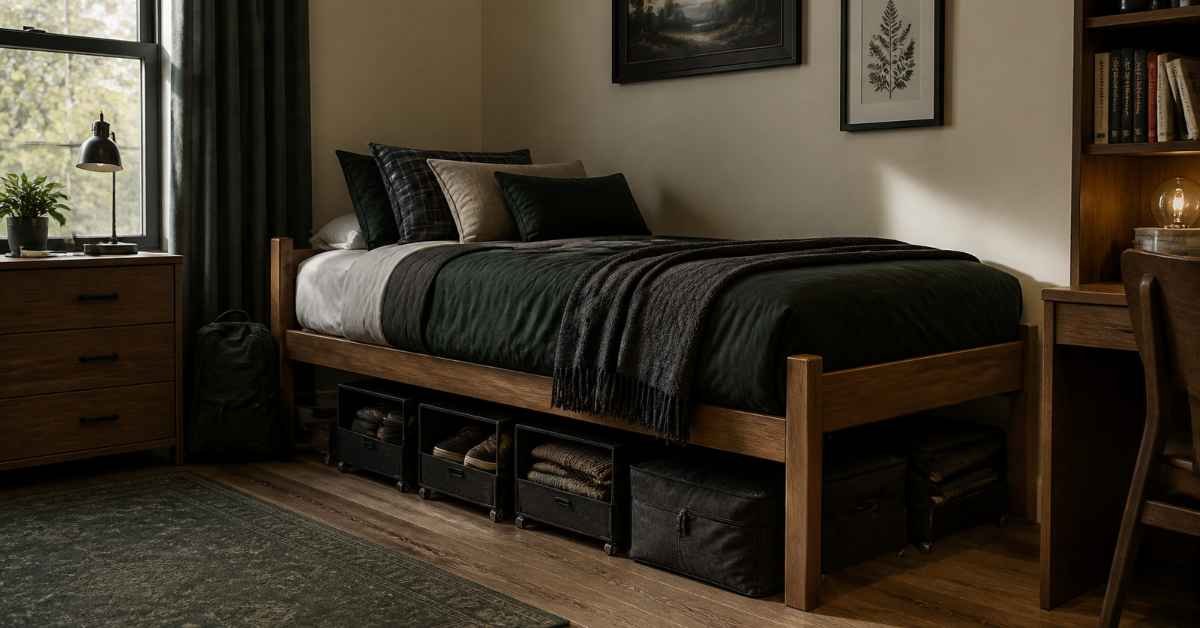
Dorm beds often create valuable storage opportunities underneath the mattress frame, depending on the permitted bed height.
Use fabric storage bags, shallow plastic containers, or zippered organizers for seasonal clothing, spare bedding, shoes, and extra supplies.
Choose dark neutral storage containers that look tidy when visible. Before purchasing bed risers, check whether your university allows them; some residence halls prohibit unapproved risers or lofting equipment.
10. Introduce an Antique-Inspired Desk Clock
A small vintage-style clock can add character to an otherwise ordinary dorm desk. Look for a compact analog design with a dark frame, cream dial, and simple metal detailing.
It can also help you manage study sessions without constantly checking your phone.
Choose a battery-operated model to avoid unnecessary cords and electrical clutter. Keep its size modest so it doesn’t interfere with your actual workspace.
11. Organize Textbooks With Decorative Bookends
Bookends provide a practical way to keep course materials organized without installing shelves.
Choose wooden, black metal, or antique-brass-look bookends. Place them on an existing desk shelf or another approved storage surface.
For a more organized arrangement, separate textbooks by subject or semester. Keep the books you use regularly within reach and move completed course materials into storage.
12. Add a Compact Rug If Your Dorm Allows It

A small area rug can visually distinguish your personal space from the rest of a shared dorm room. Choose a low-pile design in muted burgundy, faded Persian-inspired patterns, dark brown, or charcoal.
Measure the available floor area before purchasing. A rug that extends into the walking path can make a small room feel crowded and create a tripping hazard.
Select an easy-to-clean material that can handle regular foot traffic and student living conditions.
13. Use a Portable Bedside Caddy
Traditional nightstands are often impractical in dorm rooms, particularly when two beds occupy most of the available floor area.
A bedside caddy that fits securely over the bed frame or mattress edge can hold a phone, glasses, paperback, and other small essentials.
Choose a dark fabric or leather-look design to complement the room. Check the manufacturer’s fitting instructions and make sure the caddy does not interfere with the bed frame or create a safety issue.
14. Decorate With Small Historical and Botanical Prints
Small prints can introduce the visual character associated with old universities, libraries, and historical collections.
Look for botanical drawings, architectural sketches, antique maps, classical sculptures, and literary illustrations. A coordinated set of three small prints can make a stronger impression than a large collection of unrelated posters.
Use lightweight frames or unframed prints, depending on your housing rules. Keep the arrangement compact so it doesn’t overwhelm the room.
15. Create Separate Sleeping and Studying Zones
A dorm room usually needs to perform several functions in one small area. Separating these activities visually can make the space easier to use.
Keep your bedding and personal items within the bed area. Reserve the desk for academic work, and use existing drawers or closet compartments for clothing and supplies.
A small desk mat, a separate reading light, and a coordinated bed throw can help distinguish the areas without adding partitions or bulky furniture.
16. Coordinate With Your Roommate Before Decorating
Shared accommodation requires more consideration than a private bedroom. Your roommate may prefer lighter colors, minimal decorations, or an uncluttered environment.
Discuss shared wall displays, lighting, rugs, and furniture arrangements before making changes. Keep your personal decorations within your allocated area and avoid blocking windows, doors, electrical outlets, or access to shared storage.
You don’t need identical decorating preferences to create a coordinated room. A shared neutral foundation with individual decorative accents can work well.
17. Pack Your Decor for Easy End-of-Semester Removal
One of the most useful dorm decorating strategies is choosing accessories that can be packed and reused.
Prioritize lightweight prints, fabric organizers, removable desk accessories, battery-operated items where permitted, and portable decorative pieces.
Keep original packaging for delicate accessories and store small items in labeled containers when moving between semesters.
Before checkout, remove decorations according to university instructions and inspect the walls, furniture, and other surfaces for damage.
Dorm Decorating Rules and Safety Considerations
Before purchasing decorations, read your university’s residence hall handbook. Housing policies differ, even between buildings at the same institution. A product advertised as renter-friendly or damage-free does not automatically meet your dorm’s requirements.
For example, the University of Arizona’s dorm decorating guidance advises students to review housing and fire-safety policies before decorating. It also warns that students may be responsible for damage caused by supposedly removable products.
Follow these practical precautions:
- Never cover smoke detectors, sprinklers, air vents, or electrical outlets.
- Avoid candles, incense, and prohibited decorative lighting.
- Do not use unauthorized extension cords or overload power strips.
- Keep exits, doorways, and walking paths clear.
- Confirm whether adhesive hooks, wallpaper, and wall hangings are permitted.
- Avoid drilling, painting, or modifying university furniture.
For additional guidance, Columbia University’s residence hall decoration and electrical safety rules explain restrictions on adhesives, power strips, wall displays, and prohibited decorative items.
Affordable Dark Academia Dorm Room Accessories
You don’t need an expensive shopping list to achieve the look. Focus on small accessories that combine academic character with everyday usefulness.
| Accessory | Affordable alternative | Practical purpose |
| Vintage-style clock | Battery-operated analog clock | Time management |
| Antique bookends | Secondhand wooden bookends | Organizing textbooks |
| Leather desk mat | Brown faux-leather mat | Protecting desk surfaces |
| Decorative prints | Printed botanical illustrations | Personalizing walls |
| Brass accessories | Brass-tone stationery | Organizing supplies |
| Vintage storage box | Reused wooden or cardboard box | Storing small belongings |
| Desk organizer | Dark-colored stationery holder | Keeping supplies accessible |
Thrift stores, used-book shops, discount home stores, and student marketplaces are useful places to look for affordable accessories. You can also reuse items you already own instead of purchasing an entirely new collection.
For inexpensive handmade accents, explore these dark academia DIY decor ideas.
Common Dark Academia Dorm Room Decorating Mistakes

A dorm room needs to remain functional throughout the academic year. Some decorating choices that work in a spacious private bedroom can become impractical in student accommodation.
Avoid these common mistakes:
- Buying oversized furniture: Large chairs, cabinets, and tables reduce already limited floor space.
- Using too many dark surfaces: Excessive dark furniture and accessories can make a small room feel visually crowded.
- Ignoring mattress dimensions: Standard twin bedding may not fit a twin XL dorm mattress correctly.
- Choosing decorative lighting without checking policies: Some lamps, bulbs, and lighting accessories are prohibited in residence halls.
- Displaying too many books: Keep your frequently used academic materials accessible instead of filling every available surface.
- Ignoring your roommate’s preferences: Shared rooms require agreement about common areas and decorations.
- Using permanent wall treatments: Unauthorized wallpaper, paint, nails, or adhesives can result in damage charges.
- Sacrificing desk space: Decorative accessories should never prevent you from comfortably completing assignments.
For more ideas on selecting suitable fixtures, see the dark academia lighting guide.
Conclusion
Creating a dark academia dorm room is less about recreating an elaborate historical bedroom and more about adapting an academic aesthetic to the realities of university life. Twin XL bedding, compact stationery, vintage-inspired accessories, organized textbooks, and portable lighting can introduce the desired character without requiring major purchases or permanent changes.
Start with your existing dorm furniture, identify the available storage, and choose a few accessories that serve a practical purpose. Most importantly, follow your university’s housing rules and coordinate shared spaces with your roommate.
A thoughtfully arranged student room can reflect your literary interests while remaining organized, affordable, and ready for everyday college life.
Frequently Asked Questions About Dark Academia Dorm Rooms
1. How can I make my dorm room look like dark academia?
Use deep colors such as forest green, burgundy, chocolate brown, and charcoal through bedding, desk accessories, and small decorative items. Add vintage-inspired book covers, botanical prints, antique-style stationery, and a compact desk lamp. You can achieve the look without painting walls or purchasing expensive furniture.
2. How do you decorate a dorm room without damaging the walls?
Use university-approved removable hooks, lightweight wall prints, freestanding picture frames, and tabletop decorations. Check your residence hall’s rules before using adhesive strips, mounting putty, or peel-and-stick wallpaper. If adhesives are prohibited, keep decorations on desks and other existing furniture.
3. What size bedding do most college dorm beds need?
Many American university dormitories provide twin XL mattresses measuring approximately 39 inches wide by 80 inches long. However, mattress sizes vary by college and residence hall. Check your university’s housing information before purchasing sheets, mattress protectors, or comforters.
4. How can I make a small dorm room look bigger?
Use vertical storage, under-bed organizers, compact desk accessories, and furniture that serves more than one purpose. Keep walking paths clear and avoid oversized decorative items. Light-colored bedding paired with darker accent accessories can create visual contrast without making the room feel enclosed.
5. What decorations are not allowed in college dorm rooms?
Commonly restricted decorations include candles, incense, unauthorized wall adhesives, permanent wallpaper, wall-mounted shelves, and certain string lights or electrical accessories. Some universities also prohibit furniture modifications and unapproved bed risers. Always check your college’s residence hall handbook because decorating and fire-safety policies differ between institutions.

I’m Samreen Khadim Hussain, a home improvement writer specializing in practical, research-driven content for U.S. homeowners. At Domelite Home, I cover home renovation, interior design, home maintenance, and residential safety, translating technical information and industry research into clear, actionable guidance. My approach combines search intent research, reliable sources, and reader-focused writing to help homeowners understand their options, make informed decisions, and create safer, more functional living spaces.