
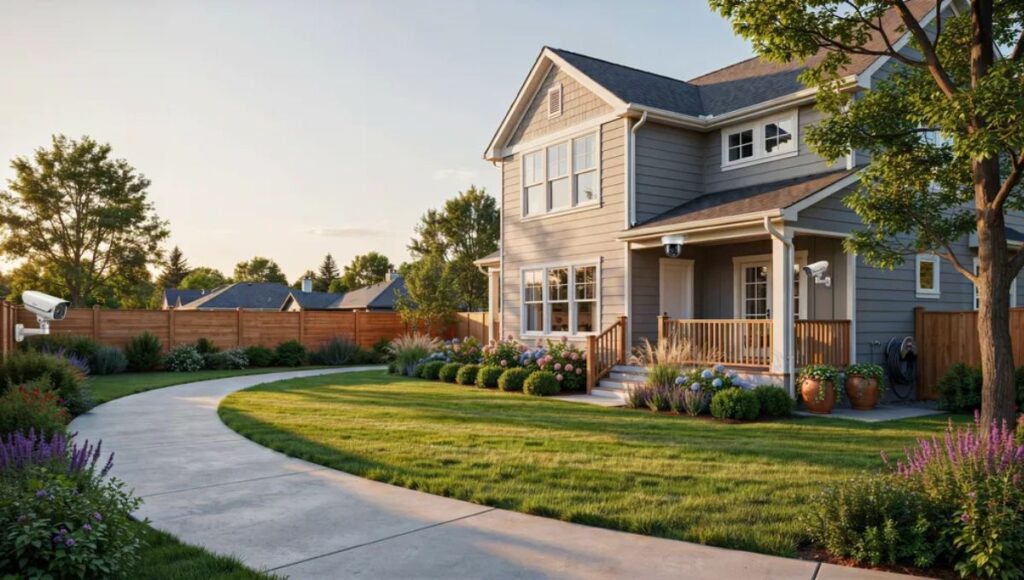
Quick Answer: The best cameras for the garden need at minimum an IP65 weather rating, night vision range that matches your yard depth, and motion detection that does not trigger on every passing car or blowing leaf. For most US homeowners, a budget of $50 to $200 covers one to two cameras that handle 90% of garden security needs with no monthly subscription required.
Cameras for the garden have become one of the most practical upgrades homeowners make for better visibility and security around their property. Whether you’re monitoring a backyard, garden, driveway, side gate, or outdoor storage area, the right camera can help you keep an eye on what matters most without constantly checking in person.
However, choosing the best cameras for the garden is not as simple as comparing star ratings or picking the most popular brand. Factors such as weather resistance, night vision performance, power source, storage options, and yard size all play a major role in how well a camera performs in real-world conditions.
This guide breaks down the features that actually matter, compares the best garden cameras for different needs and budgets, and provides practical advice on placement, coverage, and long-term costs. Whether you are shopping for cameras for the garden for the first time or upgrading an existing setup, the right information makes all the difference. By the end, you’ll know exactly which camera setup makes the most sense for your property.
What Makes a Garden Camera Different From an Indoor Camera
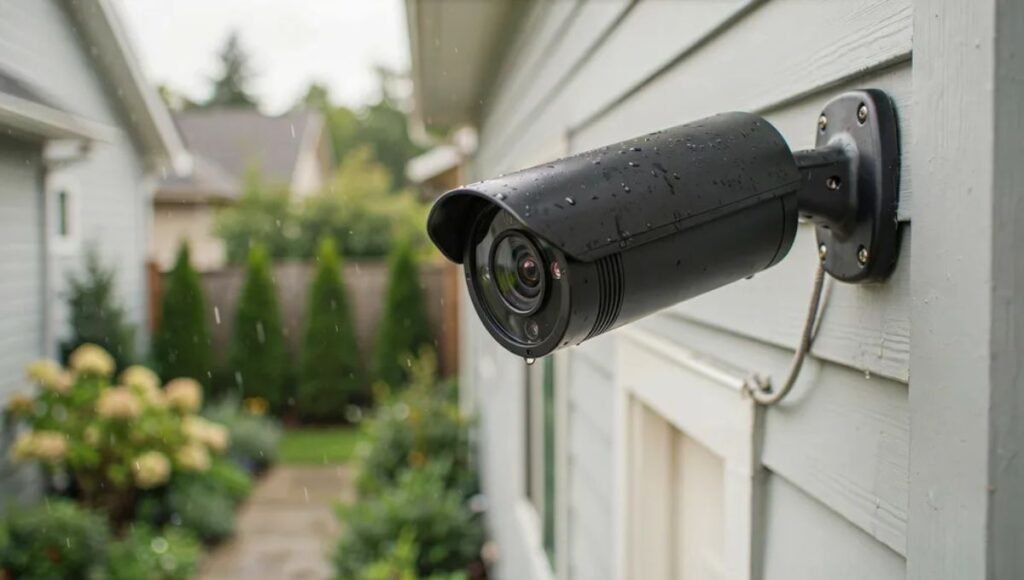
A garden camera is specifically designed to operate outdoors in variable weather, temperature extremes, and UV exposure conditions that cause standard indoor cameras to fail.
This distinction matters because many homeowners purchase indoor cameras for outdoor use, expecting similar performance. Indoor cameras are typically rated for temperatures between 32°F and 95°F and carry no waterproofing certification. An outdoor garden camera handles -4°F to 122°F and is sealed against rain, dust, and humidity.
The result of using an indoor camera outside: fogged lenses, overheating shutdowns in summer, frozen components in winter, and housing that cracks under UV exposure within one season. In short, the camera stops working often without an obvious warning.
Three specifications separate a true outdoor camera from everything else.
IP Rating (Ingress Protection) is a standardized international certification that defines exactly how a camera handles water and dust. It is not a marketing claim. It is a testable, regulated standard.
- IP65: Fully dust-tight. Protected against water jets from any direction. Suitable for rain, sprinklers, and coastal humidity.
- IP67: Fully dust-tight. Survives submersion in up to 1 meter of water for 30 minutes.
- IP68: Fully dust-tight. Survives prolonged submersion beyond 1 meter.
The minimum acceptable rating for a permanently mounted outdoor camera is IP65. Any product that lists “water resistant” without an IP number provides no standardized guarantee of outdoor durability.
The operating temperature range determines whether the camera functions in your climate. Most US regions experience temperatures outside the range that indoor cameras support. Quality outdoor cameras specify a range of -4°F to 122°F, which covers every US climate, including Minnesota winters and Arizona summers.
Field of View (FOV) determines how much of your yard a single camera covers from a fixed mount point. A camera with a 90-degree FOV and one with a 130-degree FOV produce very different results from the same position. A narrow FOV creates blind spots on the edges of the frame areas a person could move through undetected. Wider FOV reduces blind spots but may reduce detail at the edges. For most garden applications, 100 to 130 degrees is the practical target.
The Four Specifications That Determine Real-World Garden Camera Performance
1. Power Source
The power source of a garden camera determines its installation flexibility, maintenance requirements, and long-term reliability. The right choice depends on your yard’s layout, not personal preference.
Wired cameras (PoE or plug-in) record continuously without interruption. Because they draw constant power, there are no battery cycles, no recharge intervals, and no recording gaps caused by power loss. Installation requires running a cable from the camera location to a router or outdoor outlet, a task most homeowners can complete with a drill and 50 feet of Cat6 Ethernet cable. This is the most reliable long-term option.
Battery-powered wireless cameras install without cables and can be mounted anywhere within Wi-Fi range. The trade-off is maintenance: batteries require recharging every one to three months, depending on motion frequency. A camera covering a busy driveway will drain its battery faster than one monitoring a quiet side yard.
Solar-powered cameras use a photovoltaic panel to charge an internal battery. In states with consistent direct sunlight, such as Texas, Florida, Arizona, Nevada, and Southern California, solar cameras operate with minimal maintenance from April through October. In the Pacific Northwest, upstate New York, and New England, reduced winter sun hours mean solar panels cannot consistently maintain charge from November through February. In those regions, solar works best as a supplement to battery power, not as the sole source.
Pro tip: When running cable outdoors or underground, use gel-filled direct burial Cat6 cable, not standard indoor Ethernet. Standard indoor cable degrades when exposed to moisture and typically fails within two to three years underground. Direct burial cable is waterproof, UV-resistant, and rated for outdoor use. It costs approximately $30 more per 50-foot run and lasts over a decade. This is the single most common installation mistake DIY homeowners make.
2. Night Vision Range
Night vision range is the maximum distance at which a camera can produce usable footage in complete or near-complete darkness. It is measured in feet and determines whether a camera covers the full depth of a yard after dark.
Standard infrared (IR) night vision produces black-and-white footage at ranges of 20 to 30 feet on budget cameras. The average US suburban backyard measures 35 to 50 feet in depth. This means a camera with 20-foot night vision, mounted at the back door, cannot reach the rear fence, the area most likely to be an entry point for trespassers.
Color night vision cameras use available ambient light from streetlights, porch fixtures, or neighboring properties to produce full-color night footage. Color footage is significantly more useful for identifying individuals: clothing color, approximate height, and physical characteristics are visible. Black-and-white IR footage captures presence, but rarely provides enough detail for identification.
For yards deeper than 35 feet, or driveways longer than 30 feet, a camera with at least 60 feet of IR range is necessary for full coverage. Reolink’s 4K outdoor cameras reach 130 feet, adequate for most US residential properties.
Pro tip: A motion-activated LED floodlight ($20 to $30 at any hardware store) mounted near a garden camera solves two problems simultaneously. It provides the ambient light that color night vision cameras need, turning ordinary IR cameras into de facto color cameras after dark. And the activation of a bright light is, by itself, an effective deterrent most opportunistic trespassers will leave when a light comes on rather than risk being seen.
3. Video Storage: Local vs. Cloud
Garden cameras store footage either locally (on an SD card or hard drive at the property) or remotely (on a cloud server accessed by monthly subscription). Each method has specific advantages and a clear cost structure.
Cloud storage keeps footage on remote servers maintained by the camera manufacturer. Footage is accessible from any device and survives even if the physical camera is stolen or destroyed. The cost is ongoing:
- Ring Protect: $3.99/month per camera, or $10/month for all cameras
- Arlo Secure: $12.99/month for up to five cameras
- Google Nest Aware: $8/month for 60-day event history
Three cameras on Ring’s individual plan cost $144 per year. Over five years, that is $720 in subscription fees on top of the original hardware cost, a figure most buyers do not calculate at the point of purchase.
Local storage records footage directly to an SD card inside the camera or to an NVR (Network Video Recorder) connected to the camera via Ethernet. There is no recurring fee. The limitation is that footage is only as secure as the hardware: if a camera is stolen, the SD card may go with it. For cameras in high-exposure locations, such as the front gate and main driveway, pairing local storage with cloud backup for one or two key cameras is a practical solution.
Pro tip: Use a Class 10 U3 endurance-rated SD card, not a standard consumer SD card. Standard cards are designed for periodic photo and video saves. A garden camera writing footage continuously, around the clock, will exhaust a standard SD card within four to six months usually without producing any error message. The footage simply stops recording. Samsung PRO Endurance and SanDisk MAX Endurance cards are rated for continuous write cycles and cost $15 to $25. This is a $20 decision that determines whether your camera actually records anything six months from now.
4. Motion Detection Type
Motion detection is the system a camera uses to identify movement and trigger recording or alerts. The type of detection determines how accurately the camera distinguishes real threats from irrelevant movement.
There are three types of current outdoor cameras:
PIR (Passive Infrared) detection identifies movement by detecting heat signatures crossing the sensor’s field. It reduces false alerts caused by stationary objects or lighting changes, but it can miss slow-moving subjects and may struggle in hot climates where ambient air temperature approaches body temperature.
Pixel-based detection triggers when any portion of the camera’s image changes between frames. It is highly sensitive, too sensitive for most outdoor environments. Blowing leaves, passing car headlights, and insects flying across the lens at night all trigger alerts. In practice, this causes alert fatigue: homeowners disable notifications, and the camera becomes a passive recorder rather than an active security tool.
AI-powered detection uses machine learning to classify motion by type, person, vehicle, animal, or environmental. It can be configured to alert only on specific categories (person and vehicle only, for example) and ignore motion that does not match those categories. This reduces false alerts by approximately 90 percent in most outdoor environments. AI detection is now standard in cameras priced at $80 and above and is the recommended type for any garden camera facing a road, tree line, or area with regular non-threatening movement.
Best Cameras for the Garden, by Use Case
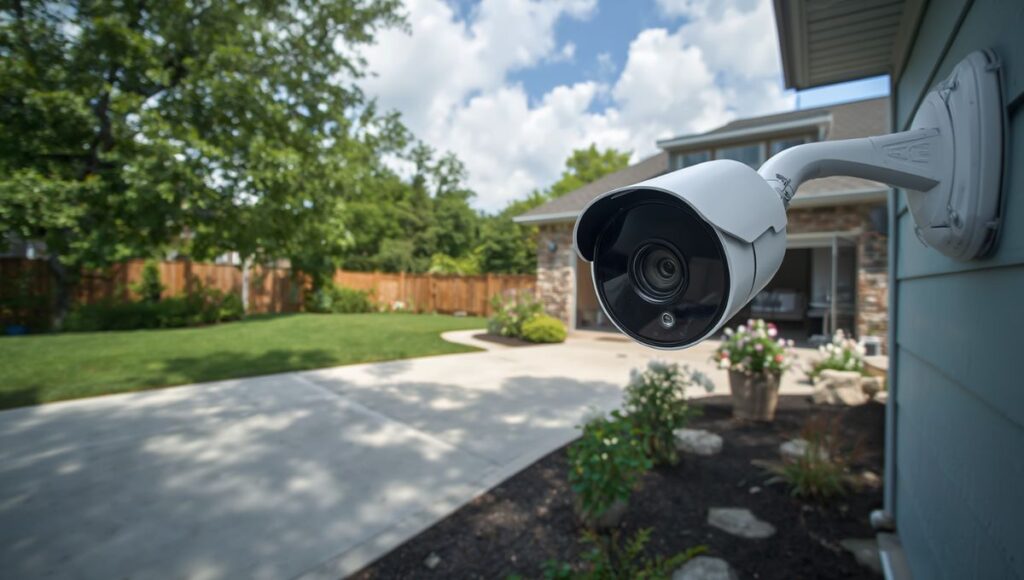
Best Under $50: Wyze Cam Outdoor v2 ($49.99)
The Wyze Cam Outdoor v2 offers 1080p resolution, IP65 weather certification, color night vision, and free basic cloud storage with no credit card required. Motion detection accuracy is strong for this price range.
Limitation: It does not support 24/7 continuous recording. It records motion-triggered clips with a brief cooldown between events. For a shed, a side gate, or a low-traffic corner of the yard, this limitation is not significant. For a high-traffic driveway where continuous recording matters, it is. This camera is the correct starting point for first-time buyers and renters.
Best for Large Yards and Driveways: Reolink RLC-810A (~$59.99)
The Reolink RLC-810A provides 4K resolution, 130 feet of infrared night vision, AI person and vehicle detection, and both PoE and Wi-Fi connectivity. It stores footage locally with no subscription required. For a yard or driveway extending more than 40 feet, this camera covers the full space in a way that budget cameras cannot.
This is the camera most homeowners move to after their first budget option proves inadequate for their yard size. At under $60, it competes with cameras priced at twice as much from brand-name manufacturers.
Best Solar-Powered Option: Arlo Essential Spotlight Solar Bundle (~$149)
The Arlo Essential Spotlight, purchased with the solar panel bundle, operates without any cable or battery swap in climates with consistent direct sunlight. It integrates with Google Home and Amazon Alexa and provides AI-powered alerts for people and vehicles.
Requirement: a minimum of four hours of direct daily sunlight to maintain charge. In Texas, Arizona, Florida, Nevada, and Southern California, this condition is reliably met year-round. In northern states or shaded yards, solar output falls short in winter, and a USB charger is needed to supplement. This camera is the correct choice for Sunbelt homeowners who want zero-maintenance outdoor coverage.
Best Smart Home Integration: Google Nest Cam Outdoor, Battery ($179.99)
The Google Nest Cam Outdoor provides the most accurate AI detection of any consumer-grade outdoor camera currently available. It classifies people, vehicles, animals, and familiar faces, and integrates directly with Google Home for automation and voice control.
Important cost note: the $8/month Google Nest Aware subscription is functionally required. Without it, footage history is limited to three hours of event clips, insufficient for meaningful security review. Buyers should calculate $179.99 plus $96/year when comparing this camera against alternatives.
Best No-Subscription Multi-Camera System: Amcrest 4K PoE Kit
The Amcrest 4K PoE kit includes cameras, an NVR, and a hard drive in a single package. It records locally at 4K resolution, continuously, with no monthly fee at any level. Footage is stored on the NVR’s hard drive at the property. This is the system small businesses, rental property owners, and security-conscious homeowners use when they want a complete multi-camera setup without ongoing costs.
At $300 to $380 for a four-camera system, the cost per camera is $75 to $95, significantly below comparable PoE systems sold by brand-name consumer security companies.
How to Position Cameras for Maximum Garden Coverage
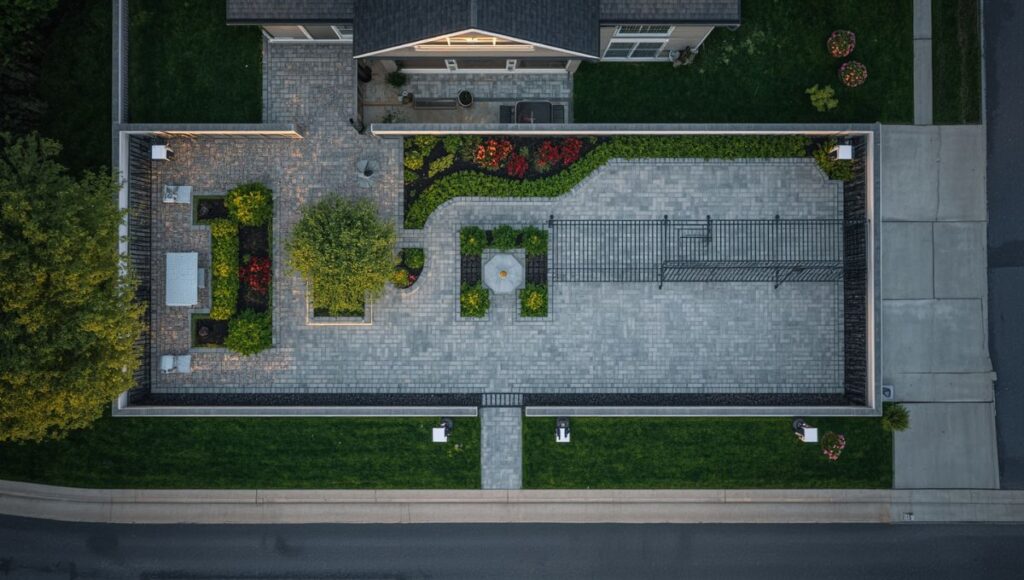
Camera placement determines coverage effectiveness. The goal is to eliminate blind spots at access points while ensuring night vision range matches the depth of each monitored zone.
Most placement advice stops at “cover entry points.” Here is the full process:
Step 1: Survey the yard at dusk, not during daylight. Lighting conditions at dusk reveal where natural cover exists and where the IR range of a camera will be insufficient. Dark zones identified at dusk are the priority locations for camera placement.
Step 2: Mount cameras between 8 and 10 feet high. At 8 to 10 feet, cameras are above easy reach for tampering while still capturing face-level footage of adults below. Above 12 feet, cameras primarily record the tops of heads — sufficient to confirm presence, insufficient for identification.
Step 3: Aim at access points, not open space. Gates, back doors, side yard gaps, and garage entries are the locations through which unauthorized entry occurs. The open center of a lawn is rarely a security priority.
Step 4: Test night vision range before permanent mounting. Using the camera’s mobile app, capture a still frame at night from the proposed mount location. This confirms whether the IR range reaches the intended coverage zone before any permanent hardware is installed.
Step 5: Overlap fields of view by 10 to 15 percent. When two cameras share a zone with partial overlap, each camera eliminates the other’s edge blind spots. This is standard professional installation practice. Sketch a basic overhead layout of the yard before mounting any hardware to identify coverage gaps in advance.
Real Cost of a Garden Camera System, US Pricing Breakdown
| System Type | Hardware Cost | Monthly Fee | 5-Year Total |
| 1 to 2 cameras small yard (Wyze) | $100 to $130 | $0 | ~$130 |
| 4-camera Wi-Fi system (Reolink) | $240 to $280 | $0 | ~$280 |
| 4-camera PoE + NVR (Amcrest) | $320 to $400 | $0 | ~$400 |
| Ring 3-camera + Protect plan | $300 + $120/yr | $10/mo | ~$900 |
| Professional install 6 to 8 cameras | $2,000 to $4,000 | Varies | $2,000 to $4,000+ |
DIY vs. professional installation: The hardware used in a professional installation is the same hardware available for purchase directly. A homeowner who installs a four-camera PoE system pays $320 to $400. A security company installing equivalent hardware typically quotes $2,000 to $2,500 for the same result. The difference is entirely in the labor and contractor margin.
Insurance discount: Several major US homeowner’s insurance providers, including State Farm, Allstate, and Farmers, offer premium discounts of 2 to 15 percent for documented home security systems. A camera system costing $400 can recover its full cost within two to four years through insurance savings alone. Contact your provider before installation and ask specifically what documentation they require to apply the discount.
Privacy Laws and HOA Rules US Homeowners Must Know
In the United States, homeowners may legally record video on their own property in all 50 states. The Federal Trade Commission provides guidance on home security privacy rights and what US homeowners need to know before installing cameras. Restrictions apply to audio recording, recording onto neighboring properties, and community association rules.
Audio recording: Eleven US states require all-party consent for audio recording, including California, Florida, Illinois, Maryland, Massachusetts, Michigan, Montana, Nevada, New Hampshire, Oregon, and Washington. Most outdoor cameras enable the microphone by default. Homeowners in these states should disable audio recording in the camera’s app settings or post a visible recording notice near the camera.
Neighbor overlap: Recording video onto a neighbor’s private enclosed space — inside their home, their fenced backyard, can create legal liability in many states, even where general outdoor recording is permitted. Cameras should be angled to capture the homeowner’s own property and avoid capturing neighbors’ private spaces.
HOA restrictions: Some homeowner associations restrict camera placement, housing color, or mounting location through their CC&Rs (Covenants, Conditions, and Restrictions). Review this document before purchasing. Violations can result in fines or mandatory removal.
Signage: Posting a “security cameras in use” sign near the primary entry point costs under $10. It satisfies disclosure requirements in states that require notification of recording, reduces neighbor disputes, and serves as a visible deterrent to opportunistic trespassers.
Frequently Asked Questions About Garden Cameras
Q: What is the minimum IP rating for an outdoor garden camera?
A: The minimum recommended IP rating for a permanently mounted outdoor garden camera is IP65. This rating certifies that the camera is fully dust-tight and protected against water jets from any direction, including rain and sprinklers. Ratings below IP64 do not provide sufficient outdoor protection for year-round use.
Q: Can garden cameras work without Wi-Fi?
A: Yes. PoE (Power over Ethernet) cameras connect to a network via Ethernet cable and record to a local NVR without requiring a wireless connection. This makes them immune to Wi-Fi signal issues and suitable for locations where the wireless signal is insufficient.
Q: How far should a garden camera see at night?
A: The night vision range should match or exceed the depth of the area being monitored. For a yard 35 to 50 feet deep, a camera with at least 40 to 60 feet of IR range is necessary. Budget cameras typically provide 20 to 30 feet. Reolink’s 4K models provide 130 feet. Cameras with insufficient night vision range leave the far end of the yard unmonitored after dark.
Q: Are solar garden cameras reliable in all US states?
A: No. Solar garden cameras perform reliably in states with consistent direct sunlight: Texas, Florida, Arizona, Nevada, and Southern California. In states with significant cloud cover or short winter days, such as Oregon, Washington, upstate New York, and New England, solar output is insufficient from November through February. In those regions, solar should supplement battery power rather than replace it.
Q: What is the difference between a garden camera with and without a subscription?
A: A subscription-based garden camera stores footage on a remote cloud server and charges a monthly fee to access recordings, typically $4 to $13 per month per camera, or per system. A no-subscription camera stores footage locally on an SD card or NVR hard drive at no ongoing cost. The functional difference is that cloud footage survives camera theft or destruction, while local footage does not. The cost difference over five years can exceed $500 for a multi-camera system.
Summary: How to Choose the Right Cameras for the Garden
Cameras for the garden perform well when four conditions are met: the camera’s IP rating matches the local climate, the night vision range covers the full depth of the monitored area, the power source suits the yard’s layout, and the motion detection type is appropriate for the environment.
The most common purchasing mistake is selecting a camera based on brand recognition or review volume without verifying these four conditions. A well-known brand camera with insufficient night vision range will leave gaps in coverage. For independent third-party testing of outdoor cameras, Wirecutter’s outdoor security camera reviews provide verified performance data across brands and price points. A high-resolution camera with pixel-based motion detection in a windy yard will produce alert fatigue and get ignored.
Match the camera to the conditions. That decision determines whether a garden security system works in practice or only on paper.

I started Domelite Home because I got tired of home improvement advice that was either too vague or written by people who had never actually picked up a drill. I’m Naik Zali Shah I’ve spent years obsessing over renovation projects, smart home setups, and interior design, and I built this site to share what actually works. No fluff, no filler. Just honest advice for homeowners who want to get things right the first time.
2 thoughts on “Cameras for the Garden: 5 Best Picks for Your Yard”