
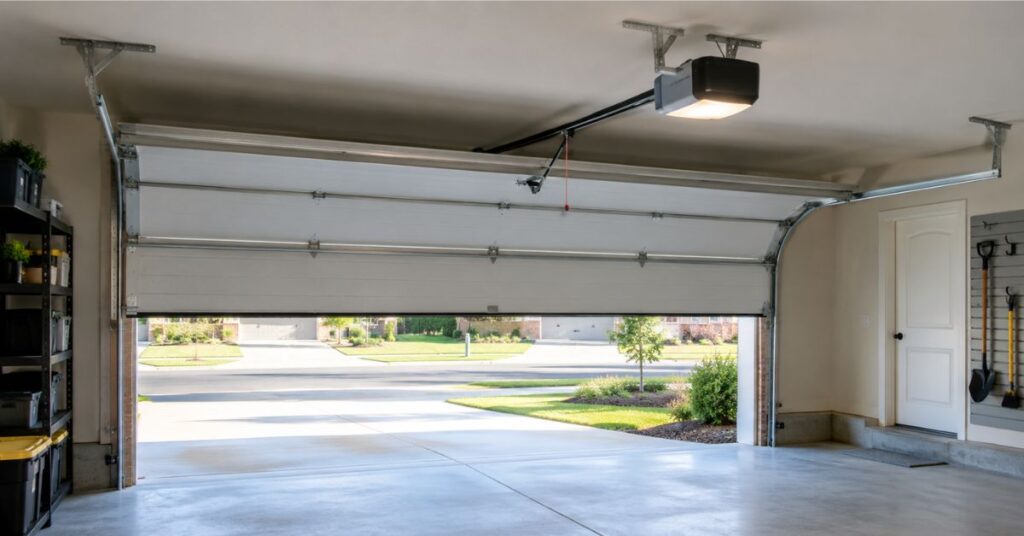
A reliable garage door opener makes daily garage access easier, safer, and more convenient. However, choosing the right model depends on your garage door, layout, budget, and daily use.
This guide covers opener types, lifting capacity, smart features, safety, installation, maintenance, and cost.
Quick Answer: Which Garage Door Opener Is Best?
For most attached garages, a belt-drive garage door opener offers a strong balance of quiet operation, reliability, and convenience.
Choose a chain-drive opener when durability and value matter more than noise. A wall-mount opener can work well when ceiling space is limited.
For smart-home convenience, look for Wi-Fi, smartphone control, activity alerts, and battery backup.
Ultimately, the best garage door opener should match your door’s weight, size, usage, and garage layout.
What Is a Garage Door Opener?
A garage door opener is a motorized device that automatically opens and closes an overhead garage door.
The motor powers a drive system that moves the door along its tracks. Depending on the design, the system may use a belt, chain, screw mechanism, or wall-mounted shaft.
Modern openers can also include LED lighting, wireless keypads, battery backup, Wi-Fi, smartphone control, and security features.
However, an opener does not replace the door’s springs, rollers, hinges, or tracks. These components remain part of the garage door system.
If the door is damaged or poorly balanced, address that problem before installing a new opener.
How Does a Garage Door Opener Work?
When you press the remote or wall button, the opener activates its motor.
The motor then moves a trolley along a rail or turns a shaft. This movement opens or closes the connected garage door.
The opener works together with the door’s springs, tracks, rollers, and hinges. Therefore, these components must operate correctly.
A powerful opener cannot fix a door that is difficult to move because of damaged hardware.
Types of Garage Door Openers
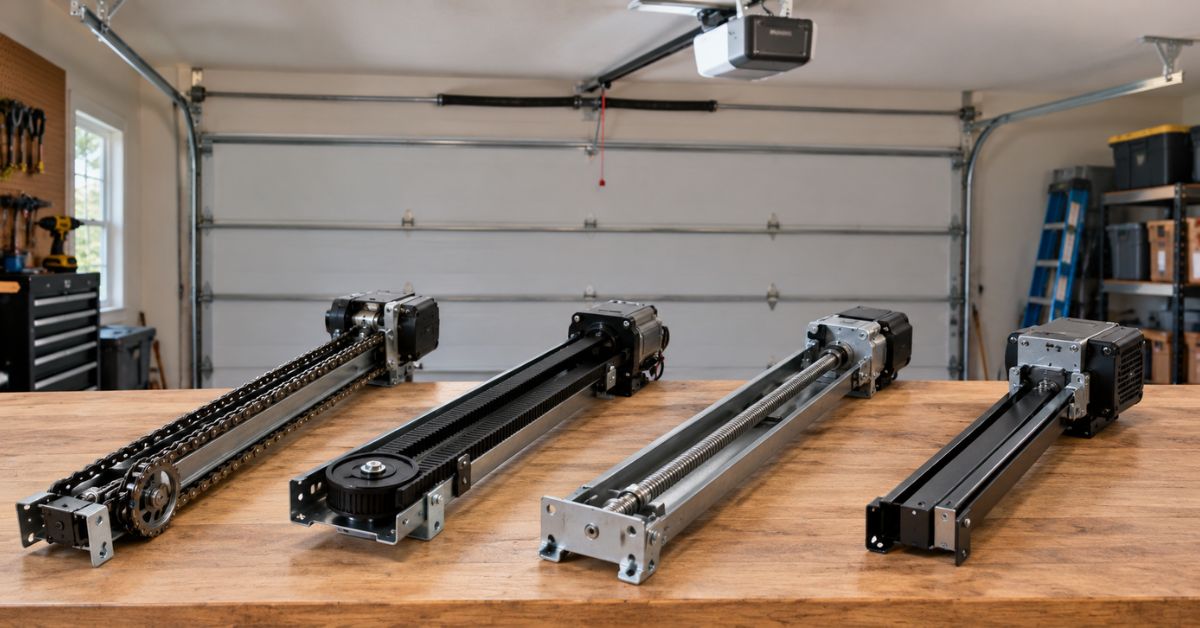
Different opener types use different drive mechanisms. Each option has specific benefits and limitations.
Belt-Drive Garage Door Opener
A belt-drive opener uses a reinforced rubber belt to move the trolley.
It usually provides smoother and quieter operation than a chain-drive system. Therefore, it works particularly well in attached garages.
This design can be especially useful when bedrooms or living spaces sit above the garage.
The main drawback is price. Belt-drive models often cost more than comparable chain-drive units.
Chain-Drive Garage Door Opener
A chain-drive opener uses a metal chain to move the garage door.
It offers dependable performance and often costs less than a belt-drive model. However, the metal chain can create more vibration and operating noise.
For a detached garage or workshop, noise may matter less. In that situation, a chain-drive model can provide practical value.
Screw-Drive Garage Door Opener
A screw-drive opener moves a trolley along a threaded steel rod.
This design has relatively few moving components. It can also provide smooth lifting performance.
However, availability and compatibility vary between manufacturers.
Before buying, check the manufacturer’s specifications for your specific garage door.
Wall-Mount Garage Door Opener
A wall-mount opener, also called a jackshaft opener, mounts beside the garage door.
This design can free valuable ceiling space for storage, lighting, or other equipment.
It can also create a cleaner ceiling appearance. However, compatibility depends on the door and existing hardware.
A wall-mounted model can be particularly useful during a garage renovation.
How Much Horsepower Does a Garage Door Opener Need?
Do not automatically choose the most powerful motor.
The required lifting capacity depends on your garage door’s size, weight, construction, and usage.
A standard residential sectional door may require less lifting capacity than a heavy custom wood door.
If your door feels unusually heavy when operated manually, investigate the door first. A stronger opener should not compensate for a mechanical problem.
| Garage Situation | What to Consider |
| Standard single door | Moderate lifting capacity |
| Double garage door | Check door weight and rating |
| Heavy wood door | Consider higher lifting capacity |
| Frequent daily use | Durable drive system |
| Garage near bedrooms | Quiet belt drive |
| Limited ceiling space | Wall-mount design |
Always check the opener manufacturer’s compatibility requirements before purchasing.
Smart Garage Door Opener Features
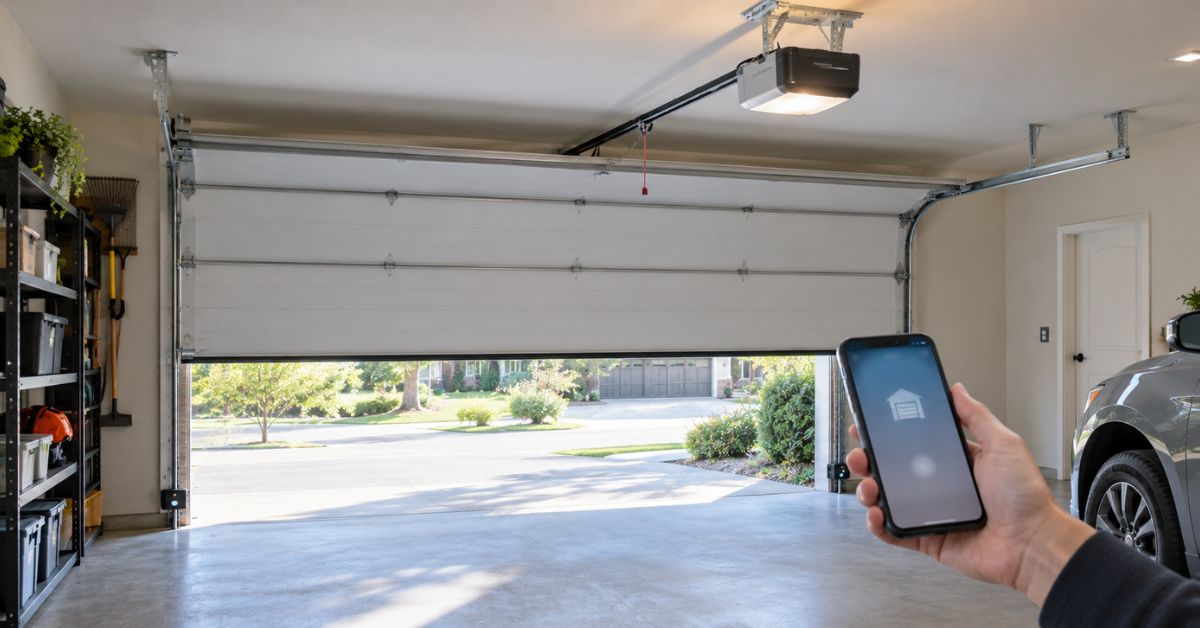
A smart garage door opener connects your garage to your home network.
Depending on the model, you may get smartphone control, activity notifications, scheduled closing, and smart-home integration.
Wi-Fi connectivity can also let you check your garage door remotely. This feature is useful when you leave home and wonder whether you closed the door.
If you are planning a larger connected-home setup, explore these smart home automation ideas for additional ideas.
Battery backup is another useful feature. It can allow the opener to operate during a power outage.
Garage Door Opener Safety Features
Safety should come before convenience features.
Automatic residential garage door operators sold in the United States must comply with federal safety requirements.
The U.S. Consumer Product Safety Commission’s garage door opener guidance explains applicable safety requirements and consumer safety information.
Photoelectric safety sensors help detect objects in the door’s path. The reversing system should also function correctly.
CPSC safety guidance recommends regularly testing the reversing feature. Monthly testing is recommended as part of routine garage door safety.
Never allow children or pets to play near a moving garage door. Keep people and objects away from the door’s travel path.
How to Choose the Right Garage Door Opener
Start by checking your garage door.
Consider its size, weight, construction, and operating frequency. Next, evaluate the garage’s physical layout.
If bedrooms sit above the garage, noise may be a major concern. In that case, a belt-drive system may be worth the additional cost.
If ceiling space is limited, consider a wall-mount opener.
Then decide which features you actually need. Wi-Fi, battery backup, LED lighting, a keypad, and smartphone alerts can improve convenience.
If you are also updating the garage’s exterior, these modern sliding garage door ideas can help with the overall design.
Garage Door Opener Installation and Maintenance
Garage door opener installation requires careful adjustment.
The installation involves the rail, mounting hardware, wall control, safety sensors, wiring, travel limits, and door connection.
Manufacturer instructions should always take priority because installation requirements vary between models.
When choosing an opener, consider the garage door’s weight, size, drive type, safety features, and available accessories. The Genie Garage Door Opener Buying Guide provides a useful overview of these buying factors.
DIY installation may suit experienced homeowners. However, garage door springs contain significant stored energy.
Never attempt spring repair without proper knowledge and equipment.
Regular maintenance also matters. Check the safety sensors, test the reversing system, inspect moving components, and follow the manufacturer’s maintenance schedule.
For broader household maintenance planning, use this home maintenance checklist.
Garage Door Opener Cost
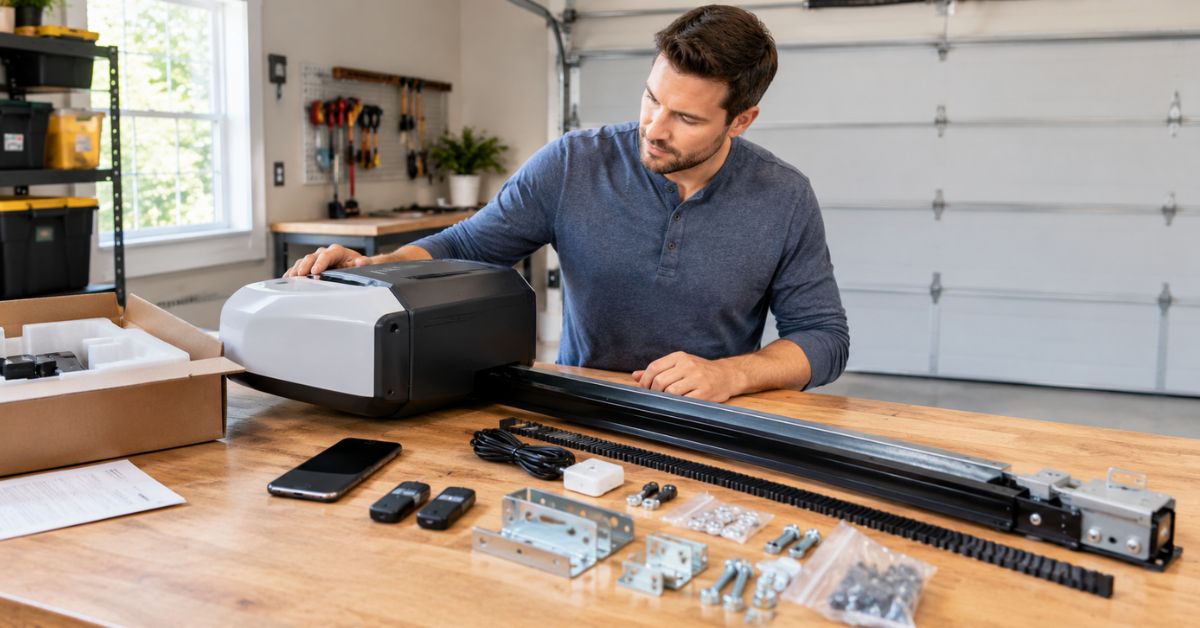
Garage door opener prices vary according to drive type, lifting capacity, smart features, battery backup, lighting, and installation.
Basic chain-drive models generally sit toward the lower price range. Premium belt-drive and wall-mount models can cost more.
Installation adds to the total project cost. Existing hardware problems can also increase the final bill.
Therefore, compare the total value rather than the purchase price alone.
| Opener Type | Main Advantage | Main Trade-Off |
| Chain drive | Value and durability | More noise |
| Belt drive | Quiet operation | Usually costs more |
| Screw drive | Simple operation | Fewer options |
| Wall mount | Saves ceiling space | Compatibility considerations |
Common Garage Door Opener Problems
A garage door opener that stops working may not have a failed motor.
First, check the remote battery, power supply, wall control, and safety sensors.
If the door closes and immediately reverses, inspect sensor alignment. Also make sure nothing blocks the door’s path.
Unusual grinding or clicking sounds may indicate a problem with the opener or garage door hardware.
Do not repeatedly increase the opener’s force settings to overcome a difficult door.
A properly functioning garage door should move smoothly.
Conclusion
Choosing a garage door opener means matching the opener to your door, garage layout, budget, and daily usage.
For many attached garages, a belt-drive model provides quiet and smooth operation. A chain-drive opener can offer dependable value, while a wall-mount system can save ceiling space.
Smart features can add convenience, especially Wi-Fi control and activity alerts. Battery backup can also help during power outages.
Most importantly, choose a properly rated opener and keep its safety systems working correctly.
Regular testing and maintenance can help keep your garage safer and more reliable.
FAQs About Garage Door Openers
How long does a garage door opener last?
Lifespan varies with usage, maintenance, door weight, and installation quality. Frequent operation generally creates more wear than occasional use.
Is a belt or chain garage door opener better?
A belt drive is usually preferable when quiet operation matters. A chain drive can suit homeowners who prioritize value and durability.
How much horsepower does a garage door opener need?
Choose lifting capacity based on your door’s size, weight, construction, and manufacturer recommendations. Avoid choosing solely by horsepower.
Are smart garage door openers worth it?
They can be worthwhile if you want smartphone control, activity alerts, or smart-home integration. Basic models may be enough for simple garage use.
Can I install a garage door opener myself?
Some experienced homeowners can install compatible openers themselves. However, spring-related work can be dangerous and may require professional assistance.

Samreen Khadim Hussain is a home improvement writer and content creator at Domelite Home. She specializes in making home renovation, interior design, and bathroom safety accessible to everyday US homeowners, turning technical subjects into clear, actionable advice. Her work is rooted in research, real-world practicality, and a genuine belief that a better home is within everyone’s reach.