
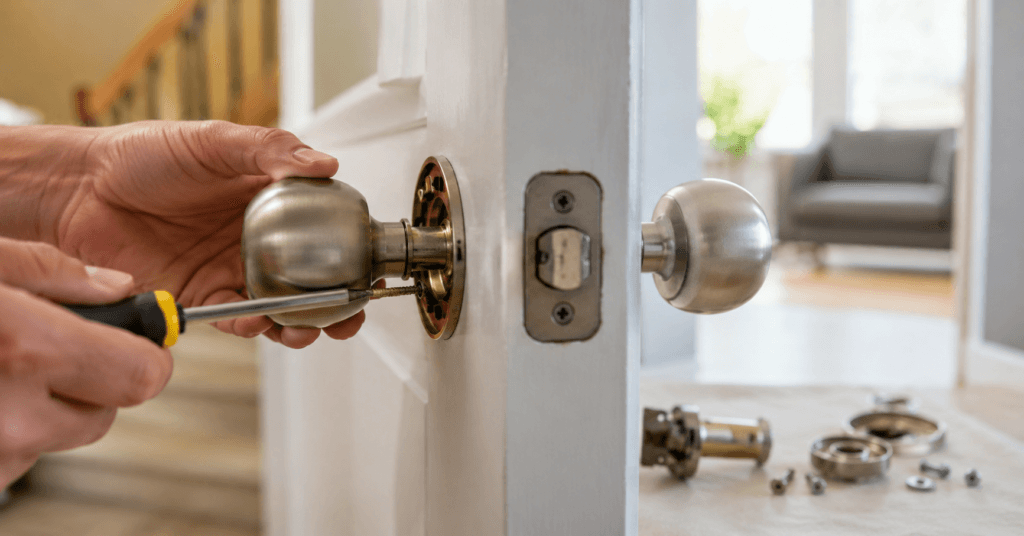
Quick Answer: How to fix a loose doorknob depends on the doorknob type. For knobs with visible screws, tighten them directly. For knobs with hidden screws, find and press the detent pin to release the knob, then access and tighten the mounting screws underneath the rose plate. Most loose doorknobs are fixed in under 15 minutes with a screwdriver and cost nothing. When screws strip, toothpicks and wood glue restore grip in under two hours.
A doorknob that wobbles when you grab it is one of those small annoyances that becomes a genuine frustration within days and a security concern on any exterior door. The good news is that learning how to fix a loose doorknob is almost always a simple screwdriver job that takes less than 30 minutes and costs nothing if the parts are intact.
What most guides do not explain is that there are several distinct doorknob types used in US homes, and each one hides its screws differently. Finding the screws is often harder than tightening them. This guide covers how to locate, access, and tighten the fasteners on every doorknob type you are likely to encounter, plus the specific fixes for stripped holes, broken detent pins, and worn spindles that the standard tighten-the-screws approach does not solve.
Why Doorknobs Come Loose
Understanding the cause tells you which fix to apply and whether tightening screws will be enough or whether you need to go further.
Loose mounting screws. The most common cause. The two long screws that pass through the door and pull the two halves of the doorknob assembly together work loose over thousands of cycles of use. The knob wobbles side to side. Tightening these screws is the fix.
Stripped screw holes. The screws turn but do not grip because the wood around them has compressed or split. The knob continues to wobble after tightening attempts. Stripped holes need the toothpick and glue repair before the screws can be retightened.
Loose or missing set screw. Many doorknobs have a small set screw on the side of the knob collar that holds the knob onto the spindle. When this set screw loosens, the knob spins freely or pulls away from the door without the mounting screws being loose at all. Finding and tightening or replacing this set screw is the specific fix.
Worn spindle. The square metal shaft that passes through the door and connects both knobs is the spindle. When the spindle wears or bends, the knobs do not engage the latch mechanism reliably even when all screws are tight. A worn spindle requires replacing the entire lockset.
Broken or compressed detent pin. The spring-loaded pin that locks the knob onto the spindle can break or lose tension over years of use. The knob then slides freely on the spindle without engaging. This also requires replacing the knob or the full lockset depending on whether replacement knobs for that specific model are available.
How to Fix a Loose Doorknob: Identify Your Type First
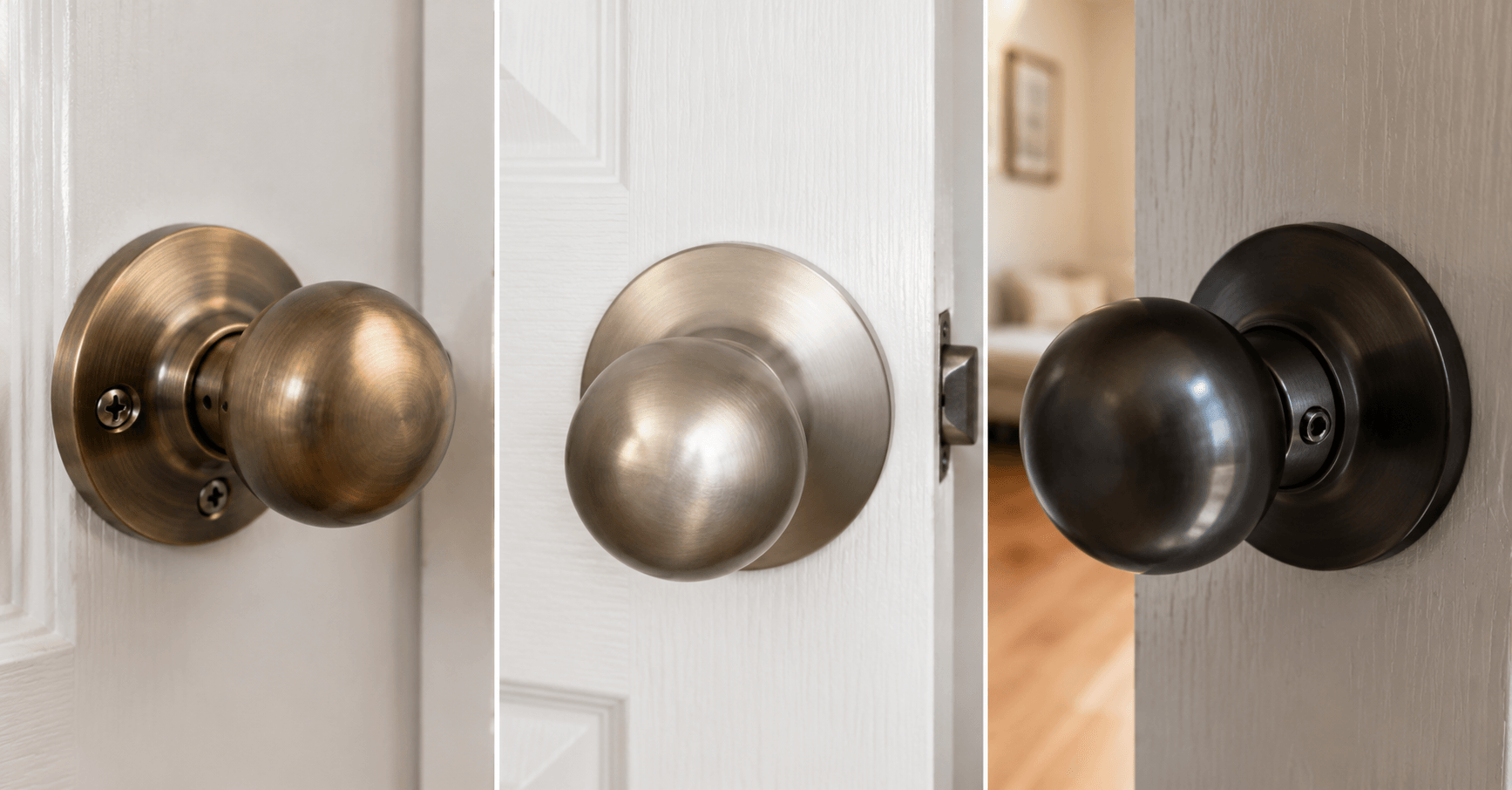
Before you learn how to fix a loose doorknob, identify which type you have. There are three common doorknob configurations in US homes, and each one accesses the mounting screws differently. There are three common doorknob configurations in US homes, and each one accesses the mounting screws differently.
Type 1: Visible screws on the rose plate. The circular decorative plate behind the knob has two visible screws. These are the most common in interior doors and the easiest to tighten. Tighten both screws with a Phillips screwdriver. Done.
Type 2: Hidden screws behind the rose plate. The rose plate appears to have no screws. The screws are concealed underneath it. The rose plate snaps off, unscrews, or releases via a detent pin. Most modern doorknobs use this configuration.
Type 3: Set screw on the knob collar. A small Allen screw or flathead screw is recessed into the side of the knob collar, sometimes facing down so it is not immediately visible. This screw holds the knob onto the spindle shaft. If this screw is missing or loose, the entire knob spins or pulls off independently of everything else.
Fix 1: Tighten Visible Mounting Screws (Free, 2 Minutes)
If your rose plate has two visible Phillips screws, this is your fix.
Open the door so both faces are accessible. Tighten both screws clockwise using a Phillips screwdriver. Use moderate hand pressure only. Overtightening pulls the rose plate hard against the door face and can crack the plate or strip the holes immediately.
Close the door and test. If the knob is solid, you are done. If it still wobbles, the screws may be stripped, and you need Fix 3.
Fix 2: Access Hidden Screws Behind the Rose Plate (Free to $5)
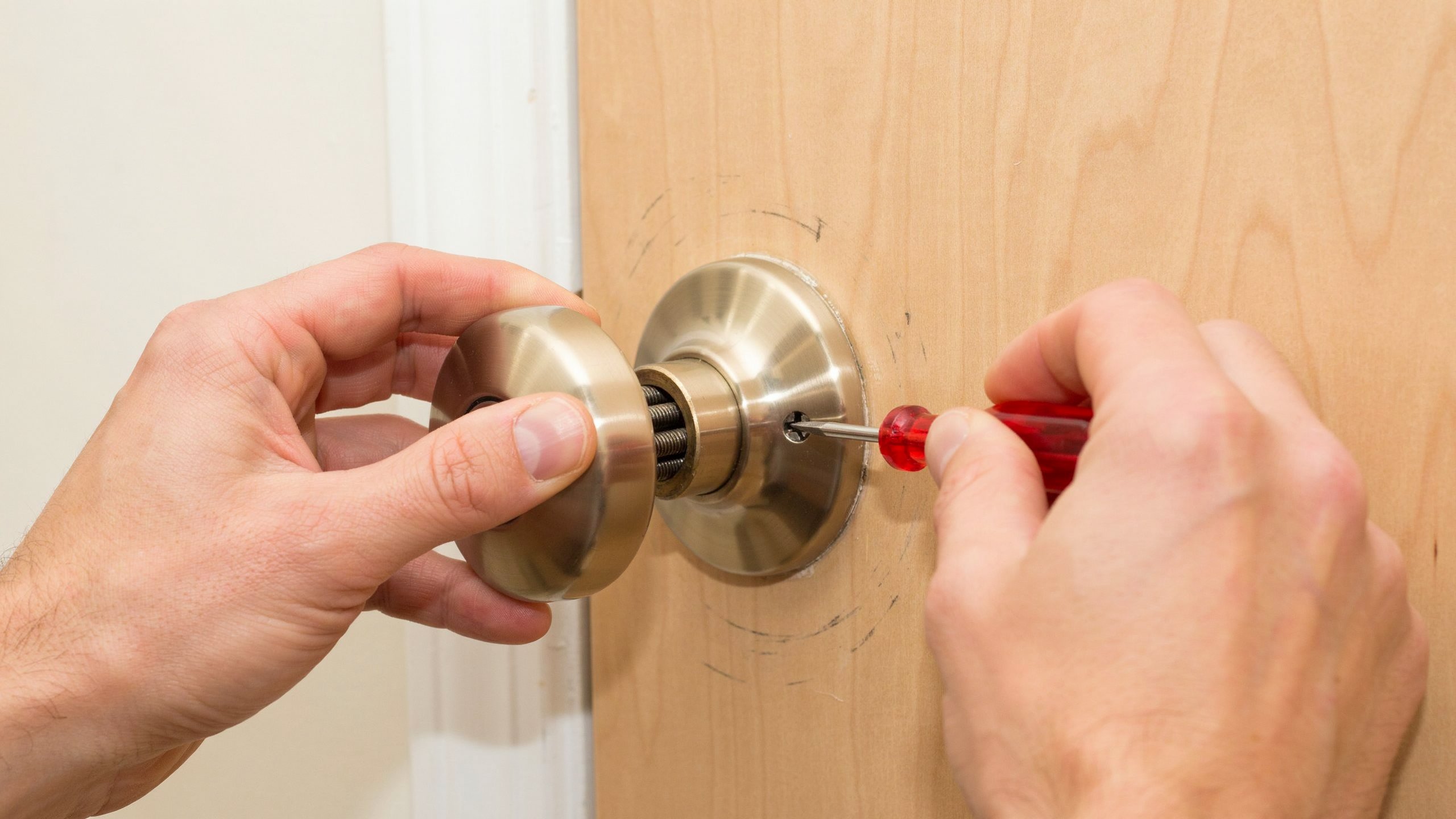
Most doorknobs installed after 1990 conceal their mounting screws under the rose plate. There are three ways the rose plate is held in place depending on manufacturer and model.
Method A: Detent pin release. Look around the neck of the knob where it meets the rose plate. You will find a small hole or slot, sometimes barely visible, that contains a spring-loaded detent pin. Insert a small flathead screwdriver or a straightened paper clip into the slot and press inward. While pressing the pin, pull the knob straight off the spindle. The rose plate then either unscrews counterclockwise or lifts straight off to reveal the mounting screws underneath.
Method B: Rotating rose plate. Some rose plates unscrew from a threaded collar behind them. Grip the rose plate and rotate it counterclockwise. It should unscrew and come free, revealing the mounting screws or mounting nut underneath.
Method C: Pop-off rose plate. Some manufacturers make rose plates that clip onto a base ring. Look for a small slot on the edge of the rose plate. Insert a flathead screwdriver into the slot and pry gently. The plate pops off the base ring and lifts away to reveal the screws.
Once the rose plate is removed, tighten the two long through-door screws that pull the two halves of the doorknob assembly together. These screws pass through the door and thread into the opposite side of the assembly. Tighten them gradually and evenly, alternating between the two screws rather than fully tightening one before touching the other. Uneven tightening torques the assembly and can crack the rose plate or misalign the latch.
For a detailed visual reference on rose plate removal across different doorknob brands, the Family Handyman guide to repairing a loose door handle at familyhandyman.com includes step-by-step photography of each removal method.
Fix 3: Tighten or Replace the Set Screw (Free to $3)
If the knob spins freely on the spindle or pulls away from the door independently of whether the mounting screws are tight, the set screw is loose, missing, or broken.
Look around the collar of the knob, the cylindrical section between the round knob and the rose plate, for a small screw. It may face downward and require crouching to see it. On some models, it is on the side and covered by the rose plate, in which case you need to remove the rose plate first.
If the set screw is an Allen or hex screw, you need the correct size Allen wrench. Most doorknob set screws use metric sizes between 2.5mm and 5mm. A basic Allen wrench set covers all of them. Tighten the set screw clockwise until snug. Do not overtighten. The set screw only needs to be firm against the flat of the spindle shaft, not torqued as hard as possible.
If the set screw is missing, take the doorknob to any hardware store with the rose plate removed so the collar is visible. The store can match the screw size from the thread profile of the empty hole. Replacement set screws cost under $1.
Fix 4: Repair Stripped Screw Holes (Under $3, 2 Hours Including Drying Time)
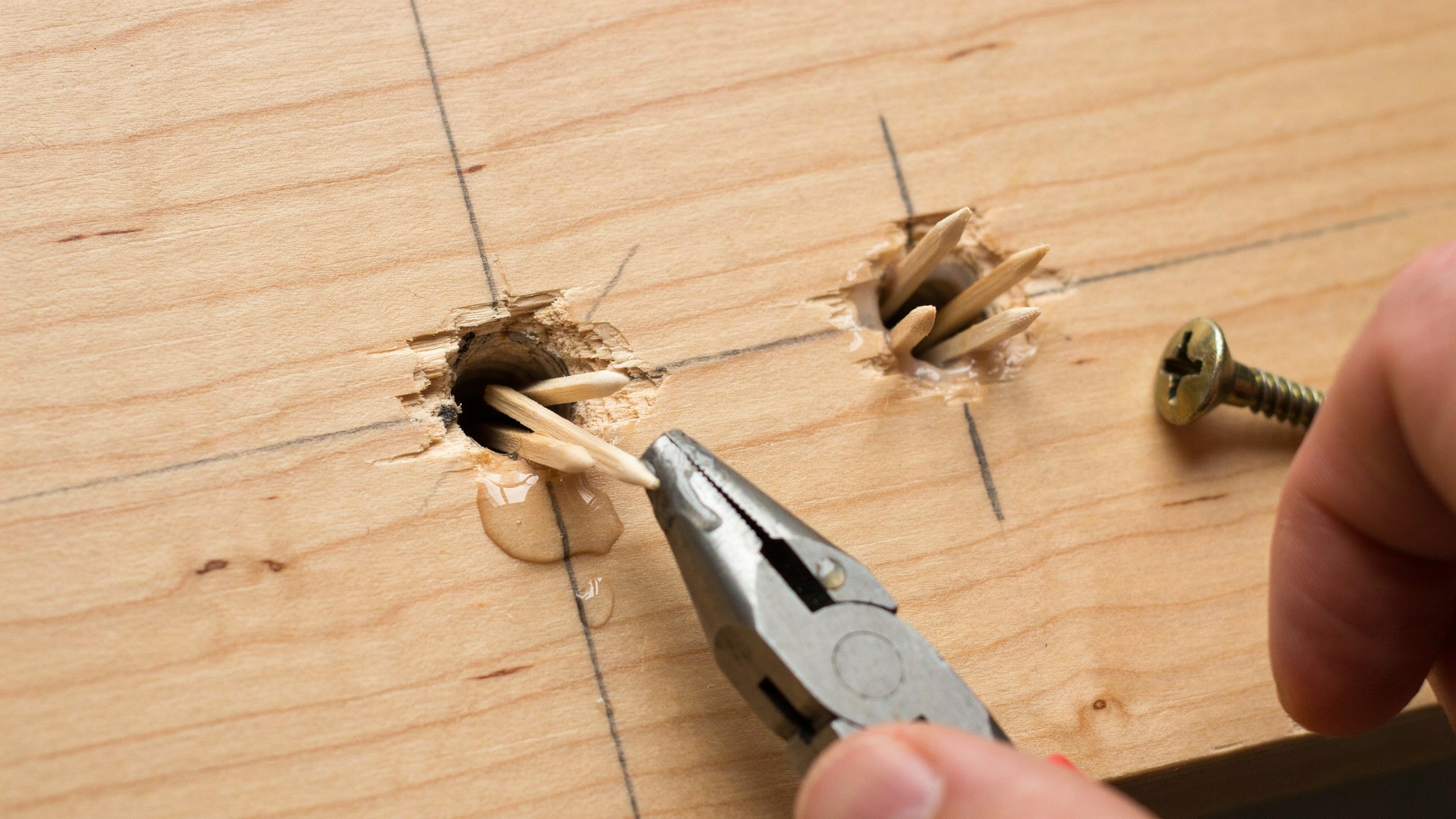
If tightening the screws does not solve the problem, knowing how to fix a loose doorknob means checking whether the mounting holes are stripped. When mounting screws turn without gripping, the wood fibers around the hole have been compressed or damaged and can no longer hold the screw threads. This is the most common reason a doorknob remains wobbly after tightening attempts.
Remove the doorknob assembly completely by following the rose plate removal steps in Fix 2. Set the hardware aside.
Pack the stripped hole with wooden toothpicks coated in wood glue. Fill the hole as completely as possible. Snap the protruding ends flush with the door surface. Let the glue cure for a minimum of two hours. Do not rush this step. Partially cured glue compresses under the screw and strips again.
Reinsert the original screw into the filled hole. It will feel significantly more resistant than before because it is biting into solid glued wood fiber rather than the compressed cavity from the stripped hole.
Reassemble the doorknob and test. For larger holes or when multiple adjacent holes are stripped, wooden dowel plugs provide more material and a stronger repair. Drill the hole out to the dowel diameter, glue the dowel in, let it cure fully, then drill a new pilot hole through the center of the dowel and reinsert the screw.
Fix 5: Fix a Doorknob That Spins Without Engaging the Latch (Free to $15)
A doorknob that turns freely without retracting the latch bolt is a different problem from a loose knob. The spindle is not engaging the latch mechanism correctly.
Check the spindle alignment. Remove the knob from one side of the door. Look at the square hole in the latch mechanism. The spindle passes through this square hole and turns the latch when you rotate the knob. If the spindle has slipped partially out of the hole, it turns without engaging. Push the spindle fully into the latch mechanism hole before reassembling the knob.
Check for a bent spindle. If the spindle is bent, it does not sit squarely in the latch hole and rotation does not transfer to the latch. A bent spindle needs replacement. Replacement spindles are sold at hardware stores for $3 to $8 and fit most standard mortise latch systems.
Check whether the spindle length is correct. Spindles are cut to specific lengths for different door thicknesses. A spindle that is too short may not fully reach the knob on one side after passing through the latch. Measure your door thickness and confirm the spindle length matches.
If the knob turns but the door still will not latch, the problem may be with the latch or strike plate rather than the knob itself. For additional troubleshooting help, see This Old House’s guide to fixing a door latch, which explains how to address common latch, alignment, and hardware problems.
Fix 6: Fix a Doorknob That Has Fallen Off Completely (Free to $20)
A doorknob that has come completely off the door needs to be reassembled, but first check whether any components have been damaged or lost.
Look for the set screw if present. A common reason doorknobs fall off is a missing set screw. If the screw is missing, a replacement costs under $1 at any hardware store.
Check the spindle. If the spindle fell out with the knob, locate it and confirm it is not bent. Insert it back through the latch mechanism in the door edge.
Slide the knob back onto the spindle from one side. Slide the opposite knob onto the spindle from the other side. Align both knobs so the rose plates sit flat against the door. Thread the mounting screws by hand first to confirm they are not cross-threading, then tighten gradually and evenly.
If the detent pin inside the knob is broken, the knob will not stay on the spindle because the pin is the mechanism that locks the knob in position. A broken detent pin usually means replacing the knob. For standard locksets, this costs $15 to $40 at any hardware store. For exterior locksets, match the keying or have the new lock rekeyed to your existing key to avoid carrying multiple keys.
Exterior Doorknobs: The Security Dimension
A loose knob on an interior bedroom or bathroom door is a convenience issue. A loose knob on an exterior entry door is a security issue.
An exterior doorknob assembly that can wobble, spin, or be pulled partially away from the door face reduces the resistance the door provides against forced entry. Even a correctly functioning entry doorknob provides limited security by itself, since the deadbolt is the primary security mechanism on most exterior doors. But a loose or damaged exterior doorknob can expose the latch mechanism, reveal the latch bolt gap, and in some cases allow manipulation of the latch from outside.
If you are fixing a loose exterior doorknob, confirm after reassembly that the latch bolt engages the strike plate fully and the deadbolt operates correctly. If the exterior doorknob wobble was severe or longstanding, inspect the door edge for any signs that the latch or deadbolt mounting has shifted.
For homeowners considering upgrading an aging exterior doorknob to a smart lock system that eliminates key dependency and adds remote access, the guide on smart home security for renters covers the no-drill smart lock options that work on any door type without permanent hardware modification.
When a Loose Doorknob Connects to a Bigger Problem
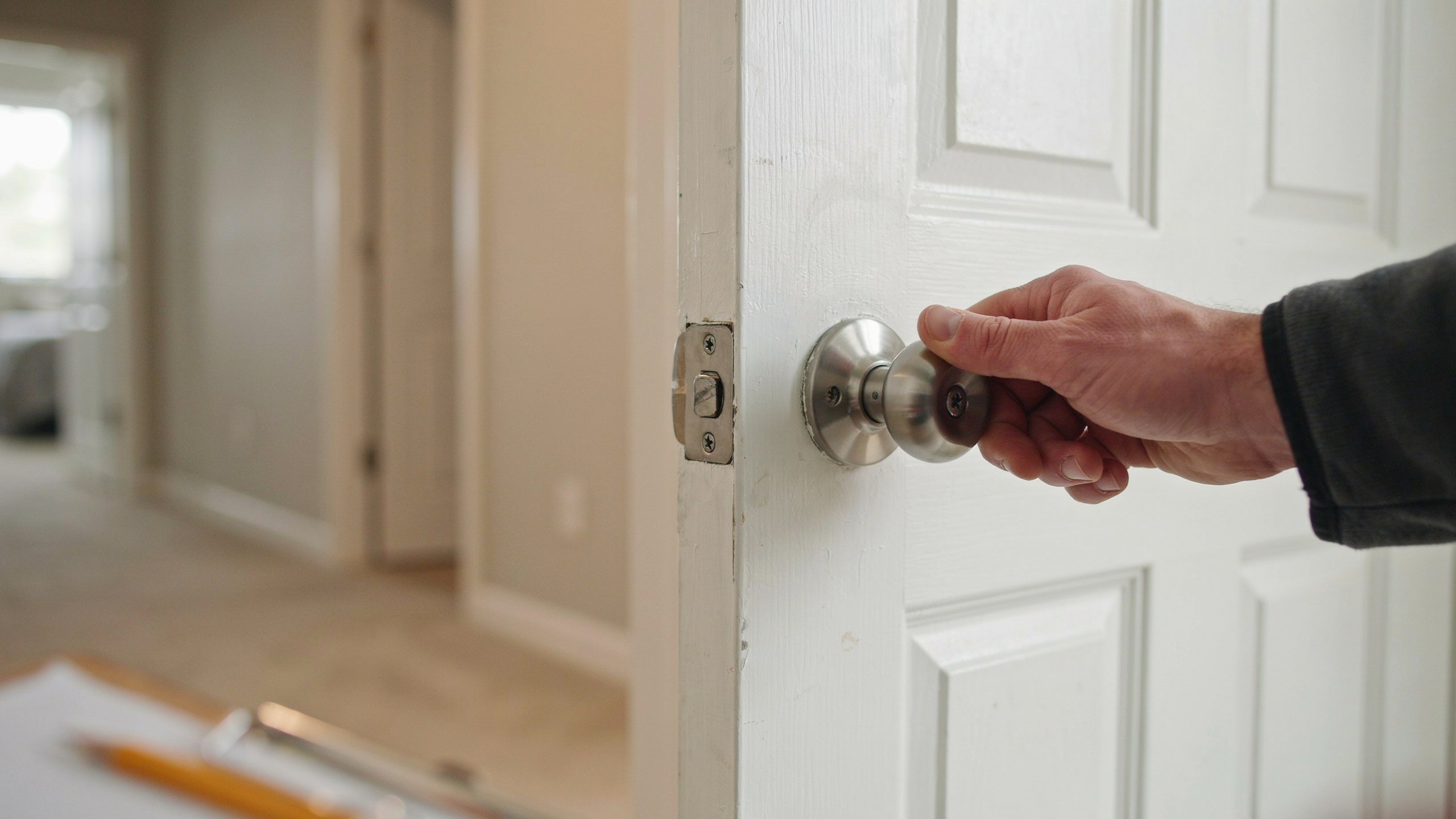
In most cases, a loose doorknob is exactly what it appears to be: a maintenance item that screws fix in minutes. In a few cases, it signals something worth investigating.
A doorknob that loosens again within weeks of being tightened suggests either stripped holes that need repair or wood movement in the door from moisture. Doors that swell and contract seasonally place stress on the hardware, and repeated screw loosening on the same door often accompanies other door fit issues like sticking or latching difficulty.
If both the doorknob and the door itself are showing problems simultaneously, the door or frame may need attention beyond just the hardware. The guide on how to fix a sagging door covers the full range of door alignment and fit problems that often present alongside hardware issues on the same door.
Home inspections sometimes note loose doorknobs on multiple doors throughout the home as general deferred maintenance. A buyer’s inspector who finds multiple loose doorknobs alongside other minor maintenance items uses these findings to assess the property’s overall maintenance history. The home inspection checklist for buyers covers how inspectors evaluate and document deferred maintenance findings and what the negotiation implications look like.
When to Replace Instead of Repair
A loose doorknob is almost always fixable without replacing the unit. Replace instead of repair when:
The knob base or rose plate is cracked. A cracked rose plate looks poor cosmetically and may not hold the mounting screws under normal use.
The latch mechanism inside the door no longer retracts cleanly. A sticky or sluggish latch is a separate problem from the knob looseness and often indicates the latch itself is worn or corroded.
The doorknob is more than 15 to 20 years old and has been repaired multiple times. At this age, multiple components are typically worn simultaneously, and repeated repairs become less worthwhile than a new lockset at $25 to $80.
The doorknob model has been discontinued, and replacement parts are not available. This is most common with builder-grade hardware from the 1980s and 1990s, where the specific detent pin or set screw size is not stocked at hardware stores.
Tools and Materials Reference
| Item | Cost | When Needed |
| Phillips screwdriver | Already own | Every fix |
| Small flathead screwdriver | Already own | Detent pin access |
| Allen wrench set | $8 to $15 | Set screw tightening |
| Straightened paper clip | Free | Alternative detent pin tool |
| Toothpicks and wood glue | $2 to $4 | Stripped holes |
| Replacement set screw | Under $1 | Missing set screw |
| Replacement spindle | $3 to $8 | Bent or wrong-length spindle |
| Replacement lockset (interior) | $15 to $40 | When repair is not viable |
| Replacement lockset (exterior) | $40 to $120 | When repair is not viable |
Frequently Asked Questions: How to Fix a Loose Doorknob
Q: How do I fix a loose doorknob with no visible screws?
A: Look for a small hole or slot on the knob collar near where it meets the rose plate. Insert a paper clip or small flathead screwdriver into the slot and press the detent pin. While pressing, pull the knob straight off the spindle. The rose plate will then either unscrew counterclockwise or lift away to reveal the mounting screws underneath. Tighten both mounting screws and reassemble the doorknob in reverse
Q: Why does my doorknob keep coming loose after I tighten it?
A: Recurring looseness after tightening almost always means stripped screw holes. The screws appear to tighten, but the wood around them cannot grip the threads. Remove the doorknob assembly, pack the screw holes with toothpicks coated in wood glue, let the glue cure for two hours, then reinstall the screws. This restores grip and the repair holds for years.
Q: My doorknob spins but does not open the door. How do I fix it?
A: The spindle is not engaging the latch mechanism. Remove the knob from one side, check that the spindle is fully seated in the square hole of the latch mechanism inside the door, and confirm the spindle is not bent. A bent or partially inserted spindle rotates without turning the latch. Straighten or replace the spindle, and the knob will engage the latch normally.
Q: Is a loose exterior doorknob a security risk?
A: Yes, particularly if the looseness is severe enough to shift the latch bolt position or expose the latch mechanism. Fix exterior doorknobs promptly. After repair, confirm the deadbolt operates correctly, and the latch bolt engages the strike plate fully. A properly functioning deadbolt provides significantly more security than the doorknob itself, so ensure it was not affected by the same looseness issue.
Q: How long does fixing a loose doorknob take?
A: Standard screw tightening takes two to five minutes. Accessing hidden screws behind a rose plate adds five to ten minutes. Repairing stripped screw holes requires two hours of drying time for the glue but only ten minutes of active work. Most loose doorknob repairs are complete in under 30 minutes of hands-on time.
Dealing with a doorknob that does not match any of the configurations above, or a repair that keeps failing? Drop your doorknob brand, whether it is interior or exterior, and what the knob does when loose in the comments, and we will help you find the right fix.

Samreen Khadim Hussain is a home improvement writer and content creator at Domelite Home. She specializes in making home renovation, interior design, and bathroom safety accessible to everyday US homeowners, turning technical subjects into clear, actionable advice. Her work is rooted in research, real-world practicality, and a genuine belief that a better home is within everyone’s reach.