
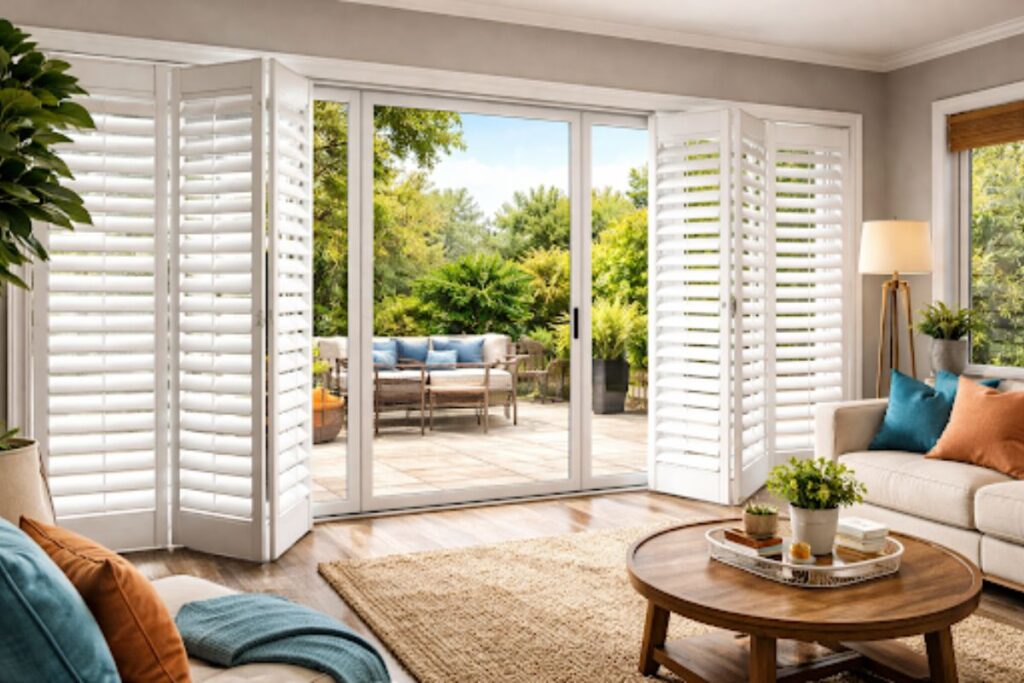
Sliding glass doors are one of those features you appreciate until you have to figure out how to cover them. During the day, they bring in beautiful natural light. At night, they leave your home fully exposed. Add in heat from direct sunlight and the constant need to open and close the door, and most window treatments start to feel like a compromise.
That’s where plantation shutters for sliding glass doors come in. They’re not just about appearance. They’re built to handle wide openings, daily use, and long-term wear without falling apart like blinds or becoming a hassle like heavy curtains.
But here’s the reality. Not every shutter setup works well for sliding doors. Some look great, but make access awkward. Others don’t hold up in busy households. If you’re spending this kind of money, you want something that actually works day to day. Choosing the right plantation shutters for sliding glass doors means understanding how they move, what they’re made of, and how they fit your daily routine
This guide breaks it down clearly so you can choose the right type, understand real U.S. pricing, and avoid the mistakes most homeowners make.
Why Sliding Glass Doors Need a Different Approach
Sliding doors are used constantly. That alone changes everything.
Think about your routine. Letting the dog out, stepping onto the patio, carrying groceries in. Now imagine dealing with tangled curtains or blinds that never quite line up. It becomes frustrating fast.
The size also matters. Most sliding doors are at least six feet wide. That’s too large for many standard window treatments to handle well. Curtains bunch up and eat wall space. Vertical blinds cover the width but often feel flimsy after a year or two.
Then there’s sunlight. If your door faces west or south, the afternoon heat can be intense, especially in states like Texas or Arizona. Without proper coverage, your cooling costs go up.
What you really need is something that:
- Moves easily with the door
- Holds up to daily use
- Lets you control light and privacy
That combination is exactly where shutters stand out.
What Are Plantation Shutters for Sliding Glass Doors?
These are not standard shutters scaled up. They’re designed specifically for large openings.
Instead of swinging open, most use a track system. Panels either slide or fold, depending on the style. This allows you to open the door without fighting the window covering.
They’re also typically custom-built. Even small measurement errors can affect how smoothly the panels move.
One thing homeowners notice right away is how solid they feel. Unlike blinds or curtains, shutters feel like part of the home. That’s one reason they’re often seen as a long-term improvement rather than a temporary fix.
Key Features That Make Them Work
- Wide louvers for better light control
- Strong panels that don’t bend or twist
- Smooth tracks designed for daily use
- Custom fit for clean alignment
A small detail that makes a difference is the tilt system. Hidden tilt rods give a cleaner look and are easier to maintain over time.
Best Plantation Shutters for Sliding Glass Doors by Type
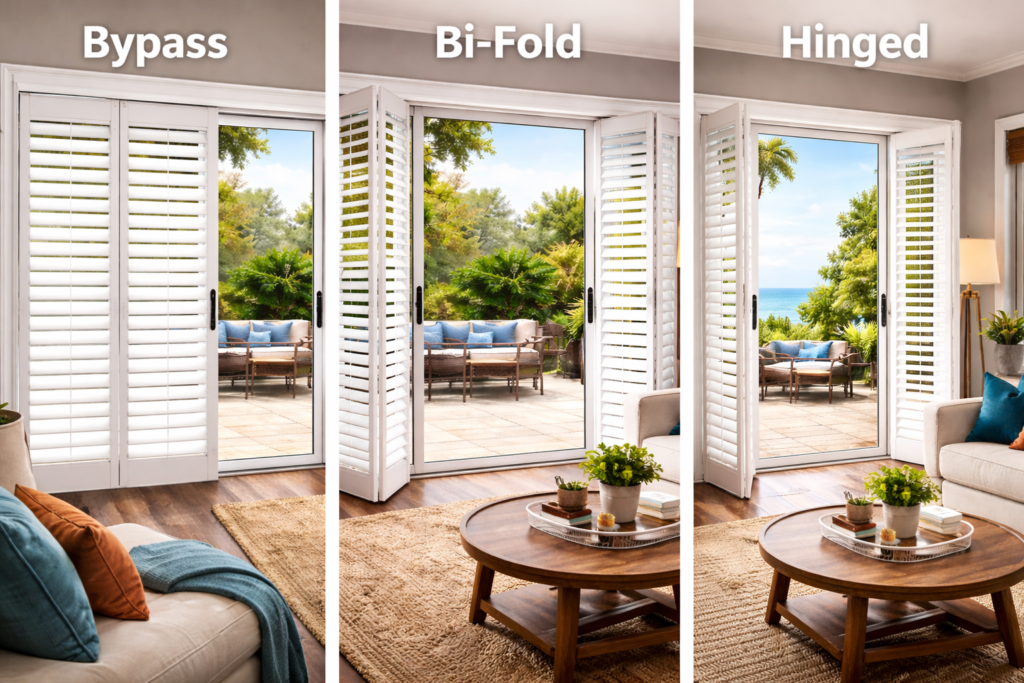
Choosing the right type matters more than most people expect. The way the panels move affects how usable your door is every day.
Bypass Shutters (Sliding System)
Bypass shutters slide along a track, similar to the glass door itself. One panel moves behind another.
They’re a practical choice for smaller spaces where you don’t have room for panels to swing open.
Best for:
- Everyday use
- Limited space
- Simple layouts
The trade-off is that part of the doorway is always covered. For most homes, that’s not a major issue.
Bi-Fold Shutters (Folding Panels)
Bi-fold shutters fold and stack to the side. This opens up more of the doorway.
If your sliding door leads to a deck or backyard, this can make the space feel more open and connected.
Best for:
- Wide openings
- Homes with outdoor entertaining areas
You’ll need enough wall space for the panels to stack. Without that, the setup can feel bulky.
Hinged Shutters
These swing open into the room. They work better for windows than sliding doors.
In most homes, they’re not practical for high-traffic areas because they take up space when opened.
Cost of Plantation Shutters for Sliding Glass Doors
Average U.S. Pricing
Most homeowners spend between $800 and $2,500, depending on size and material. Larger doors or premium wood shutters can push costs higher. According to Houzz, plantation shutters remain one of the top-rated window treatment investments among U.S. homeowners for long-term value and durability.
What Affects the Price
- Material choice (wood, vinyl, composite)
- Door size and number of panels
- Custom design details
- Professional installation
Here’s a simple comparison:
| Option | Cost | Durability | Maintenance |
| Plantation Shutters | High | Excellent | Low |
| Vertical Blinds | Low | Poor | Medium |
| Curtains | Medium | Medium | High |
Best Materials for Sliding Door Shutters
Wood
Wood shutters offer the best appearance. They work well in dry, climate-controlled homes but can struggle with humidity.
Vinyl
Vinyl is affordable and moisture-resistant. A practical option for kitchens or humid regions.
Composite
Composite shutters balance durability and appearance. They’re one of the most popular choices in U.S. homes because they handle temperature changes well.
How to Choose the Right Option
Start with how you use your door.
If it’s opened frequently, go with a bypass or bi-fold system. If space is tight, bypass is usually easier to live with.
Think about your climate. In humid areas, composite or vinyl tends to last longer than wood.
Also consider your layout. Do you have room for panels to stack? That small detail can make a big difference after installation.
Quick Checklist Before Buying
- Measure your door carefully
- Check available wall space
- Consider daily traffic
- Set a realistic budget
- Decide on DIY or professional installation
Installation: What to Expect
Professional installation is the safer route for most homeowners. It ensures proper alignment and smooth movement.
DIY is possible, but it requires precision. Even a small mistake in leveling the track can affect how the shutters operate.
Alternatives to Consider
If shutters feel out of budget, there are other options:
- Vertical blinds: Affordable but less durable
- Curtains: Flexible but require more maintenance
- Sliding panels: Modern look but not as long-lasting
Many homeowners go through a couple of these before switching to shutters.
Common Mistakes to Avoid
- Choosing style over function
- Ignoring space for panel movement
- Skipping professional measurements
- Going for the cheapest option without considering durability
These are the kinds of decisions that lead to regret after installation.
Are Plantation Shutters Worth It for Sliding Glass Doors?
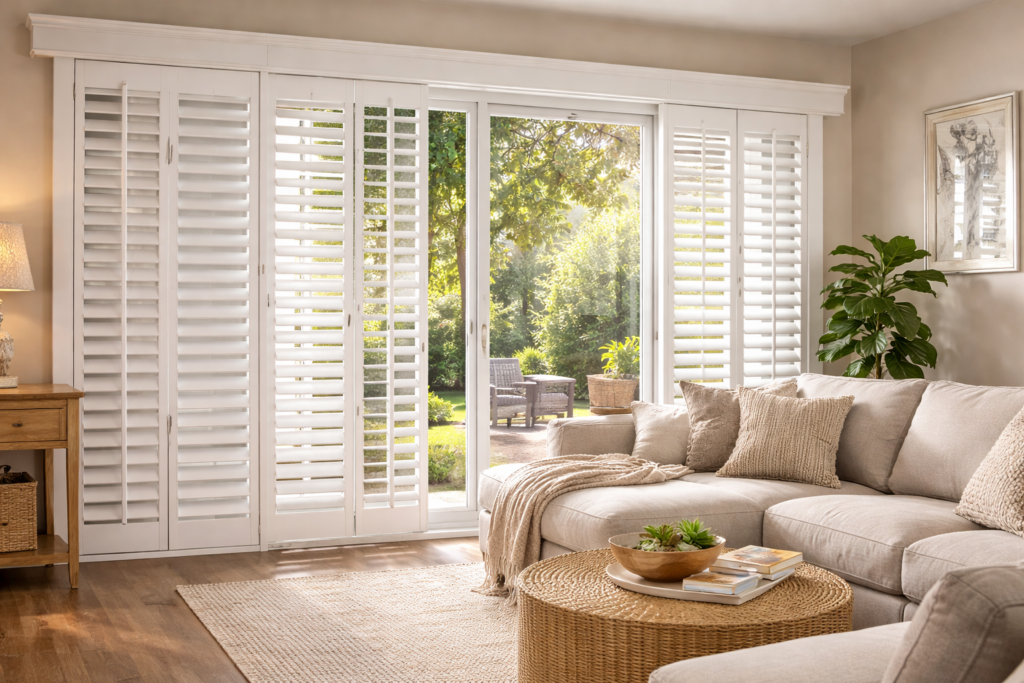
If you’re looking for a long-term solution that handles daily use without constant maintenance, they’re one of the most reliable options available.
They cost more upfront, but they solve problems that cheaper options often create. For homeowners planning to stay in their home, that trade-off usually makes sense. The U.S. Department of Energy confirms that interior window treatments like shutters can meaningfully reduce heat gain and improve home insulation.
Why Plantation Shutters Work Best
For homeowners seeking a long-term solution, plantation shutters for sliding glass doors remain the most reliable, low-maintenance option available. They handle daily use, control light, and keep your home private, all without the constant maintenance of blinds or curtains. Pick the right type and material, and you get a solution that lasts, looks great, and adds real value to your home.
Pro Tip: Bypass for small spaces, bi-fold for wide openings, and choose durable materials for your climate. Once installed, they just work, day in, day out.
FAQs
1. What type of shutters work best for sliding doors?
When choosing plantation shutters for sliding glass doors, bypass and bi-fold systems are the most practical for daily use and high-traffic areas.
2. How long do plantation shutters last?
Most last between 15 and 25 years with proper care.
3. Are they energy efficient?
Yes, they help reduce heat and improve insulation.
4. Can I install them myself?
Yes, but precision is critical for proper function.
5. Do they increase home value?
Yes, they are often seen as a permanent, high-quality feature.

I started Domelite Home because I got tired of home improvement advice that was either too vague or written by people who had never actually picked up a drill. I’m Naik Zali Shah I’ve spent years obsessing over renovation projects, smart home setups, and interior design, and I built this site to share what actually works. No fluff, no filler. Just honest advice for homeowners who want to get things right the first time.
2 thoughts on “Plantation Shutters for Sliding Glass Doors: Types, Costs, and What Actually Works”