
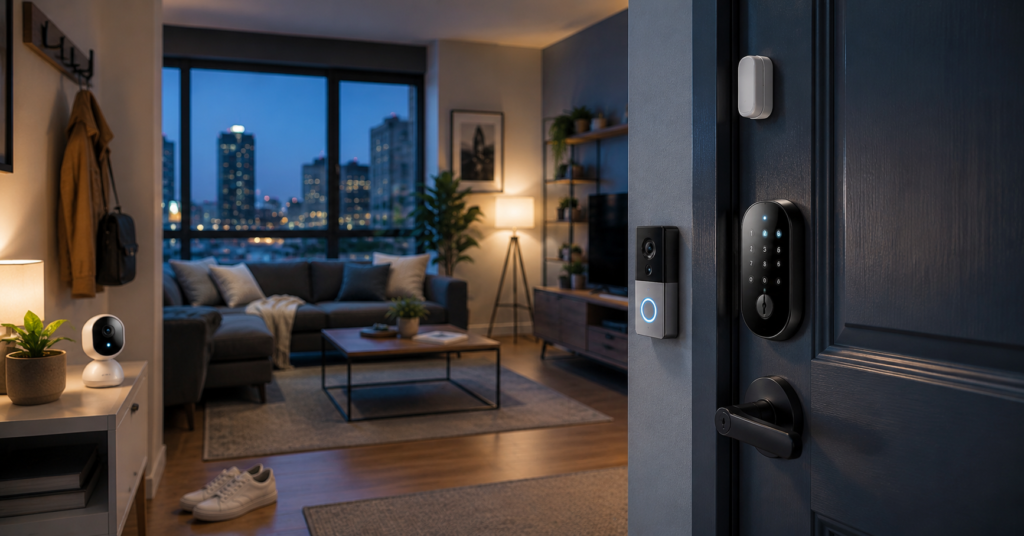
Quick Answer: Smart home security for renters means wireless, adhesive-mounted devices that protect your apartment without drilling, permanent modifications, or long-term contracts. The best renter-friendly setups cost $50 to $200 upfront with $0 to $25 per month in monitoring fees. You take everything with you when you move.
You want to feel safe in your apartment. That should be simple. But every time you look at a security system, you run into the same three walls: you cannot drill into the walls, your lease has some vague clause about modifications, and most systems lock you into a three-year contract when you might be moving in twelve months.
So you do nothing. And you keep feeling slightly uneasy every time you hear something in the hallway at night.
Here is the thing: smart home security for renters has changed completely in the last few years. The best systems in 2026 are designed specifically for people who cannot make permanent changes to their space. Wireless sensors that stick on with adhesive and peel off cleanly. Video doorbells that need no wiring. Smart locks that install in minutes and come off just as fast. Portable hubs you pack up and plug in at your next place.
This guide is specifically for renters, not homeowners. The concerns are different, the solutions are different, and the mistakes are different. Everything here is chosen because it works without a drill, without landlord drama, and without a contract that outlasts your lease.
Why Renter Security Is Different From Homeowner Security
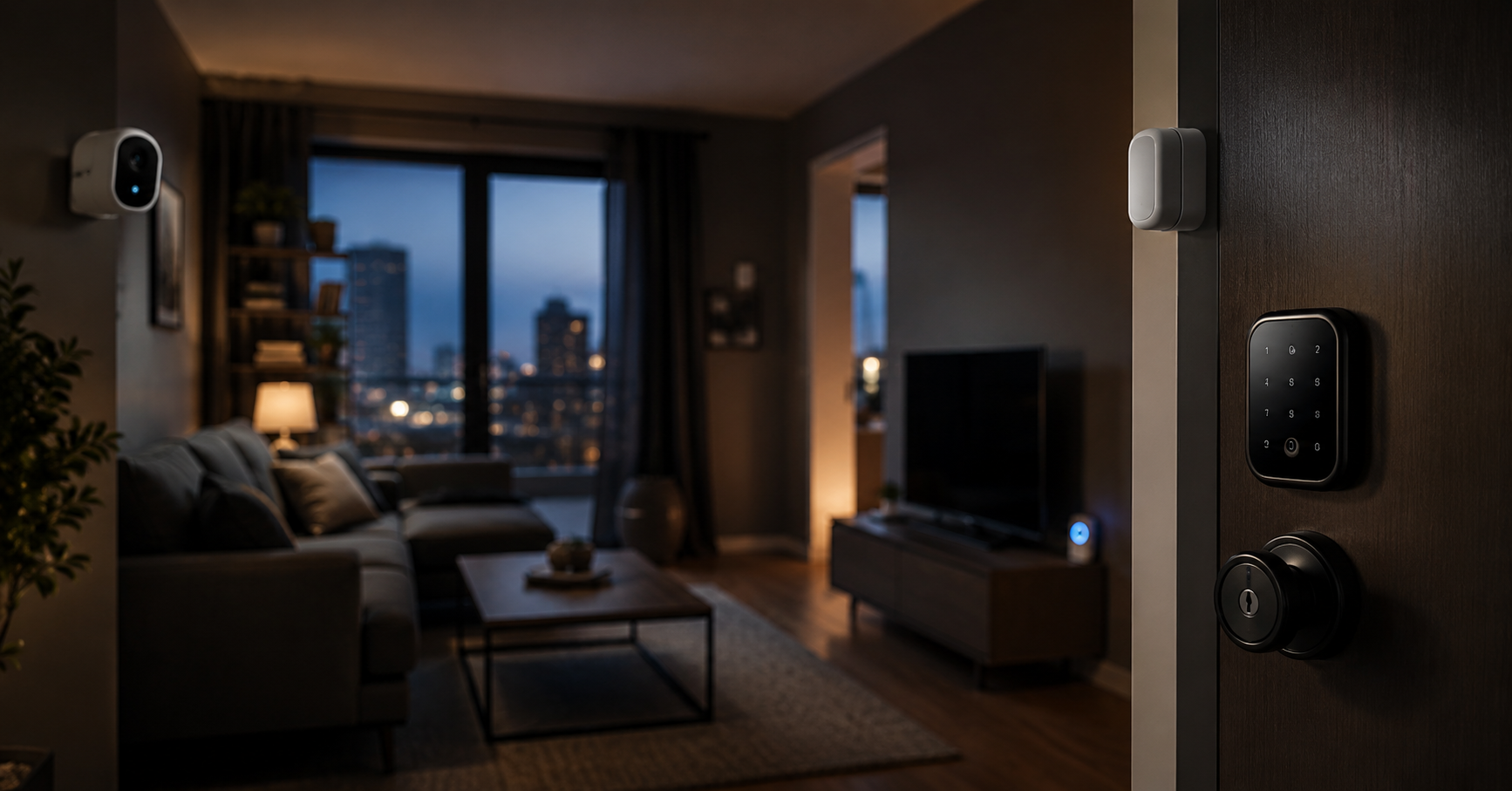
Most home security guides are written for homeowners. They talk about hardwired systems, permanent camera mounts, and professional installation. That is the wrong conversation for anyone renting an apartment.
You cannot drill or Make Permanent Changes.
Most leases prohibit permanent modifications to walls, doors, and ceilings. Drilling holes for camera mounts, security panels, or wired systems risks your security deposit and can get you in genuine trouble with your landlord. The good news is that the best renter security devices in 2026 do not require a single hole.
You Might Move in 12 Months
The average American renter moves every two to three years. A three-year monitoring contract with ADT or Vivint at $50 to $60 per month is a financial trap for anyone who is not certain they are staying put. Renter-appropriate security means month-to-month plans or free self-monitoring that you can cancel or pack up without penalty.
Your Landlord Controls the Building Entry
Homeowners control their entire perimeter. Renters do not. Your landlord controls the building entrance, the parking lot, the mailroom, and the corridors. Your security responsibility starts at your apartment door, not the street. That changes which devices matter most and which ones are completely irrelevant for your situation.
What Your Lease Actually Says About Security Devices
The U.S. Department of Housing and Urban Development outlines tenant rights around modifications and security devices that vary by state and lease type.
Before buying anything, spend five minutes reading your lease. Most rental agreements contain language about modifications, but not all security devices fall under that language.
Most leases restrict permanent modifications, which typically means drilling holes, running wires through walls, or altering door frames. Wireless, adhesive-mounted devices generally do not count as modifications under most lease agreements because they leave no permanent trace when removed.
Specific things to look for in your lease:
A clause about security systems usually refers to hardwired alarm systems connected to the building’s electrical system, not wireless self-contained units.
A clause about cameras often restricts outdoor cameras pointed at common areas or neighboring units, not indoor cameras pointing into your own space.
A clause about door modifications usually refers to replacing locks entirely, not adding a secondary smart lock that does not require modifying the existing hardware.
If you are unsure, a quick text or email to your landlord asking whether wireless, adhesive-mounted security devices are permitted almost always gets a yes. Most landlords have no objection to devices that leave no permanent trace and actually make their property safer.
The Move-In Security Checklist Every Renter Needs
This is the section most renter security guides skip entirely, and it is genuinely one of the most valuable things in this article.
When you move into a new apartment, do these checks on day one before you unpack anything:
Test every lock. Every door and window should lock securely. If any lock feels loose, stiff, or does not engage properly, document it in writing to your landlord immediately. This is both a safety and a liability issue. Following established apartment security best practices can help renters identify vulnerabilities before they become serious security risks.
Count the keys. Ask your landlord how many keys exist for your unit. Most landlords are required by law to rekey a unit between tenants, but not all do. If you are not certain the locks have been rekeyed, request it in writing. This is a reasonable ask that most landlords will honor.
Check sliding door locks. Sliding glass doors and windows often have the weakest locks in any apartment. A simple secondary security bar or window pin costs under $10 and provides meaningful additional security.
Note every point of entry. Count your doors, ground floor windows, and any accessible balcony or patio access. Every one of these is a point that needs attention from your security setup.
Document existing damage. While you are at it, photograph every scratch, hole, and mark in the walls before you move your furniture in. This protects your deposit at move-out and also tells you where previous tenants may have drilled or mounted things.
7 Best No-Drill Solutions for Smart Home Security for Renters
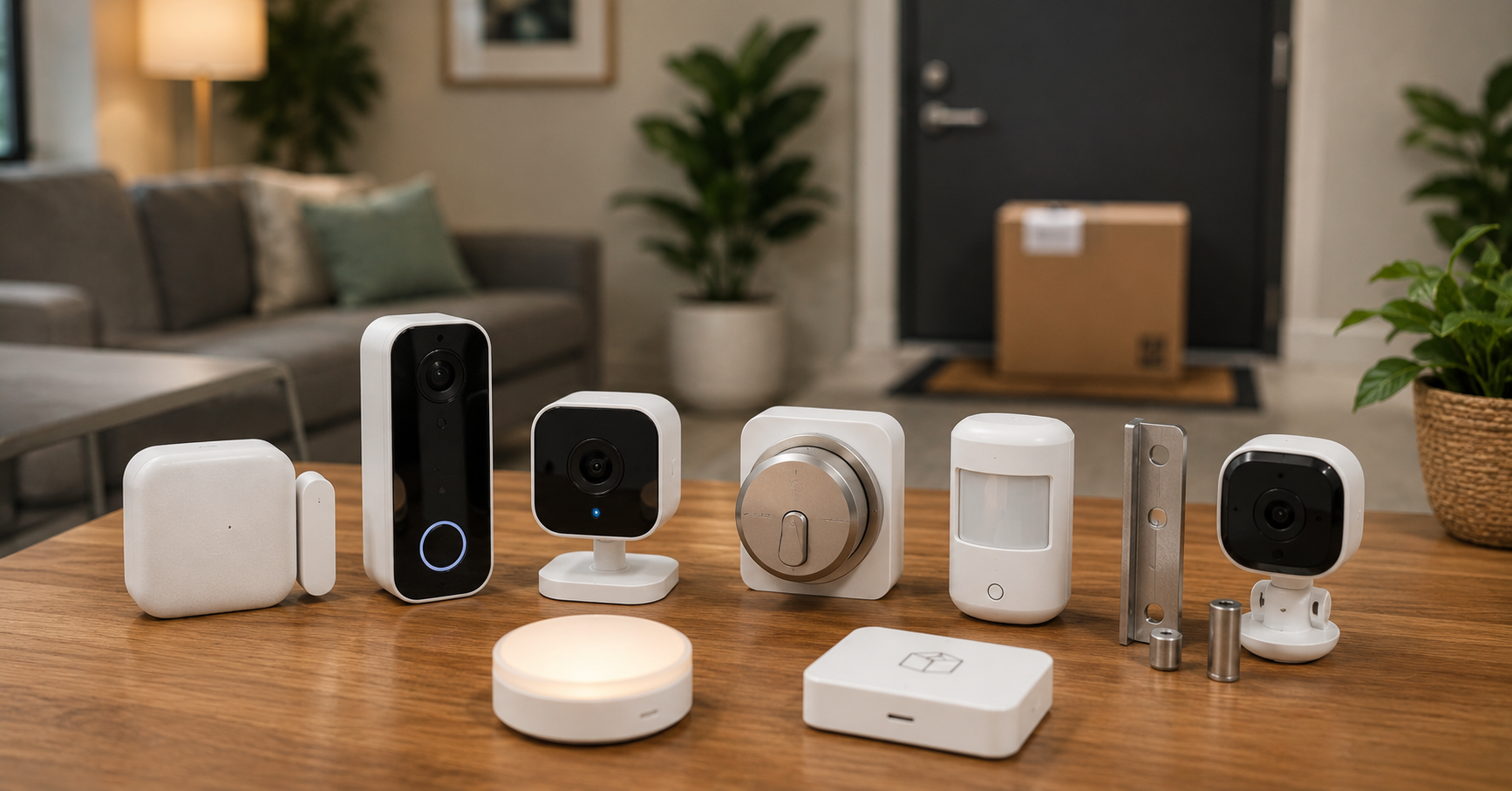
1. Wireless Door and Window Sensors ($30 to $80 for a starter pack)
This is where every renter security setup should start. Many renters choose wireless security systems for renters because they require no drilling and can move with you to your next apartment. Wireless door and window sensors attach with adhesive strips and alert your phone the moment a door or window opens. No drilling, no wiring, no professional installation.
The best options in 2026 include the Abode Mini Sensor 6-pack at around $70, which covers most one-bedroom apartments completely. SimpliSafe entry sensors are another solid option at around $20 each, and they work with SimpliSafe’s free self-monitoring tier, so you pay nothing monthly beyond the hardware.
Focus your sensors on the front door first, then any ground-floor or accessible windows, then the balcony or patio door if you have one. For most apartments, four to six sensors cover every meaningful entry point.
These devices mount with 3M adhesive strips, peel off cleanly at move-out, and come with you to your next place. They are the highest-value security investment any renter can make.
2. Adhesive Video Doorbell ($50 to $150)
A video doorbell for apartment security lets you see and speak to whoever is at your door before you open it. For renters who cannot hardwire a traditional doorbell, the options have improved dramatically.
The Wyze Video Doorbell Pro is one of the best budget options for renters at around $60. It connects to existing doorbell wiring if present, but most apartment-friendly versions run on battery and mount with adhesive or a small screw into the door frame itself, which most leases allow since it is the door frame rather than the wall.
Ring also makes battery-powered doorbell models that require no hardwiring. Both Wyze and Ring offer free basic recording tiers, though Wyze is more generous with what it includes without a subscription.
One important note for renters: do not point your doorbell camera at your neighbor’s door or any common area beyond your immediate entry. Privacy concerns aside, this can create genuine legal and lease issues in some states.
3. Portable Security Camera, Indoor ($25 to $100)
An indoor security camera covers your main living space and provides video evidence if anything does happen. For renters, the key requirement is a camera that sits on a shelf or table without any wall mounting at all.
The Wyze Cam v3, at around $35, is one of the best values available for renters. It sits on any flat surface, plugs into a standard outlet, offers free cloud storage for a rolling 14-day period, and covers a wide-angle view of an entire room. The Eufy Indoor Cam 2K is a step up in image quality at around $45, with local storage built in, meaning no subscription is needed to save footage.
Place your indoor camera where it covers the front door from inside and the main living area. A single well-placed camera in most studios or one-bedroom apartments covers the areas that matter most.
4. Smart Lock Addition (No Permanent Install) ($80 to $150)
Smart locks that work for renters are specifically designed to work alongside your existing deadbolt rather than replacing it. The August Smart Lock series is the most popular option for this. It attaches to the interior side of your existing deadbolt using the existing hardware, adds smart lock functionality including phone control, auto-lock, and temporary access codes, and removes completely without any trace when you move out.
This means you get keyless entry, the ability to let guests in remotely, and an automatic lock timer, without touching the exterior of the door or replacing anything your landlord controls.
At around $150, it is not the cheapest item on this list, but for renters who frequently need to manage access for guests, dog walkers, or service providers, it solves a genuinely irritating daily problem.
5. Motion Sensor Night Lights ($20 to $50)
Motion-activated lights serve double duty for renters. They deter intruders by eliminating the darkness that makes entry easier, and they eliminate the practical annoyance of navigating a dark hallway at night without waking your household.
Battery-powered or plug-in motion sensor lights require no installation at all. Place them in your hallway, near your front door interior, and at any other dark corner of your apartment. They come on when motion is detected and off a few seconds later.
This is the cheapest item on this list and the easiest to set up. It is also one of the most consistently underestimated security upgrades renters overlook because it does not feel technical enough to count. It does count.
6. Window and Sliding Door Security Bars ($10 to $40)
Sliding glass doors and sash windows are the easiest points of entry in most apartments, and their standard locks are often embarrassingly simple to defeat. A secondary security bar addresses this without any modification to the door or window itself.
For sliding doors, a simple bar cut to size and laid in the track prevents the door from being opened from the outside, even if the lock is bypassed. Adjustable sliding door bars are available for under $20. For windows, sash window pins are small pins that lock a window in the closed or partially open position and cost around $3 to $5 each.
These are not glamorous solutions, but they address a genuine vulnerability in most apartment layouts at almost zero cost.
7. Package Theft Alert System ($35 to $80)
Package theft is the number one property crime concern for US apartment renters in 2026, and most security guides bury it or skip it entirely. This deserves its own dedicated solution.
Learning how to protect delivered packages from theft is an important part of apartment security, especially in buildings without package lockers or concierge services.
A small camera or sensor placed near your door or in the common mail area alerts you when a package is delivered and when someone approaches it. The Wyze Cam placed inside near a ground floor window looking toward the building entrance is one approach. A dedicated package alert sensor, like the Notion or a Ring doorbell with package detection, is another.
Some apartment buildings have package lockers or a concierge. If yours does not, and package theft is a problem in your building, talk to your property manager. Many landlords will install package lockers when enough tenants raise the issue.
Self-Monitoring vs Professional Monitoring for Renters
For most renters, self-monitoring is the right choice. Here is why.
Self-monitoring means your phone gets an alert when a sensor triggers. You decide what to do. If you can check your phone reliably during the day and you live in a relatively safe area, this is usually enough,h and it costs nothing beyond the hardware.
Professional monitoring means a call center watches your system around the clock and dispatches police or fire services if an alarm triggers and you do not respond within a set time. This costs $6 to $25 per month, depending on the system, and adds genuine value if you travel frequently, sleep heavily, or live in an area where response time matters.
For renters specifically, the best professional monitoring options are month-to-month plans with no contract. Abode offers monitoring from $6 per month with no commitment. SimpliSafe charges $22.99 per month on a month-to-month basis. Consumer Reports independently tests and rates home security systems annually, making it the most reliable reference for comparing monitoring plans before you commit. Both let you cancel anytime, which is the only kind of monitoring plan that makes sense for someone who might move in the next year.
Avoid any system that requires a one, two, or three-year monitoring contract. ADT and Vivint both require long-term contracts and are not appropriate for most renters.
What Happens to Your Deposit If You Drill
This is worth addressing directly because it is the fear that stops most renters from doing anything at all about security.
If you drill holes for a security device and your lease prohibits permanent modifications, your landlord can deduct the cost of repair from your security deposit. In most US states, this means the cost of filling the holes and repainting the affected area, which typically runs $50 to $150 per wall, depending on the size and finish of the repair.
That is a real cost, but it is not catastrophic. However, if you drill and the lease specifically prohibits modifications, you may also be in technical breach of your lease, which in extreme cases could give a landlord grounds for other actions beyond deposit deduction.
The practical takeaway: all seven solutions in this guide are specifically chosen because they require no drilling. There is no reason to risk your deposit when the no-drill alternatives perform equally well for renter-specific security needs.
Portable Systems You Can Take When You Move
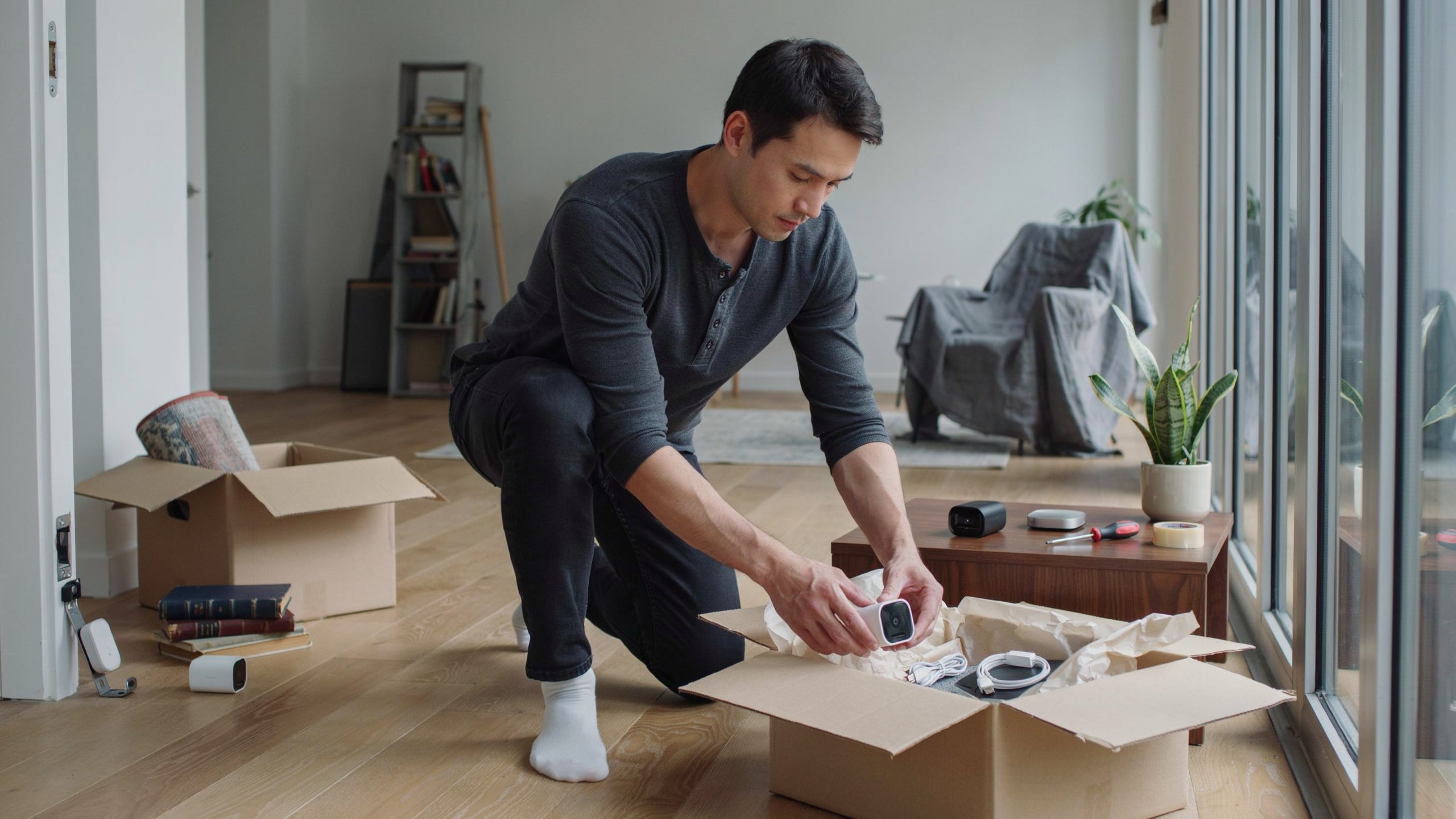
This is one of the biggest advantages of renter-appropriate security systems that most guides do not emphasize enough.
Every device in this guide is portable. Wireless sensors peel off with no wall damage. Cameras unplug and go in a box. Smart lock attachments remove in seconds. Motion lights come off the shelf. Security bars come out of the track.
You are not buying security for this apartment. You are buying security for wherever you live. A $200 renter-friendly security setup moves with you to your next three apartments over the next decade. Compare that to a hardwired system that stays in the wall when you leave.
For a broader look at building a complete smart home setup that stays portable and budget-friendly for renters, the guide on how to set up a smart home on a budget covers the full ecosystem approach for under $150.
Renter Security Budget Breakdown
Here is what different budget levels get you as a renter:
| Budget | What to Buy | Coverage |
| Under $50 | Door sensor pack, window security bars, motion night lights | Entry points secured, basic deterrence |
| $50 to $100 | Above, plus an indoor camera and a video doorbell | Visual coverage of entry and interior |
| $100 to $200 | Full wireless sensor kit, smart lock addition, and indoor camera | Comprehensive apartment coverage |
| $200 plus | Above plus optional professional monitoring | Full coverage with 24/7 dispatch option |
The $100 to $200 range gives most renters everything they actually need. Going above that adds professional monitoring, which is worth it for some people and unnecessary for others, depending on lifestyle and location.
For apartment renters specifically dealing with noise and security concerns together, our guide on how to soundproof a room cheaply covers the renter-safe acoustic solutions that work alongside these security upgrades without any drilling or deposit risk.
And if you want the broader picture of how smart home security works across different apartment setups and building types, our smart home security for apartments guide covers the full landscape, including building-level security considerations that go beyond individual unit setup.
Frequently Asked Questions
Q: Can renters install security cameras without landlord permission?
A: For indoor cameras that sit on a shelf or table and point only into your own unit, landlord permission is generally not required, and most leases do not restrict them. For outdoor cameras or cameras pointing toward common areas or neighboring units, check your lease and consider asking your landlord first. Most wireless, removable cameras that do not require drilling fall outside the modification restrictions in most standard US lease agreements.
Q: What is the best no-contract security system for renters in 2026?
A: Abode and SimpliSafe are the two strongest options for renters who want flexibility. Abode’s free self-monitoring plan costs nothing monthly after the initial hardware purchase of around $140 to $200. SimpliSafe offers month-to-month professional monitoring at $22.99 with no contract. Both are fully wireless, fully portable, and require no permanent installation.
Q: Will a wireless security system work if my Wi-Fi goes down?
A: Basic push notifications require the internet. If your Wi-Fi goes down, you lose remote monitoring until it is restored. Systems like Abode offer optional cellular backup for $6 to $13 per month, which keeps the system running if the internet fails. For most apartment renters with stable internet, cellular backup is optional rather than essential.
Q: Can my landlord prevent me from having a security system?
A: In most US states, landlords cannot prohibit tenants from having wireless, non-damaging security devices inside their own unit. Some states have specific tenant rights laws that protect the right to install security devices. However, landlords can and do restrict modifications, hardwired systems, and cameras in common areas. Always check your specific lease and local tenant rights laws before installing anything.
Q: What is the cheapest renter-friendly security setup that actually works?
A: Renters should also follow basic apartment security best practices and take steps to protect delivered packages from theft, alongside using smart security devices.
A Wyze Cam v3 at $35 for indoor coverage, a pack of adhesive door and window sensors at $30 to $50, and a sliding door security bar at under $20 gives you solid coverage for under $100 total with zero monthly fees. It is not the most sophisticated setup available, but it addresses the most common renter security concerns at a price that makes sense for a one-year lease.
Renting in a specific situation, shared house, studio apartment, or ground floor unit, and are not sure which setup fits your space? Drop your situation in the comments, and we will help you figure out the right combination.

Samreen Khadim Hussain is a home improvement writer and content creator at Domelite Home. She specializes in making home renovation, interior design, and bathroom safety accessible to everyday US homeowners, turning technical subjects into clear, actionable advice. Her work is rooted in research, real-world practicality, and a genuine belief that a better home is within everyone’s reach.
3 thoughts on “Smart Home Security for Renters: 7 No-Drill Solutions That Work”