
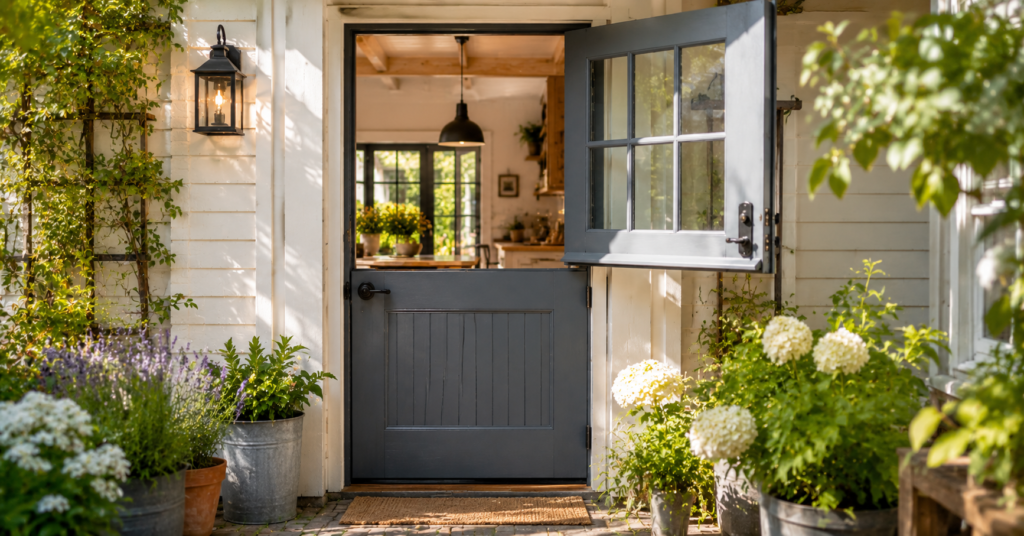
Quick Answer: Dutch doors offer genuine benefits, ventilation, pet and child containment, curb appeal, and an indoor-outdoor connection, but they cost $769 to $9,000 installed, depending on material, require more maintenance than a standard door, and develop alignment problems over time in harsh climates. They are worth it for farmhouse, coastal, and family-oriented homes. They are the wrong choice for cold climates, tight budgets, and homeowners who dislike extra maintenance.
Dutch door pros and cons is one of the most searched topics in home improvement right now, and for good reason. You have seen them everywhere lately. On Pinterest, on HGTV, in every farmhouse renovation video on YouTube. The split door that opens in two halves, letting in a breeze while keeping the dog in. It looks charming, it looks practical, and now you are wondering if it would actually work for your home or if it is one of those things that looks better in photos than it lives.
Here is the honest answer: Dutch doors are genuinely great for the right home and the right family. Understanding Dutch door pros and cons before you buy saves you from a costly mistake that is difficult to reverse. But there are four real downsides that most guides gloss over, and if any of them apply to your situation, you will regret the purchase. This complete Dutch door pros and cons guide covers both sides without pulling punches. What Dutch doors do exceptionally well, where they genuinely disappoint, what they actually cost installed in 2026, and exactly how to decide whether one belongs on your home.
What Is a Dutch Door and Why Are They Trending in 2026
A Dutch door is a single door divided horizontally into two independently operating halves. You can open the top half to let in air and light while the bottom half stays closed and latched. Open both halves together, and it functions exactly like a standard entry door. Latch them together, and they operate as one solid panel.
The design traces back to 17th-century Holland, where farmers used split doors to keep livestock out of living spaces while still ventilating the interior. Dutch settlers brought the design to America, particularly in New York and New Jersey, and it spread from there into coastal and farmhouse architecture across the country.
In 2026, they are experiencing a genuine resurgence. Houzz searches for Dutch doors increased significantly in 2025 and have continued climbing. The reasons are practical: more homeowners are prioritizing indoor-outdoor living, ventilation without screens, and pet containment without baby gates. A Dutch door solves all three in one architectural move.
Dutch Door Pros and Cons at a Glance
| Factor | Dutch Door | Standard Door |
| Ventilation | Excellent, top half opens independently | None without opening fully |
| Pet and child containment | Built-in, bottom half stays closed | None without a separate gate |
| Curb appeal | High, distinctive, and memorable | Average |
| Cost installed | $769 to $9,000+ | $500 to $4,000 |
| Maintenance | Higher, more hardware, more seal points | Lower |
| Energy efficiency | Good with proper weatherstripping | Slightly better due to fewer seal points |
| Security | Equal with proper hardware | Equal |
| Long-term alignment | Can shift in harsh climates | Stable |
| Best for | Farmhouse, coastal, family homes | Any home, any climate |
The 7 Pros of a Dutch Door
1. Natural Ventilation Without a Screen Door
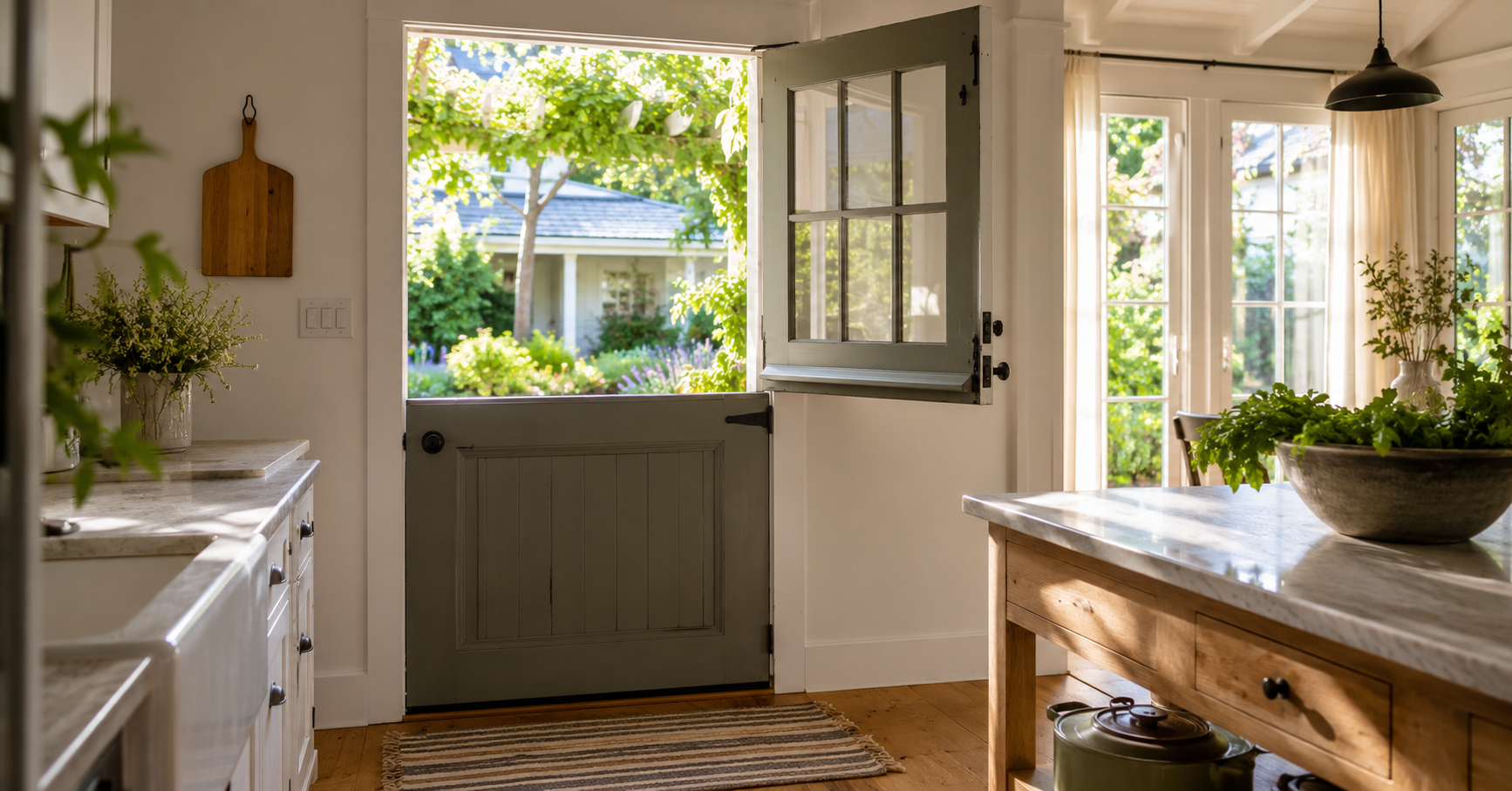
This is the reason Dutch doors were invented, and it is still their strongest argument. Open the top half, and you get a cross breeze through the entry without fully opening the house to the outside. No screen door needed, no wrestling with a storm door that slams, no choosing between security and fresh air.
For homes in mild climates, coastal California, the Pacific Northwest, and the Southeast in spring and fall, this is genuinely transformative. You can leave the top half open for hours without worrying about the dog bolting out or a toddler wandering onto the porch.
If you want ventilation and bug protection simultaneously, dedicated Dutch door screens roll down from the top and attach to the shelf at the split point. They cost $80 to $150 and solve the insect problem completely.
2. Built-In Pet and Child Containment
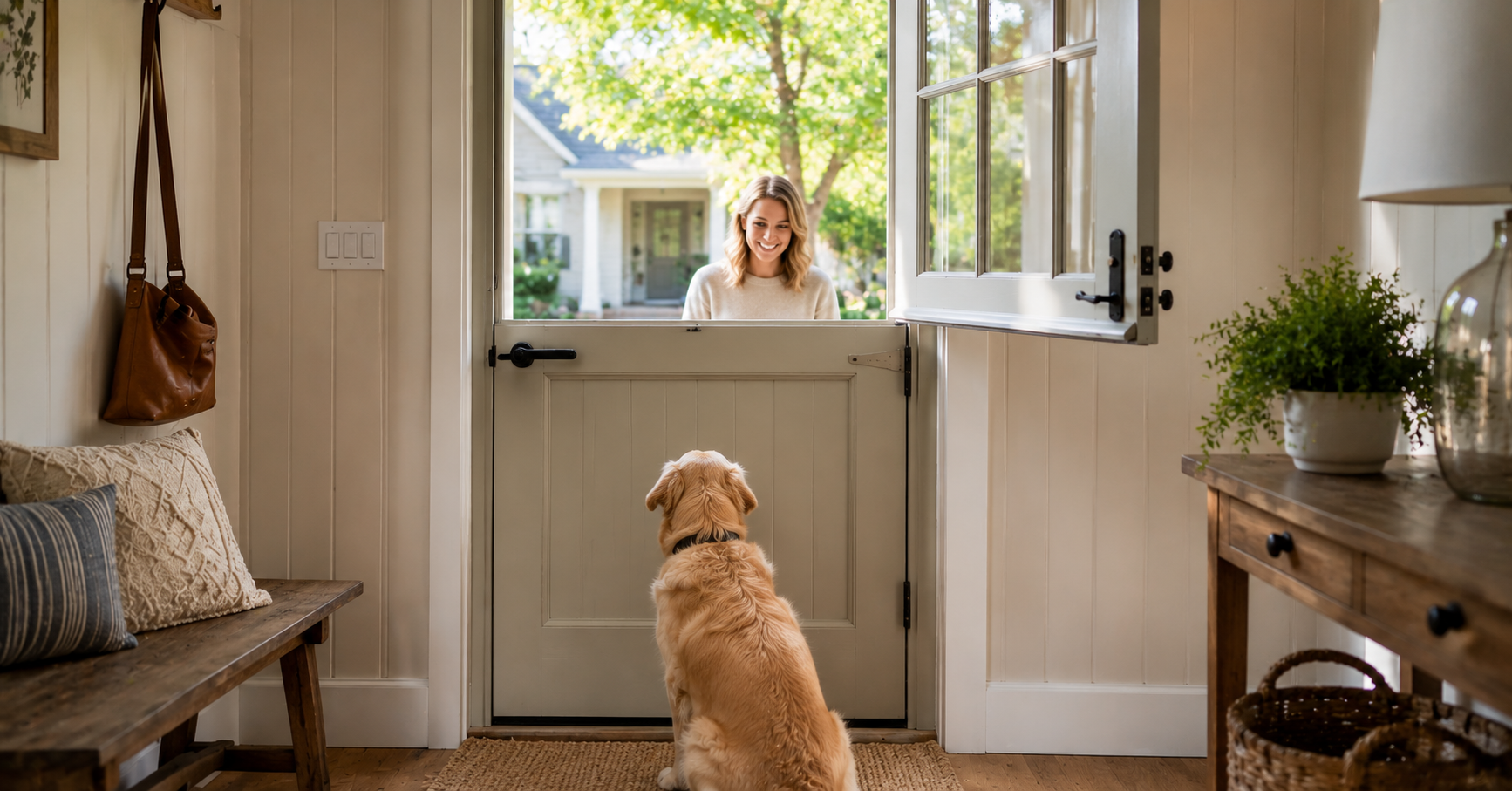
A Dutch door with the bottom half closed is functionally a gate. A large dog that can clear a 36-inch baby gate typically cannot clear a solid wood door panel, and the bottom half of a Dutch door sits at full door height, 36 inches from the floor to the split point.
For families with dogs that bolt when the door opens, or toddlers who make a break for the yard the moment anyone approaches the front door, this containment is genuinely valuable. You can answer the door, receive packages, and have a conversation with a neighbor without managing the dog or the toddler simultaneously.
The same logic applies in mudrooms and kitchen-to-backyard transitions, where you want to interact with people outside while keeping animals or small children in a defined space.
3. Curb Appeal and Character
Few front doors make as strong a first impression. A Dutch door signals architectural intention and personality in a way that a standard slab door simply cannot. Whether you choose a rustic knotty alder panel for a farmhouse, a sleek painted panel in matte black for a contemporary home, or a classic six-panel design in deep navy for a coastal property, the split profile reads as custom and considered.
Real estate data supports this. Listings that mention Dutch doors or other distinctive door features tend to attract more buyer interest, and an entry that stands out visually sets the tone for the entire showing. It is one of those relatively affordable upgrades that changes how a home photographs and how buyers remember it.
4. Indoor-Outdoor Connection
With the top half open, a Dutch door blurs the boundary between inside and outside in a way that feels genuinely different from simply opening a standard door. You are not fully opening the house to the exterior; you are creating a framed connection, enough to feel the breeze, hear the yard, and interact with whoever is outside, without the full exposure of an open door.
For kitchen-to-garden transitions, mudroom-to-patio connections, and any space where you want to maintain a dialogue between inside and outside while keeping the interior defined, this effect is genuinely functional and not just aesthetic.
5. Natural Light Without Full Exposure
Top halves fitted with glass panels flood an entry with natural light while the bottom half stays closed. If your entryway is dark and you have been considering a sidelight or transom window, a Dutch door with glass on the upper panel delivers the same effect at the door itself.
This matters particularly in entries that face north or east, where natural light is limited, and every source counts. Paired with a sidelight, a glazed Dutch door can dramatically brighten a previously dim entry without any structural work.
6. Conversation and Community Feel
There is something about a half-open Dutch door that invites conversation in a way that a fully open or fully closed standard door does not. It creates a natural threshold, a framed opening at face height, that is warmer than a screen door and more engaged than a closed door. In neighborhoods where people actually talk to neighbors, this matters.
It is a small thing, but homeowners who install Dutch doors consistently report that they use this feature more than they expected to.
7. Works in Multiple Locations
Dutch doors are not limited to front entries. They perform well in several interior and exterior applications that standard doors cannot match as effectively.
Interior locations where Dutch doors work particularly well include the top of a staircase as a safety gate, between a kitchen and laundry room, between a mudroom and main living area, and as a pantry or utility room entrance where you want ventilation and visibility without a fully open door.
Exterior applications beyond the front door include back doors opening to a patio or garden, garage-to-mudroom transitions, and barn doors on outdoor structures.
The 4 Honest Cons of a Dutch Door
1. Higher Cost Than a Standard Door
Dutch doors cost more than standard doors at every price point, more hardware, more precision manufacturing, and a more complex installation that requires careful alignment of two separate panels.
Here is the full 2026 installed cost breakdown:
| Tier | What You Get | Installed Cost |
| Builder grade | Basic wood or fiberglass slab, standard hardware, professional installation | $769 to $1,162 |
| Mid-range | Higher-quality wood species, fiberglass with decorative glass, upgraded hardware | $1,500 to $3,000 |
| Premium | Iron or steel frames, exotic wood species, custom dimensions, specialty glass | $4,000 to $9,000+ |
For current pricing specific to your zip code, the Homewyse Dutch door cost calculator provides regional estimates based on local labor and material costs.
One important cost note: energy-efficient exterior Dutch doors may qualify for the federal Energy Efficient Home Improvement Credit, which allows homeowners to deduct up to 30 percent of qualifying door costs, up to $250 per door. Check Energy Star’s current tax credit eligibility before purchasing to see if your chosen door qualifies.
2. More Hardware Means More Maintenance
A Dutch door requires a doorknob, a deadbolt, a door latch, four or more hinges, an astragal (the vertical strip connecting the two halves when closed), and a bolt or pin to lock the halves together when you want them to operate as one panel. That is roughly twice the hardware of a standard door.
More hardware means more things that can wear, loosen, stick, or fail over time. The astragal in particular is the component most prone to issues; it needs to maintain a tight fit between the two panels for both weatherproofing and security. If it loosens or warps, you will notice drafts, noise transmission, and potential security gaps.
Annual maintenance on a Dutch door includes checking and tightening all hardware, inspecting weatherstripping around all four edges of both panels, lubricating hinges and the latch mechanism, and checking the astragal seal. This takes about an hour per year, double what a standard exterior door requires.
3. Weathering and Alignment Problems Over Time
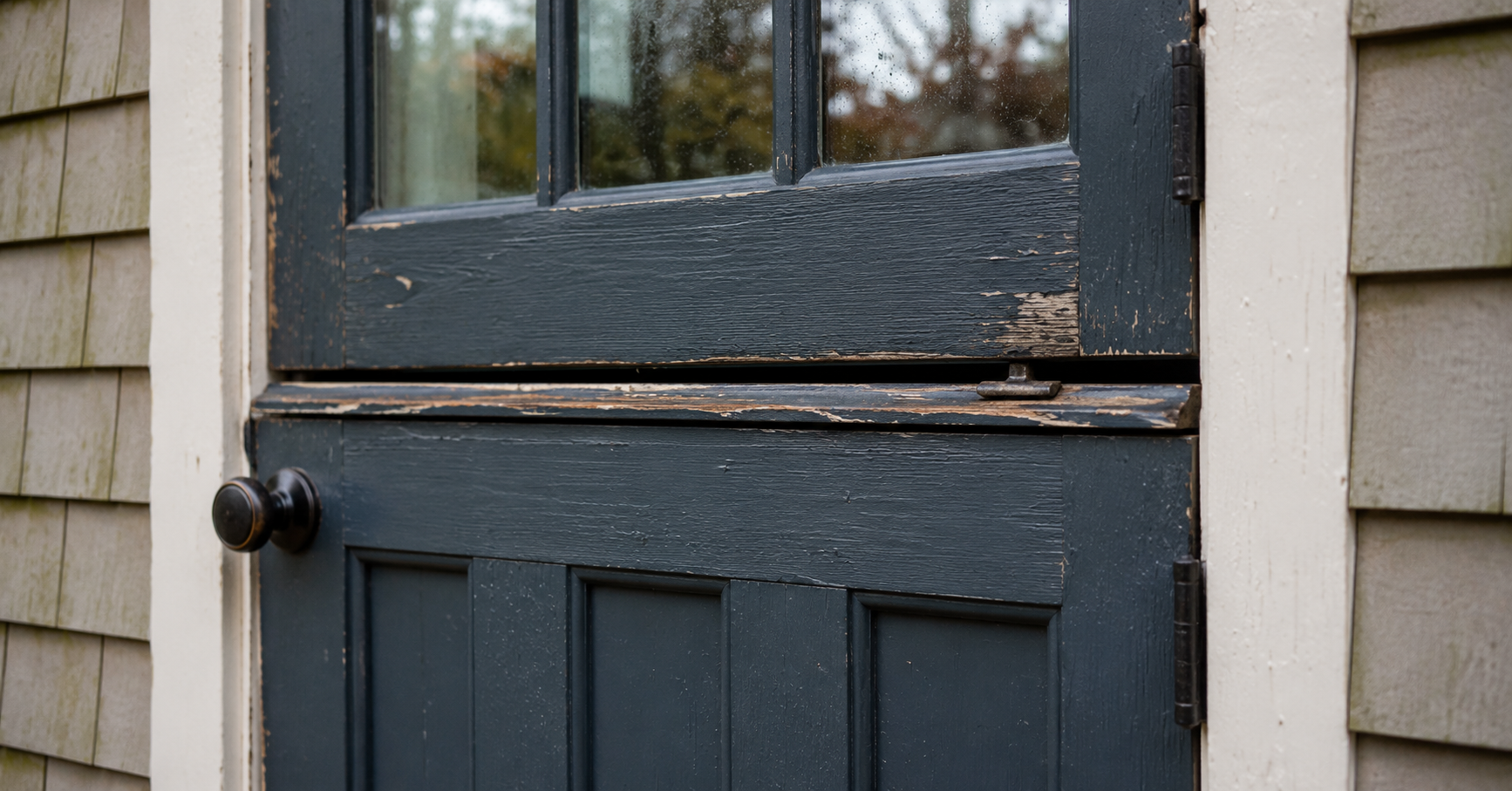
This is the con that gets the least attention and causes the most long-term frustration. The two panels of a Dutch door are separate pieces of wood or composite material exposed to the same weather but in slightly different configurations. The top panel is fully exposed to the sun, rain, and temperature changes. The bottom panel is partly shielded by the top.
Over years of seasonal expansion and contraction, the two panels can weather at different rates. This causes them to expand and contract by slightly different amounts, which gradually affects how well they align at the split point. In extreme cases, the panels no longer close flush, which creates a visible gap and a weatherproofing problem.
This issue is significantly more common in climates with extreme temperature swings, high humidity, or intense UV exposure. In mild coastal climates where Dutch doors originated and remain most popular, it is much less of a concern. In the upper Midwest, New England, and the desert Southwest, it is a genuine long-term consideration.
Fiberglass doors hold their shape significantly better than wood in these conditions and are the recommended material for any climate that sees hard winters or intense summer heat.
4. The Safety Issue Nobody Mentions
Two safety concerns come up repeatedly in real-world Dutch door ownership that most buying guides do not address directly.
The first is pinched fingers. A Dutch door has twice the pinch points of a standard door, at the normal closing edge and at the horizontal split between the two panels. For families with small children who are learning to open and close doors, this is a genuine hazard that requires active attention and clear instruction.
The second is pet damage to the top edge of the bottom panel. Dogs that are excited to greet visitors, or that are anxious when the door opens, will paw, scratch, and jump at the bottom panel. The top edge of the lower half takes significant abuse in pet-owning households. Even a quality fiberglass door will show wear from repeated claw contact. This damage is cosmetic rather than structural, but it happens faster than most buyers expect and is worth factoring into your decision if you have large, energetic dogs.
Energy Efficiency: How Dutch Doors Compare to Standard Doors
The horizontal split in a Dutch door creates an extra seal point, the joint between the two panels, that a standard door does not have. This additional seal point is the main energy efficiency concern with Dutch doors.
When the astragal and weatherstripping are in good condition, a quality Dutch door performs comparably to a standard exterior door of the same material. The issue arises when the seal degrades, which happens faster in Dutch doors than in standard doors due to the additional joint.
For maximum energy performance, choose fiberglass with a foam core over solid wood. Fiberglass rates R-5 to R-6 compared to solid wood’s R-2 to R-3, and it holds its shape better over time, maintaining the seal quality at the split point. Add quality weatherstripping around all four edges of both panels and ensure the astragal fits tightly between the halves when closed.
If your primary concern about a Dutch door is energy efficiency, the difference between a well-specified Dutch door and a well-specified standard door of the same material is small. The bigger variable is installation quality; a properly installed Dutch door outperforms a poorly installed standard door every time.
Is a Dutch Door Right for Your Home?
Dutch Door Works Best If…
Your home is farmhouse, coastal, cottage, or transitional in style. Dutch doors look architecturally appropriate and genuinely enhance these styles. In modern or contemporary homes with clean geometric profiles, they can work but require careful detailing to avoid looking nostalgic in a way that clashes with the overall aesthetic.
You have pets or young children. The containment benefit is real and valuable in daily life for families managing this specific challenge.
You live in a mild climate. The Pacific Coast, the Southeast, and the Mid-Atlantic corridor are ideal Dutch door climates. The ventilation benefit is maximized, and the weathering alignment problem is minimized.
You want a front door that stands out. If curb appeal is a priority and you want a door that photographs well and creates a strong first impression, Dutch doors deliver this reliably.
You are also considering how your door choice interacts with other architectural elements. This comparison of bifold doors vs French doors covers the broader door decision landscape that often comes up alongside the Dutch door question, including which door types suit which home styles and what the resale value implications are.
Skip the Dutch Door If…
You live in a harsh climate with extreme temperature swings, heavy snow, or intense UV exposure. The panel alignment issue is a real long-term concern in these conditions and will require ongoing monitoring and adjustment.
You are working with a tight budget. A Dutch door costs at a minimum $769 installed and realistically $1,500 or more for a mid-range option. If budget is a genuine constraint, a standard door with upgraded hardware and a distinctive paint color delivers more visual impact per dollar.
You have large, energetic dogs that paw or scratch at the door. The top edge of the bottom panel will show wear faster than you expect.
You want minimal maintenance. Dutch doors require more regular hardware checks and weatherstripping attention than standard doors. If low maintenance is a priority, factor this in carefully before committing.
For homeowners who want to maximize the value of a door upgrade without overspending, the broader guide on home renovation tips and money-saving tricks covers how to sequence door and entry upgrades for maximum impact at a reasonable cost.
Best Locations for a Dutch Door in Your Home
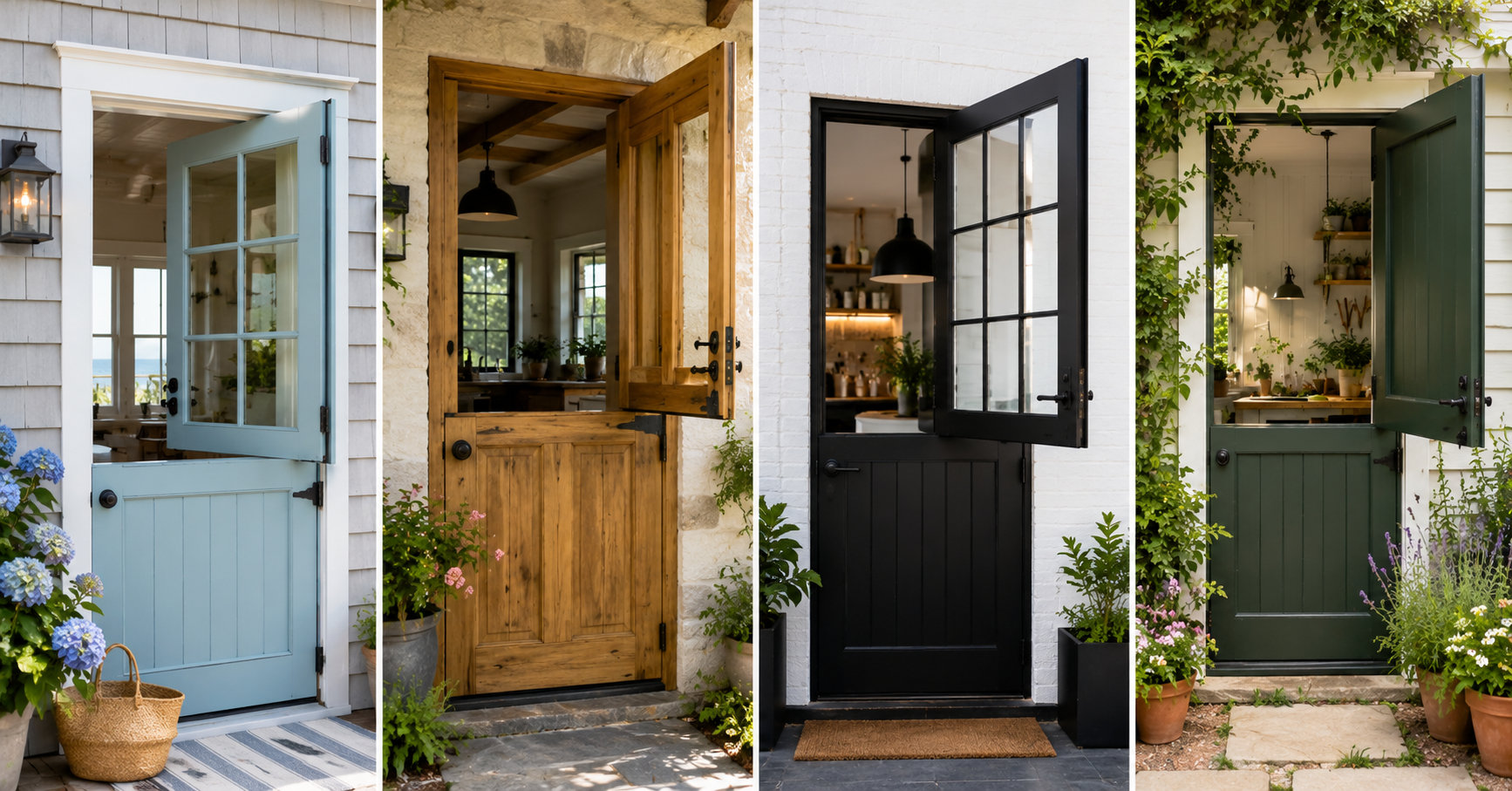
Front entry: The classic application and still the most impactful. Works best on homes with covered porches or rooflines that protect the door from direct rain exposure.
Back door to garden or patio: Ideal for the indoor-outdoor flow use case. You can leave the top half open while gardening, cooking, or supervising children in the yard.
Mudroom entry: Excellent for containing dogs coming in from outside and creating a natural transition zone between the yard and the main living space.
Kitchen to dining room or laundry: Interior Dutch doors here allow ventilation and visual connection between spaces while maintaining a defined boundary. Particularly useful in homes where cooking smells or laundry noise benefit from some containment.
Top of staircase: A Dutch door installed at the top of a staircase functions as a safety gate while maintaining visual openness and far more visual appeal than a standard baby gate.
For homeowners thinking about door color alongside their Dutch door purchase, the guide on bifold door colors and finishes covers RAL color codes, powder coat vs paint durability, and which colors suit which home styles, guidance that applies equally to Dutch door finish selection.
Frequently Asked Questions
Q: Are Dutch doors more expensive than regular doors?
A: Yes, consistently across every material and price point. Dutch doors start at around $769 installed for a builder-grade option and reach $9,000 or more for premium iron or custom wood configurations. The premium reflects additional hardware, more complex manufacturing, and a more involved installation that requires precise alignment of two separate panels. A comparable standard door of the same material typically costs 20 to 40 percent less.
Q: Do Dutch doors let in drafts?
A: They can if the weatherstripping and astragal are not maintained. The horizontal split between the two panels creates an additional seal point that standard doors do not have. With quality weatherstripping in good condition, a Dutch door performs comparably to a standard door of the same material. The key is checking and replacing the astragal seal and weatherstripping annually, since this additional joint degrades faster than a standard door’s single perimeter seal.
Q: Are Dutch doors good for security?
A: Yes, when properly equipped. Modern Dutch doors are just as secure as standard entry doors. The lower half typically carries the doorknob and primary lock, and best practice is to install a deadbolt on the upper half as well. When both halves are locked with a quality deadbolt, a Dutch door is not meaningfully easier to breach than a standard door. The additional hardware is actually a security feature, since opening the door requires engaging multiple lock points.
Q: What is the best material for a Dutch door?
A: Fiberglass is the best material for most US climates. It rates R-5 to R-6 for insulation compared to solid wood’s R-2 to R-3, holds its shape better across temperature swings, resists warping and rot, and maintains the tight panel alignment that prevents draft and weathering issues over time. Solid wood is the most beautiful option and performs well in mild climates, but requires more maintenance and is more vulnerable to the alignment problems that develop in extreme climates.
Q: Can I convert an existing door to a Dutch door?
A: Yes, technically, but it is more complex than it sounds. Converting a solid door to a Dutch door requires cutting the door horizontally at the split point, adding hardware to both halves, installing an astragal, and modifying or replacing the door frame to accommodate the additional hardware. Starting from a solid wood slab is the recommended approach; hollow-core doors are structurally unsuitable for conversion. The cost of conversion often approaches or exceeds the cost of buying a purpose-built Dutch door, so it is worth getting quotes for both before committing to conversion.
Considering a Dutch door for a specific location in your home, but are not sure if it makes sense for your layout or climate? Drop your situation in the comments, and we will help you figure out whether it is the right fit.

Samreen Khadim Hussain is a home improvement writer and content creator at Domelite Home. She specializes in making home renovation, interior design, and bathroom safety accessible to everyday US homeowners, turning technical subjects into clear, actionable advice. Her work is rooted in research, real-world practicality, and a genuine belief that a better home is within everyone’s reach.