
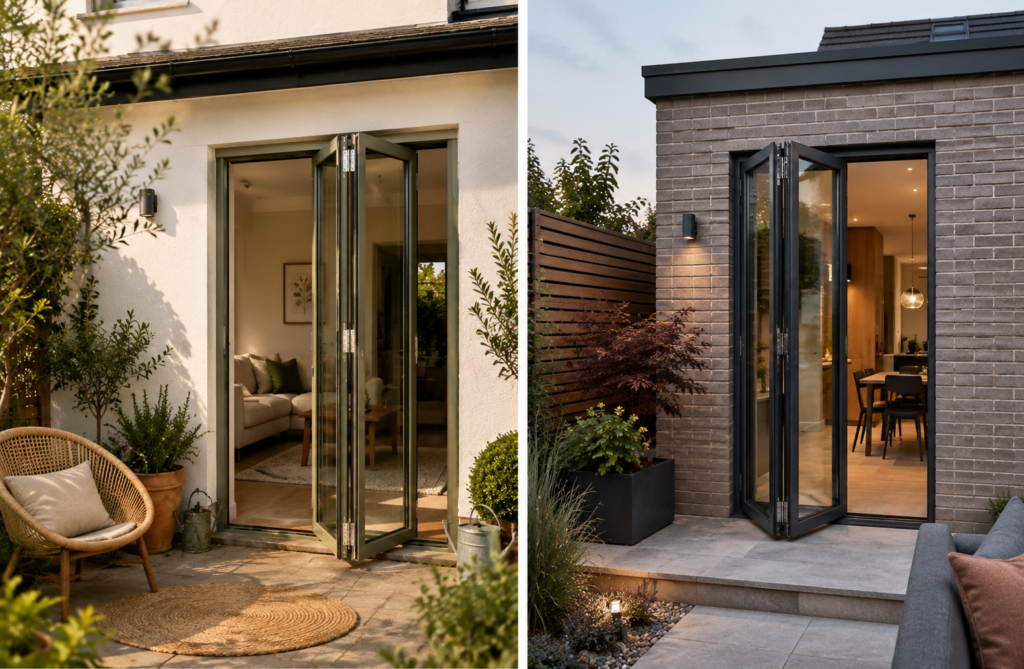
Quick Answer: The most popular bifold door colors in 2026 are matte black, anthracite grey, white, sage green, deep navy, bronze, and natural wood tone finishes. The right color depends on your home style, your exterior materials, and whether the door is interior or exterior. Getting this decision wrong is expensive. Bifold doors are not cheap to repaint or replace.
You picked the door type. You sorted the sizing. Now you are staring at a color chart with forty-seven options and absolutely no idea where to start.
Choosing the wrong bifold door color is a bigger deal than most homeowners realize going in. A matte black bifold door on a red brick colonial looks jarring. A white bifold door on a sleek modern extension looks timid. The color you choose either elevates the whole project or quietly undermines it every single day.
The good news is that once you understand how colors work with different home styles, materials, and lighting conditions, the decision gets a lot simpler. This guide walks you through the seven best bifold door colors for US homes in 2026, which finish suits your specific home style, and which colors you should avoid if resale value matters to you.
What Bifold Door Colors Are Available in 2026
Before getting to the best options, it helps to understand what you are actually choosing between when you pick a bifold door color.
Standard Colors
Most bifold door manufacturers offer a range of standard colors that are stocked and ready to order without additional lead time or cost. Standard colors typically include:
- White and off-white
- Black and matte black
- Anthracite grey
- Silver and light grey
- Bronze and dark bronze
- Cream and ivory
These cover the majority of what most US homeowners need. Standard colors are powder-coated at the factory, which means the finish is baked into the surface rather than painted on top. More on why that matters in a later section.
Premium and Custom Colors
Beyond standard options, most manufacturers offer extended color ranges and full custom color matching. This is where you can get sage green, deep navy, terracotta, forest green, champagne, or any specific shade you want. Custom colors typically add $200 to $600 to the total door cost and extend lead times by one to three weeks.
If you have a very specific exterior color scheme or a period property with exact heritage colors to match, custom color matching is worth every penny. For most homeowners, a standard color gets the job done beautifully.
What Are RAL Color Codes
If you have ever ordered a bifold door and seen references to RAL codes, here is what they mean. RAL is a standardized European color matching system used globally by door and window manufacturers. Each color has a unique four-digit code that ensures the same shade is produced every time, regardless of manufacturer or batch.
Common RAL codes for popular bifold door colors include:
| Color | RAL Code |
| Matte Black | RAL 9005 |
| Anthracite Grey | RAL 7016 |
| Pure White | RAL 9010 |
| Traffic White | RAL 9016 |
| Dark Bronze | RAL 8019 |
| Sage Green | RAL 6021 |
| Deep Navy | RAL 5011 |
| Cream | RAL 9001 |
When ordering custom or premium colors, always ask your supplier for the RAL code. It removes any ambiguity about the exact shade and protects you if there is a dispute about whether the delivered color matches what you ordered.
The 7 Best Bifold Door Colors for US Homes
1. Matte Black
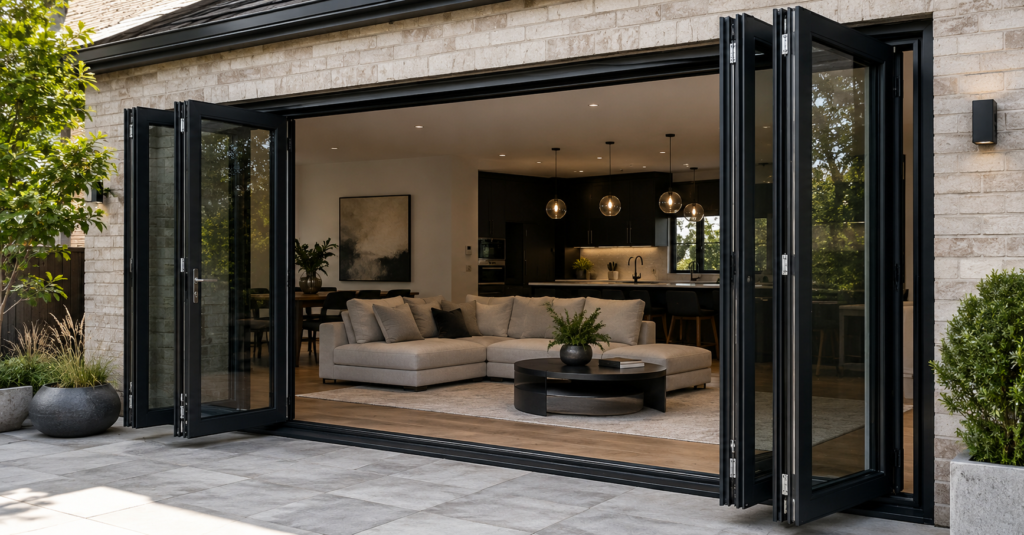
Matte black is the most popular bifold door color in the US right now, and it has held that position for good reason. It works on almost every exterior material, including brick, stone, fiber cement, and stucco. It creates a strong contrast against light interiors, makes glass panels look more dramatic, and reads as premium regardless of the home style it is paired with.
The matte finish specifically matters. Gloss black shows every fingerprint and watermark. Matte black hides day-to-day wear and maintains its appearance with minimal cleaning. For an exterior bifold door that gets daily use, matte black is the practical and stylish choice.
Best for: Modern, contemporary, industrial, and coastal homes. Works as an accent on traditional homes when paired with matching window frames.
RAL Code: 9005
2. Anthracite Grey
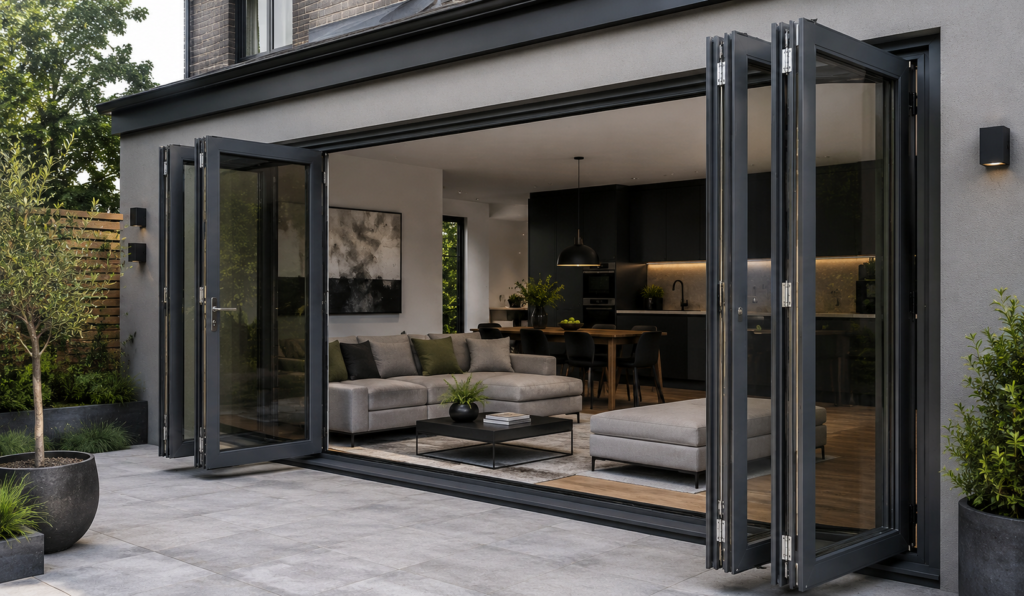
Anthracite grey is matte black’s more versatile sibling. It has all the depth and sophistication of black but sits slightly softer, which means it works on a wider range of home styles without feeling too stark or industrial.
In 2026, anthracite grey is particularly popular on homes where the exterior materials are already dark, such as charcoal render, dark timber cladding, or dark brick. Using matte black in those situations can feel overwhelming. Anthracite grey gives you the same premium look with a touch more restraint.
It also photographs exceptionally well, which matters if you are planning to sell in the next few years. Bifold doors are a feature buyers notice immediately in listing photos, and anthracite grey reads as high-end in images in a way that lighter colors sometimes do not.
Best for: Modern, Scandinavian, and contemporary homes. Excellent on rendered exteriors and dark cladding.
RAL Code: 7016
3. White
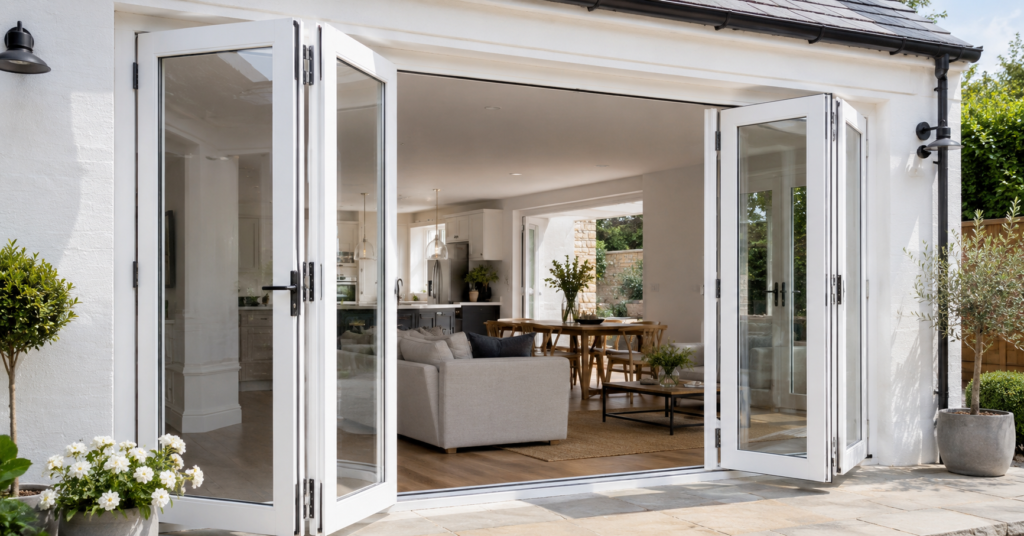
White bifold doors are the safe choice, and safe is not a bad thing when you are spending $5,000 to $15,000 on a door system. White works on every home style, appeals to the widest range of buyers at resale, and makes interior spaces feel brighter and larger by reflecting light rather than absorbing it.
The key distinction to know is the difference between Pure White (RAL 9010) and Traffic White (RAL 9016). Pure White is slightly warmer and works better on traditional or period homes where a stark, cold white would look out of place. Traffic White is brighter and crisper, which suits modern and contemporary homes where clean, sharp lines are the design priority.
White also shows dirt and scuffs more readily than dark colors, especially on the lower panels and track area. If your bifold door opens to a muddy garden or a high-traffic patio, factor in the additional cleaning commitment before choosing white.
Best for: All home styles. Particularly strong on traditional, colonial, and farmhouse properties where dark colors would feel too heavy.
RAL Codes: 9010 (Pure White) or 9016 (Traffic White)
4. Sage Green
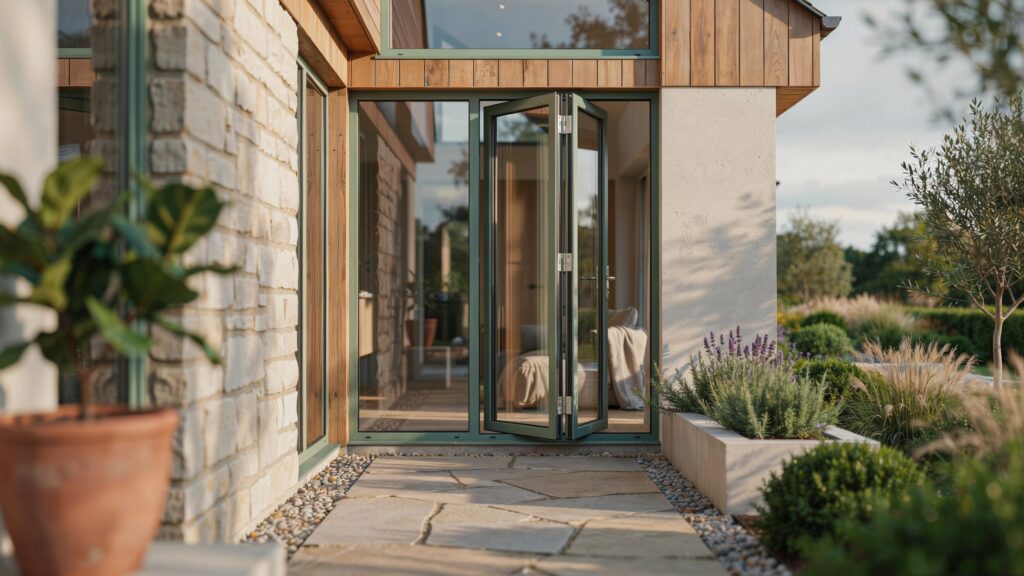
Sage green is the breakout bifold door color trend of 2025 and 2026, and it shows no signs of slowing down. It brings a natural, organic quality to a home’s exterior that neither black nor white can replicate. Paired with natural stone, timber cladding, or rendered walls in neutral tones, sage green bifold doors look genuinely beautiful and completely at home in the landscape rather than imposed on it.
The reason sage green works so well for bifold doors specifically is the contrast it creates with glass. The soft green frame against large glass panels gives the door a presence and warmth that darker colors sometimes lack.
One thing to be aware of: sage green reads very differently depending on light conditions. In direct sunlight,t it looks fresh and lively. In shade or on grey days, it can pull slightly blue-grey. Always look at a physical sample in your actual outdoor light before committing to this color.
Best for: Farmhouse, craftsman, coastal, and transitional homes. Exceptional with natural stone or timber exterior materials.
RAL Code: 6021
5. Deep Navy
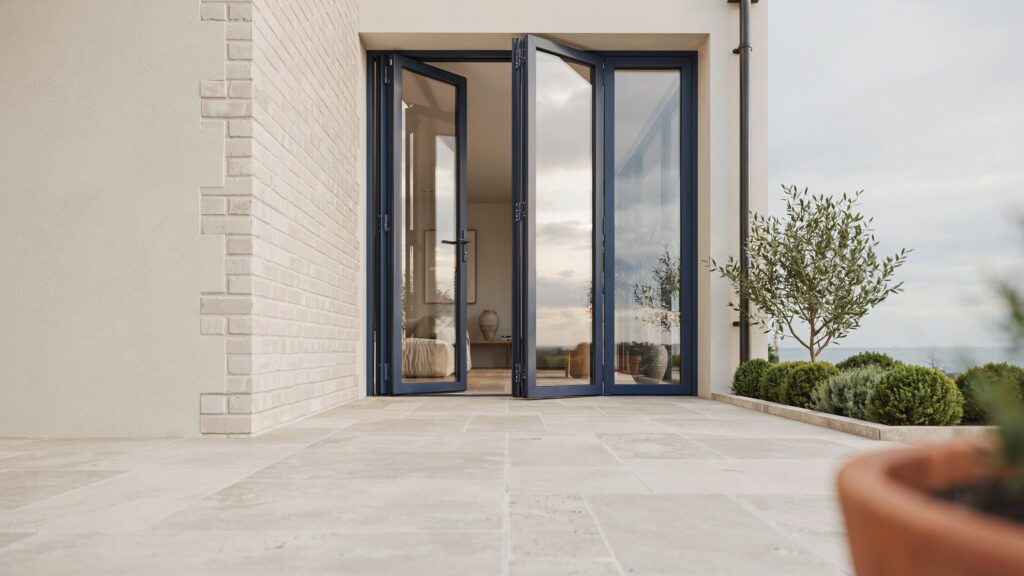
Deep navy is following sage green as the next big statement color for exterior bifold doors. It has the depth and sophistication of black with a personality that black cannot offer. On the right home, a deep navy bifold door is a genuine wow moment that becomes the defining feature of the exterior.
Navy works particularly well where the surrounding exterior materials are light. Cream render, white brick, light stone, and pale fiber cement all create a striking contrast with deep navy frames that feel intentional and architectural rather than accidental.
Like sage green, navy is a color that rewards careful sampling before purchase. The depth of the color changes significantly between daylight and evening artificial light, and between sunshine and overcast conditions.
Best for: Traditional, coastal, transitional, and some contemporary homes. Works beautifully with light exterior materials and white window frames.
RAL Code: 5011
6. Bronze and Dark Bronze
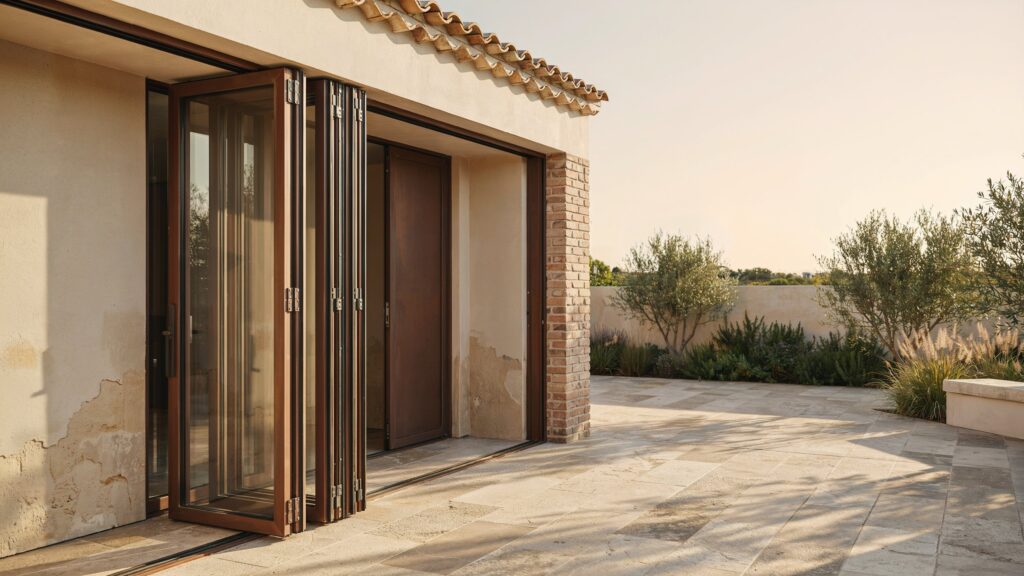
Dark Bronze (RAL 8019) bifold door colors bring warmth, durability, and timeless character, perfectly complementing brick, stone, terracotta, and other earthy exterior finishes.
Bronze and dark bronze bifold doors occupy an interesting middle ground between black and natural wood tones. They have the warmth of timber without the maintenance commitment, and the durability of powder-coated aluminum without the coldness that some homeowners find in pure black or grey finishes.
Dark bronze in particular has seen a significant uptick in popularity in 2026 as homeowners look for alternatives to the saturated black-and-white palette that dominated the previous few years. It pairs naturally with warm brick, terracotta tile, sandstone, and earthy render tones in a way that black and grey simply do not.
Best for: Traditional, Mediterranean, craftsman, and warm-toned contemporary homes. Exceptional with brick and stone exteriors.
RAL Code: 8019
7. Natural Wood Tone Finish
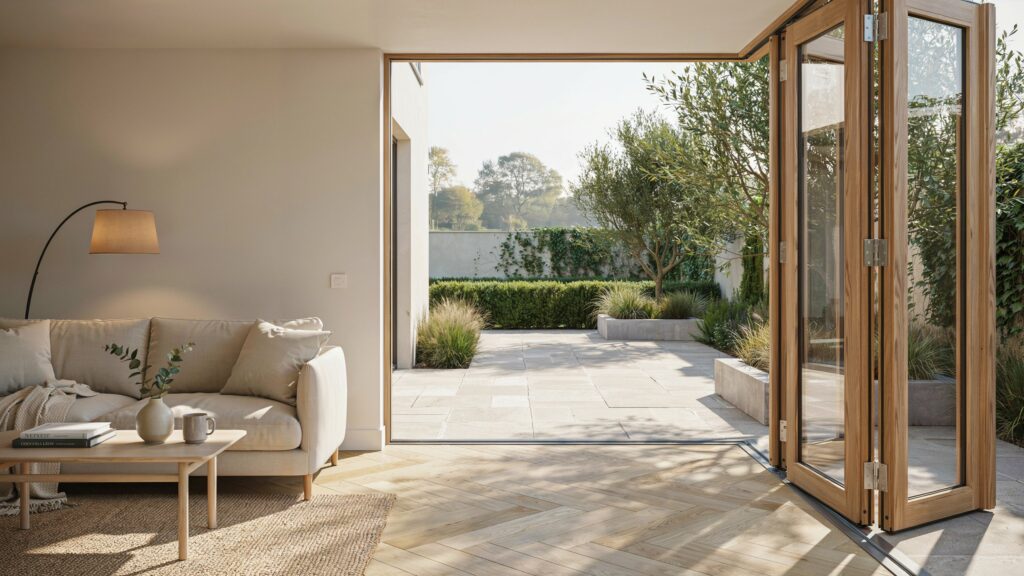
Natural wood tone finishes on aluminum bifold doors give you the warmth and character of timber without any of the maintenance burden that comes with actual wood doors. These are powder-coated aluminum frames finished with a wood grain effect that replicates oak, walnut, or pine at a visual level while performing exactly like standard aluminum underneath.
In 2026, white oak and light natural wood tones are the most requested finishes in this category. They suit the broader interior design trend toward natural materials, organic textures, and warm minimalism that is dominating US home design right now.
Wood tone finishes do have one limitation worth knowing: they work beautifully from the inside looking out, but can look less convincing on close exterior inspection. For most homeowners, this is not an issue since the door is primarily experienced from inside the home. But if close exterior visual quality matters, a real wood bifold door might be worth consideration. This comparison of aluminum vs wood bifold doors covers that decision in full detail.
Best for: Scandinavian, modern farmhouse, transitional, and warm contemporary interiors.
Which Bifold Door Color Suits Your Home Style
Modern and Contemporary Homes
Modern homes are where the full color palette opens up. Matte black and anthracite grey are the top performers here, reinforcing the clean geometric lines and slim frames that define contemporary architecture. Deep navy and sage green work well as statement colors on modern homes with light render or cladding exteriors.
For broader exterior color inspiration and how door colors interact with your home’s full palette, Architectural Digest’s exterior color guide is one of the most comprehensive references available.
Avoid cream, ivory, and warm whites in a genuinely modern home. They conflict with the cool precision that makes contemporary architecture work.
Traditional and Colonial Homes
Traditional homes call for restraint. White, off-white, and cream are the safest and most appropriate choices. Deep navy works beautifully as a bold statement color on colonial properties, especially when it coordinates with other architectural elements like window frames or shutters.
Matte black can work on traditional homes, but needs to be handled carefully. It suits a Georgian or Victorian property with the right proportions, but can look too industrial on a softer colonial or craftsman style home.
For traditional homes where shaker-style bifold doors are the right architectural choice, the color decision interacts closely with the door design itself. This guide on bifold shaker doors covers how style and finish work together in that context.
Farmhouse and Craftsman Homes
Farmhouse and craftsman homes have the widest color flexibility of any residential style. Sage green, dark bronze, white, and natural wood tones all work exceptionally well in these contexts. The earthy, grounded palette that defines farmhouse and craftsman design gives you room to experiment with nature-inspired colors that would look out of place on a modern or colonial home.
Avoid pure black on a farmhouse property. It reads too industrial and conflicts with the warmth and handcrafted quality that defines the style.
Coastal and Beach Homes
Coastal homes have their own color logic. Navy is the obvious choice and works beautifully. White and off-white are strong performers. Sage green connects the home to its natural surroundings in a way that feels effortless on a coastal property.
In coastal homes, the finish quality matters more than anywhere else. Salt air is aggressive on powder-coated surfaces, so for any home within a mile of the ocean, specify a marine-grade powder coat finish rather than standard. The color options are identical, but the protective properties are significantly better.
Powder Coat vs Paint: Which Finish Lasts Longer
This is the question most color-focused buyers forget to ask, and it has a significant impact on how your bifold door color looks ten years from now.
Powder coating is a dry finishing process where electrostatically charged color particles are applied to the aluminum frame and then cured at high temperature. The result is a finish that bonds at a molecular level with the metal surface. It does not crack, peel, or flake. It resists UV fading significantly better than conventional paint. Most quality manufacturers guarantee their powder coat finish against fading and peeling for ten to fifteen years.
The U.S. Department of Energy recommends checking energy performance ratings alongside finish quality when selecting any exterior door, since both affect long-term performance and running costs.
Liquid paint, by contrast, sits on top of the surface rather than bonding into it. It is more vulnerable to chipping from impact, peeling from moisture penetration, and fading from UV exposure. For exterior bifold doors that face daily weather and handling, painted finishes simply do not perform as well over time.
The practical takeaway: when comparing bifold door options, always confirm that the color finish is powder-coated rather than painted. For dark colors like matte black and anthracite grey, ask specifically about UV-stable pigments. Dark colors absorb more heat and can fade faster than light colors if the pigment is not UV-stabilized from the factory.
Matching Your Hardware to Your Door Color
Hardware finish is the detail most homeowners overlook until the door arrives, and getting it wrong creates a subtle visual friction that is hard to pinpoint but impossible to ignore.
Here is a simple matching guide:
| Door Color | Best Hardware Finish |
| Matte black | Matte black handles and hinges |
| Anthracite grey | Matte black or brushed stainless |
| White | Brushed nickel, chrome, or matte black |
| Sage green | Brushed brass or matte black |
| Deep navy | Brushed brass or matte black |
| Bronze / dark bronze | Oil-rubbed bronze or matte black |
| Wood tone finish | Brushed brass or bronze |
The general rule is to either match the hardware to the door color exactly (tonal matching) or go with matte black as a universal contrast option that works across almost every door color. Avoid mixing warm and cool metal tones, such as pairing a cool brushed nickel handle with a warm bronze door frame. It reads as unintentional rather than designed.
Bifold Door Colors to Avoid for Resale
If you are planning to sell your home within the next five years, color choice takes on extra weight. Here are the colors most likely to limit your buyer pool at resale.
Very bright or unusual colors. Bright red, vivid yellow, or any color that reads as a strong personal statement rather than a design choice will polarize buyers. The door is a major feature of the home, and buyers who hate the color will mentally adjust their offer downward.
Heavily customized heritage colors. Period-accurate heritage colors are beautiful on the right property but can feel limiting to buyers who do not share the same architectural sensibility. If you are selling within five years, stick to the core palette.
Cheap-looking light grey. There is a specific shade of pale, flat grey that was popular in the early 2010s that now reads as dated. If your color is described as “silver grey” or “light grey” rather than anthracite or charcoal, look carefully at the sample before committing.
For a broader look at how door choices interact with home value, this comparison of bifold doors vs French doors covers the resale value question across door types in detail.
Frequently Asked Questions
Q: What is the most popular bifold door color in 2026?
A: Matte black remains the most widely specified bifold door color in the US in 2026. It works across the widest range of home styles and exterior materials, creates a strong contrast with large glass panels, and reads as premium in both person and in listing photography. Anthracite grey and sage green are the fastest-growing alternatives for homeowners looking for something slightly different.
Q: Can bifold door colors be changed after installation?
A: Technically, yes, but practically, it is expensive and difficult. Powder-coated aluminum can be repainted with specialist paint, but the result never looks as clean or lasts as long as a factory powder coat finish. If you are unsure about color, order physical samples and look at them in your actual outdoor light across different times of day before committing. Changing your mind after installation is a costly mistake.
Q: Do dark bifold door colors fade faster than light colors?
A: Dark colors absorb more UV radiation and heat, which can accelerate fading if the pigment is not UV-stabilized. Always specify UV-stable pigments for dark colors like matte black, anthracite grey, and deep navy. Most quality manufacturers include this as standard, but it is worth confirming before you order.
Q: What color bifold door adds the most value to a home?
A: White and matte black consistently add value across the broadest range of US markets because they appeal to the widest pool of buyers. Statement colors like sage green and deep navy can add significant value on the right property in the right market, but they carry more risk in price-sensitive or conservative neighborhoods.
Q: Should interior and exterior bifold door colors match?
A: Not necessarily, and many homeowners deliberately choose different colors for each side. A common approach is anthracite grey or matte black on the exterior for weather performance and curb appeal, with a wood tone finish or white on the interior side to complement the indoor color scheme. Wood-clad aluminum systems are specifically designed for this dual-color approach.
Choosing a bifold door color for a specific home, and are not sure which finish works best? Drop your home style, exterior materials, and the colors you are considering in the comments, and we will help you narrow it down.

Samreen Khadim Hussain is a home improvement writer and content creator at Domelite Home. She specializes in making home renovation, interior design, and bathroom safety accessible to everyday US homeowners, turning technical subjects into clear, actionable advice. Her work is rooted in research, real-world practicality, and a genuine belief that a better home is within everyone’s reach.
1 thought on “Bifold Door Colors: 7 Best Finishes for Every Home”