
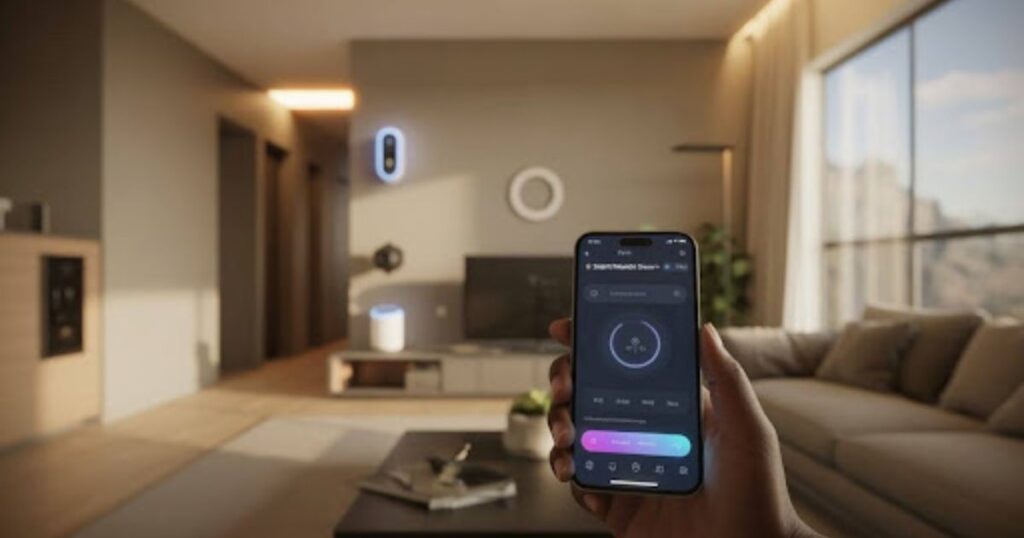
Turning off the lights while you’re still in the shower, this is the kind of frustrating mistake many AI smart home devices make during their learning phase. For years, the “smart home” was mostly just a collection of remote-controlled gadgets. You had to pull out your phone to dim the lights or yell at a speaker three times just to set a timer. In 2026, that era is officially over. We are moving away from reactive devices that wait for a command toward AI smart home devices that anticipate what you need before you even realize it.
If you’re tired of managing ten different apps or worrying that your “smart” lock is actually a security hole, this guide is for you. We’re breaking down how to build an intelligent ecosystem that saves money, protects your privacy, and finally makes your house work for you.
Moving from Connected to Intelligent: The AI Smart Home Devices
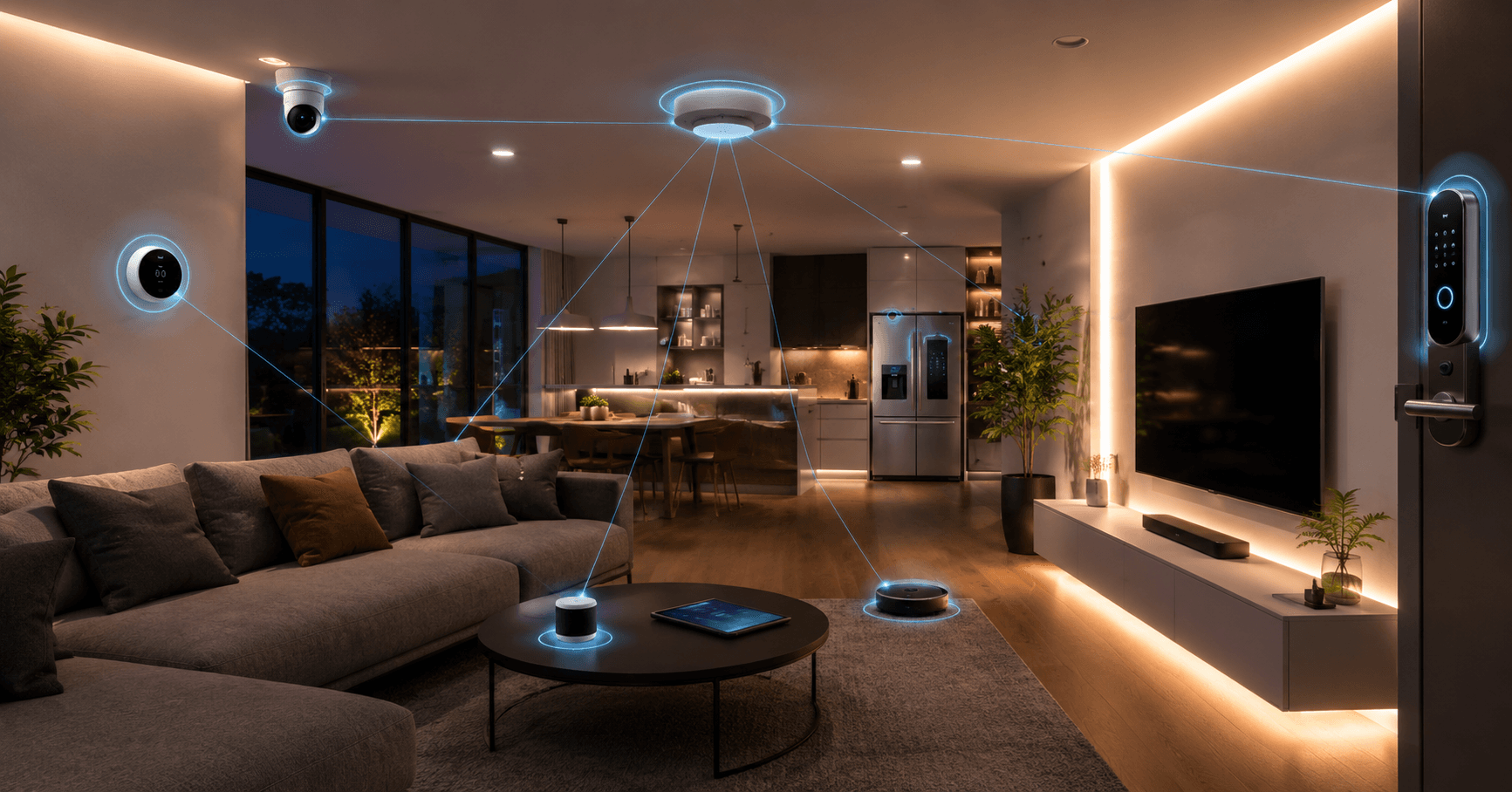
The biggest shift in 2026 is the move from Internet of Things (IoT) to AI-powered automation. Old smart devices were “rule-based”; if you walked in the room, the light turned on. Modern AI systems use mmWave presence sensors that are sensitive enough to detect the rise and fall of your chest as you breathe. This means your office lights won’t turn off just because you’ve been sitting still reading for an hour.
These systems learn your specific habits, like what temperature you prefer when it’s raining outside or which coffee you brew at 7:00 AM. Instead of a static schedule, your home creates a living environment that evolves with you.
Interoperability: Why “Matter” is the New Foundation
The greatest frustration of the last decade was buying a light bulb only to find out it didn’t work with your voice assistant. The Matter protocol is designed to improve interoperability between smart home devices, allowing products from different ecosystems to communicate through a common standard. The Connectivity Standards Alliance, which maintains Matter, released Matter 1.6 in June 2026, adding improvements for setup, multi-ecosystem experiences, and context-driven control.
Bridging the Gap: What About Your “Dumb” Appliances?
You don’t need to throw away your perfectly good “dumb” appliances to get a smart home. By using AI-enabled bridges and smart plugs, you can bring legacy devices into your modern ecosystem. For example, a high-end AI hub can monitor the power draw of an old washing machine to “learn” its cycles and send you a notification when the laundry is done, effectively turning a 10-year-old machine into a smart one.
Predictive Living: Your Home on Autopilot
Modern AI smart home devices are moving into every room, with the bathroom becoming the new health hub. We are seeing medical-grade diagnostics integrated into daily fixtures:
- Smart Mirrors: These use spectral analysis to check for skin changes, fevers, or signs of stress.
- Sleep Radar: Sensors built into headboards now track heart rate variability and respiration without requiring you to wear a watch to bed.
- Smart Toilets: These can analyze waste for hydration levels or early signs of infection, providing a non-invasive way to monitor chronic health.
In the kitchen, the focus is on inventory management. New vision systems inside your pantry track expiration dates and suggest recipes based on what needs to be used tonight, drastically reducing food waste.
Security That Thinks: Stopping Burglars Before the Knock
Old security cameras just recorded crimes as they happened. New Edge AI security systems focus on prevention. Because the “brain” is inside the camera itself, it can process footage in milliseconds.
If a stranger lingers on your porch for more than 30 seconds, the AI identifies “loitering behavior” rather than just simple motion. It can then lock your doors, flash your outdoor lights red, and play a warning message before the intruder ever touches the door handle. Because this processing happens locally, no company employee ever sees your footage, providing a massive win for privacy.
The Financial Reality: ROI and Energy Savings
Building an AI-driven home is an investment, with full systems ranging from $25,000 to over $50,000 for a standard single-family home. However, the ROI (Return on Investment) is becoming clearer.
Predictive energy managers don’t just follow a thermostat schedule; they analyze local weather patterns and real-time utility pricing. Smart thermostats can automatically adjust heating and cooling based on schedules, occupancy, and other conditions, while ENERGY STAR provides independent certification for models that demonstrate energy savings in real-world data. If the AI sees a heatwave coming tomorrow, it will pre-cool your home in the morning when electricity is cheapest. These systems can cut HVAC costs by 30-40%, saving the average homeowner between $800 and $1,200 annually. Additionally, a fully integrated AI system can increase your home’s resale value by 3-5%.
The “Dark Side”: Data Sovereignty and E-Waste
With all this data being collected, the question is: who owns it? To protect yourself, prioritize local-first systems like Apple HomeKit or Josh.ai that process your voice and video data inside your house rather than on a corporate server.
Sustainability is the other major hurdle. AI devices are often updated, leading to an e-waste problem. When upgrading, look for modular devices where you only need to swap a small sensor rather than the entire appliance. Always perform a factory reset before recycling any device to ensure your personal behavioral data isn’t passed on to the next user.
Best AI Smart Home Devices in 2026
The following are the best AI smart home devices in 2026:
- Smart thermostats
- AI security cameras
- Smart hubs (Alexa, Google Home)
- Smart lighting
- Smart appliances
Surviving the Learning Curve: When Your AI Smart Home Devices Get It Wrong
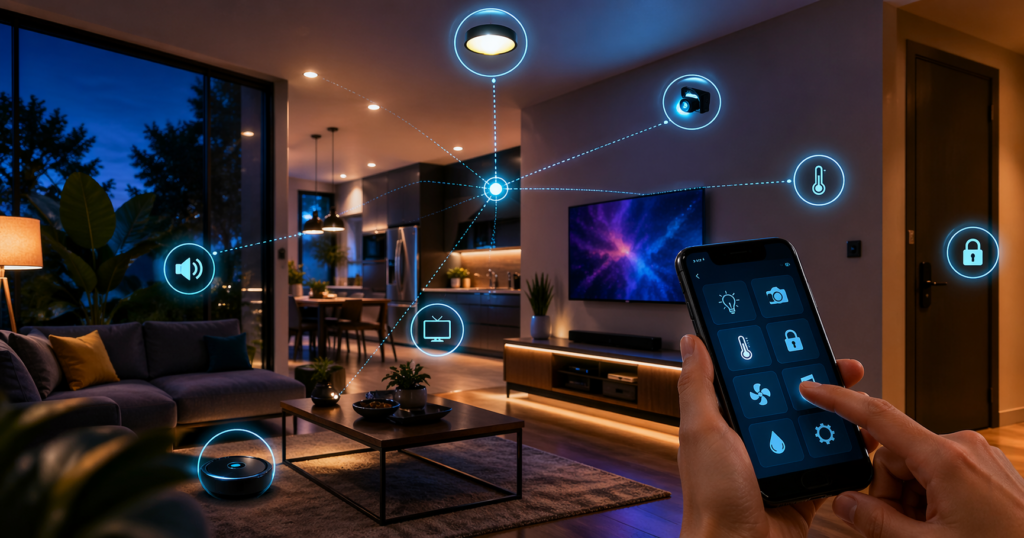
One “unclean” truth about AI smart homes is the learning phase. During the first few weeks, your AI might make annoying mistakes, like turning off lights while you’re still in the shower because it hasn’t mapped your routine yet.
Troubleshooting tips for the learning phase:
- Lower the Autonomy: Start with “suggestions” where the AI asks for permission via your phone before making a change.
- Use Manual Overrides: Don’t be afraid to flip the switch manually; the AI uses these “overrides” as a data point to learn it made a mistake.
- Check Your Network: Most AI “errors” are actually just poor Wi-Fi signal preventing the device from communicating.
Conclusion: Starting Your Journey
You don’t need a $100,000 budget for AI smart home devices. The smartest way to begin is by choosing a central hub that supports Matter and Thread. Start with one room, perhaps the living room for comfort or the front door for security, and expand as you get comfortable with the technology.
The goal of 2026 isn’t just to have a “cool” house; it’s to have an intelligent partner that handles the boring details of home management, so you have more time for what actually matters. Are you ready to let your AI smart home start thinking for you?
Frequently Asked Questions
What is an AI smart home?
It is a home that moves beyond simple remote controls to “predictive automation”. Instead of waiting for you to flip a switch or give a voice command, an AI smart home uses sensors to learn your habits and “anticipates your needs”. It basically acts as an intelligent partner that manages your environment, like adjusting the lights or temperature, before you even realize you want it.
What are the 5 types of AI smart home devices?
While the tech is expanding, the five core categories are:
- Smart Hubs & Speakers: Your voice-controlled central “brain” like Alexa or Google Home.
- Smart Thermostats: These learn your schedule to save energy automatically.
- Security Systems: AI cameras that can recognize faces and identify suspicious behavior.
- Smart Lighting: Systems that adapt brightness based on your routines or even your sleep cycles.
- Smart Appliances: AI-powered refrigerators that track groceries or ovens that recognize the food you put inside.
What can I use AI for in my home?
You can use it to drastically lower your energy bills by letting AI optimize your HVAC based on weather and utility prices. It’s also great for “proactive security,” where cameras can stop a burglar before they touch your door. Newer uses include “Health Coaching,” where sensors in your bed or bathroom track your sleep quality and vital signs without you needing to wear a watch.
What are the disadvantages of an AI smart home?
The main hurdles are cost and privacy. Setting up a full system can be expensive, ranging from $25,000 to over $75,000. There are also valid concerns about “data sovereignty”: who owns the data your home collects about your habits?. Finally, there is the “learning phase” where the AI might make annoying mistakes while it’s still figuring out your routine.
Can I design my home using AI smart home devices?
Yes, especially using Augmented Reality (AR). AR allows you to overlay digital controls and devices onto your physical rooms to see how they look and function before you install anything. Professionals also use AI-driven frameworks to plan “integrated ecosystems” so that all your devices from different brands actually talk to each other through standards like Matter.

I started Domelite Home because I got tired of home improvement advice that was either too vague or written by people who had never actually picked up a drill. I’m Naik Zali Shah I’ve spent years obsessing over renovation projects, smart home setups, and interior design, and I built this site to share what actually works. No fluff, no filler. Just honest advice for homeowners who want to get things right the first time.
3 thoughts on “AI Smart Home Devices: How They’re Changing Homes in 2026”