
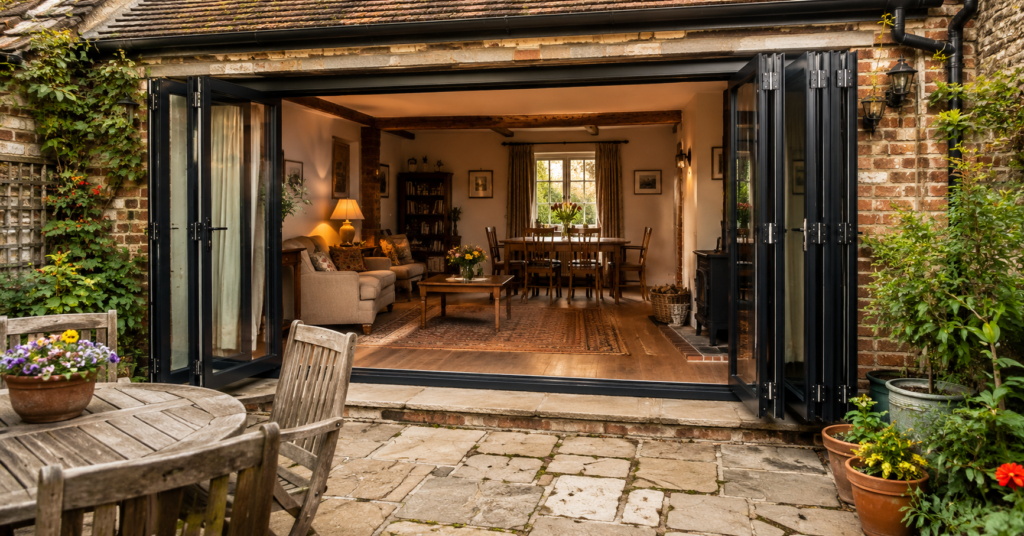
Quick Answer: Yes, replacing patio doors with bifold doors is worth it if you want a wide, dramatic opening and plan to stay in your home long enough to enjoy it. Expect to spend $5,000 to $20,000 installed, depending on size and material. It is not always a straight swap, and structural work may be required, but for the right home, it is one of the most impactful upgrades you can make.
You push your sliding patio door open, step halfway out, and squeeze past the fixed panel that never moves. You have done it a thousand times. It works fine. But fine is not what you are after anymore.
Replacing a patio door with bifold doors is not just a door upgrade. It is a complete change in how your home feels and functions. When those panels fold back and stack to one side, you do not step through a gap anymore. You walk straight out into the open, with nothing between your living room and your patio. That experience is what homeowners are paying $10,000 or more to create, and it is genuinely different from anything a sliding door delivers.
But before you call an installer, there are six things you need to know. Cost, structural requirements, permits, whether your frame can be reused, energy efficiency, and whether the investment actually pays off at resale. This guide covers all of it honestly, so you can make the right call for your home.
1. What You Get When Replacing Patio Doors With Bifold Doors
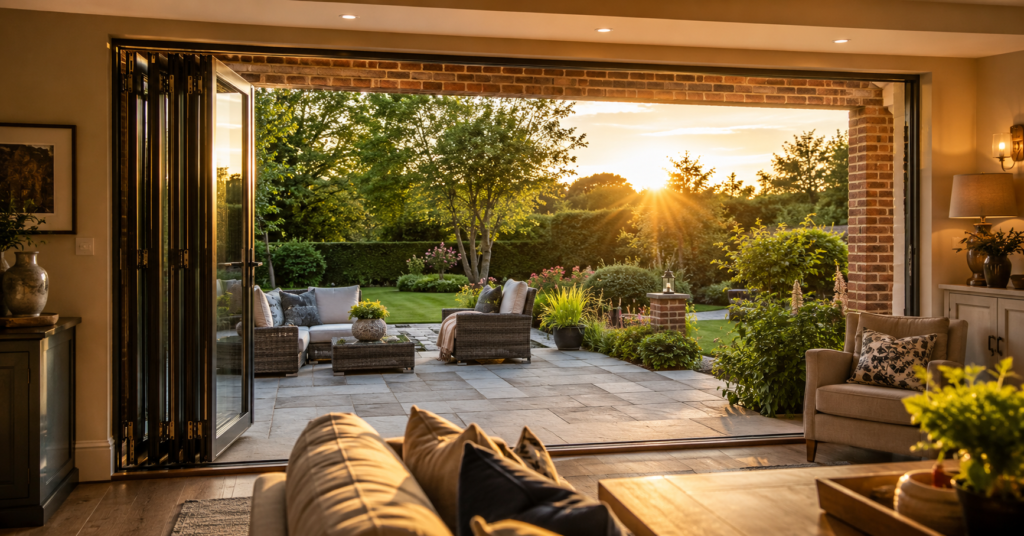
Before talking money, it helps to understand exactly what changes when you replace a patio door with a bifold system.
The Difference in How They Open
A standard sliding patio door moves one panel behind the other along a horizontal track. At best, you get about 50% of your doorway open at any one time. One panel always stays fixed, blocking part of the opening.
A bifold patio door works completely differently. Multiple panels fold against each other accordion-style and stack neatly to one side. When fully open, you get up to 90% of your doorway width as a clear, unobstructed opening. For a 10-foot wide opening, that is the difference between a 5-foot gap and a 9-foot gap. That difference is what creates the indoor-outdoor living experience that makes bifold patio doors so desirable.
What It Feels Like to Live With One
The practical change is bigger than most homeowners expect before installation. With a standard patio door, you step through a gap. With a bifold patio door, you walk out into the open. On a warm summer evening with all panels stacked to one side, the line between your living room and your patio essentially disappears. That is the experience people are paying for, and it is genuinely different from anything a sliding door can provide.
2. How Much Does It Cost to Replace a Patio Door with a Bifold Door?
This is the question most homeowners come here to answer, so here are real numbers rather than vague ranges.
Same Size Opening Replacement
If your existing patio door opening is already wide enough to accommodate a bifold system, and no structural changes are needed, this is the most straightforward and affordable scenario.
| Opening Width | Material | Installed Cost |
| 6 feet (72″) | Vinyl/uPVC | $3,000 to $6,000 |
| 6 feet (72″) | Aluminum | $4,500 to $8,000 |
| 8 feet (96″) | Vinyl/uPVC | $4,500 to $8,500 |
| 8 feet (96″) | Aluminum | $6,000 to $12,000 |
| 10 feet (120″) | Aluminum | $8,000 to $16,000 |
| 12 feet (144″) | Aluminum | $10,000 to $20,000 |
For current cost estimates in your specific area, Angi’s folding patio door cost guide is one of the most reliable references available for US homeowners.
Widened Opening Replacement
Many homeowners take the opportunity to widen their opening when replacing patio doors with bifold doors. A wider opening means a more dramatic result, but it also means structural work that adds high cost.
Widening an opening requires removing part of the wall, installing a new structural header to carry the load above, and reframing the opening. This structural work typically adds $1,000 to $3,600 to the project, and can reach $9,000 in homes with load-bearing walls or brick construction.
Total project cost when widening: $8,000 to $25,000, depending on how much the opening is expanded and what materials are chosen.
What Drives the Price Up
Several factors push the final cost higher than the base estimates above:
- Structural work on a load-bearing wall
- Widening an existing opening
- Premium glass upgrades like triple glazing or tinted glass
- Custom sizes outside standard panel dimensions
- Complex installation in brick or stucco walls
- Building permit fees range from $150 to $2,000, depending on your municipality
3. Can You Reuse Your Existing Frame?
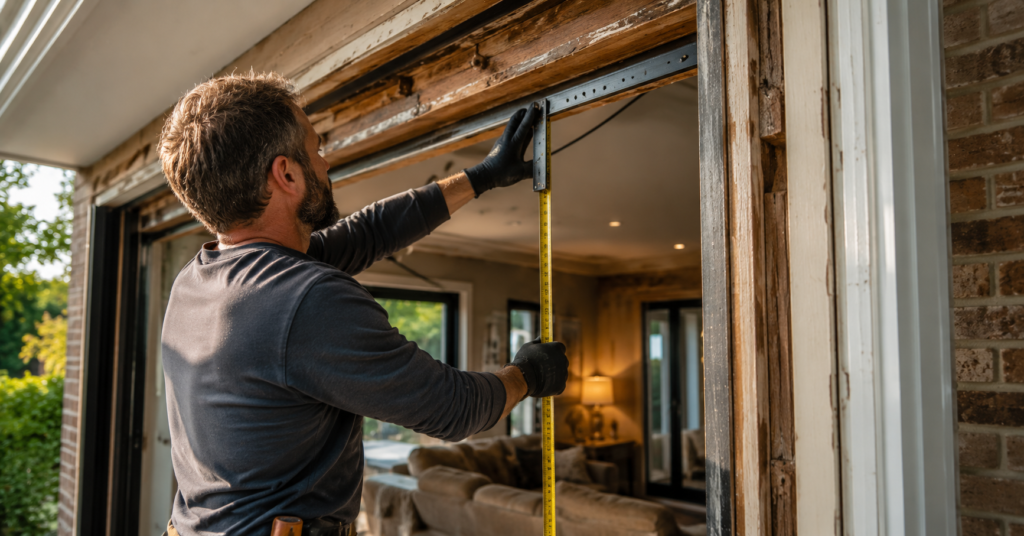
This is the question most articles skip over, and it is one of the most important practical considerations in the whole project.
When You Can Reuse the Frame
If you are doing a like-for-like replacement, meaning the new bifold door system is the same width and height as your existing patio door opening, and the existing frame is in good structural condition with no rot, water damage, or warping, you may be able to reuse the rough opening. This keeps costs lower and avoids structural work.
However, most existing patio door openings are sized for a two-panel sliding door. Bifold door systems, especially multi-panel exterior systems, are typically wider than standard sliding doors. In most cases, the opening needs some adjustment.
When You Cannot Reuse the Frame
You cannot reuse the existing frame if:
- The opening is narrower than your desired bifold system
- The existing header is undersized for the weight of a multi-panel glass door system
- There is water damage, rot, or structural deterioration in the existing frame
- You are switching from a standard patio door to a large multi-panel bifold spanning 10 feet or more
In these situations, the frame needs to come out completely, and the opening needs to be rebuilt. This is normal for a bifold door upgrade and should be factored into your budget from the start.
4. Do You Need a Permit When Replacing Patio Doors With Bifold Doors?
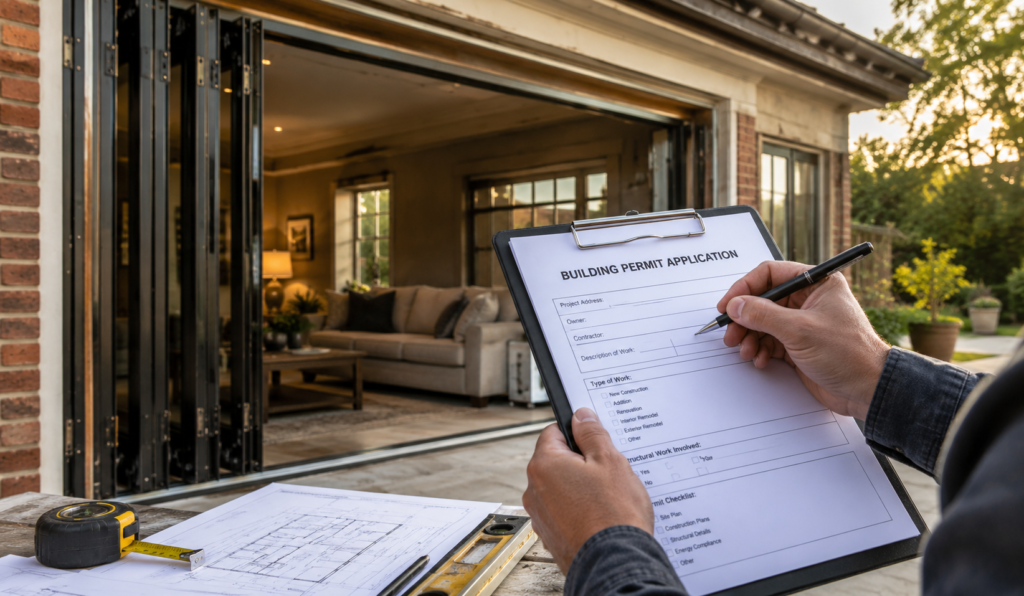
The permit question is one most homeowners either overlook or hope they can skip. Here is the honest answer.
When a Permit Is Required
A building permit is almost always required when:
- You are widening or enlarging the existing opening
- Structural work is involved, including new headers or load-bearing wall modifications
- You are in a municipality that requires permits for any exterior door replacement above a certain cost threshold
Permit fees for this type of project typically range from $150 to $2,000, depending on your location and the scope of work. Your installer should be able to advise on local requirements and, in most cases, can pull the permit on your behalf.
When a Permit May Not Be Required
A straight, same-size replacement, where the opening dimensions stay identical, and no structural work is involved, may not require a permit in some jurisdictions. But do not assume this is the case. Always check with your local building department before starting work.
Why Skipping the Permit Is a Bad Idea
Unpermitted work on exterior structural openings creates real problems. It can void your homeowner’s insurance coverage for related damage, create complications when you sell the home, and leave you personally liable if something goes wrong. For a project of this cost and scope, pulling the permit is always the right call.
5. Is Your Wall Load-Bearing?
This is the structural question that separates a straightforward replacement from a complex renovation, and it is critical to answer before you get any quotes.
How to Tell If Your Wall Is Load-Bearing
Load-bearing walls carry the structural weight of the floors and roof above them down to the foundation. Exterior walls that run perpendicular to the roof joists are almost always load-bearing. In most US homes, the rear wall where a patio door sits is a load-bearing exterior wall.
If your wall is load-bearing and you want to widen the opening, a structural engineer needs to design an appropriately sized header to span the new opening and carry the load that the removed wall section was supporting. Skipping this step is genuinely dangerous and will fail any inspection.
What a Structural Engineer Costs
A structural engineer consultation for a residential door opening typically costs $300 to $700. If you are widening an opening or have any doubt about whether structural work is needed, this is money well spent before you commit to a contractor. Most good installers will recommend this step and can refer you to a structural engineer they work with regularly.
When No Structural Work Is Needed
If you are replacing a patio door with a bifold system of identical or smaller width, and the existing header was correctly sized for the original door, you may not need any structural modifications at all. Your installer can assess this during an initial site visit and measurement.
6. Energy Efficiency: Will Bifold Doors Hurt Your Energy Bills?
This is a legitimate concern for many homeowners, especially in climates with extreme winters or summers. The honest answer is nuanced.
Modern Bifold Doors Perform Well
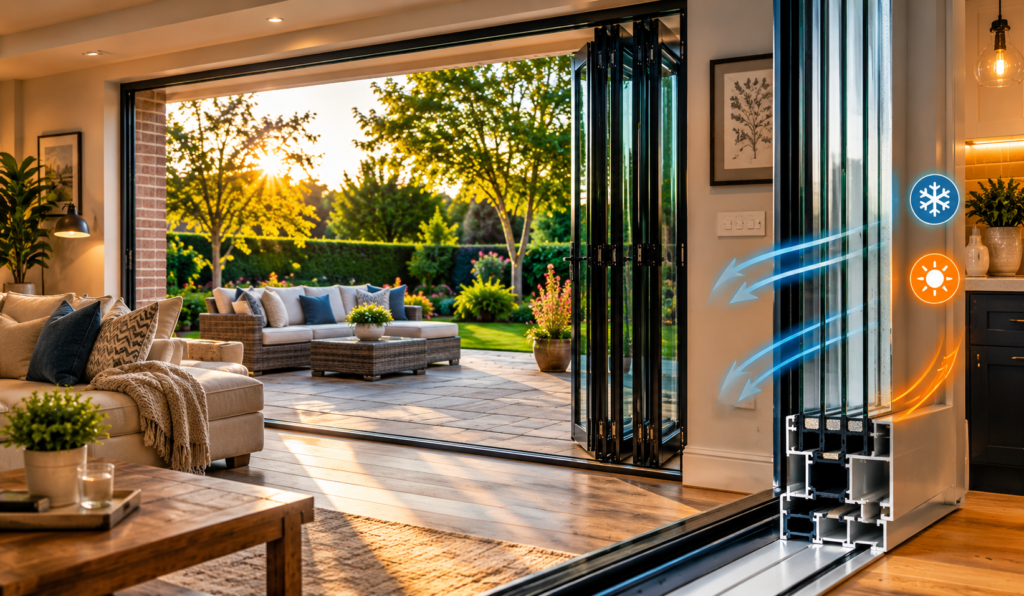
Modern bifold patio door systems with thermally broken aluminum frames and double or triple glazing perform very well in terms of energy efficiency. They meet Energy Star requirements and compare favorably to quality sliding patio doors when properly installed and sealed.
The U.S. Department of Energy recommends looking for low U-factor ratings and quality glazing packages when evaluating any exterior door replacement. The DOE’s guide on energy-efficient doors explains exactly what to look for in ratings and glazing specifications before you buy.
Where Bifold Doors Can Lose Efficiency
The potential energy efficiency weakness in bifold systems comes from the multiple panel joints and hinge points. Each joint is a potential point where the seal can degrade over time, allowing drafts to develop. A sliding door has fewer joints and a simpler seal system.
The solution is to specify quality weatherstripping and compression seals from the start, and to inspect and replace seals every two to three years as part of routine maintenance. A well-maintained bifold patio door system maintains its thermal performance consistently over its lifespan.
What It Costs vs What You Get: Is Replacing Patio Doors With Bifold Doors Actually Worth It?
Here is the honest ROI breakdown that most articles dance around.
The Financial Return
Replacing a patio door with bifold doors is not a high-percentage ROI renovation, the way a kitchen refresh or bathroom update is. You will not recoup 100% of the cost at resale in most cases.
What bifold patio doors deliver is a strong appeal to a specific type of buyer, particularly in modern homes, open-plan layouts, and markets where indoor-outdoor living is a priority. In those contexts, a well-specified bifold door system can be a genuine selling point that attracts more interest and supports a higher asking price.
In traditional neighborhoods or conservative markets, the premium you paid for bifold doors may not translate into a proportional increase in sale price. The door makes the home more desirable, but whether that desire converts to dollars depends heavily on your local market.
The Lifestyle Return
The financial return is only one part of the equation, and for most homeowners who make this upgrade, it is not the primary motivation.
The lifestyle return on replacing a patio door with bifold doors is genuinely significant. The ability to fully open a wall between your living space and your outdoor area changes how you use your home. Entertainment becomes different. Summers feel different. The connection between inside and outside, on a warm evening with all panels stacked and nothing between your living room and your patio, is something a sliding door simply does not deliver.
If you use your patio or outdoor space regularly, and you plan to stay in your home for five or more years, that lifestyle improvement has real value that does not show up in any ROI calculation.
Who Should Make This Upgrade
Replacing patio doors with bifold doors makes strong sense if:
- You entertain regularly and want a seamless indoor-outdoor flow
- Your home is modern or open-plan, and the upgrade fits the architecture
- You are planning to stay in the home long enough to enjoy the lifestyle benefits
- Your existing patio door is aging, drafty, or failing, and needs replacement anyway
- You are in a market where premium features are expected by buyers
Who should probably skip it:
- Your existing patio door is less than five years old and in good condition
- You are renovating purely for resale, and your market is price-sensitive
- Your budget is tight, and there are higher-priority renovations needed first
- Your home’s architectural style does not suit the look of a bifold system
Choosing the Right Bifold Configuration for Your Opening
Once you have decided to make the upgrade, the next decision is how many panels your opening needs and which configuration works best for your specific space. Getting this right affects both the look of the finished door and its long-term hardware performance.
For a full guide on panel counts and which setup works best at different opening widths, the comparison of 3 panel vs 4 panel bifold doors walks through the decision in detail. And if you are still deciding between a bifold and keeping a sliding door, the full bifold door vs sliding door comparison covers every practical difference between the two systems.
Before you talk to any installer, make sure your opening measurements are correct. The complete bifold door sizes guide gives you the exact measurement process and a full-size chart so you go into installer conversations knowing exactly what you need.
Frequently Asked Questions
Q: Can you replace a sliding patio door with a bifold door without structural work?
A: Sometimes, but not always. If the bifold system fits within your existing opening dimensions and the current header is adequately sized, a straight replacement without structural work is possible. If you want to widen the opening for a more dramatic result, structural work involving a new header is almost always required. Have an installer assess your specific opening before assuming either way.
Q: How long does it take to replace a patio door with bifold doors?
A: A straightforward, same-size replacement typically takes one full day. Projects involving structural work, opening widening, or complex installations in brick or stucco walls can take two to three days. Custom or large multi-panel systems may take longer if framing and finishing work is extensive.
Q: Do bifold patio doors add value to a home?
A: Yes, in the right context. Bifold patio doors are a strong selling point in modern, open-plan homes and in markets where indoor-outdoor living is a priority. In traditional neighborhoods or price-sensitive markets, the premium you paid may not fully translate to a higher sale price, but the doors make the home more appealing to a specific pool of motivated buyers.
Q: Can I install bifold patio doors myself?
A: It is not recommended for most homeowners. Bifold patio door installation requires precise alignment of tracks, brackets, and panel hardware across a wide opening. Even small errors in installation lead to alignment problems, drafts, and hardware wear. For any project involving structural work, professional installation is essential. Even for straight replacements, most manufacturers require professional installation to maintain the product warranty.
Q: What is the best material for bifold patio doors?
A: Aluminum is the best material for most exterior bifold patio door installations in the US. It is weather-resistant across all US climate zones, requires minimal maintenance, has a lifespan of 30 to 45 years, and comes in thermally broken systems that perform well on energy efficiency. Wood is a viable option in moderate climates with a committed maintenance routine, but aluminum outperforms it in durability and long-term cost of ownership for exterior use.
Planning a patio door replacement and want to know if a bifold works for your specific opening? Drop your measurements and setup in the comments, and we will help you figure out if it makes sense for your home.

Samreen Khadim Hussain is a home improvement writer and content creator at Domelite Home. She specializes in making home renovation, interior design, and bathroom safety accessible to everyday US homeowners, turning technical subjects into clear, actionable advice. Her work is rooted in research, real-world practicality, and a genuine belief that a better home is within everyone’s reach.