
Quick Answer: To secure sliding doors, start with three fixes that cost under $15 total: place a hardwood dowel or metal bar in the bottom track, drive anti-lift screws into the top track, and add a secondary pin lock. These three steps address the two most exploited vulnerabilities in sliding doors: the factory latch that pops open with a screwdriver and the lift-out technique that bypasses every track bar. Add security film, door sensors, and motion lighting for a complete layered system.
Sliding glass doors are one of the most targeted entry points in US homes. According to FBI burglary data, first-floor sliding doors rank among the top three entry points used in residential break-ins, trailing only unlocked front doors and first-floor windows.
The reason is not the glass. It is the hardware. Most sliding doors installed in US homes before 2020 have a factory latch that any pry tool can pop in seconds. Many can be lifted off their track entirely, bypassing the latch completely. And almost none have a secondary lock unless the homeowner added one.
Knowing how to secure sliding doors does not require a contractor or an expensive alarm system. Most of the fixes in this guide cost under $30 and take under 30 minutes. This guide covers every vulnerability in order from most to least exploited, with specific products, exact techniques, and the one step most homeowners miss that makes everything else pointless.
The 4 Ways Intruders Actually Enter Through Sliding Doors
Understanding the specific vulnerabilities before applying fixes ensures you address the real threats rather than spending money on security theater.
Vulnerability 1: Factory latch bypass. The standard factory latch on most sliding doors is a simple hook mechanism that can be popped open by inserting a tool in the gap between the door and the frame and applying lateral pressure. This can be bypassed more easily and leaves no visible damage. The latch was designed for convenience, not security.
Vulnerability 2: Lift-out technique. Some older sliding doors can be lifted from their tracks if they have excessive clearance; they can be lifted upward and pulled out of the bottom track while the door is locked. The door panel clears the track lip and comes free. Once the panel is out, any bar in the track is irrelevant because the barrier is the panel itself, not the track.
Vulnerability 3: Track and frame manipulation. Worn or loose tracks allow the door to shift laterally or vertically more than the manufacturer intended. A loose door rattles in its frame and can be manipulated to disengage the latch without direct prying.
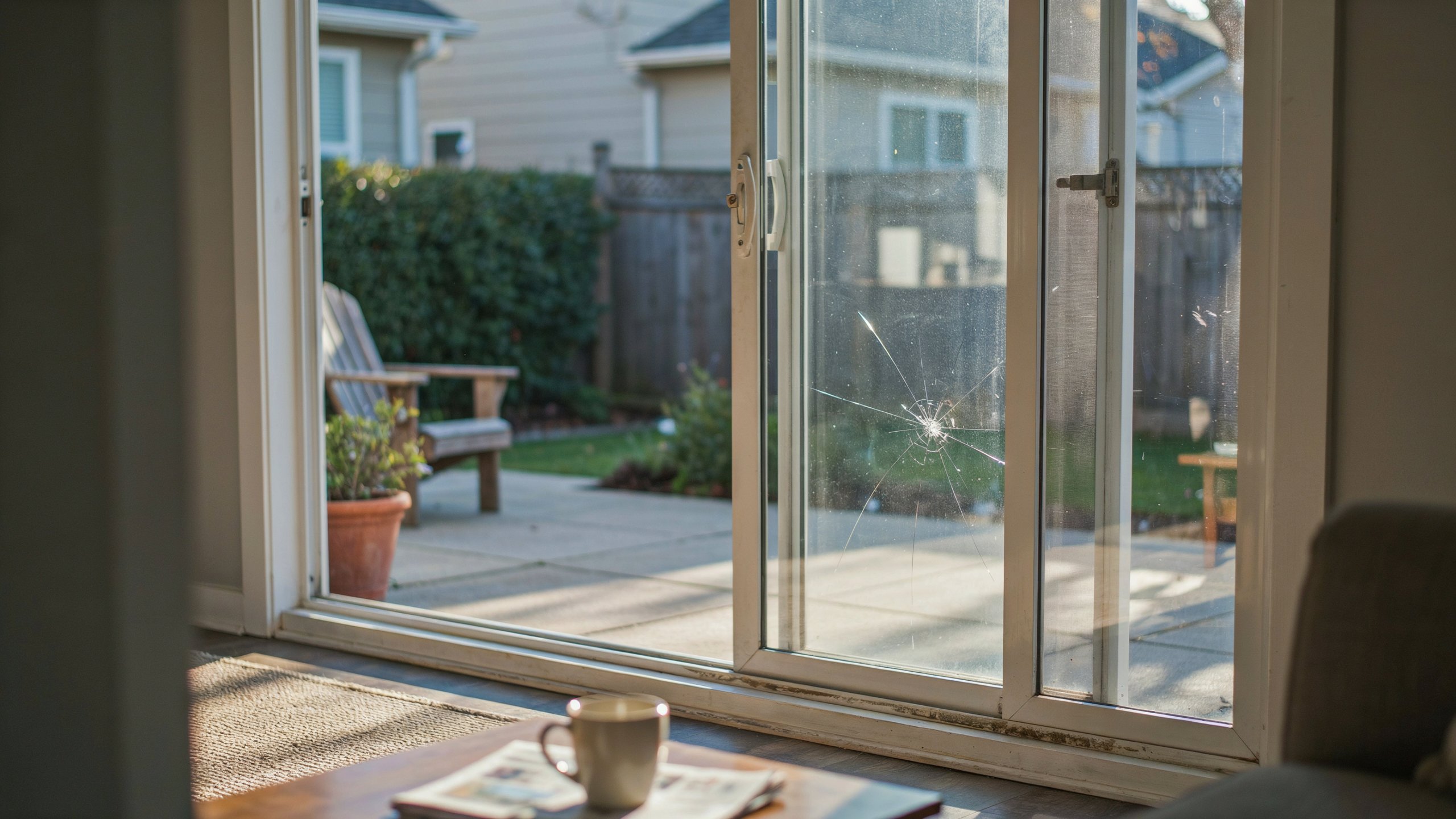
Vulnerability 4: Glass breakage. Standard tempered glass in most sliding doors shatters into small pieces on impact from a sharp tool. A determined intruder can break a panel and step through the opening in seconds. This vulnerability requires a different solution than the mechanical fixes above.
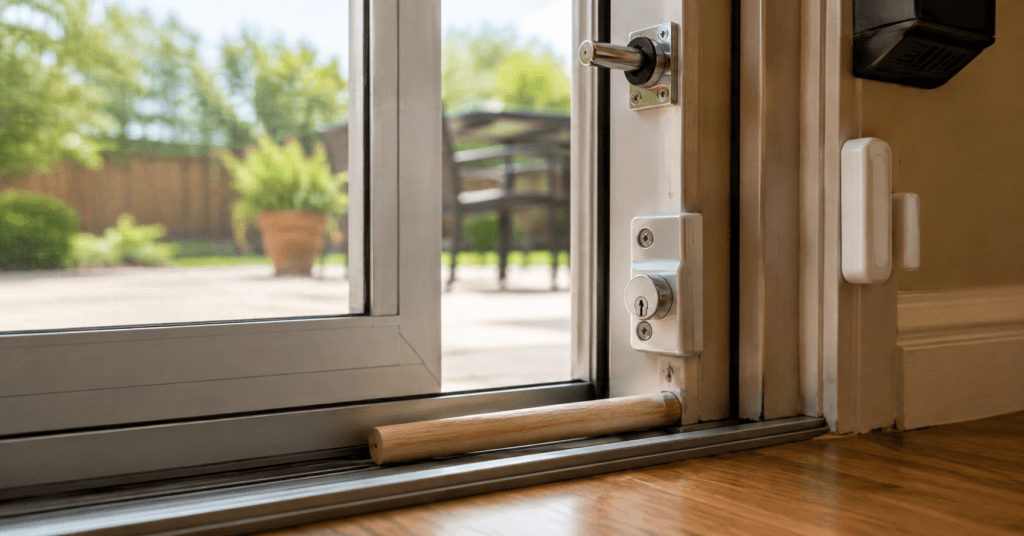
Fix 1: Track Bar or Dowel (Free to $15)
A bar in the bottom track prevents the door from sliding open even if the latch is bypassed. This is the most widely known sliding door security fix and it works for its specific purpose.
Cut a hardwood dowel, solid wood closet rod, or purchase a dedicated metal security bar to fit the length of the track when the door is closed. The bar should fit snugly, not loosely. A loose bar can be shifted by vibrating the door frame and creates a false sense of security.
A solid wood closet rod from any hardware store costs $5 to $10 and works well. Avoid thin wooden broom handles. A determined intruder can sometimes shake the door hard enough to break thin wood. Use a dowel at least one inch thick or a metal bar.
Cut a second, shorter version sized to your preferred ventilation gap. This allows you to crack the door for fresh air while the bar still prevents the door from opening wide enough for a person to enter. A 4-inch gap provides ventilation without creating a usable entry point.
Fix 2: Anti-Lift Screws in the Top Track (Free to $5)
This is the step most homeowners miss entirely, and it is more important than the track bar.
Even with a bar in the bottom track, many sliding doors can be lifted upward and pulled out of the top track, clearing the bottom track bar entirely. Once the panel is removed from the frame, there is no barrier at all.
Check your door’s manufacturer instructions before adding screws to the top track. Some sliding doors can be damaged by incorrect screw placement. If your door has excessive lift, use a compatible anti-lift device or ask a qualified door professional to inspect the adjustment and track system.
Fix 3: Secondary Pin Lock or Auxiliary Lock ($10 to $35)
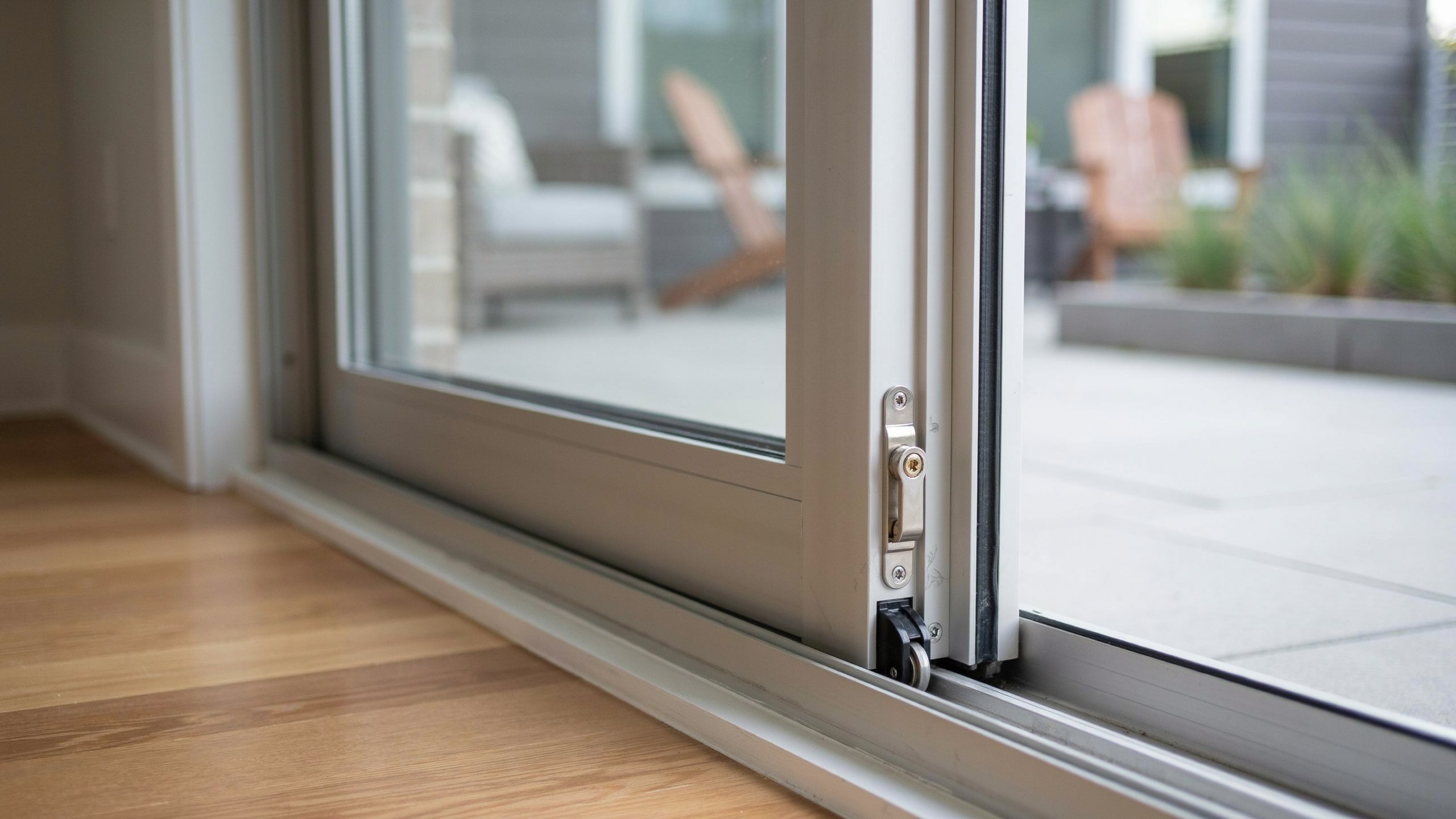
The factory latch is not enough. Adding a secondary lock provides a second line of defense that cannot be bypassed with the same technique used on the primary latch.
Pin locks are the simplest and most affordable option. These are small keyed or push-button devices that mount in the door frame and insert a pin that blocks the door from being opened. They install in minutes with a screwdriver and cost $10 to $20. Some models allow the door to be locked in partially open positions for ventilation.
Sliding door loop locks are keyed locks that attach to the door handle and loop around the frame. They prevent the door from being pushed open even if the primary latch fails. These cost $15 to $30.
Multi-point locking systems are the premium option and the most secure. A three-point lock engages the door at the top, middle, and bottom simultaneously rather than only at the latch point. This eliminates the peel-back technique where an intruder tries to bend one corner of the door to create a gap. Multi-point systems cost $80 to $250 installed and are the recommended upgrade for any exterior sliding door in a high-risk location.
Fix 4: Replace or Reinforce Worn Weatherstripping and Track ($20 to $60)
A sliding door that rattles in its frame is easier to manipulate than one that sits snugly. Worn weatherstripping and loose tracks create movement that an intruder can exploit to shift the door into a position where the latch disengages.
Check the weatherstripping around the door frame perimeter. Press it with your finger. If it compresses and does not spring back, it has lost its function. Replacement weatherstripping for most sliding door brands costs $15 to $30 and installs by pressing into the frame channel.
Check the track for debris, wear, and damage. A clean, intact track holds the door in its correct position. A damaged or debris-filled track allows lateral movement that creates gaps and reduces latch engagement.
For detailed guidance on weatherstripping replacement specific to sliding glass doors, the guide on sliding glass door weather stripping covers the correct products and installation process for every track type found in US homes.
Fix 5: Security Window Film ($30 to $80 for a standard door)
The mechanical fixes above address how intruders open the door. Security film addresses how they get through the glass.
Standard tempered glass in most sliding doors shatters into small pieces on sharp impact. Security window film is a thick, adhesive polyester film applied to the interior surface of the glass that holds the broken pieces together after impact. It does not prevent the glass from cracking but it prevents it from shattering into an open hole that someone can step through.
Film rated for security applications, distinct from tinting or solar control film, typically has a minimum thickness of 4 mil. Films rated 8 mil and above hold glass together under sustained attack. Apply to the interior surface of every glass panel, including any fixed panels beside the door opening.
Security film costs $1 to $3 per square foot depending on thickness rating. Professional installation is available for $5 to $8 per square foot, but most homeowners can install it as a DIY project with careful surface preparation and a squeegee tool.
One important limitation: security film prevents glass from shattering open but does not make the glass unbreakable. A determined intruder with the right tools can still get through filmed glass, just more slowly and with more noise. The value of film is primarily in eliminating the fast opportunistic glass-break entry that accounts for a significant portion of residential break-ins.
Fix 6: Door Contact Sensors and Glass Break Detectors ($15 to $50 per sensor)
Physical barriers stop or slow entry. Electronic sensors alert you when someone is trying to enter and create the response window that turns a security system from passive to active.
Door contact sensors attach to the door frame and door panel. When the door opens, the sensor triggers an alert to your phone or a connected alarm system. These are the most basic and most reliable electronic addition to any sliding door security setup. They cost $15 to $30 each and install with adhesive in minutes.
Glass break detectors use microphones to detect the specific acoustic frequency of breaking glass and trigger an alert before an intruder has fully entered. They cover a radius of 15 to 25 feet and can monitor multiple windows and glass doors from a single device. These cost $25 to $50 and mount on a nearby wall or ceiling.
For renters who cannot install hardwired systems, wireless sensors with adhesive mounting provide the same alert function without any permanent modification to the door or frame. The guide on smart home security for renters covers the specific no-drill sensor options that work on sliding doors without risking your security deposit.
For a comprehensive independent review of electronic security options for sliding doors, including product testing data, SafeWise maintains current recommendations at safewise.com.
Fix 7: Motion-Activated Lighting ($25 to $80)
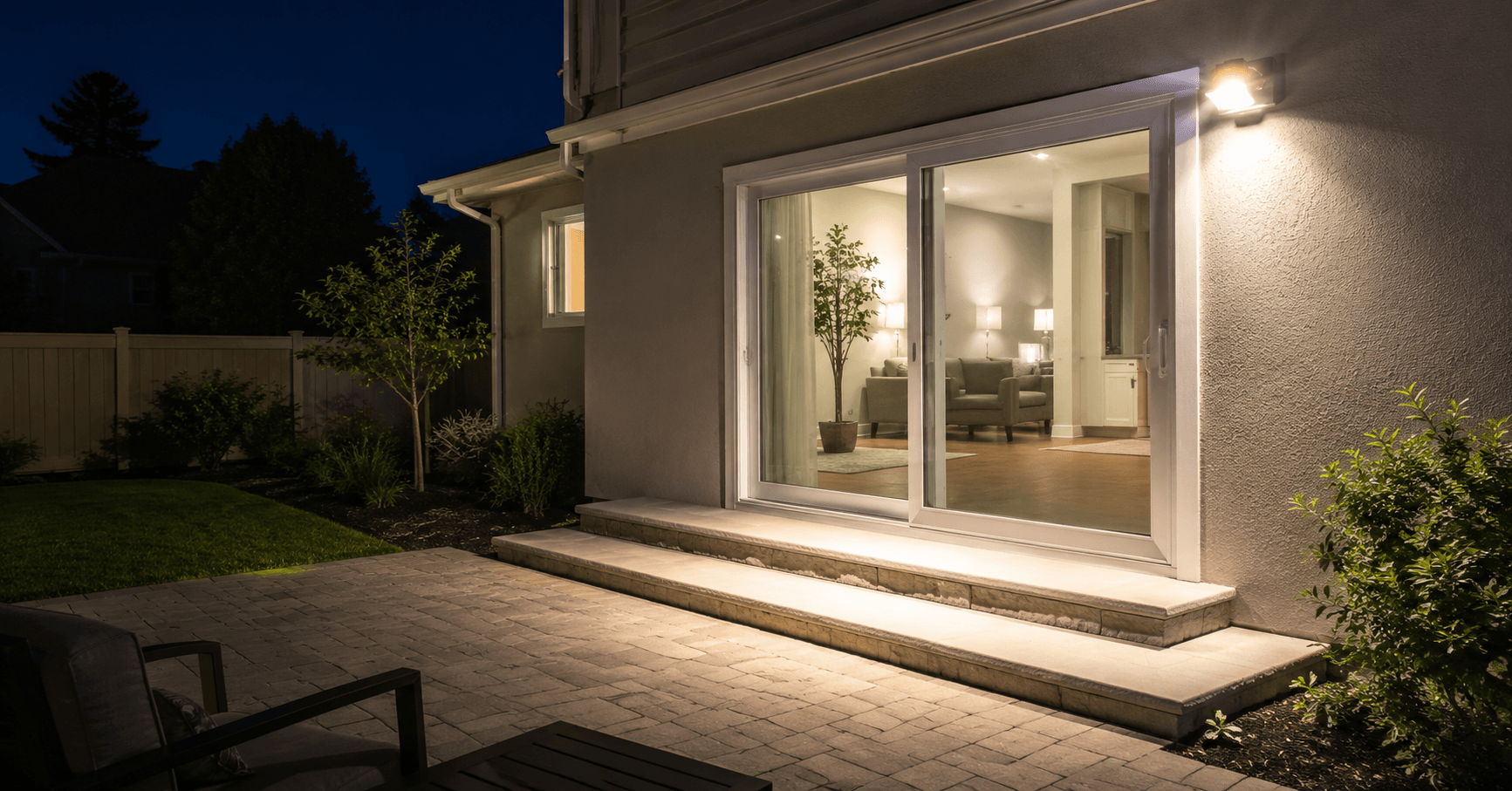
Lighting is one of the most underestimated sliding door security measures because it works at a different level than mechanical fixes or electronic sensors. Lights do not stop entry. They eliminate the darkness that makes opportunistic entry attractive.
A motion-activated LED floodlight mounted above or beside the sliding door illuminates anyone approaching the patio or backyard the moment they enter the detection zone. The sudden light removes the concealment that most opportunistic intruders depend on. Camera footage from a lit patio is also dramatically more usable than footage from a dark one.
Solar-powered motion lights require no wiring and cost $25 to $45. Hardwired LED floodlights provide more reliable performance and cost $40 to $80 plus installation. For any patio or deck area where the sliding door is the primary access point, at least one motion-activated light positioned to cover the door approach is a worthwhile addition to any security setup.
Fix 8: Upgrade the Door Lock Cylinder or Replace the Latch ($20 to $60)
The factory latch on most sliding doors is a hook-and-slot mechanism with a small key lock or thumb turn that provides minimal resistance to prying. Replacing or upgrading this latch addresses the primary mechanical vulnerability at its source.
Hook bolt locks replace the factory latch with a mechanism where a hook-shaped bolt engages a strike rather than a simple surface catch. This is significantly more resistant to prying than the standard factory latch and costs $30 to $60 for most sliding door brands.
Keyed locks on sliding doors add a cylinder that requires a key from both inside and outside. While this adds security, it creates a safety concern: in an emergency, a key requirement to open the door from inside can delay exit. If you install a keyed sliding door lock, ensure everyone in the household knows where the key is kept immediately adjacent to the door.
For homeowners weighing the cost and complexity of upgrading their sliding door versus replacing it with a different door type entirely, the comparison of bifold doors vs sliding doors covers the full practical and security differences between the two systems.
For additional guidance on sliding door security from one of the most trusted home improvement resources in the US, Bob Vila’s sliding glass door security guide at bobvila.com covers installation details that complement the approach in this guide.
The Complete 2026 Sliding Door Security Checklist
Work through this list in order. The items at the top address the most common vulnerabilities first.
| Priority | Fix | Cost | Time |
| 1 | Anti-lift screws in top track | Free to $5 | 10 minutes |
| 2 | Hardwood dowel or bar in bottom track | $5 to $15 | 5 minutes |
| 3 | Secondary pin lock or auxiliary lock | $10 to $35 | 15 minutes |
| 4 | Replace worn weatherstripping | $15 to $30 | 30 minutes |
| 5 | Security window film | $30 to $80 | 1 to 2 hours |
| 6 | Door contact sensor | $15 to $30 | 10 minutes |
| 7 | Glass break detector | $25 to $50 | 10 minutes |
| 8 | Motion-activated lighting | $25 to $80 | 20 to 60 minutes |
| 9 | Upgrade door latch | $20 to $60 | 30 minutes |
Fixes 1, 2, and 3 together cost under $50 and address the three common vulnerabilities in sliding door security. Completing all nine creates a layered system that is meaningfully more resistant than the many standard installations of US sliding doors.
Frequently Asked Questions
Q: What is the most effective way to secure a sliding door?
A: The three-fix combination that addresses the most common vulnerabilities is: anti-lift screws in the top track to prevent the lift-out technique, a hardwood dowel or metal bar in the bottom track to block the door from sliding open if the latch is bypassed, and a secondary pin lock as a second line of defense against latch manipulation. These three together cost under $50 and take under 30 minutes to install.
Q: Can sliding doors be lifted off their tracks?
A: Yes. Many sliding doors, particularly those installed before 2015, can be lifted upward and pulled out of the top track even when locked, bypassing any bar in the bottom track. Anti-lift screws driven partway into the top track prevent this by limiting how far the panel can be lifted. This is the most commonly overlooked sliding door security fix.
Q: Does security film make sliding glass doors burglar-proof?
A: No. Security film prevents glass from shattering into an open hole on impact, which eliminates fast opportunistic break-ins through the glass. It does not make the glass unbreakable. A determined intruder with the right tools can still get through filmed glass, but with significantly more time, effort, and noise. Film is most valuable as one layer of a complete security system rather than a standalone solution.
Q: How do you secure a sliding door without drilling?
A: Renters and homeowners who cannot drill can use a track bar or dowel in the bottom track, which requires no installation. Adhesive-mounted door contact sensors and glass break detectors provide electronic monitoring without drilling. Anti-lift devices that clip onto the top track without screws are available from security hardware suppliers. These no-drill options cover the primary vulnerabilities without any permanent modification.
Q: Are sliding doors less secure than regular doors?
A: Standard sliding doors with only their factory latch are can provide less resistance than a solid core hinged door with a deadbolt. The factory latch is weaker than a deadbolt, and the lift-out vulnerability has no equivalent in hinged door design. With anti-lift screws, a track bar, a secondary lock, and a contact sensor, a sliding door’s security level becomes comparable to a basic hinged door. A multi-point locking system brings it to near-equivalence with a deadbolted hinged door.
Not sure which combination of fixes makes most sense for your specific sliding door setup? Drop your door age, location in the home, and renter or owner status in the comments and we will help you prioritize the right fixes for your situation.

Samreen Khadim Hussain is a home improvement writer and content creator at Domelite Home. She specializes in making home renovation, interior design, and bathroom safety accessible to everyday US homeowners, turning technical subjects into clear, actionable advice. Her work is rooted in research, real-world practicality, and a genuine belief that a better home is within everyone’s reach.
1 thought on “How to Secure Sliding Doors: 8 Fixes That Stop Break-Ins (2026 Guide)”