
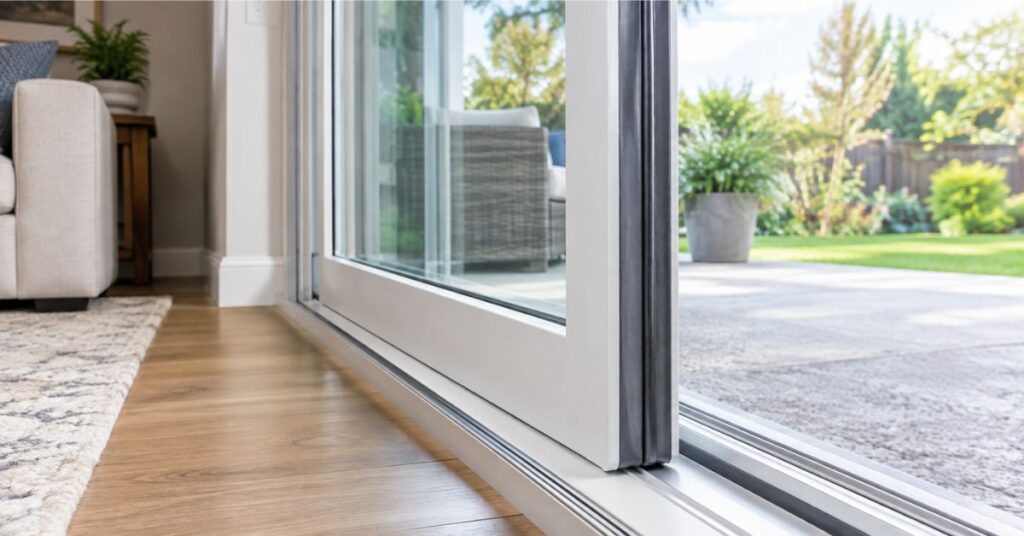
Quick Answer: The best sliding door weather stripping depends on your door’s existing seal channel and the location of the air leak. For many sliding glass and patio doors, pile weatherstripping or fin seal is a practical choice because it can seal moving panels without creating excessive friction. Before buying replacement material, check the old seal’s pile height, backing width, and attachment method. If the door still leaks after replacing the seal, the problem may be damaged rollers, poor alignment, frame gaps, or an improperly sealed rough opening.
What Is Sliding Door Weather Stripping?
Sliding door weather stripping is a flexible seal installed around a sliding door to reduce unwanted gaps between the moving panel, fixed panel, frame, and sill. It helps limit drafts and can also reduce the entry of dust, insects, outdoor noise, and moisture.
Unlike a standard hinged exterior door, a sliding patio door moves horizontally. That means the seal needs to provide protection without creating so much friction that the panel becomes difficult to open.
The Building America Solution Center identifies fin seal specifically for aluminum sliding windows and sliding glass doors and describes it as a durable option.
If your patio door feels cold around the edges in winter or lets hot outdoor air inside during summer, inspecting the weatherstripping is a sensible first step.
Signs Your Sliding Door Needs New Weather Stripping
Weatherstripping usually wears gradually. The fibers become flattened, sections disappear, vinyl becomes brittle, or the seal pulls away from its channel.
You may notice:
- A draft around the closed door
- Daylight visible around the panel
- Dust entering near the door
- Water appearing around the sill
- Flattened or missing pile
- Increased outdoor noise
- A loose or damaged seal
- Hot or cold spots near the patio door
The U.S. Department of Energy’s Building America guidance recommends checking doors and windows for worn or missing weatherstripping and testing for drafts.
Where Sliding Door Air Leaks Usually Start
Finding the leak before buying replacement material can save you money. A sliding door can have several sealing points, and each may require a different repair.
The Meeting Rail
The meeting rail is where the sliding panel meets the stationary panel. Because this area is repeatedly opened and closed, its pile or fin seal can wear over time.
If you feel air entering through the vertical center of the closed door, inspect this area first.
The Bottom Track and Sill
The bottom section is exposed to dirt, moisture, and debris. A worn bottom seal can allow drafts and water to enter.
However, don’t simply fill the track with thick foam. The panel needs enough clearance to move, and the sill may also have drainage paths that need to remain open.
The Fixed Panel and Frame
A stationary glass panel can develop gaps around its perimeter. If the leak is between the frame and surrounding wall rather than between the moving panel and frame, replacement weatherstripping may not solve it.
For larger frame gaps, proper air sealing and caulking may be necessary.
For related door maintenance and security, see How to Secure Sliding Doors.
7 Types of Sliding Door Weather Stripping
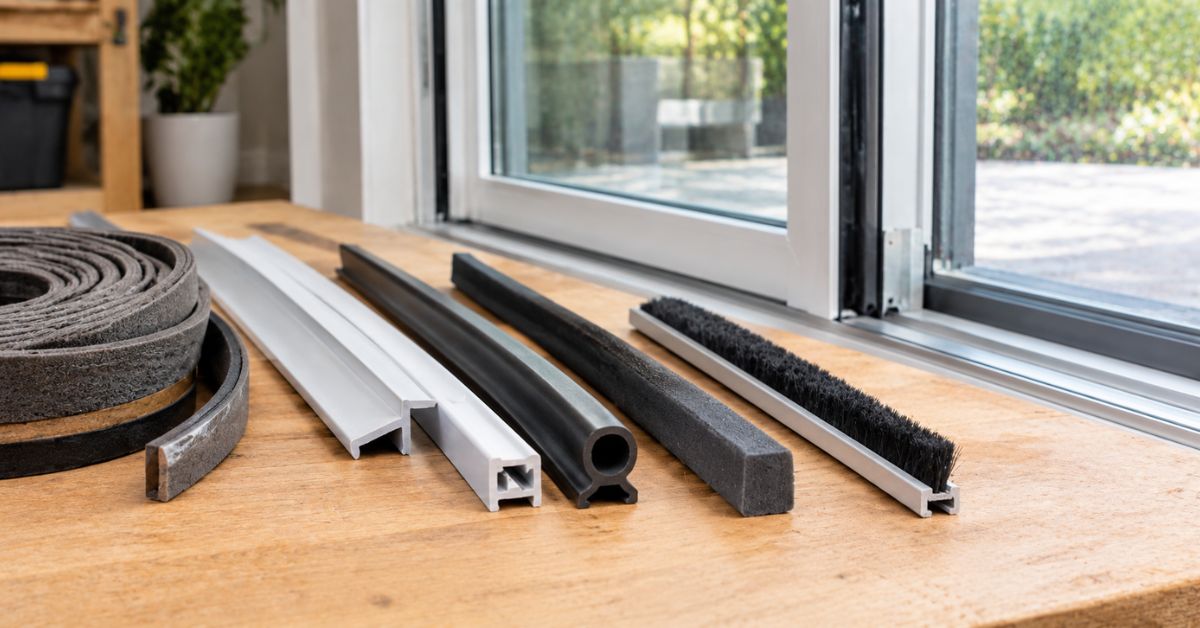
There isn’t one universal seal that fits every patio door. Your door’s manufacturer, age, frame design, and existing channel all matter.
1. Pile Weather Stripping
Pile weatherstripping has dense fibers attached to a flexible backing. The fibers compress and move as the sliding panel travels.
It is one of the most common styles associated with older and newer sliding glass doors. If your original seal looks like a fuzzy strip, replacement pile may be the closest match.
2. Fin Seal
Fin seal combines pile fibers with a thin plastic fin running through the center. The fin creates an additional barrier while the pile maintains flexibility.
For a drafty sliding patio door, this is one of the first replacement styles worth checking.
3. Vinyl Gaskets
Vinyl gaskets are molded seals that fit into specific channels or grooves. They can provide a good seal when correctly matched to the door.
The important word is matched. A generic vinyl gasket that looks similar may not fit the retaining channel correctly.
4. Bulb Seals
Bulb seals use a rounded, flexible section that compresses against another surface when the door closes.
They can work well in applications designed for them, but they are not automatically interchangeable with pile weatherstripping.
5. Foam Tape
Adhesive-backed foam is inexpensive and easy to install, making it useful for some stationary gaps and low-wear areas.
For a frequently moving sliding panel, though, thick foam can create friction and wear quickly.
6. Brush Seals
Brush-style seals use flexible bristles to reduce air and dust movement. They can be useful in certain door systems, particularly where some flexibility is required.
Their effectiveness depends heavily on the size of the gap and the door’s construction.
7. Manufacturer-Specific Seals
Older patio doors often use unusual profiles that aren’t easy to identify from a photograph. In that situation, the manufacturer’s replacement part may be the safest choice.
Search for the door’s model number, manufacturer, or a replacement part matching the original profile before modifying the frame.
How to Choose the Right Sliding Door Weather Stripping
The best weatherstripping is not necessarily the thickest or most expensive product. It is the one that fits the door’s existing design while creating enough contact to close the gap.
Measure the Old Seal
Before ordering, measure:
- Pile height
- Backing width
- Total length
- Channel or groove width
- Fin dimensions, if present
If possible, remove a short, undamaged piece of the old seal. Comparing the actual profile is often more reliable than trying to identify it from a product photo.
Check How It Attaches
Look at the old material carefully. Does it slide into a narrow groove? Does a plastic backing fit into a channel? Is it attached with adhesive, screws, or another method?
This detail can determine whether a replacement will actually fit.
For related door planning, you can also see Bifold Door vs. Sliding Door, especially if your existing slider is reaching the point where replacement makes more sense than repeated repairs.
How to Replace Sliding Door Weather Stripping
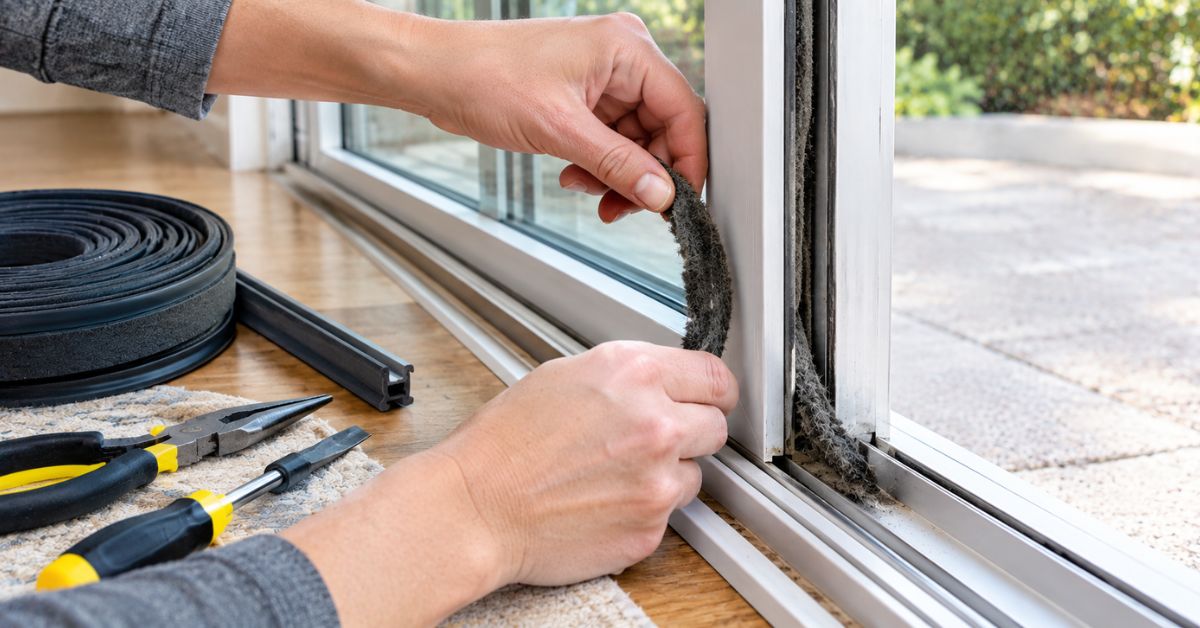
Replacing accessible weatherstripping can be a manageable DIY repair, but large glass panels require care.
Start by opening the door and identifying the damaged section. Remove the old seal carefully and clean dirt, dust, and adhesive residue from the channel. Allow the area to dry completely.
Next, measure and cut the replacement strip. Insert or attach it according to the product’s design, making sure it stays straight and does not bunch at the corners.
Finally, open and close the door several times to make sure the new seal does not interfere with smooth operation
Proper installation should reduce air infiltration without preventing the door from operating normally, which is also emphasized in U.S. Department of Energy weatherization guidance.
The Building America Solution Center recommends removing old weatherstripping, cleaning and drying the receiving surface, measuring and cutting the replacement, and testing the door afterward to make sure it closes properly.
If the repair requires removing a large glass panel, get another person to help. A patio door panel can be heavy and awkward to handle safely.
Why Your Sliding Door May Still Leak
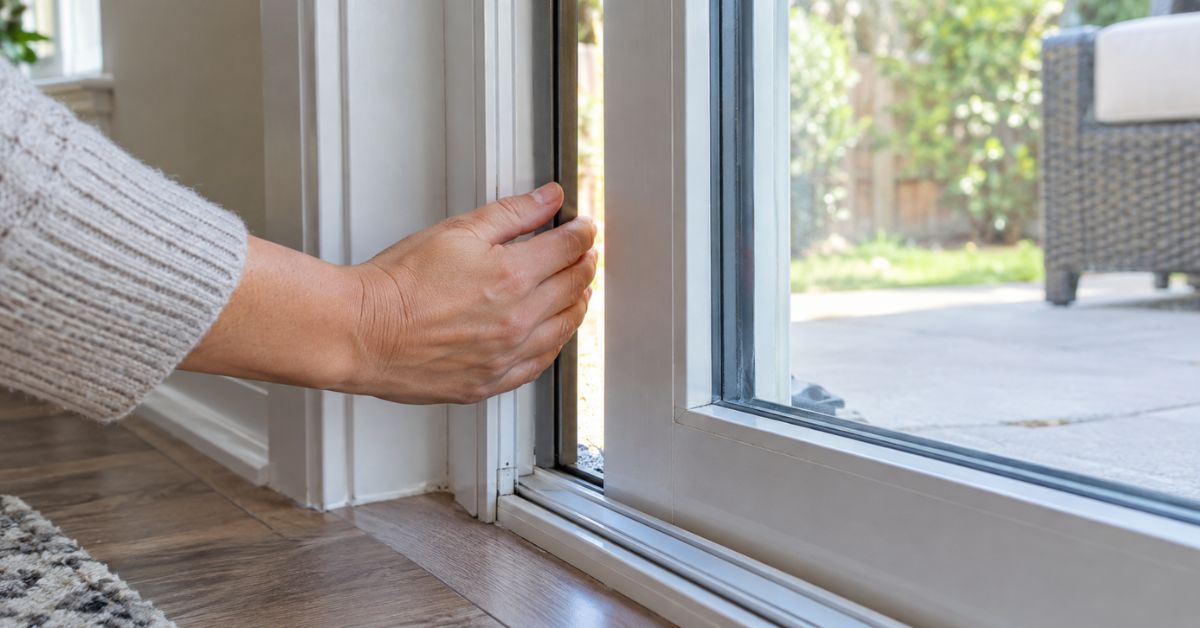
Replacing the weatherstrip doesn’t always fix a draft.
If the door is difficult to slide, sits unevenly, or does not meet the frame correctly, roller adjustment may be the real issue. A damaged track can create similar problems.
There may also be an air leak around the door frame itself. PNNL recommends sealing gaps around door rough openings with appropriate materials rather than relying on weatherstripping alone.
This is an important distinction: weatherstripping seals a moving gap; it does not repair every gap around a door installation.
For general door upkeep, the Home Maintenance Checklist can help you keep small problems from turning into expensive repairs.
How Much Does Sliding Door Weather Stripping Cost?
The cost depends on the type of seal, door size, replacement part, and whether you install it yourself.
Basic weatherstripping materials are generally inexpensive compared with replacing an entire patio door. Specialty seals for older or less common doors can cost more because the correct profile may be harder to find.
DIY installation can keep costs low when the existing door, rollers, frame, and track are still in good condition. Professional service becomes more relevant when the glass panel needs removal, the frame is damaged, or the door requires substantial adjustment.
Rather than choosing the cheapest seal, focus on correct fit and durability. A poorly matched strip can make the door harder to operate and may still leave the original air gap open.
Can Weather Stripping Stop Water From Entering?
It can help reduce water intrusion through gaps, but it is not a complete waterproofing system.
If rain is entering because a worn seal allows water through the moving panel, replacing the appropriate seal may help. But water can also enter through damaged flashing, a failed sill, blocked drainage channels, deteriorated caulk, or gaps around the frame.
If you see repeated water damage around your patio door, find the source instead of simply adding another layer of sealant.
When Should You Replace the Entire Sliding Door?
Weatherstripping is worth replacing when the door itself remains structurally sound and operates normally.
A larger repair or replacement may deserve consideration when the frame is badly damaged, the glass is failing, the track is severely damaged, or repeated roller and seal repairs no longer restore normal operation.
If you’re comparing different door configurations before making a major change, How to Secure Sliding Doors is another useful resource for evaluating the existing sliding-door setup.
Sliding Door Weather Stripping vs. Replacing the Door
| Factor | Replace Weather Stripping | Replace Door |
| Worn seal | Usually appropriate | Usually unnecessary |
| Minor draft | Often worth trying | Usually excessive |
| Damaged rollers | May need additional repair | Depends on severity |
| Damaged frame | May not solve problem | May be necessary |
| Failed glass | Does not fix it | May be necessary |
| Cost | Usually lower | Significantly higher |
| DIY potential | Often possible | More complex |
The key is diagnosing the problem first. If the door is basically sound, a properly matched seal can address a surprisingly large part of the problem.
Conclusion
The right sliding door weather stripping can reduce drafts, dust, and minor weather intrusion without replacing an otherwise good patio door. For many sliding glass doors, pile weatherstripping and fin seal are logical options because they accommodate the movement of the panel.
The most important step is accurate identification. Check the meeting rail, bottom section, fixed panel, frame, and surrounding wall before ordering replacement material. Measure the old seal and match its profile rather than buying a generic product based only on appearance.
And if a new seal does not solve the draft, don’t keep adding thicker material. Check the rollers, alignment, track, frame, drainage, and rough opening. A good repair should leave you with a door that seals properly and still slides smoothly.
FAQs
What is the best weather stripping for a sliding glass door?
Pile weatherstripping and fin seal are common choices for sliding glass doors because they can accommodate horizontal movement. The correct product depends on the existing channel and seal profile.
Can I use foam weatherstripping on a sliding door?
You can use foam in appropriate low-wear or stationary areas, but it may not be ideal for a frequently moving panel. A specialized pile or fin seal is often better suited to sliding-door movement.
How do I measure sliding door weather stripping?
Measure the old seal’s pile height, backing width, total length, and retaining channel. Taking a small piece of the original seal to a supplier can also help identify the correct replacement.
Why does my sliding door still have a draft after replacing the seal?
The panel may be misaligned, the rollers may be worn, or the leak may come from the frame or rough opening rather than the moving panel. Weatherstripping cannot correct every type of air leak.
Is replacing sliding door weather stripping worth it?
If the door is otherwise in good condition, replacing worn weatherstripping is a relatively simple repair to investigate before considering full door replacement. Correct sizing is essential for success.

Samreen Khadim Hussain is a home improvement writer and content creator at Domelite Home. She specializes in making home renovation, interior design, and bathroom safety accessible to everyday US homeowners, turning technical subjects into clear, actionable advice. Her work is rooted in research, real-world practicality, and a genuine belief that a better home is within everyone’s reach.