
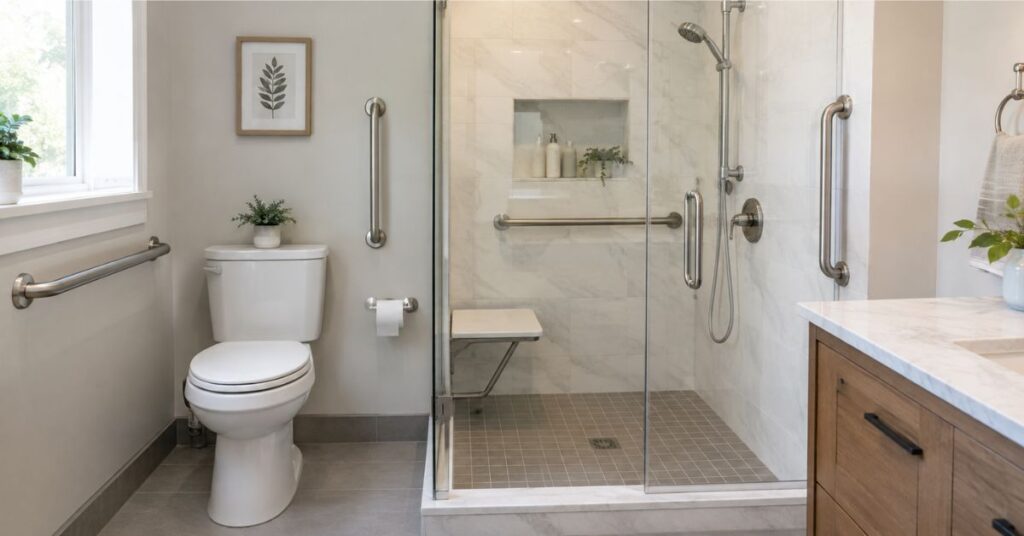
A grab bar is only useful if you can reach it when you actually need support.
That sounds obvious, but grab bars are often installed based on available wall space instead of the way a person moves through the bathroom. The better approach is to look at where someone needs help getting in, getting out, sitting down, standing up, or changing position.
If you’re wondering where should grab bars be placed, the answer depends on how the bathroom is used. For most US homes, the main locations are the shower, bathtub, and toilet area. The exact placement depends on the bathroom layout, the user’s height and mobility, and whether the installation needs to meet ADA requirements.
Quick Answer: Where Should Grab Bars Be Placed?
Where Should Grab Bars Be Placed? In a typical residential bathroom, consider placing grab bars:
- Inside the shower for support while standing and moving
- Near the shower entrance for getting in and out
- Inside and outside the bathtub where stepping over the tub wall is difficult
- Beside the toilet to help with sitting and standing
- Behind the toilet when the layout allows it
- Near a shower seat to help with sitting and standing
The best location is the one that gives the user a secure handhold before and during the movement that feels unstable.
When deciding where should grab bars be placed for aging in place, consider both current and future mobility needs. See our guide to aging in place home modifications for other changes that can make a home easier to use over time.
Where Should Grab Bars Be Placed in a Shower?
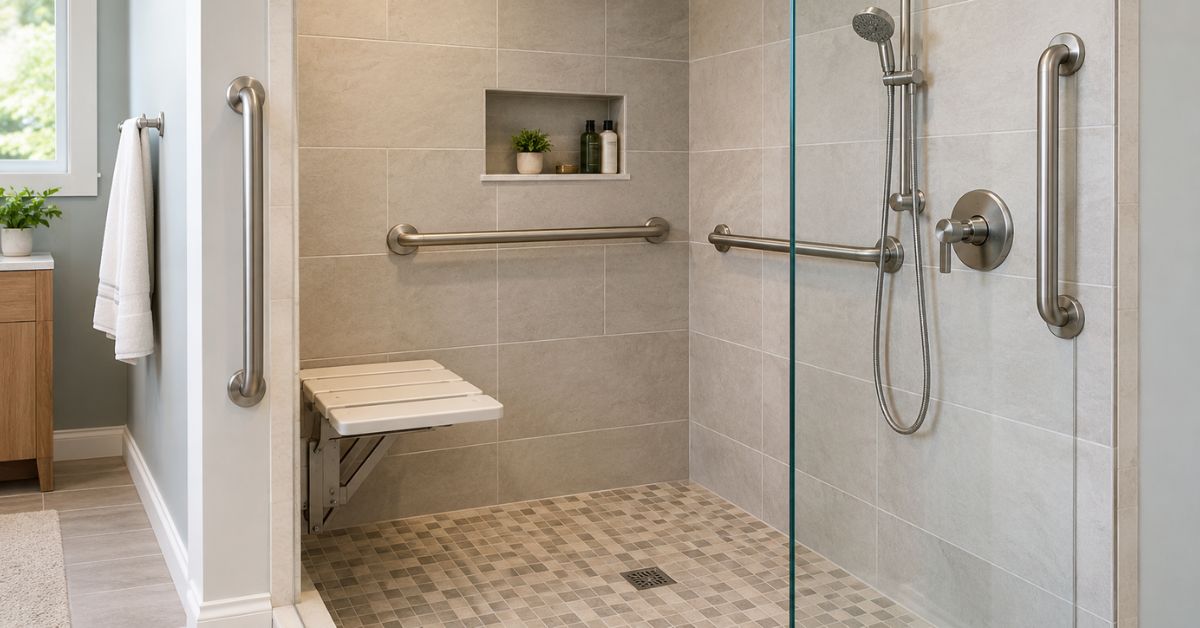
Knowing where should grab bars be placed in a shower can make the space easier to use. The shower is usually the first place homeowners consider because water can make the floor and the user’s feet less stable.
But there is not one universal grab-bar position for every shower.
1. On the Shower Wall
A horizontal grab bar can provide support while standing, turning, or repositioning.
For a private home, position it based on the person’s natural reach rather than simply copying a measurement from another bathroom. The bar should be easy to grip without forcing the user to lean too far or twist.
For an ADA-covered accessible shower, specific placement requirements apply. For example, transfer-type showers require grab bars across the control wall and back wall to a specified point. Roll-in shower requirements differ depending on whether a seat is provided.
2. Near the Shower Entrance
The shower entrance deserves special attention.
A person may be perfectly stable once standing inside the shower but need support while stepping over a threshold or moving from a dry bathroom floor onto a wet surface.
A vertical grab bar can work well for this type of transition because it gives the user several gripping positions.
Do not place it where it interferes with the shower door, enclosure, controls, or normal entry path.
3. Near a Shower Seat
If the shower has a built-in or folding seat, think about the seat and grab bar as one system.
The user should be able to:
- Reach the grab bar while approaching the seat.
- Hold the bar while lowering onto the seat.
- Reach the bar while getting back up.
- Move safely between the seat and the shower entrance.
If the seat is positioned incorrectly, even a properly installed grab bar may not be very useful.
4. Near the Shower Controls
A grab bar may also be helpful near the controls when the user has difficulty maintaining balance while reaching for the faucet or shower valve.
However, the bar should never force the user to reach around it or interfere with the controls.
For ADA-covered facilities, shower controls and grab bars have specific dimensional relationships that should be checked before installation.
Where Should Grab Bars Be Placed in a Bathtub?
If you’re deciding where should grab bars be placed in a bathtub, focus first on the entry and exit points. Bathtubs can be more challenging than showers because the user has to step over the tub wall.
That means the most important grab-bar location may not be where the person actually bathes. It may be where they enter or exit the tub.
Consider bars on:
- The wall beside the tub entrance
- The long wall alongside the tub
- The back wall
- Areas near a tub seat or transfer point
The CDC currently recommends adding grab bars inside and outside the tub or shower and next to the toilet as part of making a home safer against falls.
For ADA-covered bathtub installations, the required configuration depends on whether the tub has a permanent seat or a removable in-tub seat. The ADA Standards specify different grab-bar arrangements for these situations.
Where Should Grab Bars Be Placed Around a Toilet?
The toilet is another major location because sitting down and standing up can require significant balance and leg strength.
A common residential arrangement includes a horizontal grab bar on the wall beside the toilet.
Depending on the person’s needs and bathroom layout, a second bar may be installed behind the toilet or another support may be positioned to assist with transfers.
ADA Toilet Grab Bar Placement
For ADA-covered accessible toilet facilities, grab bars are required on the side wall closest to the toilet and the rear wall, subject to the detailed exceptions in the standards. The side and rear bars also have specific minimum lengths.
The ADA Standards generally place horizontal grab bars at 33 to 36 inches above the finished floor, measured to the top of the gripping surface.
That measurement is an important accessibility reference, but homeowners should not automatically assume that every private residential bathroom must use the exact ADA configuration.
How High Should Grab Bars Be?
For ADA-covered installations, horizontal grab bars are generally positioned 33 to 36 inches above the finished floor.
For a private home, however, the ideal height can depend on the person using the bathroom.
A shorter person may need a different position than a taller person. Someone who mainly needs help standing from a toilet may also use a bar differently from someone who needs support while walking into a shower.
Before drilling, have the primary user stand or sit in the position where support will be needed. Test the proposed location for reach and comfort.
AARP’s HomeFit guidance similarly notes that grab-bar placement should vary according to the space and the resident’s needs, rather than treating one position as suitable for everyone.
Should Grab Bars Be Horizontal or Vertical?
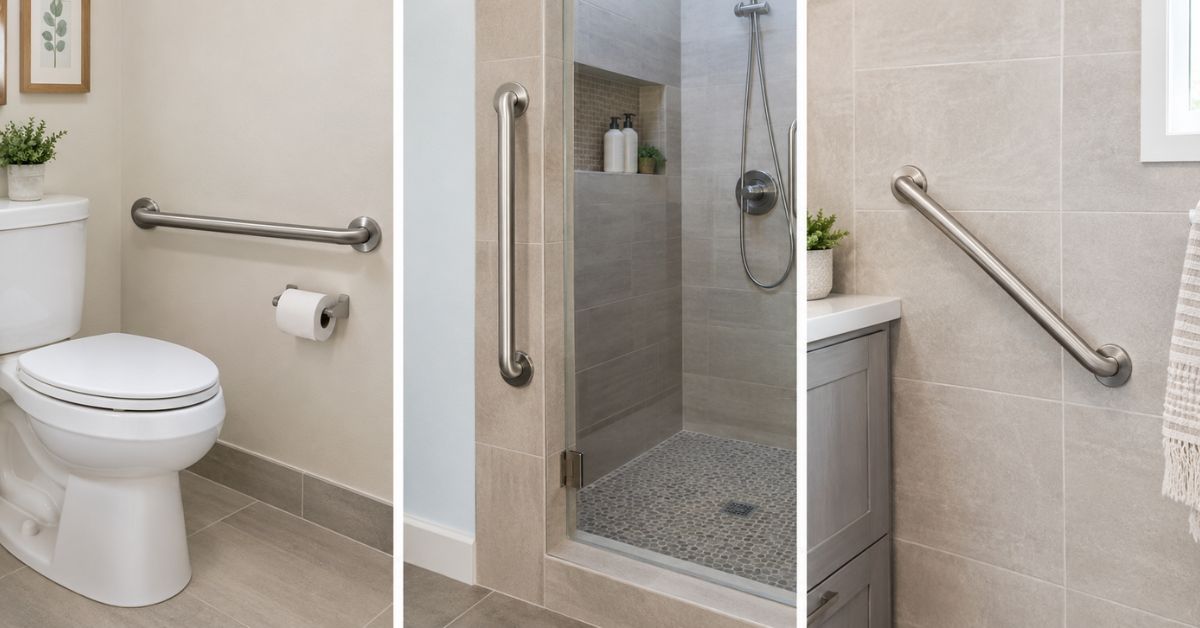
There is no single orientation that works for every situation.
Horizontal Grab Bars
Horizontal bars are useful for movements such as:
- Pulling up from a toilet
- Lowering onto a toilet
- Maintaining support while standing
- Repositioning in a shower
- Assisting with transfers
They are also the primary orientation specified for many ADA grab-bar requirements.
Vertical Grab Bars
Vertical bars can be particularly useful near:
- Shower entrances
- Bathtub entrances
- Places where the user needs to pull or steady themselves while stepping
They can provide a range of gripping positions and may feel natural during a transition.
Diagonal Grab Bars
A diagonal bar can sometimes help with sitting down and standing up because the user’s hand can follow a more natural movement.
However, don’t install a diagonal bar simply because it looks convenient. Its usefulness depends on the user’s movement pattern, reach, and the specific location.
How Much Space Should Be Between a Grab Bar and the Wall?
The clearance behind the bar matters just as much as the bar’s location.
For ADA-compliant grab bars, the required clearance between the wall and the grab bar is 1½ inches. The standards also address clearance from projecting objects around the bar.
This space allows the hand to wrap around the bar instead of being squeezed against the wall.
The grab bar should also have a suitable gripping surface and should not rotate within its fittings.
Where Should Grab Bars Not Be Installed?
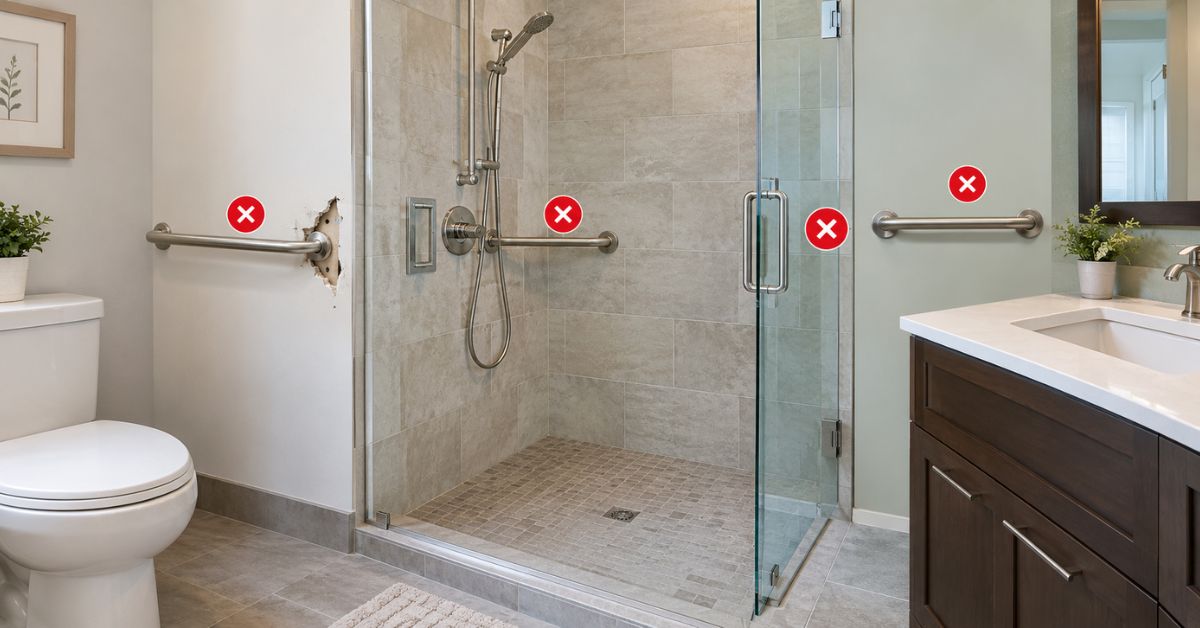
Avoid placing a grab bar:
- Where it cannot be securely anchored
- Directly into weak drywall without an appropriate mounting system
- Where it blocks shower controls
- Where it interferes with a shower door
- Where it reduces necessary movement or transfer space
- Where the user must twist excessively to reach it
- Where plumbing or electrical components prevent safe installation
A grab bar should be treated as a structural safety fixture, not a decorative bathroom accessory.
For ADA-covered installations, the supporting structure and mounting system must withstand a 250-pound force applied at specified points.
For a private home, follow the manufacturer’s mounting instructions and make sure the wall and fasteners are suitable for the intended load.
Can You Install Grab Bars on Tile?
Yes, but the tile itself is not what makes the installation secure.
The important question is what is behind the finished surface and how the grab bar is mounted.
During a bathroom remodel, consider adding blocking or other appropriate structural reinforcement before the wall is closed and tiled. This can make future grab-bar installation much easier.
It is also worth planning accessibility changes before the renovation begins. Our home renovation tips and money-saving tricks can help when you’re planning several bathroom improvements at the same time.
Do You Need Grab Bars in Every Bathroom?
Not necessarily.
The right number depends on the person and the bathroom.
A compact bathroom might need:
- One grab bar beside the toilet
- One or more bars inside the shower
- One bar near the shower entrance
A bathroom with a bathtub, shower seat, mobility equipment, or transfer needs may require additional support.
Instead of asking “How many grab bars should I install?”, ask:
“Where does this person need support during each movement?”
Think through the entire sequence:
Enter → step over → turn → sit → stand → bathe → turn → exit.
Then identify where a secure handhold would make each transition easier.
Grab Bars for Aging in Place
If you’re remodeling a bathroom for aging in place, don’t only plan for the way the bathroom is used today.
Someone who does not need a grab bar now may need one later. Adding wall reinforcement during a renovation can make future installation much easier.
The goal is not to make the bathroom look institutional. Modern grab bars are available in finishes and designs that can blend with contemporary bathroom fixtures.
The more important consideration is that the bar is actually usable and securely mounted.
How to Choose the Right Grab Bar Location
Before installation, walk through these questions:
Who Will Use It?
Consider the primary user’s height, reach, balance, and mobility.
What Movement Needs Support?
Is the person stepping into a tub, standing from the toilet, or repositioning inside the shower?
Can They Reach It Easily?
A grab bar that requires too much leaning or twisting may not provide the support you intended.
Is the Wall Strong Enough?
Check the framing, blocking, mounting hardware, and manufacturer’s installation requirements.
Will It Interfere With Anything?
Check doors, shower enclosures, controls, faucets, shelves, towel bars, and clear floor space.
Does an Accessibility Standard Apply?
If the bathroom is part of a facility covered by the ADA, follow the applicable ADA requirements rather than relying only on general residential advice.
What Is the Best Place for a Grab Bar?
There isn’t one universally “best” location.
For most bathrooms, the highest-priority areas are next to the toilet, inside the shower, and at the tub or shower entrance.
The right placement is the one that matches the user’s actual movement and gives them a secure point of support without forcing an awkward reach.
For aging-in-place projects, planning reinforcement before the walls are finished can also save time and expense later.
If you’re making several bathroom or home upgrades at once, consider how safety improvements fit into the larger renovation rather than treating each fixture as a separate project. Our guide to affordable home improvements that can increase home value covers other upgrades homeowners may consider during a renovation.
Final Takeaway
Grab bars should be placed where a person naturally needs support: beside the toilet, inside and around the shower, and near the bathtub entrance or other transfer points. Ultimately, where should grab bars be placed depends on the user’s movements, reach, and bathroom layout.
For ADA-covered facilities, precise requirements apply to grab-bar height, length, clearance, location, and structural strength. Private residential bathrooms can require a more individualized approach.
The safest installation is not necessarily the one with the most bars. It is the one that puts a secure, reachable handhold exactly where the user needs it.
Before drilling into tile or drywall, check the bathroom layout, wall construction, user’s reach, and applicable requirements. A few minutes of planning can make the finished bathroom considerably easier and safer to use.

Samreen Khadim Hussain is a home improvement writer and content creator at Domelite Home. She specializes in making home renovation, interior design, and bathroom safety accessible to everyday US homeowners, turning technical subjects into clear, actionable advice. Her work is rooted in research, real-world practicality, and a genuine belief that a better home is within everyone’s reach.