
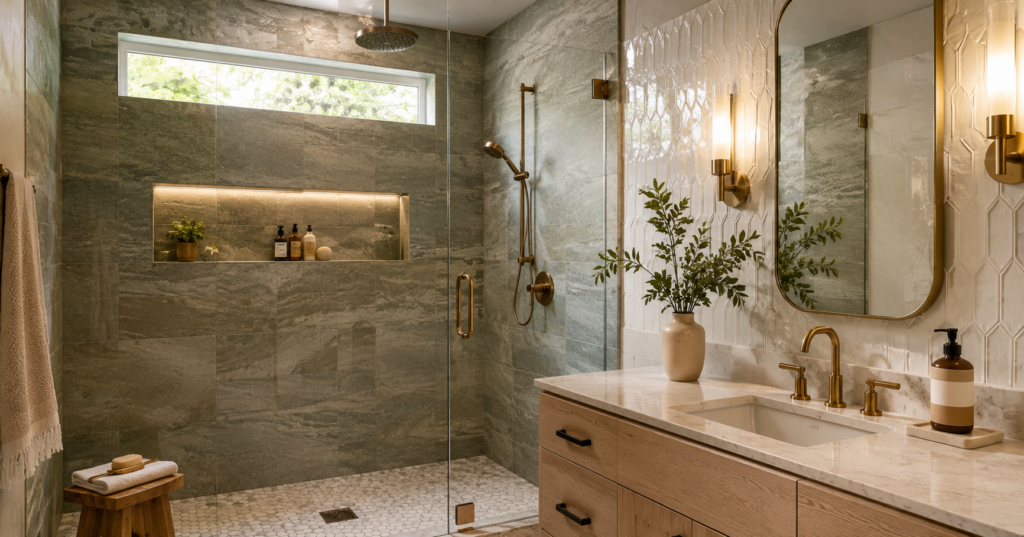
Quick Answer: The best bathroom tile shower ideas for 2026 move away from all-white subway tile toward textured surfaces, earthy tones, and intentional accent zones. Tile drenching, running the same tile across the floor, walls, and shower enclosure, is the dominant trend creating spa-like immersion. Zellige and handmade tiles add character in niches and accent walls without overwhelming the space. For most US bathrooms, a two-tile approach combining a neutral main tile with one statement piece delivers the highest impact at the most manageable cost.
You have been staring at the same white subway tile shower for six years. It is fine. It is clean. It photographs terribly, and it makes your bathroom feel like a hospital corridor rather than the spa moment you see on every design account you follow.
The gap between that shower and the ones you actually want to look at comes down to two things: material choice and intentionality. Most tile shower decisions in US homes are made by defaulting to whatever the builder installed or whatever was on sale. The homes that make you stop scrolling made deliberate choices about texture, scale, grout color, and which tile to use where.
This guide covers 12 bathroom tile shower ideas that work in real US homes, not just designer showrooms. It includes what each idea actually costs, which small bathrooms and tight budgets can pull it off, and the specific mistakes that turn a good tile concept into a costly regret.
Best Bathroom Tile Shower Ideas at a Glance
| Need | Best Choice |
| Small Bathroom | Large porcelain |
| Luxury | Marble |
| Easy Maintenance | Matte porcelain |
| Budget | Ceramic |
| Modern | Tile drenching |
| Spa Look | Limestone |
| Color Trend | Deep green |
| Slip Resistance | Mosaic |
What Makes Bathroom Tile Shower Ideas Work in Real Homes vs Just Look Good in Photos
Before getting into the ideas, it is worth understanding what separates shower tiles that age well from ones that date fast or become maintenance nightmares.
Texture matters more than color. Flat, shiny tiles in a small shower create a cold, reflective environment that amplifies every water spot and soap film. Textured surfaces, matte finishes, and materials with natural variation catch light differently through the day, hide everyday residue, and create a warmer, more tactile experience. This is the single biggest reason designer showers feel different from builder showers even when the color is almost identical.
Grout color is a design decision, not an afterthought. Most tile shower regrets in the US come down to two things: choosing white grout with a dark tile, which creates a grid pattern that dominates the visual, and choosing white grout with a light tile, which shows every stain within months. Matching grout to the tile creates a seamless surface that emphasizes the tile itself. Contrasting grout creates a graphic grid that becomes the focal point whether you want it to or not.
Scale relative to the room. Large format tiles in a 3 by 4-foot shower stall feel overwhelming and require difficult cuts at every edge. Very small mosaic tiles in a large walk-in shower look fussy and require enormous amounts of grout maintenance. The right tile scale is proportional to the shower enclosure, with the scale of the pattern complementing the size of the space.
Timeless versus trend. Natural materials, including stone, terracotta, and handmade ceramic, have appeared in shower design for centuries. They will not look dated in five years. Highly specific trend moves, bold graphic patterns in a single trending colorway, or unusual tile shapes that are very of-the-moment, carry more risk. The practical rule from Badeloft’s 2026 design analysis is direct: lead with material, let the color follow. A warm limestone floor is on-trend in 2026 and genuinely timeless. A sage-painted ceramic tile floor is a trend.
12 Bathroom Tile Shower Ideas That Work in Real US Homes
Are large tiles better for showers?
Yes. Large-format porcelain tiles create fewer grout lines, making showers easier to clean while helping small bathrooms appear larger. They also create a seamless, modern look, although professional installation is usually required for the best results.
Many of these recommendations also align with design principles promoted by the National Kitchen & Bath Association, which emphasizes balancing aesthetics, functionality, moisture resistance, and long-term durability when planning bathroom renovations.
1. Tile Drenching: One Material, Total Immersion
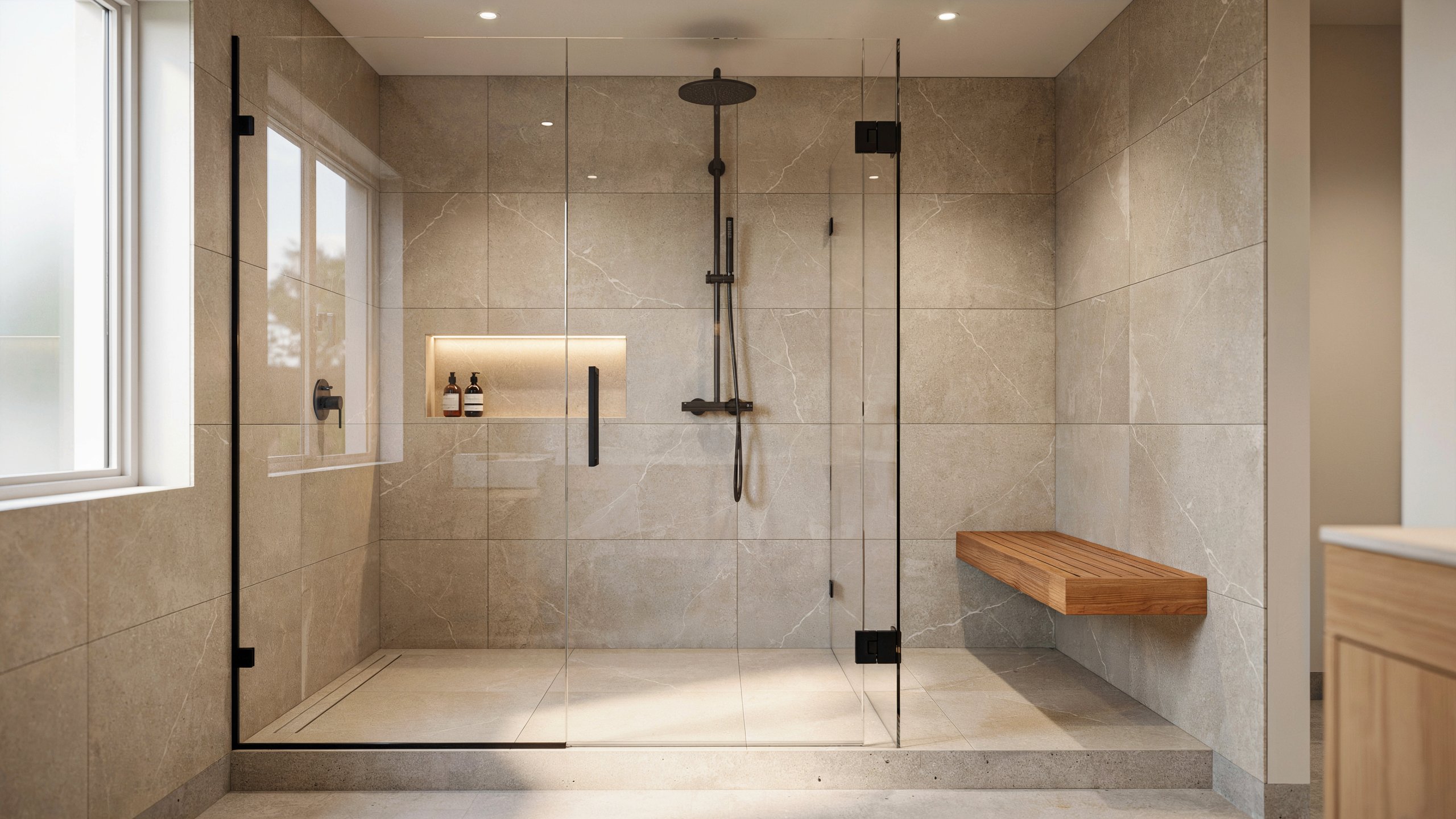
Tile drenching is the most talked-about shower trend of 2026 and for good reason. It involves running the same tile continuously across the floor, walls, shower enclosure, and sometimes the ceiling, creating a single cohesive material environment rather than a series of separate surfaces.
The practical effect is significant. When you eliminate the visual breaks between floor and wall tiles, the eye reads the space as larger and more intentional. Grout lines that match the tile color reinforce this by minimizing the grid and maximizing the material. In a small bathroom, using a large-format tile can make a 5-by-8-foot bathroom feel considerably more open than using different tiles on the floor and walls.
The materials that work best for drenching are large format porcelain in a stone look, terracotta in a warm earthy tone, and honed limestone for a genuine natural stone drenched bathroom. High gloss tiles drenched from floor to ceiling feel overwhelming in most residential bathrooms. Matte and honed finishes read as warm and enveloping rather than clinical.
The important warning: tile drenching requires a professional to plan the layout so the tile pattern aligns cleanly across the floor-to-wall transition. This is not a beginner DIY project. The cut lines at the transition need precision that affects how the finished space looks. Budget for professional installation on any drenching project regardless of how simple the tile itself seems.
Best for: Walk-in showers, master bathrooms, bathrooms with a single strong material. Cost range: $15 to $45 per square foot installed depending on tile material.
2. Zellige and Handmade Tile Accents in Niches and Feature Walls
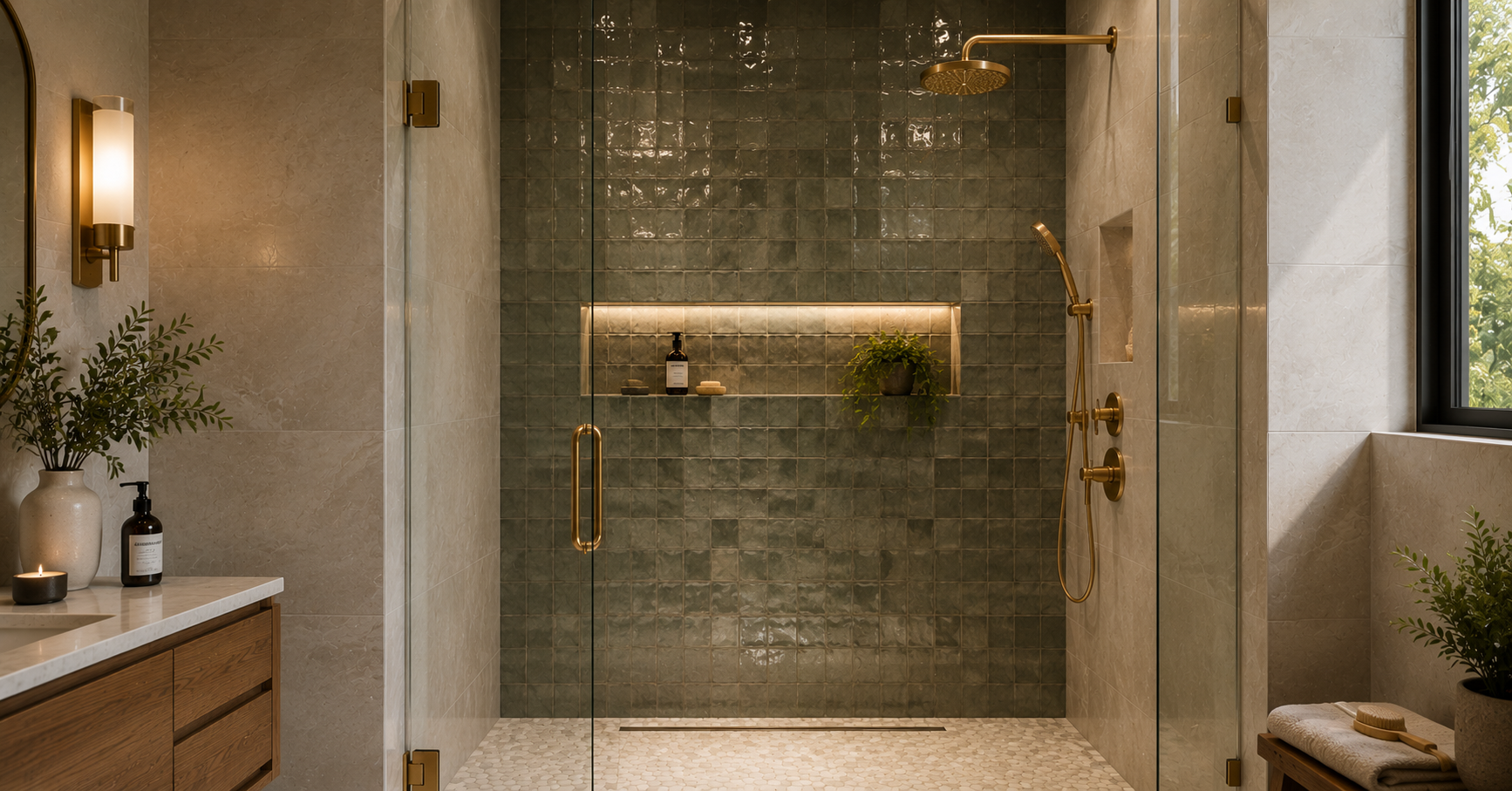
Zellige is a Moroccan handmade clay tile with an irregular glaze surface that catches light differently with every piece. It has been a design world favorite for years and has crossed over firmly into mainstream US residential design in 2026. The appeal is the wabi-sabi quality that factory tiles cannot replicate; each tile is slightly different, creating a surface that shimmers and shifts with the light.
The 2026 approach is to use zellige not as the dominant tile throughout the shower but as a concentrated accent where it has the most impact: the back wall of the shower, a built-in niche, or a single feature panel behind the showerhead. This allows the character and warmth of the handmade tile to read clearly without the cost of tiling an entire bathroom in a premium handmade product.
A practical approach that many US designers are currently specifying: a large format porcelain in a warm neutral on the main walls and floor at $8 to $12 per square foot, with a zellige or handmade tile accent in the niche or back wall at $25 to $60 per square foot. The juxtaposition of the two materials, one quiet and one expressive, creates more visual interest than either would alone across the full surface.
The maintenance consideration with zellige: the irregular surface holds more residue than flat tiles and needs regular cleaning. In the shower, specify a sealant appropriate for the specific glaze and budget for slightly more cleaning time than a smooth porcelain surface would require.
Best for: Shower niches, feature walls, back wall behind showerhead. Cost range: $25 to $60 per square foot for the tile, plus standard installation labor.
3. Large Format Porcelain: The Modern Statement That Requires Fewer Grout Lines
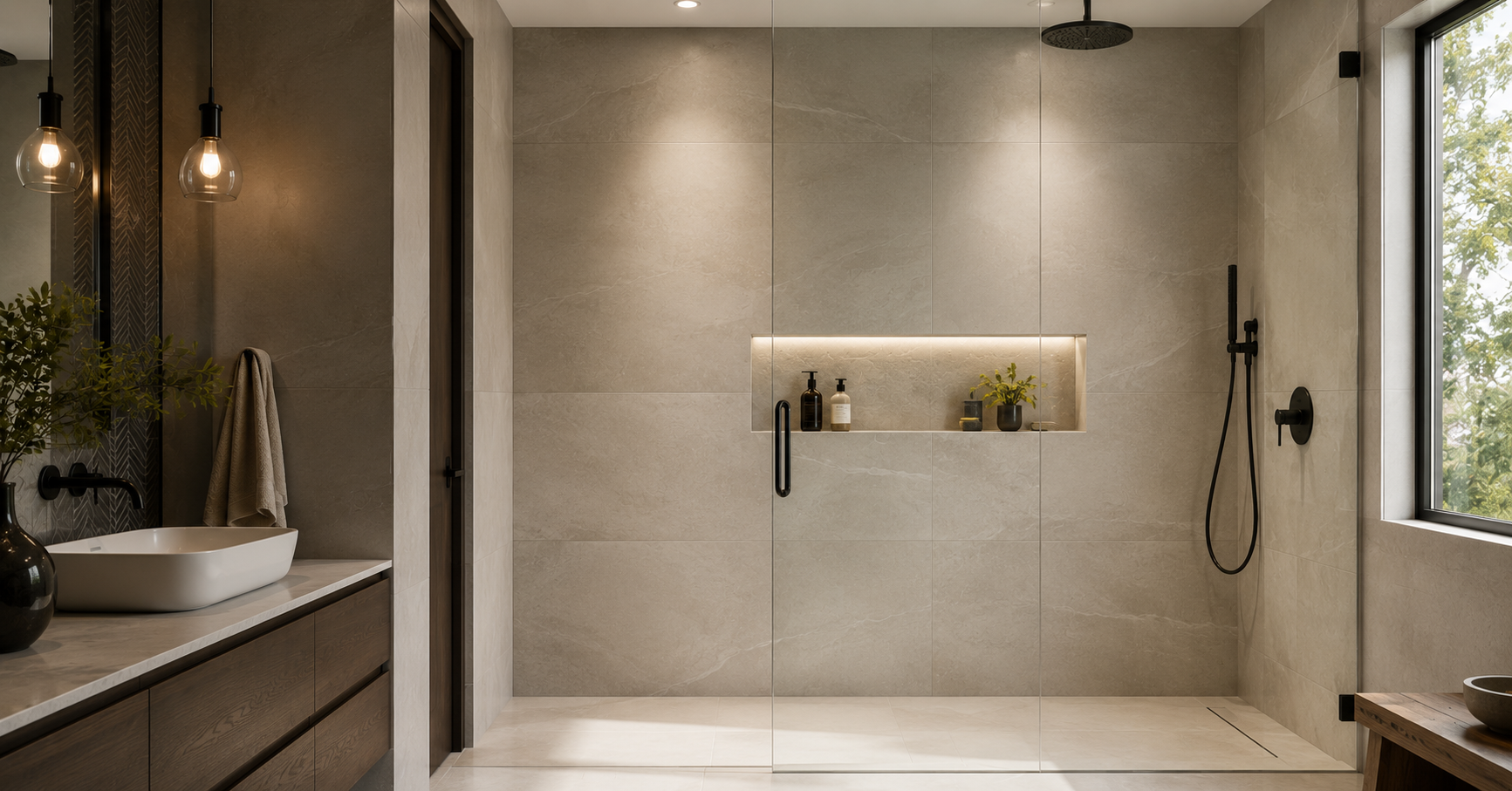
Large format porcelain tile, typically 24 by 24 inches or larger, continues to be one of the most popular shower tile choices in US homes in 2026. The reason is practical as much as aesthetic: fewer grout lines mean less maintenance, a cleaner visual, and a surface that reads as more expansive in modest-sized bathrooms.
The design detail that most guides skip: large format tiles require a perfectly flat substrate. Any irregularity in the shower wall behind the tile will telegraph through the large panels and create a wavy surface that is immediately visible. Professional preparation of the substrate before large format tile installation is not optional. This adds cost but is non-negotiable for large format tile to look the way it does in design photos.
For shower floors specifically, large format tiles need to be cut and sloped precisely toward the drain, or a linear drain needs to be used that allows the floor to slope in a single direction rather than four directions toward a center drain. A center drain with large format floor tile requires complex cuts that most installers charge a significant premium for.
Is porcelain better than ceramic for shower walls?
Yes, in most cases. Porcelain is denser, absorbs less water, and lasts longer in wet environments than standard ceramic tile. It is the preferred choice for shower walls and floors because it combines durability with low maintenance.
Best for: Walk-in showers, master bathroom wet rooms, any shower where a clean, minimal look is the goal. Cost range: $10 to $35 per square foot installed.
4. Textured and Ribbed Tiles: The Flat Tile Alternative That Changes Everything
Ribbed and fluted tiles are one of the strongest design moves available in 2026, and they are significantly underused in US residential bathrooms. The ridges create a shadow play that flat tiles cannot replicate, making the surface feel alive rather than static as the light shifts through the day.
The practical advantage is that ribbed surfaces hide water spots and soap residue far better than flat, high-gloss tiles. The texture scatters light rather than reflecting it, which means the surface does not show every drop and film the way polished subway tile does.
Ribbed tiles work particularly well on vertical accent surfaces in the shower: the back wall, the side wall visible from the bathroom entry, or a shower niche surround. On shower floors, ribbed tile creates a slip-resistant surface by default, which matters both for safety and for ADA compliance in any bathroom where accessibility is a consideration.
For homeowners thinking about shower safety alongside their tile choices, proper planning of safety hardware including grab bars should happen before tile installation rather than after, since tile installation around grab bars is far cleaner than adding them post-tile. The guide on ADA grab bars for bathrooms covers placement requirements and how to plan wall blocking before tiling to ensure grab bars have proper structural support.
Best for: Accent walls, shower niches, feature panels, shower floors. Cost range: $12 to $40 per square foot installed.
5. The Dark Accent Back Wall: Drama Without Commitment
This is one of the most achievable high-impact shower ideas for US homeowners who want visual drama without tiling an entire bathroom in a bold material. The concept is simple: the back wall of the shower, or one side wall, is tiled in a significantly darker or more dramatic tile than the surrounding surfaces.
Rich coffee brown, charcoal, midnight blue, and deep forest green all work beautifully as accent wall colors when surrounded by lighter main tiles. The contrast creates depth in the shower enclosure, makes the lighter tiles pop, and gives the shower a clearly intentional designed quality without the risk of a fully bold bathroom feeling oppressive.
The grout decision is critical here. White or light grout on a dark accent tile creates a geometric grid that may or may not be the look you want. Dark grout matching the tile creates a seamless surface that emphasizes the material. Be deliberate.
Best for: Any shower, particularly small showers where a full dark tile treatment would feel heavy. Cost range: $8 to $30 per square foot for the accent wall tile plus standard installation.
6. Checkerboard Shower Floors: The Classic That Is Back and Better
Checkerboard tile floors in bathrooms are experiencing a genuine resurgence in 2026. Square marble tiles paired with a classic checkerboard pattern are appearing across a range of styles from traditional to contemporary, adding rhythm and personality to the shower floor without introducing color.
The practical advantage of checkerboard in a shower context is slip resistance. The pattern and grout lines of a checkerboard floor provide more traction than a large-format single-color floor, making it both safer and more visually interesting. For shower floors specifically, a smaller-scale checkerboard, 2 by 2 or 3 by 3 inch tiles, provides better slip resistance than a larger-scale pattern.
The grout color determines the entire feel. Dark grout on a black and white checkerboard reads as graphic and bold. Matching grout on white tiles with a subtle marble variation reads as classic and quiet. The same tile pattern reads completely differently depending solely on this one decision.
For comprehensive guidance on checkerboard tile in bathroom and shower contexts, including material choices, scale decisions, and installation tips, the guide on stunning checkerboard floor ideas covers the full range of applications that apply directly to shower floor design.
Best for: Shower floors, small shower stalls where the pattern adds visual interest without overwhelming. Cost range: $12 to $45 per square foot installed depending on material.
7. Limewash and Plaster-Effect Tile: The Softest Shower Statement
Porcelain tile designed to replicate limewash or plaster finishes is one of the quieter but most interesting shower tile ideas emerging in 2026. These tiles have the soft, layered, slightly imperfect quality of genuine limewash without the porousness and maintenance requirements of actual lime plaster in a wet environment.
The effect is a shower wall that feels soft, warm, and almost painterly rather than hard and reflective. In muted tones of warm white, pale clay, and soft sage, these tiles create a calming shower environment that feels genuinely different from any standard tile surface.
The specific advantage over genuine plaster in a shower: porcelain is fully waterproof and non-porous, requires no sealing, and will not crack or require reapplication the way actual limewash or Venetian plaster finishes do in wet environments. You get the aesthetic of a soft plaster finish with the practical durability of porcelain.
Best for: Full shower walls, calm spa-inspired bathrooms, Japandi and earthy contemporary aesthetics. Cost range: $15 to $35 per square foot installed.
8. Natural Stone Shower: The Timeless Upgrade With Real Maintenance Requirements
Natural stone, whether marble, limestone, slate, or travertine, in a shower creates a quality and warmth that no manufactured tile fully replicates. The veining of marble, the warmth of travertine, and the irregular texture of slate all bring a natural richness that reads as genuinely luxurious in residential bathrooms.
The honest maintenance reality that most design guides minimize: natural stone in a shower requires sealing before use and resealing annually. Unsealed natural stone absorbs soap, minerals, and moisture that cause permanent staining over time. Polished marble specifically is also slippery when wet, making a honed or tumbled finish the practical choice for shower floors.
Marble and limestone are also susceptible to etching from acidic products including many shampoos, conditioners, and body wash formulations. Using natural stone in a shower requires being intentional about the products you use in it, which is a genuine lifestyle consideration.
The maintenance commitment is real but manageable. Homeowners who choose natural stone and maintain it properly have showers that look exceptional for decades. Homeowners who choose it without understanding the maintenance requirements often end up with stained, etched, and damaged surfaces within two to three years.
Best for: Master bathroom showers, homeowners willing to commit to proper maintenance. Cost range: $20 to $60 per square foot installed, varying significantly by stone type.
9. The Two-Tile Approach: Main Tile Plus One Statement Piece
This is the most practical and budget-friendly framework for achieving a designer-quality shower without a designer budget. The approach is straightforward: choose a neutral, high-quality main tile for the majority of the shower surfaces, and designate one area for a statement tile with more character, texture, or visual interest.
The main tile does the structural work. It covers the most square footage, holds the space together visually, and should be the most timeless, neutral choice in your palette. Warm gray porcelain, honed limestone look, large format white ceramic, or a simple textured subway work well as the main tile.
The statement tile does the character work. A zellige back wall, a ribbed niche surround, a mosaic floor with metallic accents, or a deep green glossy tile on a single side wall creates the moment that makes the shower memorable without risking the entire space on one bold decision.
This two-tile strategy allows you to use premium tiles where they have the most impact while managing overall cost. A shower niche tiled in $50 per square foot zellige uses approximately 3 to 4 square feet of that tile. The total premium for the niche is $150 to $200, negligible in the context of a bathroom renovation but visually significant.
Best for: Any shower, any budget, any level of design confidence. Cost range: Varies by tile selection. The framework applies at every price point.
10. Wood-Look Porcelain in the Shower: Warmth Without the Risk
Wood-look porcelain tile has evolved dramatically in the last few years. The latest products feature wide boards, authentic graining, and slightly textured finishes that are genuinely difficult to distinguish from natural timber at normal viewing distances. In a shower, this creates warmth and organic quality that no traditional tile can match.
The practical advantage over actual wood in a wet environment is obvious: wood cannot tolerate the sustained moisture of a shower. Wood look porcelain is fully waterproof and handles shower conditions without any of the warping, rot, or mold risk of genuine timber.
The design consideration is orientation. Wood look tile laid in a horizontal plank pattern on the shower wall creates width. Vertical application creates height. Diagonal application adds energy and movement. Choose the orientation based on what the specific shower enclosure needs.
Best for: Showers in bathrooms with a warm, natural, or spa aesthetic. Cost range: $8 to $25 per square foot installed.
11. Mosaic Tile Shower Floors and Niches: Where Small Scale Works
Mosaic tiles, typically one to two inch individual pieces set in sheet form, work exceptionally well in two specific shower locations: the shower floor and built-in niches. On the shower floor, mosaic tiles provide natural slip resistance through the grout lines between pieces, making them both safe and visually interesting. In niches, mosaic tiles create a jewel-like detail that contrasts with larger main wall tiles.
Mix material mosaics, blending marble and glass, stone and metal, or ceramic and metalite in a single sheet, are gaining significant ground in 2026. These combinations add tactile complexity without requiring a designer to curate each element. A well-chosen mix material mosaic in a shower niche or floor creates a focal point that reads as sophisticated and deliberate.
The maintenance reality with mosaic floors: more grout lines mean more grout to maintain. Choose an epoxy grout for shower floors, which is stain-resistant and far more durable than standard cement grout in the constant wet-dry cycle of a shower floor. The National Tile Contractors Association (NTCA) recommends epoxy grout for wet-area applications and provides installation best practices for professional tile work.
What is the easiest shower tile to maintain?
Large-format matte porcelain tiles are the easiest to maintain. They have fewer grout lines, resist moisture, do not require sealing, and hide water spots better than polished surfaces.
Best for: Shower floors, shower niches, feature accents. Cost range: $15 to $55 per square foot installed.
12. The Bold Color Moment: Deep Green, Navy, and Earthy Tones
Pure white and cool gray dominated US bathroom tile for the better part of a decade. In 2026, the movement is clearly toward color, specifically the deeper, more saturated earthy colors that have warmth and permanence rather than the cool pastels that felt trendy in earlier years.
Deep forest green, hunter green, and emerald are the most prominent color moments in 2026 shower tile. These tones pair naturally with warm neutrals, dark wood vanities, and brushed gold or black hardware. They create a bathroom that feels rich and intentional rather than generic.
Navy blue is a close second, particularly in coastal and traditional-leaning bathrooms where the reference to water is natural. Terracotta and clay tones round out the color palette, bringing warmth and an earthy quality that complements the broader interior design direction toward natural materials and organic forms.
The practical consideration with bold color tile is resale. A deep green shower in a home targeted to first-time buyers in a conservative market carries more risk than the same shower in an urban luxury market where buyers expect and appreciate distinctive design choices. Consider your likely buyer profile and neighborhood comps before committing to a bold color throughout an entire shower.
Best for: Master bathrooms, showers in homes where buyers expect distinctive design. Cost range: $10 to $45 per square foot installed depending on tile type.
The Shower Tile Decisions Most Guides Skip
Grout Width and Type
Standard grout joint width for most wall tiles is one-eighth to three-sixteenth inch. Larger format tiles often use joints as narrow as one-sixteenth inch, called rectified tiles, to create an almost seamless appearance. Smaller handmade and zellige tiles use wider joints of three-sixteenth to one-quarter inch because the irregular edges require the tolerance.
Epoxy grout versus cement grout matters enormously in showers. Cement grout is standard and less expensive but is porous, requires sealing, and stains over time regardless of sealing. Epoxy grout is stain-resistant, requires no sealing, and lasts significantly longer in wet environments. The cost difference is approximately $1 to $2 per square foot more for epoxy, which is almost always worth paying in a shower that sees daily use.
What to Do About Adjacent Wall Paint
Shower tile extends only so far. The wall surfaces adjacent to the shower enclosure, the painted drywall above the tile line or beside the shower opening, interact with the tile visually and in terms of moisture management. Water vapor from a hot shower penetrates to adjacent wall surfaces over time.
Moisture-resistant primer and bathroom-specific paint on adjacent walls is the correct approach. Paint that begins to peel on adjacent walls within a year or two of a bathroom renovation is often a moisture problem rather than a painting technique problem. The guide on how to fix peeling paint covers the moisture-related causes of peeling adjacent to wet areas and how to prep walls correctly before repainting in a bathroom environment.
Bathroom Tile Shower Ideas by Budget
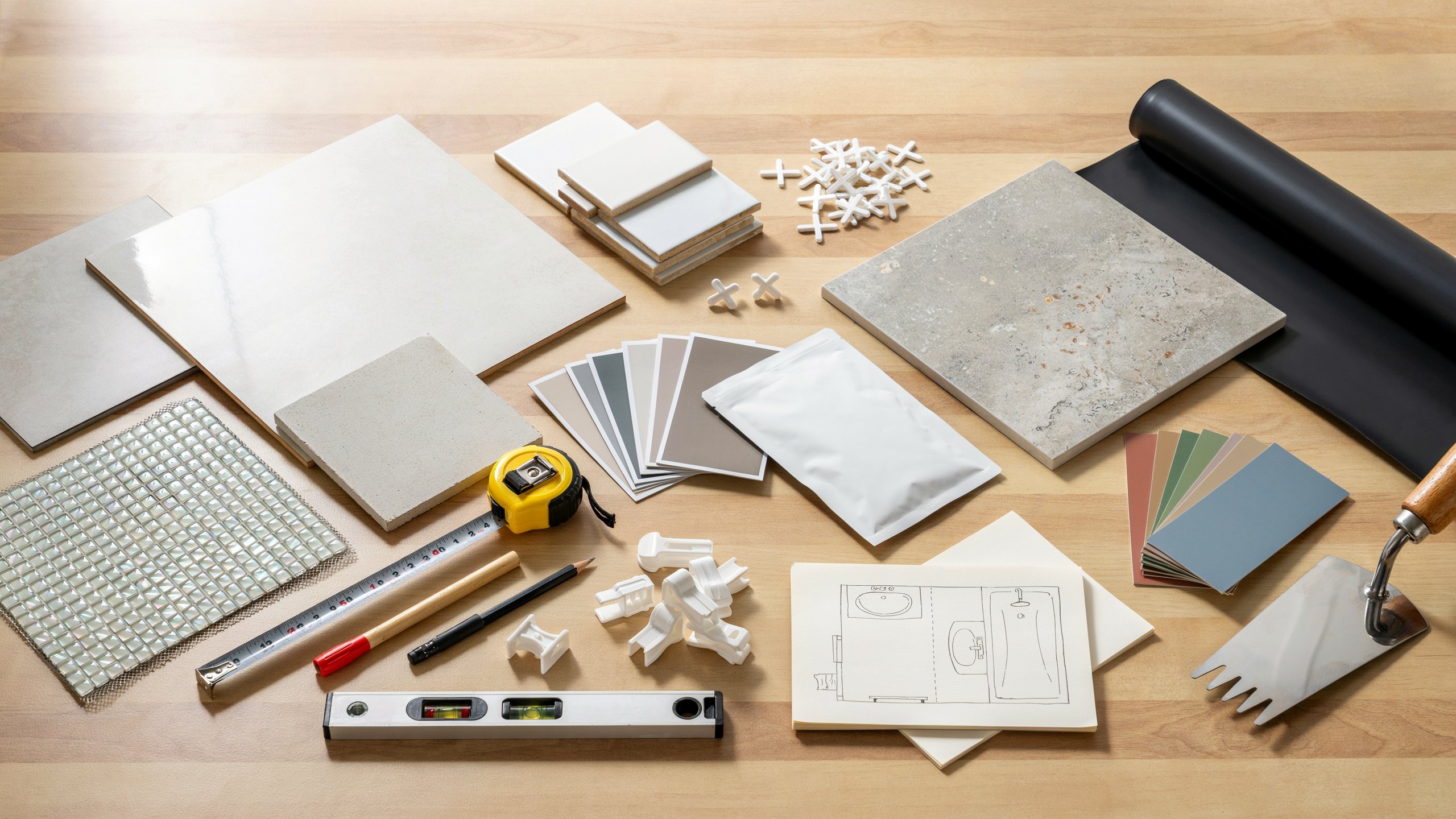
Shower tile costs have three components that need to be budgeted separately:
Tile material: $8 to $60 per square foot depending on tile type. Always order 10 to 15 percent more than your measured square footage to account for cuts, waste, and future repairs.
Installation labor: $10 to $20 per square foot for standard tile installation. Large format tiles, mosaic tiles, diagonal layouts, and natural stone all command a labor premium of $3 to $8 per square foot above the standard rate.
Substrate and waterproofing: $500 to $1,500 for a typical shower, covering cement backer board or a waterproofing membrane system from Schluter Systems (such as Kerdi) or Wedi. These systems are widely used by professional tile installers because they create a waterproof barrier behind the tile, helping prevent moisture damage and mold. This is a non-negotiable part of any shower installation. According to the Tile Council of North America, proper waterproofing and approved installation methods are essential to prevent moisture damage and ensure long-term tile performance. Tile installed over standard drywall in a shower will typically fail as moisture penetrates and damages the substrate over time.
For visual inspiration and real-home case studies showing these shower tile ideas across various budgets and bathroom sizes, Houzz maintains one of the most comprehensive collections of verified real-home bathroom tile photography at houzz.com.
How much does it cost to tile a shower?
Most homeowners spend $1,500–$6,000 to tile a shower, depending on tile material, shower size, waterproofing, and labor costs. Natural stone and custom layouts cost more than standard porcelain installations.
Bathroom Tile Shower Ideas to Avoid in 2026
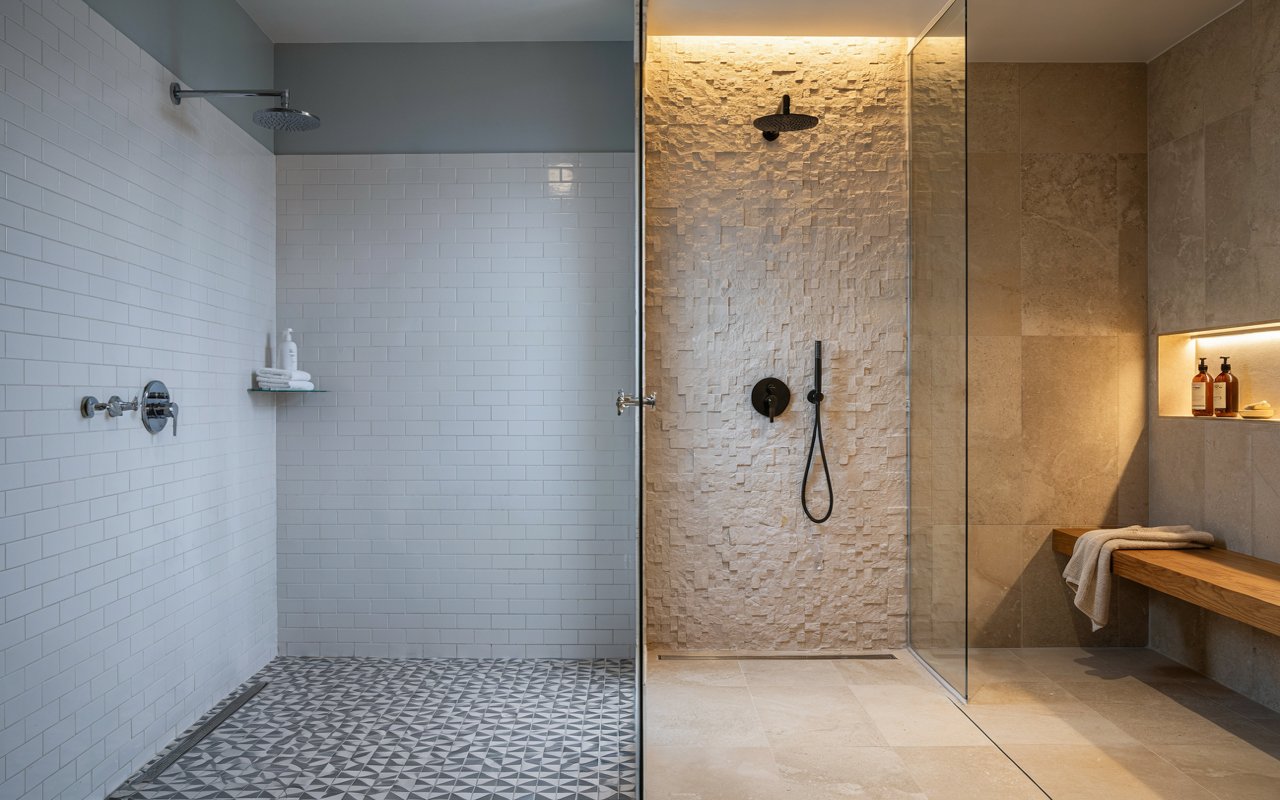
While design trends come and go, some shower tile styles are already starting to feel dated. Choosing timeless materials and warm, natural finishes can help your bathroom look current for years to come.
What shower tile styles are going out of fashion?
All-white subway tile with bright white grout, cool gray color schemes, and overly busy geometric patterns are becoming less popular. Homeowners are now choosing warm neutrals, textured finishes, handmade tiles, and natural-looking materials that create a softer, spa-inspired bathroom.
All-white subway tile with bright white grout. This has been the default US bathroom tile for 15 years, and it now reads as generic and dated. If you love subway tile, switch to a handmade ceramic version with a soft glaze and matching grout; it reads completely differently.
Gray everything. Cool gray wall tile, gray floor tile, and gray grout in the same bathroom feels cold and dated in 2026. The movement is toward warm neutrals and earth tones.
High contrast black and white geometric patterns on every surface. A single application of a graphic pattern is a strong design move. The same pattern on floors, walls, and shower reads as overdone.
Heavily veined faux marble in polyester. The mass market versions of marble-look tile often have an artificial, oversaturated veining pattern that reads as fake from across the room. If you want a marble look, choose a version with subtle, realistic veining or spend the extra money on actual stone.
Which shower tile is best for most homes?
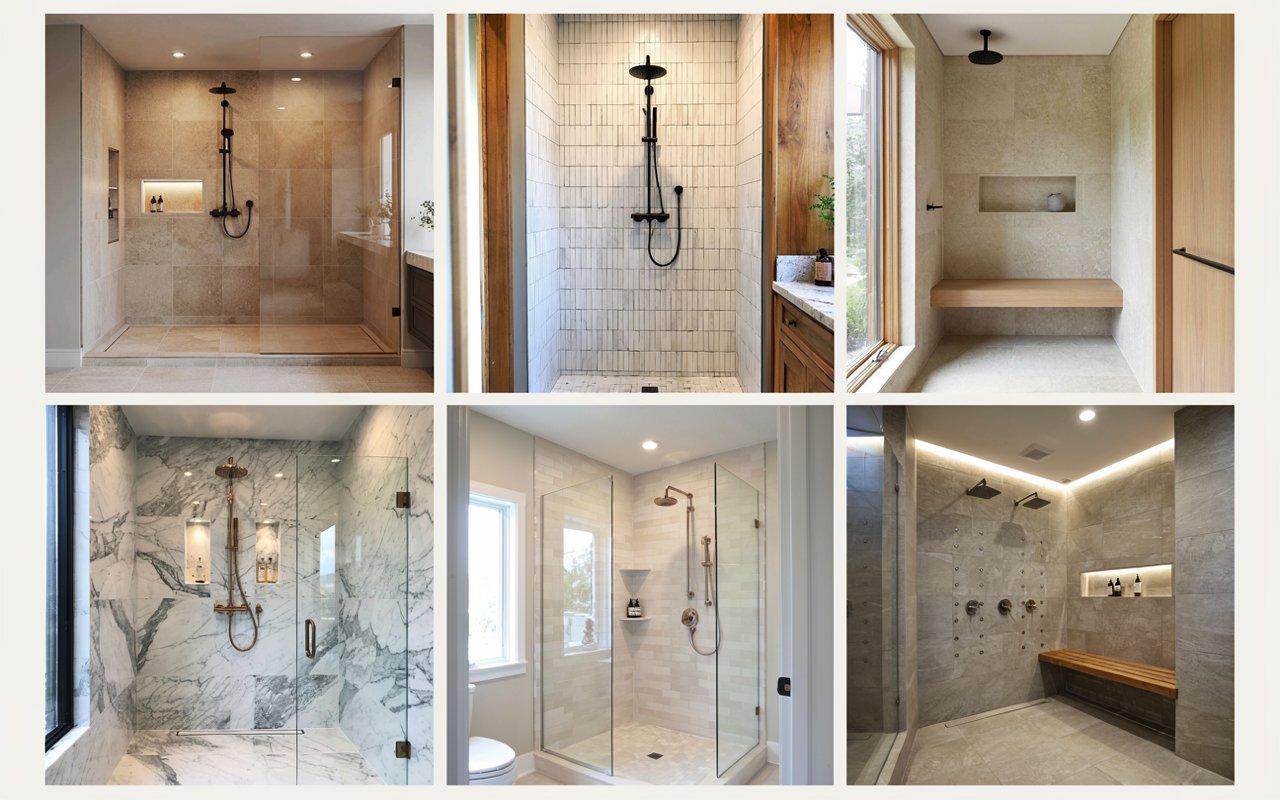
For most U.S. homes, a combination of large-format matte porcelain with one statement tile, such as zellige, ribbed ceramic, or mosaic, is the best balance of style, durability, maintenance, and cost.
Bathroom Tile Shower Ideas FAQs
Q: What is the most popular shower tile in 2026?
A: Large format porcelain in a warm neutral stone look remains the most widely specified shower tile across US residential projects in 2026. Tile drenching using this type of tile is the most prominent design move of the year. In the accent category, zellige and handmade ceramic tiles in niches and feature walls are the most requested premium option.
Q: What tile is best for a small shower?
A: For small showers, tile drenching with a large format tile in a warm neutral is the most effective approach for making the space feel larger. Running the same tile on the floor and walls eliminates the visual break that makes a small shower feel smaller. Avoid small mosaic tiles on the walls of tiny showers; they emphasize the scale of the space rather than expanding it. On the floor, a small scale tile or mosaic is fine and provides slip resistance.
Q: What grout color should I use for shower tile?
A: The most practical and visually satisfying choice is to match the grout color closely to the tile color. This creates a seamless surface that emphasizes the tile material rather than the grout pattern. White grout with light tiles shows staining rapidly even with sealing. Dark grout with light tiles creates a bold graphic grid that becomes the dominant visual element. Matching grout reads as deliberate and timeless.
Q: How much does it cost to tile a shower in 2026?
A: A typical shower tile project in a US home costs $1,500 to $6,000 depending on shower size, tile material, and layout complexity. This includes tile material at $8 to $60 per square foot, installation labor at $10 to $20 per square foot, and substrate and waterproofing at $500 to $1,500. Natural stone, large format tile, diagonal layouts, and mosaic work all add to the labor cost. Getting three quotes from licensed tile contractors before committing is standard practice.
Q: Do I need special tile for a shower floor vs walls?
A: Yes. Shower floor tile needs a coefficient of friction rating of 0.6 or higher, which is the standard for wet area slip resistance. Most wall tiles do not meet this requirement. Shower wall tile needs to be rated for wet areas and should be non-porous or sealed. Floor tiles also need to be set on a sloped substrate that directs water toward the drain, requiring more precise installation than wall tile. Always confirm wet-area suitability with your tile supplier before purchasing.
Planning a shower tile project and not sure which approach works best for your specific bathroom size and budget? Drop your shower dimensions, current tile situation, and style direction in the comments, and we will help you find the right combination.

Samreen Khadim Hussain is a home improvement writer and content creator at Domelite Home. She specializes in making home renovation, interior design, and bathroom safety accessible to everyday US homeowners, turning technical subjects into clear, actionable advice. Her work is rooted in research, real-world practicality, and a genuine belief that a better home is within everyone’s reach.
5 thoughts on “Bathroom Tile Shower Ideas: 12 Designs That Actually Work in Real Homes”