
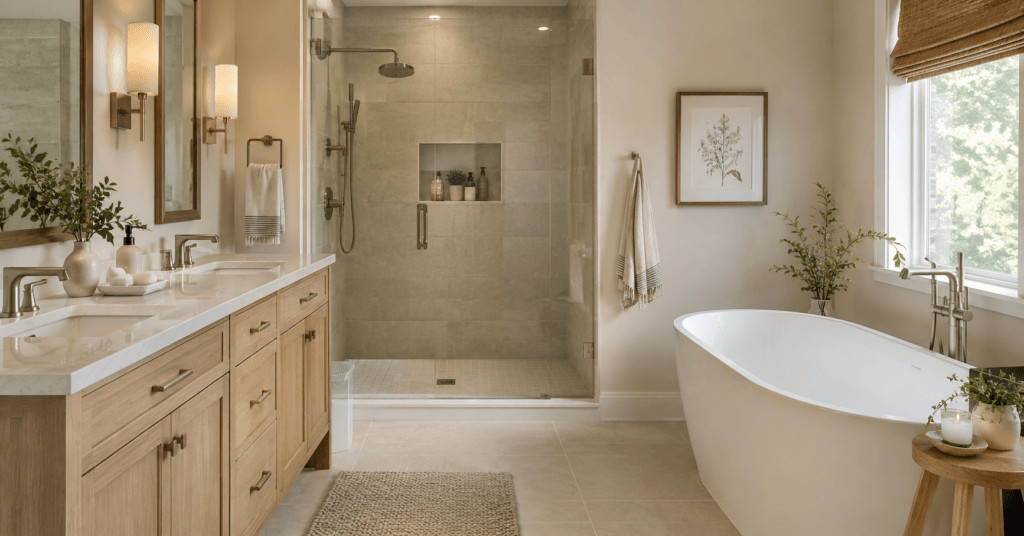
Quick Answer: What Are the Best Neutral Bathroom Ideas?
The best neutral bathroom ideas combine soft colors, natural materials, simple fixtures, and subtle contrast to create a bathroom that feels calm, timeless, and inviting. Popular choices include warm white walls, beige or greige tile, natural wood vanities, stone-look porcelain, brushed nickel or matte black fixtures, layered lighting, and textured accessories. For a small bathroom, lighter colors, large-format tile, a large mirror, and minimal visual clutter can make the space feel more open. The key is to layer different textures and finishes rather than using the same neutral shade everywhere. This gives the bathroom depth and personality while keeping the overall design easy to update and suitable for different home styles.
If you want a bathroom that feels clean, relaxing, and easy to live with, neutral bathroom ideas are hard to beat. But neutral does not have to mean an all-white room with a basic vanity and builder-grade tile. The most inviting neutral bathrooms use layers of color, texture, natural materials, lighting, and small contrasts to create a space that feels finished without becoming visually busy.
For a U.S. bathroom remodel, this approach also makes practical sense. Neutral colors work with everything from warm oak vanities to brushed nickel faucets, and they can adapt when you change towels, mirrors, lighting, or accessories later.
Here are the ideas that are actually worth considering if you’re planning a bathroom update.
What Is a Neutral Bathroom?
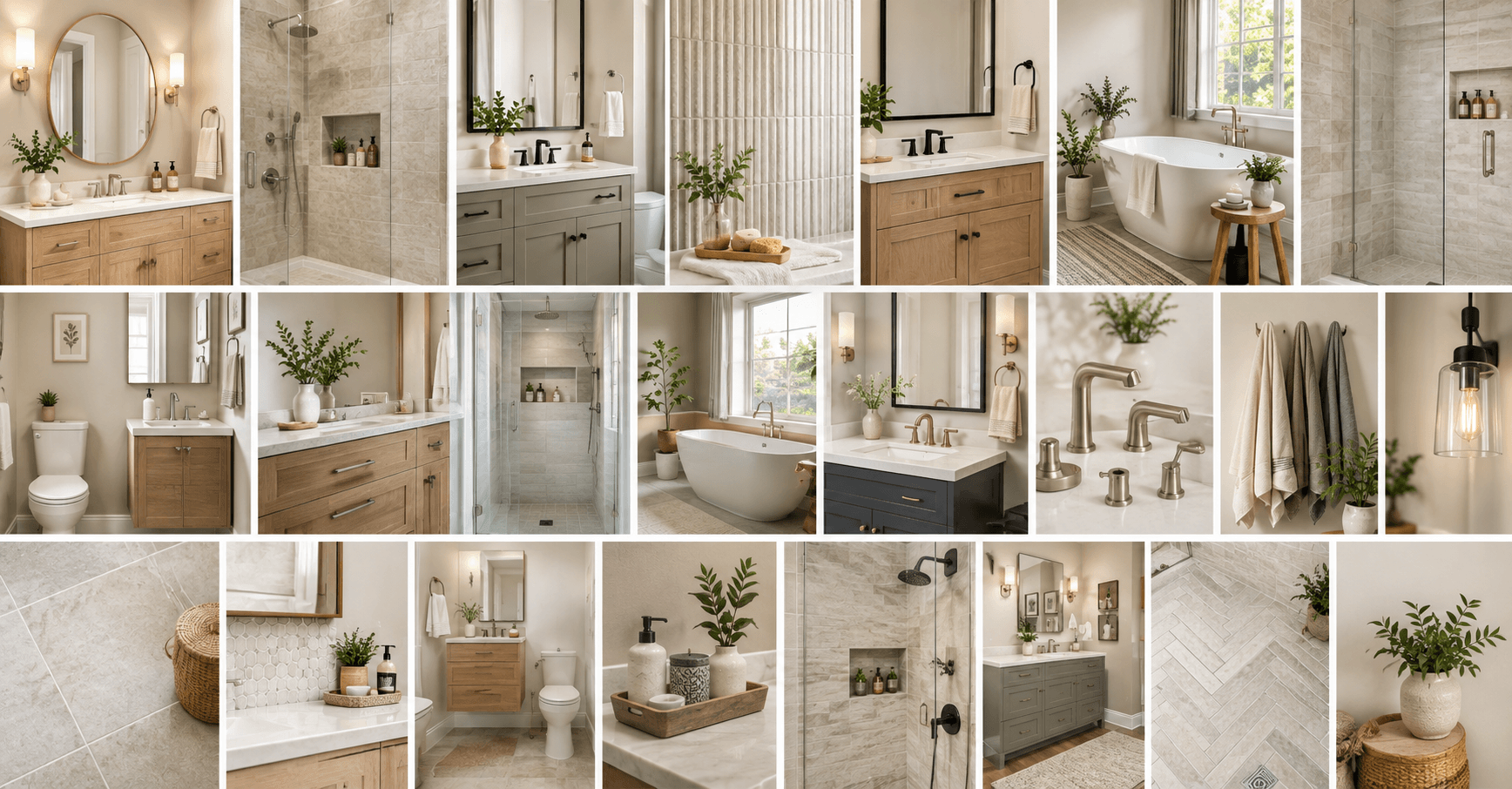
A neutral bathroom uses colors that are soft, understated, and easy to combine. White, cream, beige, taupe, greige, warm gray, soft brown, and muted earthy shades are common choices. Black can also work as an accent when it is balanced with lighter finishes.
The important thing is that a neutral bathroom isn’t defined by one particular color. It’s defined by balance. A room with white walls, gray tile, chrome fixtures, and glossy surfaces can feel cold, while a room using warm white paint, beige stone-look tile, oak, linen textures, and subtle metal accents can feel much more comfortable.
Think of the palette as the background of a painting. You want enough variation to give the eye somewhere to go, but not so much that every surface competes for attention.
1. Warm White With Natural Wood
Warm white is one of the easiest starting points for a neutral bathroom because it keeps the room bright without the stark appearance that some cool whites create. Pair it with a natural wood bathroom vanity, especially oak or a similar light-toned finish, and the room immediately feels warmer.
This combination works particularly well in bathrooms that receive limited natural light. Instead of trying to make the room interesting with several paint colors, use the vanity, mirror frame, woven storage baskets, and towels to introduce texture.
A white quartz or light stone-look countertop can complete the look without making the space feel overly polished.
2. Beige Bathroom With Creamy Tile
Beige has made a strong comeback because today’s versions are much more sophisticated than the yellowish beige associated with older bathrooms. Look for soft beige, sand, mushroom, or creamy taupe rather than a highly saturated tan.
One useful approach is to use slightly different shades of beige on the walls, floor, and shower. The colors remain related, but the differences prevent the room from looking flat.
If you’re working on the shower specifically, you can find additional inspiration in these bathroom tile shower ideas.
3. Greige for a Modern Neutral Bathroom
Can’t decide between gray and beige? Greige gives you a middle ground.
It works especially well with contemporary vanities, white countertops, black fixtures, and natural wood. The trick is choosing the undertone carefully. Some greige colors lean noticeably warm, while others can look gray under certain lighting.
Before committing to paint, test a sample on more than one wall. Morning sunlight, artificial lighting, and the amount of daylight entering through a window can change how the color looks.
4. Add Texture Instead of More Color
Here’s one of the easiest ways to make a neutral bathroom interesting: stop adding colors and start adding textures.
A bathroom could use cream walls, beige tile, and a light vanity and still have plenty of personality if the surfaces are different. Consider a textured shower tile, natural wood, a woven basket, a linen shower curtain, a ribbed glass light fixture, or a subtly patterned bath mat.
Texture gives a neutral room depth without forcing you into a complicated color scheme.
5. Use Black Accents Carefully
Black bathroom hardware can give a neutral space a crisp architectural edge. Matte black faucets, shower hardware, cabinet pulls, and mirror frames can all work, but you don’t need black everywhere.
A common mistake is matching every fixture in black and then adding several other black accessories. The result can become visually heavy.
Instead, choose one or two areas where black creates contrast. A black-framed mirror above a light wood vanity, for example, can be enough to anchor the entire room.
6. Try a Taupe and White Combination
Taupe is particularly useful when you want something warmer than gray but less obvious than beige. Combine taupe walls with white trim, a white countertop, and warm metallic hardware for a relaxed transitional bathroom.
This palette works nicely in both older homes and newer construction because it doesn’t force the room into a highly specific decorating style.
If you’re replacing the vanity area, don’t overlook the wall behind it. A carefully chosen backsplash can become the visual focal point without overwhelming the room. These bathroom vanity backsplash ideas can help with that part of the design.
7. Create a Spa-Like Neutral Shower
A neutral shower should feel calming rather than sterile. Large-format porcelain tile in a soft stone color can give you a clean look with fewer grout lines, while smaller tiles can add pattern and texture.
You can also create contrast by using one tile on the shower walls and another on the floor. Keep their undertones compatible so the combination feels intentional.
For a more natural appearance, consider stone-look porcelain instead of natural stone. You can get the visual character of stone while generally having an easier-care surface.
8. Mix Warm and Cool Finishes
Neutral doesn’t mean every finish has to have the same temperature.
A warm wood vanity can work beautifully with a cooler gray floor. Cream walls can sit comfortably beside brushed nickel. Warm beige tile can even be paired with a restrained black accent.
The key is repetition. If you introduce a warm finish, echo it somewhere else in the room. The same applies to cool or dark accents.
9. Choose the Right Neutral Bathroom Floor
Bathroom flooring needs to look good, but it also has to deal with water, humidity, cleaning, and daily traffic.
Porcelain and ceramic tile remain popular choices for bathrooms because they offer a huge range of colors, patterns, and finishes. For a neutral design, stone-look tile, light concrete-look tile, warm beige tile, and subtle wood-look porcelain are all possibilities.
If your bathroom is small, avoid choosing a floor solely because it looks dramatic in a showroom. A busy pattern can dominate a compact room quickly.
10. Make the Vanity the Focal Point
A neutral bathroom doesn’t need a colorful statement wall. Sometimes the vanity can do all the work.
A natural oak vanity with a simple white countertop creates contrast through material rather than color. Add a distinctive mirror and attractive sconces, and you have a focal point that still feels timeless.
If you’re deciding between tile and other backsplash options around the vanity, this guide to bathroom vanity tile backsplash is another useful reference.
11. Neutral Bathroom Ideas for Small Spaces
Small bathrooms benefit from visual simplicity, but that doesn’t mean everything needs to be white.
A warm off-white wall color, light floor tile, wall-mounted vanity, and large mirror can make a compact bathroom feel more open. A frameless shower enclosure can also reduce visual interruptions when the layout allows it.
Storage matters just as much as color. Keep everyday products organized inside the vanity or recessed shelving rather than covering every available surface.
When floor space is limited, every piece of furniture should earn its place.
12. Use Natural Materials Without Going Rustic
Natural materials can make a neutral bathroom feel more personal, but you don’t have to turn the room into a rustic cabin.
Try pairing a modern vanity with wood grain, a stone-look countertop, woven accessories, and simple ceramic tile. The result can feel contemporary while still having warmth.
This is also where minimalist design principles can work well. If you like the calm combination of natural materials and restrained decoration, Japandi interior design offers useful inspiration beyond the bathroom itself.
13. Pick Bathroom Hardware That Will Age Well
For a bathroom you’re planning to keep for years, hardware deserves more thought than it usually gets.
Brushed nickel is versatile and tends to blend easily with both warm and cool palettes. Matte black provides stronger contrast. Brushed brass or champagne bronze can add warmth and personality without requiring a colorful bathroom.
You don’t necessarily have to match every metal perfectly, either. If you mix finishes, keep the combination deliberate and repeat each finish enough that it looks intentional.
14. Don’t Forget Bathroom Lighting
Even the perfect neutral color can look wrong under poor lighting.
Use layered lighting where possible. A ceiling fixture provides general illumination, while vanity lighting helps with grooming tasks. If the bathroom has natural light, consider how the chosen paint and tile colors change throughout the day.
For the vanity, lighting that reduces harsh shadows around the face is generally more useful than relying on a single overhead fixture.
A beautiful bathroom with bad lighting is like a great photograph taken with the lens cap on. The design is there, but you can’t really see it.
15. Add Personality With Things You Can Change
One reason neutral bathrooms remain popular is flexibility.
You can keep the expensive, difficult-to-replace elements simple and bring personality through items that are easy to change. Towels, artwork, a small stool, a shower curtain, countertop accessories, and plants can all shift the mood without another renovation.
That means you don’t have to predict exactly what your taste will be five years from now. Build a calm foundation and leave room for your personality to move around.
What Is the Best Neutral Color for a Bathroom?
There isn’t one universal best neutral bathroom color. Warm white, creamy beige, greige, taupe, and soft gray are among the most adaptable choices, but the right option depends on the bathroom’s natural light, existing finishes, and size.
For a bathroom with little daylight, a warm white or creamy neutral can prevent the room from feeling gloomy. In a bright bathroom, greige or taupe can provide more depth.
Always test paint and tile samples in the actual room before making the final decision.
How Do You Make a Neutral Bathroom Look Expensive?
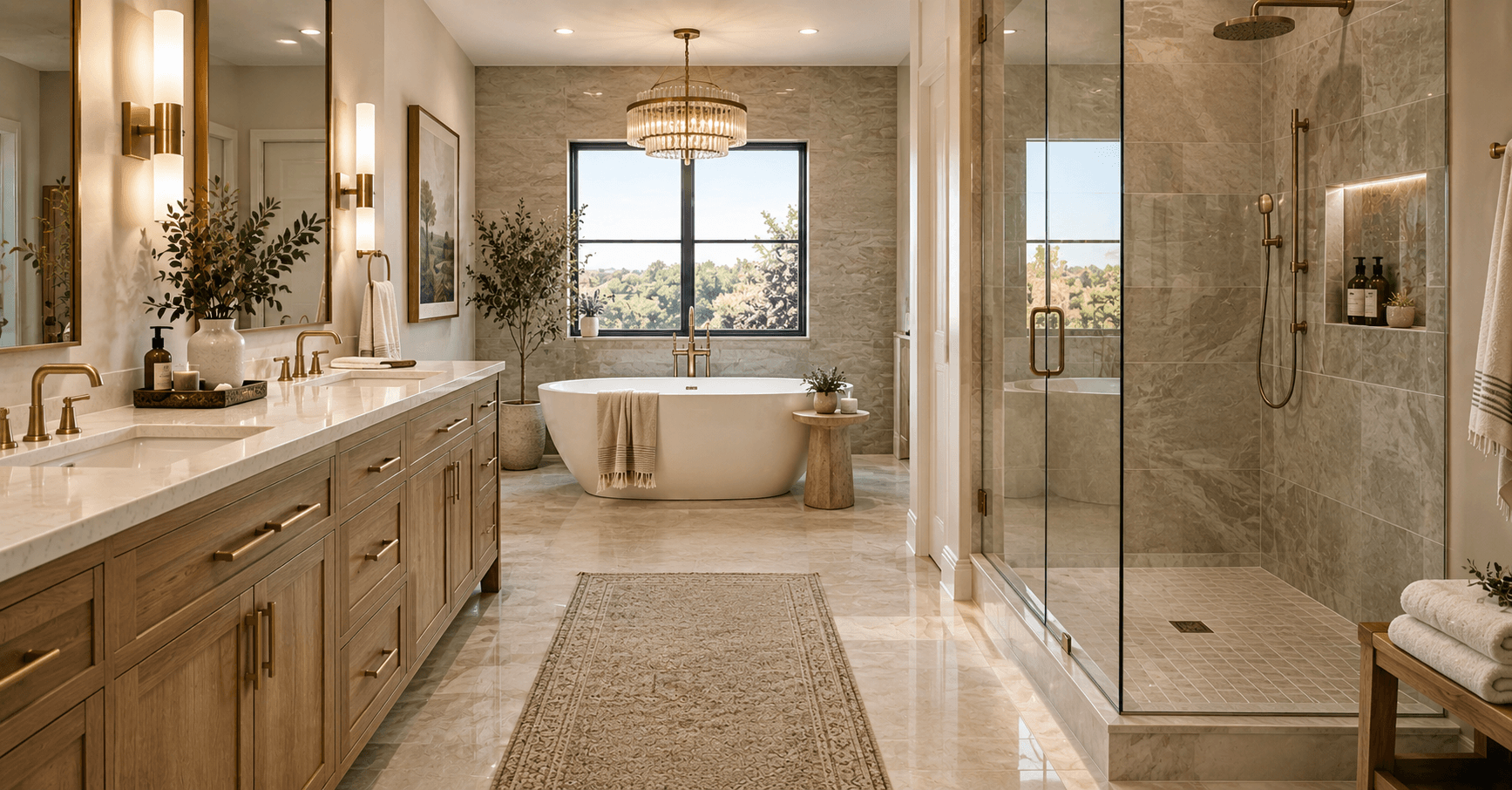
You don’t need luxury materials everywhere. A more convincing high-end appearance usually comes from consistency, proportion, and restraint.
Choose a limited palette, repeat materials thoughtfully, avoid unnecessary visual clutter, and spend more of your budget on elements that you interact with every day, such as the vanity, faucet, lighting, and shower hardware.
Good installation matters too. Crooked tile, uneven grout lines, poorly aligned fixtures, and rushed trim work can make expensive materials look cheap.
How Can You Make a Neutral Bathroom Less Boring?
Add contrast through texture, shape, material, and lighting rather than simply introducing more colors.
A round mirror, fluted vanity, textured tile, wood grain, dark hardware, and soft textiles can give a neutral bathroom plenty of character. You can also use one small pattern, such as a subtle floor tile or shower accent, while keeping the rest of the room quiet.
That approach gives you personality without losing the calm quality that made you choose a neutral palette in the first place.
A Practical Note on Water and Accessibility
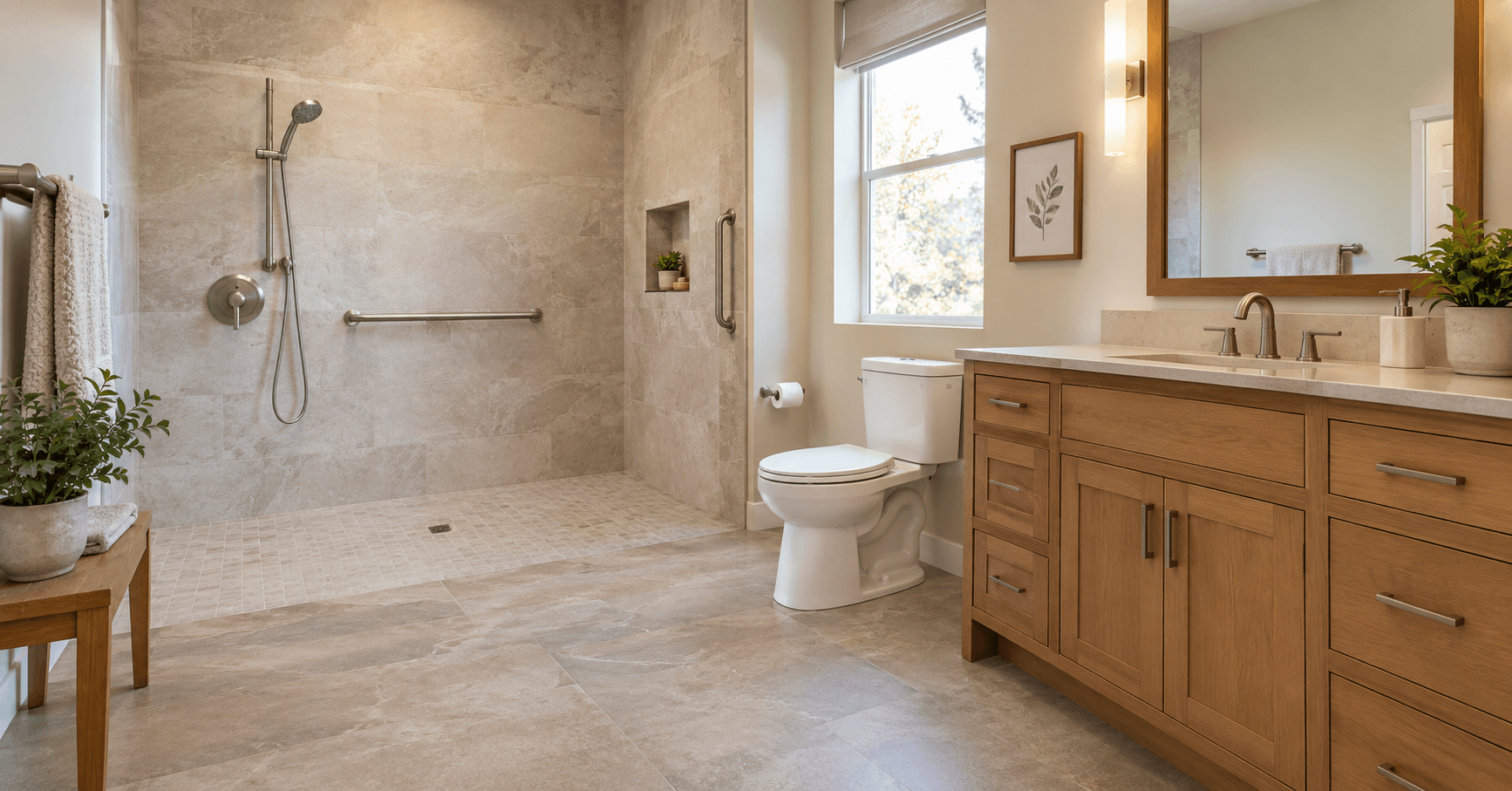
A bathroom remodel is also a chance to think about function, not just appearance. If you’re replacing faucets, showerheads, or toilets, look for water-efficient products and check the EPA’s WaterSense program for guidance on products designed to use water efficiently.
Accessibility can matter too, particularly if you’re planning to stay in the home long term. The U.S. Access Board provides federal accessibility standards and guidance through its ADA resources.
These practical decisions don’t have to interfere with the design. A well-planned bathroom can be attractive, comfortable, and easier to use at the same time.
Conclusion
The best neutral bathroom ideas aren’t about making everything beige, white, or gray. They’re about creating a room where the materials work together, and nothing feels unnecessarily loud.
Start with a simple base color, then build around it with tile, a vanity, countertop, lighting, hardware, and texture. If you’re remodeling a small bathroom, prioritize visual openness and storage. If you have more space, let the shower or vanity become the main feature.
Most importantly, choose finishes you can imagine living with every morning, not just finishes that look impressive in a showroom photograph. A neutral bathroom should feel like a comfortable part of your home, not a staged room that you’re afraid to touch.
FAQs About Neutral Bathroom Ideas
1. Are neutral bathrooms still popular?
Yes. Neutral bathrooms remain appealing because they are flexible and relatively easy to update. You can change accessories, lighting, mirrors, and textiles without replacing the major finishes.
2. What colors go well with a neutral bathroom?
Warm white, cream, beige, taupe, greige, soft gray, natural wood, muted green, and black accents can all work. The best combination depends on the undertones of your tile, countertop, vanity, and lighting.
3. Should bathroom cabinets be lighter or darker than the walls?
Either can work. A darker vanity creates a stronger focal point, while a vanity close to the wall color creates a quieter, more seamless appearance. Natural wood is another easy way to add contrast without introducing a strong paint color.
4. What tile looks best in a neutral bathroom?
Stone-look porcelain, large-format tile, subtle geometric tile, warm beige tile, and soft concrete-look tile are versatile options. Choose based on the overall palette, maintenance needs, room size, and how much visual pattern you want.
5. How do I keep a neutral bathroom from looking cold?
Use warm lighting, natural wood, textured fabrics, warmer paint undertones, and materials with visible variation. You can also introduce small amounts of brass, bronze, or other warm finishes to soften a predominantly white or gray palette.

Samreen Khadim Hussain is a home improvement writer and content creator at Domelite Home. She specializes in making home renovation, interior design, and bathroom safety accessible to everyday US homeowners, turning technical subjects into clear, actionable advice. Her work is rooted in research, real-world practicality, and a genuine belief that a better home is within everyone’s reach.