
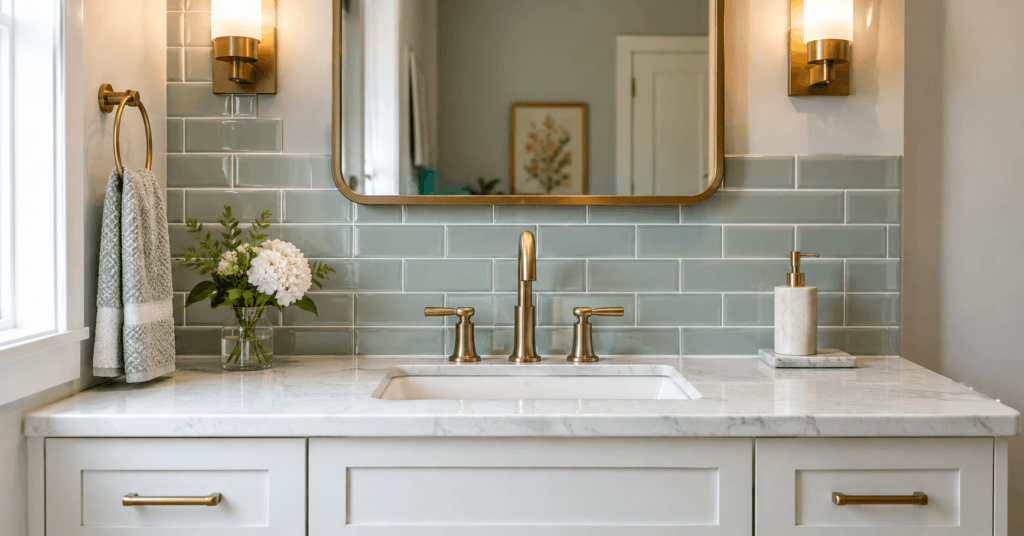
A bathroom vanity tile backsplash is one of those small design details that can completely change the look and function of a bathroom. It protects the wall behind the sink from water splashes, toothpaste, soap, and everyday moisture, but it also gives you a chance to add color, texture, pattern, and personality. Whether you’re remodeling a primary bathroom, updating a guest bath, or giving a small powder room a budget-friendly makeover, the right backsplash can make the vanity feel finished rather than simply installed against a blank wall.
The good news is that you don’t need an enormous remodeling budget to create an impressive result. A simple ceramic subway tile can look timeless, while porcelain, glass, mosaic, or stone can create anything from a clean modern appearance to a more luxurious statement. The trick is choosing the right material, size, height, grout color, and pattern for your specific bathroom.
This guide walks through the most important decisions U.S. homeowners face when choosing a tile backsplash for a bathroom vanity, including popular design ideas, installation considerations, maintenance, and cost. You’ll also find direct answers to common questions people ask before starting a bathroom backsplash project.
What Is a Bathroom Vanity Tile Backsplash?
A bathroom vanity tile backsplash is a section of tile installed on the wall directly behind a bathroom vanity and sink. Its main practical purpose is to protect the wall from water and moisture, while its design purpose is to create a finished transition between the countertop, vanity, mirror, and surrounding bathroom surfaces.
Think of the backsplash as the visual bridge between your vanity and the wall. Without one, a painted wall can sometimes look unfinished or become stained or damaged from repeated splashing. With tile, you create a durable surface that’s generally easier to wipe clean while adding another layer of design to the room.
Backsplashes can be short, extending only several inches above the countertop, or they can extend much higher behind the mirror. Some homeowners even use the same tile from the vanity wall through the shower area to create continuity.
The right choice depends on the style and layout of your bathroom. A traditional vanity might look great with classic white subway tile, while a modern floating vanity could pair beautifully with large-format marble-look porcelain. In a small bathroom, a light-colored backsplash may help the space feel brighter and more open.
Should a Bathroom Vanity Have a Backsplash?
A bathroom vanity does not always need a backsplash, but a backsplash is highly practical when the sink is positioned close to a wall. It helps protect the wall from water, soap, toothpaste, and other moisture-related messes while also giving the vanity area a more finished appearance.
Whether you should install one depends on how the bathroom is used and the look you’re trying to achieve. A heavily used family bathroom usually benefits from additional wall protection, especially around a sink that receives frequent splashes. A powder room that is used occasionally may give you more freedom to choose a painted wall, wallpaper, stone slab, or another decorative finish.
A backsplash can also be valuable when you’re trying to create a cohesive bathroom design. Repeating a color or material from the countertop, shower, floor, or hardware can visually connect separate areas of the room.
That said, don’t assume a backsplash must be a small horizontal strip. A full-height tiled vanity wall can make a much stronger statement. The decision should be based on the proportions of the room, the location of your mirror and lighting, and how much visual attention you want the vanity to receive.
What Is the Best Tile for a Bathroom Vanity Backsplash?
Porcelain and ceramic tile are two of the best overall choices for a bathroom vanity backsplash because they are durable, widely available, easy to clean, and offered in a huge variety of colors and patterns. Glass, natural stone, and mosaic tile can also work well when their maintenance and installation requirements fit your project.
The best tile isn’t necessarily the most expensive tile. A bathroom vanity backsplash doesn’t experience the same conditions as a shower floor, so your decision can focus heavily on appearance, durability, maintenance, and budget.
Before buying anything, consider the existing finishes in your bathroom. If your countertop has a strong marble pattern, for example, a highly patterned backsplash may create too much visual competition. On the other hand, if the vanity and countertop are simple, a decorative tile can become an attractive focal point.
For additional inspiration, take a look at these bathroom vanity backsplash ideas to compare different styles before choosing your material.
Ceramic vs. Porcelain Tile
Ceramic and porcelain tile are both excellent options for bathroom vanity backsplashes, but they have some differences. Porcelain is generally denser and has lower water absorption, making it a particularly durable option for bathrooms and other areas where moisture is present.
Ceramic tile is often available at a broad range of prices and comes in countless shapes, colors, finishes, and decorative designs. It’s also commonly easier to cut, which can make certain installations more approachable for DIY homeowners.
Porcelain is especially useful when you want the appearance of natural stone without using actual stone. Modern porcelain products can imitate marble, limestone, concrete, terrazzo, and other materials remarkably well.
For most vanity backsplashes, either material can perform effectively when properly selected and installed. Your final decision should consider the specific product’s characteristics, appearance, price, and installation requirements rather than choosing based solely on the word “porcelain” or “ceramic.”
Glass, Stone & Mosaic Tile
Glass tile can add brightness and visual depth to a bathroom because it reflects light differently from traditional ceramic or porcelain. It’s particularly attractive in smaller bathrooms where you want the backsplash to feel light and decorative.
Natural stone, including marble and travertine, provides a premium appearance but may require more maintenance. Some stone products are porous and may need sealing or specialized cleaning, so homeowners should understand the manufacturer’s care instructions before installation.
Mosaic tile is another flexible option. Small mosaic pieces can introduce intricate patterns without requiring you to cover the entire bathroom in a complicated design. Hexagons, penny rounds, arabesque shapes, and other decorative mosaics can work beautifully behind a vanity.
The important thing is balance. If your vanity, countertop, and mirror are already visually detailed, a quieter backsplash may create a more sophisticated result.
How High Should a Bathroom Vanity Backsplash Be?
There is no single backsplash height that works for every bathroom vanity. A traditional short backsplash can extend several inches above the countertop, while a taller backsplash can rise behind the faucet and mirror or continue all the way to the ceiling.
The ideal height depends on the overall composition of the vanity wall. A short backsplash creates a clear visual boundary between the countertop and painted wall. This approach works well in traditional and transitional bathrooms.
A taller backsplash can feel more contemporary because it treats the entire vanity wall as a design feature. If you have a large mirror, wall-mounted sconces, or a dramatic tile pattern, extending the tile upward can create a more integrated appearance.
Before deciding, measure the countertop, faucet, mirror, lighting, and available wall area. You don’t want a backsplash ending awkwardly behind a mirror or competing with electrical fixtures.
For homeowners planning a major bathroom renovation, it can be helpful to determine the backsplash height before finalizing the mirror and lighting positions. That way, every element works together instead of forcing one component to fit around another.
Best Bathroom Vanity Tile Backsplash Ideas
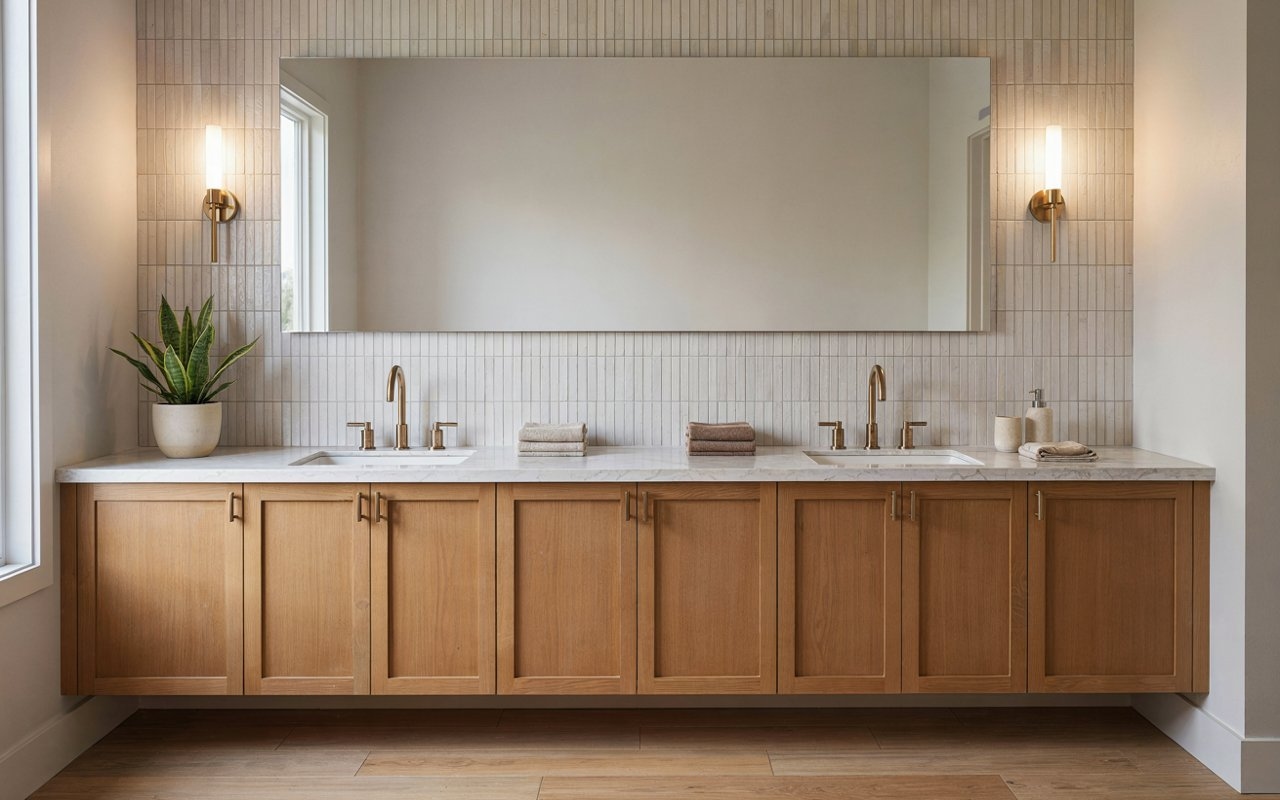
The best backsplash ideas combine practicality with visual consistency. You don’t have to use an elaborate pattern to create a beautiful bathroom. Often, a simple tile installed thoughtfully will look more expensive and timeless than a complicated design chosen simply because it’s trendy.
Consider the size of your bathroom first. A large primary bathroom can handle substantial patterns and larger tile formats, while a compact powder room may benefit from lighter colors and fewer visual interruptions.
Also consider the style of your vanity. Shaker cabinetry works well with traditional and transitional tile patterns, while a sleek floating vanity can support larger modern tiles or minimalist layouts.
If you’re remodeling other parts of the bathroom, look for opportunities to repeat materials. Using a related tile in the shower and behind the vanity can create a connected appearance without making every surface identical.
Subway Tile
Subway tile remains one of the most versatile bathroom backsplash choices. Its rectangular shape works with traditional, farmhouse, transitional, and contemporary bathrooms, which makes it particularly useful if you want a design that won’t quickly feel dated.
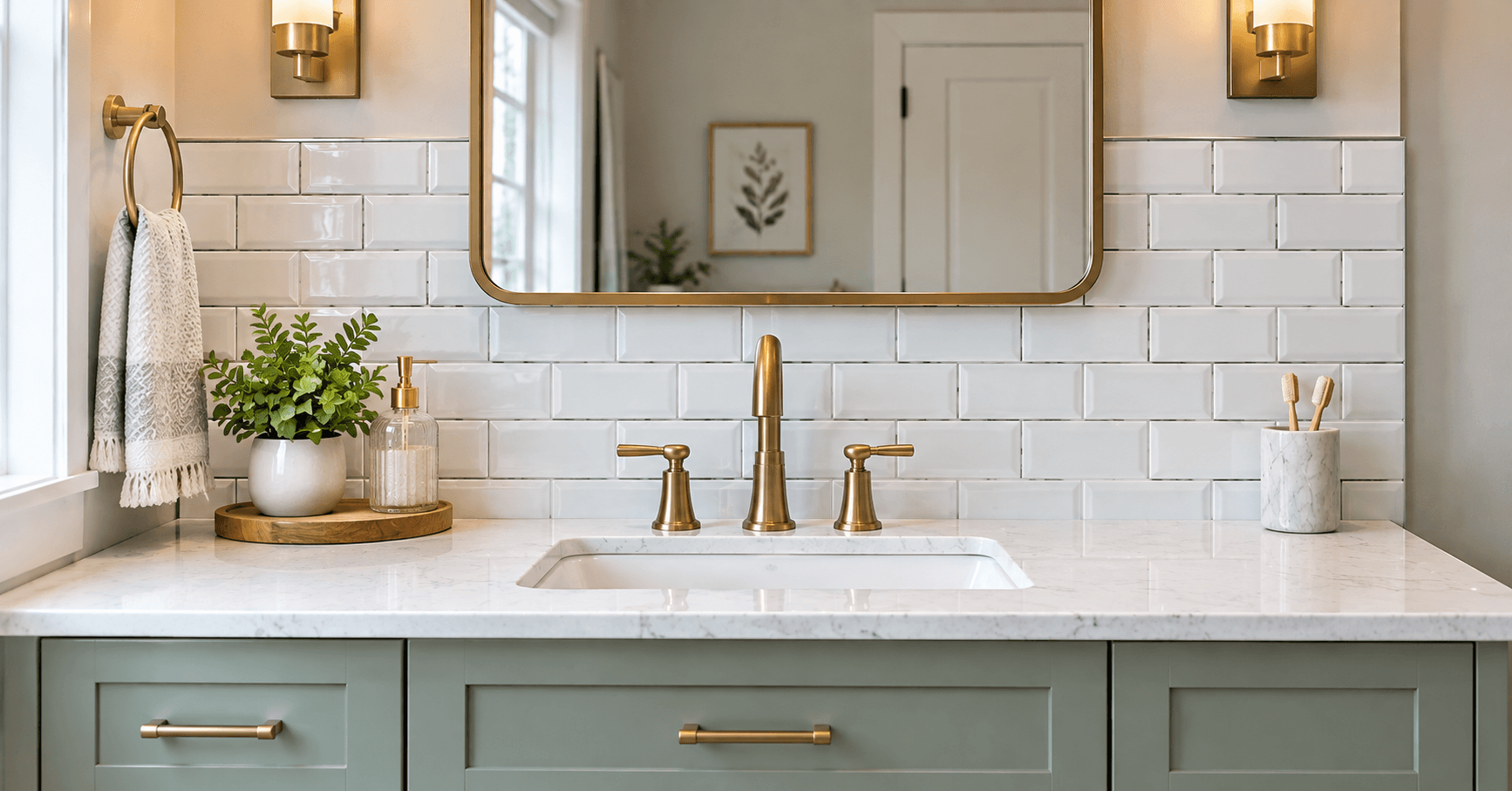
Classic white subway tile with light grout creates a clean and bright appearance. Changing the grout color can dramatically alter the result. Dark grout creates stronger definition around each tile, while a similar grout color makes the installation look more seamless.
You can also change the orientation. A traditional running-bond pattern feels familiar, while vertical installation can make the wall appear taller. A stacked arrangement gives subway tile a more modern character.
Because subway tile is available in so many price ranges, it can also work well for homeowners trying to control renovation costs.
Herringbone
Herringbone tile creates movement and visual interest without requiring an extremely complicated tile design. The characteristic zigzag pattern can make a vanity backsplash feel more decorative while still using relatively simple rectangular tiles.
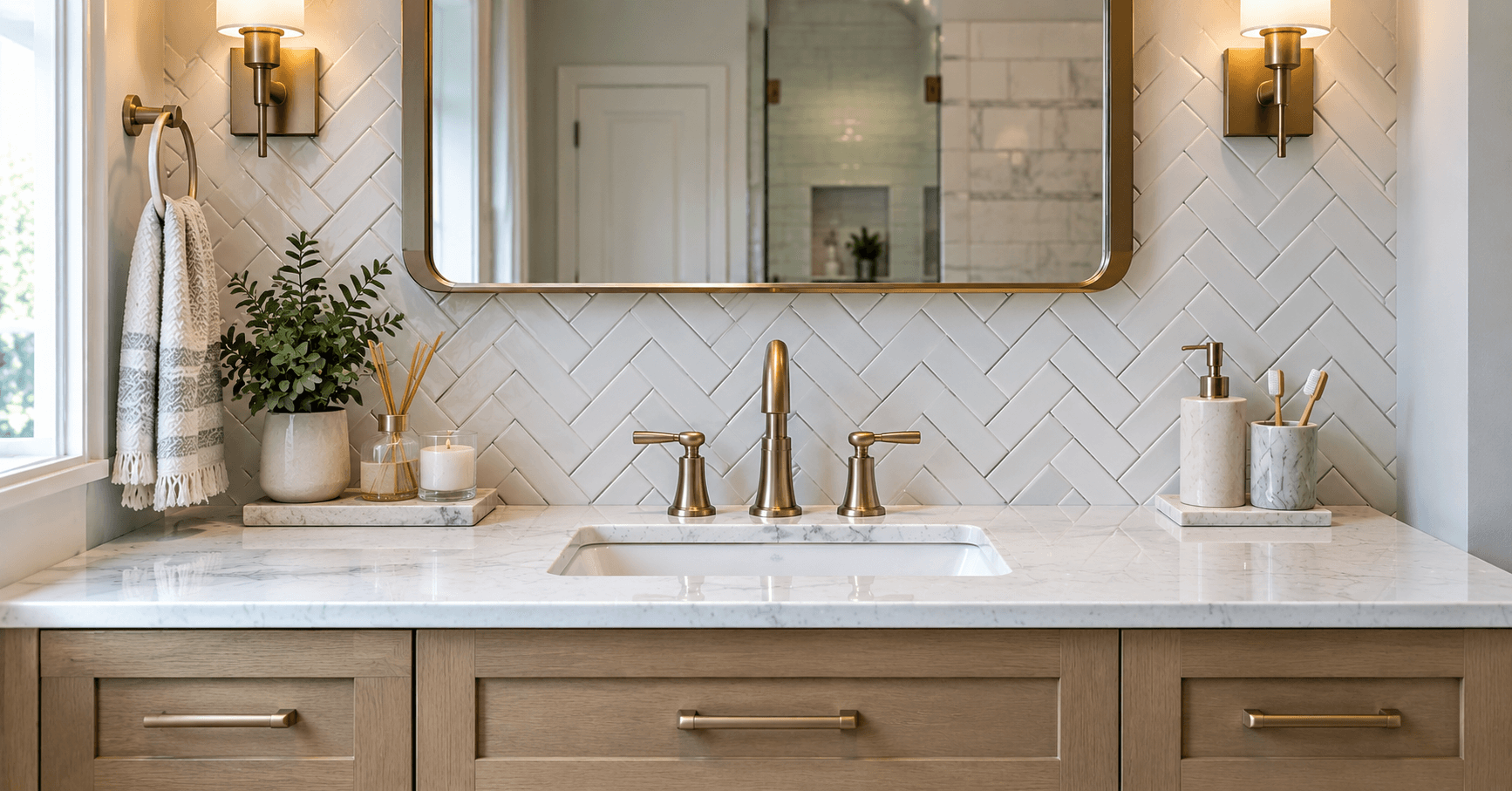
A white herringbone backsplash can provide subtle texture, while a contrasting grout color can make the pattern much more prominent. Herringbone can also be created using marble-look porcelain or colored ceramic tile for a more distinctive result.
However, this pattern generally requires more planning and cutting than a basic straight installation. That can increase labor time, especially around outlets, corners, mirrors, and backsplash edges.
If you’re hiring a professional, ask to see examples of previous patterned tile installations. Alignment becomes much more noticeable with a herringbone layout, so precision matters.
Stack Bond
Stack bond tile uses aligned horizontal and vertical grout lines to create a clean, structured appearance. It’s especially popular in contemporary bathrooms because the pattern feels orderly and architectural.
A vertical stack can emphasize the height of the vanity wall, while a horizontal stack can visually reinforce the width of a long countertop. The simplicity of the pattern allows you to experiment with color, texture, or tile size without overwhelming the room.
Stack bond also works particularly well with elongated rectangular tiles. Pairing a soft neutral tile with minimal grout contrast can create an understated modern look.
If your goal is a backsplash that feels current but not overly decorative, stack bond is one of the simplest patterns to consider.
What Backsplash Looks Best With a White Vanity?
A white vanity works beautifully with white, gray, beige, blue, green, marble-look, and many other backsplash colors. The best option depends on whether you want the bathroom to feel bright and seamless, warm and organic, or bold and dramatic.
A white-on-white backsplash creates a clean appearance and can make a small bathroom feel more open. Soft gray provides gentle contrast without overpowering the vanity, while warmer beige or cream can prevent the room from feeling too cold.
If you want more personality, consider muted blue or green. These colors can create a calm, spa-like atmosphere while still working naturally with white cabinetry.
Dark tile can also look excellent with a white vanity. Charcoal, deep green, navy, or black can turn the vanity wall into a focal point. The key is balancing the darker backsplash with appropriate lighting and lighter elements elsewhere in the room.
Always look at tile samples next to your actual vanity and countertop. Different shades of white can have warm, cool, gray, yellow, or pink undertones, and those differences can become surprisingly obvious once everything is installed.
How to Match Backsplash Tile With Your Vanity
Matching backsplash tile to a vanity is easier when you stop trying to make every element identical. Instead, look for shared colors, undertones, textures, or materials that create a visual relationship.
Start with the vanity and countertop because they’re usually larger permanent elements. If your cabinet is a warm wood tone, a cream, beige, or warm gray backsplash may work better than an icy white. If the vanity is bright white, you have more freedom to introduce color.
Next, consider the countertop. A heavily veined countertop often looks best with a relatively quiet backsplash. A simple solid countertop gives you more room to experiment with patterns.
Hardware should also influence your choice. Brushed brass can reinforce warm backsplash tones, while matte black can provide crisp contrast. Chrome works with a wide range of cool and neutral finishes.
The goal isn’t perfect matching. It’s creating a bathroom where each component looks like part of the same design conversation.
Best Grout Colors
Grout color can change the appearance of your entire backsplash. A grout color close to the tile creates a softer, more continuous surface, while contrasting grout emphasizes individual tile shapes and patterns.
White tile with white grout feels classic and understated. Light gray grout offers a little more definition while often being more forgiving visually than bright white. Dark grout creates a graphic effect that can make rectangular or geometric tile stand out.
Think about maintenance as well. Bathroom grout is exposed to moisture, cleaning products, and everyday residue. The best color depends partly on how much cleaning you’re willing to do and the specific grout product you select.
Don’t choose grout from a tiny sample alone. If possible, look at a larger tile-and-grout sample because the relationship between the two colors can look completely different once repeated across a wall.
Can You Put Tile Behind a Bathroom Mirror?
Yes, you can put tile behind a bathroom mirror, and doing so can create a polished, built-in appearance. A tiled wall can provide a decorative background for the mirror while protecting the wall around the vanity from moisture and everyday wear.
Planning is especially important when tile will continue behind a large mirror. Determine the mirror’s exact dimensions and location before installing the backsplash. You should also account for electrical outlets, wall sconces, medicine cabinets, and other fixtures.
A full-height tile wall behind a mirror can look particularly striking in a modern bathroom. Large-format porcelain or marble-look tile can create a seamless backdrop, while smaller decorative tile can provide more texture.
However, don’t choose an overly busy pattern without considering how much of it will actually remain visible around the mirror. Sometimes a subtle texture looks more sophisticated because it doesn’t compete with the reflection.
Best Backsplash Tile for Small Bathrooms
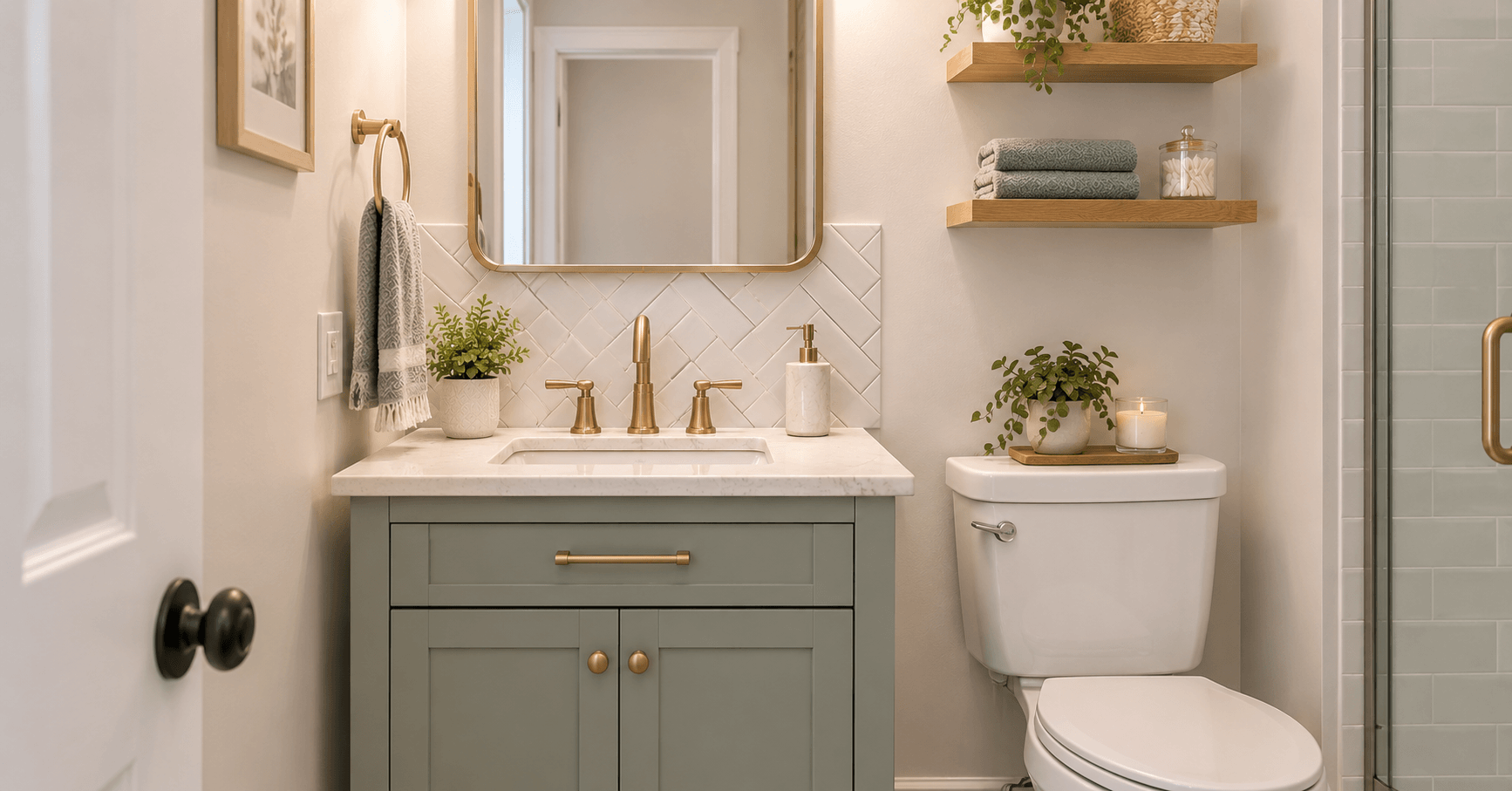
Light-colored ceramic or porcelain tile is often an excellent choice for a small bathroom because it can keep the vanity area visually bright and uncluttered. Larger tiles can also reduce the number of grout lines, while reflective finishes may help distribute available light.
That doesn’t mean small bathrooms have to avoid pattern. A compact vanity wall can actually be a great place for an accent tile because you need less material to create a noticeable effect.
Consider a soft white, warm beige, pale gray, muted blue, or light green palette. If your bathroom receives little natural light, test your samples under the actual artificial lighting before making a final decision.
You can also create continuity by carrying a related tile from the shower to the vanity wall. This approach makes separate areas feel connected and can prevent a small bathroom from looking visually chopped up.
For more inspiration, explore these bathroom tile shower ideas if you’re coordinating your vanity backsplash with a shower renovation.
How to Install a Bathroom Vanity Tile Backsplash
Installing a bathroom vanity tile backsplash begins with proper wall preparation. The wall should be clean, sound, appropriately flat, and ready for the specific installation system recommended for your tile. If the existing wall has moisture damage, loose paint, cracks, or other problems, those issues should be addressed before the tile installation begins.
The general process involves measuring the wall, planning the tile layout, preparing the surface, applying the appropriate tile-setting material, placing the tile, allowing it to cure, grouting the joints, and finishing the edges and corners appropriately. Following the tile manufacturer’s installation instructions is important because different tile materials and installation systems can have different requirements.
Layout is one of the most important steps. Don’t simply begin at one end and hope everything lines up. Dry-fit your design first so you can determine where cuts will occur and avoid awkward narrow pieces at highly visible edges. This is especially important with herringbone, mosaic, and other patterned backsplash designs, where even small alignment problems can become obvious.
DIY installation can make sense for a small, straightforward backsplash if you have the necessary tools and experience. However, complicated patterns, large-format tile, uneven walls, natural stone, or extensive electrical and plumbing obstacles can justify hiring a professional. For industry-standard tile installation methods and technical guidance, homeowners and contractors can also refer to the Tile Council of North America (TCNA).
If you’re uncertain about the condition of the wall or the appropriate installation method, getting advice from a qualified tile professional before starting can prevent costly mistakes. Taking extra time during preparation and layout is usually far less expensive than having to remove and reinstall poorly placed tile later.
How Much Does a Bathroom Vanity Tile Backsplash Cost?
The cost of a bathroom vanity tile backsplash varies according to tile material, backsplash size, labor, installation complexity, wall preparation, and local contractor rates. A small backsplash using affordable ceramic tile can be relatively inexpensive, while premium porcelain, natural stone, intricate patterns, and extensive preparation can significantly increase the total project price.
Tile itself is only one part of the budget. You may also need to account for grout, setting materials, trim or edging, tools, demolition, surface preparation, delivery, and professional installation.
Labor can vary considerably across the United States. A straightforward backsplash with large rectangular tiles may take substantially less time than a detailed herringbone or mosaic installation requiring numerous cuts.
The smartest approach is to establish your total project budget before selecting materials. If the bathroom is undergoing a larger renovation, look for opportunities to save on less visible components while investing more heavily in the features you want to highlight.
These home renovation tips and money-saving tricks can help when you’re trying to balance design upgrades with a realistic remodeling budget.
How to Clean and Maintain Vanity Backsplash Tile
Smooth porcelain and glazed ceramic are generally among the easiest bathroom backsplash materials to maintain. Their surfaces can usually be wiped regularly with a cleaner appropriate for the tile, while keeping grout clean helps preserve the overall appearance of the installation.
Don’t wait for toothpaste, soap, and water spots to build up. A quick wipe can be much easier than trying to remove dried residue later. Regular bathroom ventilation also matters because reducing excess humidity can help keep the surrounding environment healthier.
Natural stone requires more care. Some stones are porous and can be sensitive to acidic or abrasive cleaning products. Always follow the care recommendations for the specific stone rather than using a generic bathroom cleaner.
Grout deserves attention as well. If you notice discoloration, buildup, cracking, or deterioration, investigate the cause rather than simply covering the problem with more cleaning.
For broader information about moisture management and mold prevention in homes, homeowners can consult the U.S. Environmental Protection Agency’s mold and moisture resources.
Common Mistakes to Avoid
One of the biggest mistakes is choosing backsplash tile before considering the vanity and countertop. The backsplash should support the major elements of the room, not force them into a design that doesn’t work.
Another common problem is choosing a tile pattern without considering the wall’s scale. A tiny mosaic can become visually overwhelming on a large vanity, while an oversized tile can require awkward cuts on a narrow wall.
Ignoring grout color is another mistake. Grout takes up a lot of visual space, especially with small tiles, so its color can completely change the finished look.
Poor layout planning can also undermine an otherwise excellent material. Before installation, consider where the tile will begin and end, how it meets corners, how it interacts with the mirror, and where cuts will be visible.
Finally, don’t assume that tile automatically solves every moisture problem. Proper wall preparation, installation, sealing where applicable, and bathroom ventilation remain important. If the underlying wall already has moisture damage, address that issue before installing a new backsplash.
Bathroom Vanity Tile Backsplash FAQs
Is a backsplash necessary behind a bathroom vanity?
No, a backsplash isn’t mandatory in every bathroom, but it provides useful protection against water and everyday splashes. It’s particularly beneficial for frequently used bathroom vanities where the wall behind the sink receives regular moisture.
What is the best tile size for a bathroom vanity backsplash?
There isn’t one universally best size. Larger tiles can create a cleaner appearance with fewer grout lines, while smaller tiles and mosaics provide more pattern and detail. The ideal size depends on the vanity’s dimensions, wall space, design style, and desired visual effect.
Should backsplash tile match the shower tile?
It doesn’t have to match exactly. Using complementary or related tile can create continuity, especially in a small bathroom. You can repeat the same color or material while changing the tile size or installation pattern to keep the design interesting.
Is porcelain or ceramic better for a bathroom backsplash?
Both can be excellent choices. Porcelain is denser and generally has lower water absorption, while ceramic offers extensive design choices and can be economical. For a typical vanity backsplash, choose based on the specific product, appearance, durability, installation requirements, and budget.
Can bathroom backsplash tile go behind a mirror?
Yes. Installing tile behind a mirror can create a cohesive vanity wall and an attractive finished appearance. The mirror, electrical fixtures, lighting, and tile layout should be planned together before installation.
Conclusion
A bathroom vanity tile backsplash can be one of the most effective upgrades you make during a bathroom remodel. It protects the wall from everyday water exposure while giving you an opportunity to introduce color, texture, pattern, and architectural interest.
For most homeowners, ceramic and porcelain are practical starting points because they combine durability, design flexibility, and relatively straightforward maintenance. Glass, stone, and mosaic tile can create more distinctive results when their additional installation or maintenance requirements fit your project.
The most important thing is to consider the entire vanity wall as one composition. Think about the vanity, countertop, backsplash, mirror, lighting, faucet, hardware, grout, and wall color together rather than making each decision separately.
If you’re working with a smaller bathroom, light colors and carefully selected tile sizes can help maintain an open feeling. If you have a larger primary bathroom, a full-height backsplash or dramatic patterned tile can transform the vanity into a genuine focal point.
Take your time with samples, layout, and measurements before ordering materials. A backsplash may occupy a relatively small area, but because it sits at eye level, thoughtful planning can make the difference between a bathroom that simply looks renovated and one that feels intentionally designed.

Samreen Khadim Hussain is a home improvement writer and content creator at Domelite Home. She specializes in making home renovation, interior design, and bathroom safety accessible to everyday US homeowners, turning technical subjects into clear, actionable advice. Her work is rooted in research, real-world practicality, and a genuine belief that a better home is within everyone’s reach.