
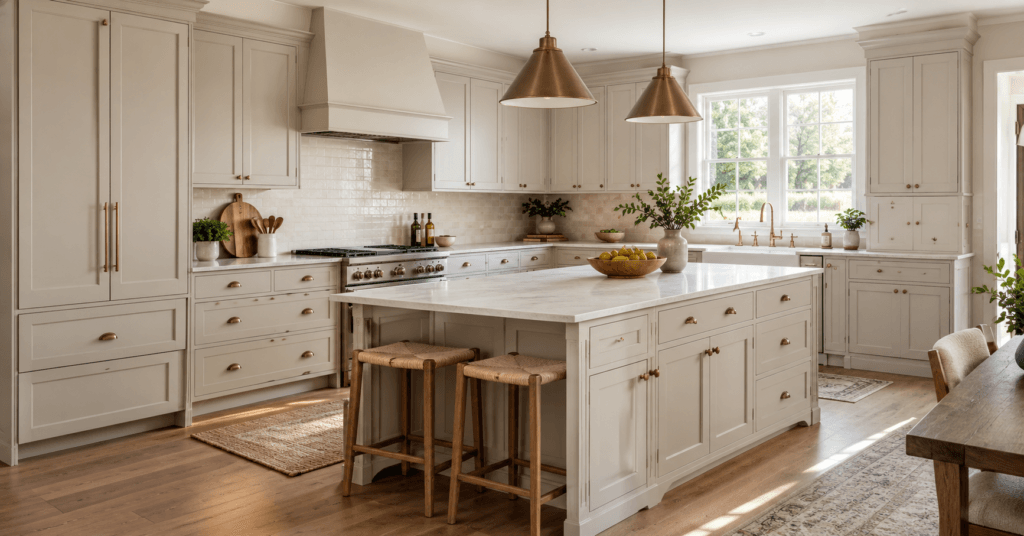
Quick Answer: Painted wooden cupboards are a practical choice when you want the durability and character of wood with a finish that can be customized to your home’s style. They work well in kitchens, bedrooms, bathrooms, mudrooms, laundry rooms, and built-in storage, provided the underlying material is sound and the paint system is suited to the room.
If you’re repainting existing cupboards, the finish depends heavily on what happens before painting. Remove the doors and hardware, clean away grease and residue, repair dents or damaged areas, prepare the old surface, apply the right primer, and then use a durable cabinet coating in thin, even coats. Satin and semi-gloss finishes are common choices because they offer a useful balance between appearance and everyday cleanability.
For US homeowners, repainting makes the most sense when the cabinet boxes, doors, and layout are still in good condition. If panels are swollen, veneer is failing, or the cabinet structure is damaged by moisture, replacement may be the better option.
What Are Painted Wooden Cupboards?
Painted wooden cupboards are storage cabinets made from solid wood, plywood, or a combination of wood and engineered materials that have been covered with an opaque paint finish. Common cabinet woods include maple, poplar, birch, oak, and pine, and each has different surface characteristics that can affect the final appearance.
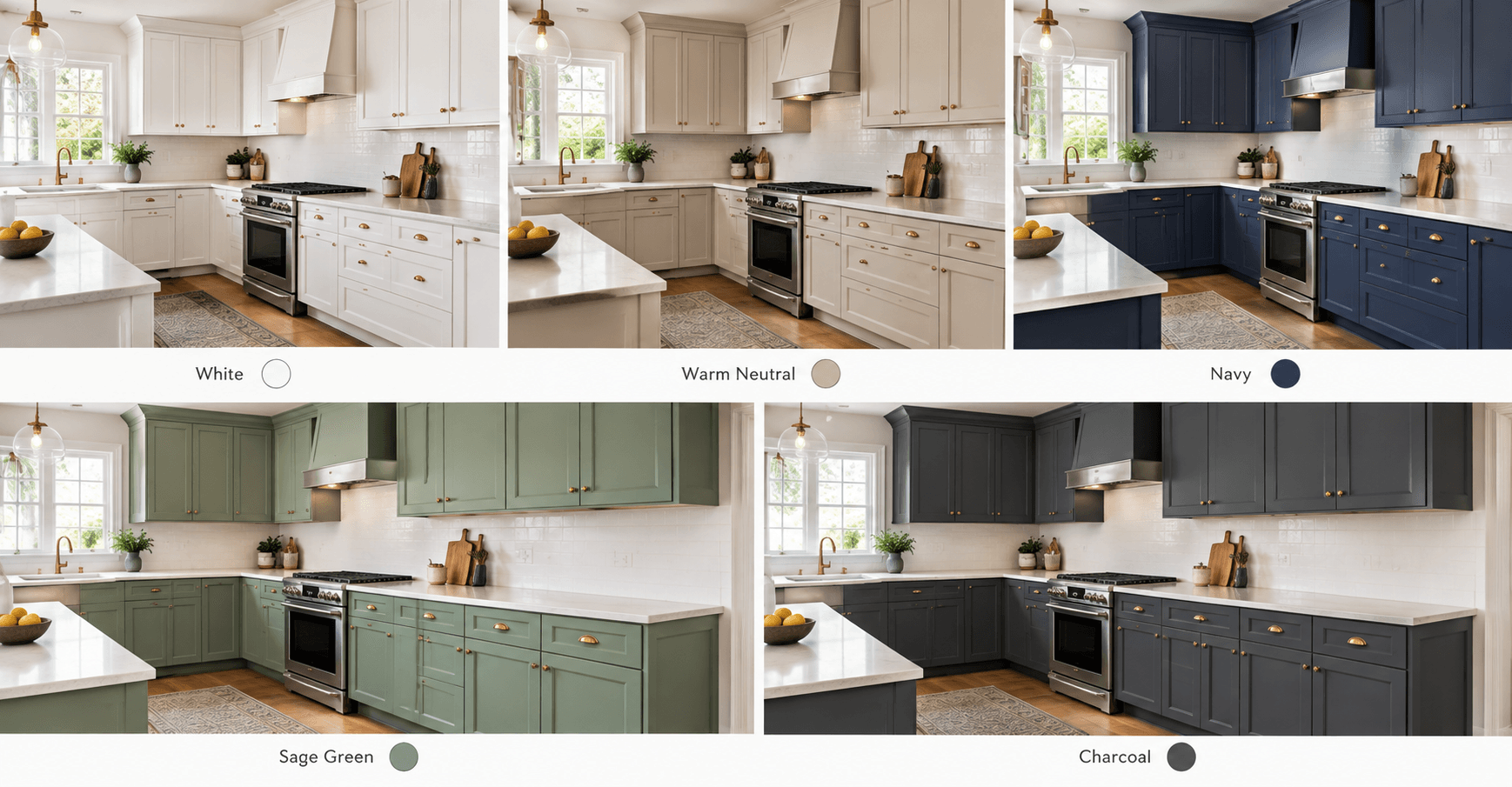
Paint gives homeowners considerably more design freedom than a natural or stained finish. Instead of working around the existing wood color, you can choose warm white, cream, gray, navy, sage green, charcoal, or another shade that fits the room.
There is also an important practical distinction between the wood underneath and the coating on top. Wood responds to moisture and environmental conditions, while the paint has to cope with handling, cleaning, impacts, and temperature changes. The USDA Forest Service’s Wood Handbook provides detailed technical information about wood as a material, including properties that help explain why wood products can respond differently to their surroundings.
That is why painting a cupboard isn’t simply a matter of applying a new color. The substrate, existing finish, preparation, primer, coating, and environment all influence the result.
Why Choose Painted Wooden Cupboards?
The biggest advantage is design flexibility. Natural wood has a built-in color and grain pattern, whereas paint allows you to change the visual character of the cabinetry without changing its basic construction.
This can be particularly useful when an older kitchen or storage area still functions well but looks dated. If the cabinet layout works for your household, repainting can update the appearance without the demolition involved in replacing an entire cabinet system.
Paint also makes it easier to coordinate cupboards with countertops, backsplashes, flooring, walls, appliances, trim, and hardware. A warm neutral can soften a traditional room, while a darker shade can turn otherwise ordinary cabinetry into a focal point.
For homeowners considering a kitchen refresh, these painted kitchen cabinet ideas can provide additional design inspiration.
Which Wood Is Best for Painted Cupboards?
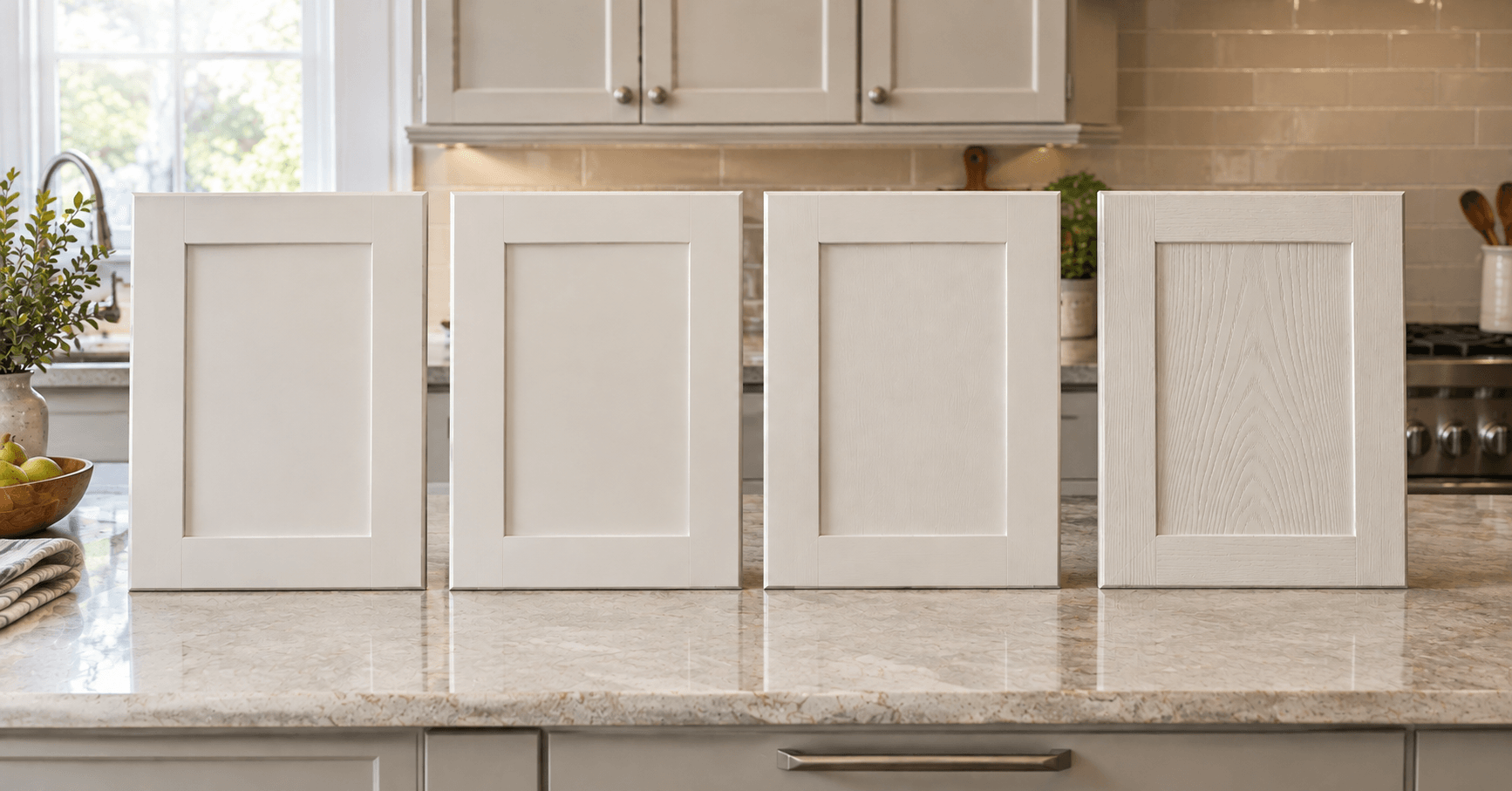
Maple, Poplar, and Birch
Maple, poplar, and birch can all work well for painted cabinetry when the surfaces are properly prepared. Their relatively fine textures can make it easier to achieve a clean painted appearance than with heavily open-grained woods.
Poplar is widely used for painted cabinet components, while maple and birch can provide a smooth-looking foundation when correctly sanded and primed.
The species, however, isn’t the only factor. Previous coatings, repairs, moisture exposure, dents, and the condition of the wood can have a bigger effect on the finished result than the wood name itself.
Can Oak Cupboards Be Painted?
Yes. Oak cupboards can be painted successfully, but their open grain deserves extra attention.
Paint can cover much of oak’s natural color, but it doesn’t automatically eliminate the physical texture of the grain. If you want an exceptionally smooth, almost factory-like surface, grain filling or additional surfacing work may be necessary before primer and paint.
That’s an important expectation to set before starting. A painted oak cupboard can look excellent without being completely texture-free.
What Paint Should You Use on Wooden Cupboards?
Choose a durable cabinet, trim, or furniture coating intended for surfaces that receive regular handling and cleaning. Wall paint isn’t automatically the best choice simply because it is available in the color you want.
Cabinet doors are touched constantly. Kitchen cupboards also encounter grease, food residue, steam, moisture, and repeated cleaning. The coating therefore needs to be appropriate for those conditions.
Acrylic and acrylic-alkyd formulations are among the types commonly used for interior cabinetry, but the product’s application instructions matter more than the label alone. Check whether the coating is intended for wood or previously finished cabinetry and follow its preparation, recoat, and curing requirements.
What Sheen Is Best?
Satin and semi-gloss are practical choices for many cupboards. Satin has a softer appearance and can hide minor surface imperfections better, while semi-gloss provides greater reflectivity and is often convenient for surfaces that need regular wiping.
Very glossy finishes can make dents and sanding imperfections more obvious. Very flat finishes may be less practical for cabinetry that receives frequent cleaning.
How to Paint Wooden Cupboards
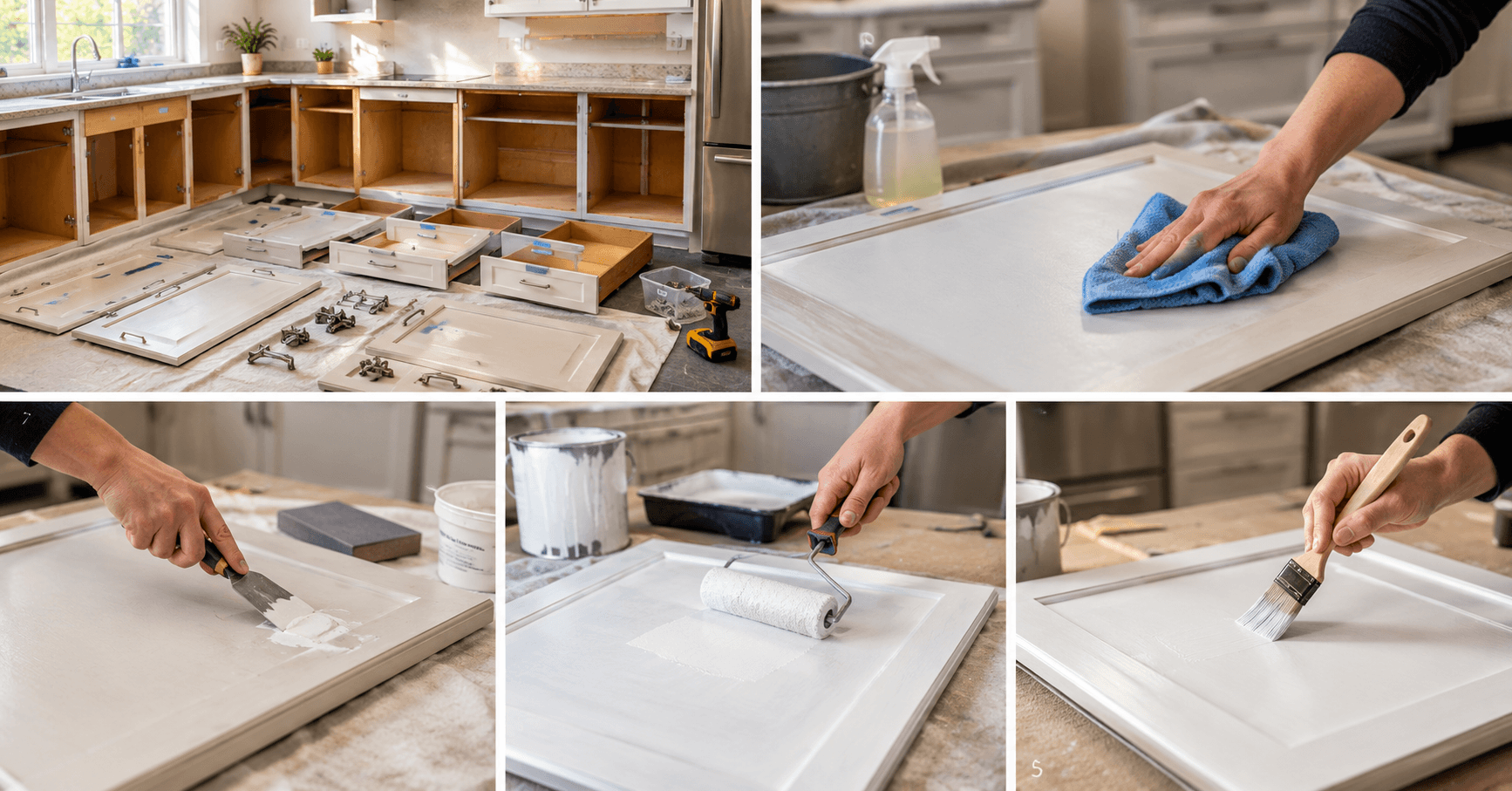
1. Remove Doors, Drawers, and Hardware
Take off doors and drawers where practical, then remove handles and hinges if they need to be painted or replaced. Label components so everything goes back to its original location.
This small organizational step can save considerable frustration later.
2. Clean and Degrease
Cleaning is one of the most important preparation steps. Kitchen cabinets can accumulate grease that isn’t obvious until paint begins failing over it.
Use a suitable degreasing cleaner, rinse or wipe according to its instructions, and allow the surface to dry completely before continuing.
3. Repair and Prepare the Surface
Fill dents, cracks, unwanted screw holes, and other imperfections. Sand as needed to smooth repairs, remove loose material, and reduce the gloss of a sound existing finish.
You generally don’t need to strip every layer of a stable old coating. The objective is to create a clean, sound, properly prepared surface that the primer can adhere to.
4. Prime the Cupboards
Primer is particularly useful over bare wood, stained surfaces, difficult existing finishes, and woods that can cause discoloration.
If you’re dealing with tannin bleed or an old stained finish, use a primer appropriate for blocking those problems. Allow it to dry as specified, then smooth the surface if required and remove sanding dust.
5. Apply Thin Finish Coats
Apply cabinet paint in controlled, even coats. Trying to achieve complete coverage with one thick coat can lead to runs, poor leveling, and longer drying.
Follow the product’s recoat instructions rather than painting again simply because the surface feels dry. Dry to the touch does not necessarily mean fully cured.
Brush, Roller, or Sprayer: Which Is Better?
Sprayer
A paint sprayer can produce an exceptionally smooth finish and is useful when a project includes many doors and drawer fronts. It distributes the coating evenly and minimizes traditional brush marks.
The downside is preparation. Spraying requires careful masking, appropriate ventilation, equipment setup, and practice.
Brush and Fine-Finish Roller
A quality brush provides good control around raised panels, profiles, corners, and detailed areas. A fine-finish roller can cover broad, flat sections efficiently while reducing obvious brush marks.
For a DIY project, the best tool isn’t necessarily the most expensive one. Good preparation and controlled application matter more than equipment alone.
How Much Does It Cost to Paint Wooden Cupboards?
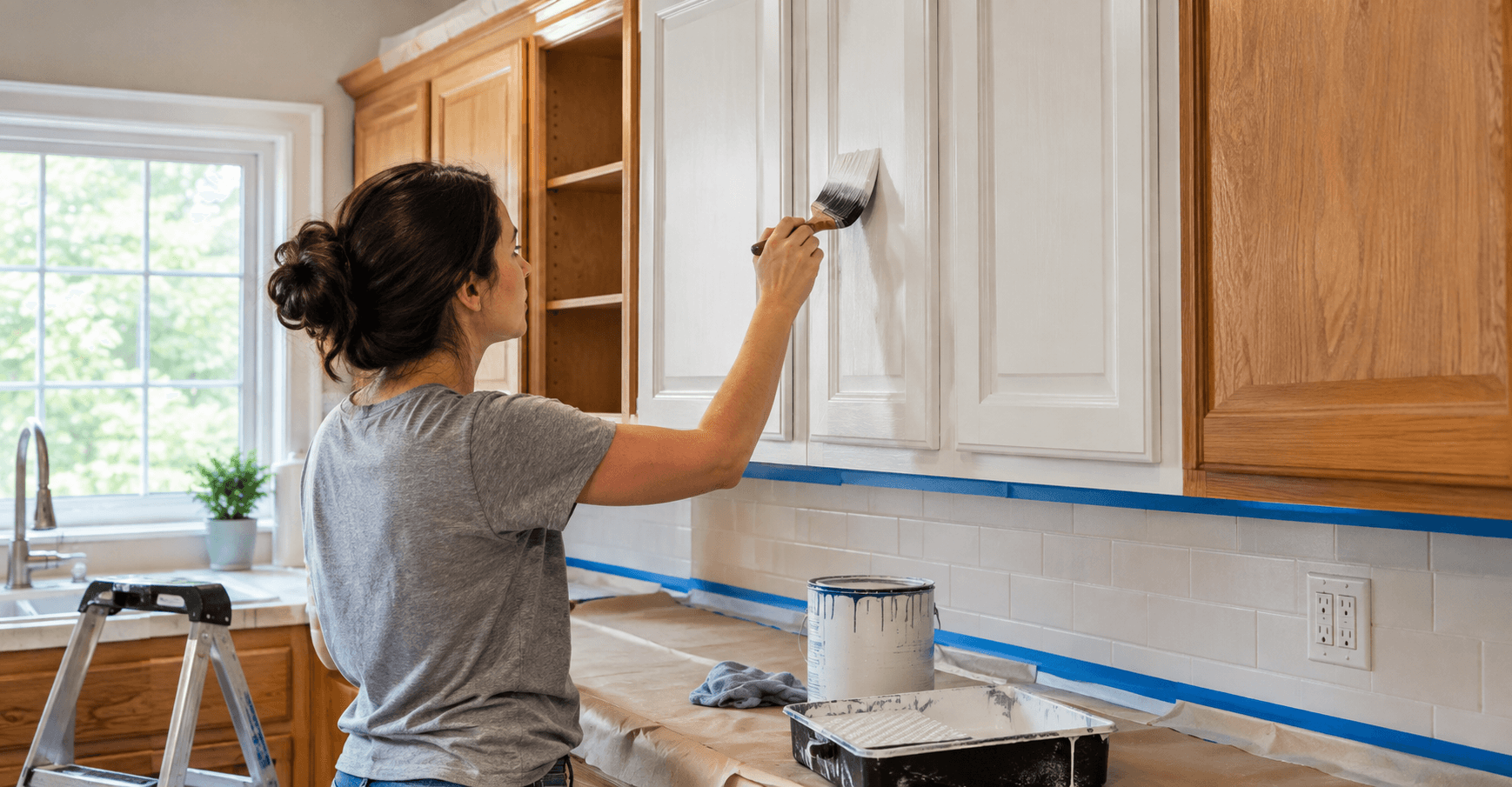
The cost of painting cupboards in the US varies according to cabinet size, number of doors, labor rates, preparation requirements, repairs, coating quality, and application method.
DIY work can reduce the labor portion considerably, particularly when the cupboards are in good condition. Professional refinishing costs more but may make sense for large kitchens, extensive preparation, or sprayed finishes.
A more useful question than simply asking about painting cost is: Does repainting make financial sense compared with replacement?
If the cabinet boxes are strong, doors are serviceable, and the layout works, painting can deliver a major visual change without replacing the entire cabinet system.
You can also compare the project with these home renovation money-saving tips.
Painted Cupboards vs. Stained Wood Cupboards
Paint and stain solve different design problems. Stain keeps the natural character of the wood visible, while paint creates a more consistent surface and gives you much greater freedom with color.
| Feature | Painted wood | Stained wood |
| Color choices | Very broad | More dependent on wood species |
| Grain visibility | Reduced or hidden | Emphasized |
| Style | Traditional, transitional, modern | Natural, rustic, traditional |
| Surface preparation | Important | Important |
| Design flexibility | High | Closely tied to existing wood |
If you love the grain of oak, stain may be the better choice. If you want cream, blue, green, gray, or another strong color, paint gives you considerably more control.
Best Painted Cupboard Colors for US Homes
White and Warm Neutrals
White remains a reliable cabinet color because it works with a wide range of countertops and wall colors. Warm whites and creamy neutrals can feel less stark and work particularly well with warmer flooring and natural materials.
Navy, Sage, and Charcoal
Navy blue creates contrast without requiring an extremely bright color. Sage green adds personality while remaining relatively restrained, and charcoal can create a modern, architectural feel.
Don’t choose a cupboard color based only on an online image or small paint chip. Test a sample in the actual room. Morning daylight, evening lighting, countertops, flooring, and wall colors can all change the way the shade looks.
How to Make Painted Wooden Cupboards Last
A durable cupboard finish begins with proper preparation, but everyday conditions also determine how long it stays attractive.
Use cleaning methods appropriate for the coating rather than aggressively scrubbing every mark. Keep standing water off painted wood and pay particular attention to cabinet edges, joints, sink areas, and locations where water can collect.
The University of Minnesota Extension’s guidance on water usage and water damage in homes is useful background for understanding why controlling household moisture matters. For painted wooden cupboards, that translates into a simple habit: don’t allow repeated or prolonged water exposure to become normal.
Hardware deserves attention too. Loose hinges and handles can cause doors to shift, rub, or strike neighboring cabinets. Tightening them periodically can prevent unnecessary wear.
If a painted edge chips, repair it early instead of allowing the damaged area to expand.
Common Problems With Painted Wooden Cupboards
Peeling or Poor Adhesion
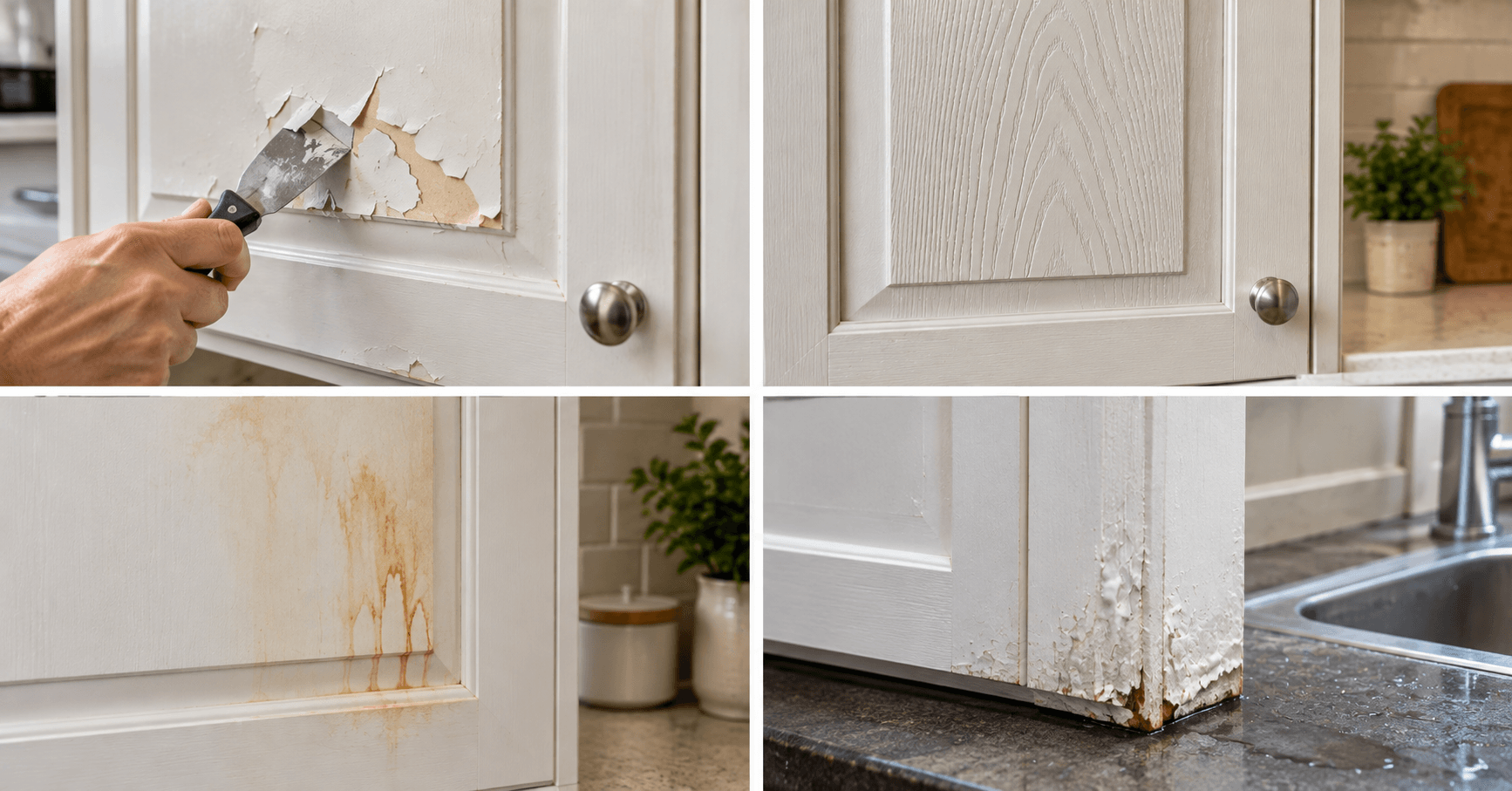
Peeling paint is often connected to inadequate surface preparation. Grease, glossy finishes, loose old coatings, incompatible products, or unsuitable primers can all contribute to adhesion problems.
Simply adding another coat over unstable paint rarely fixes the cause. Remove failing material and prepare the surface properly before repainting.
Visible Wood Grain
Visible grain isn’t necessarily a coating failure. On oak and other open-grained woods, texture can remain noticeable beneath an opaque finish.
If the desired look is completely smooth, deal with the grain before applying the final paint coats.
Tannin Bleed
Brown, yellow, or reddish discoloration can sometimes migrate through paint from wood or previous finishes. A suitable stain-blocking primer can help prevent this problem.
Moisture Damage
Paint doesn’t make wood waterproof. Persistent moisture can affect the substrate as well as the coating, especially around sinks, dishwashers, bathrooms, and poorly ventilated areas.
If the underlying wood has already swollen or deteriorated, painting over it won’t restore the damaged material.
Are Painted Wooden Cupboards Good for Kitchens?
Yes, provided the cabinets are properly prepared and the coating is suitable for kitchen use.
Kitchen cupboards face considerably more wear than many bedroom or hallway cabinets. Grease, steam, moisture, fingerprints, frequent opening and closing, and regular cleaning all put pressure on the finish.
The construction also matters. Solid wood naturally responds to changes in its environment, so joints and panel areas may move slightly over time. That doesn’t mean the cabinets are unsuitable for painting; it means the finish needs to be approached with realistic expectations.
Color should also be considered alongside the rest of the kitchen. Countertops, backsplash, flooring, lighting, appliances, and hardware all influence whether a cabinet color feels balanced.
Before beginning a major kitchen update, review these kitchen remodeling mistakes so you can address practical issues before committing to the renovation.
Are Painted Cupboards Easy to Clean?
Yes, properly finished painted cupboards are generally straightforward to clean. The important distinction is between normal cleaning and aggressive scrubbing.
Use a soft cloth or sponge and a cleaning method compatible with the coating. Dry moisture-prone areas afterward rather than leaving water sitting on the surface.
Flat-panel doors are usually simple to wipe, while raised panels and decorative grooves can collect dust and residue around their profiles.
Color affects visibility too. White may reveal certain stains more quickly, while dark colors can make dust and fingerprints easier to spot. That’s a visibility issue, not necessarily a durability problem.
Painted Wooden Cupboards and Home Style
Painted cupboards can work across a wide range of interiors because color and door style can be changed independently.
A white Shaker cupboard can feel traditional and bright. The same Shaker door in navy or green can feel more contemporary. Flat-panel cabinetry in a muted neutral can blend into a minimalist room rather than dominating it.
Hardware can shift the look again. Brass can add warmth, black creates contrast, and brushed nickel tends to provide a quieter transition.
The key is to treat the cupboards as part of the room rather than choosing their color in isolation.
How to Choose Painted Wooden Cupboards
If you’re buying new cupboards, look beyond the finish. Examine door construction, drawer boxes, hinges, drawer slides, joinery, cabinet boxes, and storage capacity.
If you’re repainting existing cupboards, inspect their condition first. Small scratches and dents are usually manageable. Swollen particleboard, failing veneer, severely damaged doors, or weakened cabinet boxes may justify replacement instead.
Think about how the room is used, too. Kitchen cupboards need to withstand more cleaning and handling than occasional-use bedroom storage. Bathroom cupboards need careful moisture management, while mudroom storage may experience greater impact.
The best choice is the one that balances appearance, construction, maintenance, budget, and actual household use.
Frequently Asked Questions About Painted Wooden Cupboards
Can you paint wooden cupboards without sanding?
Sometimes a suitable bonding product can reduce the amount of sanding required, but completely skipping surface preparation is risky. Cleaning, removing loose material, and following the coating manufacturer’s preparation instructions remain important.
What is the best paint finish for wooden cupboards?
Satin or semi-gloss cabinet coatings are commonly practical choices. Satin provides a softer look, while semi-gloss offers more reflectivity and can be convenient for frequently cleaned surfaces.
How many coats of paint do wooden cupboards need?
There isn’t one correct number for every cupboard. Coverage depends on the existing surface, primer, color, coating, and application method. Follow the product instructions rather than applying a predetermined number of coats.
Can you paint oak cupboards?
Yes. Oak can be painted successfully, but its open grain may remain visible. If you want a smoother appearance, additional grain preparation may be necessary before priming.
How long do painted wooden cupboards last?
A well-prepared and properly painted cupboard can remain attractive for many years. Its lifespan depends on coating quality, preparation, moisture exposure, cleaning, impact, construction, and how frequently the cupboard is used.
Conclusion
Painted wooden cupboards can transform an outdated room without requiring you to replace cabinetry that is still structurally sound. They offer far more freedom with color than stained wood while retaining the practical benefits of an existing wooden cabinet system.
The biggest mistake is treating the project as a color-selection exercise. The finish is only as reliable as the surface underneath it. Clean thoroughly, repair damage, prepare the old coating, use the appropriate primer, apply thin finish coats, and give the paint enough time to cure.
For US homeowners, repainting is particularly attractive when the cabinet layout and construction already work. When the underlying cupboards are solid, a carefully planned paint job can deliver a substantial change in appearance with less disruption than a full replacement.

Samreen Khadim Hussain is a home improvement writer and content creator at Domelite Home. She specializes in making home renovation, interior design, and bathroom safety accessible to everyday US homeowners, turning technical subjects into clear, actionable advice. Her work is rooted in research, real-world practicality, and a genuine belief that a better home is within everyone’s reach.