
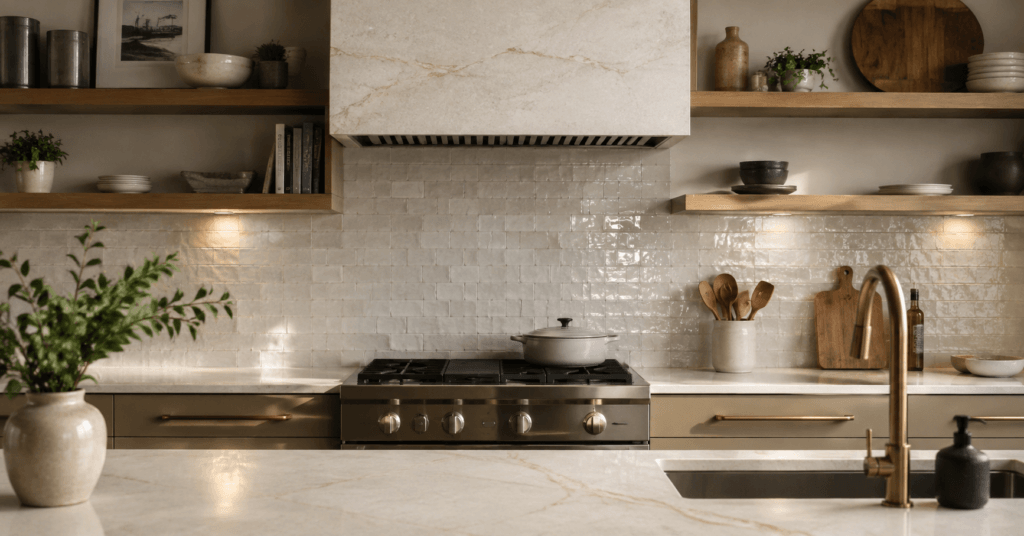
Quick Answer: The top modern kitchen backsplash ideas for 2026 are full-height slab backsplashes (now in 28% of renovated US kitchens according to Houzz data), zellige and handmade ceramic tile, large format porcelain with minimal grout lines, and warm earthy tones replacing the cool whites and grays that dominated the last decade. The defining shift is away from pattern toward material quality, texture, and seamless surfaces that read as genuinely designed rather than builder-standard.
Modern Kitchen backsplash ideas homeowners are searching for in 2026 go far beyond the default four-inch strip of white subway tile. The backsplash is the fastest-changing element in the modern American kitchen right now. Not the countertop, not the cabinets. The backsplash. It is where the biggest visual transformation happens at the lowest cost per square foot, and in 2026 it is getting more design attention than it has in years.
The shift is specific: away from the default four-inch strip of white subway tile that signals nothing and toward surfaces that actually say something about the kitchen they are in. Whether that is a full slab of quartzite running counter to ceiling, a zellige field that shimmers differently at every hour of the day, or a warm terracotta that makes a flat-panel cabinet look considered rather than commercial.
These modern kitchen backsplash ideas homeowners are choosing in 2026 focus less on following one short-lived trend and more on material quality, texture, seamless surfaces, and creating a kitchen that feels genuinely designed rather than assembled.
This guide covers the ten modern kitchen backsplash ideas that are actually being installed in US homes in 2026, the decisions that most homeowners get wrong before selecting anything, and the one coordination principle that determines whether your backsplash looks designed or assembled.
This approach makes it easier to narrow down the many modern kitchen backsplash ideas available for today’s kitchens.
The One Decision That Determines Everything
Before any tile selection, one coordination decision determines whether your modern backsplash works or fights the rest of the kitchen.
Match material temperature, not color. A cool gray tile backsplash against warm wood cabinets creates tension that reads as unintentional. A warm cream porcelain against the same cabinets reads as cohesive and designed. Color can vary within a range. Temperature, whether the materials read as warm or cool, needs to be consistent across the backsplash, countertop, and cabinet finish.
This single principle explains why some kitchen photos look effortless, and others look assembled from separate decisions. Get the temperature consistent and almost any individual tile choice works. Fight the temperature across materials, and even expensive tile looks like a mistake.
Modern Kitchen Backsplash Ideas: 10 Top Designs for 2026
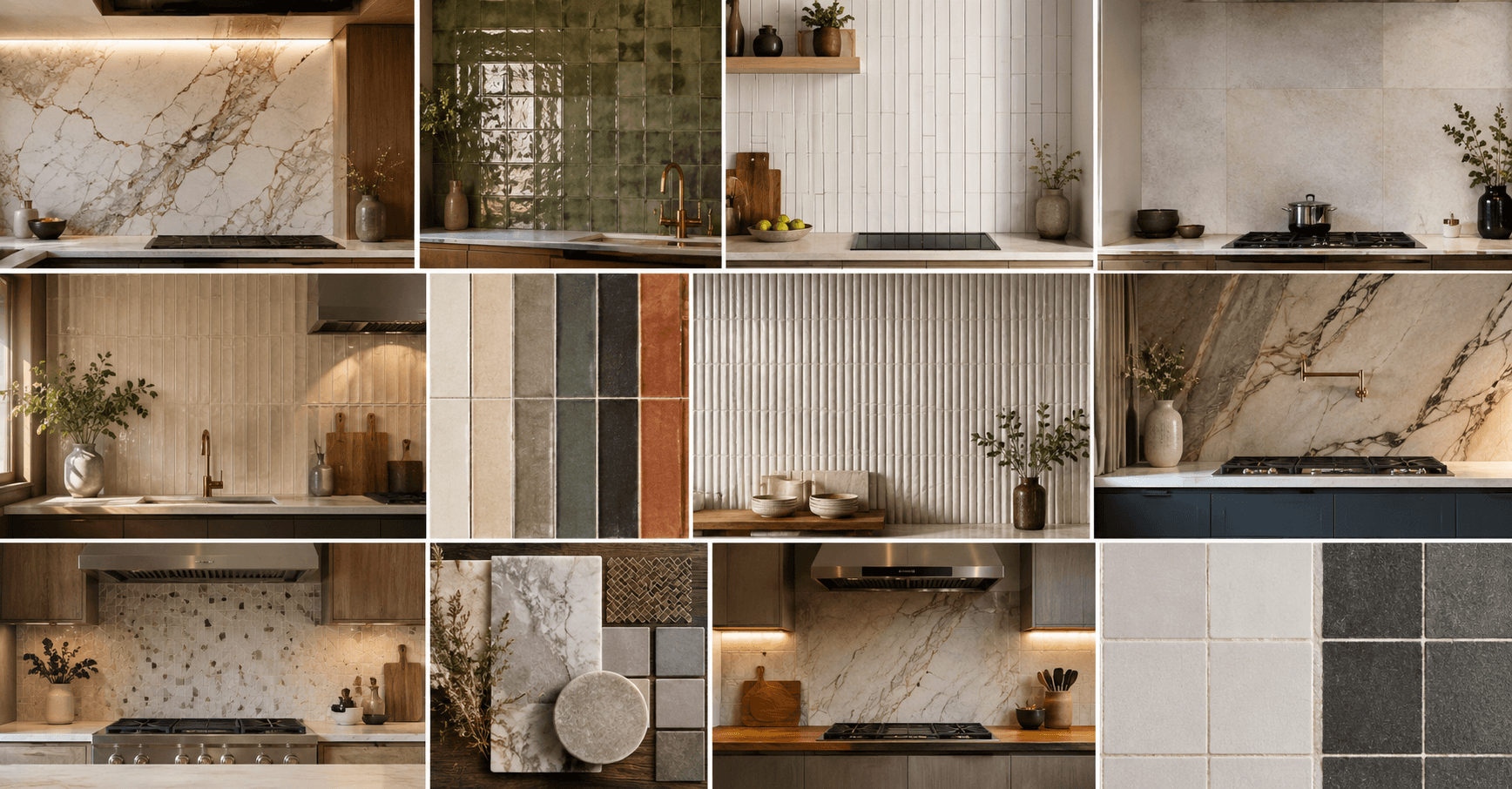
These modern kitchen backsplash ideas show how materials, color, texture, and layout are shaping more functional and visually distinctive kitchens in 2026.
1. Full-Height Slab Backsplash: The Defining Trend of 2026
According to the 2026 US Houzz Kitchen Trends Study, slab backsplashes now account for 28% of all backsplashes in renovated US kitchens, making them the fastest-growing backsplash choice by a significant margin. The reason is visual and practical simultaneously.
For homeowners seeking modern kitchen backsplash ideas with a seamless, high-end appearance, this is one of the strongest options.
A slab backsplash runs the same material as the countertop from counter to ceiling in a single uninterrupted surface. No grout lines, no tile pattern, no visual interruption between the work surface and the wall above it. The kitchen reads as a single material environment rather than a series of separate decisions layered on top of each other.
Quartzite and marble with dramatic veining create the most impactful full-height statements. Warm-toned porcelain slabs provide the same seamless quality at lower cost and with easier maintenance. Engineered quartz in a slab format is the most practical option for households where maintenance is a priority over the natural stone aesthetic.
The practical advantage of a slab: one surface to clean with no grout lines to scrub. In a kitchen that gets heavy daily use, this matters more than it sounds.
Best paired with: Flat-panel cabinetry, waterfall countertop edges, minimal hardware. Cost range: $75 to $200 per linear foot installed depending on material.
2. Zellige Tile: The Material That Changes With the Light
Zellige is the handmade Moroccan clay tile that has been a design world favorite for years and has crossed firmly into mainstream US kitchen design in 2026. Its appeal in a kitchen backsplash context is the quality no factory tile can replicate: each piece is slightly different in glaze thickness, color saturation, and surface reflection, creating a wall that looks different at breakfast than it does at dinner.
In kitchens where the cabinets and countertops are quiet, zellige provides the material interest that prevents the space from feeling generic. In kitchens with statement cabinetry, zellige provides warmth without competing. It is one of the most versatile backsplash materials available at any price point.
The 2026 zellige colors working best in US kitchens include warm white and cream, sage and dusty green, warm charcoal, and terracotta. Each of these reads differently against different cabinet colors, which is why zellige samples look different against your actual cabinetry than they do in design photos.
One practical note: zellige installation requires a skilled tile setter who understands the material. The irregular thickness of handmade zellige needs to be managed in the thinset bed to create a surface that, while not perfectly flat, reads as intentionally textural rather than randomly uneven. The National Tile Contractors Association maintains guidance on finding qualified installers for specialty tile at the specifications covered in their materials at homesandgardens.com.
Best paired with: Flat-panel and shaker cabinets, unlacquered brass and matte black hardware, warm wood tones. Cost range: $25 to $60 per square foot for tile plus installation premium.
3. Full-Height Tile: The Most Impactful Layout Change
The same tile that reads as builder-standard at four inches becomes a genuine design statement when it runs floor to ceiling or counter to ceiling. Full-height tile changes the proportions of the kitchen, makes ceilings feel taller, and creates a backdrop that makes everything in front of it look more intentional.
This works with almost any tile type: subway tile at full height reads as intentional rather than default. Zellige at full height creates a textural environment. Large format porcelain at full height creates a sleek, almost residential hotel quality.
The coordination principle here is grout color. At full height, the grout color becomes a significant visual element. Matching grout to the tile color creates a seamless surface that emphasizes the material. Contrasting grout at full height creates a grid that becomes the dominant visual, intentional on some tile types, problematic on others.
Best paired with: Any cabinet style, any countertop material. Cost range: 30 to 50 percent more than standard backsplash height due to additional tile and labor.
4. Large Format Porcelain With Minimal Grout Lines
Large format tile, 24×24 inches and larger, creates the fewest grout lines of any tiled backsplash and produces the most seamless, modern result short of a full slab. The visual logic is the same as the slab: fewer interruptions, more material.
The practical advantage over natural stone slabs is cost. Large format porcelain in a stone look costs significantly less than actual quartzite or marble and requires no sealing. It is available in warm limestone looks, subtle concrete looks, and dramatic marble looks, all with the durability and low maintenance of porcelain.
The installation consideration: large format tile requires a perfectly flat substrate. Any irregularity in the wall surface behind the tile telegraphs through the large panels. Professional substrate preparation is not optional for large format tile to look the way it does in design photos.
Best paired with: Handleless flat-panel cabinetry, integrated appliances, clean-line kitchens. Cost range: $10 to $35 per square foot installed.
5. Warm Earthy Tones Replacing Cool Gray and White
The color direction in 2026 modern kitchen backsplashes is the most significant shift from the previous decade. Cool gray and bright white, which dominated US kitchens from 2010 through 2023, are being replaced by warm neutrals, earth tones, and nature-derived colors that feel grounded rather than clinical.
The specific colors working in 2026 US kitchens include warm cream and ivory (replacing bright white), warm greige and mushroom (replacing cool gray), sage and dusty olive green, terracotta and warm clay, and muted navy and dusty blue.
The warm white shift is the most universally applicable. Replacing a cool white subway tile with a warm cream handmade ceramic in the same kitchen immediately changes the entire temperature of the space. The cabinets look warmer, the hardware looks more intentional, and the kitchen feels like it was designed rather than specified from a standard palette.
Best paired with: Warm wood cabinetry, brass and bronze hardware, stone countertops with warm veining.
6. Vertically Stacked Subway Tile
The same subway tile in a vertical stack instead of the traditional horizontal brick pattern reads completely differently. Vertical stacking makes walls feel taller, gives the same familiar tile a contemporary edge, and signals design intentionality in a way the horizontal brick pattern no longer does in 2026.
This is one of the cheapest ways to modernize a kitchen backsplash because the tile itself can be standard, affordable subway tile. The layout change is the transformation. A 3×6 ceramic subway tile in a warm cream, installed vertically with matching cream grout, looks more considered and more current than the same tile installed horizontally with white grout.
The vertical stack works particularly well in kitchens with lower ceilings where the visual upward movement is a genuine spatial improvement, not just an aesthetic preference.
Best paired with: Both traditional and contemporary cabinetry. Works across a wider range of kitchen styles than most layout variations. Cost range: Same as horizontal installation of the same tile. No material premium, minor layout labor increase.
7. Textured and Dimensional Tile
Flat tile in a 2026 modern kitchen reads as insufficient on its own. Textured surfaces, including ribbed tile, fluted tile, handcrafted tile with visible surface variation, and dimensional profiles with relief patterns, add a depth that flat tile cannot achieve.
The ribbed tile trend specifically has moved from bathrooms into kitchen applications in 2026. Vertical ribs on a backsplash tile create shadow lines that change with the light and give the surface a tactile quality that is genuinely different from any flat tile at any price point.
The practical advantage of textured tile over smooth tile in a kitchen: the texture breaks up light rather than reflecting it, which means the surface hides cooking residue, fingerprints, and water spots better than a smooth gloss tile. In a kitchen, this matters every day.
Best paired with: Minimal cabinetry where the backsplash needs to provide the visual interest, open shelving configurations where the backsplash is more visible. Cost range: $12 to $40 per square foot installed.
8. Natural Stone Backsplash
Natural stone brings a quality to a kitchen backsplash that no manufactured tile fully replicates. The veining of marble, the warmth of travertine, the organic variation of slate, and the drama of quartzite create surfaces that look different from every angle and at every time of day.
The honest maintenance reality for US kitchens: natural stone requires sealing before use and annual resealing. Marble is susceptible to etching from acidic products including lemon juice, vinegar, and many common kitchen products. Quartzite is significantly harder and more acid-resistant than marble while providing a similar aesthetic. Honed finishes hide everyday marks better than polished in a kitchen context.
Bold-veined stone as a full-height backsplash behind the range creates the most dramatic focal point available in any kitchen at any price point. A single slab of dramatically veined quartzite from counter to ceiling behind a 36-inch range is the element that makes a kitchen look in design publications.
Best paired with: Simple flat-panel cabinetry where the stone is the clear focal point, warm wood cabinetry in transitional kitchens. Cost range: $20 to $75 per square foot installed depending on stone type.
9. The Range Wall as a Statement Focal Point
The range wall, the section of backsplash directly behind the range and above the hood, is the most visible surface in the kitchen from the entry point of most US homes. In 2026, modern kitchen design is treating this surface as a dedicated focal point rather than a continuation of the general backsplash.
This means using a different, more expressive material or layout specifically on the range wall while keeping the rest of the backsplash quieter. A zellige range wall with a large format neutral tile on the flanking walls. A natural stone slab centered on the range with porcelain on the sides. A dramatic color tile behind the range with a warm neutral on the perimeter.
This approach creates the visual hierarchy that makes a kitchen feel professionally designed. One surface is the statement. Everything else supports it without competing.
The range wall approach also manages budget effectively. Using a premium tile or material on the 15 to 25 square feet of range wall and a more affordable material on the remaining backsplash area concentrates spending where it has the most visual impact.
Best paired with: Any kitchen style where you want one clear focal point. Cost range: Determined by the specific tile selections for each zone.
10. Grout as a Design Tool, Not an Afterthought
This is the decision most buyers make without realizing it has as much visual impact as the tile itself. In 2026 modern kitchen backsplashes, grout color is being treated as a deliberate design choice rather than a default selection.
Matching grout to the tile creates a seamless surface that emphasizes the material. This reads as sophisticated and intentional and is the approach used in the high-end kitchen designs that most homeowners are trying to replicate.
Contrasting grout creates a grid pattern that becomes the dominant visual of the backsplash. This can be intentional and effective on specific tile types. On subway tile, dark grout with light tile creates a graphic, somewhat industrial look. On zellige or natural stone, contrasting grout competes with the material variation that makes these tiles worth using.
The practical consideration: light grout stains more visibly than dark grout in a kitchen environment. Epoxy grout is stain-resistant and non-porous, requires no sealing, and outperforms standard cement grout in longevity in the daily wet-dry cycle of a kitchen backsplash. The cost premium is approximately $1 to $2 per square foot and is almost always worth paying.
What Is Going Out in 2026
Knowing what to avoid is as useful as knowing what to choose.
All-white subway tile with white grout reads as builder standard rather than designed. It is not timeless; it is now dated. If you love subway tile, switch to a handmade version in a warm cream with matching grout.
Gray everything; cool gray tile, gray countertop, gray grout feels cold and dated. Warm materials have taken over across every category.
Small glass mosaic tile in blue and green; the early 2010s coastal kitchen aesthetic. Matte and textured surfaces have replaced glossy glass in modern kitchen applications.
Heavily patterned tile throughout; geometric patterns at full kitchen scale can feel overwhelming. The current direction is quieter backgrounds with one expressive material used strategically rather than pattern everywhere.
Coordinating Your Backsplash With Cabinets and Countertops
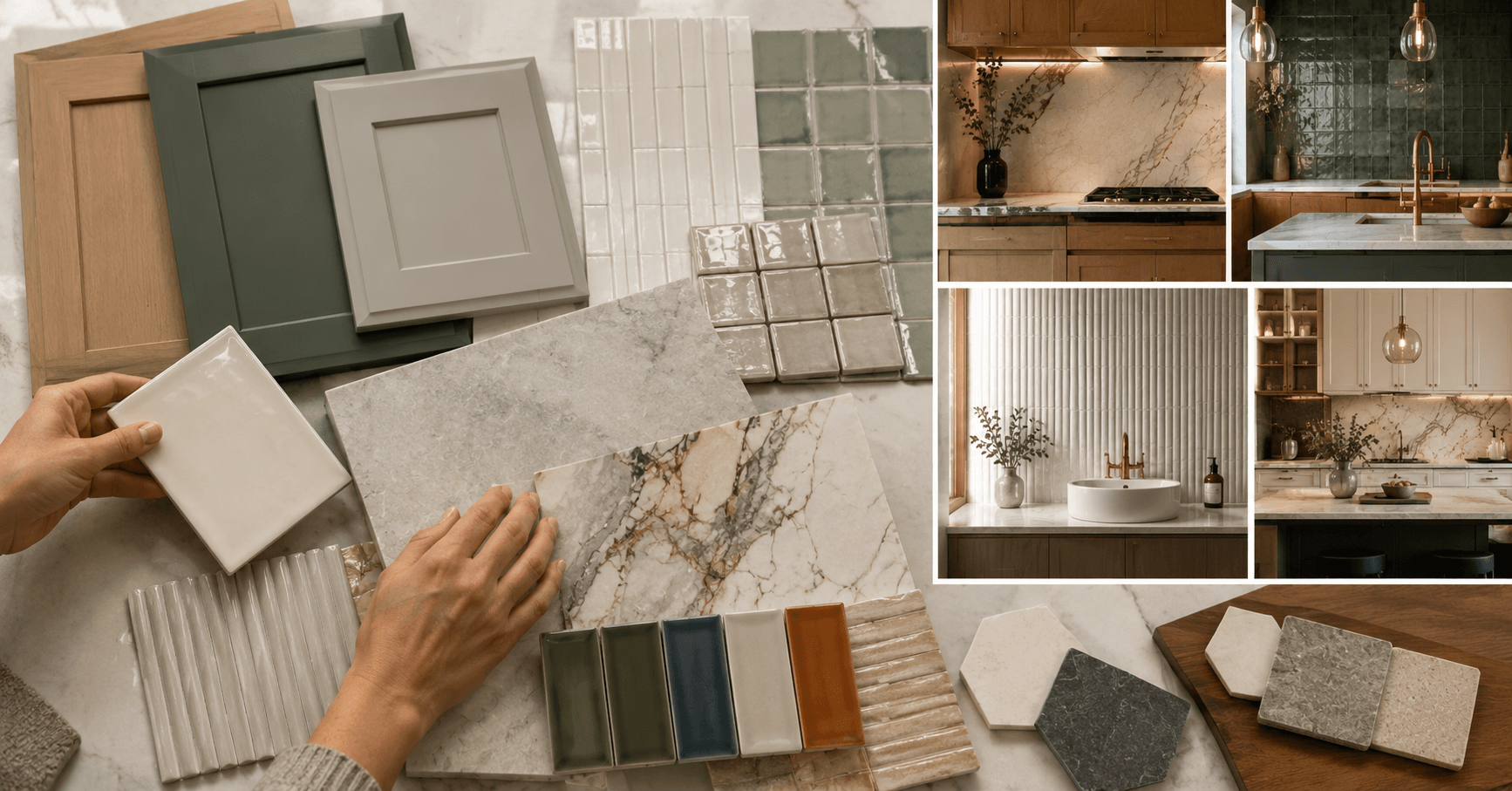
The most common modern kitchen backsplash mistake is selecting tile in isolation without reference to the cabinet color and countertop material already in the space.
The best modern kitchen backsplash ideas work as part of a complete material scheme rather than as an isolated design decision.
For guidance on cabinet color decisions that interact directly with backsplash selection, the guide on painted kitchen cabinet ideas covers the specific colors, finishes, and combinations that coordinate with the modern backsplash directions in this guide.
For homeowners who want to avoid the planning and sequencing mistakes that turn backsplash projects into expensive corrections, the guide on kitchen remodeling mistakes covers the ordering decisions, measurement errors, and contractor coordination issues that affect backsplash projects specifically.
For homeowners extending a backsplash project into the bathroom simultaneously, the guide on bathroom vanity backsplash ideas covers the same material principles applied to bathroom contexts where moisture and daily use conditions are different from a kitchen.
For real-home case studies showing these modern kitchen backsplash ideas executed across different budgets and kitchen sizes, Houzz maintains the most comprehensive collection of verified US kitchen photography.
Real Cost Reference: 2026 US Kitchen Backsplash Pricing
| Approach | Material Cost | Installed Total |
| Standard ceramic subway tile | $2 to $8 per sq ft | $600 to $1,500 |
| Handmade ceramic or zellige | $25 to $60 per sq ft | $1,500 to $4,000 |
| Large format porcelain | $10 to $35 per sq ft | $1,000 to $3,000 |
| Natural stone tile | $20 to $75 per sq ft | $2,000 to $6,000 |
| Full slab (quartzite or porcelain) | $75 to $200 per linear ft | $3,000 to $10,000 |
| Textured or ribbed ceramic | $12 to $40 per sq ft | $1,200 to $3,500 |
Always order 10 to 15 percent more tile than your measured square footage to account for cuts, waste, and future repairs. Get three quotes from licensed tile contractors before committing, particularly for specialty materials like zellige and natural stone where installer skill directly affects the finished result.
Frequently Asked Questions
Q: What is the most popular modern kitchen backsplash in 2026?
A: Slab backsplashes are the fastest-growing choice, now accounting for 28% of renovated US kitchens according to the 2026 Houzz Kitchen Trends Study. Among tiled options, zellige and handmade ceramic tiles in warm cream, sage green, and earthy tones are the most requested by homeowners working with designers. Large format porcelain with minimal grout lines is the most widely installed across all budget ranges.
Q: What kitchen backsplash is easiest to keep clean?
A: Full slab backsplashes with no grout lines are the easiest to maintain; one continuous surface wipes clean in a single motion. Among tiled options, large format porcelain with epoxy grout provides the best combination of low maintenance and modern appearance. Smaller tiles with more grout lines require significantly more cleaning time and are more susceptible to staining.
Q: Should a modern kitchen backsplash match the countertop?
A: Not match exactly, but coordinate in material temperature. Using the same material for the countertop and backsplash creates the seamless, high-end look of a slab installation. Using different materials that share a warm or cool temperature reads as coordinated. Mixing warm and cool materials, such as a cool gray tile with a warm wood countertop, creates tension that reads as unintentional.
Q: What tile layout makes a kitchen look more modern?
A: Vertical stacking of subway tile is the most accessible layout change that makes a traditional tile read as modern. Large format tile with minimal grout lines, full-height installation from counter to ceiling, and slab materials with no grout lines all read as progressively more modern. The grout color matters as much as the layout: matching grout to the tile creates a seamless surface that reads as more sophisticated than contrasting grout that emphasizes the grid.
Q: What kitchen backsplash adds the most value before selling?
A: A clean, neutral, modern backsplash in warm tones adds more value than a bold statement piece that polarizes buyers. Large format porcelain in a warm neutral stone look or a warm cream handmade ceramic coordinate with the widest range of buyer preferences. Avoid highly specific color choices or busy patterns that reduce the number of buyers who connect with the kitchen.
Whether you prefer a dramatic stone slab, handmade tile, or a warm textured surface, the best modern kitchen backsplash ideas are the ones that suit your cabinets, countertops, budget, and daily use.
Planning a modern kitchen backsplash and not sure how to coordinate the material with your existing cabinets or countertop? Drop your cabinet color, countertop material, and kitchen size in the comments, and we will help you find the right direction.

Samreen Khadim Hussain is a home improvement writer and content creator at Domelite Home. She specializes in making home renovation, interior design, and bathroom safety accessible to everyday US homeowners, turning technical subjects into clear, actionable advice. Her work is rooted in research, real-world practicality, and a genuine belief that a better home is within everyone’s reach.