
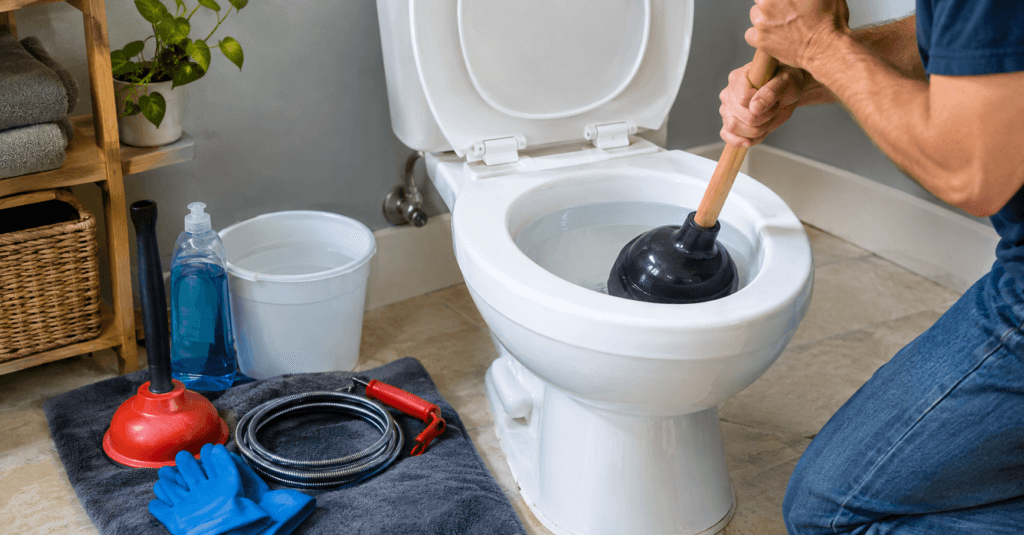
Quick Answer: How to Unclog a Toilet starts with stopping overflow at the tank flapper, then working through fixes in order of severity: dish soap and hot water for minor clogs, a flange plunger for standard blockages, a toilet auger for stubborn or deep clogs, and a plumber call for anything involving multiple drains backing up simultaneously.
A clogged toilet ranks high on the list of home problems that need solving right now. Not tomorrow. Not after you look up a video. Now.
The fix is almost always simpler than it feels in the moment, but only if you work through the methods in the right order and use the right tool for each type of clog. Most guides list every method without telling you which one to use for your specific situation. This guide does the opposite: it tells you how to read your clog, match it to the right fix, and clear it without making the situation worse.
Step Zero: Stop Overflow First
Before anything else, if the bowl is filling dangerously close to the rim, stop adding water immediately.
Do not flush again. A second flush on a clogged toilet fills the bowl further and risks overflow. Remove the tank lid and push the toilet flapper down flat by hand. This stops water from the tank entering the bowl. Alternatively, turn the shut-off valve clockwise behind or below the toilet until it stops. Water flow ceases immediately.
Once the water level is stable, place old towels around the base of the toilet before starting any fix. This is not pessimism. It is the step that prevents a messy problem from becoming a wet floor emergency.
How to Unclog a Toilet: Read the Clog Before Choosing a Fix
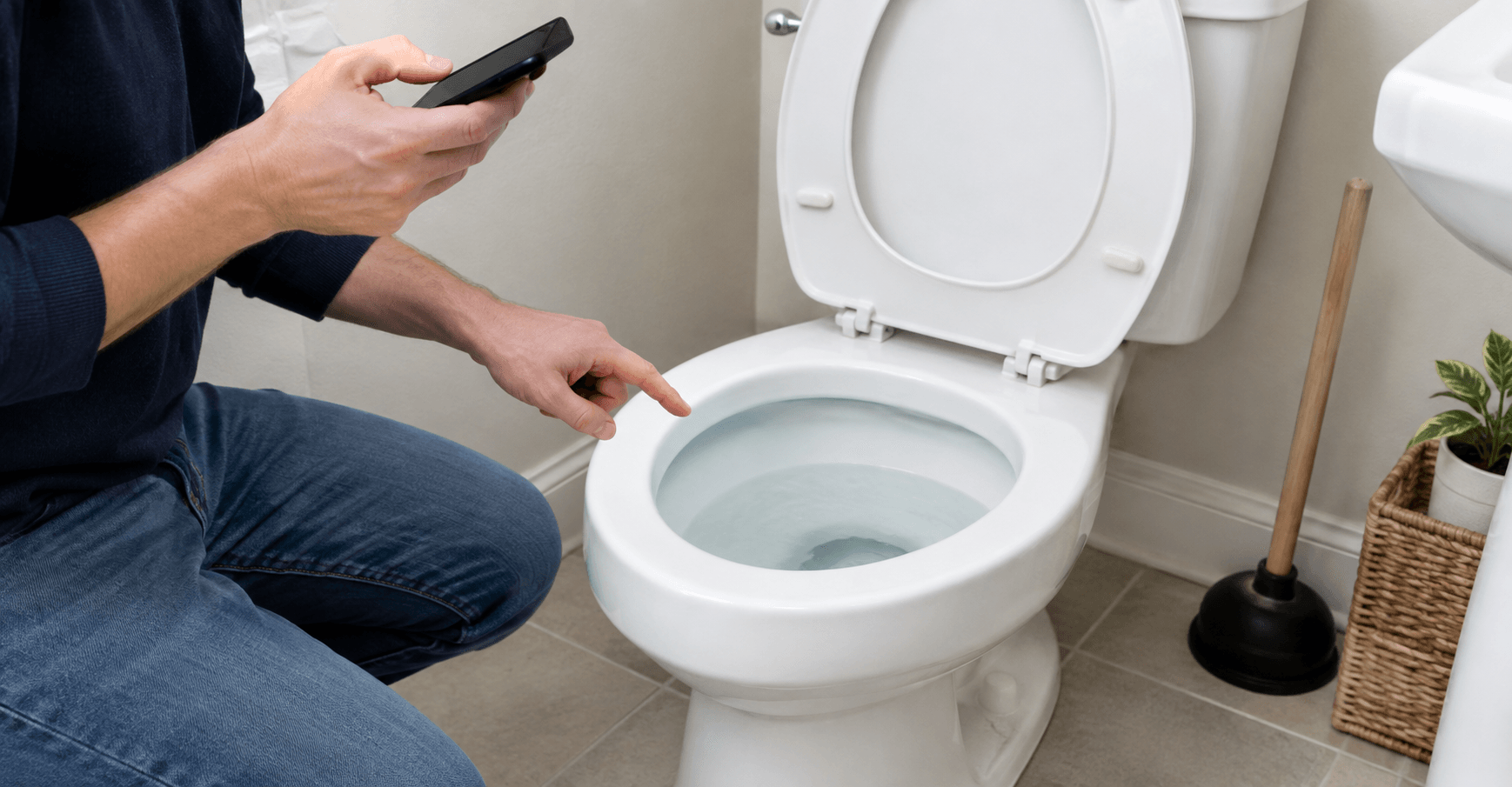
The behavior of the clogged toilet tells you what type of blockage you are dealing with and which fix to start with.
Water drains slowly but eventually clears: Partial clog in the toilet trap. Dish soap and hot water or a basic plunging session will almost certainly clear it.
Water rises to near the rim and stops draining: Full blockage in the trap or just past it. Start with a flange plunger.
Water drains but clogs again within a day or two: Recurring partial blockage, often from accumulated buildup or a partial foreign-object obstruction. A toilet auger is needed.
Multiple drains in the house are slow or backing up simultaneously: This is not a toilet clog. This is a main sewer line blockage. Stop all DIY attempts and call a licensed plumber immediately. Adding water anywhere in the house risks sewage backup into lower fixtures.
The toilet bubbles when you run a sink or shower nearby: Same signal as above. Sewer line involvement. Call a plumber.
How to Unclog a Toilet With Dish Soap and Hot Water
Fix 1: Dish Soap and Hot Water (Minor Clogs, No Tools Required)
This works on fresh, soft clogs where organic material or paper is the cause. It does not work on hard objects, severe blockages, or clogs that have been sitting for more than a day.
Squeeze approximately one-quarter cup of liquid dish soap directly into the toilet bowl. Dish soap is denser than water and sinks to the trap where it coats the clog with lubricant. Let it sit for 10 to 15 minutes.
While the soap is sitting, fill a bucket or large pitcher with the hottest tap water available. Do not use boiling water. Water above 140 degrees Fahrenheit can crack a cold porcelain toilet bowl. Tap hot water is sufficient and safe.
Pour the hot water into the bowl from waist height. The height creates momentum that adds force to the hot water and soap combination. The combination of heat, lubricant, and water pressure dislodges soft clogs effectively.
Wait five minutes and attempt a flush. If the water drains normally, the clog is clear. If not, move to Fix 2.
Fix 2: The Correct Plunger Technique (Most Clogs)
Using the wrong plunger is the single most common reason people cannot clear a toilet clog that is actually simple. There are two types of plungers, and they serve completely different purposes.
Cup plunger (flat bottom, red rubber): Designed for flat surfaces like sinks and tubs. It cannot create a proper seal over a toilet drain and generates minimal pressure on a toilet clog. This is the wrong tool for a toilet.
Flange plunger: Has a cylindrical rubber extension that folds out from the cup and fits into the toilet drain opening, creating a complete seal. This is the correct tool for a toilet. If you do not own one, they cost $10 to $20 at any hardware store and are worth having.
Before plunging, ensure there is enough water in the bowl to cover the rubber cup. The plunger needs water resistance to build pressure. If the water level is low, add water from a bucket until the cup is submerged.
Insert the flange into the drain opening and press the cup flat against the bowl to create a complete seal. Expel any air from the cup with a slow initial push before beginning the actual plunge sequence. Air in the cup reduces pressure effectiveness and can splash dirty water.
Push down firmly and pull up sharply. The push forces water into the clog. The pull creates suction that loosens it. The combination is what dislodges the blockage, not just the downward pressure alone. Maintain the seal throughout. Breaking the seal on the upstroke releases the suction effect.
Repeat 15 to 20 times with a steady rhythm. If the clog is clearing, the water will begin to drain faster, and the resistance in the plunger will reduce. When the water drains, flush once to confirm and clear any remaining debris.
If 20 to 25 plunge cycles do not clear the clog, the blockage is deeper than the trap or is a harder obstruction. Move to Fix 3.
Fix 3: Baking Soda and Vinegar (Alternative Without a Plunger)
This is not a chemical reaction that dissolves clogs. The fizzing action of baking soda and vinegar creates agitation in the water that can dislodge soft, fresh blockages. It is most effective on partial clogs and as a follow-up after partial plunging.
Pour one cup of baking soda directly into the bowl. Follow immediately with two cups of white vinegar. The mixture will fizz actively for several minutes. Allow it to work for at least 20 to 30 minutes before flushing.
Follow with a bucket of hot tap water poured from waist height to add momentum to the now-loosened material.
This method does not work on hard objects, severe paper clogs, or deep blockages. It is most useful when no plunger is available, and the clog is fresh and soft.
Fix 4: Toilet Auger (Stubborn or Deep Clogs)
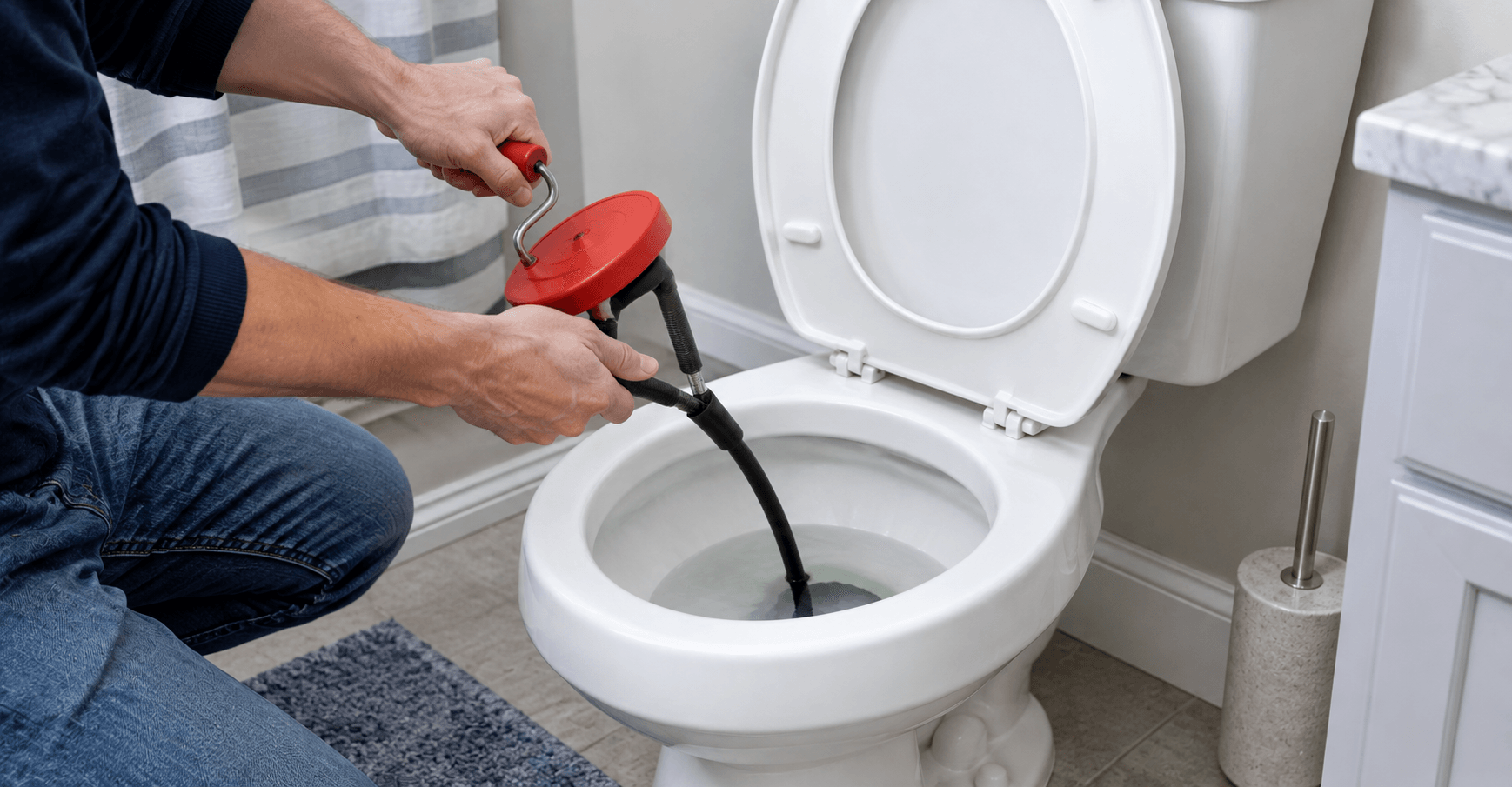
A toilet auger, also called a closet auger or plumber’s snake, is a coiled metal cable inside a protective sleeve designed specifically for toilet use. It reaches past the trap and into the drain pipe to break up or retrieve obstructions that a plunger cannot reach.
A basic toilet auger costs $25 to $50 at any hardware store and is the correct tool for any clog that does not respond to plunging. Do not use a standard drain snake designed for sinks in a toilet. The lack of a protective sleeve will scratch the porcelain.
Insert the rubber-coated end of the auger into the drain opening. The protective sleeve sits against the porcelain to prevent scratching. Crank the handle clockwise while applying gentle forward pressure. The coil extends into the drain pipe.
When you feel resistance, you have reached the clog. Continue cranking clockwise. The coil either breaks through the blockage and pushes it through the drain, or hooks the obstruction so it can be retrieved by pulling the cable back.
If cranking clockwise meets increasing resistance that does not give, try cranking counter-clockwise to reposition the coil, then resume clockwise cranking. Hard objects that the coil has hooked will come back out with the cable when you retract it. Soft clogs that the coil has broken through will flush away.
After the clog is cleared, flush the toilet twice to confirm complete drainage and clear any remaining material from the drain.
Fix 5: Enzyme-Based Drain Cleaner (Maintenance and Buildup)
Standard chemical drain cleaners, including products with sodium hydroxide or sulfuric acid, should not be used in toilets. These chemicals generate heat that can crack porcelain, damage wax rings, and deteriorate older pipes. They are also hazardous to handle and create toxic fumes in an enclosed bathroom.
Enzyme-based cleaners are the correct choice for toilet drain maintenance. These products use biological enzymes that break down organic material, paper, and waste without heat, fumes, or pipe damage. They work slowly, over hours rather than minutes, so they are not appropriate for emergency unclogging but are effective for ongoing prevention and clearing slow-drain situations.
Pour the product according to package directions, typically overnight, and flush in the morning. For slow-draining toilets that do not have a complete blockage, enzyme cleaners used monthly prevent buildup that eventually causes full clogs.
Fix 6: The Plastic Wrap Trick (No Tools, No Products)
This method sounds unusual but is genuinely effective on fresh, soft clogs and was popularized by plumbing professionals as a quick alternative when no tools are available.
Lift the toilet seat. Stretch several layers of plastic cling wrap tightly across the entire toilet bowl rim, creating a completely airtight seal over the bowl. Press the edges firmly to the porcelain to ensure no air gaps.
Flush the toilet. The flush creates air pressure inside the sealed bowl that pushes downward into the drain with significant force. The plastic wrap bulges upward from the pressure. Press down firmly on the bulge with both hands to direct the pressure back into the drain.
The pressure combination often dislodges soft clogs that plunging has not cleared. Remove the plastic wrap carefully and dispose of it in a trash bag.
Fix 7: Foreign Object Retrieval
If a hard object has been flushed or dropped into the toilet, the approach is completely different from any of the methods above. Hard objects including toys, phone cases, soap bars, and hygiene products do not dissolve, compress, or respond to plunging. Forcing a plunger on a hard object lodged in the trap can push it further into the drain pipe where retrieval becomes significantly more expensive.
For objects visible in the trap, wear rubber gloves and attempt manual retrieval before any tool use.
For objects not visible, a toilet auger with a retrieval hook is the appropriate tool. The coil can hook many objects and pull them back out through the bowl.
If the object is past the trap and into the drain pipe, stop DIY attempts. An object in the drain pipe typically requires a plumber with a professional inspection camera and retrieval tools. Attempting to push it through risks lodging it in the main line where the retrieval cost increases dramatically.
What Never to Flush: The Root Cause Prevention Guide
Understanding what causes clogs prevents them from happening. The majority of toilet clogs in US homes result from flushing items that are not designed to break down in water.
Toilet paper is the only paper product designed and tested for flushing. Everything else belongs in the trash.
Never flush: Wet wipes labeled as flushable (they do not break down in residential plumbing timelines), paper towels, facial tissues, cotton balls and swabs, feminine hygiene products, dental floss, medications, cat litter, or any personal care product not specifically designed for toilet disposal.
Hard objects, including phone accessories, small toys, and toiletry caps that fall in accidentally, are the leading cause of clogs requiring professional auger service.
When to Call a Plumber
Stop DIY attempts and call a licensed plumber immediately when:
Multiple drains in the house are slow or backing up. This indicates a main sewer line blockage that requires professional rooter or hydro-jetting equipment.
The toilet bubbles or gurgles when other fixtures run. Sewer line involvement.
You have used a toilet auger without success. The blockage is past the reach of residential tools.
The toilet has been clogged and unclogged repeatedly within weeks. A recurring clog indicates a structural problem in the pipe, tree root intrusion, or a partial obstruction that needs camera inspection.
Water is seeping around the base of the toilet during use. This indicates a wax ring failure or drain connection issue that requires toilet removal to repair.
Expect to pay $85 to $600 for professional toilet unclogging depending on blockage severity and location. A main line rooter service runs $150 to $500. Hydro-jetting for severe buildup or root intrusion runs $350 to $600.
Bathroom Safety Note for Seniors and Mobility-Limited Users
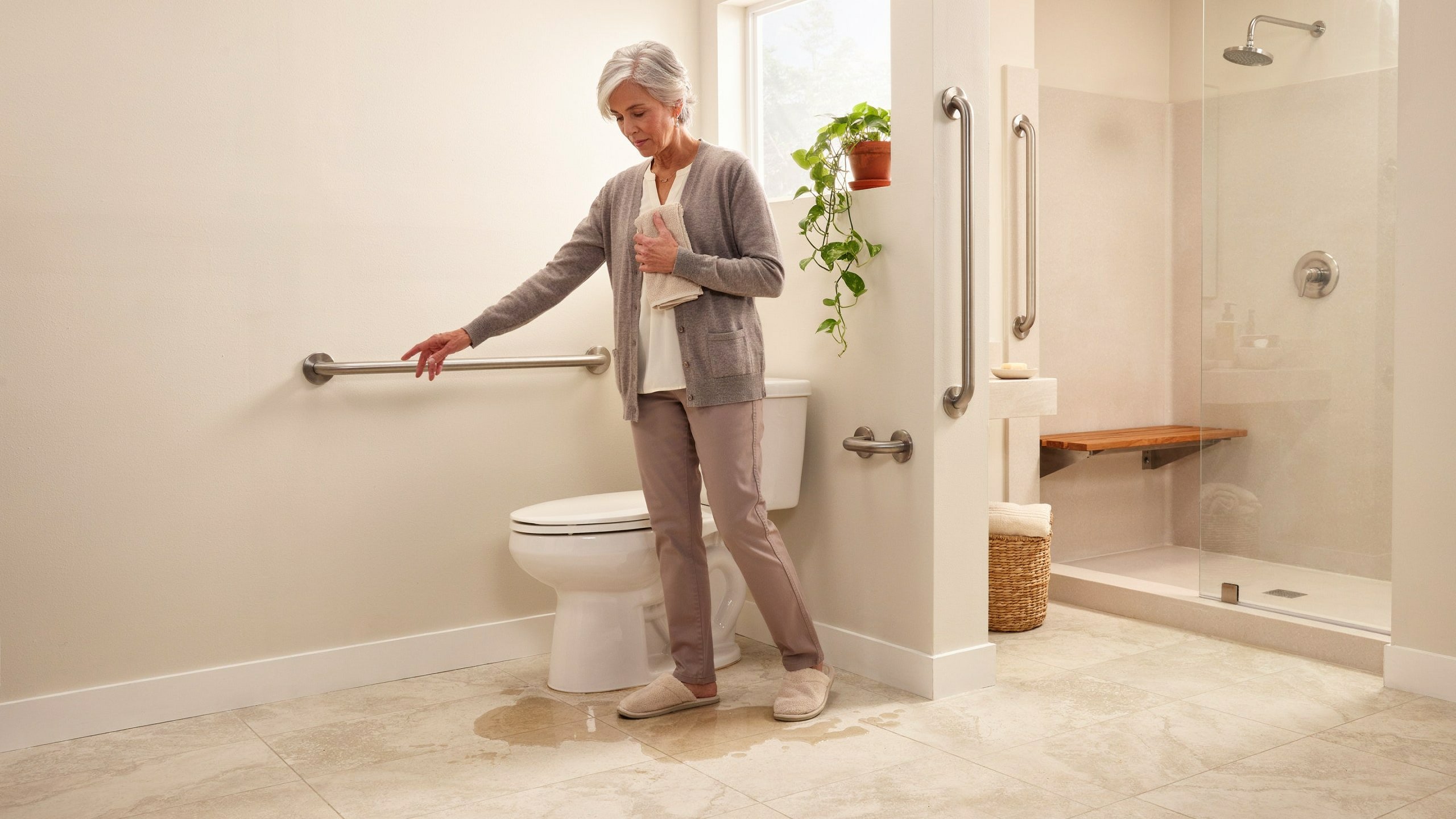
Toilet clogs in bathrooms used by seniors or people with limited mobility deserve particular attention to the surrounding environment. Wet floors from overflow create a significant slip hazard. Ensure grab bars are installed and functional in any bathroom where falls are a concern before any plunging work that risks splashing.
The guide on ADA grab bars for bathrooms covers proper placement, installation, and load requirements for bathroom safety hardware that supports independent use and reduces fall risk in exactly the situations where toilet maintenance creates wet floor conditions.
For homeowners planning broader bathroom upgrades alongside plumbing maintenance, the guides on bathroom tile shower ideas and bathroom vanity backsplash ideas cover the full range of bathroom renovation decisions that homeowners typically address when maintenance work reveals the need for broader updates.
Tools and Cost Reference
| Tool or Method | Cost | Best For |
| Dish soap and hot water | Free | Fresh, soft clogs |
| Baking soda and vinegar | Under $3 | Soft partial clogs, no plunger |
| Plastic wrap method | Free | Fresh, soft clogs, no tools |
| Flange plunger | $10 to $20 | Most standard toilet clogs |
| Toilet auger | $25 to $50 | Stubborn or deep clogs |
| Enzyme drain cleaner | $10 to $20 | Prevention and slow drains |
| Plumber service | $85 to $600 | Sewer line or auger-resistant clogs |
For additional guidance on unclogging techniques, plunger use, toilet augers, and when to call a professional, see This Old House’s guide to unclogging a toilet.
For additional technique guidance, including video walkthroughs of correct plunger form and auger use, Family Handyman covers the full method range at familyhandyman.com.
Frequently Asked Questions
Q: Why is my toilet still clogged after plunging?
A: The most common reasons are using a cup plunger instead of a flange plunger, not creating a complete seal over the drain, or having a blockage deeper than the trap that plunging cannot reach. Try a toilet auger if correct plunging technique with the right plunger does not clear the clog after 20 to 25 strokes.
Q: Is it safe to use bleach to unclog a toilet?
A: Bleach disinfects but does not unclog. It has no dissolving or lubricating effect on the organic material or paper that causes most toilet clogs. Do not use standard chemical drain cleaners with sodium hydroxide or sulfuric acid in toilets. These chemicals generate heat that can crack porcelain and damage plumbing.
Q: How to Unclog a Toilet Without a Plunger?
A: Pour one-quarter cup dish soap into the bowl, wait 15 minutes, then add hot tap water from waist height. Alternatively, try one cup of baking soda followed by two cups of vinegar; wait 30 minutes, then add hot water. The plastic wrap pressure method works on fresh, soft clogs when nothing else is available.
Q: Can too much toilet paper clog a toilet?
A: Yes. Large amounts of toilet paper, particularly the thicker multi-ply varieties, can form a mass in the trap that water pressure alone cannot push through. A flange plunger clears most paper clogs quickly. To prevent this, flush once during and once after use when using large amounts of paper.
Q: When is a toilet clog a plumbing emergency?
A: Call a plumber immediately when multiple fixtures drain slowly simultaneously, when the toilet bubbles during other fixture use, when toilet water backs up into the tub or shower, or when there is a sewage smell from drains. These signs indicate main sewer line involvement that requires professional equipment and cannot be resolved with any household method.
Dealing with a clog that does not match any of the scenarios above, or a toilet that keeps clogging in the same spot repeatedly? Drop your situation in the comments, and we will help you identify the right fix or confirm when a plumber is the correct call.

Samreen Khadim Hussain is a home improvement writer and content creator at Domelite Home. She specializes in making home renovation, interior design, and bathroom safety accessible to everyday US homeowners, turning technical subjects into clear, actionable advice. Her work is rooted in research, real-world practicality, and a genuine belief that a better home is within everyone’s reach.