
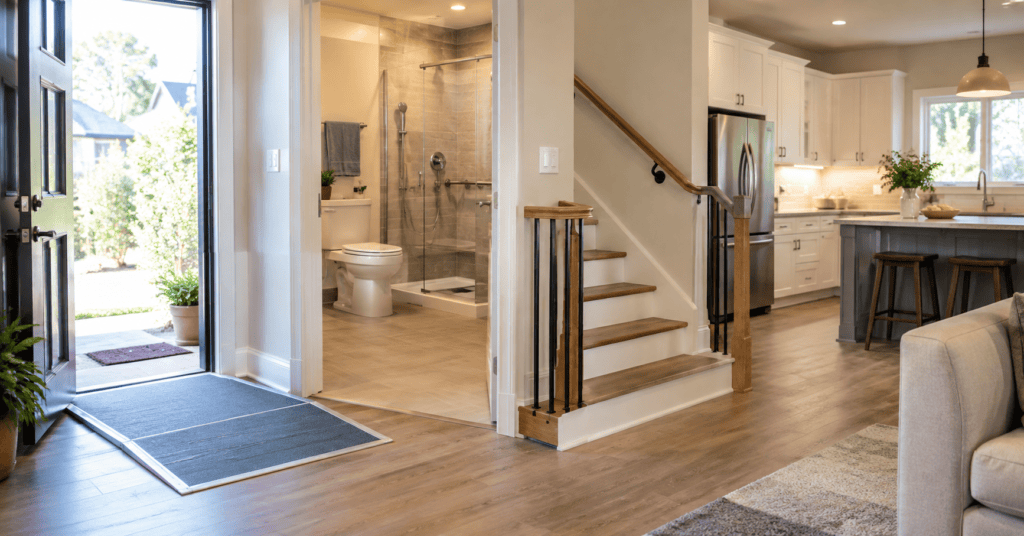
Quick Answer: Aging in place home modifications are changes that make a home safer, more accessible, and easier to use as mobility needs change. Common modifications include bathroom grab bars, safer flooring, improved lighting, secure stair railings, accessible entrances, easier-to-use doors, lower or easier-to-reach storage, and clearer pathways. The best modifications depend on the home’s layout and the person’s current and future needs.
Aging in Place Home Modifications can help homeowners prepare their living spaces for changing mobility, balance, and accessibility needs.
The right modifications can make everyday activities easier while reducing common barriers around the home. You do not necessarily need a complete remodel. Many projects can be completed gradually, starting with the areas that create the biggest safety or accessibility problems.
How to Plan Aging in Place Home Modifications
Start With a Room-by-Room Home Assessment
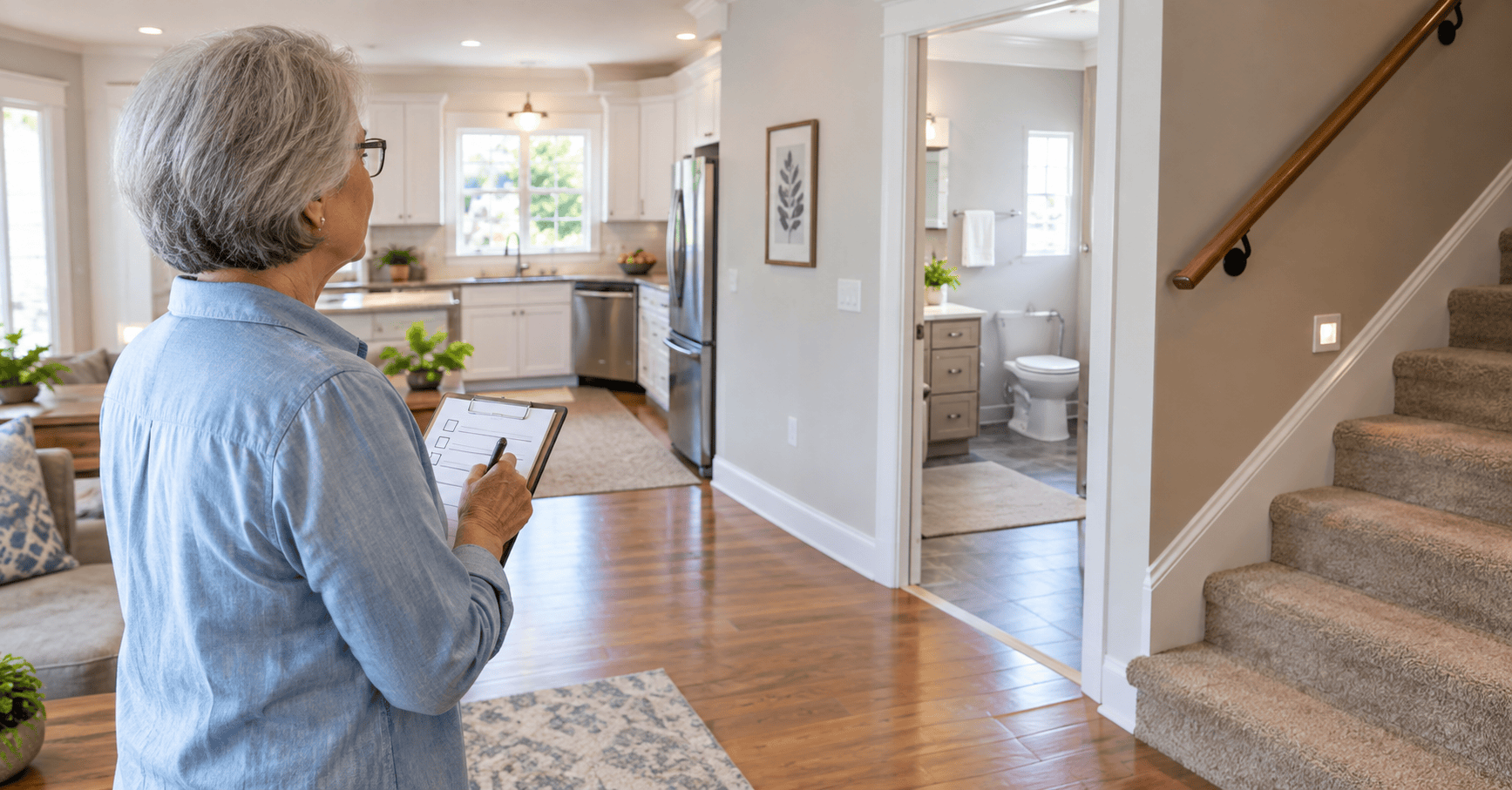
The first step is to assess the home before buying products or starting construction.
A careful assessment helps identify which Aging in Place Home Modifications should be addressed first.
Walk through each room and look for anything that makes walking, reaching, transferring, bathing, cooking, or entering and leaving the house more difficult.
Check for:
- Loose rugs or unsecured carpets
- Uneven flooring and thresholds
- Poor lighting
- Narrow or obstructed pathways
- Difficult-to-use door handles
- High shelves and cabinets
- Unstable stair railings
- Slippery bathroom surfaces
- Steps at entrances
- Furniture that restricts movement
The National Institute on Aging recommends going through the home room by room, correcting immediate dangers first, and reassessing home safety as needs change.
Prioritize Problems Instead of Remodeling Everything
Not every room needs to be modified at the same time.
Start with hazards that could interfere with safe daily movement. Then focus on rooms used most frequently, such as the bathroom, bedroom, kitchen, and main entrance.
This approach can make an aging-in-place project more affordable and easier to manage.
Bathroom Modifications for Aging in Place
Bathroom safety is often one of the first priorities when planning Aging in Place Home Modifications.
Install Secure Grab Bars
Grab bars can provide support near the toilet and around the shower or tub.
They need to be properly installed into appropriate structural support. A decorative bar attached only to drywall should not be treated as a weight-bearing safety device.
For more information about bathroom support features, see our guide to ADA grab bars for bathrooms.
Reduce Slips and Difficult Transfers
Bathrooms combine water, hard surfaces, and frequent movement, making them an important area to evaluate.
Potential modifications include:
- Nonslip flooring or appropriate nonslip strips
- A handheld showerhead
- A shower seat
- A low-threshold shower
- Improved lighting
- An easy-to-use faucet
- A comfortable-height toilet when appropriate
The CDC also recommends grab bars near toilets and inside and outside tubs or showers as part of making homes safer for older adults.
Make the Home Entrance More Accessible
Improve Steps, Thresholds, and Ramps
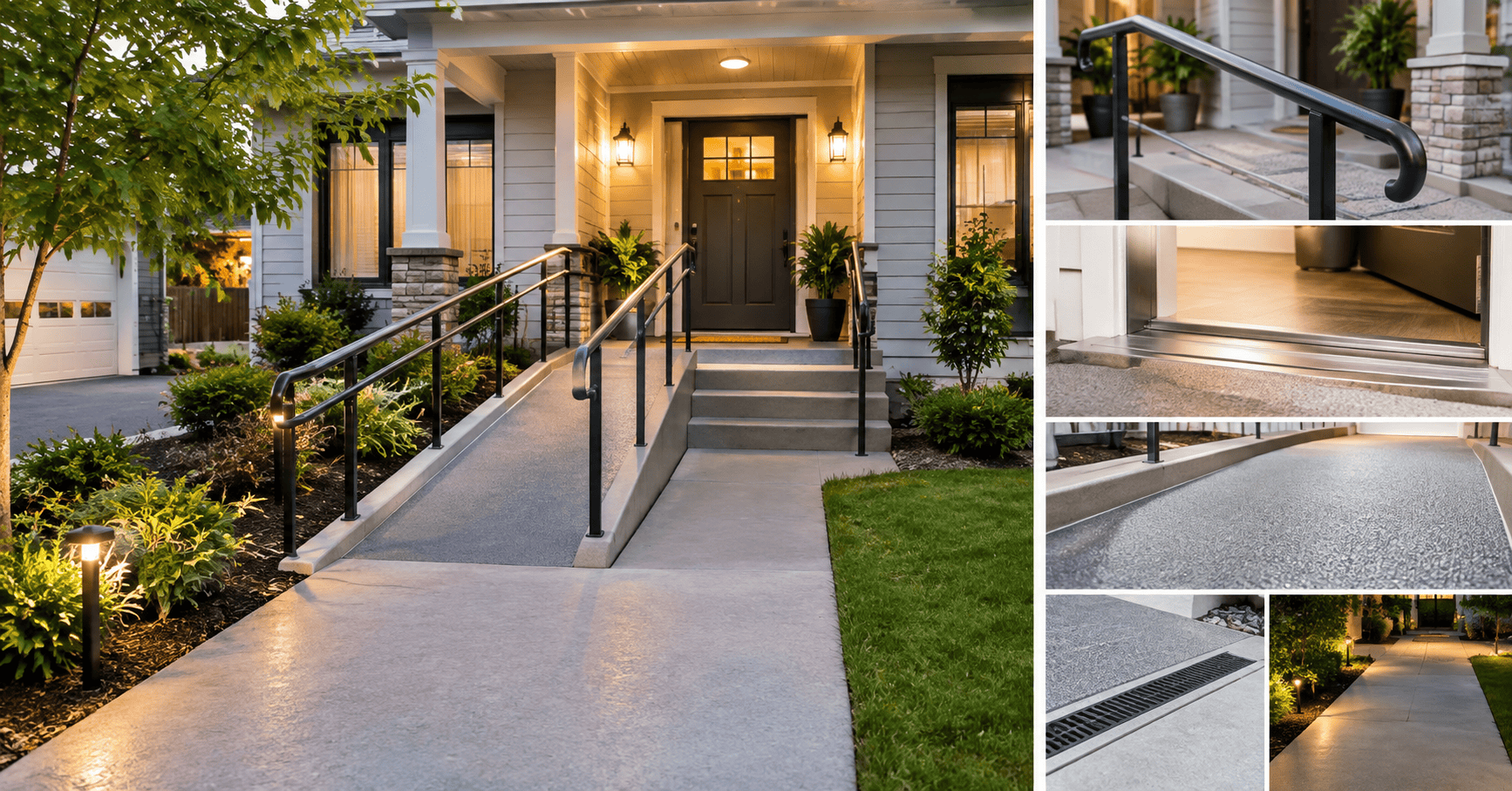
The main entrance should provide a stable route into the home.
These entrance improvements are common Aging in Place Home Modifications that can make daily access safer and easier.
Depending on the property and mobility needs, useful modifications may include:
- Secure handrails on steps
- A properly designed ramp
- A low-threshold entrance
- Improved exterior lighting
- A stable, nonslip walkway
- Reduced doorway thresholds
A ramp should be designed with appropriate slope, space, drainage, and local requirements in mind rather than treated as a simple DIY addition.
Improve the Path From the Driveway
Accessibility starts before reaching the front door.
Check sidewalks, driveways, porch surfaces, and paths for cracks, uneven sections, clutter, or poor lighting. Fixing these problems can make the entrance easier to navigate without changing the entire structure.
Make Doors Easier to Operate
Replace Difficult Door Hardware
Round doorknobs can be difficult for people with limited grip or hand strength.
Lever-style handles can be easier to operate because they generally require less gripping and twisting.
Other options include:
- Easy-to-operate locks
- Lightweight doors where practical
- Better lighting around doorways
- Clear space on both sides of doors
- Reduced thresholds
Consider Doorway Width
A doorway that works for walking may not provide enough clearance for a wheelchair or some mobility equipment.
If greater clearance is needed, doorway widening may be considered as part of a larger accessibility project. Structural, electrical, and building-code requirements should be reviewed before changing a wall or door opening.
Choose Safer Flooring
Remove Common Floor Hazards
Flooring is an important part of aging in place home modifications because loose rugs, raised transitions, clutter, and slippery surfaces can interfere with safe movement.
The NIA recommends removing area rugs and making sure carpets are firmly secured.
Prioritize:
- Firmly secured flooring
- Smooth transitions between rooms
- Clear walking routes
- Appropriate slip resistance
- Easy maintenance
- Flooring compatible with mobility equipment
Consider LVP for Some Areas
Luxury vinyl plank flooring can be worth considering when replacing older floors because it provides a smooth, continuous surface and is available in many styles.
However, product quality, installation, subfloor condition, and moisture exposure all matter.
Before choosing it, review our guide to LVP flooring pros and cons.
Improve Stair Safety
Secure the Handrails
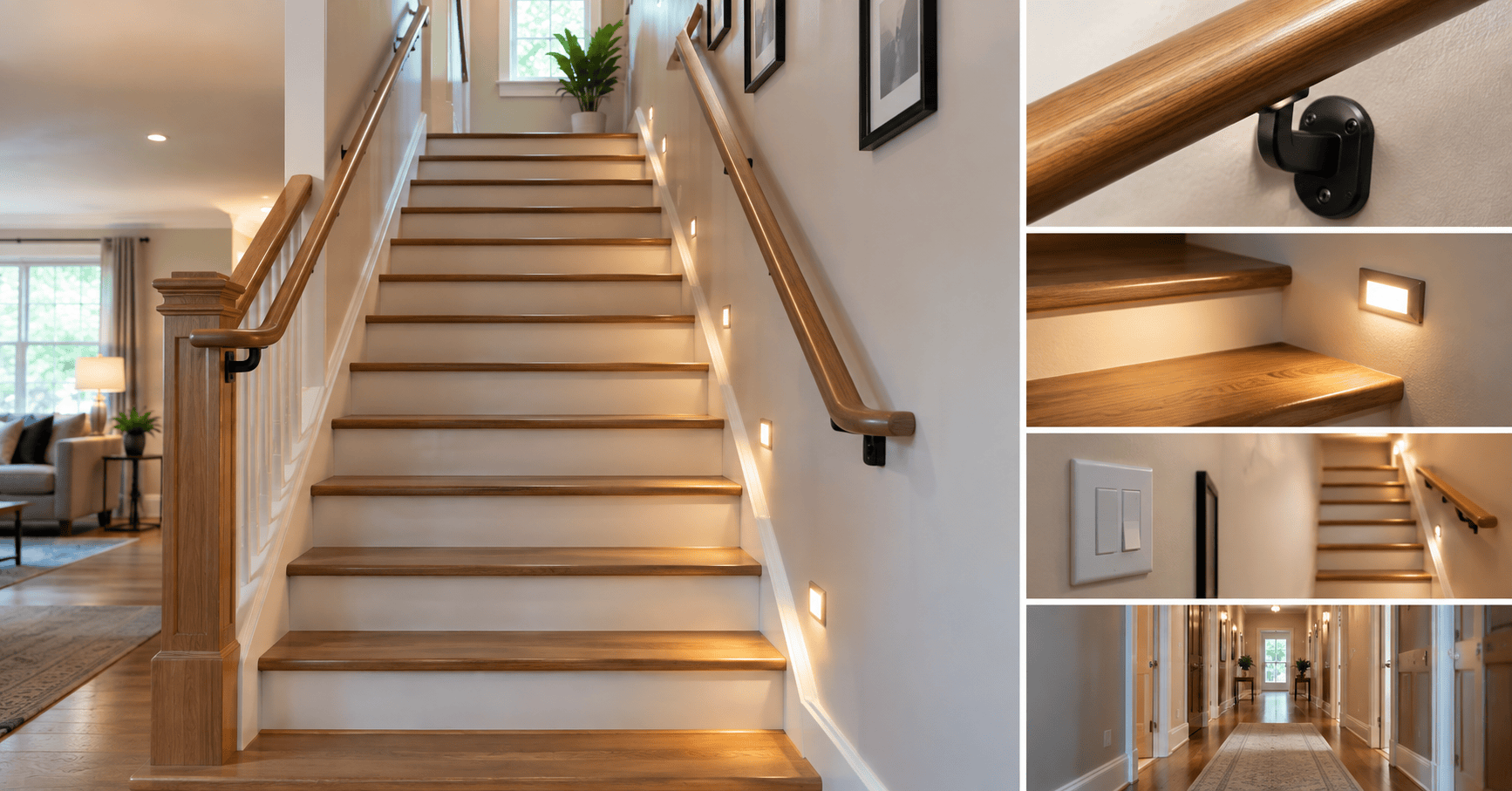
Stairs deserve special attention because they combine changes in elevation with repeated daily movement.
Check that:
- Handrails are firmly secured
- Stairs are well lit
- Walking surfaces are in good condition
- Objects are not left on steps
- There is enough space to use the stairs safely
The CDC recommends handrails on both sides of staircases as part of home fall-prevention measures.
Improve Stair and Hallway Lighting
Good lighting makes it easier to see steps, floor transitions, and obstacles.
Consider switches at both ends of stairways and motion-activated lighting where appropriate. The NIA specifically recommends good lighting at the top and bottom of stairs and along pathways.
Make the Kitchen Easier to Use
Move Frequently Used Items Within Reach
A kitchen does not always need a complete remodel to become easier to use. Simple storage and layout changes can be practical Aging in Place Home Modifications without requiring a full kitchen renovation.
Start by moving frequently used dishes, cookware, food, and appliances to locations that do not require excessive bending or reaching.
Useful changes can include:
- Pull-out shelves
- Easy-grip cabinet hardware
- Lever-style faucets
- Better task lighting
- Clear counter and floor space
- Accessible storage
Reduce Climbing and Bending
Avoid storing frequently used items on very high shelves or at the back of deep lower cabinets.
Heavy cookware is generally easier to manage when stored where it can be reached without climbing on a chair or repeatedly bending down.
Improve Lighting Throughout the Home
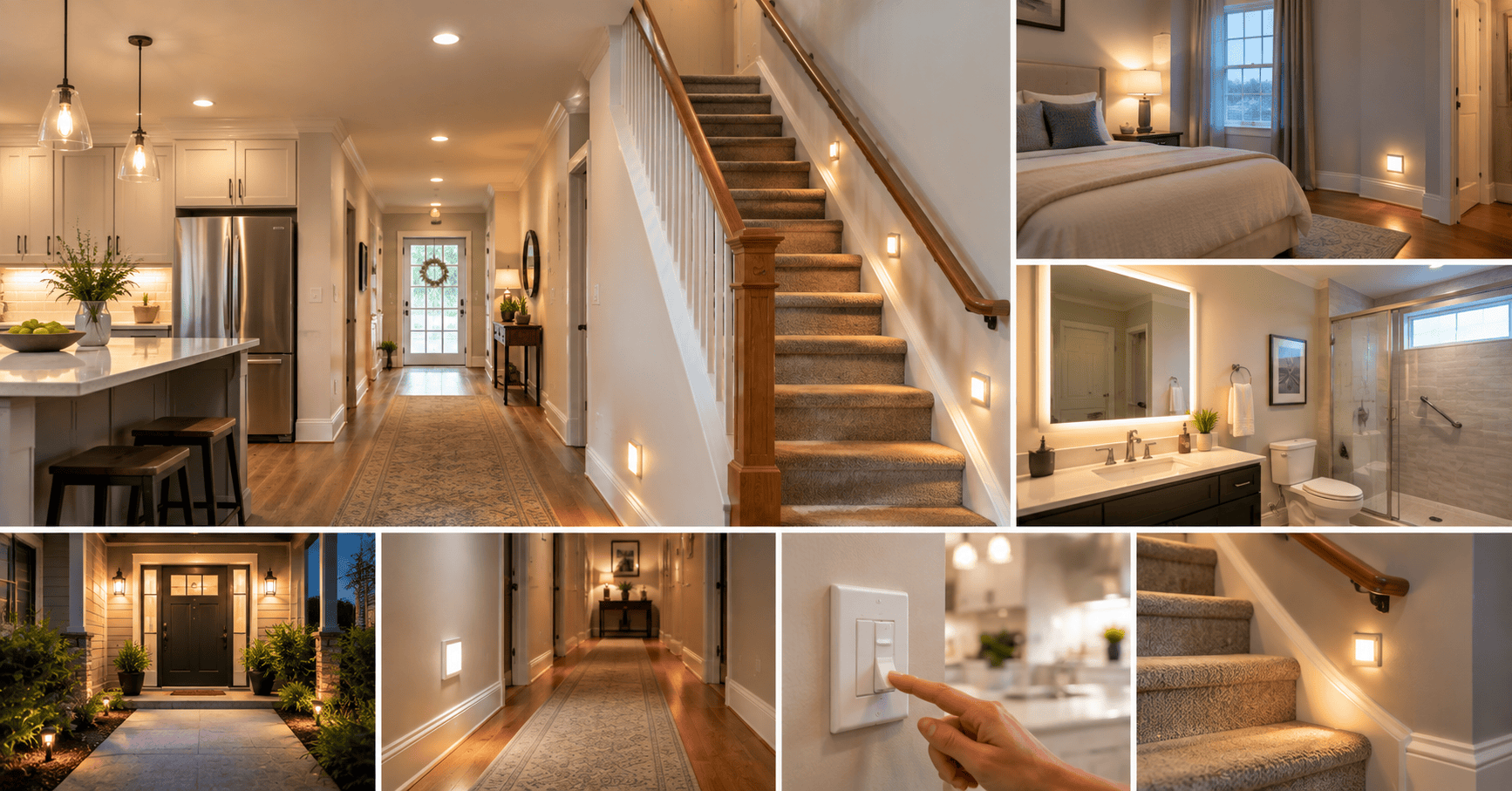
Focus on High-Use Areas
Lighting should be evaluated in hallways, stairs, bathrooms, bedrooms, entrances, and kitchens.
Useful improvements include:
- Brighter task lighting
- Night lights
- Motion-activated lights
- Easy-to-reach switches
- Better lighting around entrances
- Lighting at the top and bottom of stairs
The goal is consistent visibility without creating excessive glare or sharp differences between bright and dark areas.
Keep Walking Paths Clear
Create Simple Routes Between Rooms
A home can have wide doorways and still be difficult to navigate if furniture or clutter blocks the main routes.
Create clear paths between frequently used areas, especially:
- Bedroom
- Bathroom
- Kitchen
- Living room
- Main entrance
Keep electrical cords, small tables, decorative objects, shoes, and other items out of walking routes.
Reconsider Furniture Placement
Furniture should support movement rather than force people to squeeze between objects.
Leave enough space around commonly used chairs, beds, tables, and doorways. Stable furniture is also preferable to pieces that can move unexpectedly when used for support.
Consider Bedroom Modifications
Make Nighttime Movement Easier
The route from the bedroom to the bathroom is particularly important. Bedroom and nighttime-access improvements are also useful Aging in Place Home Modifications, particularly when mobility needs change.
Consider:
- A clear path beside the bed
- A night light
- A reachable lamp or light switch
- Stable furniture
- Easy-to-reach clothing storage
- A bed height that allows comfortable transfers
Keep a phone, flashlight, or appropriate emergency-alert device within easy reach when needed.
Don’t Forget Outdoor Areas
Check Porches, Walkways, and Garages
Aging in place should include areas outside the house.
Inspect:
- Porches
- Decks
- Walkways
- Driveways
- Garage entrances
- Garden paths
- Exterior stairs
Repair uneven surfaces, improve lighting, secure railings, and remove clutter.
Maintain Outdoor Access
Outdoor areas are part of everyday home life. A safer path can make it easier to continue using a garden, patio, garage, or mailbox without unnecessary barriers.
Consider Smart Home Features
Use Technology to Solve Specific Problems
Smart home technology can complement physical modifications.
Depending on individual needs, useful options may include:
- Voice-controlled lights
- Smart locks
- Video doorbells
- Motion sensors
- Smart thermostats
- Automated shades
- Water-leak sensors
Technology should solve a real problem rather than add unnecessary complexity.
For example, voice-controlled lighting may be useful when someone has difficulty reaching a wall switch.
How to Prioritize Aging in Place Home Modifications
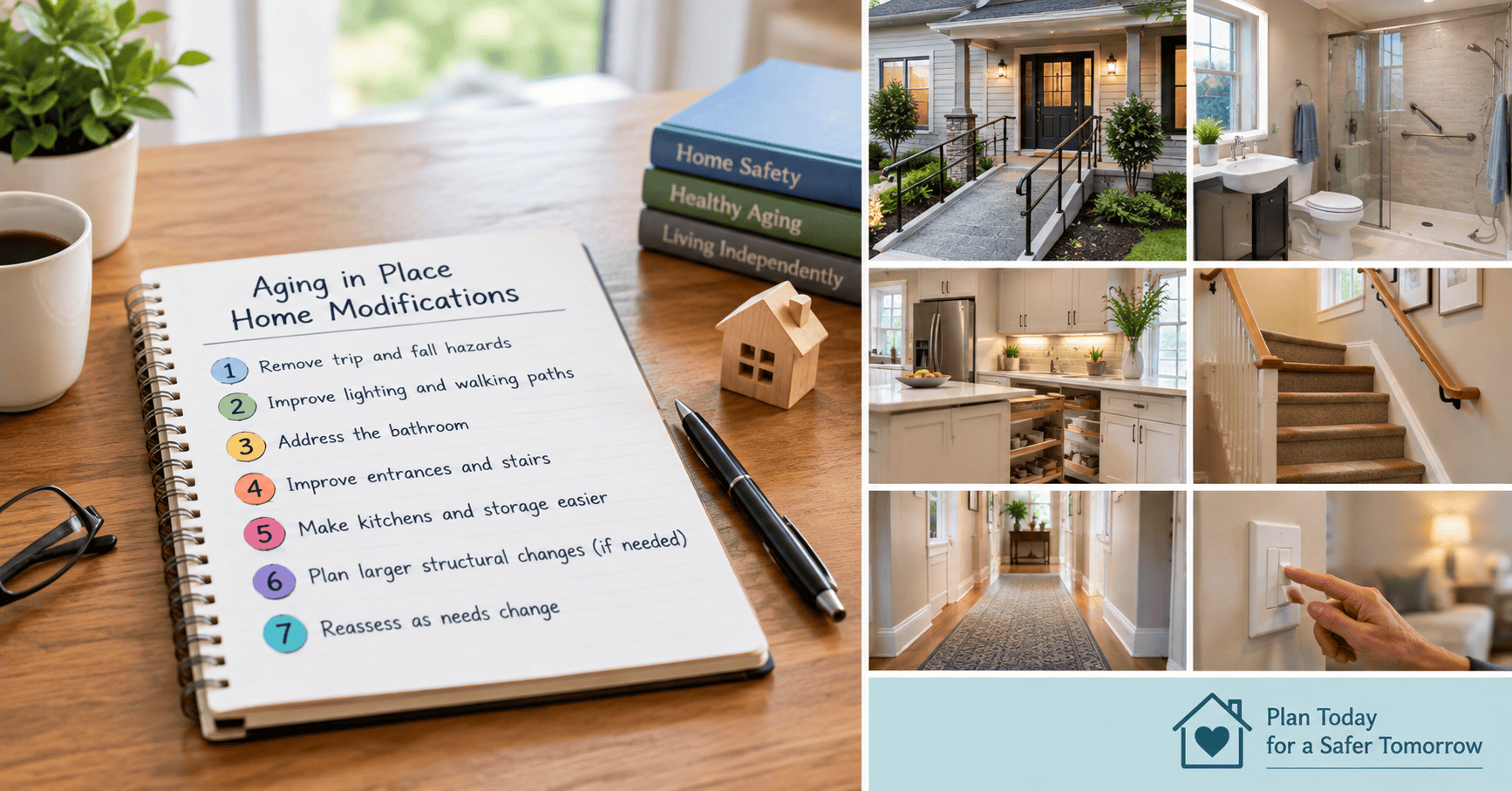
Follow a Practical Order
A useful approach is:
- Remove immediate trip and fall hazards.
- Improve lighting and walking paths.
- Address the bathroom.
- Improve entrances and stairs.
- Make kitchens and storage easier to use.
- Plan larger structural modifications if needed.
- Reassess the home as needs change.
This allows homeowners to spread projects over time rather than attempting a complete renovation immediately.
Plan Around Future Needs
The best modifications are not necessarily the most expensive ones.
Think about how the home may need to function if mobility, balance, strength, or the use of a walker or wheelchair changes later.
Planning can prevent rushed renovations after a problem occurs.
How Much Do Aging in Place Home Modifications Cost?
Small Changes
Some improvements can be relatively inexpensive, such as:
- Better light bulbs
- Night lights
- Lever handles
- Cabinet hardware
- Removing loose rugs
- Reorganizing storage
- Improving pathways
Larger Projects
Costs can rise significantly for:
- Accessible bathroom remodeling
- Doorway widening
- Ramp construction
- Major flooring replacement
- Stair lifts
- Structural modifications
- Plumbing or electrical changes
Get multiple estimates for major projects and separate urgent safety work from optional upgrades.
For broader renovation budgeting, see our guide to home renovation tips and money-saving tricks.
The NIA also notes that some homeowners may find assistance through state housing agencies, social services, community development groups, or federal programs.
When Should You Hire a Professional?
Know Which Projects Need Expert Help
DIY changes can work for simple tasks, but professional help is appropriate for projects involving:
- Structural changes
- Electrical work
- Plumbing relocation
- Doorway widening
- Major bathroom remodeling
- Ramp construction
- Stair lifts
- Complex accessibility requirements
An occupational therapist can also provide useful input about how the home supports specific daily activities and mobility needs. Professional assessment can help ensure that modifications address actual barriers instead of adding features that are unnecessary.
What Are the Most Important Aging in Place Modifications?
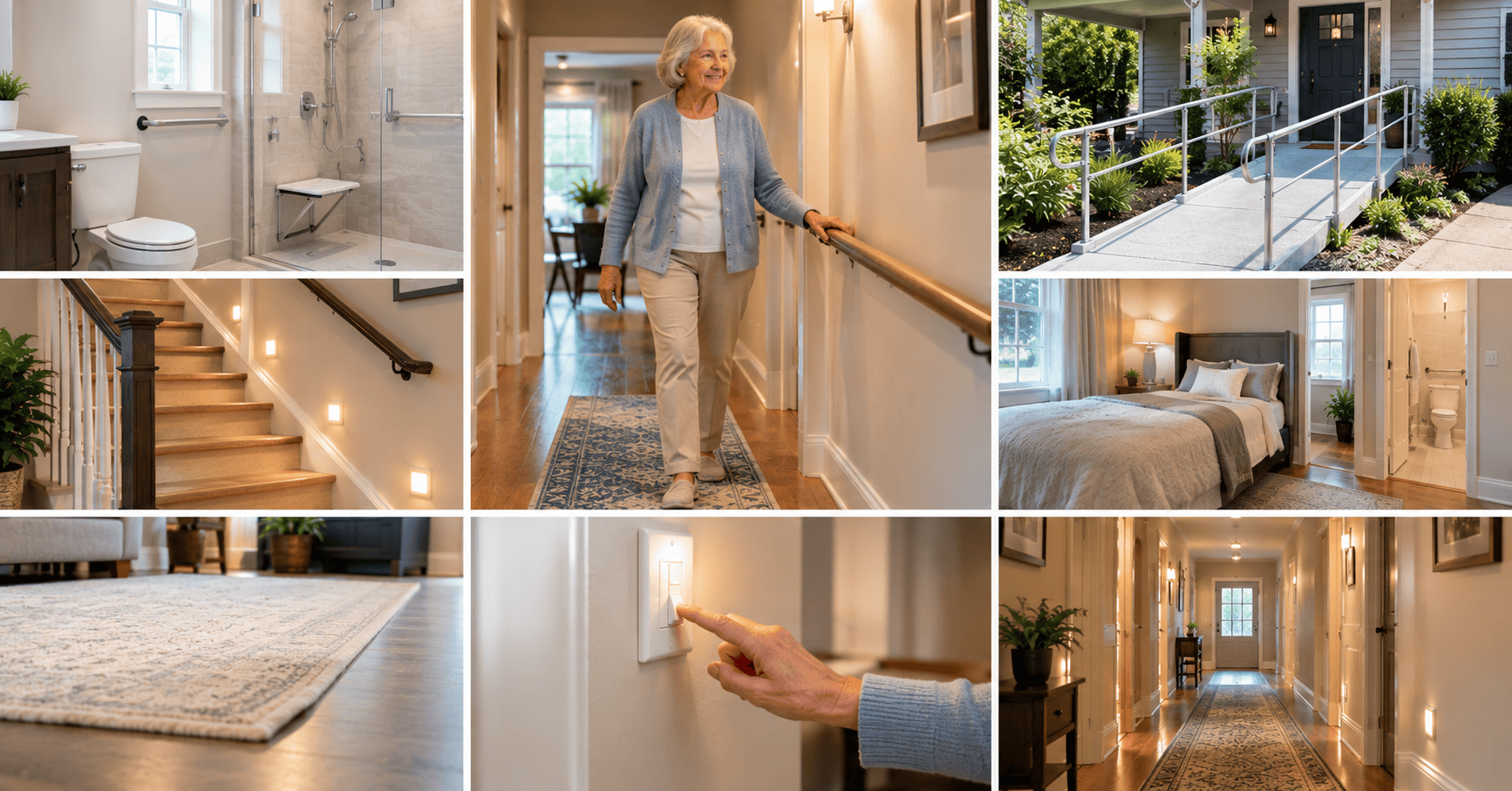
Start With the Highest-Use Areas
For many homes, the first areas worth evaluating are the bathroom, entrance, stairs, bedroom-to-bathroom route, flooring, lighting, and main walking paths.
The exact priorities depend on the individual and the home’s layout.
A secure handrail may be more useful than an expensive renovation. Similarly, removing a trip hazard or improving bathroom support can address an immediate problem without changing an entire room.
Final Thoughts
Aging in place home modifications can help make a familiar house safer, more accessible, and easier to use as needs change.
The process does not have to begin with a major remodel. Start with a room-by-room assessment, correct immediate hazards, and then prioritize improvements based on how the home is actually used.
As mobility needs change, reassess the home and make additional modifications when necessary. A thoughtful, gradual approach can make aging in place more practical while keeping renovation decisions focused on safety, accessibility, comfort, and everyday independence.

Samreen Khadim Hussain is a home improvement writer and content creator at Domelite Home. She specializes in making home renovation, interior design, and bathroom safety accessible to everyday US homeowners, turning technical subjects into clear, actionable advice. Her work is rooted in research, real-world practicality, and a genuine belief that a better home is within everyone’s reach.
1 thought on “Aging in Place Home Modifications: A Room-by-Room Guide to a Safer Home”