
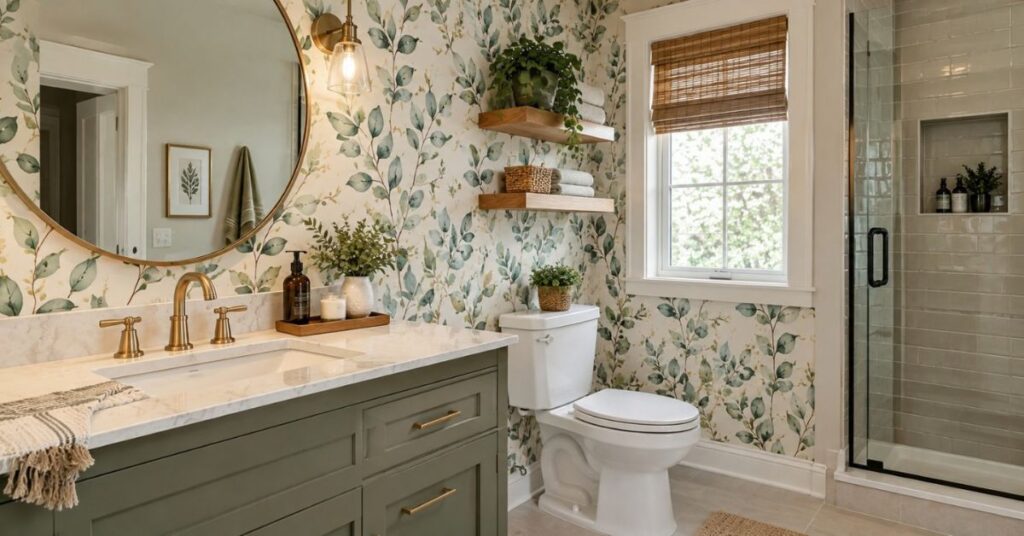
Can you use wallpaper in a bathroom? Yes. Bathroom wallpaper can add color, pattern, and personality to a space, especially in powder rooms, half baths, vanity areas, and walls that are protected from direct shower spray.
The key is choosing the right product and controlling moisture. Wallpaper is not a substitute for waterproofing, so shower and tub areas exposed to regular water should generally use tile or another suitable wet-area wall covering.
Quick Answer: Is Bathroom Wallpaper a Good Idea?
Bathroom wallpaper can work well when:
- The wall is not exposed to constant direct water.
- The bathroom has adequate ventilation.
- The wall is clean, dry, smooth, and free from moisture damage.
- The wallpaper is designed or recommended for humid interior spaces.
- Follow the manufacturer’s adhesive and installation instructions.
Best places for wallpaper: powder rooms, half baths, vanity walls, and dry walls away from the shower.
Avoid wallpaper: inside showers, directly beside areas receiving regular spray, and over walls with leaks, mold, or existing water damage.
For a full bathroom, a practical approach is to use tile or another water-resistant material in wet zones and wallpaper on the upper or dry walls. For inspiration on combining decorative wallpaper with wet-area materials, see our Bathroom Tile Shower Ideas guide.
Why Use Wallpaper in a Bathroom?
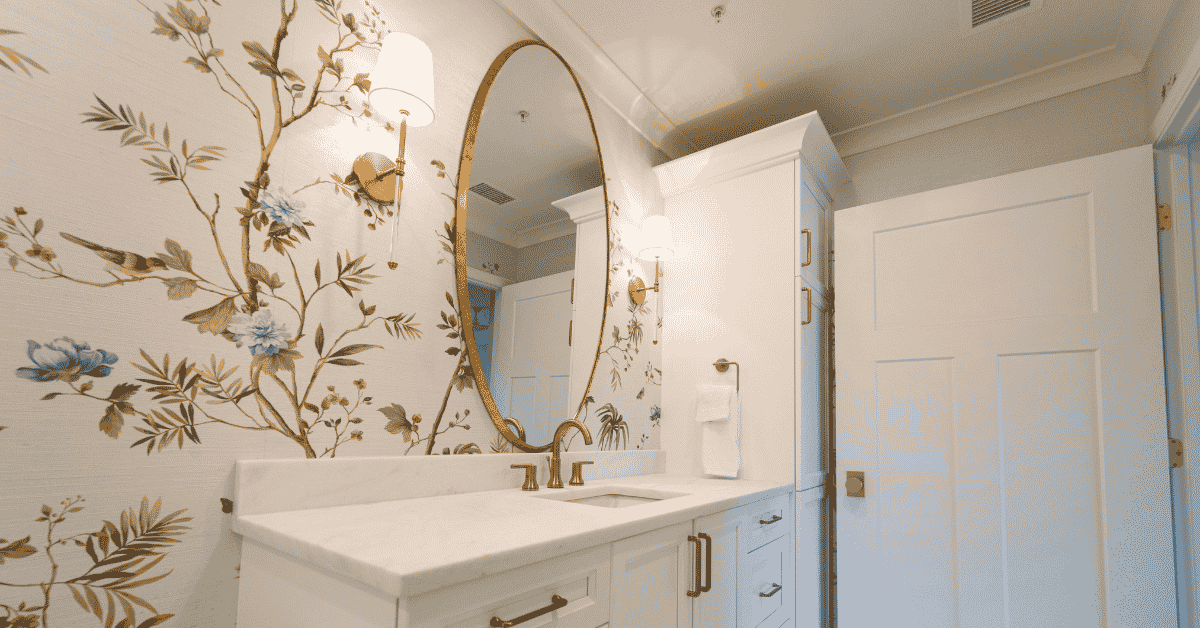
Wallpaper can transform an ordinary bathroom without the extensive demolition associated with a full tile installation. It comes in countless colors, patterns, textures, and finishes, making it especially useful when you want a strong design statement.
Bathroom wallpaper can also be used strategically rather than covering every wall.
For example, a homeowner might use:
- A bold pattern on one feature wall
- Wallpaper above a tile wainscot
- A botanical print around a vanity
- A subtle geometric pattern in a powder room
- Neutral wallpaper to complement wood, stone, or painted cabinetry
However, humidity is an important consideration.
Wallpaper should not be used to hide an existing leak, damp drywall, peeling paint, or mold problem. Moisture issues should be corrected before installation. The U.S. Environmental Protection Agency also recommends addressing moisture problems and controlling humidity to help prevent mold and other moisture-related problems.
When Bathroom Wallpaper May Not Work
Wallpaper may be a poor choice when:
- The bathroom has persistent condensation.
- An exhaust fan is missing or inadequate.
- Walls have previous water damage.
- The wallpaper would receive frequent shower spray.
- The product is not recommended for humid environments.
- Seams or edges cannot be kept protected from water.
In these situations, correcting the moisture problem or choosing a more water-resistant wall covering is the safer approach.
Where Does Bathroom Wallpaper Work Best?
The location of the wallpaper can matter as much as the wallpaper itself.
| Bathroom Location | Suitability | Why |
| Powder room | Excellent | Little direct water exposure |
| Half bath | Excellent | Generally lower moisture exposure |
| Vanity wall | Good | Usually protected from significant water |
| Wall opposite shower | Good | Less direct spray |
| Upper bathroom walls | Good | Can be separated from wet zones |
| Shower interior | Not recommended | Constant direct water exposure |
| Directly beside shower spray | Usually unsuitable | Regular water can damage seams |
| Walls with water damage | Not suitable until repaired | Wallpaper can hide an underlying problem |
Powder Rooms
A powder room is one of the easiest places to use wallpaper because it typically does not contain a shower or bathtub.
This allows homeowners to experiment with dramatic patterns, darker colors, botanical prints, or decorative designs without exposing the material to constant water.
Vanity Walls
Wallpaper can work particularly well behind or around a bathroom vanity when the sink area has suitable protection from splashing.
A backsplash or other water-resistant surface can provide additional protection where needed.
Walls Away From the Shower
If you have a full bathroom, consider wallpapering walls that are outside the primary spray area.
For example, the wall opposite the shower or a section around the vanity can provide the visual impact of wallpaper without putting it directly in a wet zone.
What Is the Best Wallpaper for a Bathroom?
There is no single best wallpaper for every bathroom. The right choice depends on humidity, water exposure, installation method, cleaning needs, and the manufacturer’s recommendations.
Vinyl and Coated Wallpaper
Vinyl-coated wallpaper is a popular option for bathrooms because many products have a wipeable surface and offer better resistance to everyday humidity than traditional uncoated paper wallpaper.
It can be particularly useful for:
- Powder rooms
- Half baths
- Vanity walls
- Bathrooms with good ventilation
Keep in mind that moisture-resistant does not mean waterproof. Even a wipeable vinyl surface should not be treated as a substitute for tile in a shower.
Always check the product specifications before purchasing.
Nonwoven Wallpaper
Nonwoven wallpaper is made from a combination of synthetic and natural fibers and is known for being relatively easy to install and remove.
It can be a practical choice for bathroom walls that experience humidity but are protected from direct water.
Advantages can include:
- Easier handling during installation
- Good dimensional stability
- A wide variety of designs
- Suitable options for humid interior spaces
As with any wallpaper, check the manufacturer’s bathroom and humidity recommendations.
Peel-and-Stick Bathroom Wallpaper
Peel-and-stick wallpaper is attractive for renters and homeowners looking for a relatively quick cosmetic update.
It is particularly useful in powder rooms and other lower-moisture spaces.
However, adhesive performance can be affected by humidity, wall condition, temperature, and installation quality. Edges and seams may eventually lift in demanding bathroom environments.
Before buying, check whether the specific product is approved or recommended for bathroom use.
Best use: powder rooms, temporary updates, and lower-moisture bathroom walls.
How Much Does Bathroom Wallpaper Cost?
The total cost depends on the wallpaper material, room size, pattern, wall preparation, and whether you install it yourself.
Typical material prices can vary considerably:
| Wallpaper Type | Approximate Price Range |
| Basic peel-and-stick | 15–40 per roll |
| Vinyl or coated wallpaper | 25–60 per roll |
| Nonwoven wallpaper | 30–70 per roll |
| Designer wallpaper | 50–150+ per roll |
These are general planning ranges rather than fixed prices. Coverage also varies between products, so calculate the required rolls using the manufacturer’s stated coverage.
Professional Installation
Professional wallpaper installation adds labor costs that vary by project, with additional charges possible for wall preparation, difficult patterns, corners, fixtures, or damaged surfaces.
DIY installation can reduce labor costs, but professional installation may be worthwhile when:
- The pattern requires precise matching.
- The bathroom has many corners or fixtures.
- The walls need extensive preparation.
- The wallpaper is expensive.
- You have limited installation experience.
Always request a project-specific quote before budgeting.
How to Prepare a Bathroom Wall for Wallpaper
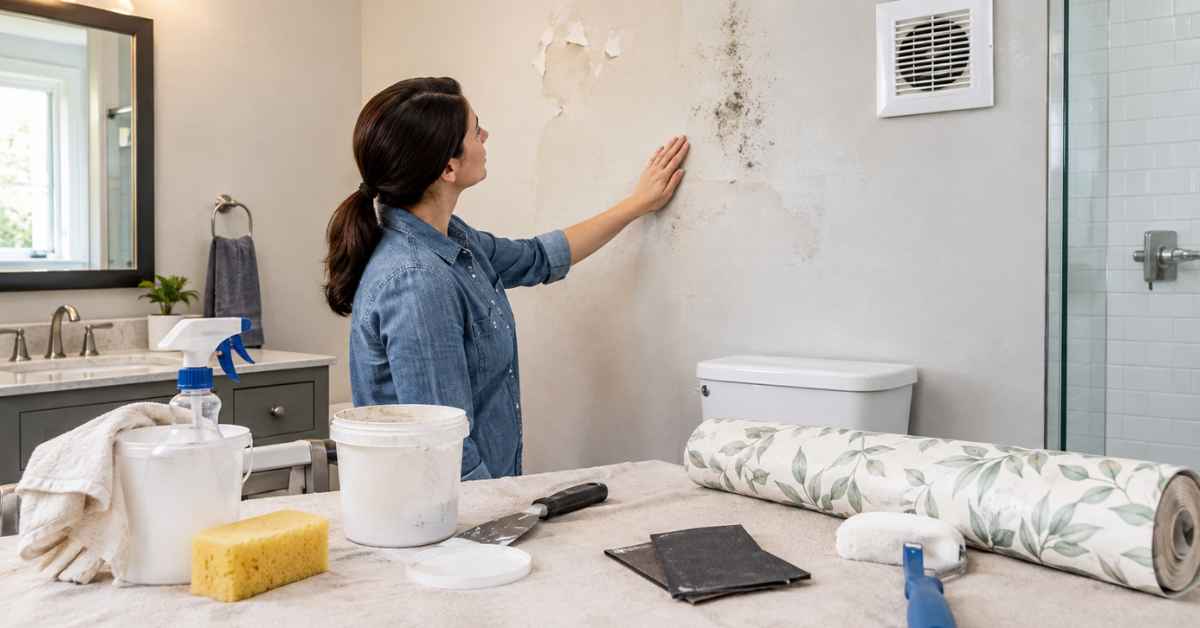
Proper preparation is one of the most important parts of a successful bathroom wallpaper installation.
Step 1: Check for Moisture Problems
Before installing wallpaper, inspect the wall for:
- Peeling paint
- Dark stains
- Bubbling surfaces
- Soft or damaged drywall
- Musty odors
- Visible mold
- Plumbing leaks
- Persistent condensation
Do not wallpaper over an active moisture problem.
Repair plumbing leaks and water damage first. If drywall has been significantly damaged, it may need to be repaired or replaced before wallpaper installation.
Step 2: Clean the Surface
The wall should be clean, dry, smooth, and free from grease, dust, soap residue, and loose material.
Follow the wallpaper manufacturer’s recommended cleaning and preparation method. Avoid introducing unnecessary moisture to a wall that has not completely dried.
Step 3: Repair Imperfections
Fill holes and cracks with an appropriate wall repair compound.
Sand repaired areas until the surface is smooth. Uneven areas can become more noticeable once wallpaper is installed, particularly with thinner or patterned products.
If the wall has peeling paint that needs attention before wallpaper installation, see our guide on How to Fix Peeling Paint.
Step 4: Apply Wallpaper Primer
A suitable wallpaper primer can create a more consistent surface for adhesive and can make future wallpaper removal easier.
Follow the drying time specified by the primer manufacturer before installation.
Step 5: Check Bathroom Ventilation
Good ventilation helps reduce excess humidity after showers and baths.
Use the bathroom exhaust fan during bathing and for the period recommended by the fan or bathroom ventilation guidance. If the room remains excessively damp or condensation persists, address the ventilation problem before installing wallpaper.
EPA guidance recommends functioning bathroom exhaust ventilation that removes moisture to the outdoors rather than into an attic or other enclosed space.
Bathroom Wallpaper vs. Tile
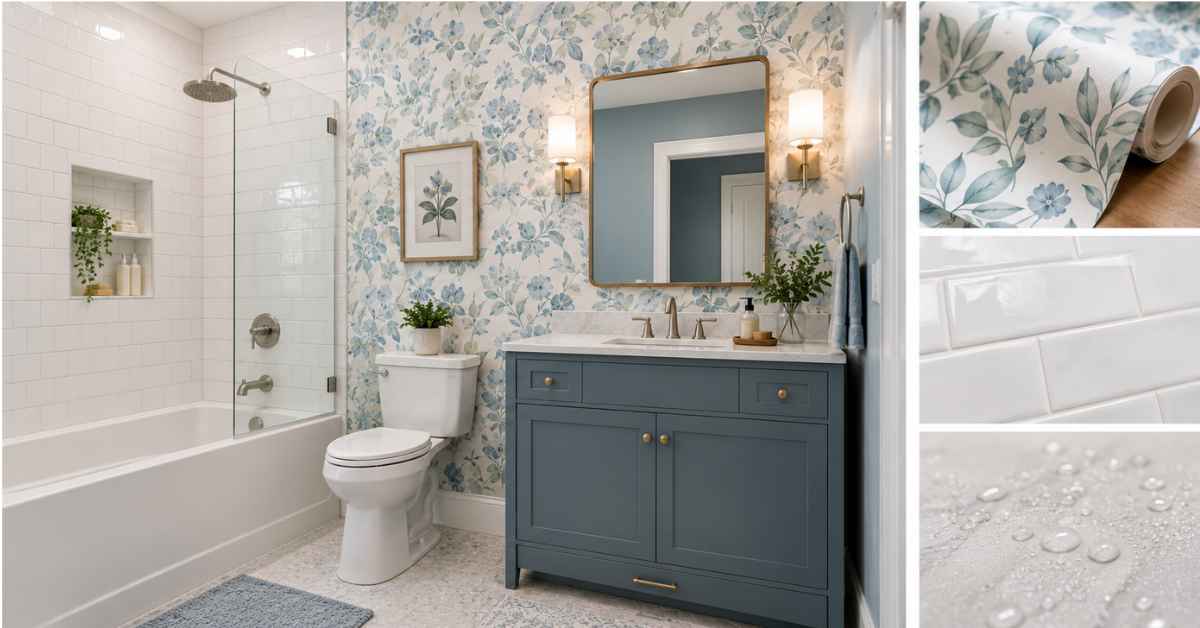
Wallpaper and tile serve different purposes in a bathroom.
| Factor | Bathroom Wallpaper | Tile |
| Design variety | Very high | High |
| Direct water resistance | Limited | High when properly installed |
| Installation | Generally simpler | More labor-intensive |
| DIY potential | Often suitable for experienced DIYers | More demanding |
| Cleaning | Depends on product | Generally easy |
| Wet-zone suitability | Limited | Excellent |
| Pattern choices | Extremely varied | Wide range |
| Replacement | Relatively straightforward | More involved |
The choice depends on where the material will be installed.
For shower and tub surrounds: a properly installed water-resistant wall system is generally more appropriate.
For dry and decorative walls: bathroom wallpaper can provide more pattern and design flexibility.
A Practical Combination
You do not have to choose wallpaper or tile for the entire bathroom.
A combination can work especially well:
Tile in wet zones + wallpaper on dry or upper walls.
This approach provides a decorative finish while reserving more water-resistant materials for areas that receive regular spray.
How to Install Bathroom Wallpaper
Installation instructions vary by product, so always follow the manufacturer’s directions.
The basic process generally involves:
- Measure the walls and calculate the amount of wallpaper required.
- Prepare the surface by cleaning, repairing, and priming it.
- Mark a straight starting line using a level.
- Prepare the adhesive if the wallpaper is not pre-pasted or peel-and-stick.
- Position the first strip carefully to establish a straight pattern.
- Smooth the wallpaper from the center toward the edges to reduce bubbles.
- Match patterns and seams according to the manufacturer’s instructions.
- Trim around fixtures and edges carefully.
- Press seams firmly without damaging the wallpaper surface.
- Allow the adhesive to cure for the recommended time before exposing the wall to heavy humidity.
Bathroom Wallpaper Installation Mistakes to Avoid
1. Using the Wrong Product
Do not assume that every wallpaper can tolerate bathroom humidity.
Check the manufacturer’s specifications before buying.
2. Ignoring Ventilation
Excess humidity can affect wallpaper, adhesives, seams, and the wall underneath.
Address ventilation issues before installation.
3. Installing Over Damaged Walls
Wallpaper should not be used to conceal leaks, mold, or damaged drywall.
Repair the underlying problem first.
4. Rushing the Drying Process
Give the adhesive and wallpaper enough time to cure according to the manufacturer’s instructions.
Avoid exposing newly installed wallpaper to unnecessary moisture during this period.
5. Poor Seam Installation
Visible or loose seams can become an entry point for moisture.
Take time to align and secure seams properly.
How Long Does Bathroom Wallpaper Last?
There is no universal lifespan for bathroom wallpaper.
Durability depends on:
- Wallpaper material
- Product quality
- Humidity
- Direct water exposure
- Wall preparation
- Adhesive
- Installation quality
- Bathroom ventilation
- Cleaning practices
A well-installed, suitable wallpaper product in a properly ventilated powder room may remain attractive for years. Peel-and-stick products may have a shorter service life, particularly in humid conditions.
Instead of relying on a specific number of years, check the manufacturer’s warranty and recommended application conditions for the product you are considering.
Bathroom Wallpaper Ideas for Different Styles
Wallpaper can be used in many bathroom designs.
One Feature Wall
A single wallpapered wall can create a focal point while limiting material use.
This works particularly well behind a vanity or on a wall that is naturally visible when entering the room.
Wallpaper Above Tile
Install tile on the lower portion of the wall and wallpaper above it.
This creates a layered look while keeping wallpaper away from areas more likely to receive splashes.
Botanical Wallpaper
Leaves, flowers, branches, and nature-inspired patterns can add visual interest without requiring additional decorative accessories.
Geometric Wallpaper
Geometric patterns can create a contemporary look. Vertical patterns may also emphasize the height of a room.
Neutral Bathroom Wallpaper
Cream, beige, soft gray, taupe, and other restrained colors can complement a wide range of bathroom fixtures and finishes.
For more inspiration, explore our Neutral Bathroom Ideas guide.
Small Bathroom Wallpaper
A small bathroom does not automatically mean wallpaper should be avoided.
In a powder room or well-protected area, a carefully chosen pattern can make a compact space feel intentional and distinctive.
Bathroom Wallpaper by US Climate
Bathroom conditions can vary significantly by region. Rather than choosing wallpaper solely based on geography, consider the actual humidity and ventilation of your bathroom.
Southeast
States such as Florida, Georgia, South Carolina, and Louisiana can experience high humidity.
Focus on:
- Strong bathroom ventilation
- Suitable humidity-resistant wallpaper
- Proper wall preparation
- Keeping wallpaper away from direct water
Southwest
Drier areas may have fewer humidity-related challenges, but bathrooms can still develop moisture around showers, tubs, and poorly ventilated spaces.
Do not assume that a dry outdoor climate makes every wallpaper suitable for a wet bathroom.
Midwest and Northeast
Seasonal temperature and humidity changes can contribute to condensation.
Pay particular attention to ventilation during colder months and inspect wallpaper edges and seams if condensation becomes a recurring problem.
Pacific Northwest
Higher humidity can make moisture management particularly important.
Choose products appropriate for the bathroom conditions and ensure the room can dry effectively after showers.
Where to Buy Bathroom Wallpaper in the US
Bathroom wallpaper is available through home-improvement retailers, wallpaper specialists, online marketplaces, and direct-to-consumer brands.
When shopping, compare:
- Material
- Roll dimensions
- Pattern repeat
- Coverage
- Washability
- Moisture recommendations
- Adhesive requirements
- Return policy
- Sample availability
Ordering a sample before buying several rolls can help you check the actual color, texture, and pattern scale in your bathroom’s lighting.
How to Prevent Bathroom Wallpaper From Peeling
To reduce the risk of peeling:
- Start with a clean, dry, properly prepared wall.
- Use the recommended primer.
- Choose a product suitable for the bathroom environment.
- Use the manufacturer’s recommended adhesive.
- Keep wallpaper away from direct shower spray.
- Maintain good bathroom ventilation.
- Do not rush installation or curing.
- Address leaks immediately.
- Inspect seams and edges periodically.
- Clean the wallpaper only according to the manufacturer’s instructions.
If a seam begins lifting, address it early rather than allowing moisture to penetrate farther behind the wallpaper.
FAQ: Bathroom Wallpaper
Can you put wallpaper in a bathroom?
Yes. Bathroom wallpaper can work well on walls that are exposed to humidity but protected from constant direct water. Powder rooms, vanity walls, and dry walls away from showers are common applications.
What is the best wallpaper for a bathroom?
Vinyl-coated and other bathroom-suitable wallpaper products are common choices because they can offer better resistance to humidity and easier cleaning. The best option depends on the specific product and the conditions in your bathroom.
Is peel-and-stick wallpaper good for bathrooms?
It can be suitable for some powder rooms and lower-moisture applications. However, humidity can affect adhesive performance, so always check the manufacturer’s recommendations before installation.
Can wallpaper go behind a bathroom sink?
Yes, wallpaper can be used around a bathroom vanity or sink when the area is protected from excessive splashing. A backsplash can provide additional protection around the sink.
Can you put wallpaper behind a shower?
Wallpaper should generally not be installed where it will receive constant direct shower spray. Use a suitable water-resistant wall covering for the shower area.
How do you prevent bathroom wallpaper from peeling?
Use the correct product and adhesive, prepare the wall properly, control humidity, and keep wallpaper away from direct water. Proper seam installation is also important.
How long does bathroom wallpaper last?
Its lifespan varies according to the material, installation, ventilation, humidity, and water exposure. Follow the manufacturer’s recommendations rather than relying on a universal lifespan.
Is bathroom wallpaper waterproof?
Not necessarily. Some wallpaper products are washable or moisture-resistant, but that does not make them waterproof. Always distinguish between resistance to humidity and protection from direct water.
Is wallpaper better than tile in a bathroom?
Neither material is universally better. Tile is generally more suitable for wet areas exposed to direct water, while wallpaper offers extensive design flexibility on dry or protected walls.
Should I install bathroom wallpaper myself or hire a professional?
DIY installation can work for straightforward walls and suitable products if you are comfortable measuring, aligning patterns, and handling seams. Professional installation may be useful for expensive wallpaper, complex patterns, difficult layouts, or extensive wall preparation.
Final Takeaway
Bathroom wallpaper can be a practical and stylish choice when it is used in the right location and installed under suitable conditions.
For the best results, start with a dry and properly prepared wall, choose wallpaper appropriate for humid interiors, maintain good ventilation, and keep wallpaper away from constant direct water.
For bathrooms with showers or tubs, a combination of tile or another water-resistant material in wet zones and bathroom wallpaper on dry or upper walls can provide both protection and design flexibility.

Samreen Khadim Hussain is a home improvement writer and content creator at Domelite Home. She specializes in making home renovation, interior design, and bathroom safety accessible to everyday US homeowners, turning technical subjects into clear, actionable advice. Her work is rooted in research, real-world practicality, and a genuine belief that a better home is within everyone’s reach.