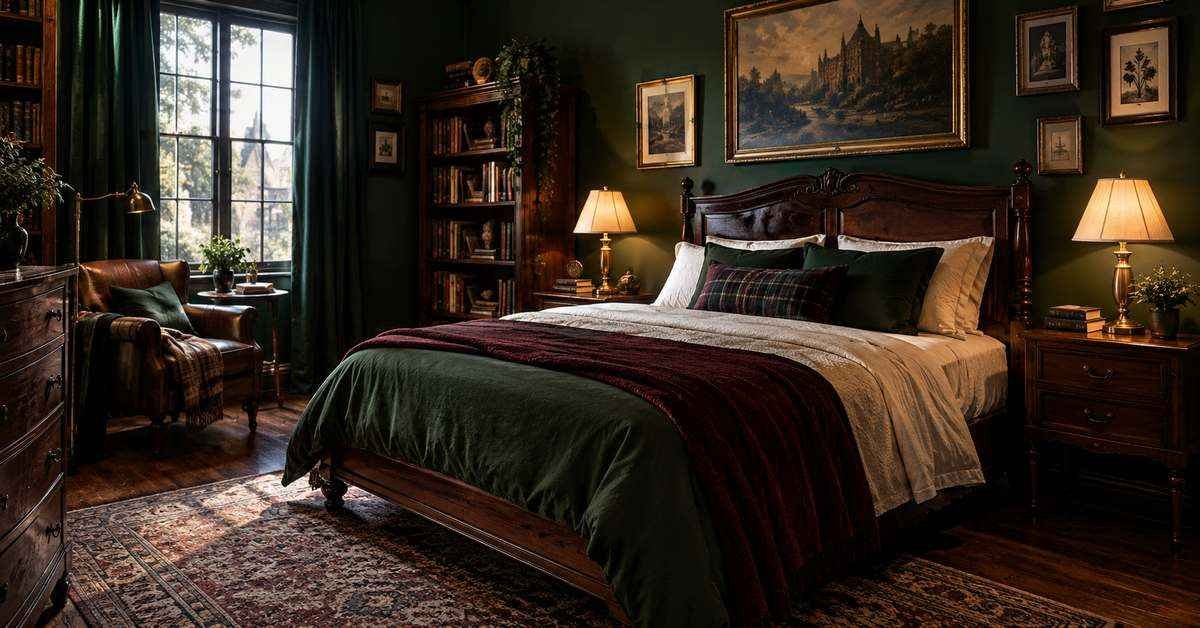
Quick Answer: A dark academia bedroom combines rich colors, vintage furniture, layered bedding, classic artwork, and warm lighting to create a comfortable, scholarly retreat. Start with forest green, burgundy, navy, or chocolate brown, then add cream textiles, dark wood furniture, and a few personal accessories. You can create this style on a budget, even in a small bedroom, without renovating the entire space.
Dark academia bedroom design takes inspiration from traditional libraries, historic university rooms, classic literature, and vintage interiors. The result should feel personal and comfortable, not like a staged antique shop.
You do not need expensive furniture or dark walls on every side. The right combination of color, lighting, and texture can transform your bedroom gradually.
17 Dark Academia Bedroom Ideas to Try
1. Choose a Rich, Timeless Color Palette

Start with two or three complementary colors. Forest green, burgundy, chocolate brown, and midnight navy provide depth, while parchment cream and warm taupe create balance.
Try these combinations:
- Forest green, walnut brown, and cream
- Burgundy, charcoal, and warm beige
- Midnight navy, antique gold, and ivory
- Chocolate brown, olive green, and parchment
- Muted plum, charcoal, and cream
Use your main color on a larger surface, such as the bedding or an accent wall. Add supporting shades through curtains, cushions, artwork, or furniture.
For broader design inspiration, explore HGTV’s guide to the dark academia aesthetic for ideas on bringing this classic style into your home.
For specific color combinations and HEX codes, see these dark academia color palette ideas.
2. Paint an Accent Wall
A dark accent wall creates a traditional, library-inspired atmosphere without making the entire room feel enclosed.
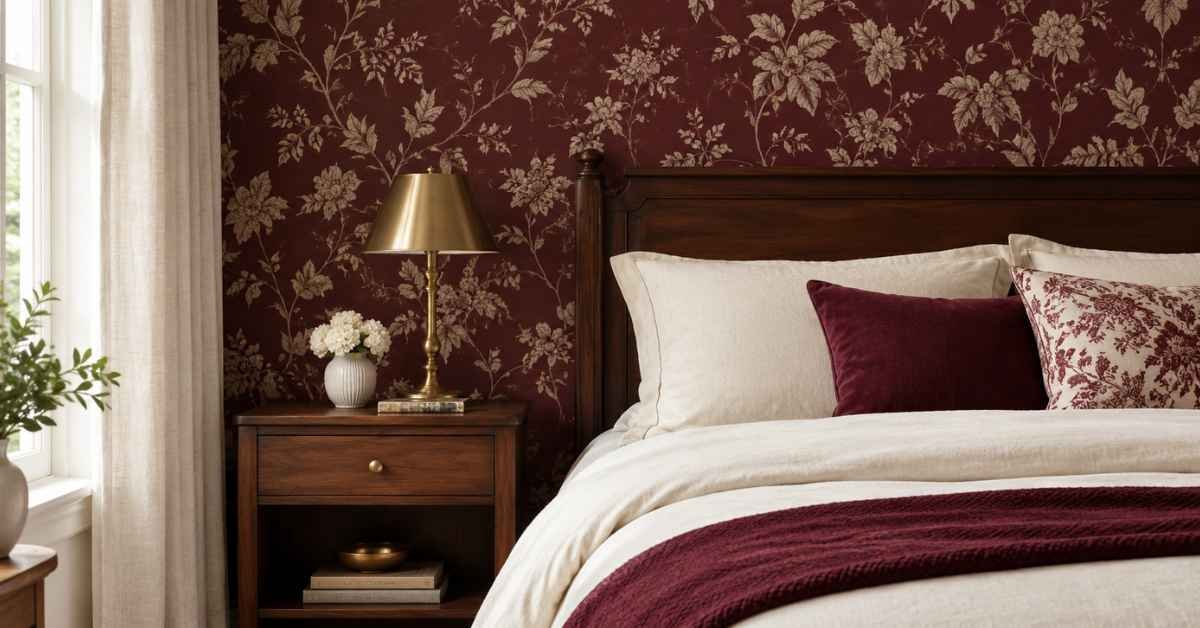
Forest green works well with walnut furniture, while deep navy offers a classic alternative. Burgundy can add warmth behind a wooden or upholstered headboard.
Test paint samples at different times of day before choosing a shade. If your bedroom receives little natural light, keep other walls lighter or introduce cream bedding and curtains.
3. Choose Dark Wood Furniture
Walnut, mahogany, and dark oak finishes complement the traditional character of dark academia interiors.
A wooden bed frame, vintage-style dresser, or traditional nightstand can establish the look. Furniture with visible wood grain adds character without requiring elaborate decoration.
You do not need to replace everything. A secondhand dresser or an existing wooden bedside table can become a focal point with careful cleaning and updated hardware.
4. Layer Bedding for Comfort
The bed should look inviting rather than overly coordinated. Combine different fabrics in a controlled color scheme.
For example, pair cream sheets with a forest-green duvet, a burgundy throw, and textured cushions. Alternatively, use navy bedding with ivory sheets and a brown knitted blanket.
Cotton, linen, velvet accents, and wool-look fabrics add texture. Plaid, subtle florals, and traditional prints can introduce pattern without overwhelming the room.
5. Add Vintage-Style Bedside Tables
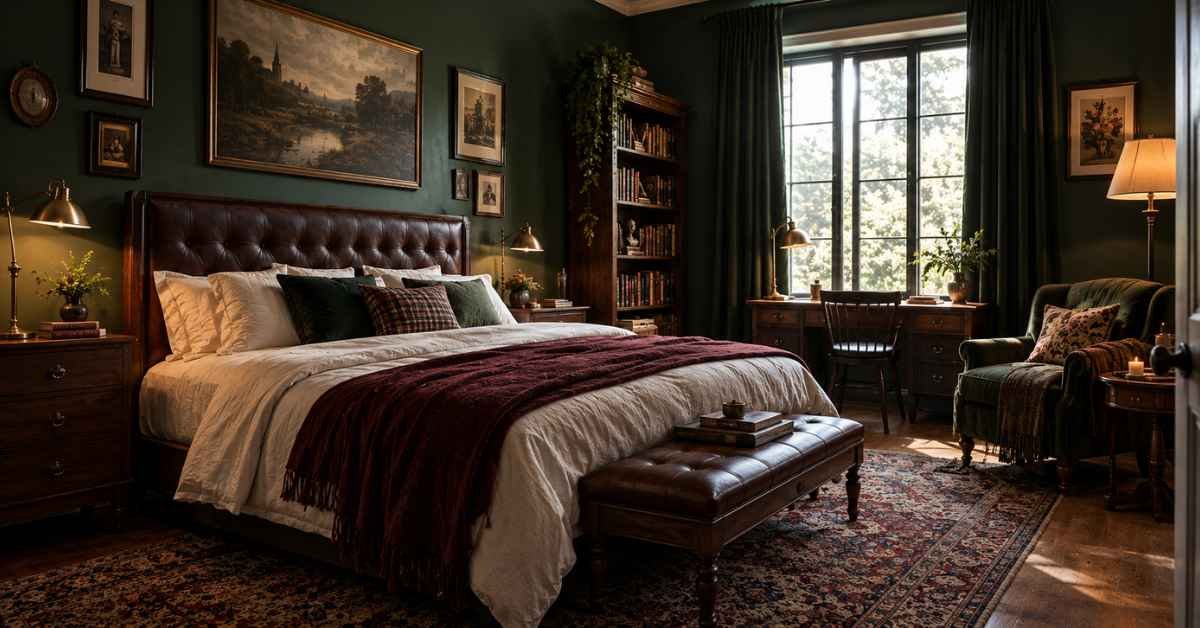
Bedside tables offer a practical place to introduce traditional details. Look for dark wood, aged finishes, curved legs, or brass-colored handles.
Style each table with a lamp, a small stack of books, and one personal object. Leave enough room for everyday essentials.
A matching pair is not necessary. Different tables can work together when their finishes, proportions, or colors complement each other.
6. Use Warm, Layered Lighting
Lighting affects how dark colors and traditional furniture appear. Instead of relying on one bright ceiling light, combine general lighting with bedside lamps or a floor lamp where space allows.
Choose warm-white bulbs for a softer evening atmosphere. A shaded table lamp can make reading more comfortable, while a picture light can highlight artwork.
Keep enough light for dressing, cleaning, and moving safely around the bedroom.
7. Decorate With Classic Artwork
Botanical illustrations, landscape prints, architectural drawings, and traditional portraits fit naturally into this style.
Use dark wood, black, bronze, or muted gold frames to connect the artwork with your furniture. One larger piece above the bed can look elegant, while a small gallery wall creates a collected appearance.
For further inspiration, The Spruce’s guide to dark academia interior design explores the style’s vintage furnishings, rich colors, and old-world details.
8. Create a Reading Corner
If your bedroom has enough space, add a comfortable chair, a small side table, and a reading lamp.
Choose upholstery in olive green, burgundy, brown, or navy. A wooden chair with a cushion is a practical alternative when a large armchair would crowd the room.
Position the chair near a window when possible and keep a few books within reach. Even a small reading spot can make the bedroom feel more personal.
9. Try Botanical or Vintage Wallpaper
Wallpaper introduces pattern without adding more furniture. Consider faded florals, botanical illustrations, damask, or subtle vintage stripes.
A patterned wall behind the bed can become the room’s focal point. Keep the other walls and bedding relatively simple so the design does not compete with every other element.
Explore these dark academia wallpaper ideas for more inspiration.
10. Hang Full-Length Curtains
Curtains add softness and connect the bedding, wall color, and furniture.
Choose forest green, navy, burgundy, or chocolate brown for a richer look. Cream or warm taupe curtains can brighten a bedroom with dark walls.
Measure the window before buying and consider how much daylight you want to retain. Heavier curtains may improve privacy and light control, while lighter fabrics help keep the room bright.
11. Add a Traditional Rug
A vintage-inspired rug introduces color and pattern without requiring changes to the walls.
Look for faded floral, Persian-inspired, or traditional geometric designs in rust, cream, olive, brown, or burgundy. In a small bedroom, a rug beside the bed may be more practical than a large rug underneath all the furniture.
Choose a size that fits the available floor area and does not obstruct doors or walking paths.
12. Style Shelves With Books and Personal Objects
Books are a natural fit for the scholarly character of dark academia. Use a small bookcase, floating shelves, or a neat stack on your nightstand.
Combine vertical and horizontal book arrangements, then add one or two objects, such as a ceramic vase or a framed print.
Avoid overcrowding shelves. A few meaningful items will look more intentional than a collection of decorations that leaves no usable space.
13. Introduce Brass and Aged-Metal Accents
Antique-brass and bronze finishes complement dark wood and rich colors. Use them on lamp bases, drawer handles, mirror frames, or picture frames.
A few repeated metal details can make the room feel coordinated. You do not need to replace every handle or buy a matching set of accessories.
14. Make a Small Bedroom Feel Spacious
A small room can still have a distinctive dark academia look. Focus on a few key details rather than trying to recreate a large library.
- Use one dark accent wall instead of painting every surface.
- Choose furniture that fits the room’s proportions.
- Use wall shelves instead of a bulky bookcase.
- Limit the bedding palette to two or three colors.
- Add a mirror where it can reflect available daylight.
- Choose bedside lamps that take up little surface space.
- Store extra bedding and accessories out of sight.
For additional practical options, browse these space-saving furniture ideas.
15. Create the Look on a Budget
You can build the bedroom gradually without buying a complete furniture set.
Start by rearranging existing furniture and choosing one visible change, such as new bedding, a warm bedside lamp, or framed botanical prints. Shop secondhand for wooden furniture and use books you already own as decoration.
If you plan to paint, test the color before purchasing enough paint for the entire room. Prioritize a comfortable bed, suitable lighting, and functional storage before spending on accessories.
16. Mix Traditional and Modern Pieces
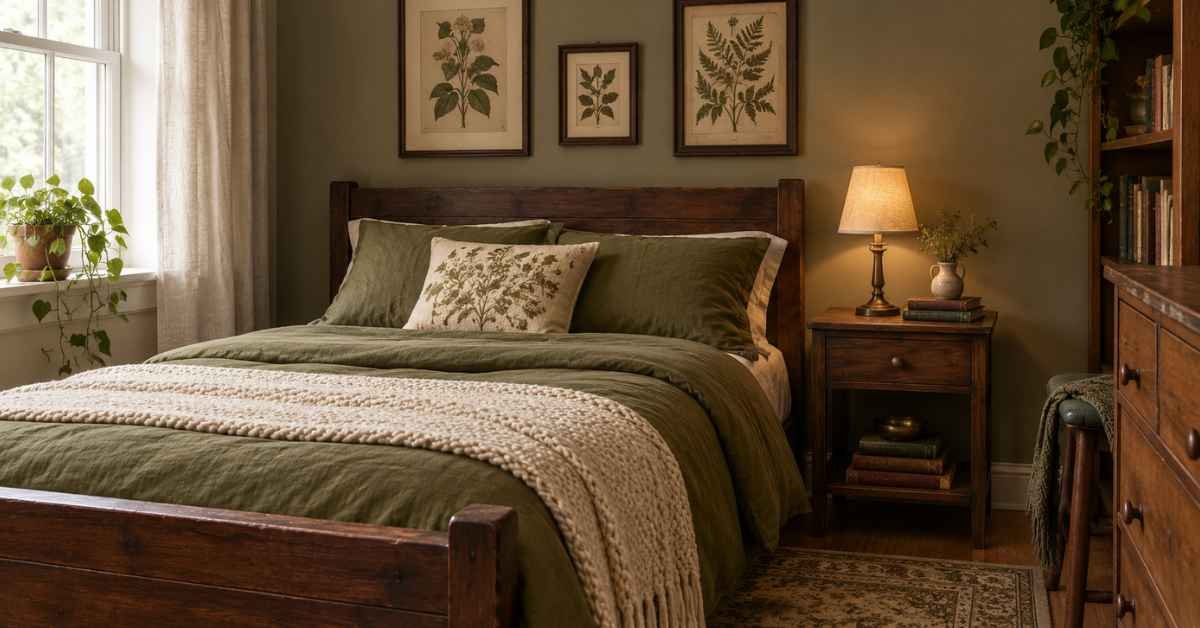
A room can feel more natural when not every item looks antique. Pair a traditional wooden bed with plain linen bedding, or place a simple modern lamp beside a vintage-style nightstand.
This contrast keeps the bedroom functional while preserving its classic character. Choose modern storage when it solves a practical problem, and use artwork, textiles, and furniture finishes to maintain a consistent look.
17. Keep the Room Personal and Uncluttered
Dark academia works best when it reflects your interests rather than looking like a themed display.
Include books you enjoy, artwork you appreciate, and objects with personal meaning. Avoid filling every surface with ornaments and decorative books.
Keep pathways clear, make sure drawers and wardrobes remain accessible, and use lamps safely around bedding and curtains. A bedroom should be comfortable to sleep in and easy to maintain.
Frequently Asked Questions
What colors are best for a dark academia bedroom?
Forest green, burgundy, chocolate brown, charcoal, and midnight navy are useful starting points. Add cream or warm taupe to balance darker shades and create contrast.
Can I create a dark academia bedroom without painting?
Yes. Use darker bedding, traditional artwork, warm lighting, vintage-style accessories, and wood furniture. These changes can establish the style without permanently changing your walls.
How do I decorate a small dark academia bedroom?
Use a limited color palette, appropriately sized furniture, wall-mounted shelves, and a few distinctive accessories. Keep walking paths clear and use lighter textiles to balance dark surfaces.
Is dark academia bedroom decor expensive?
No. Reusing furniture, shopping secondhand, framing affordable prints, and updating bedding can help you create the look gradually. Expensive antiques are not essential.
What lighting suits a dark academia bedroom?
Warm-white bedside lamps, shaded table lamps, and floor lamps work well. Combine them with general room lighting so the bedroom remains practical for everyday activities.
Final Thoughts
A dark academia bedroom combines rich colors, comfortable textiles, traditional furniture, and personal details without sacrificing function. Start with the bedding or lighting, then add artwork, wallpaper, or vintage furniture as your budget allows.
Choose details you genuinely enjoy, and let the room develop over time. The best result feels timeless, comfortable, and lived in not crowded or overly coordinated.

I’m Samreen Khadim Hussain, a home improvement writer specializing in practical, research-driven content for U.S. homeowners. At Domelite Home, I cover home renovation, interior design, home maintenance, and residential safety, translating technical information and industry research into clear, actionable guidance. My approach combines search intent research, reliable sources, and reader-focused writing to help homeowners understand their options, make informed decisions, and create safer, more functional living spaces.