
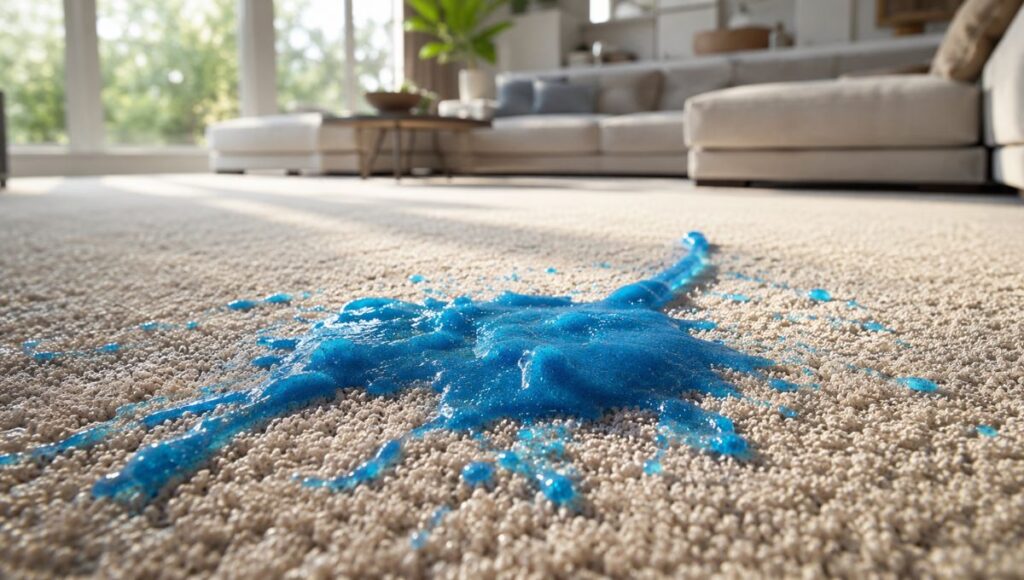
Quick Answer
Here’s how to get slime out of carpet, start to finish: freeze it with ice for 10–15 minutes until it hardens, then scrape it off with a dull knife or plastic scraper. Vacuum up the crumbles, then treat any remaining residue with a mix of white vinegar and warm water, blotting, never rubbing, with a clean cloth until the stain lifts.
Key Takeaways
- Cold, not heat, is your best friend for fresh or dried slime; freezing makes it brittle and easy to chip off.
- Blot, don’t scrub. Scrubbing drives slime and dye deeper into the carpet backing.
- Vinegar and water handle most residue. Rubbing alcohol is your backup for stubborn dye stains.
- Glitter and foam-bead slime need a second step; a lint roller or packing tape pulls out what vacuuming leaves behind.
- Wool and Berber carpets need a gentler hand than standard synthetic carpet.
- If a stain has been sitting for days or you’re dealing with an antique rug, it’s worth calling a professional instead of pushing your luck with DIY.
There’s a specific sound every parent learns to dread: that soft “splat” of a slime ball missing the tray and landing square in the middle of the living room rug. Maybe it’s still warm and gooey. Maybe you’re finding it a full day later, camouflaged against the carpet until you step on it in socks. Either way, your first instinct is probably somewhere between panic and resignation.
Here’s the thing, though: slime is one of the more forgiving stains you’ll ever deal with. Unlike red wine or pet accidents, slime is mostly glue and water-soluble activator, which means it responds really well to a handful of basic household products, if you use them correctly. The mistakes people make aren’t usually about what they reach for; it’s how they use it. Scrubbing too hard. Using hot water on a dye-heavy batch. Skipping the scraping step and going straight for the spray bottle.
This guide covers exactly how to get slime out of carpet, every common type, from glitter and butter to cloud, foam bead, store-bought, and homemade, and breaks down how your approach should shift depending on whether you’ve got nylon carpet, wool, or a hand-woven area rug underfoot.
What is slime, exactly? Slime is a non-Newtonian polymer, typically made by combining a glue base (polyvinyl acetate) with an activator such as borax, liquid starch, or contact lens solution. The reaction links the glue molecules into long, stretchy chains; the same chemistry that makes it fun to play with is what makes it grab onto carpet fibers.
Why Does Slime Stick to Carpet?
Short answer: Slime sticks to carpet because its polymer chains bond to individual fibers as moisture evaporates, and that grip only gets stronger the longer it’s left untreated.
Most slime, whether it’s the homemade kind mixed in a mixing bowl or the kind that comes in a plastic tub from the store, starts with that same polyvinyl acetate base a fancy name for glue. When the glue reacts with an activator like liquid starch, borax solution, or contact lens solution (which contains boric acid), it cross-links into the stretchy, semi-solid texture kids love.
That cross-linking is exactly what makes slime so clingy against carpet. As the water content evaporates, the polymer strands tighten their grip on individual fibers, almost like a weak adhesive curing in place. Glitter, foam beads, or bright dye complicate things further. Each one adds a separate problem layered into a single stain: a sticky base, a physical debris issue, and a potential color-transfer issue.
Timing is what changes everything here. Fresh slime hasn’t cured yet, so the polymer bonds are still loose and it lifts away with minimal effort. Give it 24 hours, though, and it’s an entirely different job.
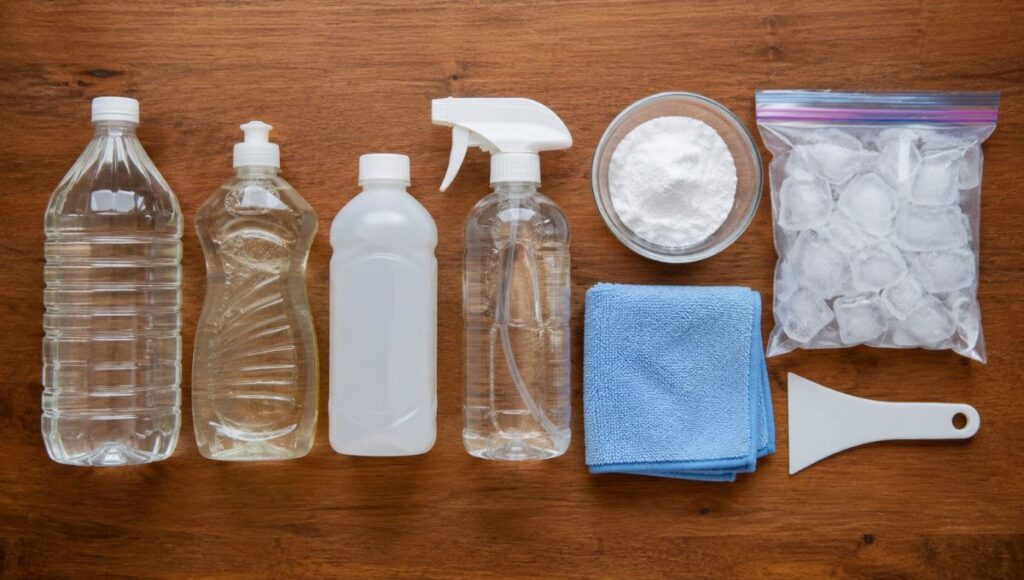
What You’ll Need Before You Start
You don’t need a fully stocked cleaning cabinet for this. Most of what works is already under your kitchen sink:
- Ice cubes, sealed in a zip-top bag
- A dull butter knife, plastic scraper, or an old gift card
- White vinegar
- A clear, dye-free dish soap
- Baking soda
- Rubbing alcohol (isopropyl, 70%)
- Clean white cloths or plain paper towels; colored towels can bleed dye onto light carpet
- A spray bottle
- A shop vac or regular vacuum
- Cold water, never hot, at least in the early stages
Pro tip: Keep a small “slime kit” just vinegar, a scraper, and a spray bottle in a cabinet near wherever your kids actually make slime. The two or three minutes you save by not hunting for supplies is often the difference between a fresh stain and a set-in one.
Fresh Slime vs. Dried Slime: Quick Comparison
| Fresh Slime | Dried/Hardened Slime | |
| Removal difficulty | Low | Moderate |
| Best first step | Scoop with a spoon | Freeze with ice |
| Time needed | 10–15 minutes | 20–30 minutes |
| Risk of dye staining | Lower (less time to set) | Higher |
| Tools needed | Spoon, vinegar, cloth | Ice, scraper, vinegar, cloth |
How to Get Slime Out of Carpet When It’s Fresh and Wet
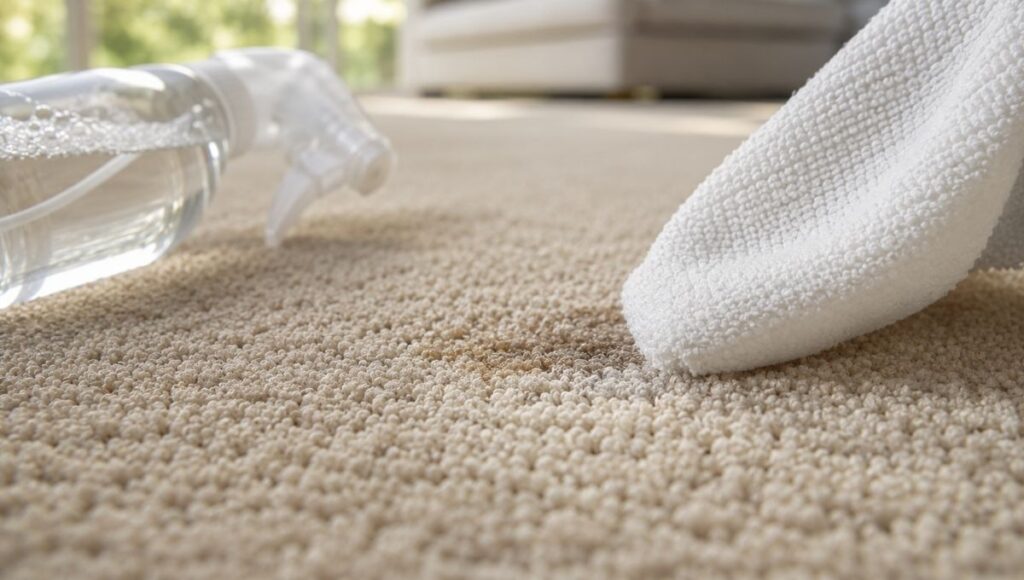
Fresh slime is the easy case, and if you catch it within the first hour or so, you can usually skip most of the harder steps below.
- Scoop first, always. Use a spoon or the flat edge of a plastic scraper to lift as much slime off the carpet as you can, working from the outer edge in toward the center. This keeps the blob contained instead of smearing it wider.
- Blot, don’t press. Once the bulk is removed, dab the area with a dry cloth to soak up any leftover moisture or tackiness.
- Mix your vinegar solution. Combine equal parts white vinegar and cool water in a spray bottle.
- Lightly mist; don’t drench. Spray just enough to dampen the area; oversaturating carpet risks soaking the padding underneath, which invites mold down the line.
- Let it sit for 5 minutes, then blot with a clean white cloth, working from the outside in.
- Rinse lightly with plain cool water and blot dry with a fresh towel.
Most fresh-slime incidents are fully resolved in under 15 minutes using just these steps.
How to Get Slime Out of Carpet When It’s Dried or Hardened
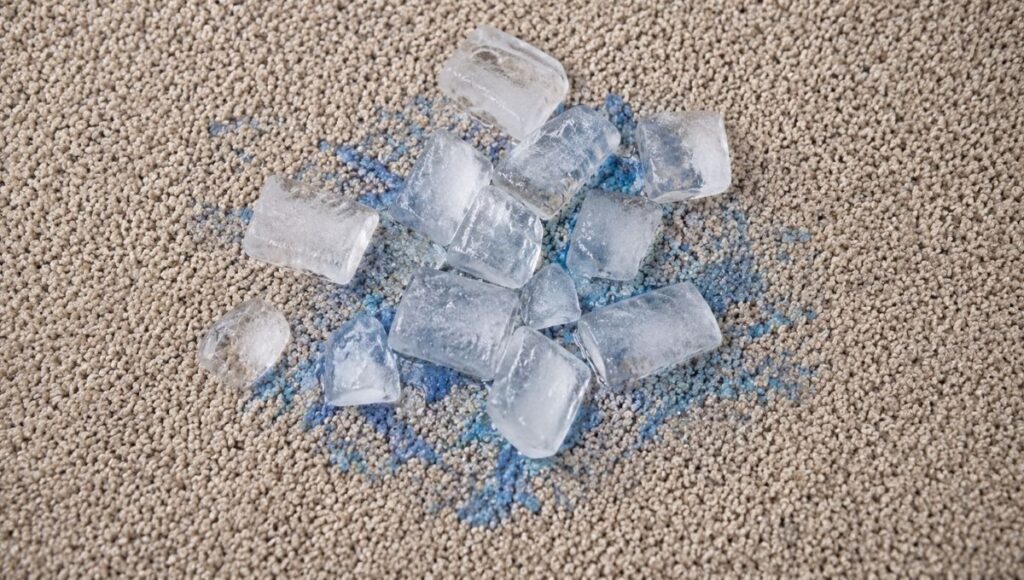
This is where the ice-cube method earns its reputation as the single best trick in this entire guide.
- Cover the dried slime with ice. Either lay loose ice cubes directly over the spot or place a sealed bag of ice on top.
- Wait 10–15 minutes. As the slime chills, the polymer bonds stiffen, and the whole mass turns brittle, essentially the opposite of what happens when slime warms up in your hands.
- Chip it away. Use a dull knife or plastic scraper to gently break the frozen slime into pieces, working from the outside toward the center so you’re not grinding it further into the pile.
- Vacuum thoroughly to pull up all the loosened crumbs before you introduce any liquid.
- Treat residual staining with the vinegar method above. If color remains, move to the rubbing alcohol method below.
Why this works: Slime, like most polymer-based substances, becomes stiff and loses its tackiness at cold temperatures. Freezing essentially undoes the “stickiness” that makes it so hard to scrape off in its room-temperature state.
A mistake people commonly make here: going in with hot water first, assuming heat will “melt” the slime loose. It won’t; the glue base doesn’t dissolve well in hot water alone, and hot water can actually set dye stains from colored slime permanently. Cold water and ice are the better first move nearly every time.
Tackling Stubborn Dye Stains
Bright, neon-colored slime is where things get trickier, because even after the physical slime is gone, a faint colored shadow can remain. This is a separate problem from the sticky residue, and it needs a slightly different tool.
- Dab a small amount of rubbing alcohol onto a clean white cloth; never pour it directly onto the carpet.
- Test an inconspicuous spot first, like a closet corner or under a piece of furniture, to confirm it won’t affect your carpet’s color or texture.
- Gently dab the stained area in small sections, rinsing your cloth as it picks up color.
- Rinse lightly with cool water and blot dry.
Rubbing alcohol works because it breaks apart dye molecules that vinegar and water can’t fully touch. It’s more aggressive, though, which is why the patch test matters particularly on synthetic carpets with certain dyes, or on any natural fiber material.
Special Case: Glitter Slime and Foam Bead Slime
Glitter and foam beads don’t dissolve, no matter what cleaning solution you use; they have to be physically pulled out of the carpet.
After treating the sticky residue with the methods above:
- Vacuum slowly and repeatedly, moving in several directions across the pile.
- Press a strip of packing tape or a lint roller directly against the carpet. The adhesive lifts embedded glitter far more effectively than suction alone.
- Expect a faint shimmer to linger for a day or two after cleanup that’s normal, and it typically fades with regular vacuuming as trapped particles continue working their way to the surface.
Special Case: Butter Slime and Cloud Slime
Butter slime (made with a clay or moldable additive) and cloud slime (made with instant snow powder) behave a little differently than standard glue-based slime.
Butter slime tends to be thicker and oilier, which means it can leave a slightly greasy residue behind even after the bulk is removed. A dish soap solution one teaspoon of clear dish soap to one cup of warm water is more effective here than straight vinegar, since dish soap is built to cut through oil-based residue.
Cloud slime is lighter and more crumbly when dry, which actually makes it one of the easier types to vacuum up once it’s fully dried out. Let it air-dry completely before vacuuming rather than trying to clean it while it’s still damp and spreadable.
Household Solution vs. Commercial Product: Which Should You Use?
Vinegar and dish soap handle the vast majority of slime stains, but if you’d rather reach for something off the shelf, here’s how the common options compare.
| Product | Type | Works Well For | Notes |
| White vinegar + water | Household | General residue, most fiber types | Cheapest option, no rinsing chemicals into your home |
| Dish soap solution | Household | Oily residue, wool, delicate fibers | Gentlest option overall |
| Folex Carpet Spot Remover | Commercial | Set-in residue, dye transfer | No-rinse formula, widely recommended by carpet installers |
| Resolve Carpet Cleaner | Commercial | General spot treatment | Foaming formula, good for larger areas |
| OxiClean spray | Commercial | Dye stains, odor | Oxygen-based, safe on most synthetic fibers |
| Bissell or Hoover portable spot cleaners | Machine | Large or repeated messes | Worth it if slime-making is a weekly event in your house |
If you go the commercial-product route, always check the label against your carpet type first. A spot check in a hidden corner takes thirty seconds and can save you from a much bigger problem than the original stain.
Store-Bought vs. Homemade Slime: Does the Recipe Matter?
Not hugely, but it’s worth knowing. Store-bought slime often contains additional stabilizers and preservatives that can make it slightly more resistant to water-based cleaners, while homemade slime usually just glue, activator, and food coloring tends to respond faster to the vinegar method. Either way, the core removal process stays the same: remove the bulk, treat the residue, address any leftover color.
Carpet Padding, Drying Time, and Moisture Control
One detail that gets overlooked constantly: what happens under the carpet matters as much as what happens on the surface.
Carpet padding sits directly beneath the visible pile, and it’s far more absorbent than the carpet fibers themselves. If you oversaturate a spot while treating a slime stain, that moisture can seep down and sit in the padding, where it doesn’t dry quickly and can eventually lead to mildew or a musty smell, especially in humid climates or basements.
To avoid this:
- Always mist, don’t pour. A spray bottle set to a fine mist gives you enough moisture to work the solution in without soaking through to the pad.
- Blot dry thoroughly after every treatment round using a fresh, absorbent towel; press down firmly and hold for a few seconds rather than wiping.
- Point a fan at the area or crack a window afterward. Most spot treatments dry within two to four hours with decent airflow; without it, that window can stretch to a full day.
- If you ever feel dampness in the padding after cleanup, press a stack of dry towels over the spot and weigh them down with a book overnight to help draw the moisture back up.
Expert note: The EPA lists excess indoor moisture as a leading contributor to mold growth, and damp carpet padding is one of the more common and least visible sources of it in a home. Thorough drying isn’t just about protecting the carpet itself; it’s an indoor air quality issue too.
For more on keeping the flooring beneath your feet in good shape long-term, see our guide on fixing squeaky hardwood floors if carpet isn’t the only flooring you’re maintaining.
Carpet Fiber Type: Why It Changes Your Approach
Not every carpet reacts the same way to vinegar, rubbing alcohol, or scrubbing pressure. Here’s how the common types compare.
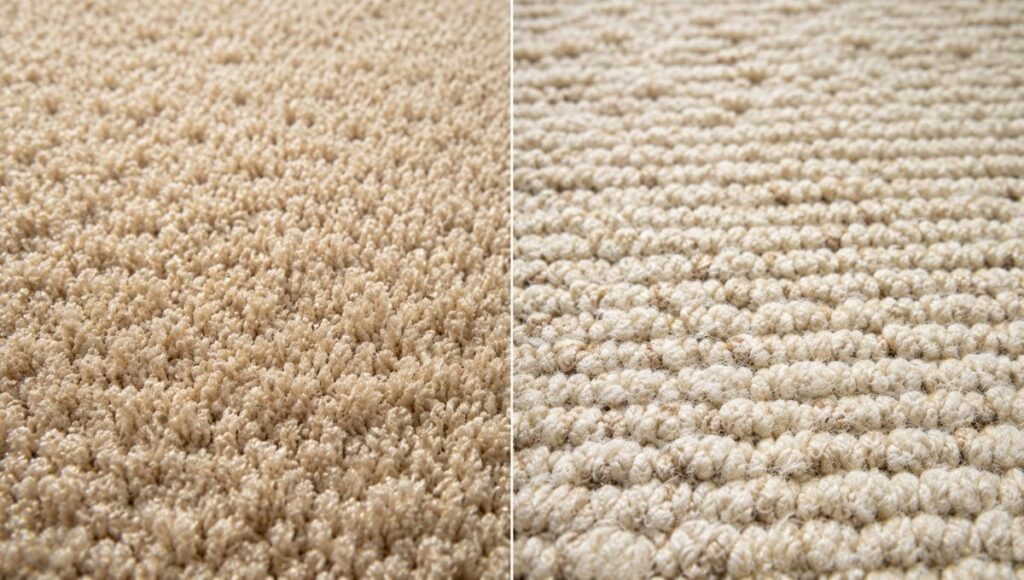
| Carpet Type | Best Method | What to Avoid | Notes |
| Nylon | Vinegar, rubbing alcohol, all methods | Excess heat | Most stain-resistant common fiber |
| Polyester | Vinegar, dish soap | Prolonged alcohol exposure | Can hold dye more than nylon |
| Olefin (polypropylene) | Vinegar, dish soap | Harsh scrubbing | Weaker fiber strength, handle gently |
| Wool | Dish soap first | Vinegar in high concentration, alcohol | Acid-sensitive, test first |
| Berber (looped) | Ice method, gentle scraping | Sharp tools, aggressive scraping | Loops snag easily |
| Area rugs (natural fiber) | Dish soap, spot test always | DIY on valuable/antique pieces | Consider a rug specialist |
Synthetic carpet (nylon, polyester, olefin) makes up the vast majority of residential wall-to-wall carpet, and it’s genuinely the most forgiving material to work with. Nylon in particular tolerates all the methods in this guide without much risk.
Wool and wool-blend carpet is a different story. Wool fibers are naturally more reactive to acidic solutions, and full-strength vinegar left on too long can occasionally cause subtle discoloration or a change in texture. Start with the gentler dish soap method, and if you do reach for vinegar, dilute it further than you would for synthetic carpet. If your wool carpet or rug carries a WoolSafe certification, check the manufacturer’s cleaning guidance first; certified products are formulated specifically to stay within safe pH ranges for wool fiber.
Carpet construction matters here too. Cut-pile carpet (where fiber loops are sheared at the top, creating the plush, upright texture most homes have) tends to release slime more easily than loop-pile carpet, where the fiber stays looped and creates more surface area for anything sticky to grab onto.
Berber or looped-pile carpet has a construction where the fiber loops rather than cutting into individual strands, which means slime has more surface area to grip and can work its way down between loops more easily. Go slow with the scraping stage, and use a dull, rounded tool instead of anything with a sharp edge that could snag a loop and unravel it.
Area rugs and natural fiber rugs (jute, sisal, silk-blend, hand-knotted wool) are the category to treat with the most caution. For anything with real monetary or sentimental value, it’s often smarter to skip DIY entirely and call a rug specialist; a botched home treatment on an antique or hand-woven piece can cause damage that’s far more expensive to fix than the original stain.
For more room-by-room cleaning and maintenance guides, browse the rest of our home care blog.
A Note on Pets
If you share your home with a dog or cat, keep two things in mind. First, some slime activators, particularly borax-based recipes, can cause stomach upset if a pet licks a fresh, untreated spot, so it’s worth keeping curious noses away until the area’s been cleaned and dried. Second, once you’ve applied vinegar or rubbing alcohol, keep pets off the spot until it’s fully dry and the smell has faded, since strong scents can attract some pets to lick or roll on the treated area out of curiosity.
Do’s and Don’ts at a Glance
| Do | Don’t |
| Scrape and freeze before adding any liquid | Spray cleaner directly onto a big blob of slime |
| Blot in one direction, outside to inside | Scrub in circles |
| Use cool or lukewarm water | Use hot water on colored slime |
| Test any solution on a hidden patch first | Assume every carpet reacts the same way |
| Let the area dry fully with airflow | Cover a damp spot with furniture right away |
| Vacuum thoroughly after any dry treatment | Leave baking soda residue sitting in the pile |
Common Mistakes That Make Slime Stains Worse
- Reaching for hot water first. It feels intuitive, but heat can set dye-based stains rather than lift them.
- Scrubbing instead of blotting. This is the single most common mistake, and it’s the one most likely to push a small stain into a bigger, more embedded one.
- Skipping the patch test. Especially with rubbing alcohol on wool or older carpet, testing a hidden spot first takes thirty seconds and can save you from a much bigger problem.
- Oversaturating the area. More liquid doesn’t mean more cleaning power; it just means a longer drying time and a higher risk of padding damage.
- Waiting too long. The single biggest factor in how hard a slime stain is to remove is simply how much time has passed. A fast response consistently beats a perfect technique applied a week later.
When DIY Won’t Cut It: Calling a Professional
Most slime stains resolve completely with the steps in this guide, but there are situations where it makes more sense to bring in a professional carpet cleaning service:
- The stain has been sitting for several days or longer, and household treatments aren’t fully lifting the discoloration
- You’re working with wool, silk-blend, or an antique or hand-woven rug
- The slime contained a particularly strong or dark dye that’s left a stain visible even after multiple treatment rounds
- The mess covers a large area rather than a single spot
Professional carpet cleaners typically use hot water extraction paired with commercial-grade spot treatments, which go beyond what’s practical or safe to attempt at home, especially for high-value carpet or rugs. The Carpet and Rug Institute recommends professional deep cleaning at least once every 12 to 18 months for general maintenance, which is also a reasonable benchmark if your household deals with frequent craft-related messes.
Between deep cleans, the right maintenance habits go further than any single product. Our money-saving home renovation tips cover more ways to keep upkeep costs down.
Long-Term Carpet Care and Prevention
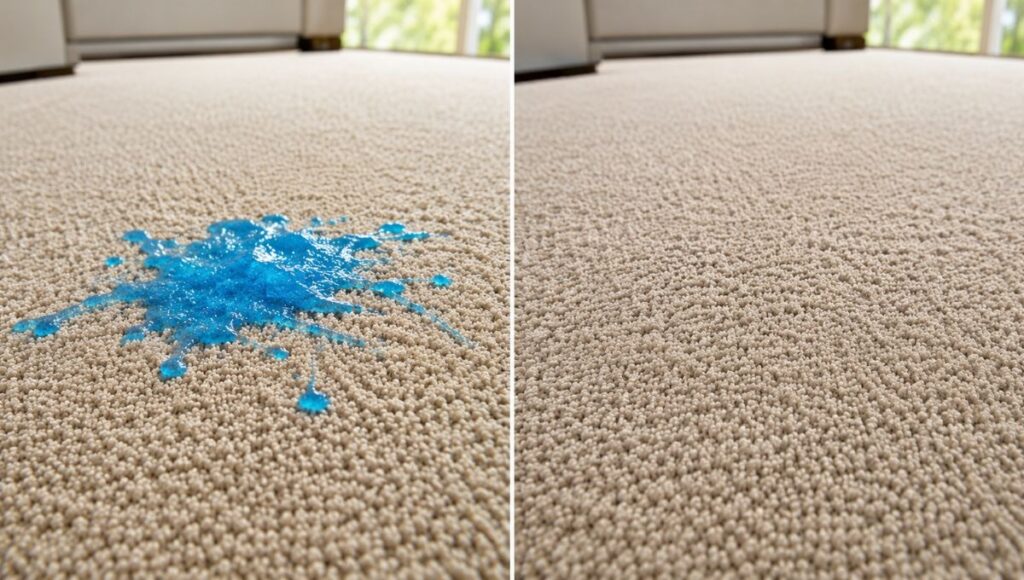
If slime-making is a regular fixture in your house, a handful of small habits go a long way toward saving you future cleanup time:
- Set up a designated slime zone a plastic tablecloth, tray, or hard-surface area like a kitchen table or playroom mat so slime never touches carpet in the first place.
- Store slime in airtight containers between play sessions so it doesn’t dry out, crumble, and scatter across the house on its own.
- Keep your slime kit stocked and accessible so you’re never delayed by a supply run when an accident happens.
- Vacuum high-traffic play areas more frequently if slime-making is a weekly activity, since this helps catch stray bits of dried slime or glitter before they get walked deeper into the pile.
- Schedule periodic deep cleaning. Even carpet that looks clean on the surface benefits from a professional or rental deep clean every year or so, which helps address any residue that’s built up in the padding over time.
Craft time doesn’t stop at slime; if paint touch-ups are next on your list, our guide on fixing peeling paint covers that project too.
Frequently Asked Questions
Does vinegar damage carpet? Diluted white vinegar is generally safe on most synthetic carpets like nylon, polyester, and olefin when used in moderation and rinsed afterward. It’s more likely to cause issues on wool or natural fiber rugs, so test a hidden spot first and dilute more heavily on delicate materials.
Can I use a steam cleaner on a slime stain? Steam cleaners work well as a finishing step after you’ve already treated and lifted the stain, but avoid using heat directly on fresh, colored slime, since it can set the dye into the fibers. Handle the color removal first with cool water, then follow up with steam cleaning once the area is stain-free.
How long does it take to remove slime from carpet? Fresh slime usually takes 15 to 20 minutes from start to finish. Dried, set-in stains can take 30 minutes or more and may require two or three rounds of vinegar or rubbing alcohol treatment before the residue fully lifts.
Will slime permanently stain my carpet? It’s uncommon if you treat it within a day or two. The risk goes up significantly with brightly dyed slime left untreated for several days, which is when professional treatment becomes worth considering.
Is WD-40 safe to use on slime stains? It’s better to avoid it. WD-40 and similar petroleum-based products carry a real risk of damaging carpet backing or leaving their own oily stain behind. Vinegar, dish soap, baking soda, and rubbing alcohol cover nearly every slime scenario without that risk.
What’s the fastest way to get dried slime out of carpet? Freezing it with ice for 10 to 15 minutes, then chipping it away with a dull knife, is generally the quickest method for dried or hardened slime. It typically outperforms trying to soften dried slime with water alone.
Can slime stain hardwood floors or tile too? Yes, though it’s usually far easier to remove from hard surfaces than carpet. A vinegar-water solution or rubbing alcohol wiped with a soft cloth typically lifts slime from hardwood or tile within a couple of minutes, without the concern of the stain sinking into padding.
Does borax in slime pose a safety risk on carpet? In the small amounts used in typical slime recipes, borax residue on carpet isn’t considered a significant hazard for adults, but it’s worth keeping young children and pets away from an unwashed spot until it’s been cleaned, since borax can cause mild irritation if ingested directly.
Why does my carpet still feel sticky after cleaning? This usually means some glue residue is still present. Repeat the vinegar or dish soap treatment, making sure to fully rinse and blot dry. Sticky residue is often a sign that a cleaning solution wasn’t rinsed out completely rather than a sign that a stronger product is needed.
Can I prevent slime from staining carpet at all? The most reliable prevention is keeping slime activities on a hard, easy-to-wipe surface entirely, but if an accident does happen, acting within the first hour dramatically increases your odds of full, stain-free removal.
Is it safe to mix vinegar and baking soda for slime stains? You can, though the fizzing reaction that happens when they combine is mostly a physical loosening effect rather than an added chemical cleaning power. Many people find it’s just as effective to use them as separate, sequential steps: vinegar for the sticky residue, baking soda afterward for any lingering odor or grit.
How do I get slime out of a carpet that has a rug pad underneath? Follow the same process, but be extra cautious about moisture control, since rug pads can trap dampness between the rug and the floor. Blot thoroughly, and lift a corner of the rug afterward to confirm the pad underneath hasn’t absorbed excess liquid.
Summary
If you take nothing else from this guide on how to get slime out of carpet, remember this: it’s a manageable stain, not a carpet-replacing disaster. The core sequence scrape or freeze, treat with a suited solution, blot instead of scrub, dry thoroughly handles nearly every situation you’ll run into, from a five-minute-old mess to a stain that’s been sitting for days.
Maintenance Checklist
- [1] Scrape or freeze off excess slime before applying any liquid
- [2] Choose your solution based on carpet type (vinegar for synthetic, dish soap for wool/delicate)
- [3] Blot from the outside of the stain inward
- [4] Rinse lightly and blot dry
- [5] Vacuum thoroughly once fully dry
- [6] Check carpet padding for residual dampness
- [7] Set up a designated slime zone to prevent future incidents
Final Expert Advice
If there’s one habit worth building, it’s speed. Every method in this guide works better the sooner it’s applied, and a fast response with just cool water and a clean cloth will often outperform a “perfect” technique used a week too late. Keep a small kit on hand, stay calm when the mess happens, and treat it as a fifteen-minute chore rather than an emergency.
Have a different carpet stain giving you trouble? Check out the rest of our home care blog for more room-by-room solutions.

I started Domelite Home because I got tired of home improvement advice that was either too vague or written by people who had never actually picked up a drill. I’m Naik Zali Shah I’ve spent years obsessing over renovation projects, smart home setups, and interior design, and I built this site to share what actually works. No fluff, no filler. Just honest advice for homeowners who want to get things right the first time.
2 thoughts on “How to Get Slime Out of Carpet: A Field-Tested Guide for Every Type of Mess”