

Let’s be honest — when most people hear “neutral bedroom,” they picture something a little lifeless. White walls, beige bedding, zero personality. That’s exactly why so many people are turning to a bedroom tan color scheme instead.
Tan sits in this sweet spot that beige and gray just don’t hit. It’s warmer than beige, softer than brown, and it somehow works whether your style is minimalist, rustic, boho, or somewhere in between. If you’ve been staring at paint chips trying to find “the one,” there’s a good chance a bedroom tan is exactly what you’re picturing.
This guide is everything I’d tell a friend who asked me how to actually pull off a bedroom tan look — not just “here’s a pretty picture,” but the real decisions: which shade to pick, what to pair it with, what mistakes make it look flat, and how to get that “wait, did you hire a designer?” look without spending a fortune. If you’re new to warm neutrals in general, our interior design guides are a good place to browse for more room-by-room inspiration.
Why a Bedroom Tan Color Scheme Works So Well
Your bedroom is the one room in your house that’s supposed to help you relax. And color psychology aside, there’s a reason a bedroom tan palette keeps showing up in rooms designed by people who actually know what they’re doing: it’s warm without being loud.
Here’s what makes it such a solid choice:
- It goes with almost everything. Wood, black metal, brass, cream, green tan doesn’t fight with other colors, it backs them up.
- It never looks cold. White and gray bedrooms can feel a little sterile, especially at night. A bedroom tan scheme always keeps some warmth in the room.
- It’s forgiving with lighting. Whether it’s morning sun or a dim lamp at 11pm, tan tends to look good either way.
- It doesn’t age out. Trend colors come and go. Bedroom tan has been around forever and isn’t going anywhere — you won’t be repainting in two years because it feels dated.
If you’re torn between “something safe” and “something with personality,” a bedroom tan gives you both.
Not All Tan Is the Same Picking Your Bedroom Tan Shade
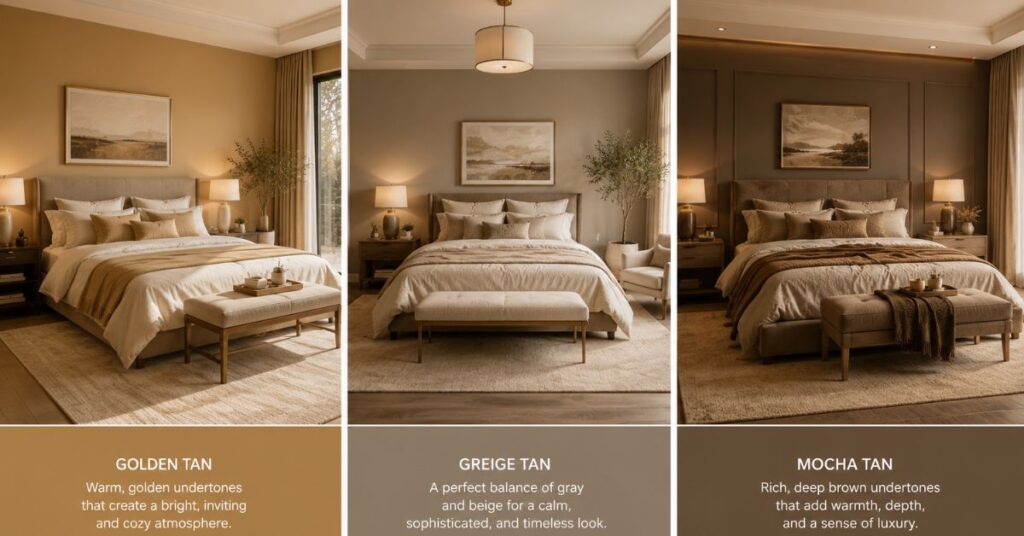
This is where people go wrong. They grab a tan swatch, paint the whole room, and it either looks too orange or too muddy. The undertone matters a lot more than people expect.
Warm, golden bedroom tan shades
These lean a bit yellow/orange and give you that sun-soaked, cozy cabin feeling. Great if your room gets a lot of natural light. Pairs beautifully with cream, terracotta, and olive. Sherwin-Williams’ own 2026 Color of the Year, Universal Khaki, is a good example of this warmer, golden-leaning tan done well.
Cool, greige-leaning tan shades
A touch of gray mixed in, so it’s warm but not overwhelming. This is the safer pick if your furniture or floors already lean warm and you don’t want the room tipping into “orange.”
Deep, mocha-leaning tan shades
Basically a light brown. Best used as an accent wall behind the bed rather than on all four walls — it gets moody and enveloping fast, especially with lamp light at night.
Quick trick: look at your wood furniture and flooring before you pick a bedroom tan swatch. Match your tan to whatever warmth is already in the room instead of guessing blind.
How to Build a Bedroom Tan Palette (So It Doesn’t Look Flat)
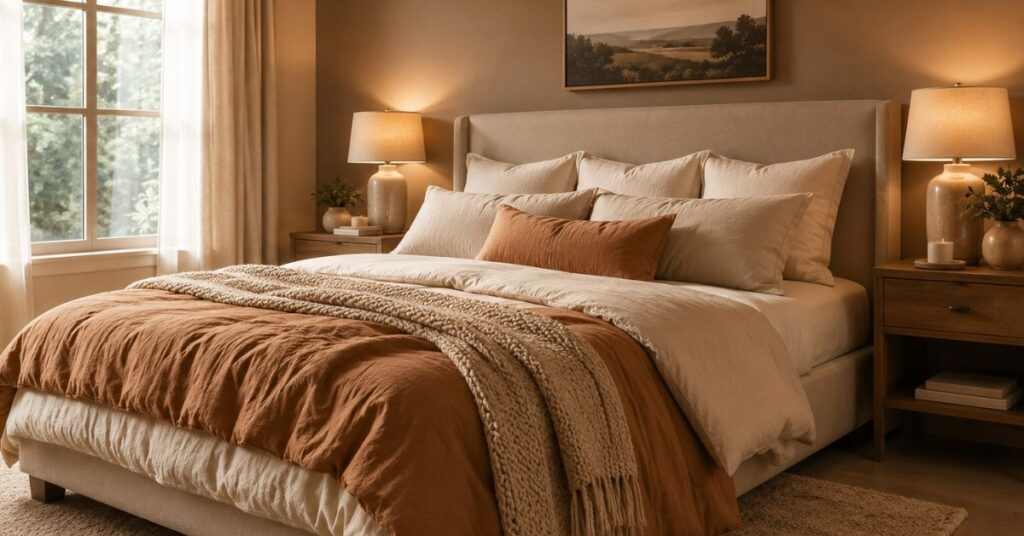
Here’s the mistake almost everyone makes: painting the walls tan and calling it done. One flat tone on every surface reads boring, not cozy. The rooms that actually pull off a bedroom tan look right use layers.
The layering approach
- Walls — a mid-tone tan as your base.
- Bedding — go a shade or two lighter (cream, ivory) so it doesn’t blend into the wall.
- One darker accent — a dark brown or espresso piece of furniture, a frame, or a throw blanket to add depth.
- Texture — this is the part people skip. A jute rug, rattan headboard, linen curtains, a chunky knit throw. Texture is what makes a bedroom tan feel intentional instead of just “a paint color.”
This layered, natural-material approach is basically the same philosophy behind Japandi interior design, which builds calm, warm rooms around honest materials instead of a lot of decoration — worth a look if you want the fuller version of this idea.
Colors that actually pair well with a bedroom tan
You don’t need to add another color at all — tan can carry a room on its own. But if you want a little more life:
- Tan + cream — safe, timeless, basically foolproof.
- Tan + deep green — sage or olive, grounded and a little earthy.
- Tan + dusty blue — a chalky muted blue keeps it soft instead of clashing.
- Tan + blush or mauve — leans a little more romantic.
- Tan + black or espresso — more modern, more contrast, less “soft.”
- Tan + brass or gold hardware — this one’s underrated. Metallics make a bedroom tan feel richer instead of flat.
If you like the idea of building a whole-home palette around tan, our living room color ideas guide covers a lot of the same warm-neutral pairings, just applied to a different room.
Bedding That Makes a Bedroom Tan Look Expensive
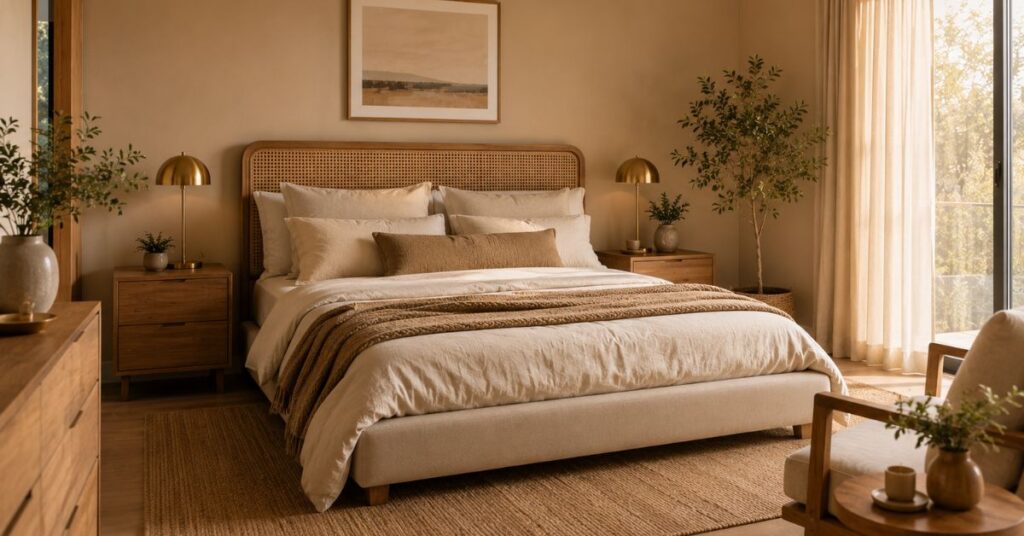
If you’re not ready to repaint, start here. Bedding alone can carry the whole bedroom tan look.
- Cream sheets under a camel or tan-colored duvet — instant depth, even on white walls.
- Mix textures — velvet, boucle, linen pillows together look curated, not random.
- A knit throw at the foot of the bed does a lot of heavy lifting for basically no money.
- Curtains in the same tonal family as your bedding keep the whole room feeling connected instead of pieced together.
Honestly, if you rent your place or just aren’t committing to paint yet, this section alone can get you 80% of the way to a bedroom tan look.
Furniture That Actually Suits a Bedroom Tan Scheme
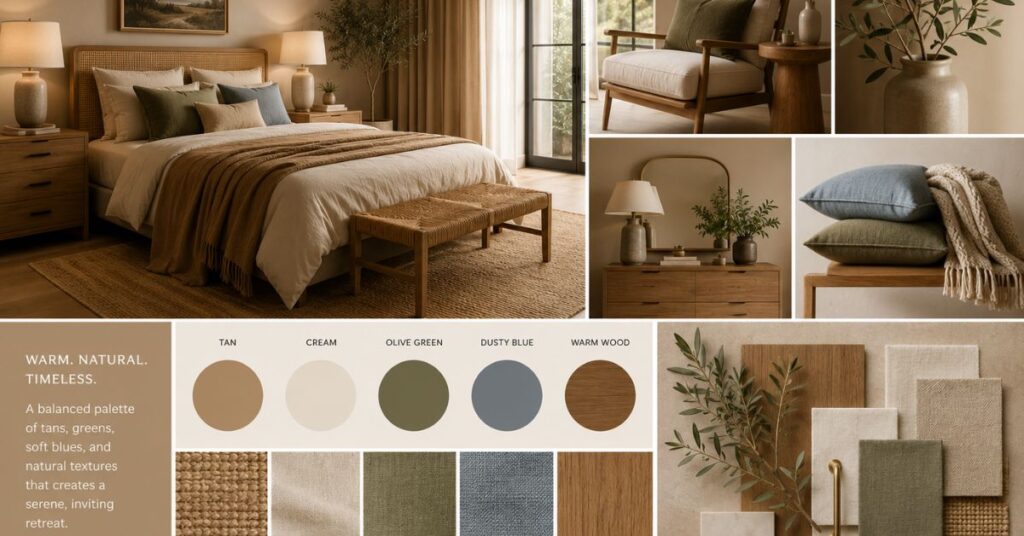
Tan is warm and earthy, so a bedroom tan wants to be paired with natural materials, not sleek and cold ones.
- Wood — oak, walnut, teak. All of it works.
- Rattan or wicker — adds texture and keeps things feeling grounded.
- Upholstered beds in linen, boucle, or velvet soften the whole room.
- Matte black or brass hardware gives you a little definition so the room doesn’t feel like it’s melting into one tone.
What doesn’t work as well: glossy white furniture or cold chrome finishes. If that’s what you’ve already got, don’t stress — just balance it out with warmer textiles and lighting instead of replacing everything.
Lighting Makes or Breaks a Bedroom Tan Look
This one’s underrated. A bedroom tan reacts to lighting way more than people think.
- Stick to warm-white bulbs (2700K–3000K). Cool daylight bulbs will make your tan walls look gray and dull — genuinely one of the most common mistakes.
- Layer your light sources. One ceiling light flattens the whole room. Add a bedside lamp or a floor lamp so you get some warm pockets of light at night.
- A pendant light or glass globe fixture over a nightstand looks great and brings out the depth in the wall color.
- Let daylight do its thing too — sheer curtains keep the room feeling airy in the day, and then it gets cozy once the lamps click on.
Does a Bedroom Tan Scheme Work in a Small Room?
Yes — despite what you might’ve heard about dark or warm colors “shrinking” a room. A bedroom tan with good lighting can feel just as open as a white one, and usually cozier.
- Keep the ceiling white or a lighter shade of the same tan to protect the sense of height.
- Go vertical — tall curtains hung near the ceiling, a tall headboard, vertical paneling — to pull the eye upward.
- Don’t overload it with colors. One or two accents max in a small space.
- A mirror or two helps bounce light around so the room doesn’t feel closed in.
A Few Bedroom Tan Combos to Steal
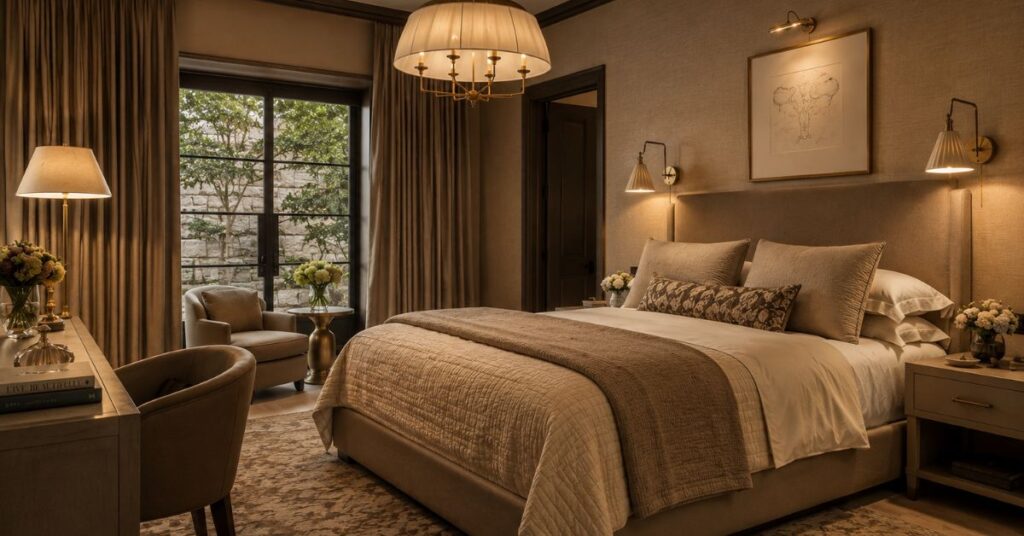
If you don’t want to build a palette from scratch, here are combinations that just work:
The minimalist version: tan walls, cream bedding, a wood platform bed, one big neutral art piece, a wood bench at the foot of the bed. Nothing extra — just tone and texture doing the work.
The moody version: a deeper mocha tan on just the wall behind the bed, cream bedding, a chunky knit throw, blackout curtains, warm lamp light. Feels like a room you want to disappear into at night.
The natural wood version: lighter tan walls, oak-toned bed frame and picture frames, creamy linens, a soft glass pendant. Very Scandinavian, very calm.
The “boutique hotel” version: tan walls, a slightly darker taupe upholstered bed, layered textures on the throw and pillows, brass hardware on the nightstands. This is the bedroom tan combo that gets the most compliments.
Bedroom Tan Questions People Actually Ask
Does a bedroom tan look outdated?
Not if you add texture and at least one accent color. Flat tan on every surface with nothing else going on can feel dated — but layer in wood, linen, wool, or brass, and a bedroom tan reads current, not old-fashioned.
What trim color goes with a bedroom tan?
Soft white or off-white is the easiest, safest option — it keeps the room from feeling too heavy. Some people paint the trim the exact same tan as the walls for a more seamless, moodier look.
Is bedroom tan basically the same as beige?
They’re close cousins, but tan usually has more warmth and depth, while beige can read flatter and a bit “builder-grade.” If your room already feels too beige-boring, going a shade warmer into a bedroom tan is often the fix.
What curtains pair best with a bedroom tan?
Cream, ivory, or a curtain a shade lighter than your walls. Sheer linen is a popular pick because it lets in soft light during the day without breaking up the palette.
Can a bedroom tan work with black or dark furniture?
Yes, and it’s actually a great combo. The contrast adds structure and a slightly more modern edge — just keep the black to a few pieces (frames, hardware, one furniture item) rather than spreading it everywhere.
Bottom Line on Bedroom Tan
A bedroom tan works because it manages something a lot of colors can’t — it’s calm without being boring, and warm without being heavy. Whether you go all in with paint or start small with bedding and a few wood accents, it’s one of the easiest neutrals to build an actually restful room around.
Quick recap if you’re just skimming:
- Match your bedroom tan’s undertone (golden, greige, or mocha) to your existing wood tones and light.
- Layer a few shades of tan instead of using one flat tone everywhere.
- Add texture through wood, linen, wool, and rattan — this is what keeps it from looking flat.
- Use warm bulbs, not cool ones. This one’s easy to overlook.
- Pick one or two accent colors, not five.
Get those right, and a bedroom tan isn’t just a paint color — it’s the room you actually look forward to walking into at the end of the day.

I started Domelite Home because I got tired of home improvement advice that was either too vague or written by people who had never actually picked up a drill. I’m Naik Zali Shah I’ve spent years obsessing over renovation projects, smart home setups, and interior design, and I built this site to share what actually works. No fluff, no filler. Just honest advice for homeowners who want to get things right the first time.