
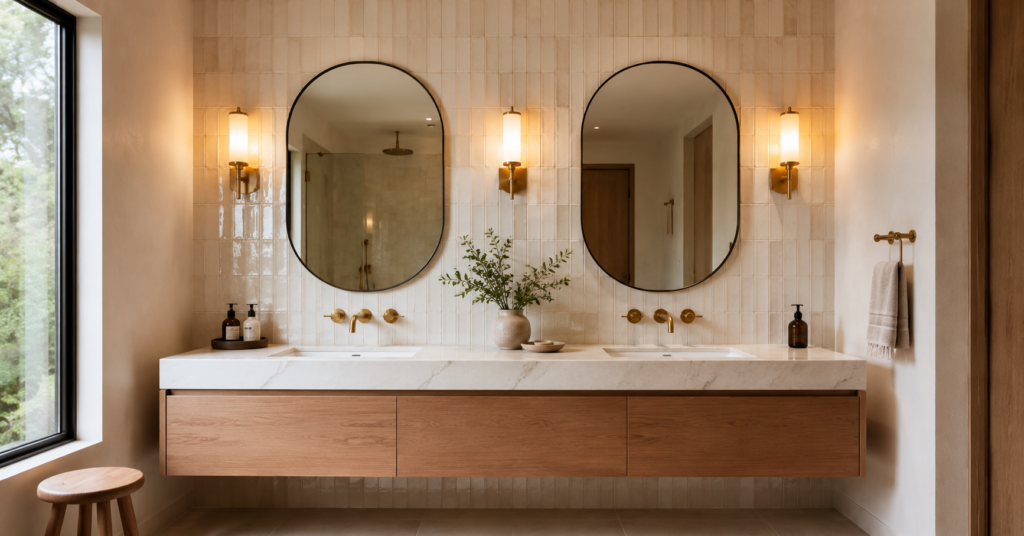
Quick Answer: The best bathroom vanity backsplash ideas in 2026 go far beyond the traditional 4-inch splash. Full-height tile, handmade zellige, large-format porcelain, marble slab backsplashes, and vertical tile layouts are leading trends because they protect the wall while creating a custom, designer look. Most homeowners spend between $300 and $1,500 for a quality vanity backsplash, depending on the material, size, and installation.
A bathroom vanity backsplash might seem like a small detail, but it can completely change how your bathroom looks and feels. It protects the wall from water, toothpaste, and daily splashes, but it also acts as the backdrop for your vanity, mirror, and lighting. Get it right, and even a basic vanity can look custom-built.
The good news is you do not need a full bathroom remodel to make a noticeable difference. Updating the backsplash is one of the most affordable ways to refresh the space while adding personality, texture, and long-term value.
In this guide, you’ll discover 11 bathroom vanity backsplash ideas that are popular in real U.S. homes, along with design tips, estimated costs, common mistakes to avoid, and expert advice to help you choose the right style for your bathroom.
Expert Tip: Before choosing a backsplash, decide whether you want it to blend into the bathroom or become the main focal point. This single decision makes selecting colors, materials, and tile sizes much easier.
What Makes a Bathroom Vanity Backsplash Look Expensive?
Many homeowners assume expensive tile automatically creates a luxury bathroom. In reality, the overall design matters more than the price of the material.
Here are the four elements that separate an average backsplash from one that looks professionally designed.
1. The Right Height
A standard 4-inch backsplash protects the wall but adds very little visual impact.
Taking the tile to the bottom of the mirror instantly creates a cleaner look. Extending it to the ceiling makes the bathroom appear taller and gives the vanity wall a custom, high-end finish.
2. Proper Scale
Large vanities look best with larger tiles because they create fewer grout lines and a cleaner appearance.
Small powder rooms usually benefit from smaller decorative tiles that add character without overwhelming the space.
3. Matching the Rest of the Bathroom
The vanity backsplash should work with the shower tile instead of competing against it.
The materials do not need to be identical. They simply need to share similar colors, textures, or finishes.
If you’re planning a complete bathroom remodel, coordinate the vanity wall with your shower design for a much more cohesive result.
4. Grout Color Matters
Grout changes the entire appearance of a backsplash.
Matching grout creates a seamless surface.
Contrasting grout highlights every tile and creates a stronger pattern.
For most modern bathrooms in 2026, matching grout produces the cleanest result.
Bathroom Vanity Backsplash Ideas at a Glance
| If You Want… | Best Choice |
| Biggest visual impact | Full-height tile |
| Luxury appearance | Marble slab |
| Lowest maintenance | Large-format porcelain |
| Budget-friendly update | Handmade subway tile |
| Modern bathroom | Vertical stacked tile |
| Organic texture | Zellige tile |
| Bold personality | Patterned ceramic tile |
| Small bathroom | Mirror wall with tile accent |
| Timeless style | Warm neutral stone-look porcelain |
11 Bathroom Vanity Backsplash Ideas
1. Full-Height Tile Creates the Biggest Transformation
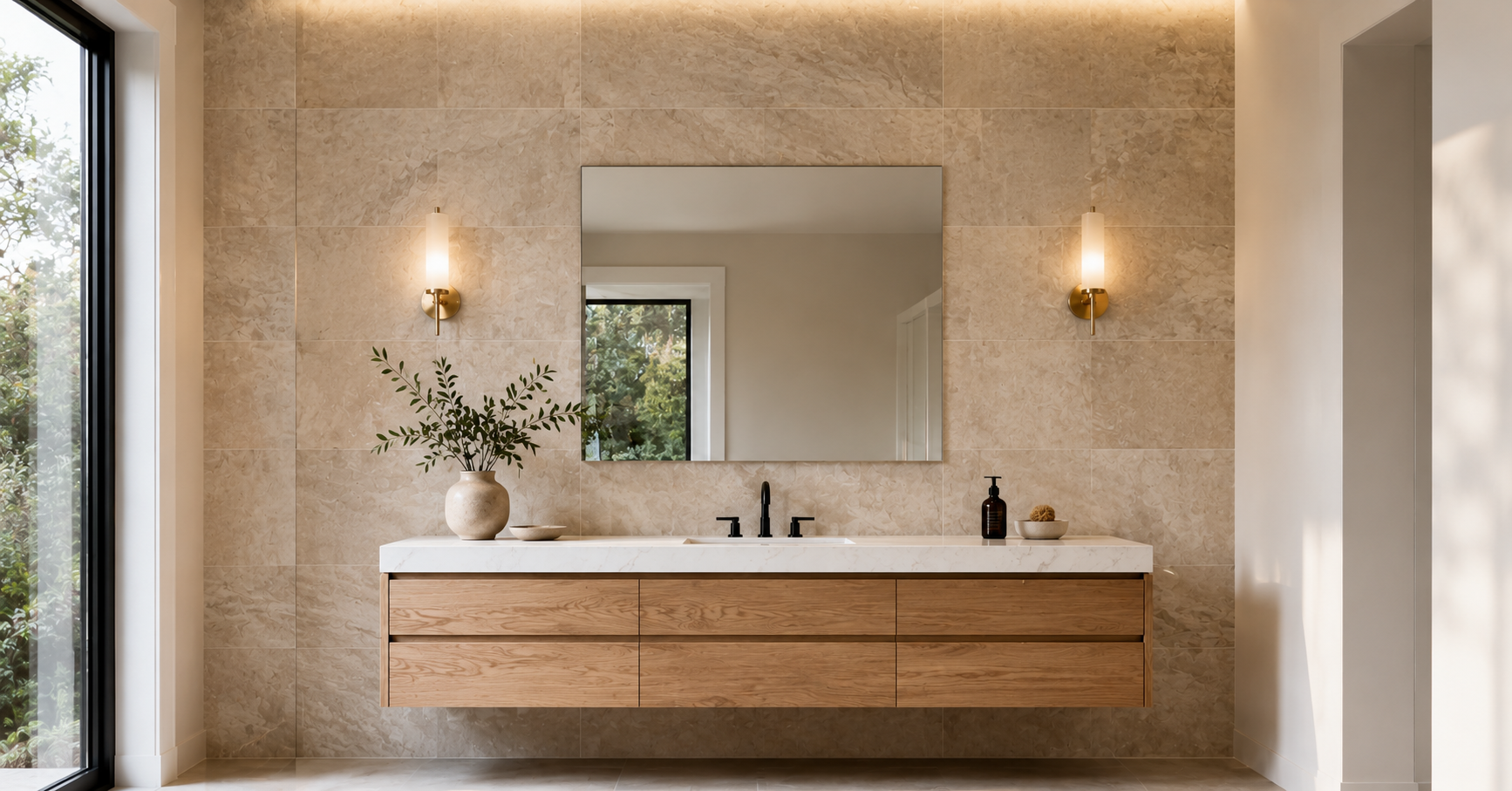
A full-height backsplash is easily the biggest bathroom trend of 2026.
Instead of stopping a few inches above the countertop, the tile continues from the vanity all the way to the ceiling. This creates one continuous feature wall that immediately makes the bathroom feel larger and more expensive.
Floating mirrors and wall sconces stand out beautifully against a tiled background, giving the entire vanity area a custom-built appearance.
Large-format porcelain, handmade ceramic, and zellige all work well for this style because they create texture without making the wall feel busy.
Best for
- Master bathrooms
- Floating vanities
- Modern renovations
Pros
- Makes ceilings appear taller
- Adds the strongest visual impact
- Increases resale appeal
Cons
- Higher material cost
- More labor than a standard backsplash
Typical Cost: $700 to $1,500 installed.
2. Zellige Tile Adds Texture Without Busy Patterns
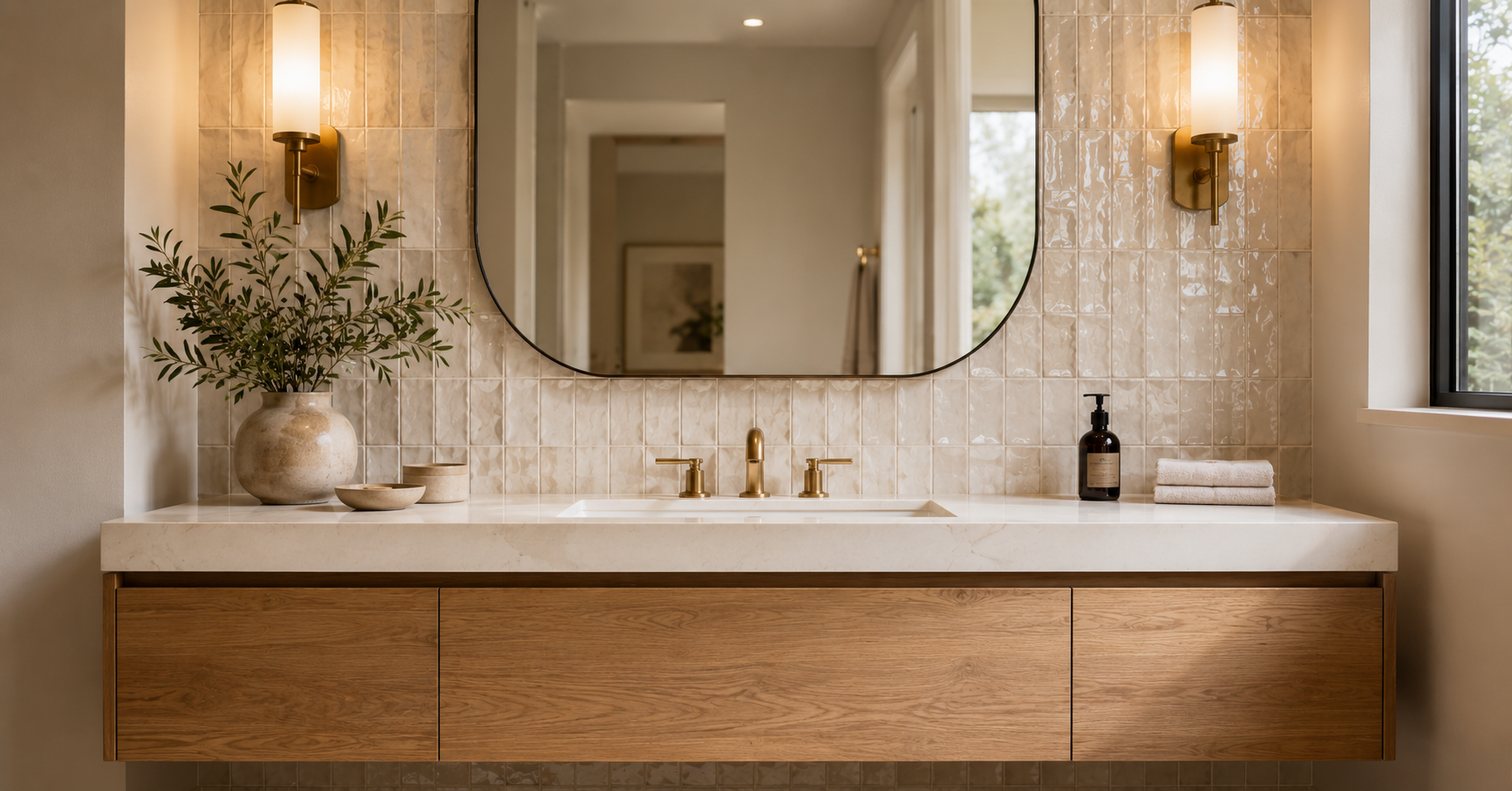
If you’ve looked at recent designer bathrooms, you’ve probably noticed zellige tile.
Unlike factory-made ceramic, every handmade tile has slight differences in glaze, color, and surface texture. Those small imperfections create depth that changes throughout the day as natural and artificial light hit the wall.
Warm white remains the safest choice, while sage green, soft blue, and earthy clay colors are becoming increasingly popular for homeowners who want a little more personality.
Since handmade tiles vary in thickness, installation requires more precision than standard porcelain.
For the best results, hire an experienced tile installer familiar with handmade products. The National Tile Contractors Association (NTCA) offers resources and best practices for specialty tile installations.
Best for
- Modern farmhouse bathrooms
- Japandi interiors
- Luxury renovations
Pros
- Handmade appearance
- Rich texture
- Timeless design
Cons
- Premium pricing
- Requires an experienced installer
Typical Cost: $500 to $1,200 installed.
Designer Tip: Pair warm white zellige with natural oak vanities and brushed brass hardware for a bathroom that feels warm, bright, and timeless.
3. Extend the Tile Across the Entire Vanity Wall
One of the easiest ways to make a builder-grade bathroom feel custom is to extend the backsplash beyond the sink.
Instead of tiling only behind the faucet, continue the material across the full vanity wall.
This simple design choice creates a clean backdrop for mirrors, lighting, and accessories while making the vanity look intentionally designed instead of pieced together.
It works especially well with floating vanities and frameless mirrors because everything appears connected.
Best for
- Double vanities
- Floating cabinets
- Contemporary bathrooms
Pros
- Creates a seamless appearance
- Makes small bathrooms feel larger
- Easy to coordinate with the shower
Cons
- Requires more tile
- Slightly higher installation cost
Typical Cost: $400 to $1,800.
4. Marble Slab for a Luxury Spa Look
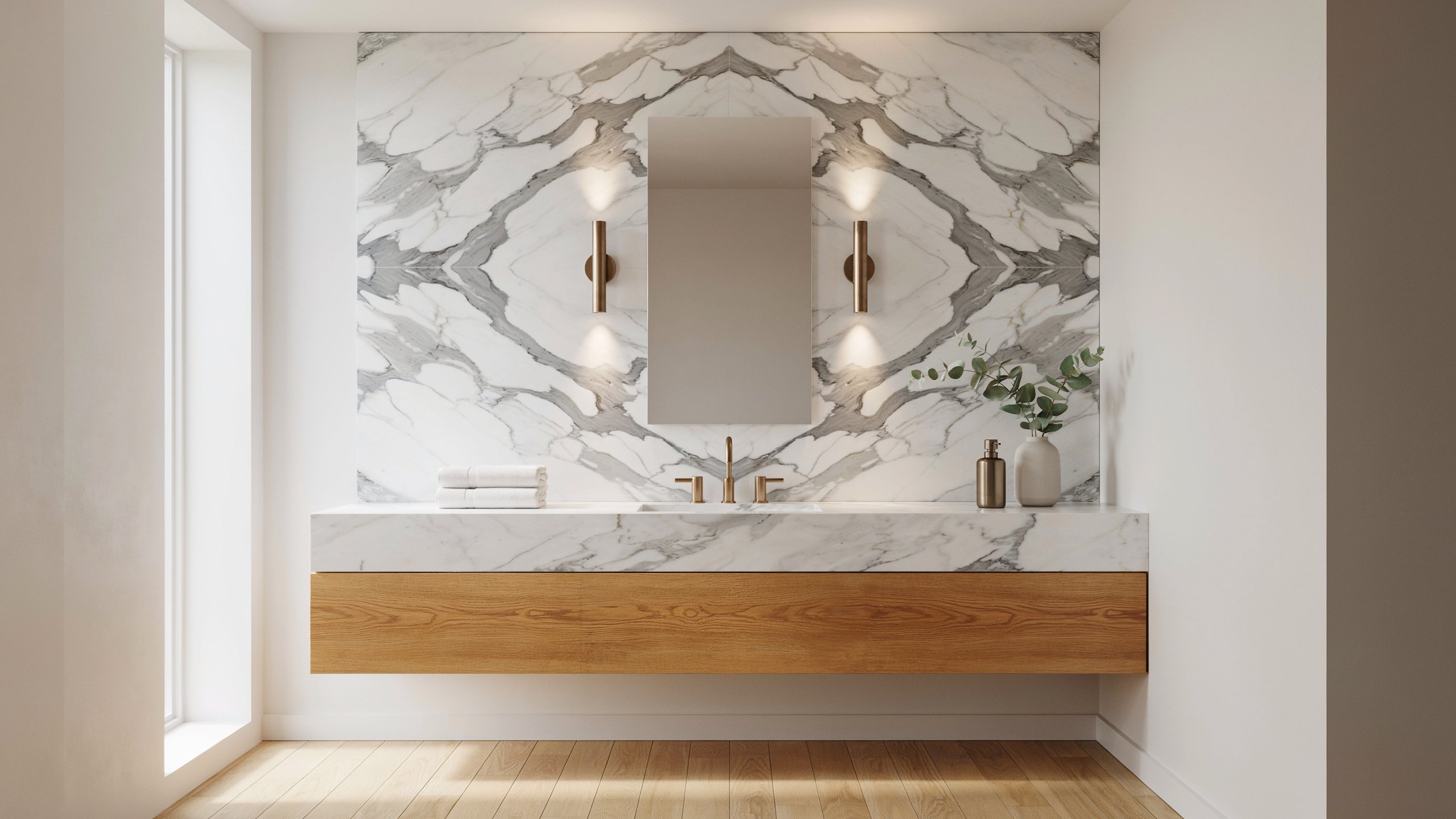
Nothing creates a luxury bathroom quite like a continuous marble or quartz slab backsplash.
Instead of individual tiles, one solid slab runs from the countertop up the wall. With no grout lines, the result feels clean, elegant, and incredibly easy to maintain.
Natural marble offers beautiful veining but requires sealing to protect against stains and etching.
Quartz and quartzite provide a similar appearance with less maintenance, making them popular choices for busy households.
Book-matched slabs, where the stone pattern mirrors itself, create an eye-catching focal point often seen in luxury hotels and high-end custom homes.
Best for
- Primary bathrooms
- Luxury remodels
- Minimalist interiors
Pros
- No grout lines
- Easy daily cleaning
- High-end appearance
Cons
- Higher upfront cost
- Natural marble needs regular sealing
Typical Cost: $1,200 to $3,300 installed.
5. Modern Subway Tile That Doesn’t Look Builder Grade
Subway tile remains one of the smartest backsplash choices because it works with almost every bathroom style.
The difference is how you use it.
Instead of glossy white tiles with bright white grout, today’s bathrooms use handmade ceramic subway tiles in warm white, cream, sage, or soft gray. Matching grout softens the grid pattern and gives the wall a more natural appearance.
You can also change the layout to give this classic tile a fresh look.
Vertical stacks feel modern.
Herringbone adds movement.
Traditional running bond works well in transitional bathrooms.
Small changes like these make subway tile feel custom without increasing your budget.
Best for
- Budget-friendly remodels
- Farmhouse bathrooms
- Transitional homes
Pros
- Affordable
- Easy to match
- Timeless design
Cons
- Common if installed traditionally
- Handmade versions cost more
Typical Cost: $300 to $800 installed.
6. Vertical Tile Makes the Bathroom Feel Taller
Sometimes the layout matters more than the tile itself.
Installing rectangular tiles vertically naturally draws the eye upward, making lower ceilings feel higher.
This simple change costs no more than a traditional horizontal layout but creates a noticeably more modern appearance.
Vertical subway tile works particularly well with wood vanities because the opposing directions create visual balance.
Choose matching grout to emphasize the continuous vertical lines.
Best for
- Small bathrooms
- Eight-foot ceilings
- Contemporary homes
Pros
- Creates visual height
- Modern appearance
- No additional material cost
Cons
- Less traditional
- Requires careful layout planning
Typical Cost: Same as standard subway tile installation.
7. Patterned Tile Creates a Bold Focal Point
If your vanity is simple, let the backsplash become the star of the room.
Patterned ceramic or porcelain tiles add personality without overwhelming the bathroom because the backsplash covers a relatively small area. Moroccan-inspired designs, soft geometric patterns, and subtle Mediterranean prints remain popular choices in 2026.
Unlike cement tiles, porcelain and ceramic options require very little maintenance, making them a better fit for busy family bathrooms.
Keep the rest of the bathroom fairly neutral so the backsplash stands out without making the room feel cluttered.
Best for
- Powder rooms
- Guest bathrooms
- Eclectic and Mediterranean-inspired homes
Pros
- Instantly adds character
- Creates a unique focal point
- Available in many styles
Cons
- Can feel busy in very small spaces
- Harder to match with future renovations
Typical Cost: $400 to $1,000 installed.
8. Large-Format Porcelain for a Clean, Timeless Look
Not every backsplash needs to grab attention.
Sometimes, the best design quietly complements everything around it.
Large-format porcelain tiles with a limestone, travertine, or concrete look create a calm backdrop that lets the vanity, mirror, and lighting stand out. Because there are fewer grout lines, the wall also feels cleaner and is easier to maintain.
Porcelain is one of the most durable bathroom materials available. It resists moisture, stains, and everyday wear better than many natural stones, making it an excellent choice for family bathrooms.
Best for
- Modern bathrooms
- Minimalist interiors
- Homes with high resale value in mind
Pros
- Easy to clean
- Very durable
- Timeless appearance
Cons
- Fewer decorative options
- Professional installation is recommended for large tiles
Typical Cost: $500 to $1,200 installed.
9. Scallop and Shaped Tiles Add Soft Texture
Straight lines dominate most bathrooms, from mirrors and vanities to cabinets and countertops. Scallop and other shaped tiles help soften those hard edges.
Fish scale, fan, hexagon, and leaf-shaped tiles create subtle texture through light and shadow rather than bold color. They work especially well in bathrooms with warm wood vanities, brushed brass hardware, and natural stone countertops.
Since shaped tiles require more careful planning during installation, they are usually better left to experienced tile installers.
Best for
- Luxury bathrooms
- Coastal interiors
- Modern farmhouse homes
Pros
- Adds texture and movement
- Looks custom
- Complements natural materials
Cons
- More expensive to install
- Requires precise layout
Typical Cost: $500 to $1,400 installed.
10. Mirror Wall With a Tile Accent Makes Small Bathrooms Feel Bigger
If space is limited, consider making the mirror the main feature.
A full-width mirror reflects light around the room, making even a compact powder room feel noticeably larger. Instead of covering the wall with tile, add a narrow decorative band where the mirror meets the countertop.
This approach provides splash protection while keeping the room bright and open.
Choose a tile that complements your vanity hardware to tie everything together.
Best for
- Small bathrooms
- Powder rooms
- Guest bathrooms
Pros
- Creates the illusion of more space
- Lower tile cost
- Brightens the room
Cons
- Less opportunity for decorative tile
- Large mirrors require regular cleaning
Typical Cost: $400 to $1,000 installed.
11. Coordinate the Vanity Backsplash With Your Shower Tile
The best-designed bathrooms rarely rely on one standout feature.
Instead, they repeat colors, textures, and materials throughout the room.
Using the same tile in both the shower and vanity area creates a seamless look, while choosing tiles from the same color family provides variety without feeling disconnected.
For example, you could use large-format porcelain in the shower and handmade ceramic in the vanity area, both in the same warm beige tone.
This layered approach feels more natural than trying to match everything perfectly.
If you’re renovating the entire bathroom, planning both surfaces together will give you a much more polished result. Be sure to explore our guide on Bathroom Tile Shower Ideas for inspiration on pairing shower walls with vanity backsplashes.
Which Bathroom Vanity Backsplash Is Right for You?
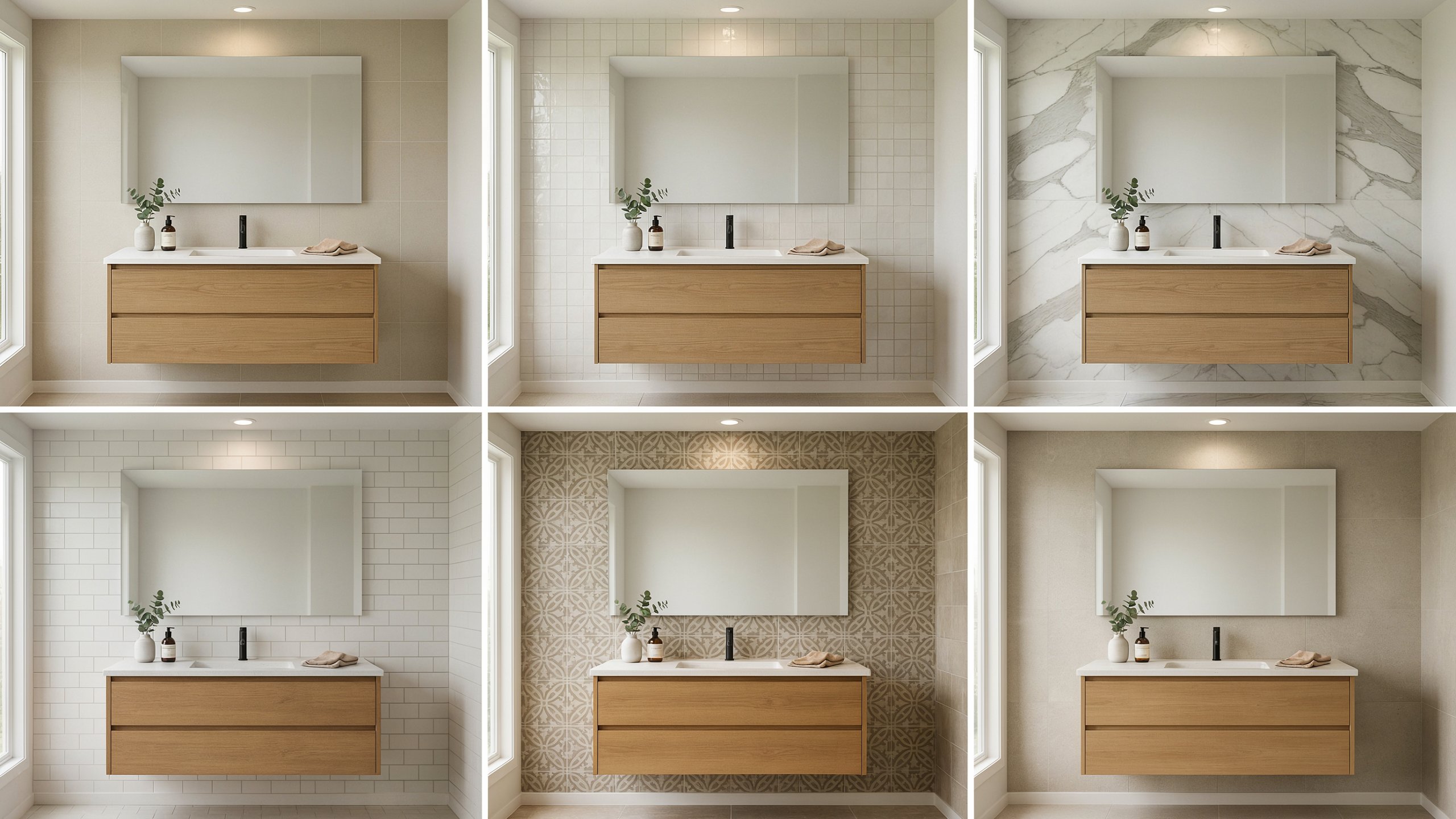
Choosing the right backsplash becomes much easier when you start with your priorities.
| If You Want… | Best Choice |
| Lowest maintenance | Large-format porcelain |
| Luxury appearance | Marble slab |
| Budget-friendly update | Handmade subway tile |
| Handmade texture | Zellige |
| Bold personality | Patterned ceramic tile |
| Modern style | Vertical tile |
| Small bathroom solution | Mirror wall with tile accent |
| Biggest visual impact | Full-height tile |
| Long-term resale appeal | Warm neutral porcelain |
How High Should a Bathroom Vanity Backsplash Be?
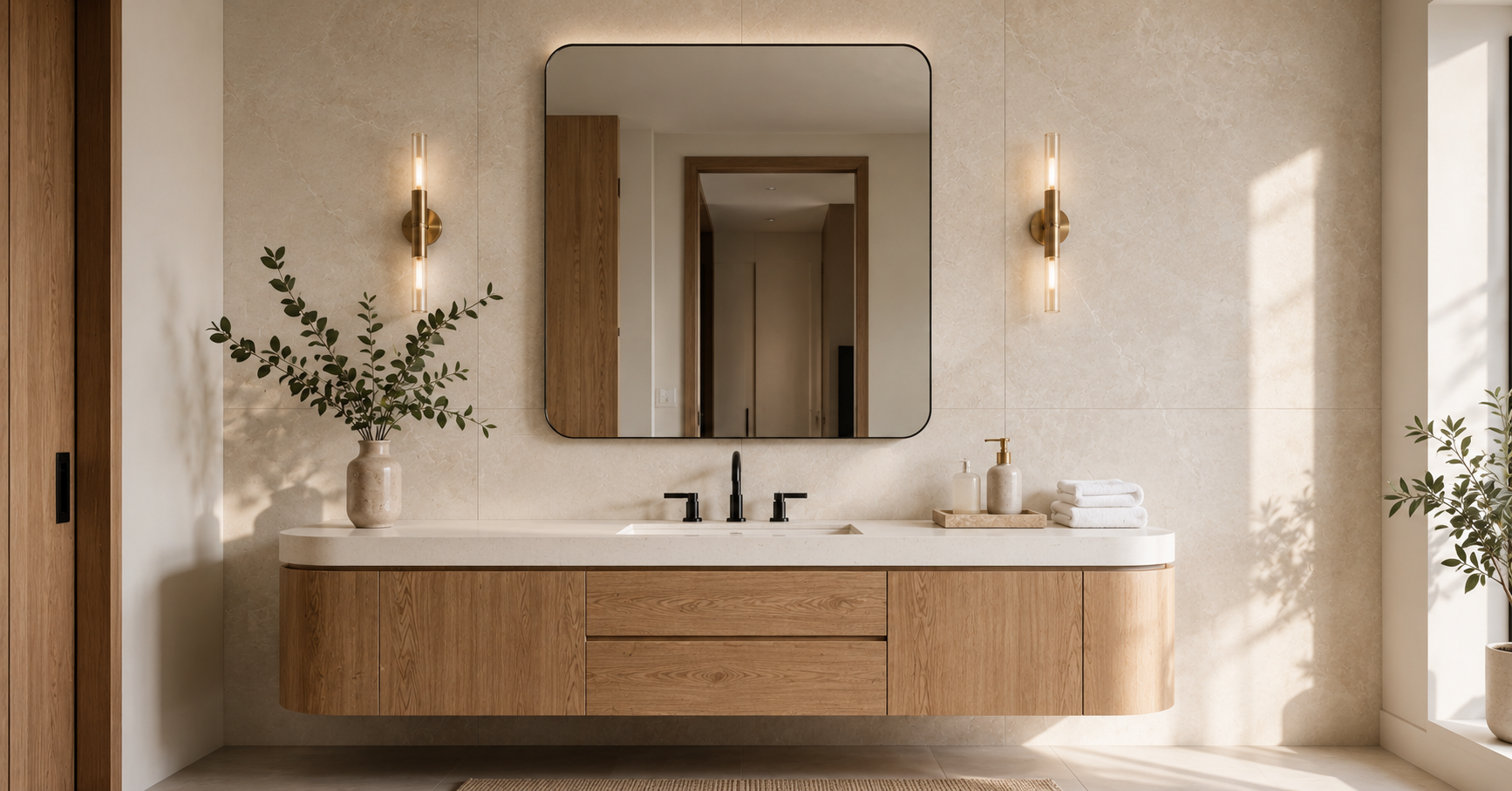
There isn’t one perfect height for every bathroom, but these guidelines work well in most homes.
4-inch backsplash
A practical choice that protects the wall but offers little visual impact.
To the bottom of the mirror
The most common option in professionally designed bathrooms. It balances function and style without increasing costs too much.
To the top of the mirror
Creates a stronger focal point and gives the vanity wall a more finished appearance.
To the ceiling
The most dramatic option. It works especially well in bathrooms with 8-foot ceilings because it naturally draws the eye upward.
Expert Tip: If you’re installing a floating vanity, extending the tile to the ceiling creates a clean architectural feature that makes the entire bathroom feel more custom.
Common Bathroom Vanity Backsplash Mistakes
Even expensive materials can look disappointing if a few basic design principles are ignored.
Avoid these common mistakes.
- Installing a tiny backsplash behind a large double vanity.
- Choosing busy patterned tile for a small bathroom.
- Ignoring grout color during planning.
- Forgetting to coordinate the backsplash with the shower.
- Skipping waterproofing behind the tile.
- Picking trendy colors that don’t suit the rest of the bathroom.
- Measuring before choosing the mirror and light fixtures.
Planning these details before installation saves both time and money.
Waterproofing Matters More Than the Tile
Even the most beautiful backsplash won’t last if moisture gets behind it.
For larger vanity backsplashes, especially those extending to the ceiling, use a proper moisture-resistant substrate and waterproofing system before installing tile. High-humidity bathrooms benefit from cement backer board or a quality waterproofing membrane rather than standard drywall alone.
Professional installers typically follow the waterproofing and installation standards published by the Tile Council of North America (TCNA). Following these best practices helps prevent moisture damage, loose tiles, and premature backsplash failure.
If your existing bathroom walls already show bubbling or peeling paint, fix the underlying moisture issue before installing a new backsplash. Our guide How to Fix Peeling Paint explains the most common causes and repair methods.
Bathroom Vanity Backsplash Color Trends for 2026
Warm, natural colors continue to replace cool gray bathrooms.
The most popular choices this year include:
- Warm white
- Soft cream
- Sage green
- Dusty olive
- Beige stone
- Terracotta
- Warm charcoal
- Deep navy for statement powder rooms
These colors pair beautifully with natural oak vanities, brushed brass fixtures, matte black hardware, and white quartz countertops.
If you’re struggling to choose a paint color that works with your backsplash, our guide on Living Room Color Ideas includes timeless warm neutral shades that also work beautifully in bathrooms.
Real Bathroom Vanity Backsplash Costs
| Style | Average Installed Cost |
| Basic ceramic backsplash | $150 to $350 |
| Subway tile | $300 to $800 |
| Patterned tile | $400 to $1,000 |
| Large-format porcelain | $500 to $1,200 |
| Zellige tile | $500 to $1,200 |
| Full-height tile | $700 to $1,500 |
| Marble slab | $1,200 to $3,300 |
Costs vary depending on your location, material, and labor rates. Getting at least three quotes from licensed tile installers is always a smart idea.
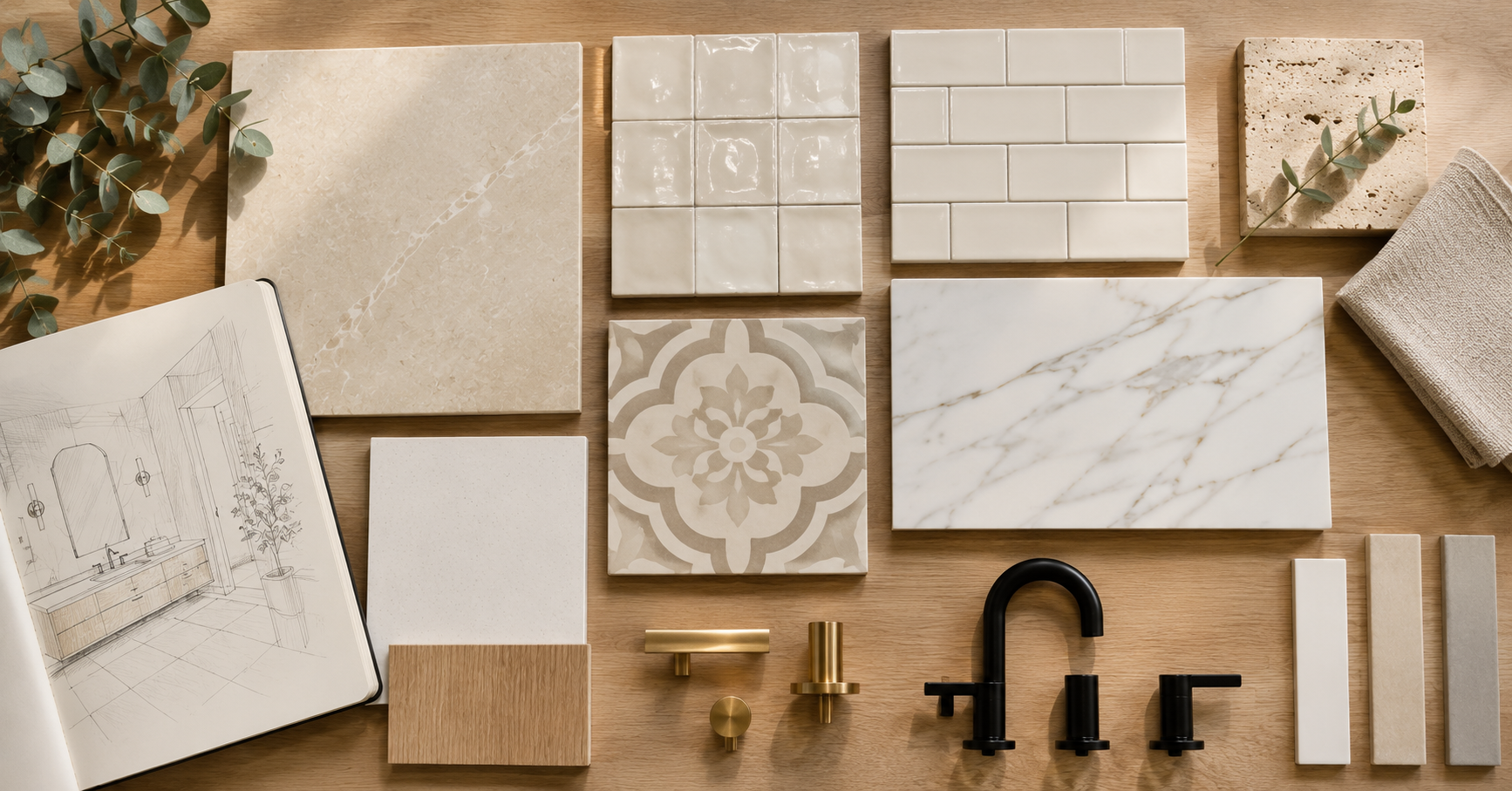
Frequently Asked Questions
What is the best material for a bathroom vanity backsplash?
Porcelain is the best all-around option because it’s durable, water-resistant, easy to clean, and available in countless styles. If you’re looking for a luxury finish, marble and zellige are excellent upgrades.
Should the vanity backsplash match the countertop?
Not necessarily. Matching materials creates a seamless look, while complementary materials add depth and character. The goal is coordination, not an exact match.
Does every bathroom vanity need a backsplash?
A backsplash isn’t always required, but it’s highly recommended. It protects the wall from water damage and makes cleaning much easier.
Can I install a bathroom vanity backsplash myself?
Simple ceramic or subway tile projects are manageable for experienced DIYers. Larger tiles, natural stone, and handmade products like zellige usually produce better results when installed by a professional.
What backsplash is easiest to maintain?
Large-format porcelain with matching grout is one of the easiest materials to keep clean because it has fewer grout lines and resists stains.
Final Thoughts
The right bathroom vanity backsplash does much more than protect the wall behind your sink. It helps define the entire style of the bathroom.
If you want the biggest visual transformation, choose full-height tile. For timeless elegance, large-format porcelain and marble slab backsplashes remain excellent investments. If personality is your goal, zellige or patterned ceramic tile can turn an ordinary vanity into the room’s focal point.
Before making your final decision, consider your vanity, countertop, mirror, lighting, and shower tile as a single cohesive design rather than separate pieces. When these elements work together, the result feels balanced, intentional, and far more expensive than the budget might suggest.
Planning a full bathroom makeover? Pair your new vanity backsplash with coordinated shower tile, moisture-resistant finishes, and quality fixtures to create a bathroom that looks beautiful today and stays that way for years to come.

Samreen Khadim Hussain is a home improvement writer and content creator at Domelite Home. She specializes in making home renovation, interior design, and bathroom safety accessible to everyday US homeowners, turning technical subjects into clear, actionable advice. Her work is rooted in research, real-world practicality, and a genuine belief that a better home is within everyone’s reach.
2 thoughts on “11 Bathroom Vanity Backsplash Ideas to Transform Your Bathroom in 2026 ”