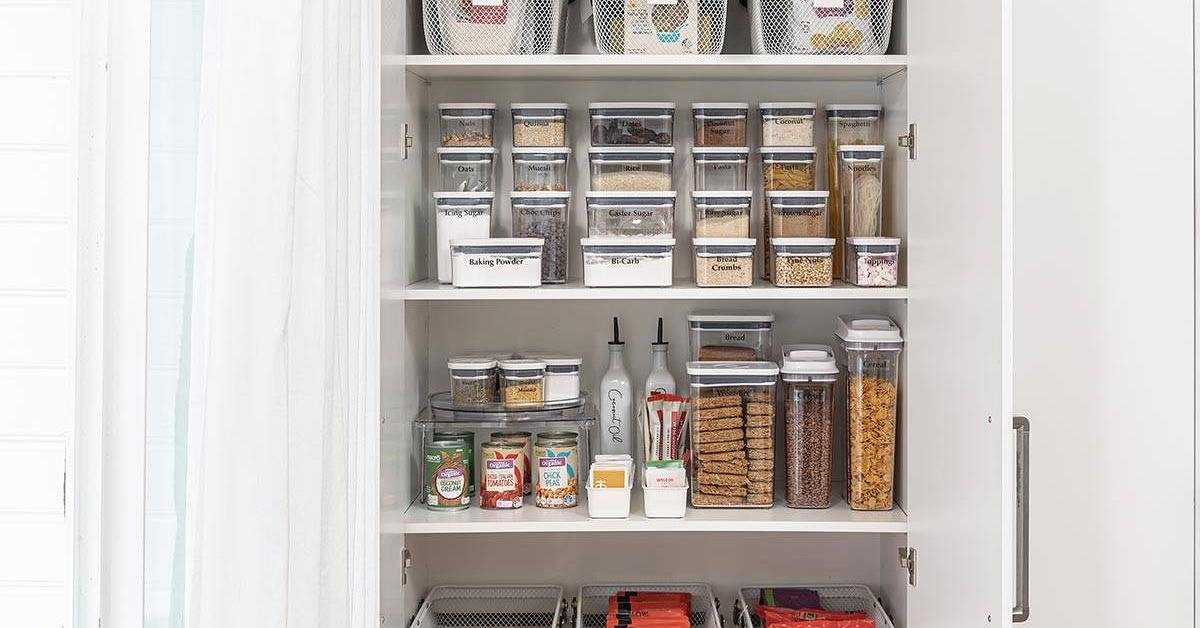
Quick Answer: To organize a pantry, take everything out, throw away expired food, and wipe the shelves clean. Then measure the shelves, sort food into five zones by meal and use, and fit bins and containers to the shelf depth. Put daily food at eye level, heavy food low, and rare food high. Label the front of each bin, and use the oldest food first, with a five-minute reset each week.
This guide shows how to organize pantry shelves in any kitchen, from a small cabinet to a walk-in pantry. You will get real shelf sizes, bin sizes, costs, and food storage times, so you can buy the right bins once and keep the system working.
How to Organize Pantry Step by Step
The system has five steps: purge, measure, zone, contain, and label. Do them in that order.
Step 1: Empty, Purge, and Clean
Take every item out of the pantry and put it on a table or counter where you can see it. Check the date on each item, and throw away food that is expired, stale, or spoiled. Our guide to how to declutter your home uses the same purge first rule, and it works just as well in a kitchen.
Wipe each shelf with a damp cloth, and let it dry before you put food back.
Step 2: Measure Before You Buy Anything
Measure the width, depth, and height of each shelf before you shop for bins. Most pantry shelves are 12 to 16 inches deep, with 12 to 15 inches between shelves. The top shelf should sit under about 72 inches so that you can reach it with a small step stool. For standard cabinet sizes, see our guide to kitchen cabinet sizes.
| Shelf or item | Typical size | What it means for you |
| Everyday food shelf | 12 to 16 in deep | Use bins up to 15 in deep |
| Shelf spacing | 12 to 15 in apart | Tall jars need 16 to 18 in |
| Spices and small jars | 4 to 6 in deep | Use a riser or turntable |
| Cans, jars, and sauces | 10 to 12 in deep | Stack cans two deep at most |
| Walk-in pantry | 5 by 5 ft minimum | Leave a 36 in aisle |
Avoid shelves deeper than 20 inches without pull-out bins. On a shelf that deep, your arm and eyes can only manage the front 12 to 14 inches, and food at the back gets lost and expires.
Step 3: Zone It by Meal and Use
A zone is a home for one kind of food, placed by how often you reach for it. Zone by meal and use, not by package type.
Start with five zones: daily grab, breakfast and drinks, baking, grains and pasta, and canned and jarred food. Daily food goes at eye level, 4 to 5 feet high.
| Zone | Where it goes | What goes in it |
| Daily grab | Eye level, 4 to 5 ft | Coffee, cereal, oil, peanut butter |
| Breakfast and drinks | Eye level or one shelf down | Oats, tea, bread, jam |
| Baking | One shelf above daily | Flour, sugar, baking powder |
| Grains and pasta | Middle shelf | Rice, pasta, noodles, beans |
| Canned and jarred | Middle to lower shelf | Tomatoes, soup, beans, sauce |
| Snacks and backstock | Low or top shelf | Crackers, bulk cans, paper goods |
Pantry Organization Bins: What Size Do You Need?
Pantry organization bins work best when they fit the shelf. Buy bins about one inch shallower than the shelf depth, so they slide out like a drawer.
Common clear bins measure about 11.2 by 8.1 by 6 inches for a large bin, and about 10 by 4 by 3 inches for a small bin. Use clear bins so you can see when a bin is almost empty.
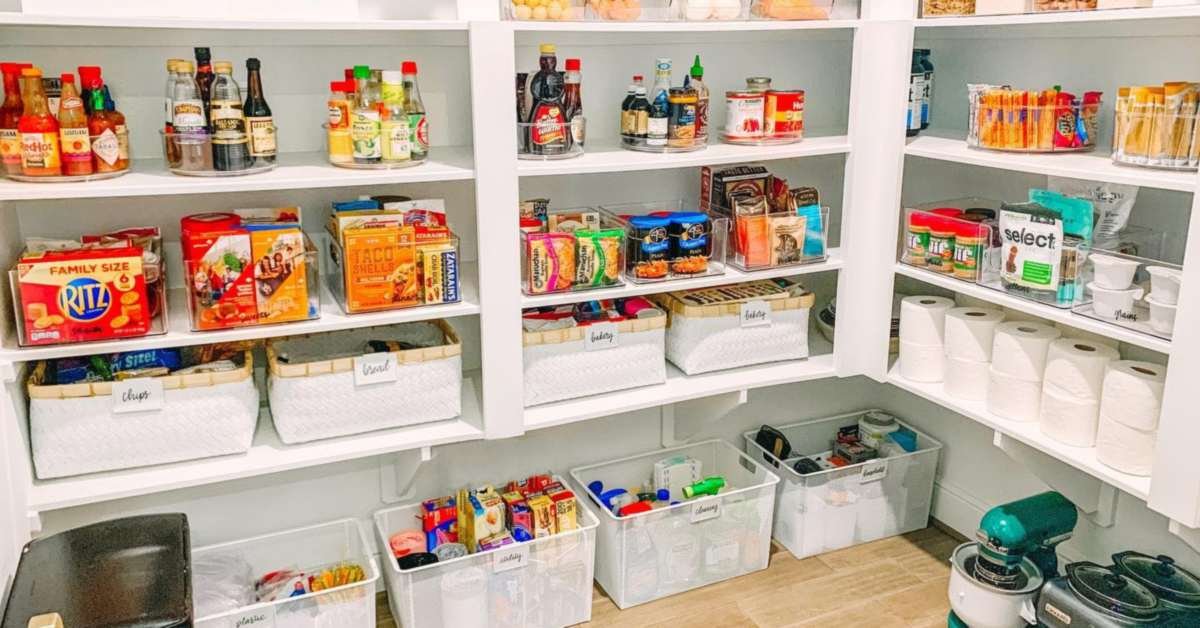
Turntables fix deep shelves. Use a 9 to 10 inch turntable on a 12 inch shelf, and a 14 to 16 inch turntable on a 16 inch or deeper shelf.
| Shelf depth | Bin size that fits | Turntable size |
| 12 in | About 10 in long, 6 in tall | 9 to 10 in |
| 14 in | About 11 in long, 6 in tall | 10 to 12 in |
| 16 in or deeper | About 13 in long, 6 in tall | 14 to 16 in |
| Door rack | Narrow, 4 in wide | None; use small bins |
What to Decant, and What Size Container Do You Need?
Decant only dry food that comes in a bag or box, such as flour, sugar, rice, pasta, cereal, and oats. Move it into a clear, airtight container with a locking lid, so you can see the level and keep moisture and pantry moths out. Consumer Reports advises buying containers double the size of what you store, so a 16 ounce bag of pasta fits in a 32 ounce container with room for a refill.
A 5 pound bag of flour holds about 19 cups, so it needs at least 5 quarts. A 4 pound bag of sugar holds about 9 cups, so it needs at least 3 quarts.
Do not decant everything. Leave tins, jars, and bottles as they are. Decanting every item costs $150 or more.
Deep Shelves, Small Pantries, and No Pantry
Deep shelves need a back zone and a front zone. Keep daily food in the front 12 to 14 inches, and backstock only at the back.
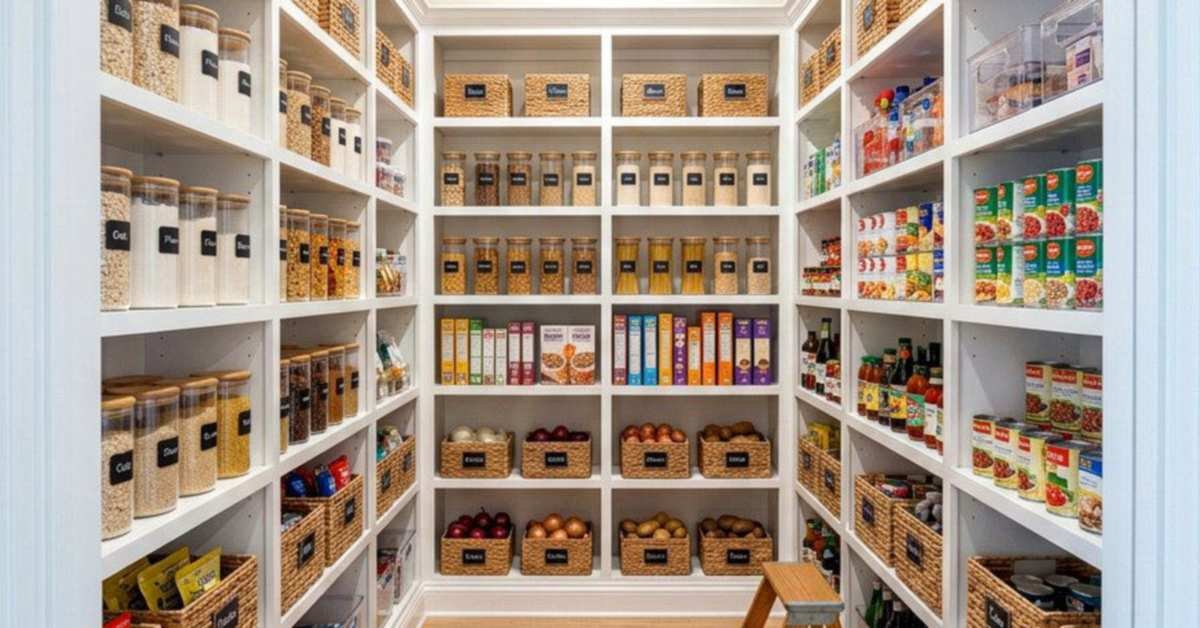
Image: how-to-organize-pantry-deep-shelves.jpg – How to organize pantry deep shelves in a walk-in pantry with jars, baskets, and canned food
A small pantry works when every shelf has one job. Keep less in it, use the full height, and add a door rack for spices and small packets. Use risers on each shelf, and keep floor bins for heavy bulk food.
If you have no pantry at all, pick one kitchen cabinet and call it the pantry. Add a rolling cart for overflow and a door rack for spices.
Labels That Actually Get Used
Label the front of each bin and container, not the lid. Label the shelf edge too, so everyone knows where each zone lives.
Keep labels short, with one or two words, such as Pasta, Baking, or Snacks. Use masking tape and a marker if you do not want to buy a label maker.
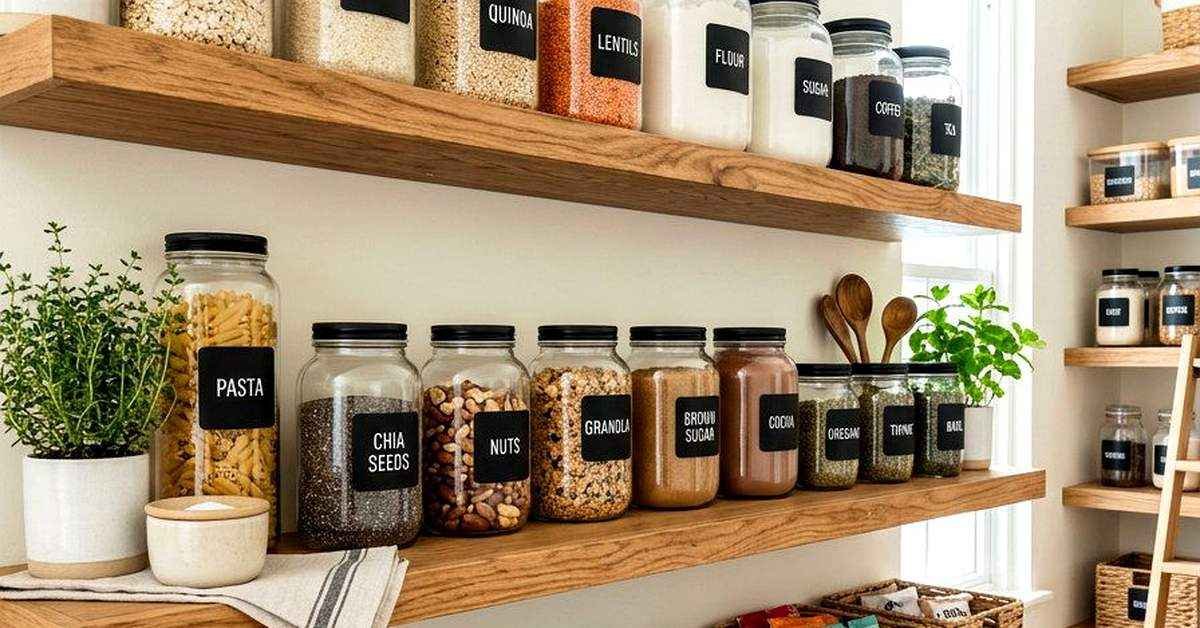
Image: how-to-organize-pantry-labels.jpg – How to organize pantry with labeled glass jars for flour, sugar, pasta, and spices on wooden shelves
What Does It Cost to Organize a Pantry?
A budget reset costs about $25, a standard reset costs $40 to $120, and a full decant-everything reset costs $150 or more. Most households do not need the full reset.
| Item | Typical cost | Notes |
| Clear bins, each | $3 to $8 | Budget bins, buy a pack to save |
| Bin pack, 6 to 10 bins | $23 to $38 | Best value for a full pantry |
| Airtight canister set | $30 to $50 | 8 to 10 piece set |
| Shelf riser | $5 to $20 | Tiered risers cost $10 to $15 |
| Turntable | $8 to $25 | 10 to 14 in size |
| Labels | $0 to $30 | Tape is free, a maker costs more |
| Total DIY reset | $25 to $120 | Standard range, check current prices |
How Long Does Pantry Food Last?
Store pantry food in a cool, dry place, below 85 degrees Fahrenheit if you can. The best range is 50 to 70 degrees, and heat over 100 degrees can harm canned food. Keep food away from the stove, the sink, and a damp garage or basement. Check the full list in the USDA FoodKeeper app, which lists storage times for hundreds of foods.
| Food | Pantry storage time | Notes |
| Low-acid canned food | 2 to 5 years | Beans, meat, fish, soup, vegetables |
| High-acid canned food | 12 to 18 months | Tomatoes, fruit, juice |
| White rice | Up to 2 years | Keep it dry and sealed |
| Dry pasta | About 2 years | Keep it in a sealed container |
| White flour | 6 to 12 months | Whole wheat flour lasts 3 to 6 months |
| Cooking oil | 6 to 12 months | 3 to 5 months after opening |
Brown rice is the one food with a split answer. FoodKeeper summaries give 3 to 6 months in a warm pantry, and up to about 1 year in a cool, dry pantry. Keep bulk brown rice in the fridge or freezer.
Keep It Organized: FIFO and the 5-Minute Reset
FIFO means first in, first out. When you unpack groceries, put new food behind the old food, so the oldest item sits at the front. Write the date on decanted jars, and check the pantry every few weeks for food that is close to its date.
Spend five minutes each week on a reset. Put each item back in its zone.
7 Common Mistakes to Avoid
Mistake 1: buying bins before measuring. Measure first, then buy bins that fit.
Mistake 2: decanting everything. Decant only dry food in bags and boxes.
Mistake 3: deep shelves with no pull-out. Add a pull-out bin or a turntable.
Mistake 4: opaque bins with no labels. You will buy the same food twice.
Mistake 5: heavy food up high. Keep flour, sugar, and large cans below waist level.
Mistake 6: skipping the date check. Check dates every few weeks.
Mistake 7: overfilling every shelf. Leave space to pull a bin out.
Frequently Asked Questions
How do I organize a small pantry?
Keep less in a small pantry, give every shelf one job, and use the full height. Add a door rack for spices and risers for cans. Measure first, and buy narrow bins that fit the shelf depth.
What size are pantry organization bins?
A large clear bin is about 11.2 by 8.1 by 6 inches, and a small bin is about 10 by 4 by 3 inches. Buy bins about one inch shallower than your shelf. On a 12 inch shelf, use a bin about 10 inches long.
How much does it cost to organize a pantry?
A budget reset costs about $25, a standard reset costs $40 to $120, and a full reset costs $150 or more. Bins cost $3 to $8 each, and a canister set costs $30 to $50.
How do I organize a walk-in pantry?
A walk-in pantry needs at least 5 by 5 feet, with a 36 inch aisle in the middle. Put daily food at eye level, and keep the top shelf under about 72 inches. Use pull-out bins on deep shelves, and keep bulk food on the floor.
Should I decant everything into matching containers?
No, decant only flour, sugar, rice, pasta, cereal, and oats into clear, airtight containers. Leave tins, jars, and bottles as they are, and leave food you use fast in its own bag. Decanting everything costs $150 or more, and it adds a chore most households drop.
How long does it take to organize a pantry?
A small cabinet takes about one hour, a reach-in pantry takes two to three hours, and a walk-in pantry takes four to six hours. Add time for shopping if you need bins and containers. The five-minute weekly reset keeps it organized after the first reset.
How do I keep my pantry organized?
Use FIFO, so new food goes behind old food, and the oldest item stays at the front. Spend five minutes each week putting food back in its zone, and do a full purge every season. Label the front of each bin, and keep a use-it-up basket for food to eat this week.
Pick One Shelf and Start Today
You do not need a new pantry. Pick one shelf, empty it, measure it, and give it a zone and a bin that fits. Then do the next shelf the same way. For a simple way to keep the whole house on the same reset habit, use our home maintenance checklist and add the five-minute pantry reset to your weekly list.

I’m Samreen Khadim Hussain, a home improvement writer specializing in practical, research-driven content for U.S. homeowners. At Domelite Home, I cover home renovation, interior design, home maintenance, and residential safety, translating technical information and industry research into clear, actionable guidance. My approach combines search intent research, reliable sources, and reader-focused writing to help homeowners understand their options, make informed decisions, and create safer, more functional living spaces.