Quick Answer: Kitchen drawer organization works when each drawer has one job, the organizer fits the inside of the drawer, and the most used items sit at the front. Measure the inside width, depth, and height first. Put cutlery near the dishwasher, cooking tools near the stove, and spices near the prep space. Fill a drawer to about 80 percent, not more, and reset it for 5 minutes once a week.
Kitchen drawer organization is not about buying more boxes. It is about giving every item a fixed spot, in the drawer closest to where you use it, so you can find it without digging. This guide shows you how to measure, sort, fit, and keep your drawers tidy, with real sizes and costs.
Measure Your Drawers First
Measure before you buy anything. Take out the drawer, then measure the inside width, depth, and height.
Standard drawer widths run 12 to 36 inches, in 3 inch steps. A standard base cabinet is 24 inches deep, and the drawer box inside it is typically 20 to 21 inches deep. A drawer box is about 1 inch narrower than the opening with side mount slides, half an inch per side. Shallow drawers are 3 to 6 inches high, standard drawers 4 to 6 inches, and deep drawers 8 to 12 inches.
Use the clearance rule. An organizer must be at most the interior height minus half an inch, so the drawer can still close. Leave about a quarter inch of total width slack. If the drawer sticks, the organizer is too tall or too wide.
| Drawer type | Height | Best for |
| Shallow drawer | 3 to 6 inches | Cutlery, flat tools, foil and wrap |
| Standard drawer | 4 to 6 inches | Utensils, gadgets, towels |
| Deep drawer | 8 to 12 inches | Pots, pans, lids, mixing bowls |
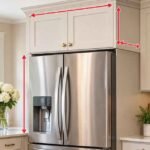
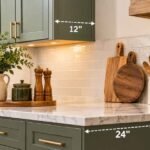
Check these kitchen cabinet sizes before you order an organizer.
Give Every Drawer a Job by Location
A tidy drawer starts with location, not with a container. Give each drawer one job, in the spot closest to where you use it.
Cutlery goes nearest the dishwasher or sink, so clean forks and spoons go straight from the rack to the drawer. Cooking tools go nearest the stove: spatulas, tongs, ladles, and wooden spoons. Spices go nearest the prep counter. Baking tools stay together near the oven. Deep drawers hold pots, pans, and lids, stacked by size, most used pan on top. The junk drawer gets a limit: one drawer, one small tray, cleared every month. For the same zone idea in a pantry, see how to organize pantry.
Kitchen Drawer Organization by Drawer Type
Different drawers need different tools.
Cutlery and utensils
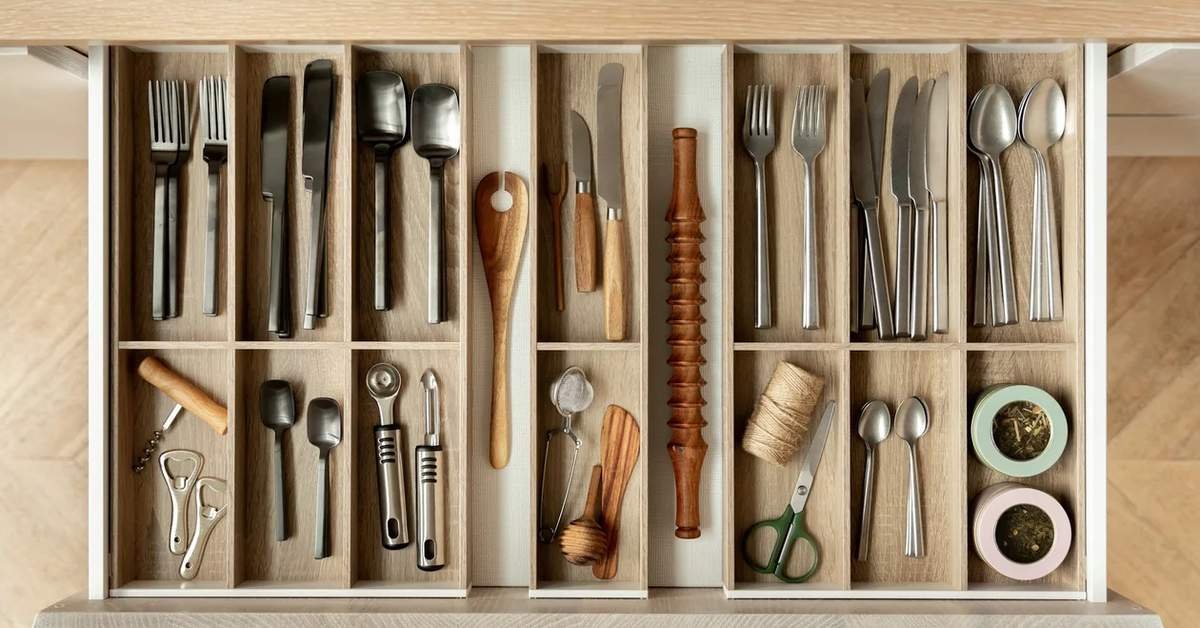
Use a tray that fits the drawer width, with slots for forks, knives, spoons, and serving pieces. Put everyday items in the front slots. Keep sharp knives in a block or a covered slot, never loose.
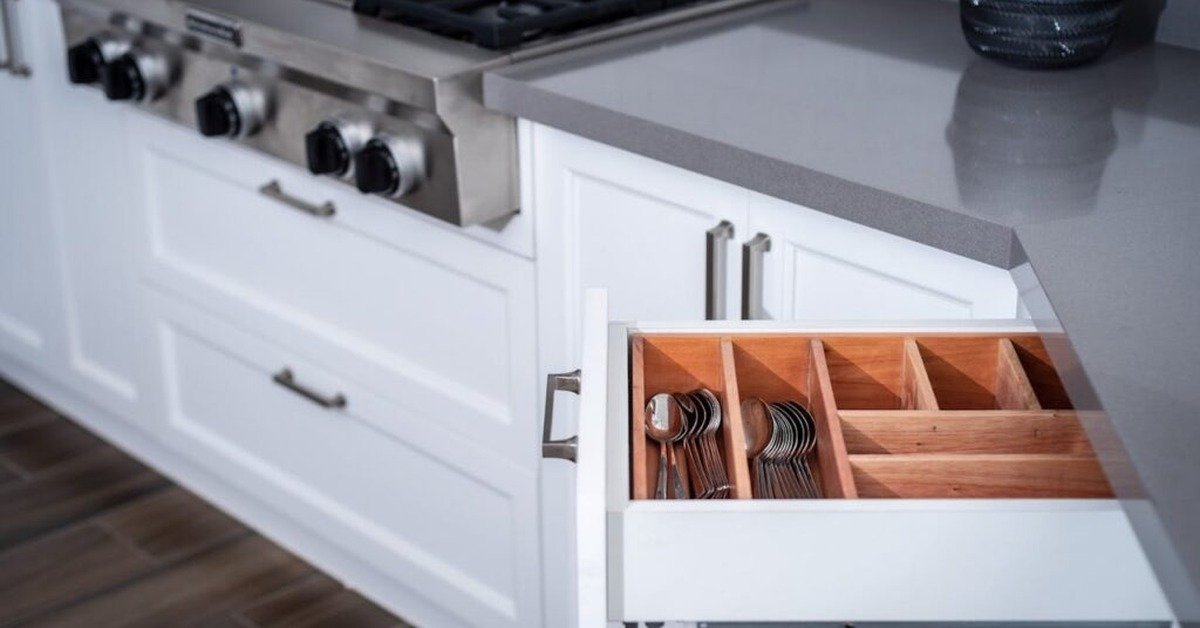
Kitchen drawer organization with a wooden divider tray holding spoons and forks in a white kitchen drawer
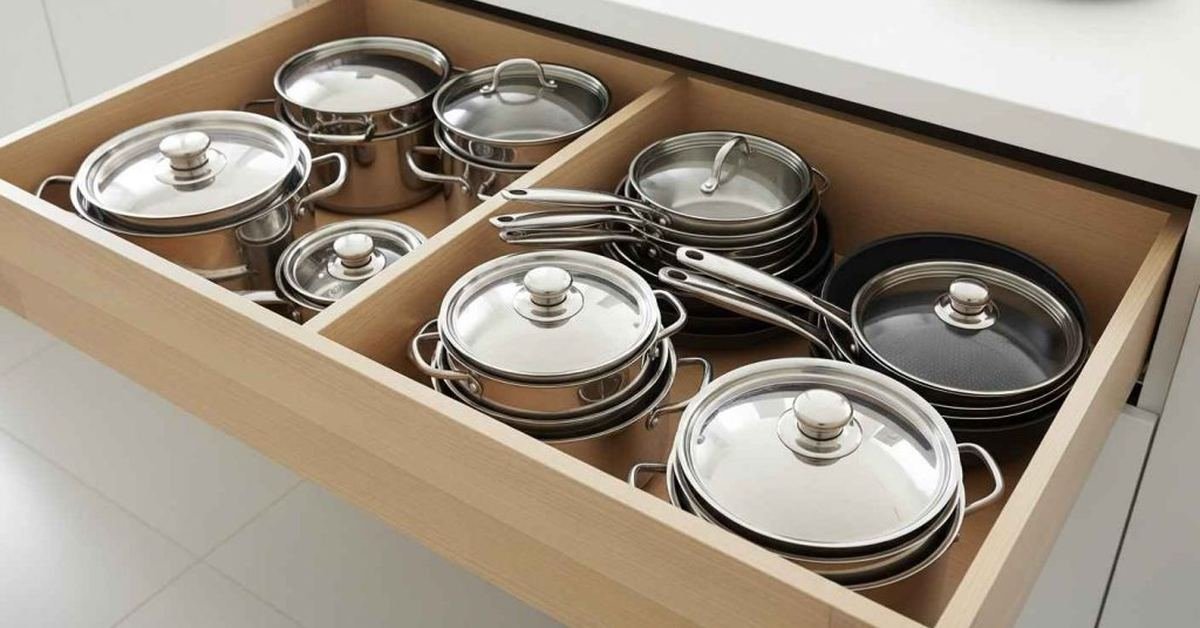
Deep drawers for pots and pans
Use pegs or a divider to hold pans upright, lids in a separate slot. Stack pans by size, largest at the bottom, most used on top. Do not stack more than three pans.
Spice drawers
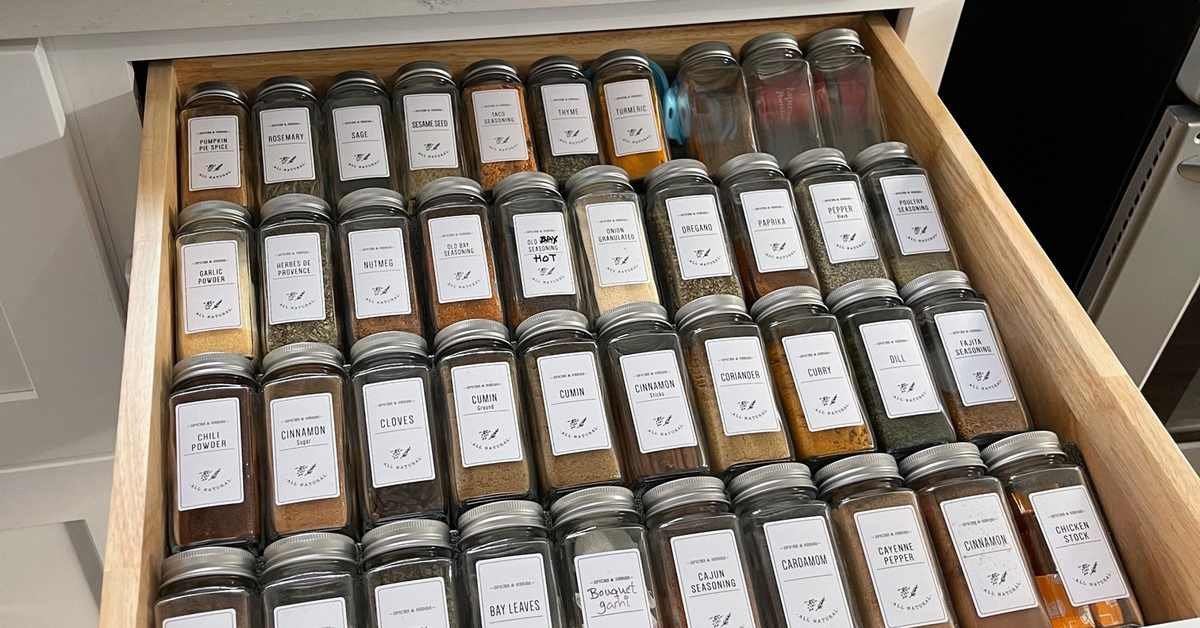
Use a tiered insert with labels on the lids, so you can read each spice from above. Put the most used spices at the front, in alphabetical order if the drawer is full. Do not store spices above the stove.
Junk drawers
Keep one junk drawer only, with a tray of four sections: batteries, tape and tools, pens and paper, and odds and ends. Clear it once a month. A junk drawer is a holding spot, not a storage room.
Under-sink drawers
Use the under-sink drawer for cleaning supplies only, in a small caddy that lifts out. Do not store food, knives, or medicines here. If it gets wet, dry it the same day.
How to Organize Kitchen Drawers in 5 Steps
Follow these five steps, one drawer at a time.
Step 1, empty one drawer. Take everything out and wipe the drawer clean. Do not empty the whole kitchen at once.
Step 2, sort into three piles: keep, relocate, and donate or toss. Kansas State University Extension tips for organizing your kitchen say it plainly: if a utensil or gadget has not been used in a year or more, let it go. Group the keep pile by purpose, so baking tools stay together, and cooking tools stay together.
Step 3, measure the empty drawer. Write down the inside width, depth, and height, and pick an organizer that fits those numbers.
Step 4, fit the organizer and load it front to back. Put the most used items at the front, and the least used items at the back. Fill the drawer to about 80 percent full, not more, so you can see every item.
Step 5, test it for a week. If you reach past the drawer every time, move the item to a closer drawer. If the drawer sticks, swap the organizer for a shorter one.
What Size Organizer Fits Your Drawer
Pick the organizer by drawer size, not by looks.
| Organizer type | Drawer width | Height | Best for | Cost estimate |
| Expandable cutlery tray | 12 to 18 inches | 2 to 3 inches | Cutlery, flat tools | $15 to $30 |
| Bamboo dividers | 12 to 24 inches | 2 to 4 inches | Utensils, gadgets | $20 to $40 |
| Peg system | 18 to 36 inches | 3 to 6 inches | Deep drawers, plates, pans | $30 to $60 |
| In-drawer knife block | 12 to 18 inches | 3 to 4 inches | Knives, sharp tools | $25 to $50 |
| Tiered spice insert | 12 to 24 inches | 2 to 3 inches | Spice jars, small bottles | $20 to $35 |
An expandable tray is a safe first buy, because it adjusts to the width. A peg system is best for a deep drawer, because you can move the pegs when the pans change. For spices, a tiered insert beats a flat tray, because you can read the labels from above.
How Much Does Kitchen Drawer Organization Cost
You buy one organizer per drawer, not a whole kitchen at once.
A budget reset costs $25 to $50. That covers one cutlery tray and one or two small bins, for the drawer you use most. A standard reset costs $60 to $150. That covers three to five drawers, with trays, dividers, and a spice insert. A full reset costs $150 to $300. That covers a whole kitchen, with a peg system for deep drawers, a knife block, and spice inserts.
Start with the drawer that annoys you most, and buy the next organizer only after the first one works.
How to Keep Kitchen Drawers Organized
A drawer stays tidy only if the system is easy to keep. Give every item a home, and make the home visible.
Spend 5 minutes once a week putting items back in their spots. Use one-in-one-out: when a new gadget comes in, one old gadget goes out. That rule stops drawers from filling up again.
For renters, use no-drill options. A tension rod across a deep drawer holds lids upright. A small bin with a non-slip base holds utensils without screws. None of these need holes in the cabinet, and all of them move with you.
Keep most-used items between shoulder and knee height. Put heavy pots in a deep drawer at knee height, not in a high cabinet. If a drawer keeps getting messy, the job is wrong, not the person, so change the job or move the item.
Common Mistakes With Kitchen Drawer Organization
Do not buy an organizer before you measure. Measure first, then buy.
Do not fill a drawer to the top. A full drawer hides items. Fill to about 80 percent, and leave space to see.
Do not mix jobs in one drawer. Give each drawer one job.
Do not store knives loose, and do not store cleaners or medicines where a child can reach them. Children climb furniture and pull out drawers, so anchor top-heavy furniture to the wall, use child locks on drawers that hold knives, cleaners, or medicines, and remove tempting objects from the top. The CPSC AnchorIt childproofing guide explains how to anchor furniture and lock drawers safely.
Do not forget the junk drawer limit. One drawer, one tray, cleared once a month.
Frequently Asked Questions
How do I start organizing kitchen drawers?
Start with the cutlery drawer and empty it completely. Sort what you use often from what you have not used in a year, measure the inside of the drawer, and fit a tray that matches those numbers. Load the most used items at the front.
What size organizer fits a standard kitchen drawer?
A standard kitchen drawer is often 18 to 24 inches wide, 20 to 21 inches deep, and 4 to 6 inches high. Pick an organizer about a quarter inch narrower than the inside width, and at least half an inch shorter than the inside height, so the drawer closes.
How do I organize deep kitchen drawers?
Use a peg system or a vertical divider to hold pans and plates upright, with lids in a separate slot. Stack pans by size, largest at the bottom, most used pan on top. Do not stack more than three pans, and put a soft liner under them.
How do I organize a junk drawer?
Keep one junk drawer only, with a tray of four sections for batteries, tape and tools, pens and paper, and odds and ends. Clear it once a month, and let go of anything you have not used in a year.
How do I organize spices in a drawer?
Use a tiered insert with labels on the lids, so you can read each spice from above. Put the spices you use most at the front, in alphabetical order if the drawer is full. Do not store spices above the stove.
How much does it cost to organize kitchen drawers?
A budget reset costs $25 to $50 for one or two drawers. A standard reset costs $60 to $150 for three to five drawers. A full kitchen reset costs $150 to $300. Start with the drawer that annoys you most.
How do I keep kitchen drawers organized?
Spend 5 minutes once a week putting items back in their spots, and use one-in-one-out when a new gadget comes in. Keep most-used items between shoulder and knee height, and give each drawer one job.
Start With One Drawer Tonight
Start with one drawer tonight, the cutlery drawer, and finish it in 20 minutes. Empty it, sort it, measure it, fit a tray, and load the most used items at the front. Tomorrow, do the next drawer. A kitchen does not get tidy in one day, but one drawer a day will get it there in a week. For the rest of your kitchen, follow this home maintenance checklist and keep the whole room in the same shape as the drawers.

I’m Samreen Khadim Hussain, a home improvement writer specializing in practical, research-driven content for U.S. homeowners. At Domelite Home, I cover home renovation, interior design, home maintenance, and residential safety, translating technical information and industry research into clear, actionable guidance. My approach combines search intent research, reliable sources, and reader-focused writing to help homeowners understand their options, make informed decisions, and create safer, more functional living spaces.