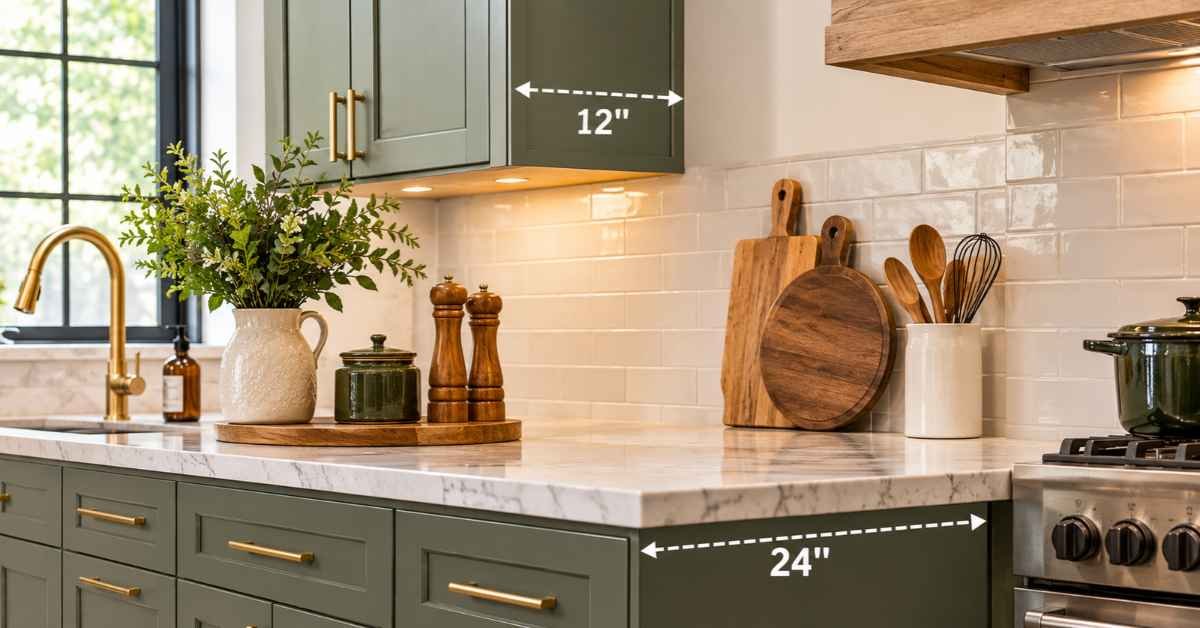
Quick Answer: Standard upper kitchen cabinets are commonly 12 inches deep, while standard base cabinets are typically 24 inches deep. The shallower upper cabinets leave more workspace and make it easier to reach across the countertop. Base cabinets provide deeper storage and support the countertop. With its front overhang, a standard countertop is usually about 25 to 26 inches deep. Actual dimensions vary by manufacturer and cabinet design.
Upper cabinet depth vs. base cabinet depth is the pair of numbers that decides how your counter works. Make the uppers too deep, and they crowd your workspace. Make the bases too shallow, and you lose counter. Below, you will see how the two depths compare, where the countertop fits between them, and what gaps to leave.
Upper Cabinet Depth vs Base Cabinet Depth at a Glance
In the upper cabinet depth vs base cabinet depth comparison, uppers are typically 12 inches deep, and bases are typically 24 inches deep. The ANSI A161.1-2022 cabinet standard from the Kitchen Cabinet Manufacturers Association (KCMA) lists those depths for wall and base cabinets, and it puts the top of a base cabinet with its countertop at 36 inches.
| Measure | Upper (wall) cabinet | Base cabinet |
| Typical box depth | 12 inches | 24 inches |
Approximate overall depth | About 12.75 inches with a 3/4 inch door | 25 to 26 inches with the countertop |
| Typical height | 12 to 42 inches | 34.5 inches, or 36 with the countertop |
| Starts at | About 54 inches above the floor | The floor |
| Holds | Dishes, glasses, pantry items | Pots, drawers, appliances |
These measurements represent common cabinet dimensions, not fixed sizes for every manufacturer. Base cabinet height and countertop depth can also vary by design. Check the manufacturer’s specifications before ordering.
Why Are Upper Cabinets Shallower Than Base Cabinets?
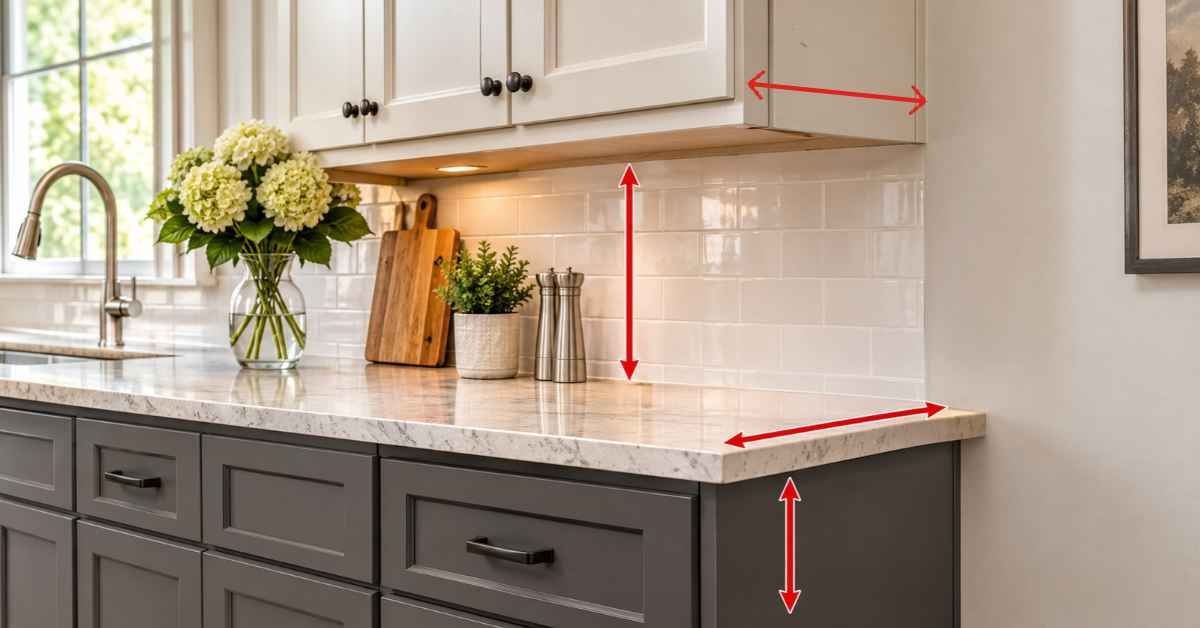
Upper cabinets are half as deep so you can reach across the counter and keep your head clear while you work. A 12 inch cabinet hangs over only the back half of the counter. Bob Vila gives the same reason for the 12 inch standard.
Base cabinets go deeper for a different job. The standard base cabinet depth of 24 inches holds drawers, pots, and appliances. With the countertop, it reaches 25 to 26 inches, close to the 25 to 26 inch depth of a typical range, according to cabinet maker Best Online Cabinets.
Upper cabinet depth vs base cabinet depth comes down to function. Uppers are storage you reach. Bases are a work surface you use.
Upper Cabinets Depth Compared to Countertop
A standard countertop is 25 to 26 inches deep, about twice the depth of a 12 inch upper cabinet. That is a 24 inch base cabinet plus a 1 to 1.5 inch overhang at the front, so base cabinet depth with countertop is always a little more than the box alone.
Subtract the upper cabinet’s overall depth, and you get the open counter in front of it. With a 12 inch box and a 3/4 inch door, a 25.5 inch counter leaves about 13 inches. That is where upper cabinet depth vs base cabinet depth shows up in daily use. The table shows what happens as uppers get deeper.
The following examples assume a 25.5-inch countertop and a 3/4-inch projecting cabinet door. Actual clearance varies with door construction, countertop depth, and cabinet installation.
| Upper box depth | Depth with 3/4 inch door | Open counter in front of it |
| 12 inches | 12.75 inches | 12.75 inches |
| 15 inches | 15.75 inches | 9.75 inches |
| 18 inches | 18.75 inches | 6.75 inches |
| 24 inches | 24.75 inches | 0.75 inches |
The figures assume a 25.5 inch deep counter, which is a 24 inch base plus a 1.5 inch overhang.
The NKBA Kitchen Planning Guidelines call for 158 inches of countertop frontage, 24 inches deep, with at least 15 inches of clearance above it. A 24 inch upper over that counter would hang almost to the front edge, which is why deep uppers stay out of work areas.
How far above the counter should uppers hang?
The NKBA minimum is 15 inches between the countertop and the bottom of the upper cabinet. Many installers use 18 inches, which puts the cabinet bottom 54 inches above the floor over a 36 inch counter.
When Upper Cabinets Go Deeper Than 12 Inches
Upper cabinets can be deeper than 12 inches when a kitchen layout requires additional storage or a closer fit with nearby appliances. Deeper cabinets are commonly used above refrigerators, while selected appliance areas may also require different dimensions. The appropriate depth depends on the appliance specifications, available space, and kitchen layout. See our guide to upper cabinet depth and standard measurements for more options.
How to Choose Upper Cabinet Depth vs Base Cabinet Depth

Standard kitchens
Use 12 inch uppers over 24 inch bases. That upper cabinet depth vs base cabinet depth pairing is the default for stock cabinets, so you get the most size options and the easiest replacements later.
Small kitchens
Keep uppers at 12 inches and bases at 24 inches. Before you shave base depth to widen the aisle, check that your range and dishwasher still sit flush with the counter edge.
Custom kitchens
Custom shops can change both depths. Use the table above to see how much open counter you keep in front of each upper before you approve a deeper cabinet.
Common Mistakes With Upper Cabinet Depth vs Base Cabinet Depth
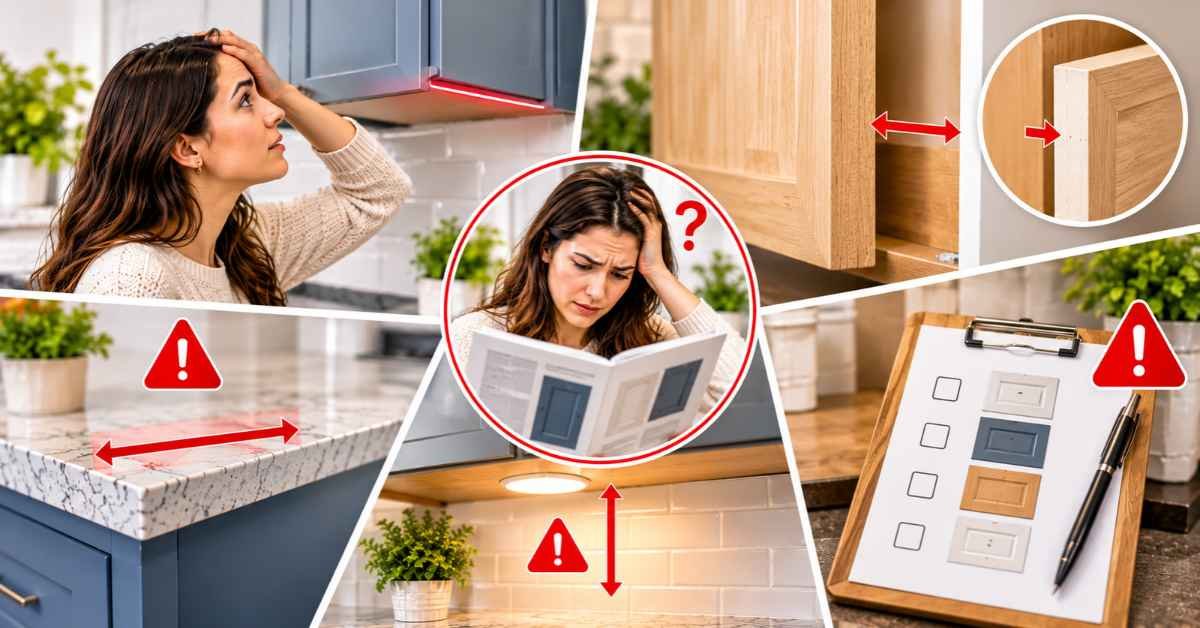
- Making uppers as deep as bases over the counter. A 24 inch upper leaves about 3/4 inch of open counter and crowds your head.
- Using box depth only. A 3/4 inch door adds to the depth of uppers and bases alike.
- Forgetting the overhang. Base cabinet depth with countertop is 25 to 26 inches, not 24.
- Hanging uppers too low. The NKBA minimum is 15 inches above the countertop.
- Mixing cabinet lines blindly. Depths vary by maker, so check each spec sheet before you order.
Upper Cabinet Depth vs Base Cabinet Depth FAQs
1. Why are upper cabinets 12 inches deep and base cabinets 24 inches deep?
Upper cabinets are typically 12 inches deep to provide storage without taking up too much space above the countertop. Base cabinets are usually 24 inches deep to accommodate larger kitchen items, support countertops, and provide practical storage.
2. What is the difference between upper and base cabinet depth?
Upper cabinets are commonly 12 inches deep, while base cabinets are typically 24 inches deep. Upper cabinets provide accessible storage above the counter, whereas base cabinets offer deeper storage below it.
3. Do base cabinet depths include the countertop?
No. The standard 24-inch base cabinet measurement generally refers to the cabinet itself. A countertop usually extends beyond the cabinet box, making the total countertop depth approximately 25 to 26 inches, depending on its design.
4. How much space should be between upper and base cabinets?
A common installation measurement is 18 inches between the countertop and the bottom of the upper cabinets. However, the appropriate distance can vary depending on the kitchen layout, appliances, and applicable installation requirements. Always check the manufacturer’s instructions and local requirements.
Check Every Depth Before You Order
Write down upper cabinet depth vs base cabinet depth, the countertop depth, and the gap between them before you buy. If you are planning a full remodel, read our kitchen remodeling mistakes first.

I’m Samreen Khadim Hussain, a home improvement writer specializing in practical, research-driven content for U.S. homeowners. At Domelite Home, I cover home renovation, interior design, home maintenance, and residential safety, translating technical information and industry research into clear, actionable guidance. My approach combines search intent research, reliable sources, and reader-focused writing to help homeowners understand their options, make informed decisions, and create safer, more functional living spaces.