Quick Answer: The standard upper kitchen cabinet depth is commonly 12 inches (30.5 cm), measured from the back of the cabinet box to its front edge. The overall depth may be greater when the door is included, depending on its design and construction. Deeper cabinets, including 15- and 18-inch options, are available for specific storage needs, while cabinets above refrigerators may be deeper to accommodate the appliance and surrounding layout. Always check the manufacturer’s dimensions before ordering.
Whether you are ordering a full set or replacing one wall unit, depth is the number that decides what fits. Too shallow and plates hang over the shelf edge. Too deep and you bump your head or lose counter space. Below are exact depths in inches and centimeters, a chart, and clearances for refrigerators, microwaves, and stoves.
Standard Upper Cabinet Depth: How Deep Are Upper Kitchen Cabinets?
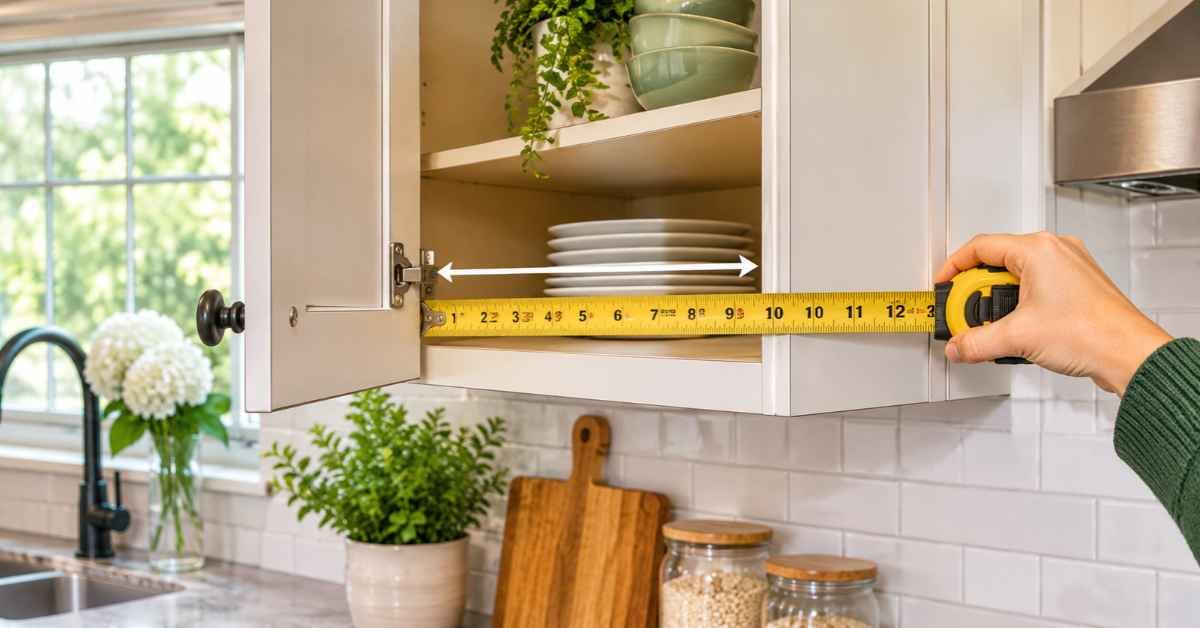
Most upper kitchen cabinets are 12 inches deep, measured from the back panel to the front edge of the cabinet box. That is the standard depth of upper kitchen cabinets in the United States.
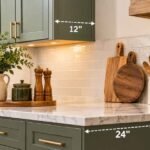
Most standard kitchen wall cabinets are 12 inches deep, while base cabinets typically measure 24 inches deep. KraftMaid confirms these common dimensions in its kitchen cabinet sizing guide. However, available sizes can vary by cabinet style and manufacturer, so always check the product specifications before ordering.
Most standard wall cabinets follow the same 12-inch depth measurement. However, some kitchens require deeper units to accommodate specific appliances or provide additional storage. These variations are especially common above refrigerators and around over-the-range microwaves.
Upper Cabinet Depth in Inches and Centimeters
A standard upper cabinet is 12 inches deep, which equals 30.5 centimeters. To convert any depth, multiply inches by 2.54.
| Upper Cabinet Depth | Centimeters | Typical Application |
|---|---|---|
| 12 inches | 30.5 cm | Common depth for standard kitchen wall cabinets |
| 15 inches | 38.1 cm | Additional storage for larger dishes and selected appliance areas |
| 18 inches | 45.7 cm | Deeper storage where kitchen layout and accessibility allow |
| 24 inches | 61 cm | Specialized applications, often above refrigerators |
Cabinet measurements can vary by manufacturer and product line. Check whether the listed depth refers to the cabinet box or includes the door before ordering.
Upper Cabinet Depth Chart: 12, 15, 18 and 24 Inches
Upper cabinets come in four common depths: 12, 15, 18 and 24 inches. Choose 12 inches for everyday storage. Deep upper kitchen cabinets, meaning anything over 12 inches, earn their place only in specific spots.
This kitchen cabinet depth chart compares upper depths with the other cabinets in the room. Microwave and refrigerator cabinet sizes vary by line.
| Cabinet type | Typical depth | Typical use |
| Wall (upper) cabinet | 12 inches | Dishes, glasses, pantry items |
| Wall cabinet near a microwave | 15 to 18 inches | Larger items, closer fit around the microwave |
| Cabinet above a refrigerator | 24 inches | Rarely used items |
| Base cabinet | 24 inches | Counters, sinks, drawers |
| Oven or refrigerator cabinet | 24 inches | Built in ovens, tall storage |
| Utility cabinet | 12 or 24 inches | Pantry, broom storage |
12 inch deep upper cabinets
This is the default. A 12 inch box holds plates, glasses, and canned goods, and its front edge stays well back from your head at the counter.
15 inch deep upper cabinets
Fifteen inches adds 3 inches of shelf depth. It suits large serving dishes and the cabinet beside a microwave, but the front hangs closer to your face.
18 inch deep upper cabinets
Eighteen inch uppers are uncommon. They fit large kitchens with deeper counters, but the back of each shelf is a stretch to reach.
24 inch deep upper cabinets
A 24 inch deep upper matches the depth of a base cabinet. It belongs above a refrigerator, where nobody works underneath it. Over a prep counter it blocks your view and crowds your head.
Cabinet Box Depth vs Door Depth vs Usable Shelf Depth

Cabinet depth can refer to three different measurements: cabinet box depth, overall depth with the door closed, and usable interior shelf depth.
- Cabinet box depth: The measurement from the back of the cabinet box to its front edge, excluding the door.
- Overall depth: The distance from the wall to the outer face of the closed cabinet door. This depends on the door design, overlay, and cabinet construction.
- Usable shelf depth: The actual front-to-back storage space available inside the cabinet. It is usually less than the box depth because of the back panel and interior construction.
For example, a cabinet with a 12-inch box depth and a 3/4-inch door that projects beyond the cabinet box may have an overall depth of approximately 12.75 inches. However, not every cabinet uses the same door construction, so check the manufacturer’s specifications.
When buying storage organizers, measure the actual usable shelf depth rather than relying on the cabinet’s advertised exterior dimensions.
Upper Cabinets vs Base Cabinets
Standard upper kitchen cabinets are commonly 12 inches deep, while base cabinets are typically 24 inches deep. The shallower upper cabinets leave more usable workspace and reduce obstruction above the countertop.
The exact measurements can vary depending on cabinet design, countertop dimensions, and installation requirements. For a detailed comparison of both cabinet types, see our guide to upper cabinet depth vs base cabinet depth.
Upper Cabinet Depth Above a Refrigerator
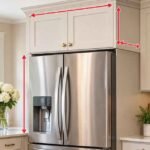
Cabinets above refrigerators are often deeper than standard upper cabinets to provide additional storage and align with the surrounding kitchen layout. Their dimensions depend on the refrigerator’s width, height, and depth, as well as the available ceiling space and installation requirements.
For detailed measurements, cabinet sizing options, and installation considerations, see our guide to upper cabinets over refrigerator depth, height, and width.
Upper Cabinet Depth Above a Microwave, Stove or Range
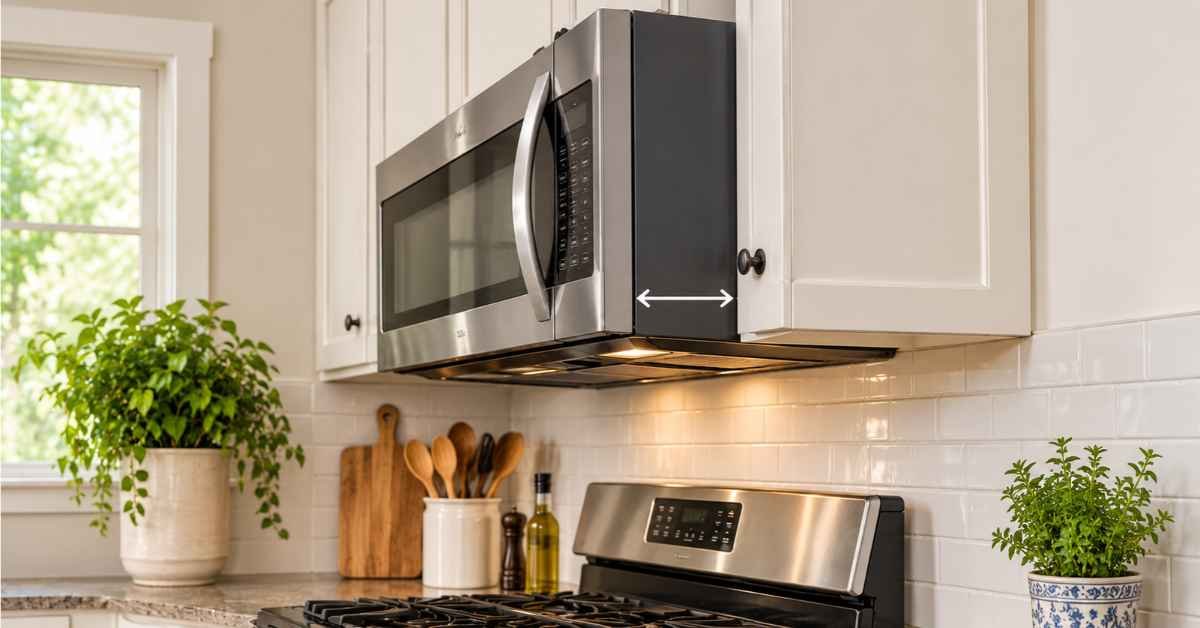
Most over-the-range microwaves measure 15 to 18 inches deep with the door closed. This means they typically extend beyond a standard 12-inch upper cabinet. Before choosing the cabinet depth, check the microwave’s installation manual for the required dimensions and clearances.
Over-the-range microwaves can extend beyond standard 12-inch-deep upper cabinets because many models have a greater front-to-back measurement. Some kitchen layouts use deeper cabinets in this area, but the correct size depends on the microwave model and its installation requirements.
Before selecting a cabinet, check the appliance manufacturer’s installation manual for the required cabinet dimensions, mounting instructions, and clearances.
For cabinets above a range or cooktop, vertical clearance is a separate consideration from cabinet depth. Follow the appliance manufacturer’s instructions and applicable local building and fire-safety requirements. Do not assume that a particular cabinet depth alone ensures safe installation.
How to Measure Existing Upper Cabinets
Before replacing or ordering upper kitchen cabinets, measure the cabinet box, the overall depth with the door closed, and the usable shelf depth separately. These measurements are different and serve different purposes.
- Box depth: hold a tape against the wall and measure to the front edge of the cabinet side panel.
- Overall depth: with the door closed, measure from the wall to the face of the door.
- Usable depth: open the door and measure from the back panel to the front edge of the shelf.
How to Choose the Right Upper Cabinet Depth
Best depth for upper kitchen cabinets
Twelve inches is the best depth for upper kitchen cabinets in most homes. It matches the industry standard, fits stock cabinet lines, and leaves the counter free.
Are 12 inch deep upper cabinets enough?
Yes, for most households. Twelve inches holds dinnerware, glasses, and pantry staples. If you stack large platters or bulky small appliances, use 15 inches for one or two cabinets rather than the whole wall.
Deeper upper cabinets pros and cons
Deeper uppers trade easy reach for extra storage.
- Pros: more shelf space per cabinet, room for large dishes, and a closer fit around an over-the-range microwave.
- Cons: items get lost at the back, the front edge sits closer to your head, and the counter below feels more closed in.
Upper cabinet depth for a small kitchen
Stick with 12 inches over the main counter in a small kitchen. Add depth only where you do not stand, such as above the refrigerator, so you gain storage without losing head room.
Custom upper cabinet depth
Custom and semi-custom makers can change wall cabinet depth to fit unusual walls. Ask which depths a line offers before you design around one.
Common Mistakes With Upper Cabinet Depth

- Ordering by box depth alone. Add about 3/4 inch for the door.
- Skipping the microwave manual. Most over-the-range microwaves are 15 to 17 inches deep, and the manual’s template sets the cabinet size you need.
- Hanging a cabinet too close to the cooktop. Code calls for 30 inches of clearance, or 24 inches with approved protection.
- Making every upper 15 or 18 inches deep. Deeper boxes bring the front closer to your head and bury items at the back.
- Forgetting the refrigerator. A standard depth fridge is 30 to 36 inches deep, so a 12 inch cabinet above it looks recessed and is hard to reach.
Upper Cabinet Depth FAQs
Are 12-inch deep upper cabinets enough?
Yes. A 12-inch-deep upper cabinet provides sufficient space for most everyday kitchen items, including plates, glasses, and pantry staples. Larger serving dishes may require deeper storage, depending on their dimensions.
Do upper cabinet depths include the doors?
Not always. Many cabinet listings specify the cabinet box depth separately from the door. Check the manufacturer’s measurement details and measure the closed cabinet if you need its total projection from the wall.
Can upper kitchen cabinets be deeper than 12 inches?
Yes. Some upper cabinets are available in 15- and 18-inch depths for additional storage. Cabinets above refrigerators may also be deeper. However, deeper cabinets should be selected according to the kitchen layout, accessibility, and available working space.
Measure Before You Order
Get all three depths on paper before you buy: box, overall, and usable. Planning a full remodel? Read our kitchen remodeling mistakes before you order.

I’m Samreen Khadim Hussain, a home improvement writer specializing in practical, research-driven content for U.S. homeowners. At Domelite Home, I cover home renovation, interior design, home maintenance, and residential safety, translating technical information and industry research into clear, actionable guidance. My approach combines search intent research, reliable sources, and reader-focused writing to help homeowners understand their options, make informed decisions, and create safer, more functional living spaces.