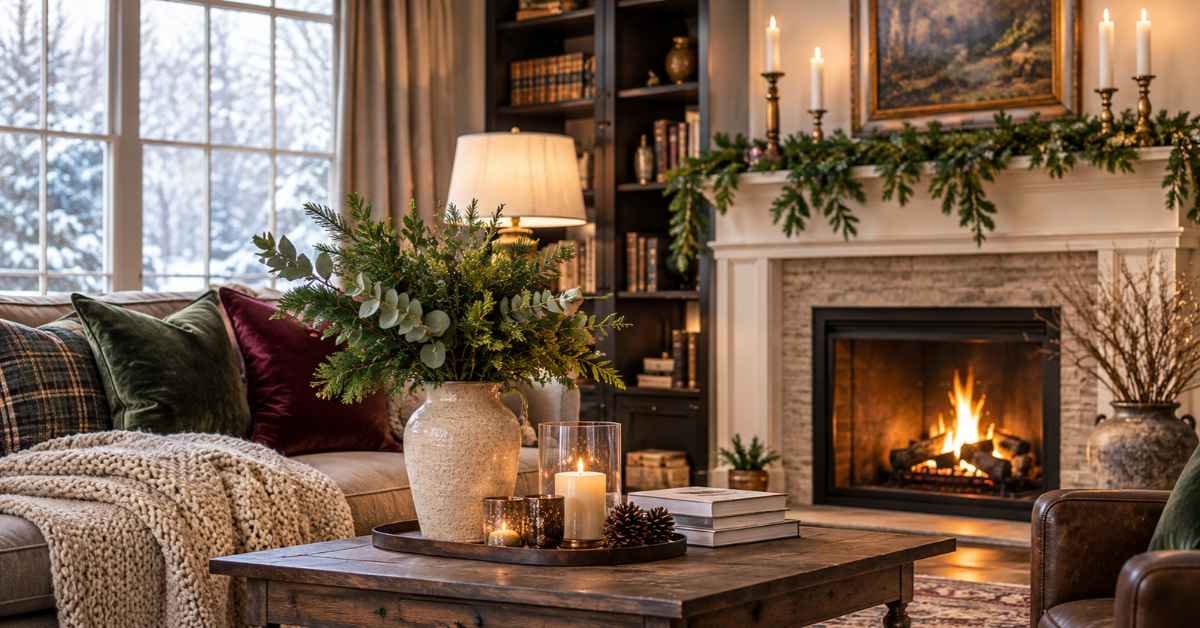
Quick Answer: The best winter decor ideas focus on warm lighting, natural greenery, layered textiles, earthy colors, and comfortable furniture rather than Christmas-specific decorations. Replace red-and-green holiday accents with cream, taupe, forest green, burgundy, and warm brown. Add soft throws, candles, wooden accessories, and winter branches to create a welcoming home that feels beautiful throughout January, February, and early spring.
Winter is far from over when the Christmas decorations come down. January and February are the perfect months to give your home a fresh, comfortable look that celebrates the season without making every room feel festive.
The secret is to decorate for winter rather than another holiday. Think soft lighting, natural textures, inviting seating, and colors inspired by winter landscapes. These elements work in traditional homes, modern apartments, and even small spaces.
Whether you prefer a clean neutral interior or a rich, vintage-inspired atmosphere, these winter decor ideas will help you create a home that stays warm and inviting long after the holidays.
15 Winter Decor Ideas That Work Beyond Christmas

1. Choose a Warm and Timeless Winter Color Palette
Start with a color scheme that feels comfortable throughout the colder months. Cream, warm white, beige, taupe, chocolate brown, and muted gray make excellent foundations.
Introduce deeper shades through cushions, rugs, artwork, and decorative accessories.
Consider these combinations:
- Cream and camel: Soft, understated, and welcoming.
- Forest green and walnut: Natural and traditional.
- Burgundy and chocolate brown: Rich and sophisticated.
- Warm gray and ivory: Clean and contemporary.
- Navy and antique gold: Elegant without looking overly festive.
Avoid relying too heavily on bright red, shiny gold, and Christmas-specific patterns. A more restrained palette gives your home a longer-lasting seasonal look.
2. Layer Soft Blankets and Textured Throws
Few winter decor ideas make a room feel more comfortable as quickly as adding soft textiles.
Drape a knitted throw over the arm of a sofa, fold a wool blanket at the end of your bed, or place a textured blanket in a basket beside your favorite reading chair.
Choose materials such as:
- Chunky knitted fabrics
- Cotton and brushed cotton
- Wool and wool blends
- Linen
- Velvet
Mixing different textures adds depth without requiring new furniture. Choose colors that complement your existing upholstery instead of purchasing a completely matching set.
3. Decorate With Natural Winter Greenery
Greenery brings life into a home when outdoor landscapes look bare. It also offers a simple alternative to traditional Christmas garlands.
Try arranging eucalyptus, cedar branches, pine stems, or olive branches in ceramic vases. Place a small arrangement on a coffee table, dining table, or fireplace mantel.
You can also use simple wreaths made from natural branches without ornaments, ribbons, or holiday decorations.
If you prefer low-maintenance styling, choose realistic artificial greenery that can be reused every winter.
4. Create a Cozy Atmosphere With Layered Lighting
Shorter days make lighting one of the most important parts of winter home decor.
Instead of depending entirely on overhead fixtures, combine different light sources to create a comfortable atmosphere.
Consider adding:
- Table lamps beside sofas and beds.
- Floor lamps near reading chairs.
- Wall sconces in darker corners.
- Warm-white LED bulbs in frequently used rooms.
- Battery-operated candles for decorative displays.
Position lighting where people read, relax, or spend time together. This creates a more inviting environment while making each area useful.
5. Style Your Coffee Table With Simple Seasonal Accessories

A coffee table can become a natural focal point without looking overcrowded.
Start with a small tray or decorative book. Add a ceramic vase, a few pinecones, or a wooden bowl filled with seasonal objects.
For a simple arrangement, combine three elements:
- Something with height, such as a vase with bare branches.
- Something flat, such as a book or decorative tray.
- Something natural, such as pinecones or a small arrangement of greenery.
Leave enough open space for drinks, books, and everyday use.
6. Refresh Your Fireplace Mantel for Winter
Once stockings, ornaments, and Christmas garlands are removed, your fireplace mantel can feel unexpectedly empty.
Give it a new look with a few pieces that suit the entire winter season.
Try combining:
- A simple mirror or framed artwork.
- Two or three neutral candle holders.
- A ceramic vase with bare branches.
- A small arrangement of greenery.
- Natural wood or stone accessories.
Keep the arrangement balanced rather than filling every inch of the mantel. A little negative space helps individual pieces stand out.
7. Bring Natural Wood and Rustic Materials Indoors
Natural materials make winter interiors feel grounded and comfortable.
Wooden bowls, woven baskets, rattan accessories, stoneware, and textured ceramics introduce warmth without relying on seasonal decorations.
You do not need to replace existing furniture. A wooden serving tray, small storage basket, or handcrafted vase can create the same effect.
Combine different finishes carefully. For example, walnut furniture looks attractive with cream textiles, while lighter oak pairs well with beige and muted green.
8. Add Seasonal Flowers and Winter Branches
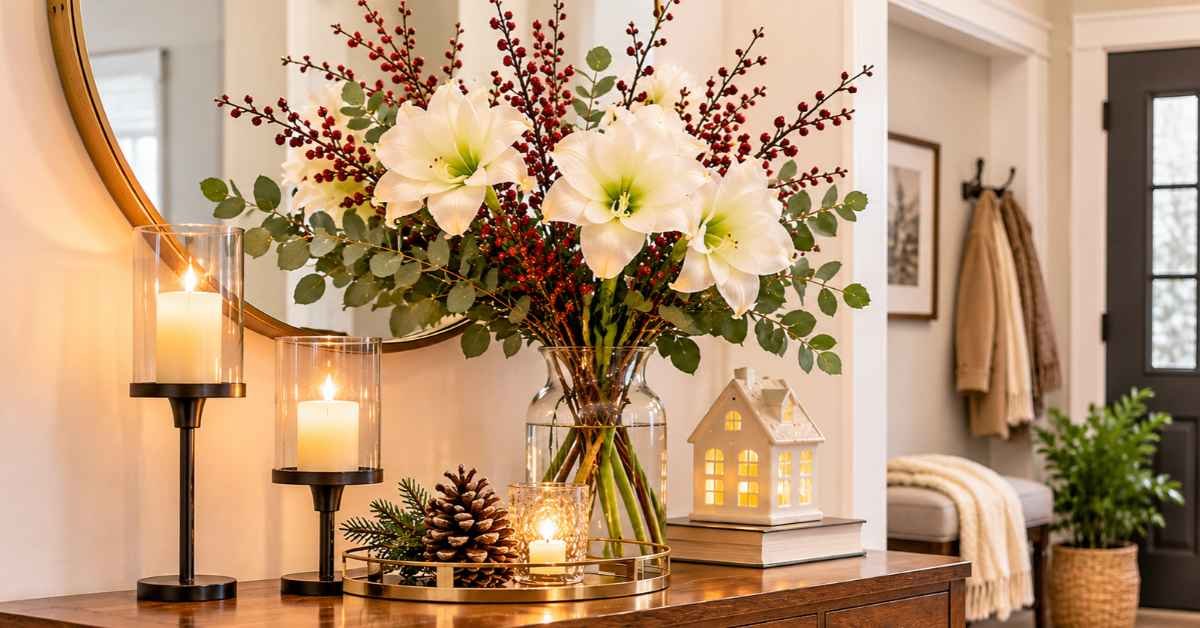
Fresh flowers are not just for spring and summer. Several varieties bring color to winter interiors, while bare branches create a simple, sculptural display.
Try arranging:
- White amaryllis in a ceramic planter.
- Paperwhites in a simple glass container.
- Camellia stems where locally available.
- Eucalyptus branches in a tall vase.
- Birch or willow branches for a natural display.
Choose flowers that suit your indoor conditions and check their pet safety before bringing them home.
For more seasonal inspiration, explore our guide to winter flowers that bloom in cold weather and discover varieties that can bring natural color to your home and garden during colder months.
9. Make Your Bedroom Feel Like a Winter Retreat
Your bedroom should feel comfortable without requiring an expensive seasonal makeover.
Start with warm bedding, a soft throw, and a few decorative cushions. Replace bright summer colors with deeper or more neutral shades such as cream, olive, burgundy, or warm gray.
A bedside lamp with a warm-white bulb can make the room feel more relaxing in the evening.
If you have hardwood or tile flooring, consider adding a soft rug beside the bed. It provides a comfortable surface underfoot on cold mornings.
10. Create a Welcoming Winter Entryway
Your entryway is the first part of your home that guests see. A few thoughtful changes can make it feel more inviting during colder months.
Add a durable doormat, a woven basket for gloves and scarves, and a small table for everyday essentials.
A simple vase with winter branches or greenery can provide a seasonal touch without taking up much space.
If your entryway is narrow, use wall hooks and vertical storage rather than adding bulky furniture.
11. Use Candles and Lanterns for a Softer Evening Atmosphere
Candles add gentle light and make living spaces feel more intimate during long winter evenings.
Choose unscented ivory, cream, or taupe candles for a timeless appearance. Place them in glass holders, metal lanterns, or ceramic candle stands.
For homes with children or pets, flameless LED candles offer a practical alternative.
Never leave burning candles unattended. Keep them at least 12 inches away from anything that can burn, and extinguish them before leaving the room or going to bed. See the U.S. Fire Administration’s candle fire safety recommendations for additional precautions.
12. Introduce Winter-Inspired Artwork and Wall Decor
You do not need snowflake decorations to make your walls feel seasonal.
Choose artwork that reflects winter landscapes, forests, mountains, botanical illustrations, or traditional architectural details.
Muted colors and natural subjects work especially well because they remain appropriate after winter ends.
You can also update a gallery wall by changing one or two prints rather than replacing the entire arrangement.
13. Make a Small Reading Corner
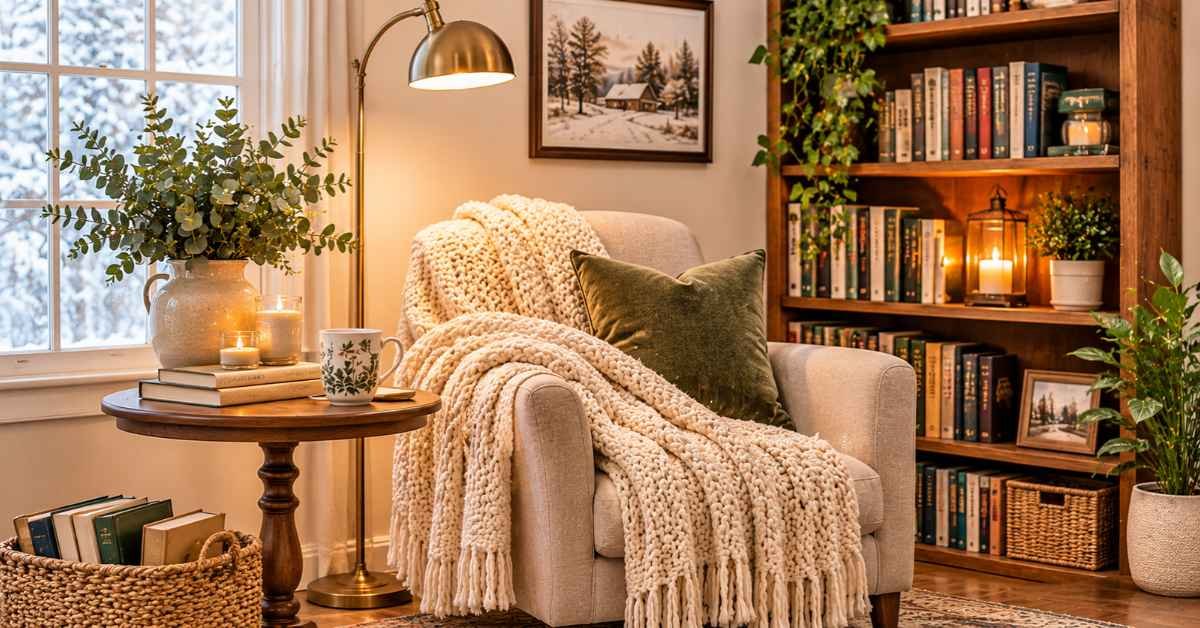
Winter is an ideal time to create a comfortable place for reading, writing, or relaxing.
Choose a supportive armchair, a small side table, and a floor or table lamp. Add a soft cushion and a blanket within easy reach.
If space is limited, position the chair near an existing bookshelf or use an unused bedroom corner.
The goal is to create a functional spot that encourages you to slow down and enjoy your home.
14. Create a Dark Academia Winter Room
For a more dramatic approach to winter decor, consider a dark academia-inspired interior. This style combines traditional furniture, rich colors, books, warm lighting, and layered materials to create a comfortable, library-inspired atmosphere.
Start with forest green, burgundy, chocolate brown, or deep navy. Introduce walnut furniture, vintage-style artwork, brass accessories, and textured cushions.
A dark wooden bookshelf, leather or upholstered reading chair, and warm table lamp can establish the look without requiring a complete room renovation.
For a balanced winter interior:
- Use cream or parchment textiles to soften darker colors.
- Add a knitted throw to a reading chair.
- Display books and a few meaningful decorative objects.
- Choose warm lighting instead of harsh overhead illumination.
- Introduce natural branches or subtle greenery for seasonal character.
Explore these related guides for more inspiration: dark academia room ideas and the dark academia color palette.
This approach works particularly well in bedrooms, home libraries, reading corners, and traditional living rooms.
15. Keep Your Winter Decor Simple and Clutter-Free
One of the easiest ways to improve your home is to remove decorations that no longer serve a purpose.
After the holidays, store ornaments, stockings, Christmas signs, and other festive accessories. Keep the pieces that work throughout the colder months.
Before purchasing anything new, try rearranging your existing accessories. Move a lamp to a darker corner, place a throw on a sofa, or group a few decorative objects together.
A room does not need more accessories to feel complete. Thoughtful placement and a consistent color scheme often make a bigger difference.
What Should You Keep and Remove After Christmas?

Not every holiday decoration needs to disappear immediately. Some pieces can transition naturally into winter styling.
| Keep for winter | Store after the holidays |
| Plain greenery and branches | Santa figures |
| Neutral candles | Christmas stockings |
| Pinecones and natural wood | Christmas ornaments |
| Warm-white lights | Christmas signs |
| Cream and wool throws | Festive table decorations |
| Simple lanterns | Holiday-specific wreaths |
The easiest test is to ask whether an item would look appropriate in your home during February. If it would, it can probably stay.
For additional inspiration, read The Spruce’s guide to transitioning holiday decor into winter decor.
How Can You Decorate Your Home for Winter on a Budget?
You do not need a large decorating budget to create a comfortable winter interior.
Start by using what you already own. Rearrange cushions, reuse blankets, move accessories between rooms, and display natural branches in existing vases.
If you plan to purchase something, prioritize versatile pieces:
- Neutral cushion covers.
- A comfortable textured throw.
- Warm-white LED lighting.
- A simple ceramic vase.
- A natural woven basket.
Choose items that work with your existing furniture and can be reused in other seasons. For more ways to control decorating and improvement costs, explore these home renovation tips and money-saving tricks.
Frequently Asked Questions
How do I decorate my home for winter after Christmas?
Remove holiday-specific decorations and replace them with neutral textiles, natural greenery, candles, wooden accessories, and warm lighting. Choose colors such as cream, beige, forest green, and brown to create a cozy atmosphere.
What colors are best for winter home decor?
Cream, ivory, taupe, warm gray, chocolate brown, forest green, burgundy, and muted navy are excellent choices. Combine lighter neutrals with deeper accent colors for a balanced appearance.
How can I make my living room cozy in winter?
Layer soft blankets and cushions, use warm lighting, add a textured rug, and arrange comfortable seating around a central focal point. Natural materials and a few seasonal accessories can make the room feel more inviting.
Can I keep fairy lights up after Christmas?
Yes. Simple warm-white lights can work as winter decorations when displayed without Christmas ornaments or festive accessories. Use lights rated for the intended indoor or outdoor location.
When should I remove winter decorations?
There is no fixed date. Many homeowners gradually transition to lighter textiles, brighter colors, and spring-inspired accessories as temperatures rise and daylight increases.
Final Thoughts
The best winter decor ideas are not about filling your home with seasonal decorations. They are about creating comfortable spaces that feel welcoming throughout the colder months.
Start with a timeless color palette, add soft textures, introduce natural greenery, and use layered lighting to create warmth. Whether you prefer neutral interiors, rustic details, or a dark academia winter room, choose pieces that complement your home and everyday routine.
With a few thoughtful changes, your home can remain inviting long after the holidays are over.

I’m Samreen Khadim Hussain, a home improvement writer specializing in practical, research-driven content for U.S. homeowners. At Domelite Home, I cover home renovation, interior design, home maintenance, and residential safety, translating technical information and industry research into clear, actionable guidance. My approach combines search intent research, reliable sources, and reader-focused writing to help homeowners understand their options, make informed decisions, and create safer, more functional living spaces.