
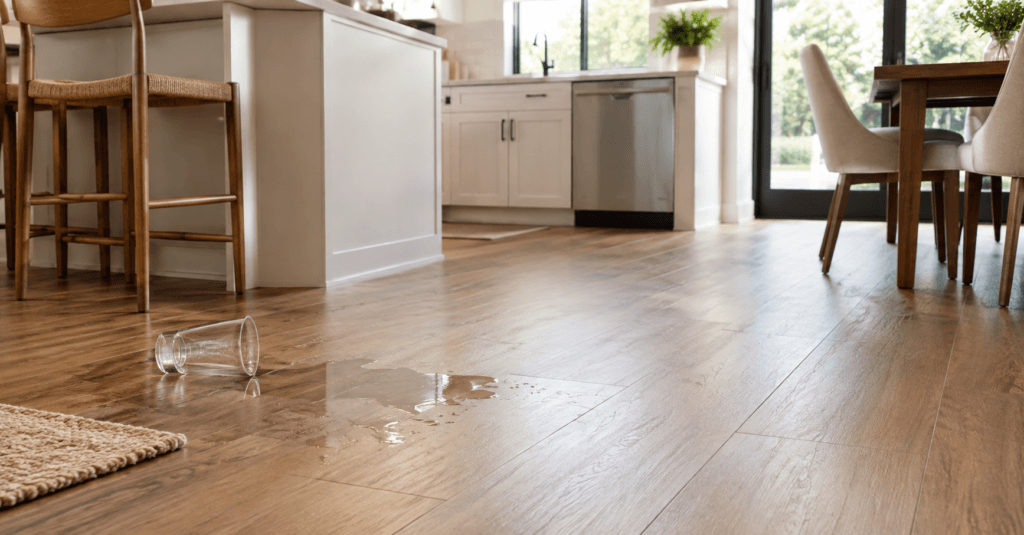
Quick answer: Waterproof laminate flooring is a laminate product engineered to provide much stronger protection against moisture than traditional laminate. It can work well in kitchens, dining rooms, living rooms, hallways, bedrooms, and, with the right product, some bathrooms and laundry rooms. However, waterproof does not mean flood-proof. The manufacturer’s water warranty, core construction, locking system, installation method, and subfloor condition all affect how well the floor handles moisture.
For US homeowners, the real question is not simply, “Is waterproof laminate waterproof?” It is: where can it safely be installed, how much water can it handle, and what does the manufacturer’s warranty actually cover?
What Is Waterproof Laminate Flooring?
Waterproof laminate flooring is a multi-layer flooring product designed to look like hardwood, stone, or other materials while offering better resistance to moisture than older laminate products.
A typical laminate plank has several layers. The top wear layer protects the surface from everyday traffic and abrasion. Underneath is the decorative layer that creates the wood or stone appearance. The central core gives the plank its structure, while the backing layer supports the bottom of the board.
The biggest difference between waterproof and traditional laminate is usually found in the core and joint construction. Older laminate products commonly relied on wood-based cores that could swell when exposed to significant moisture. Waterproof laminate products are engineered to reduce water penetration and limit the damage moisture can cause.
That makes waterproof laminate particularly attractive to homeowners who want a wood-look floor without choosing solid hardwood for every room.
Still, every product is different. A waterproof laminate floor from one manufacturer may have different water-exposure limits from another. That’s why checking the product’s technical documentation is more useful than relying on the word “waterproof” printed on the box.
How Waterproof Laminate Differs From Regular Laminate
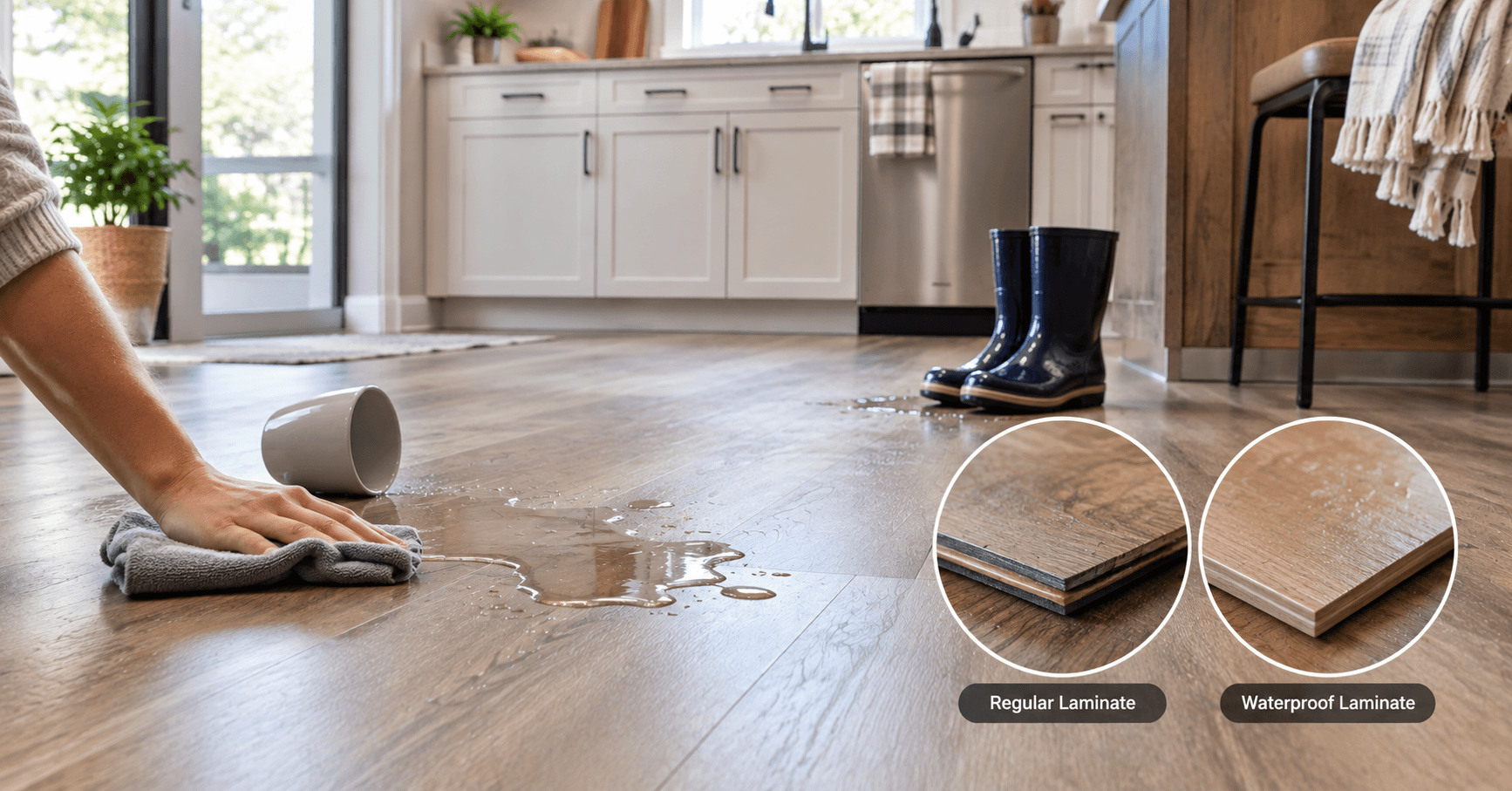
Traditional laminate can handle ordinary household use, but prolonged moisture exposure can cause swelling, edge damage, or separation. Waterproof laminate is designed to give homeowners a larger safety margin when spills happen.
Think about a busy kitchen. Someone spills a glass of water, a child drops a cup, or wet shoes leave puddles near the back door. With a suitable waterproof laminate product, these everyday incidents are less concerning when cleaned promptly.
That does not mean the floor should be left wet. A leaking dishwasher or refrigerator water line can expose flooring to a completely different level of moisture.
The North American Laminate Flooring Association provides information about laminate flooring standards and performance, while the manufacturer’s documentation should always determine the installation and care requirements for a specific product.
Is Waterproof Laminate Flooring Really Waterproof?
Waterproof laminate can provide significant water protection, but it is not designed to tolerate unlimited standing water or flooding.
This is one of the most important distinctions for buyers. “Waterproof” describes the performance the manufacturer claims under defined conditions. It does not mean that a laminate floor can remain submerged for hours or days without consequences.
Before purchasing, look at the actual warranty. Find out whether it covers surface spills, how long water exposure is covered, which rooms are approved, and whether there are special requirements for installation.
You should also check whether the warranty has conditions involving perimeter sealing, expansion gaps, underlayment, moisture barriers, or subfloor preparation.
The U.S. Environmental Protection Agency emphasizes moisture control as an important part of preventing mold problems indoors. Flooring cannot compensate for a persistent moisture source, so leaks and damp subfloors need to be addressed separately.
What Happens When Water Gets Under Laminate?
Water underneath a floating floor is more concerning than a small spill that stays on the finished surface.
A plumbing leak can travel beneath multiple planks before it becomes visible. Moisture may reach the plank edges, subfloor, or other materials beneath the flooring. The longer it remains there, the greater the chance of damage.
If a dishwasher hose breaks, for example, the priority is stopping the leak and removing standing water. Do not assume that a waterproof floor means the water can simply remain underneath it.
Concrete subfloors create another consideration because moisture can migrate through a slab. Wood subfloors can absorb water and may require drying or repair after a substantial leak.
Where Can You Install Waterproof Laminate Flooring?

Waterproof laminate is commonly considered for living rooms, bedrooms, dining rooms, hallways, entryways, and kitchens. Some products are also approved for bathrooms, laundry rooms, or basements.
The room itself does not determine suitability. The product’s specifications do.
A kitchen, for example, has frequent spills but usually does not have continuous water on the floor. A bathroom can experience repeated splashing and higher humidity. A basement may have moisture concerns coming from the concrete slab beneath the floor.
That means the same flooring product may be suitable for one room but unsuitable for another.
Is Waterproof Laminate Good for Kitchens?
Yes, waterproof laminate can be an excellent option for a kitchen when the specific product is approved for kitchen installation.
Kitchen floors deal with water, food, dirt, dropped objects, chairs, pets, and heavy foot traffic. Waterproof construction addresses one part of that problem, while the wear layer addresses everyday surface use.
Look for a product with appropriate scratch and wear protection as well as documented water resistance. Pay particular attention to areas around dishwashers, refrigerators, sinks, and cabinets because plumbing leaks often begin in places where they are difficult to notice.
Waterproof laminate also gives homeowners plenty of design flexibility. Light oak, warm walnut, natural maple, and modern gray wood patterns can all create a hardwood-inspired appearance.
If you’re renovating the entire kitchen, rather than just changing the floor, these home renovation tips and money-saving tricks can help with broader project planning.
Can You Use Waterproof Laminate in Bathrooms?
Sometimes. It depends entirely on the product.
Do not assume that every laminate floor labeled waterproof is approved for a full bathroom. Check the manufacturer’s warranty and installation instructions before buying.
A bathroom has more demanding moisture conditions than a typical bedroom. Water can splash around a shower, bathtub, toilet, and vanity, while leaks can remain hidden around plumbing fixtures.
If the manufacturer approves the product for bathroom use, follow its instructions for installation around walls, fixtures, transitions, and other vulnerable areas.
A half bath may have less direct water exposure than a bathroom with a shower, but product-specific instructions still apply.
Waterproof Laminate vs. LVP
Waterproof laminate and luxury vinyl plank are two popular wood-look flooring choices, but they are made from different materials.
| Feature | Waterproof Laminate | LVP |
| Construction | Layered laminate with a rigid core | Vinyl-based construction |
| Appearance | Wood and stone designs | Wood and stone designs |
| Moisture protection | Product-specific | Product-specific |
| Feel | Generally firm | Varies by product |
| Installation | Often click-lock floating | Floating and other systems |
| Maintenance | Damp cleaning according to manufacturer | Damp cleaning according to manufacturer |
| Bathroom use | Check product approval | Check product approval |
| Refinishing | Not designed to be sanded like hardwood | Not designed to be refinished like hardwood |
The decision should come down to the actual room and product rather than the flooring category alone.
If you’re comparing both materials for a home renovation, read this guide to LVP flooring pros and cons before making a final decision.
Which Flooring Is Better for Your Room?
For a living room, waterproof laminate can provide the firm feel and wood appearance many homeowners want. For a kitchen, water resistance and surface durability are both important.
For a bathroom or laundry room, the manufacturer’s approved-use statement becomes especially important. In a basement, investigate moisture conditions and subfloor requirements before choosing any floating floor.
The best flooring choice is the one that matches the actual conditions of the room, not necessarily the product with the most impressive marketing claim.
Benefits and Drawbacks of Waterproof Laminate
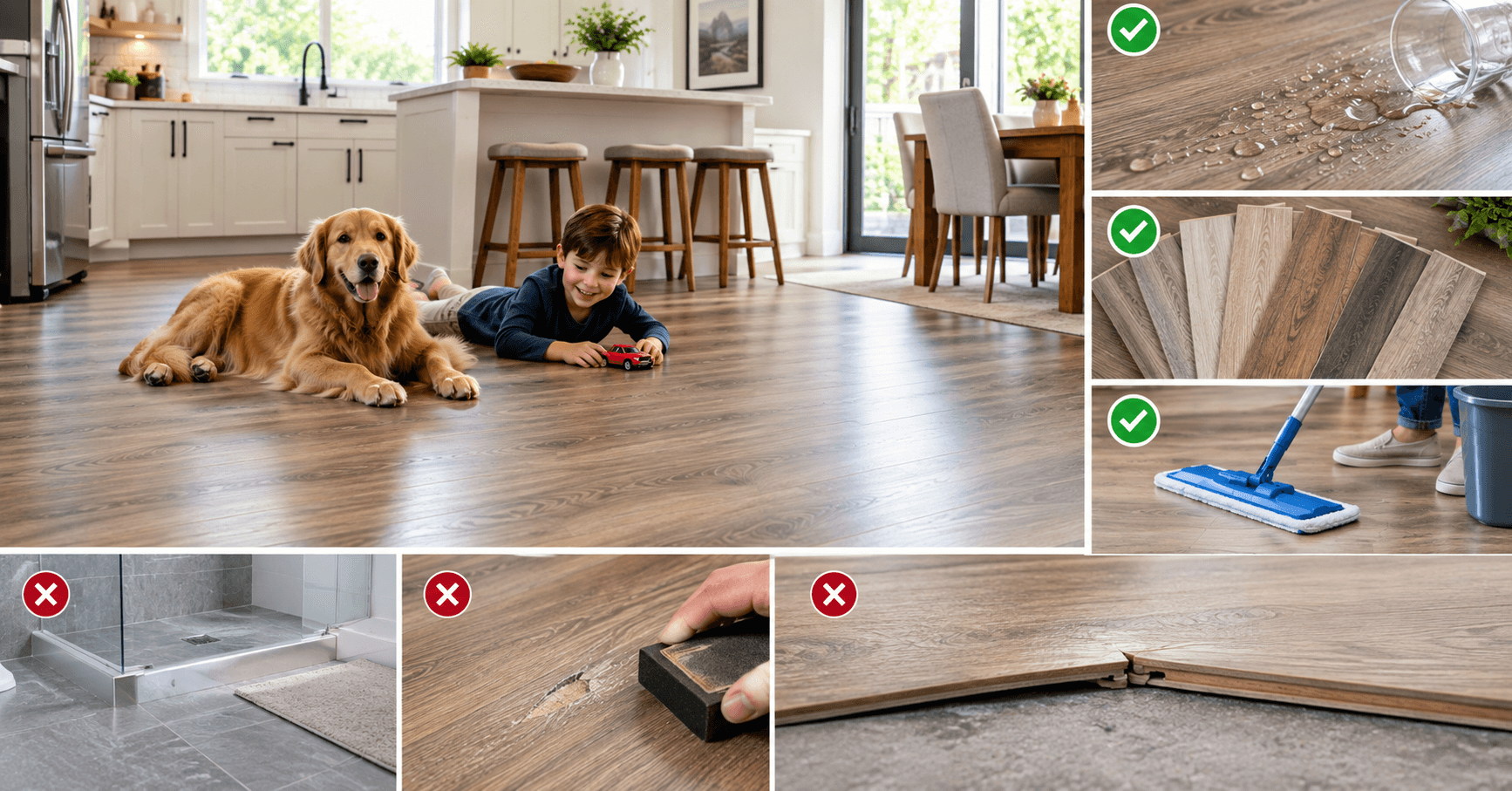
The main benefit is straightforward: better moisture protection than standard laminate.
That’s useful in households with children, pets, frequent guests, or busy kitchens. Waterproof laminate can also provide a realistic wood appearance without the maintenance and refinishing requirements associated with traditional hardwood.
Another advantage is style. Manufacturers offer many colors, plank widths, textures, and wood patterns, making it easier to coordinate flooring with cabinets, walls, furniture, and trim.
Maintenance is generally uncomplicated. Regular sweeping or vacuuming removes dirt and grit, while appropriate damp cleaning handles normal spills.
There are drawbacks. Waterproof laminate is not intended to replace tile or another flooring system in every wet environment. It also cannot normally be sanded and refinished when the surface is permanently damaged.
Installation quality matters, too. An uneven subfloor or incorrectly installed locking system can cause movement, gaps, or noise regardless of how water-resistant the product is.
How to Choose Waterproof Laminate Flooring
Start by deciding where the flooring will go. Then compare products that are specifically approved for that room.
Do not choose a floor solely because the sample looks attractive. A beautiful plank with unsuitable moisture protection is still the wrong product.
What to Check Before Buying
Water warranty: Read the actual warranty and identify its water-exposure limits.
Approved rooms: Confirm whether the product can be used in kitchens, bathrooms, laundry rooms, or basements.
Core: Investigate the core construction and moisture protection.
Locking system: Check how the planks connect and whether additional sealing is required.
Subfloor: Review requirements for concrete, plywood, or other subfloor materials.
Underlayment: Determine whether an attached underlayment is included or whether a specific product is required.
Durability: Consider pets, children, furniture, shoes, and daily traffic.
Cleaning: Make sure the manufacturer’s maintenance instructions fit your household.
Replacement boards: Keep spare planks after installation when possible. Matching an older floor years later can be difficult.
How to Clean Waterproof Laminate Flooring
The easiest way to protect laminate is to avoid letting dirt accumulate.
Sweep or vacuum regularly to remove sand, grit, pet hair, and other particles that can wear the surface when walked over repeatedly.
For wet cleaning, use a damp, well-wrung mop, not a soaking-wet one. Follow the manufacturer’s instructions for cleaning products and avoid abrasive chemicals unless specifically approved.
Clean spills as soon as practical. Waterproof construction gives you extra protection, but leaving water on the floor serves no useful purpose.
Place mats near exterior doors to catch water, snow, and dirt before they reach the flooring. Felt pads beneath furniture can also reduce scratches and surface wear.
How Much Does Waterproof Laminate Flooring Cost?
The cost varies throughout the US depending on the product, retailer, location, labor rates, room size, subfloor condition, and installation method.
A realistic project budget should include more than the flooring itself.
| Expense | What to consider |
| Flooring | Cost per square foot of the selected product |
| Underlayment | May be required depending on the floor |
| Trim | Baseboards, transitions, and finishing pieces |
| Labor | Depends on location and installation complexity |
| Removal | Needed when replacing existing flooring |
| Subfloor work | Repairs or leveling may add cost |
| Delivery | May apply to large orders |
| Disposal | Cost of removing old flooring |
When comparing estimates, ask for the total installed price per square foot. This makes quotes easier to compare than looking only at the retail price of the planks.
Is Waterproof Laminate Worth It?
Waterproof laminate is worth considering if you want the appearance of hardwood with greater moisture protection than conventional laminate and relatively simple maintenance.
It makes particular sense when the room has occasional spills rather than constant water exposure.
The most important step is choosing the right product for the room. Check the warranty, installation instructions, core construction, subfloor requirements, and approved applications before ordering.
If your home has a serious moisture problem, fix that problem first. Waterproof flooring is a flooring solution, not a substitute for proper drainage, plumbing repairs, or moisture control.
For US homeowners, that distinction can prevent an expensive mistake.
FAQs About Waterproof Laminate Flooring
Is waterproof laminate flooring really waterproof?
Waterproof laminate is designed to resist water under conditions specified by the manufacturer. It should not be treated as completely immune to flooding, prolonged standing water, or moisture entering from underneath.
Can waterproof laminate be used in a kitchen?
Yes, many waterproof laminate products are suitable for kitchens. Confirm that the specific product’s warranty covers kitchen installation and follow the manufacturer’s installation instructions.
Can waterproof laminate be installed in a bathroom?
Some products are approved for bathrooms, but others are not. Always check the product warranty and installation guide before installing laminate in a bathroom with a shower or bathtub.
Is waterproof laminate better than LVP?
They have different constructions, so the right choice depends on the room and your priorities. Compare the specific products for moisture protection, durability, appearance, installation, and warranty rather than comparing the labels alone.
How do you clean waterproof laminate flooring?
Sweep or vacuum regularly and use a damp mop when needed. Avoid flooding the floor, abrasive cleaners, and unapproved cleaning equipment. Always follow the manufacturer’s care instructions.
Can waterproof laminate be installed over concrete?
Some products can be installed over concrete, provided the slab meets the manufacturer’s moisture and preparation requirements. Basement and slab installations deserve particular attention because moisture can come from below.
Does waterproof laminate scratch?
It can. Waterproof performance and scratch resistance are different properties. Check the product’s surface protection and choose flooring suited to your household’s traffic, pets, and furniture use.
How long does waterproof laminate flooring last?
Service life depends on the product, installation, traffic, maintenance, and environment. The manufacturer’s warranty can help you understand the expected performance and applicable conditions, but it is not a guaranteed lifespan.

Samreen Khadim Hussain is a home improvement writer and content creator at Domelite Home. She specializes in making home renovation, interior design, and bathroom safety accessible to everyday US homeowners, turning technical subjects into clear, actionable advice. Her work is rooted in research, real-world practicality, and a genuine belief that a better home is within everyone’s reach.