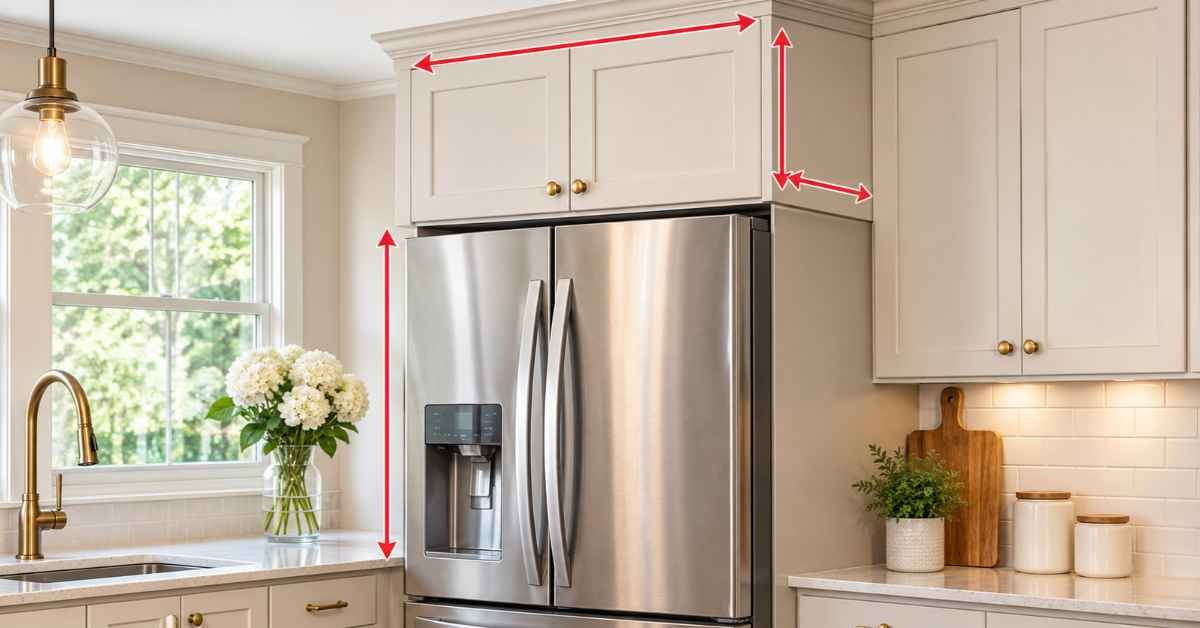
Quick answer: Upper cabinets over refrigerator depth is typically 24 inches, according to cabinet makers, twice the 12 inch depth of a standard wall cabinet. The deeper box lines up with your base cabinets and gives you usable storage above the fridge. These cabinets are 30, 33, or 36 inches wide, 12 to 24 inches tall, and hang about 72 inches above the floor. A standard depth refrigerator still sticks out 6 to 12 inches past them.
Upper cabinets over refrigerator depth is the first number to settle, because height and width follow from it. These cabinets are deeper than other uppers, hang higher, and sit above a fridge that may stick out past them. Below are the sizes to plan and the clearance to leave.
Upper Cabinets Over Refrigerator Depth: Typically 24 Inches
Cabinet makers typically build the cabinet above the fridge 24 inches deep, twice the standard wall cabinet depth. Captivating Cabinets and Kitchen Cabinet Distributors both list refrigerator wall cabinets at 24 inches.
No national standard sets this number. The ANSI A161.1-2022 cabinet standard from the Kitchen Cabinet Manufacturers Association (KCMA) lists 12 inches as the typical wall cabinet depth. It defines a refrigerator cabinet as a floor-level cabinet, typically 24 inches deep and 84 inches or taller, which is a different cabinet from the one above your fridge.
Refrigerator wall cabinet depth is 24 inches in most maker catalogs, and many catalogs call the same cabinet a bridge cabinet. For the 12, 15 and 18 inch options on other walls, see our upper cabinet depth guide.
Why Refrigerator Wall Cabinets Are Deeper Than Other Uppers
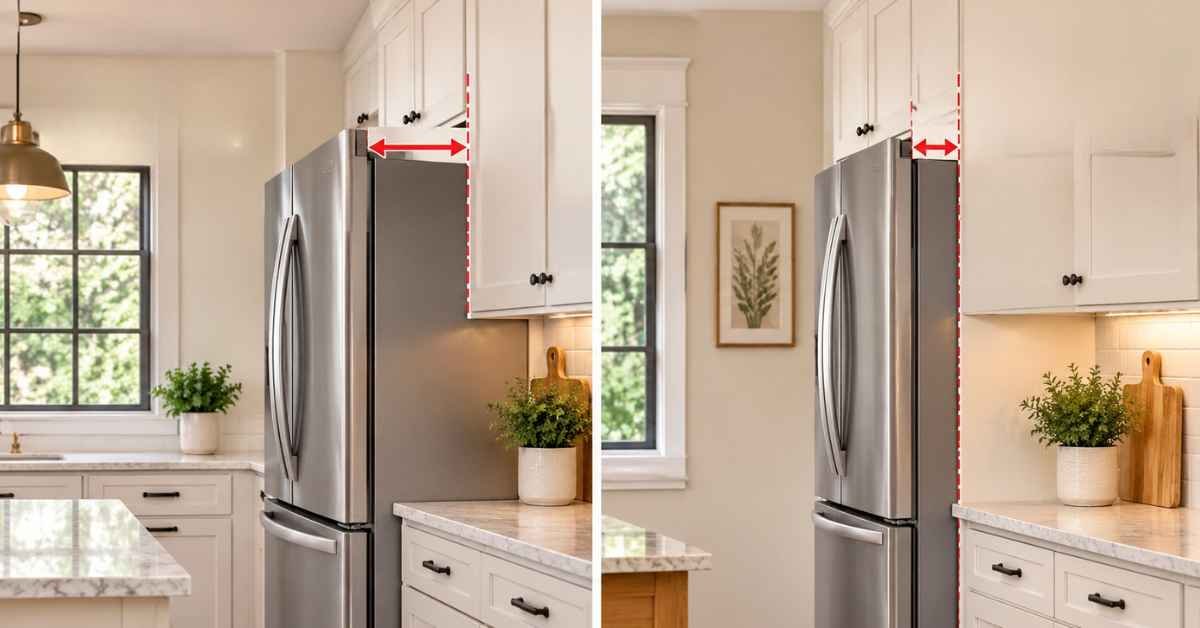
The cabinet above the fridge is deeper than other uppers because the refrigerator below is deeper than a counter, and a 24 inch box lines up with the base cabinets and tall cabinets beside it. Whirlpool lists standard depth refrigerators at 30 to 36 inches deep and counter depth models at 24 to 30 inches.
| Refrigerator type | Listed depth | Sticks out past a 24 inch cabinet |
| Standard depth | 30 to 36 inches | 6 to 12 inches |
| Counter depth | 24 to 30 inches | 0 to 6 inches |
A shallow 12 inch cabinet over a standard depth fridge would sit 18 to 24 inches behind the fridge front. That looks recessed and is hard to reach.
A 24 inch deep wall cabinet also needs support. One maker’s spec sheet says it requires support on the front frame from an adjacent wall, a pantry cabinet, or a refrigerator end panel. Plan that panel before you order.
How High to Hang Cabinets Over a Refrigerator
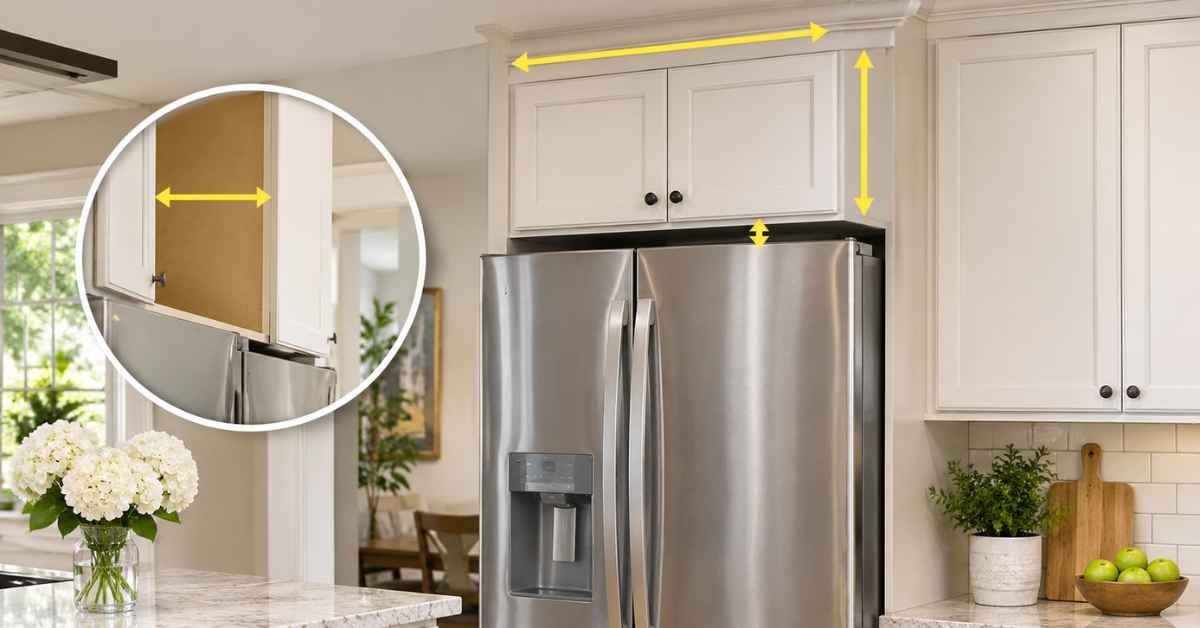
The bottom of the cabinet usually sits about 72 inches above the floor, which leaves a small gap above a 70 inch refrigerator. Most full size refrigerators are roughly 66 to 70 inches tall, according to Refrigerator Select.
Whirlpool’s installation guides ask for about 1/2 inch to 3 inches of space above the fridge, depending on the model. Check your model’s guide, then use the table to find your cabinet bottom.
| Refrigerator height | Cabinet bottom | Room up to a 96 inch ceiling |
| 66 inches | 68 inches | 28 inches |
| 68 inches | 70 inches | 26 inches |
| 70 inches | 72 inches | 24 inches |
The table assumes a 2 inch gap, which sits inside the range Whirlpool lists. A 9 foot ceiling adds 12 inches to the last column.
Height also decides what you store there. The NKBA Kitchen Planning Guidelines count storage more than 84 inches above the floor as miscellaneous storage, and their access standards suggest keeping frequently used items 15 to 48 inches up. Treat this cabinet as space for rarely used platters and seasonal items.
How to Measure for a Cabinet Over Your Refrigerator
- Measure the refrigerator’s full height, including hinges and top vents.
- Add the gap from your model’s installation guide.
- Measure from the floor to your ceiling or soffit.
- Subtract the first two numbers from the third. That is the tallest cabinet that fits.
Cabinet Width and Height Options
Cabinet makers list refrigerator wall cabinets in 30, 33, and 36 inch widths and in heights from 12 to 24 inches, in 3 inch steps. Upper cabinets over the refrigerator depth stays at 24 inches, so width and height are your real choices.
Pick the width to match your cabinet opening and the height to fit the gap under your ceiling. Our kitchen cabinet sizes chart covers every other size.
How to Choose Upper Cabinets Over Refrigerator Depth
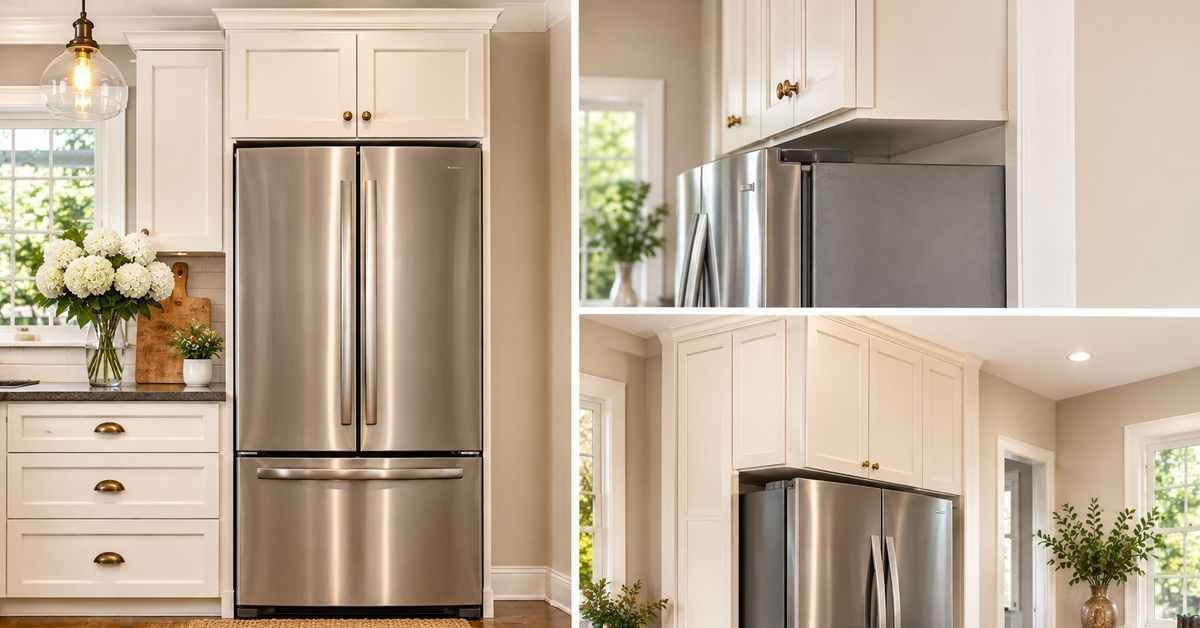
Standard depth refrigerator
Use a 24 inch deep cabinet and accept that the fridge will stick out 6 to 12 inches past it. That is normal for this type of refrigerator.
Counter depth or built-in refrigerator
A 24 inch cabinet lines up closely with a counter depth model, which sticks out 0 to 6 inches by its listed depth. This pairing gives the cleanest look.
Low ceilings
Depth stays at 24 inches, but height changes with your ceiling. With an 8 foot ceiling, a 24 inch tall cabinet fits over a 70 inch refrigerator. A taller fridge or a shorter ceiling means a 12 or 15 inch tall cabinet, or no cabinet at all.
Common Mistakes With Upper Cabinets Over Refrigerator Depth
- Using a 12 inch deep cabinet. Over a standard depth fridge it sits 18 to 24 inches behind the front.
- Setting height from the catalog. Measure the refrigerator itself, then add the gap its installation guide lists.
- Skipping the support. A 24 inch deep cabinet needs a wall, pantry cabinet, or end panel beside it.
- Planning daily storage up there. A cabinet bottom near 72 inches is well above easy reach.
- Buying cabinets before the fridge. Refrigerator depth and height vary by model, so check the guide before you order the cabinet.
Upper Cabinets Over Refrigerator Depth FAQs
How deep should upper cabinets over a refrigerator be?
Upper cabinets over refrigerator depth is typically 24 inches, according to cabinet makers. That is twice the 12 inch depth of a standard wall cabinet, and it lines up with the base cabinets beside the fridge. The KCMA does not set a separate standard for this cabinet.
Can I put a 12 inch deep cabinet over my refrigerator?
Yes, but it will look recessed. A standard depth refrigerator is 30 to 36 inches deep, so a 12 inch cabinet sits 18 to 24 inches behind the fridge front, which makes the top shelf hard to reach. Most kitchens use a 24 inch deep cabinet instead.
How much space should be above a refrigerator for a cabinet?
Leave about 1/2 inch to 3 inches above the refrigerator, depending on the model. Whirlpool’s installation guides list different clearances by model, so check your guide before you set the cabinet height. A 2 inch gap sits inside that range.
How high should a cabinet over a refrigerator be hung?
The bottom of the cabinet usually sits about 72 inches above the floor. Most full size refrigerators are roughly 66 to 70 inches tall, so a 72 inch bottom leaves 2 to 6 inches of gap. Measure your own refrigerator, including hinges, before you set the height.
What size cabinet goes over a refrigerator?
Cabinet makers list refrigerator wall cabinets 30, 33, or 36 inches wide, 12 to 24 inches tall, and 24 inches deep. Match the width to your cabinet opening and the height to the space between the top of the fridge and your ceiling.
Should the cabinet over the fridge be flush with the refrigerator?
Only with a counter depth or built-in model. A counter depth refrigerator is 24 to 30 inches deep, so it sits within 6 inches of a 24 inch cabinet. A standard depth fridge, at 30 to 36 inches, sticks out 6 to 12 inches past it.
What should you store in a cabinet above the refrigerator?
Store rarely used items such as serving platters and seasonal dishes. A cabinet bottom near 72 inches is well above the 15 to 48 inch zone the NKBA access standards suggest for frequently used items, so daily dishes belong lower.
Measure the Refrigerator Before You Order
Confirm upper cabinets over refrigerator depth, height, and width against your fridge’s installation guide before you buy. If you are planning a full remodel, read our kitchen remodeling mistakes first.

I’m Samreen Khadim Hussain, a home improvement writer specializing in practical, research-driven content for U.S. homeowners. At Domelite Home, I cover home renovation, interior design, home maintenance, and residential safety, translating technical information and industry research into clear, actionable guidance. My approach combines search intent research, reliable sources, and reader-focused writing to help homeowners understand their options, make informed decisions, and create safer, more functional living spaces.