
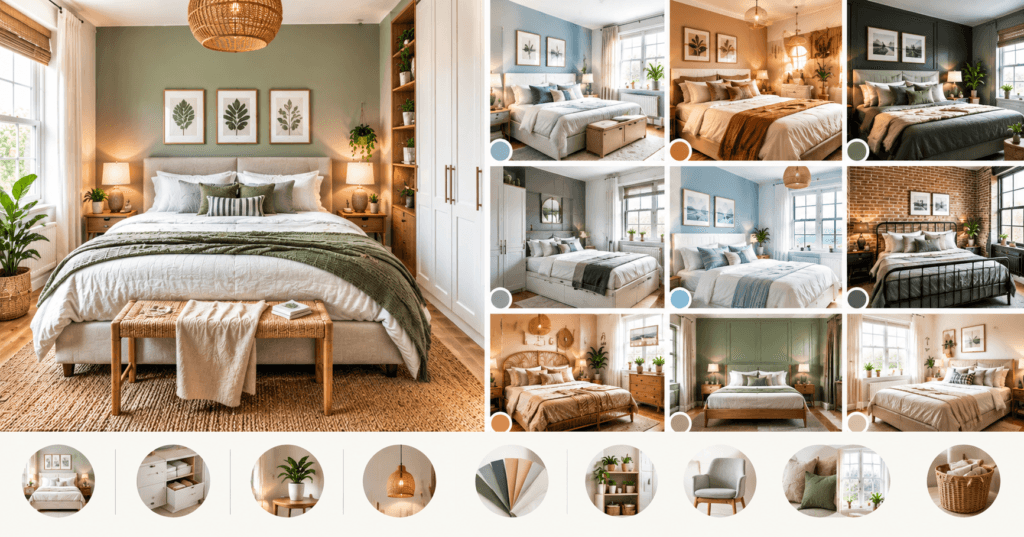
Quick Answer: The best bedroom styles for small rooms are those that keep the floor visually open, use furniture with more than one purpose, and make good use of vertical space. For most U.S. homes and apartments, Japandi, modern minimalist, Scandinavian, warm contemporary, and light traditional styles work especially well because they rely on simple shapes, practical storage, lighter colors, and uncluttered layouts.
The biggest difference usually comes from the bed, storage, lighting, color palette, and window treatments, not from expensive décor. A low-profile bed, wall-mounted nightstands, under-bed storage, tall cabinets, mirrors, and curtains hung higher than the window can make a compact bedroom feel noticeably more spacious without changing its footprint.
Why Bedroom Styles for Small Rooms Matter
A small bedroom does not need to look cramped. The problem is usually not the number of square feet alone. It is how much of that space gets visually and physically blocked by furniture, dark finishes, bulky storage, and unnecessary accessories.
Think of the room like a small suitcase. You can fit quite a lot inside if everything has a purpose, but once you start adding things without a plan, it becomes difficult to use. The same principle works for bedroom design.
For a compact U.S. bedroom, prioritize a clear walking path, appropriately scaled furniture, useful storage, and a consistent visual palette. If your bedroom is narrow, place larger furniture against the longer walls where possible. If the ceiling is low, use vertical lines, tall curtains, and higher storage to draw the eye upward.
A useful approach is to decide what the room actually needs before choosing a style. A guest room may only need a bed, small surface, lighting, and luggage storage. A primary bedroom may require clothing storage, a dresser, seating, and more substantial bedside furniture.
Focus on Visual Space
Visual space is just as important as physical floor area. Furniture with exposed legs, glass or reflective surfaces, light-colored bedding, and open shelving can make a room feel less crowded.
That does not mean every small bedroom should be white. Soft beige, pale gray, muted green, warm cream, dusty blue, and other restrained shades can work beautifully. The goal is consistency rather than simply choosing the lightest possible paint.
15 Smart Bedroom Styles for Small Rooms That Make Rooms Feel Bigger
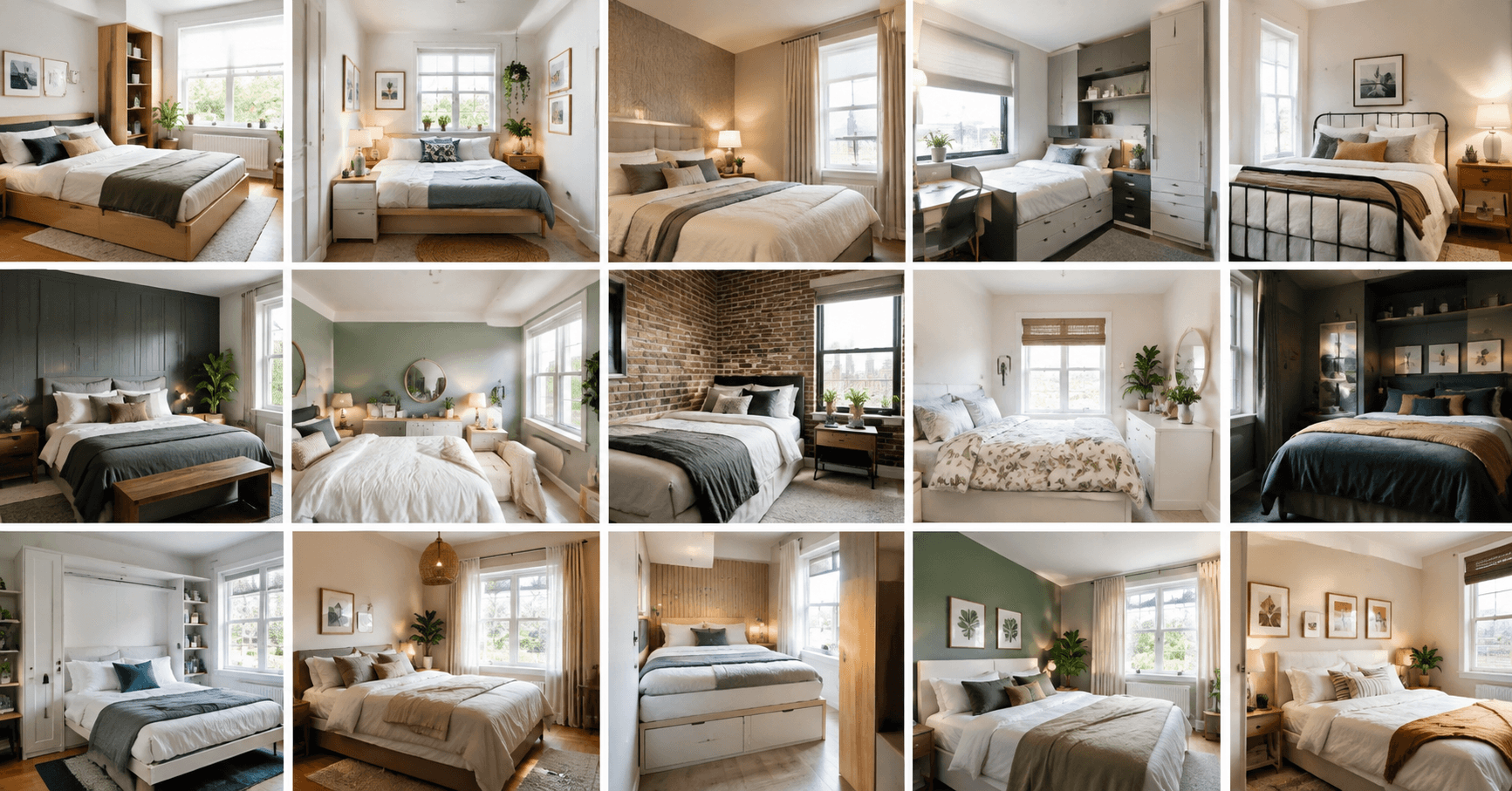
1. Japandi Bedroom Style
Japandi bedroom design combines Japanese simplicity with Scandinavian warmth. It is one of the strongest choices for a small bedroom because the style naturally avoids unnecessary furniture and decoration.
Choose a low-profile wood bed, simple bedding, one or two carefully selected accessories, and natural materials such as linen, cotton, bamboo, or wood. Warm beige, cream, taupe, muted brown, and soft green can create a calm palette without making the room feel sterile.
If you like this aesthetic, our guide to Japandi interior design can help you develop the look beyond the bedroom.
The key is restraint. A Japandi room should feel intentional rather than empty.
2. Scandinavian Small Bedroom
Scandinavian style is another practical option for compact bedrooms. Its emphasis on daylight, functional furniture, pale finishes, and simple forms makes it naturally compatible with limited space.
Try a light wood bed, white or warm-gray walls, simple textiles, and minimal bedside storage. Instead of using several small decorations, choose one large artwork or a single plant.
For American apartments and smaller homes, Scandinavian design is particularly useful when natural light is limited because the palette can help the room feel brighter.
3. Modern Minimalist Bedroom
Minimalism works when every item earns its place.
A modern minimalist bedroom might include a platform bed, compact nightstands, a streamlined dresser, one rug, simple window coverings, and a limited number of decorative objects. Choose furniture with straight lines and avoid pieces that are significantly oversized for the room.
Wall-mounted lighting can free up valuable nightstand space. A floating shelf can replace a conventional bedside table when you only need somewhere for a phone, book, and lamp.
The important distinction is that minimalist does not mean uncomfortable. Keep the mattress, pillows, bedding, and lighting comfortable even if the furniture itself is simple.
4. Warm Contemporary Style
If minimalist bedrooms feel too stark, try warm contemporary design.
Use modern furniture shapes with warmer materials and softer colors. Think upholstered headboards, walnut or oak finishes, cream bedding, textured curtains, and warm lighting.
This approach is especially effective in small primary bedrooms because it creates a polished look without requiring lots of decoration.
Keep patterns controlled. One patterned pillow or throw can add character, while several competing prints can make the room feel visually busy.
5. Small Traditional Bedroom
Traditional design can work in a small bedroom, but scale matters.
Instead of a massive four-poster bed and oversized dresser, choose a compact upholstered or wood headboard, a narrow chest, and classic bedside tables. Use a coordinated color scheme so the traditional details feel connected.
Small floral patterns, framed artwork, table lamps, and classic bedding can add personality without overwhelming the room.
The trick is to use traditional details selectively rather than trying to reproduce a large formal bedroom inside a compact space.
6. Monochromatic Bedroom
A monochromatic scheme uses different shades of one color family.
For example, a bedroom could combine warm white walls, cream bedding, beige curtains, and light tan accessories. You could also build the room around soft gray, muted blue, or sage green.
Because there are fewer abrupt color changes, the room can appear more continuous. This is particularly useful when the walls, ceiling, and furniture are close together.
Add interest through texture rather than more colors. Linen, wool, wood, woven materials, and cotton can give a small room depth without creating visual clutter.
7. Light and Airy Coastal Style
Coastal style can make a small bedroom feel relaxed and open when it stays simple.
Use soft blue, white, sand, light wood, and natural woven textures. Avoid filling the room with nautical signs, anchors, shells, and themed accessories.
Good ventilation also helps maintain a comfortable bedroom environment, and the U.S. Environmental Protection Agency’s indoor air quality guidance explains common factors that can affect air quality indoors.
A simple upholstered bed, woven basket, lightweight curtains, and blue-gray bedding can create the coastal feeling without turning the room into a themed space.
Natural daylight becomes especially important here. Keep windows as unobstructed as possible during the day.
8. Small Industrial Bedroom
Industrial design is possible in a compact room, but dark finishes need careful handling.
Instead of painting every wall charcoal or black, introduce industrial character through black metal hardware, a simple metal bed frame, exposed-style lighting, wood furniture, or a textured accent wall.
Balance darker elements with lighter bedding and walls. This keeps the style recognizable while preventing the room from feeling visually compressed.
9. Boho Style Without the Clutter
Boho bedrooms often use layers of textiles, plants, baskets, artwork, and patterns. In a small bedroom, that can quickly become too much.
The solution is edited boho.
Choose one dominant textile pattern, a few natural materials, and a limited number of plants. Use baskets for storage rather than decoration alone. A simple wood bed with neutral bedding can provide a calm foundation for more colorful accessories.
If the floor is already crowded, move plants onto wall shelves or window ledges where appropriate.
10. Built-In Storage Style
When floor space is limited, use the walls.
Tall wardrobes can provide substantially more storage within the same footprint as shorter furniture. Built-in shelving around a bed can also combine books, clothing, lighting, and decorative items in one area.
If a custom built-in is outside your budget, modular wardrobes and freestanding shelves can create a similar effect.
The principle is simple: go upward before adding another piece across the floor.
11. Murphy Bed and Multifunctional Bedroom
A Murphy bed can be useful when the bedroom has to perform more than one job.
For example, a small room might function as a guest bedroom and home office. A wall bed can allow the sleeping area to disappear when it is not needed, although installation requirements and local building considerations should be checked before modifying the room.
Other multifunctional solutions include beds with drawers, storage ottomans, desks that double as vanities, and benches with concealed compartments.
For more ideas, see these guides to space-saving furniture and compact furniture for small rooms.
12. Mid-Century Modern Small Bedroom
Mid-century modern suits small bedrooms because its furniture often has slim profiles and exposed legs. Choose a simple walnut or oak bed, a compact dresser, and one distinctive piece such as a globe pendant or geometric artwork. Warm wood tones paired with muted green, rust, mustard, or cream give the room character without requiring lots of décor.
13. Cottage Bedroom Style
A cottage-style bedroom brings softness and personality to a compact space through painted wood, cotton bedding, small-scale patterns, and vintage-inspired accents. Try a white or light wood bed with a floral quilt or gingham throw. Instead of adding bulky furniture, use a small stool as a bedside table and baskets for blankets or everyday items.
14. Dark and Moody Small Bedroom
A small bedroom can handle deep navy, charcoal, forest green, or chocolate brown when the color palette stays cohesive. Use one dominant dark shade with lighter bedding or natural wood to keep the room balanced. Warm bedside lighting, rather than excessive decoration, can make the darker palette feel intentional and comfortable.
15. Modern Farmhouse Small Bedroom
Modern farmhouse style works well when you want warmth without a heavily rustic appearance. Combine a simple wood bed with cream bedding, black metal lighting, and one or two natural-texture accessories. Skip oversized reclaimed furniture and excessive farmhouse signs because they can quickly consume the visual space in a compact bedroom.
How to Choose Colors for a Small Bedroom
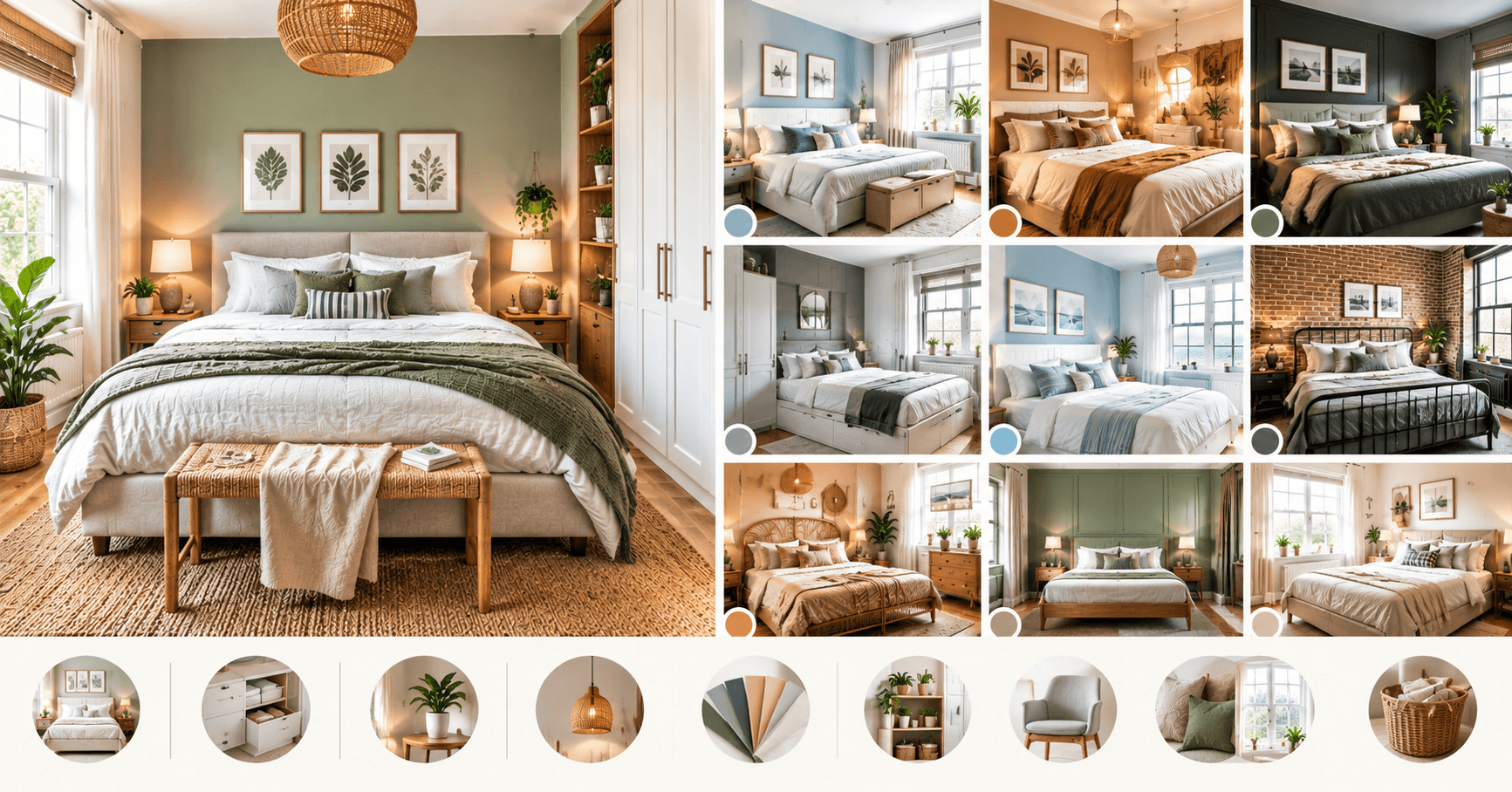
There is no rule saying small bedrooms must be white. What matters more is how colors interact with light, furniture, and the room’s proportions.
Soft, low-contrast colors are generally easy to work with because they create fewer visual breaks. If you want a darker bedroom, consider using the deeper color on one wall while keeping larger surfaces lighter.
Painting the ceiling a similar light tone to the walls can also create a more continuous visual field. Glossy finishes are not automatically better for small spaces. A subtle finish can provide enough light reflection without creating distracting glare.
Before committing to a color, test a sample at different times of day. A shade that looks warm in afternoon sunlight can look very different under LED lighting at night.
Best Furniture Layout for a Small Bedroom
Start with the bed because it is usually the largest piece.
Position it where the door, closet, and window remain practical to use. Avoid creating a layout where you have to squeeze sideways around furniture just to reach the closet.
If possible, maintain a comfortable walking route on the sides and foot of the bed. When the room is extremely narrow, you may need to prioritize one clear circulation path rather than forcing symmetrical furniture into the space.
Measure everything before buying. A beautiful dresser is still a poor choice if opening its drawers blocks the bedroom door.
Lighting Tricks That Open Up the Room
Layered lighting can change how a small bedroom feels.
Use ambient lighting for general illumination, task lighting for reading or getting dressed, and accent lighting when you want a softer atmosphere. Wall sconces are particularly useful because they provide bedside lighting without occupying the surface of a nightstand.
Warm white bulbs can create a comfortable bedroom atmosphere, while brighter lighting may be useful around closets and dressing areas.
Do not ignore daylight. Keep bulky furniture away from windows when possible and choose window coverings that provide privacy without permanently blocking natural light.
The U.S. Department of Energy also offers guidance on energy-efficient lighting and home energy use, which can be useful when choosing lighting for a compact bedroom.
For broader home design ideas, you can also explore these living room color ideas.
Storage Mistakes to Avoid
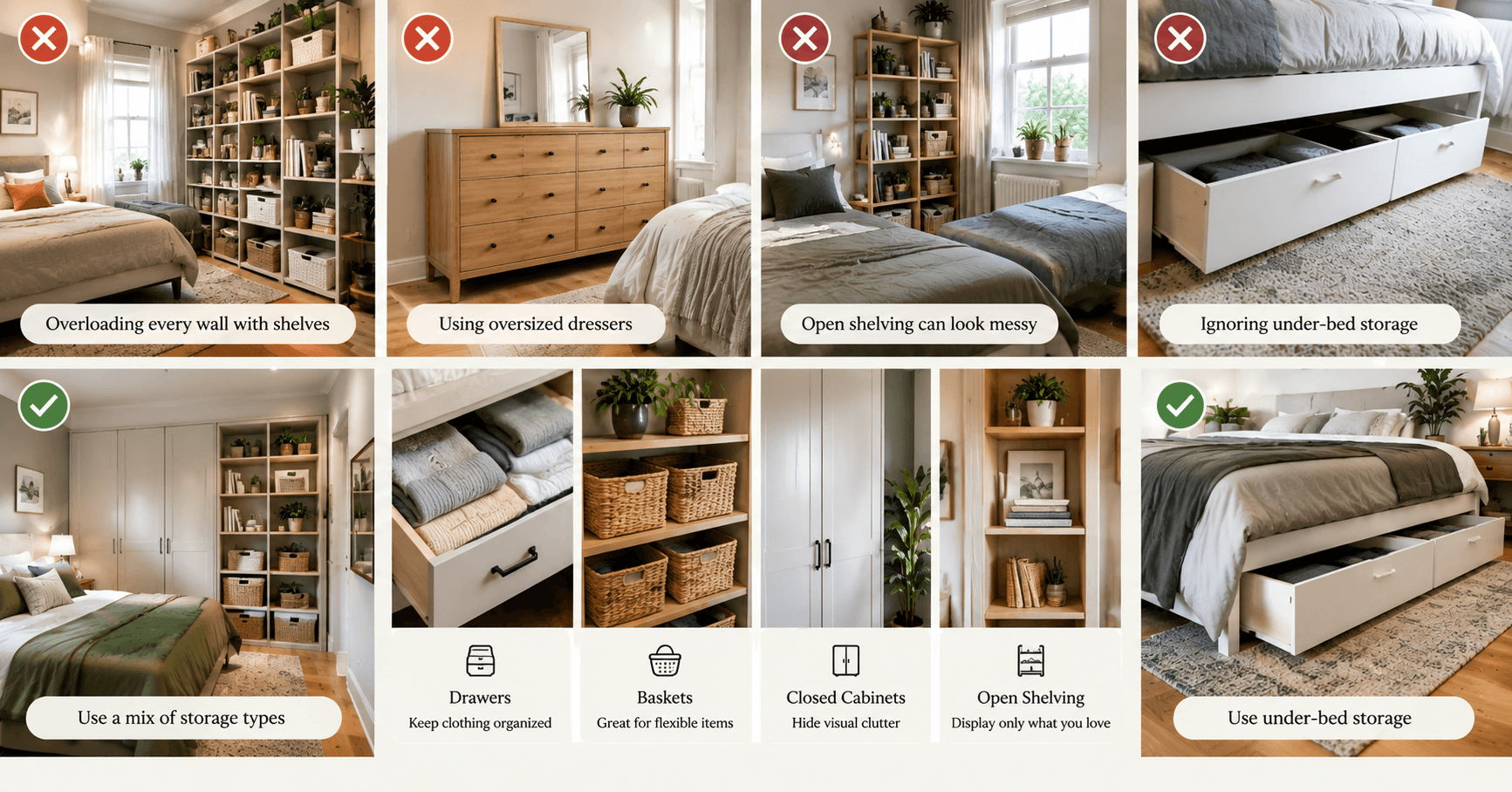
One of the most common mistakes is adding storage without considering how much floor space it consumes.
Avoid filling every available wall with shelves. Open shelving can become visually messy when it is packed with possessions. Likewise, large dressers often look smaller in a showroom than they do in a compact bedroom.
Instead, combine storage types. Use drawers for clothing, baskets for flexible items, closed cabinets for visual clutter, and open shelving for a small selection of things you actually want to display.
Under-bed storage is especially valuable because it uses an area that would otherwise remain unused.
How to Make a Small Bedroom Look Bigger
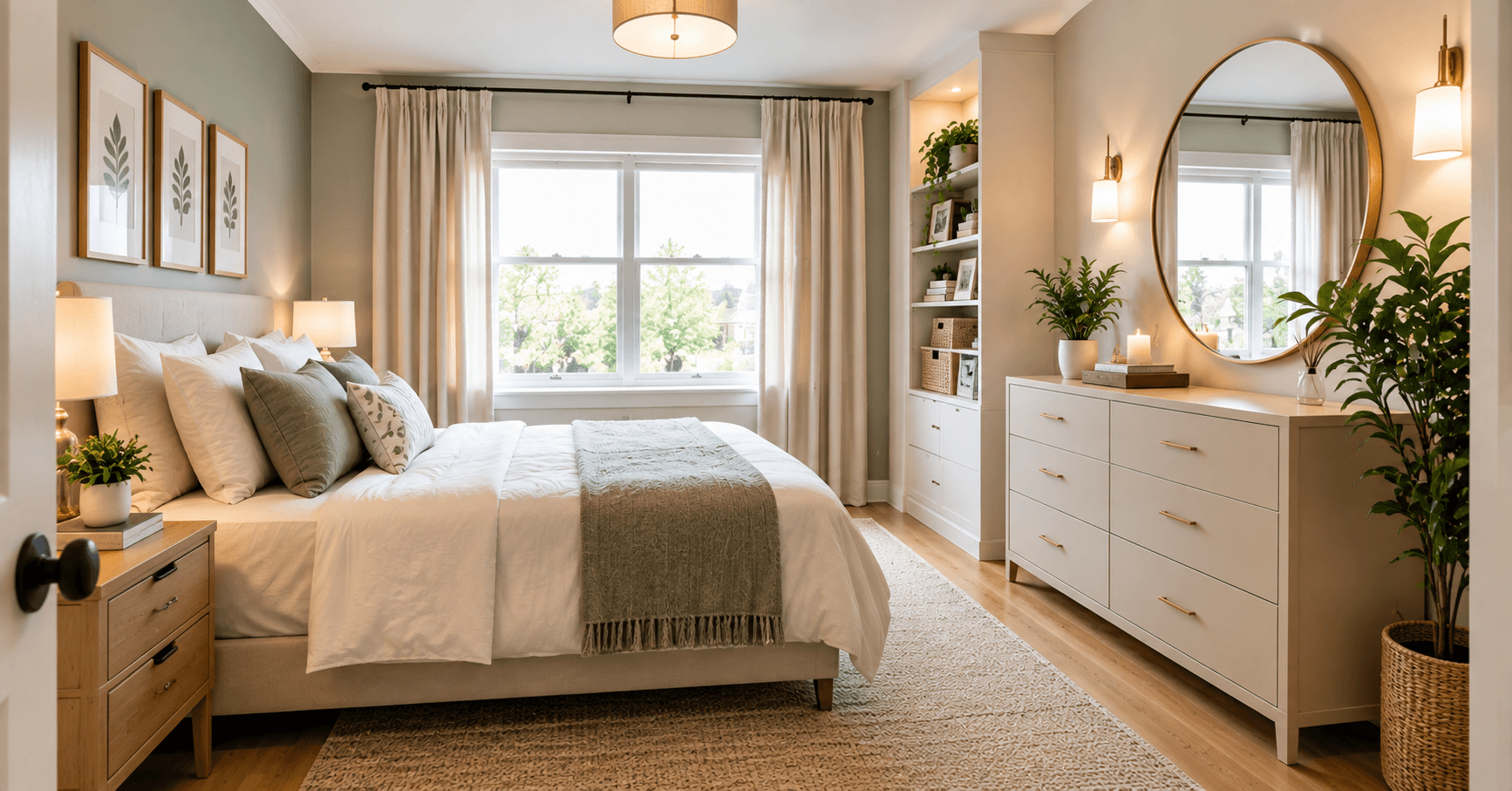
A few changes can have a surprisingly strong effect:
- Use furniture that fits the room rather than oversized pieces.
- Keep the floor as visible as possible.
- Choose a coordinated color palette.
- Use vertical storage.
- Mount lighting where practical.
- Hang curtains higher and wider than the window when the installation allows.
- Use one appropriately sized mirror to reflect light and create depth.
- Keep decorative objects selective.
- Choose bedding that does not overwhelm the bed.
- Hide everyday clutter inside drawers, baskets, and cabinets.
A mirror is useful, but it is not magic. Putting one in a cluttered room will reflect the clutter too. The best result comes from combining reflection with an organized layout.
Best Small Bedroom Style by Room Type
| Bedroom type | Best styles | Main priority |
| Small primary bedroom | Japandi, warm contemporary | Comfort + storage |
| Guest bedroom | Scandinavian, minimalist | Flexibility |
| Teen bedroom | Modern, Scandinavian | Organization |
| Studio apartment bedroom | Japandi, minimalist | Multifunctional furniture |
| Narrow bedroom | Scandinavian, monochromatic | Clear circulation |
| Low-light bedroom | Light contemporary, coastal | Brightness |
| Small rental bedroom | Minimalist, warm contemporary | Non-permanent changes |
The best style is ultimately the one that matches how you use the room. A guest bedroom does not need the same storage strategy as a primary bedroom, and a teenager’s room may need a desk and technology storage that would be unnecessary elsewhere.
Frequently Asked Questions
What is the best bedroom style for a very small room?
Japandi and modern minimalist styles are among the easiest choices because both emphasize simple furniture, restrained decoration, natural materials, and efficient use of space.
What color makes a small bedroom look bigger?
Soft whites, warm neutrals, pale gray, muted blue, and gentle greens can help a room feel open, particularly when combined with good natural or artificial lighting. The exact result depends on the room’s existing light.
Should a small bedroom have a king-size bed?
Only if the room can accommodate it while maintaining practical access around the bed and to doors and closets. A queen or full-size bed may provide a better balance between sleeping comfort and usable floor space in many compact bedrooms.
How do you add storage to a small bedroom?
Use vertical wardrobes, under-bed drawers, wall-mounted shelves, bedside storage, and furniture with hidden compartments. Prioritize storage that uses otherwise wasted space.
Does a mirror make a small bedroom look bigger?
A well-positioned mirror can make a room feel deeper or brighter by reflecting light and parts of the space. Its effectiveness depends on what it reflects and where it is placed.
Conclusion
The best bedroom styles for small rooms are not about making a tiny bedroom look like a showroom. They are about making every part of the room work harder without making the space feel crowded.
Japandi, Scandinavian, minimalist, warm contemporary, coastal, traditional, and carefully edited boho styles can all work. The winning formula is usually the same: choose furniture to scale, keep circulation clear, use vertical storage, control visual clutter, and create a consistent color palette.
For U.S. homeowners and renters, even small changes such as replacing bulky nightstands with wall-mounted alternatives, using under-bed storage, improving lighting, or changing the furniture arrangement can make the bedroom more comfortable and functional.

Samreen Khadim Hussain is a home improvement writer and content creator at Domelite Home. She specializes in making home renovation, interior design, and bathroom safety accessible to everyday US homeowners, turning technical subjects into clear, actionable advice. Her work is rooted in research, real-world practicality, and a genuine belief that a better home is within everyone’s reach.