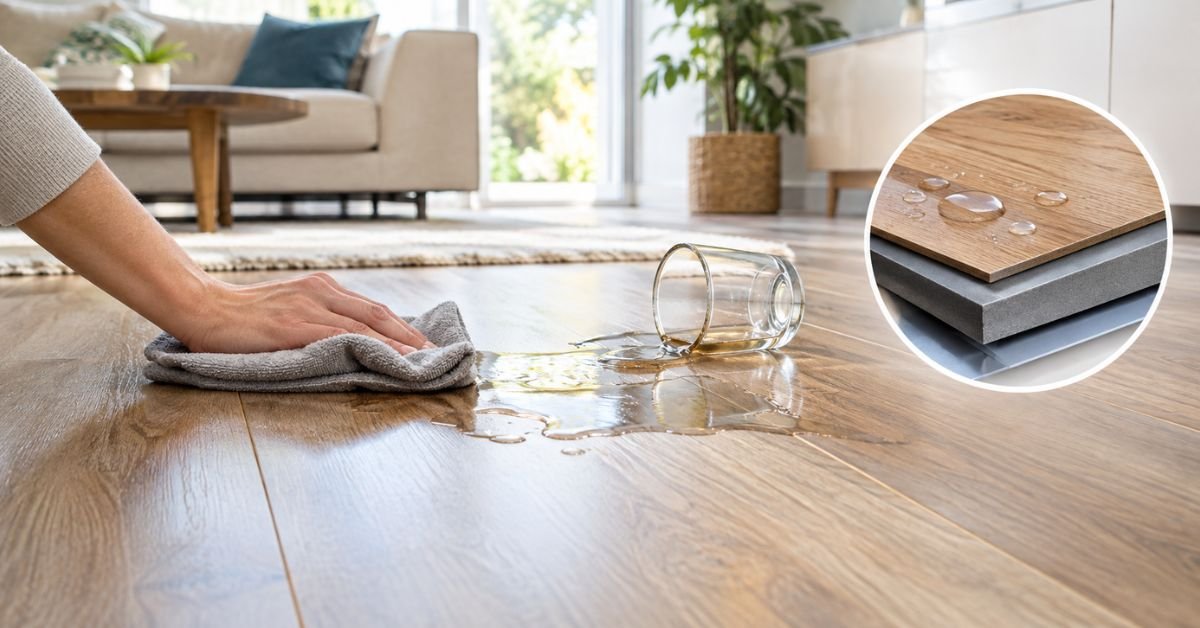
Quick Answer: The main waterproof laminate flooring pros and cons include realistic hardwood appearance, good scratch resistance, affordable pricing, and improved protection against everyday spills. However, laminate can still suffer water damage from flooding, prolonged moisture, or poor installation. It is a practical choice for living rooms, bedrooms, and many kitchens, but may not be ideal for consistently wet areas.
Waterproof laminate flooring looks like a smart investment, especially if you love hardwood floors but want something easier to maintain.
However, choosing the right flooring involves more than appearance.
Some homeowners appreciate laminate’s durability and price, while others discover that its water protection has limitations.
Understanding waterproof laminate flooring pros and cons helps homeowners compare moisture protection, long-term durability, and overall value before purchasing.
This guide examines seven important advantages and disadvantages, 2026 costs, durability, and how waterproof laminate compares with luxury vinyl plank.
What Are the Pros and Cons of Waterproof Laminate Flooring?
Waterproof laminate flooring combines a realistic wood-look surface with an engineered core and protective layers.
Modern products often feature moisture-resistant locking joints, treated edges, and durable wear surfaces.
These features improve performance against everyday household spills.
However, the level of water protection varies between manufacturers and product collections.
The following comparison summarizes the most important benefits and drawbacks.
| Pros | Cons |
| Realistic hardwood appearance | Not necessarily floodproof |
| Good scratch resistance | Damaged planks are difficult to repair |
| More affordable than many hardwood floors | Water protection varies by product |
| Easy everyday cleaning | Requires careful installation |
7 Waterproof Laminate Flooring Pros and Cons Explained

The following waterproof laminate flooring pros and cons highlight how this material performs in everyday American homes, especially in high-traffic and moisture-prone areas.
1. Pro: Realistic Hardwood Appearance
One of the biggest advantages of waterproof laminate is its convincing wood appearance.
Modern manufacturing techniques reproduce natural grain patterns, knots, and surface textures.
Homeowners can choose finishes resembling white oak, walnut, maple, or traditional hardwood.
Unlike solid hardwood, laminate doesn’t require regular sanding or refinishing.
For homeowners who want an attractive interior without premium hardwood prices, laminate offers considerable design flexibility.
2. Pro: Better Protection Against Everyday Spills
Modern waterproof laminate products are engineered to resist surface moisture.
This makes them useful in homes where spilled drinks, wet shoes, and occasional pet accidents are common.
Many manufacturers use tight locking joints and treated plank edges to improve protection.
However, waterproof does not always mean unlimited water resistance.
The North American Laminate Flooring Association (NALFA) provides testing and certification information that can help homeowners evaluate laminate performance.
Always check the manufacturer’s water-resistance warranty before buying.
3. Pro: Good Scratch and Wear Resistance
Laminate flooring is popular in busy households because of its protective wear layer.
Quality products can resist everyday scratches caused by foot traffic, furniture movement, and pets.
However, scratch resistance varies by product.
For high-traffic areas, consider flooring with a suitable abrasion rating and verified performance testing.
Furniture pads and entrance mats can further reduce unnecessary wear.
4. Pro: Affordable Installation and Maintenance
Waterproof laminate often costs less than solid hardwood while offering a similar appearance.
Many products use click-lock systems, which can reduce installation complexity.
Homeowners with suitable DIY experience may be able to install laminate themselves.
Routine cleaning is also straightforward.
If you’re planning a larger project, these home renovation tips and money-saving tricks can help you manage renovation expenses.
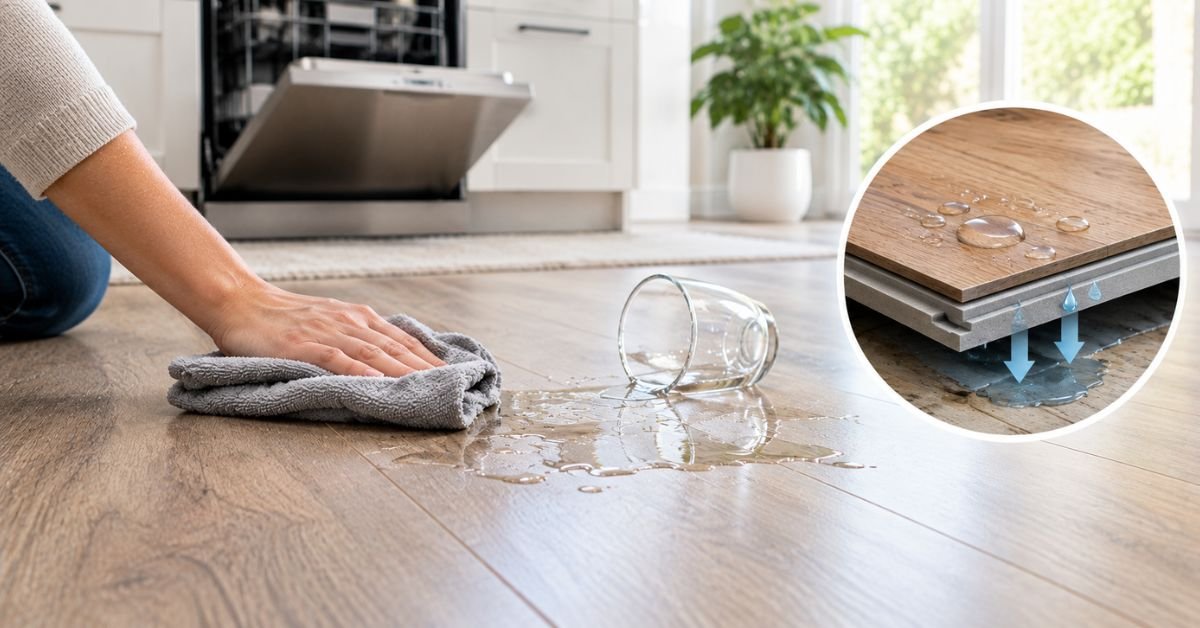
5. Con: Limited Protection Against Flooding
One important disadvantage is that waterproof laminate may still suffer damage from prolonged water exposure.
Water can enter through expansion gaps, damaged joints, or the edges of the flooring.
Once moisture reaches the fiberboard core, swelling or distortion may occur.
A dishwasher leak or basement flood can cause problems even when the top surface appears undamaged.
For rooms with recurring water problems, another flooring material may be more appropriate.
6. Con: Damaged Planks Are Difficult to Repair
Unlike solid hardwood, laminate flooring generally cannot be sanded and refinished.
If a plank develops severe scratches, swelling, or broken locking joints, replacement is often necessary.
Replacing a single plank can also be complicated when it is located in the middle of a large floor.
Keeping a few spare planks after installation can make future repairs easier.
7. Con: Installation Mistakes Can Reduce Water Protection
Waterproof laminate depends on proper installation.
An uneven subfloor, incorrect underlayment, or poorly connected joints can affect performance.
Some manufacturers require specific sealing procedures around bathrooms, kitchens, and other moisture-prone locations.
Ignoring these instructions may also affect warranty coverage.
Before installation, carefully review the manufacturer’s approved subfloors, expansion-gap requirements, and moisture limits.
How Much Does Waterproof Laminate Flooring Cost in 2026?
Waterproof laminate flooring commonly costs approximately 3–7 per square foot for materials in the United States.
Professional installation may bring the total to around 5–12 per square foot.
These are general planning estimates. Actual prices depend on flooring quality, labor rates, location, and subfloor preparation.
| Room Size | Estimated Installed Cost |
| 100 sq. ft. | 500–1,200 |
| 200 sq. ft. | 1,000–2,400 |
| 300 sq. ft. | 1,500–3,600 |
| 500 sq. ft. | 2,500–6,000 |
When comparing waterproof laminate flooring pros and cons, consider the complete installation cost, expected lifespan, and potential replacement expenses rather than the purchase price alone.
Additional expenses may include old flooring removal, underlayment, moisture barriers, and trim.
For an accurate budget, request local installation quotes and compare the complete project cost rather than material prices alone.
Waterproof Laminate vs. Luxury Vinyl Plank: Which Is Better?
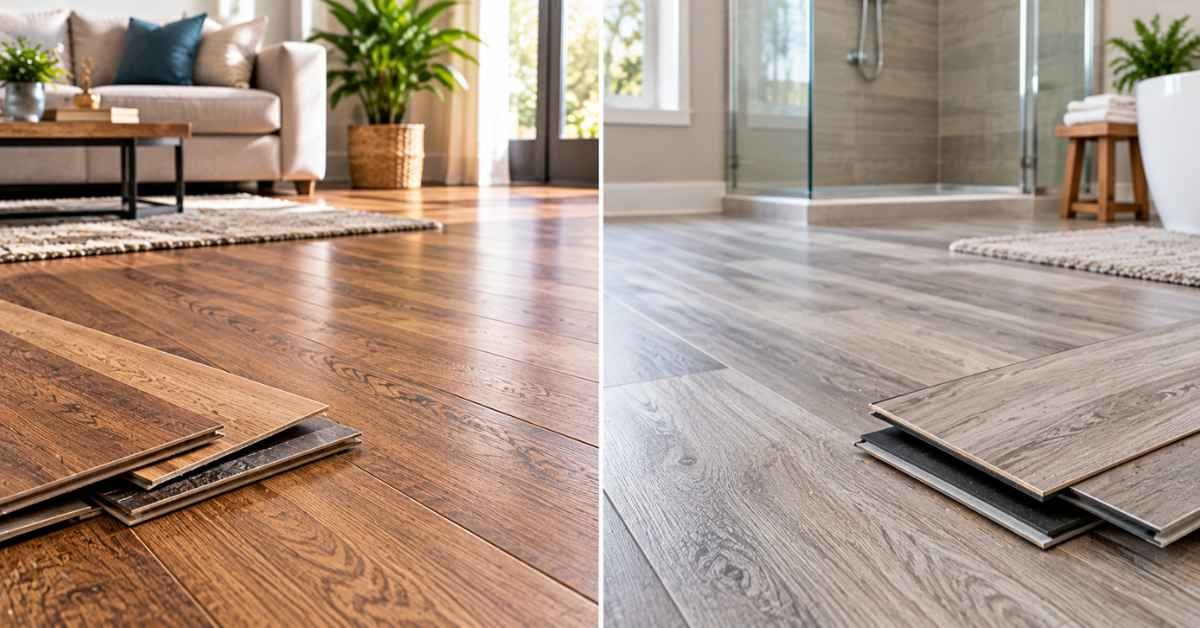
Waterproof laminate and luxury vinyl plank are both popular wood-look flooring options.
However, their construction differs.
Laminate usually contains a wood-fiber core, while most luxury vinyl plank products use synthetic materials.
| Feature | Waterproof Laminate | Luxury Vinyl Plank |
| Appearance | Realistic wood texture | Wood and stone designs |
| Scratch resistance | Often excellent | Product-dependent |
| Water protection | Limited by product and installation | Generally stronger material-level resistance |
| Core | Usually wood fiber | Usually synthetic |
| Maintenance | Easy | Easy |
| Best use | Living areas and approved kitchens | Living areas and moisture-prone rooms |
Which should you choose?
Waterproof laminate is a strong option when appearance, scratch resistance, and price are priorities.
Luxury vinyl plank may be better when frequent moisture exposure is the main concern.
For more details, read our LVP flooring pros and cons guide.
Is Waterproof Laminate Flooring Good for Kitchens and Bathrooms?
Waterproof laminate can be suitable for kitchens because it handles ordinary surface spills better than many traditional laminate products.
However, bathrooms require more careful consideration.
Some manufacturers approve particular laminate collections for bathroom installation when specific sealing procedures are followed.
For frequently wet bathrooms, tile or waterproof vinyl may be a better choice.
Homeowners planning a bathroom renovation can also explore these bathroom tile and shower ideas before choosing a flooring material.
How Long Does Waterproof Laminate Flooring Last?
Quality laminate flooring can last approximately 10–25 years under suitable conditions.
Its lifespan depends on traffic, moisture exposure, product quality, installation, and maintenance.
A durable wear layer can help protect against everyday scratches.
However, even premium laminate may deteriorate prematurely when exposed to repeated water damage.
For better longevity, clean spills promptly, use protective furniture pads, and follow the manufacturer’s maintenance instructions.
How to Choose Waterproof Laminate Flooring
Before purchasing, compare several important product specifications.
Thickness: Laminate commonly ranges from 6mm to 12mm. Thickness can influence the feel of the floor, but it does not guarantee better durability.
Wear rating: AC3 products are commonly suitable for residential traffic, while AC4 products are designed for heavier use.
Water protection: Check the warranty, approved installation areas, and moisture-resistance claims.
Indoor air quality: Look for appropriate formaldehyde-emission compliance labeling.
The U.S. Environmental Protection Agency guides formaldehyde requirements for applicable composite wood flooring products.
Choosing a well-tested product is more important than relying on marketing terms alone.
How to Install Waterproof Laminate Flooring
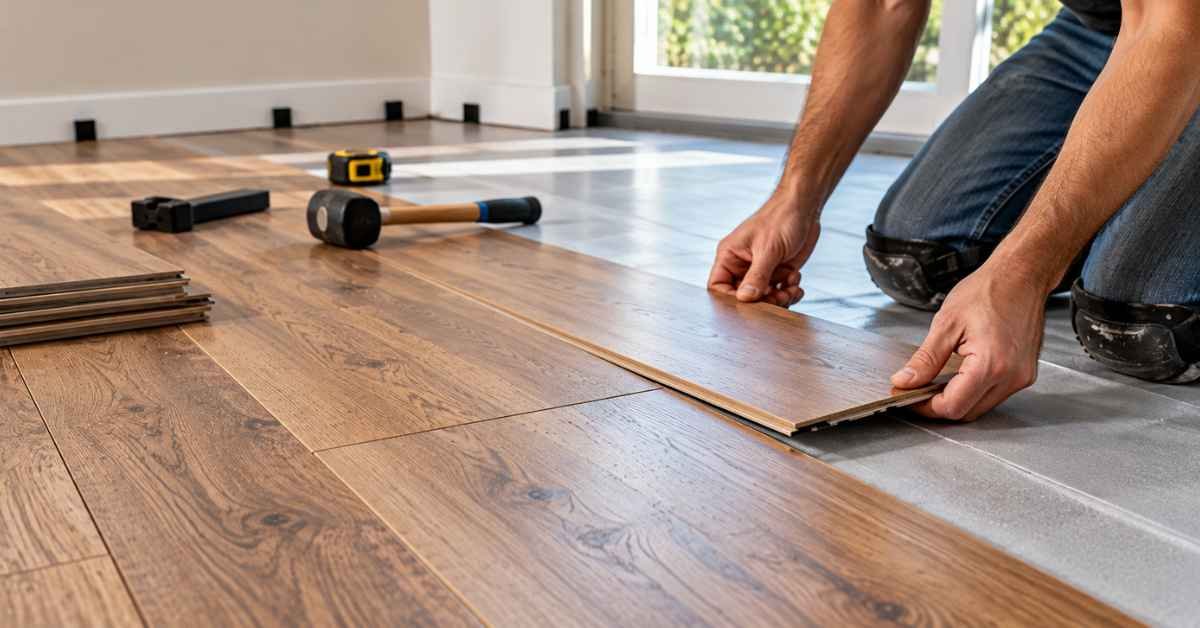
Many waterproof laminate products use click-lock installation systems. Proper installation helps maintain their intended moisture protection.
Follow these basic steps:
- Clean and level the subfloor according to manufacturer requirements.
- Test subfloor moisture where required.
- Install approved underlayment and moisture barriers.
- Connect the planks using the recommended locking method.
- Maintain the required expansion gaps.
- Seal approved areas according to the installation instructions.
Do not apply glue or sealant to locking joints unless specifically required.
How to Maintain Waterproof Laminate Flooring
Waterproof laminate is relatively easy to clean.
Regular sweeping or vacuuming helps prevent grit from scratching the surface.
Use a lightly damp microfiber mop and laminate-approved cleaner.
Avoid excessive water and steam cleaning unless the manufacturer specifically permits them.
Clean spills promptly and place protective pads beneath furniture.
These simple habits can help preserve the flooring’s appearance and performance.
Evaluating waterproof laminate flooring pros and cons alongside your household’s moisture exposure, foot traffic, and maintenance needs will help you make a more confident flooring decision.
Related guide: Waterproof Laminate Flooring: Is It Really Waterproof?
Conclusion: Is Waterproof Laminate Flooring Worth It?
Understanding the waterproof laminate flooring pros and cons makes it easier to choose a suitable floor.
Its main advantages include realistic wood appearance, scratch resistance, manageable maintenance, and competitive pricing.
The biggest disadvantages are limited flood protection, difficult plank repairs, and installation requirements.
For living rooms, bedrooms, hallways, and many kitchens, waterproof laminate can offer excellent value.
However, bathrooms, laundry rooms, and moisture-prone basements require careful product selection.
Before buying, compare product specifications, warranty coverage, and total installation costs.
Frequently Asked Questions
1. What is the biggest disadvantage of waterproof laminate flooring?
Its biggest limitation is that prolonged moisture or water trapped beneath the flooring can still damage the core and subfloor.
2. Is waterproof laminate flooring good for pets?
Yes. Many products offer good scratch resistance and protection against occasional pet accidents. Clean spills promptly and choose a suitable wear rating.
3. Is waterproof laminate cheaper than vinyl?
Prices overlap considerably. Basic laminate may cost less than premium vinyl, but total expenses depend on product quality and installation requirements.
4. Can waterproof laminate flooring be installed over concrete?
Yes, when the manufacturer approves concrete installation, and the subfloor meets moisture and flatness requirements.
5. Is waterproof laminate flooring worth buying in 2026?
Yes, for homeowners who want a realistic hardwood appearance, good everyday durability, and improved surface-water protection at a competitive price. It is less suitable for areas with persistent moisture problems.

I’m Samreen Khadim Hussain, a home improvement writer specializing in practical, research-driven content for U.S. homeowners. At Domelite Home, I cover home renovation, interior design, home maintenance, and residential safety, translating technical information and industry research into clear, actionable guidance. My approach combines search intent research, reliable sources, and reader-focused writing to help homeowners understand their options, make informed decisions, and create safer, more functional living spaces.